
Best 2 Milvus Alternatives in 2026
Last Updated: October 24, 2025
Milvus is a database specifically built to store and search vector embeddings. When you use AI models to process text, images, or other data, they create numerical vectors that represent the meaning of that data. Milvus organizes these vectors so you can quickly find similar items.
Unlike traditional databases that work with exact matches, Milvus excels at finding items that are similar in meaning. For example, it can find pictures that look alike or text passages with related concepts, even if the exact words are different.
The best alternative to Milvus is  Weaviate
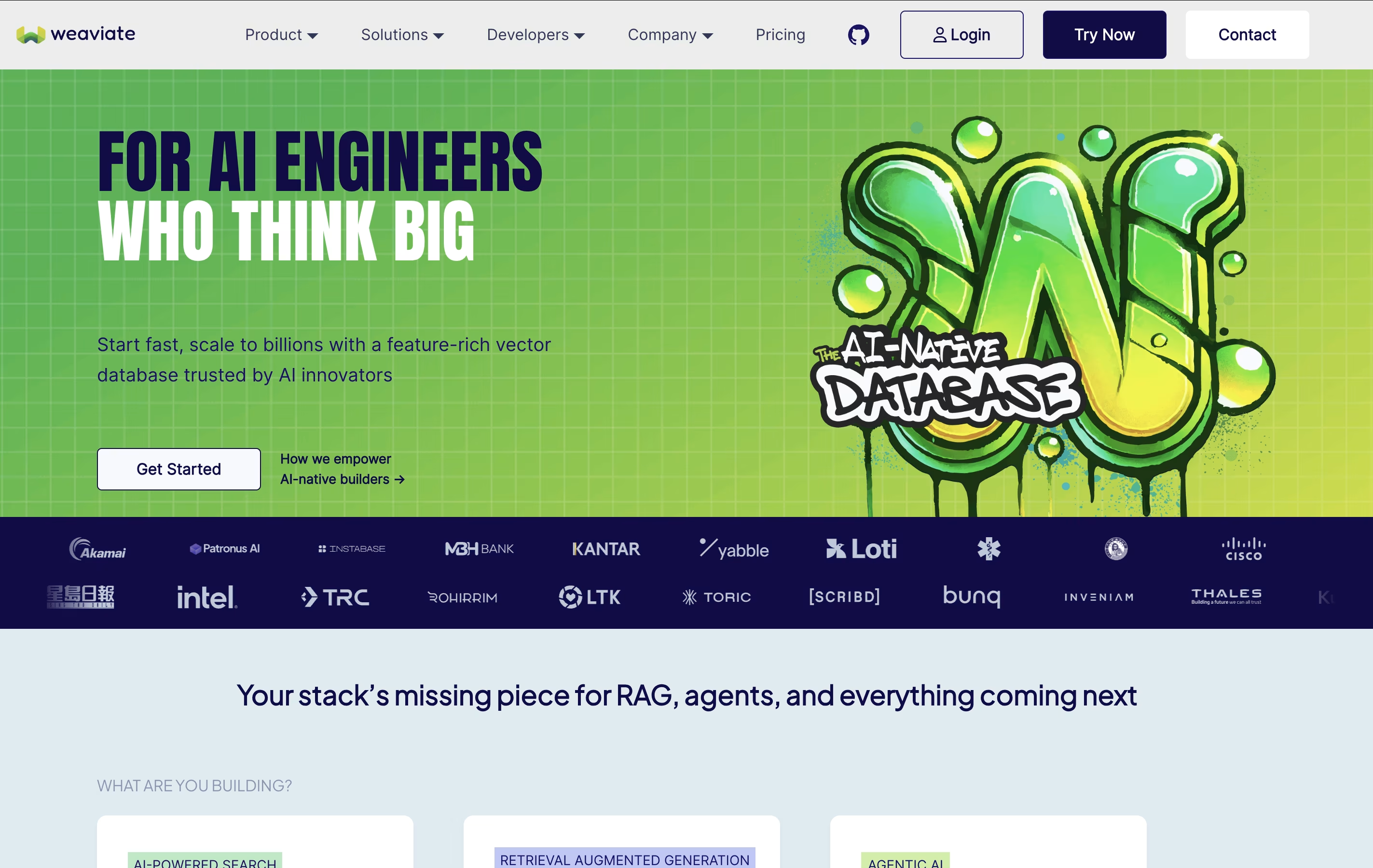 WeaviateOpen Source Vector Database for AI.
So, here are the 2 best alternatives to Milvus:

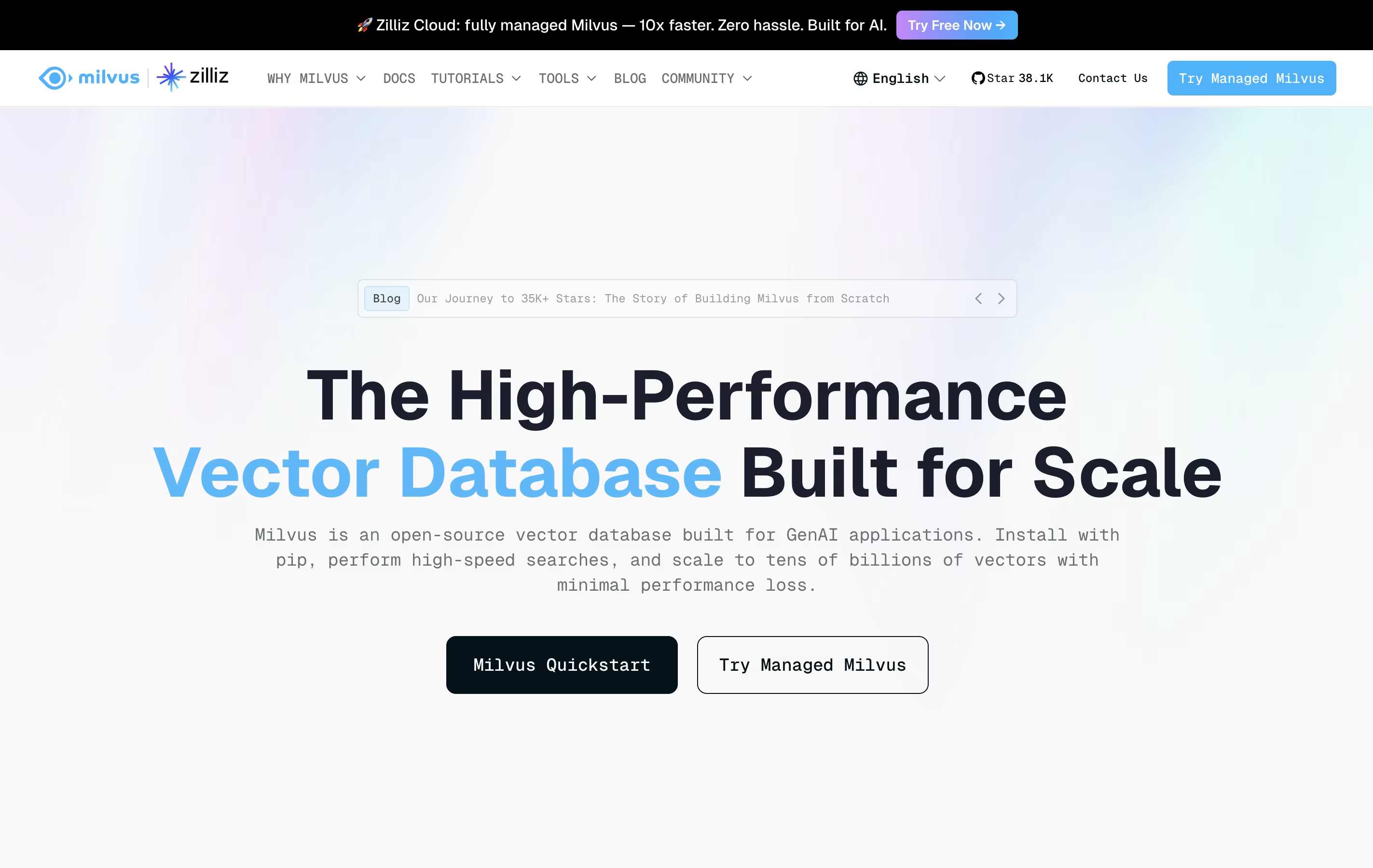
Weaviate is a database designed specifically for AI applications that need to understand the meaning behind data. Unlike regular databases that only match exact words, Weaviate can find information based on what you mean, not just what you type.
It combines traditional database features with vector search technology. This means you can store documents, images, or any type of data, and then search through them using natural language or by similarity. The database handles millions or even billions of items quickly, usually returning results in less than 100 milliseconds.
You can use it for many purposes: building chatbots that answer questions accurately, creating search engines that understand context, making recommendation systems, or organizing large amounts of unstructured data like documents and images.

Qdrant is a vector database that stores and searches high-dimensional data using advanced technology. Unlike traditional databases that store exact text or numbers, Qdrant works with vectors—mathematical representations of complex information. This makes it perfect for finding similar items based on meaning rather than exact matches.
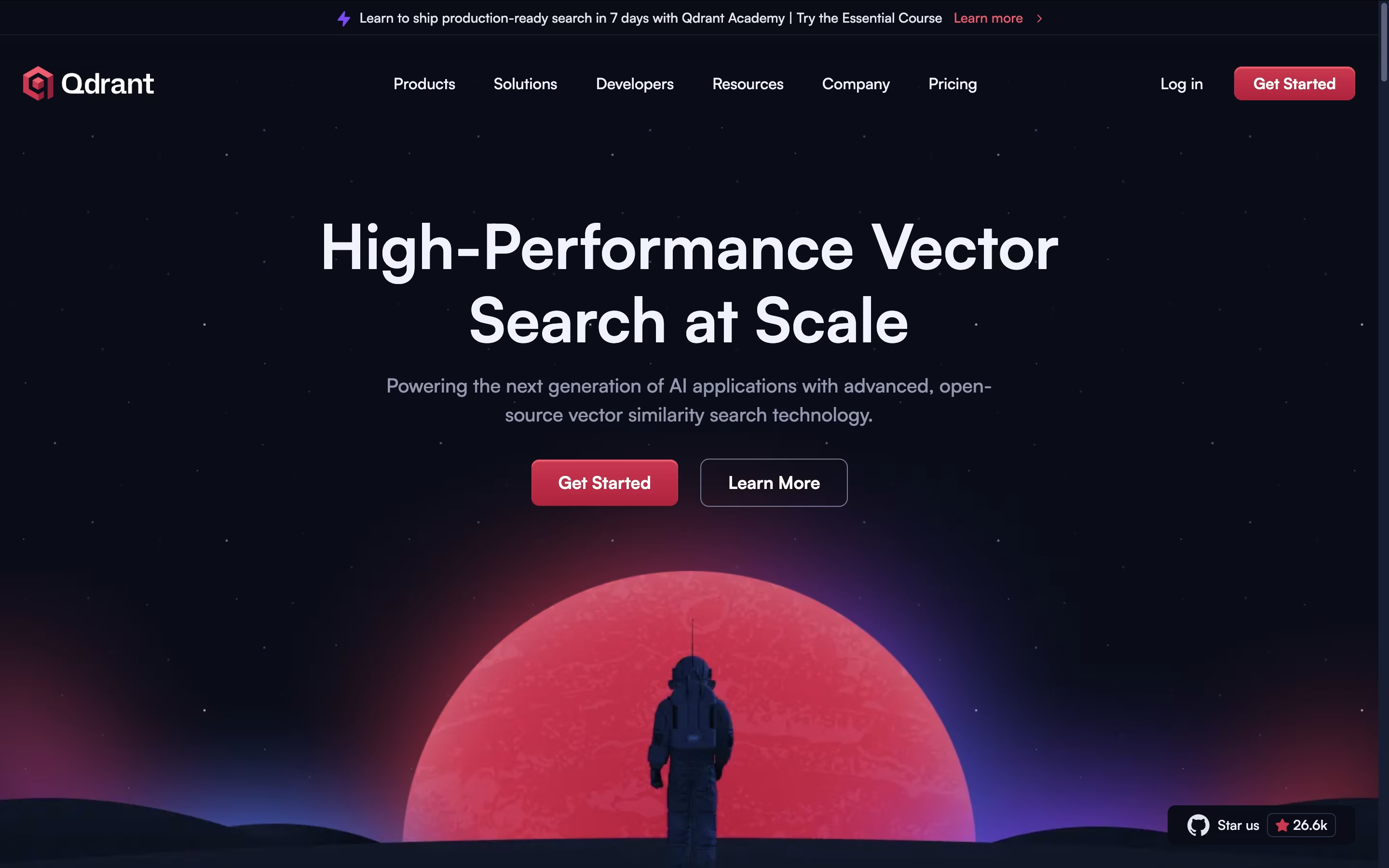
The database uses a special algorithm called HNSW that makes searches incredibly fast, even with billions of data points. It supports different ways to measure similarity between items, including options for text, images, and other data types.
Qdrant includes features like data compression to save memory, filtering to narrow down results, and the ability to scale up as your needs grow. You can use it through a simple web interface or integrate it directly into your applications using various programming languages.