Best 12+ Tools for AI Agent Building in 2026
Last Updated: August 4, 2026
Automating a multi-step task often requires more than a single AI response, it needs a system that can plan and act. AI Agent Building tools help design and configure AI agents that can complete tasks autonomously using tools and reasoning.
Developers and technical teams use agent-building tools to automate workflows that go beyond a single request and response.
 Typing Mind
 Typing MindAdvanced AI Chat Frontend for ChatGPT, Claude & Gemini,
  Lindy
Lindy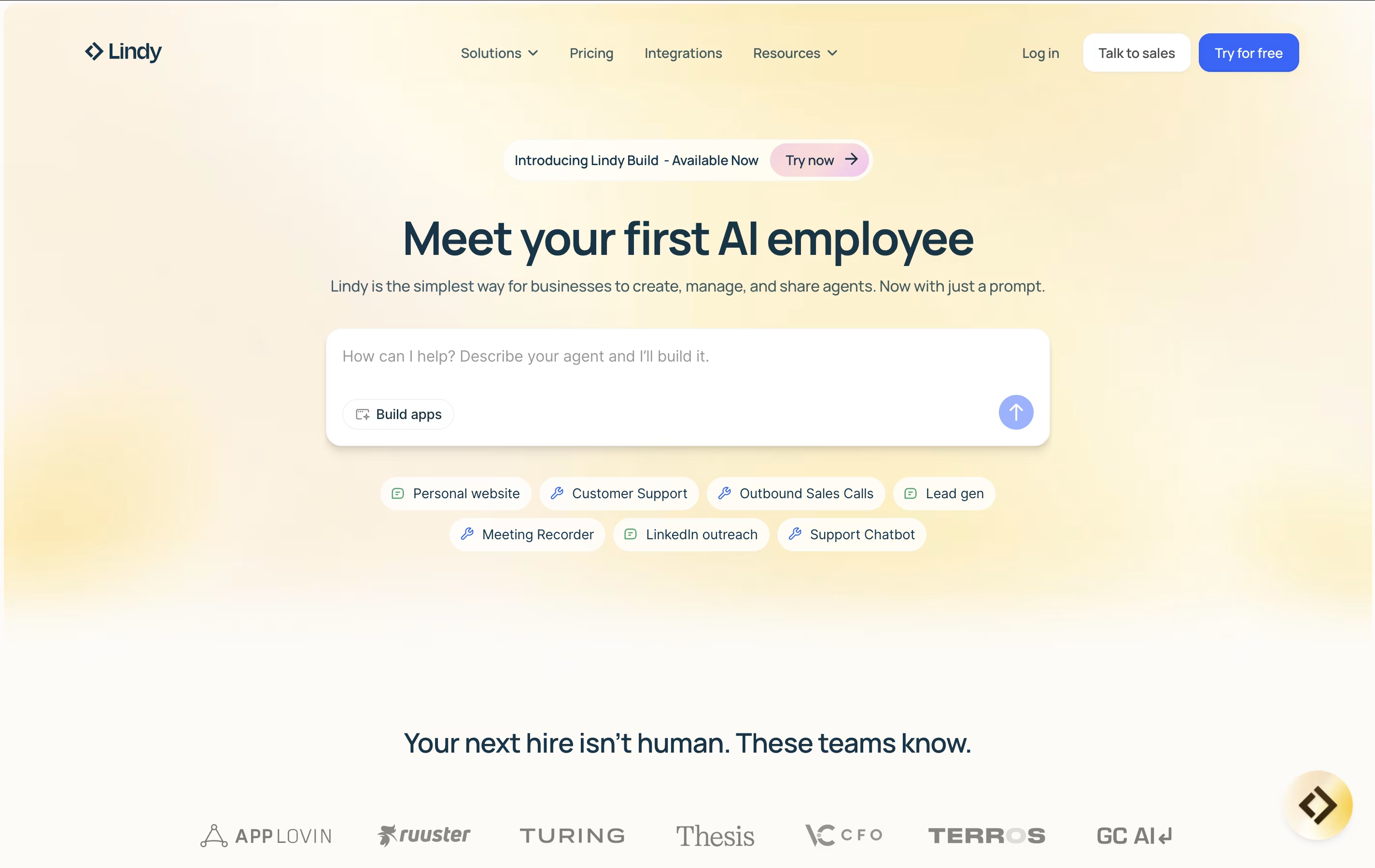 Lindy, and
  Relevance AI
 Relevance AIBuild Your AI Workforce Easily are the best for AI Agent Building. So, let’s take a closer look at all 12+ tools.
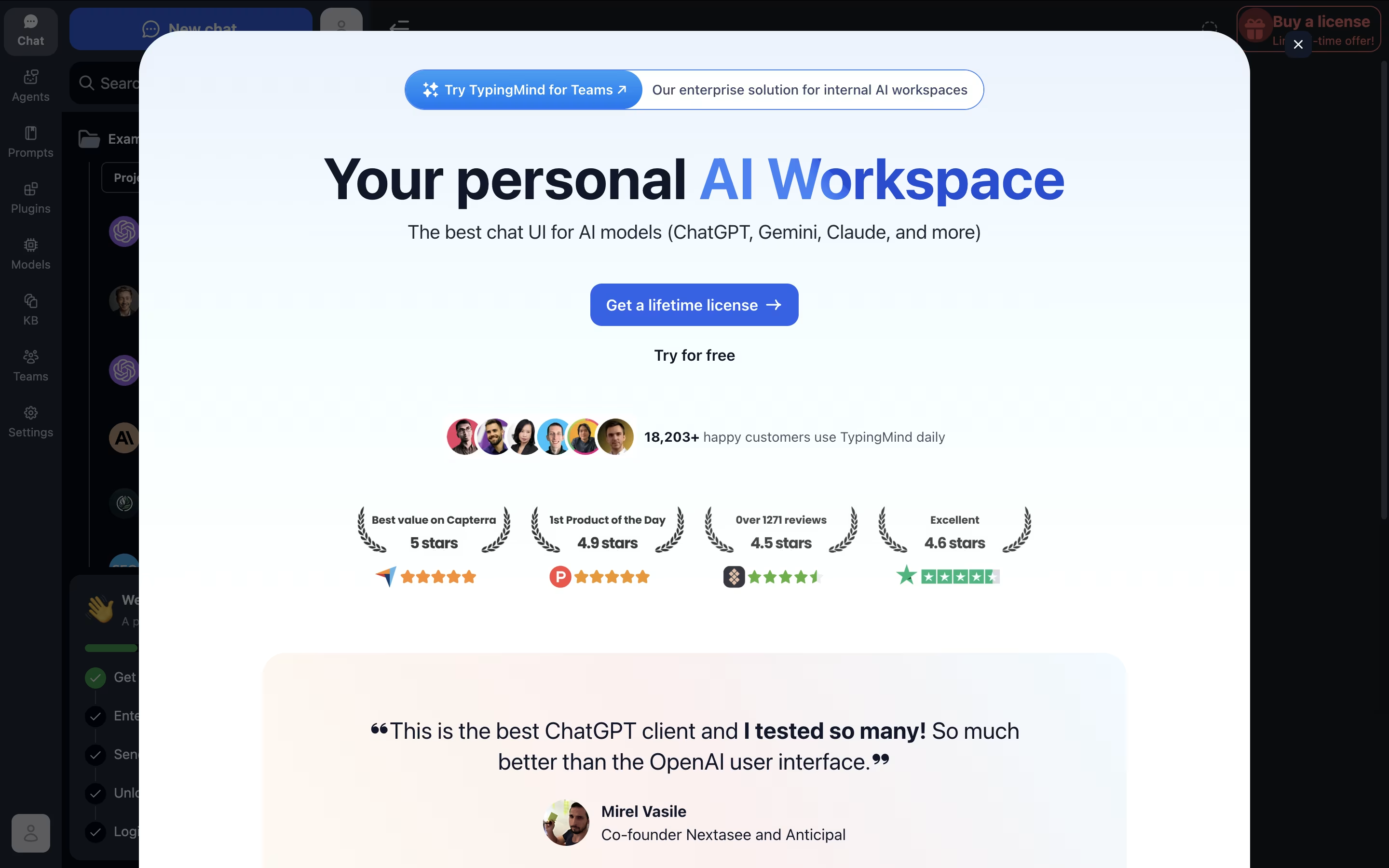
Typing Mind is an advanced chat frontend for popular AI models like ChatGPT, Claude, Gemini, and others. Instead of using the official websites, you use your own API keys with Typing Mind to get a much better chat experience.
Think of it as a replacement interface that makes AI chatting more powerful and organized. You get features like chat folders, history search, voice input, text-to-speech, and the ability to chat with multiple AI models from one place.
The big advantage is cost and privacy. You only pay for actual API usage (often much cheaper than ChatGPT Plus), and your conversations stay completely private. The tool works offline-first, storing everything locally on your device, so no one else can see your chats.
Lindy is an AI-powered automation platform that lets anyone create intelligent assistants called "Lindies" without any coding knowledge. Think of it as a smart combination of ChatGPT's intelligence and Zapier's connectivity, but much more powerful.
Each Lindy you create can understand context, make decisions, and take actions across your entire tech stack. Unlike basic automation tools that just move data around, Lindy's AI agents can read emails and understand what they mean, research leads and write personalized outreach, join meetings and take detailed notes, or handle customer support with human-like responses.
The platform uses simple "if this, then that" logic combined with natural language commands, making it accessible to everyone from small business owners to large enterprise teams. You can start with pre-built templates or create completely custom agents tailored to your specific business needs.
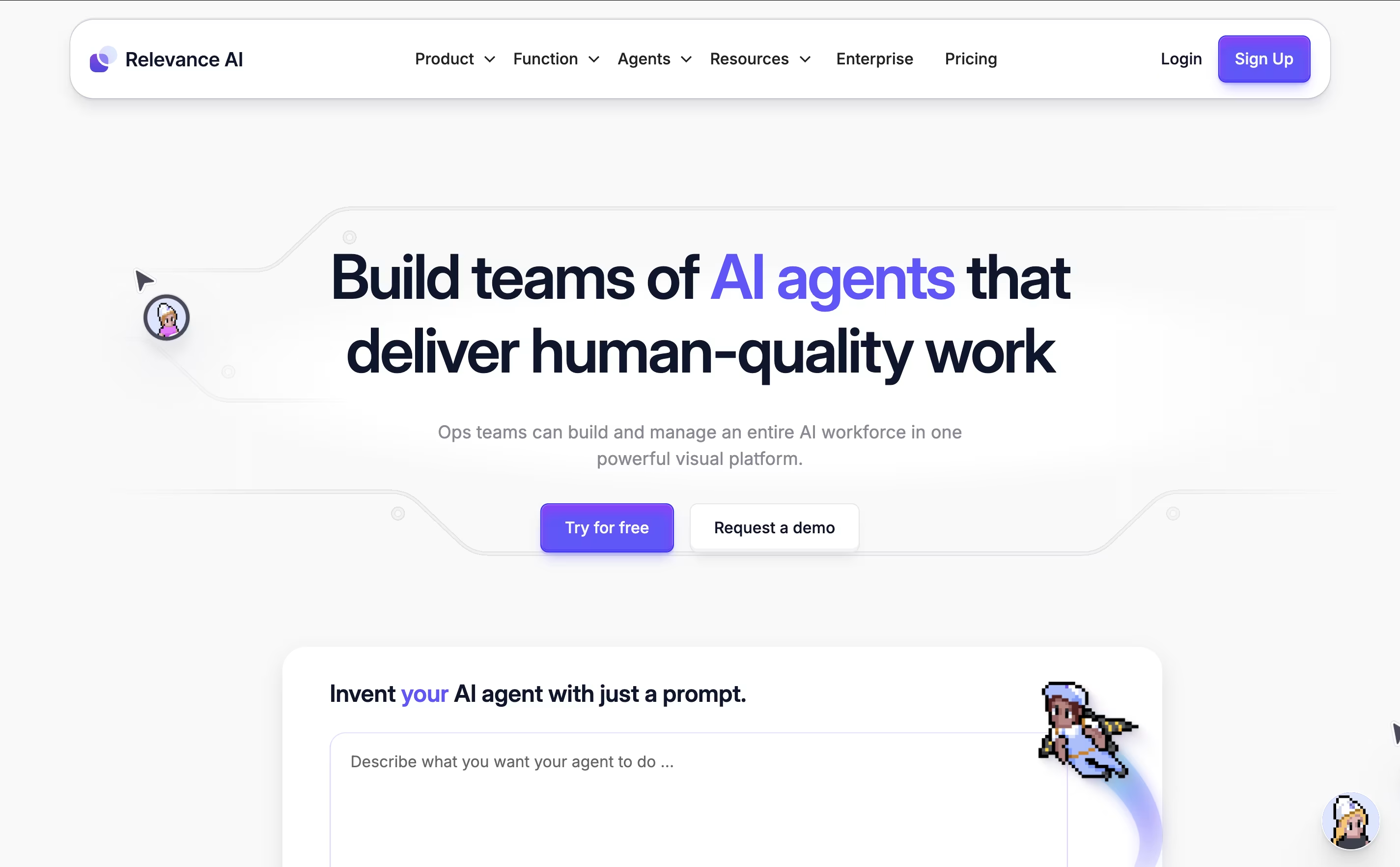
Relevance AI is a no-code platform where anyone can build AI agents and complete AI teams to handle business tasks automatically. These AI agents work like digital employees that can be trained to follow your exact processes and procedures.
The platform supports multiple AI models including GPT-4, Claude, and Gemini, so you get access to the most advanced AI technology. You can create custom tools and workflows, then give these tools to your AI agents so they can complete complex tasks on their own.
What makes it special is that everything happens without coding. You simply drag and drop to build workflows, connect your existing apps, and train your agents using plain English. The platform is SOC 2 compliant and offers data centers in the US, EU, and Australia for security and privacy.

Voiceflow is a collaborative AI agent platform that allows teams to design, develop, and deploy conversational AI experiences without coding. Think of it as a visual builder for smart chatbots and voice assistants that can understand and respond to customer questions naturally.
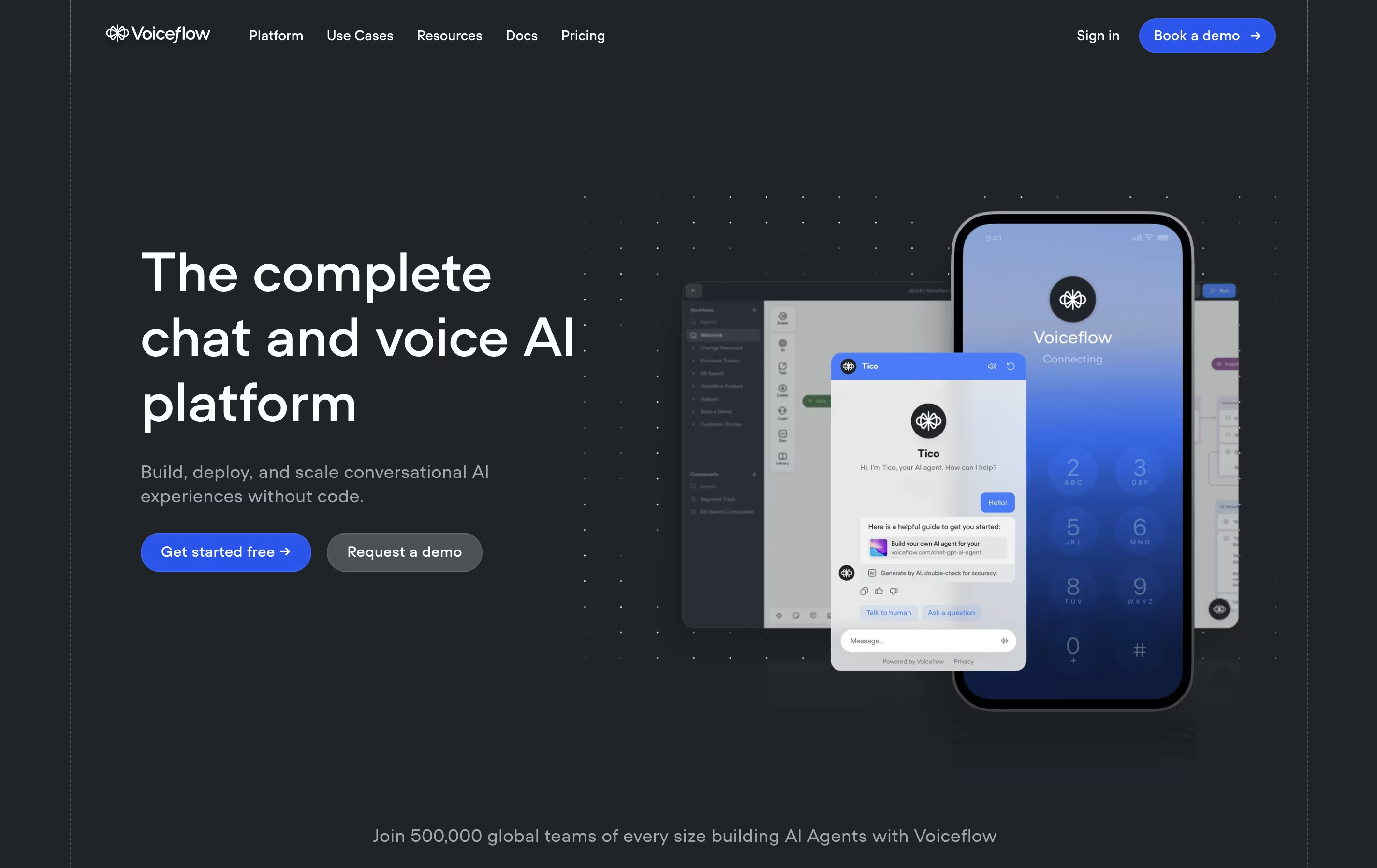
The platform uses a drag-and-drop canvas where you create conversation flows, add AI capabilities, and connect to your business systems. What makes Voiceflow special is its ability to work with multiple AI models like GPT-4, Claude, and Gemini, giving you flexibility in how your agents respond.
You can train these agents on your own content, documents, and data to provide accurate, company-specific answers. The platform supports both text-based chatbots for websites and voice agents for phone systems, making it versatile for different business needs.

Dify is a complete platform for building AI-powered applications using a visual interface. You can create workflows by connecting different components without writing code. The platform supports many AI models from providers like OpenAI, Anthropic, and others, letting you switch between them easily.
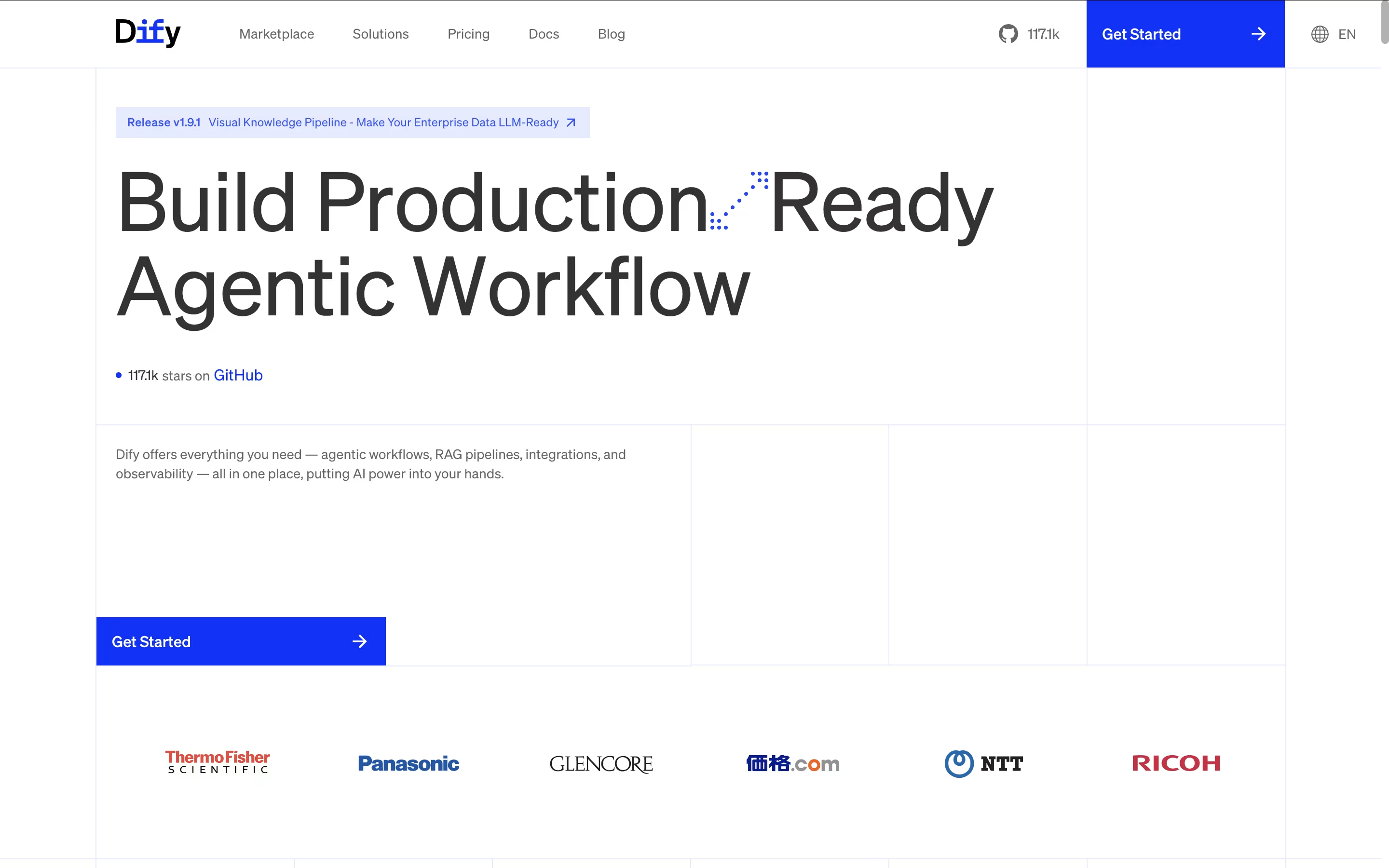
The platform includes tools for managing knowledge bases, creating custom agents, and monitoring application performance. It offers both cloud-based service and self-hosted options, giving you control over where your data lives. The visual workflow builder lets you design complex logic through simple drag-and-drop actions.
Dify is open-source, meaning a community of developers constantly improves it. This makes it reliable and feature-rich while remaining free to use for basic needs, with premium plans available for advanced features.

Think of Google AI Studio as a free workshop for Google's Gemini models. You can chat with a model, tweak its settings, and see how it responds, all inside your browser with no setup needed.
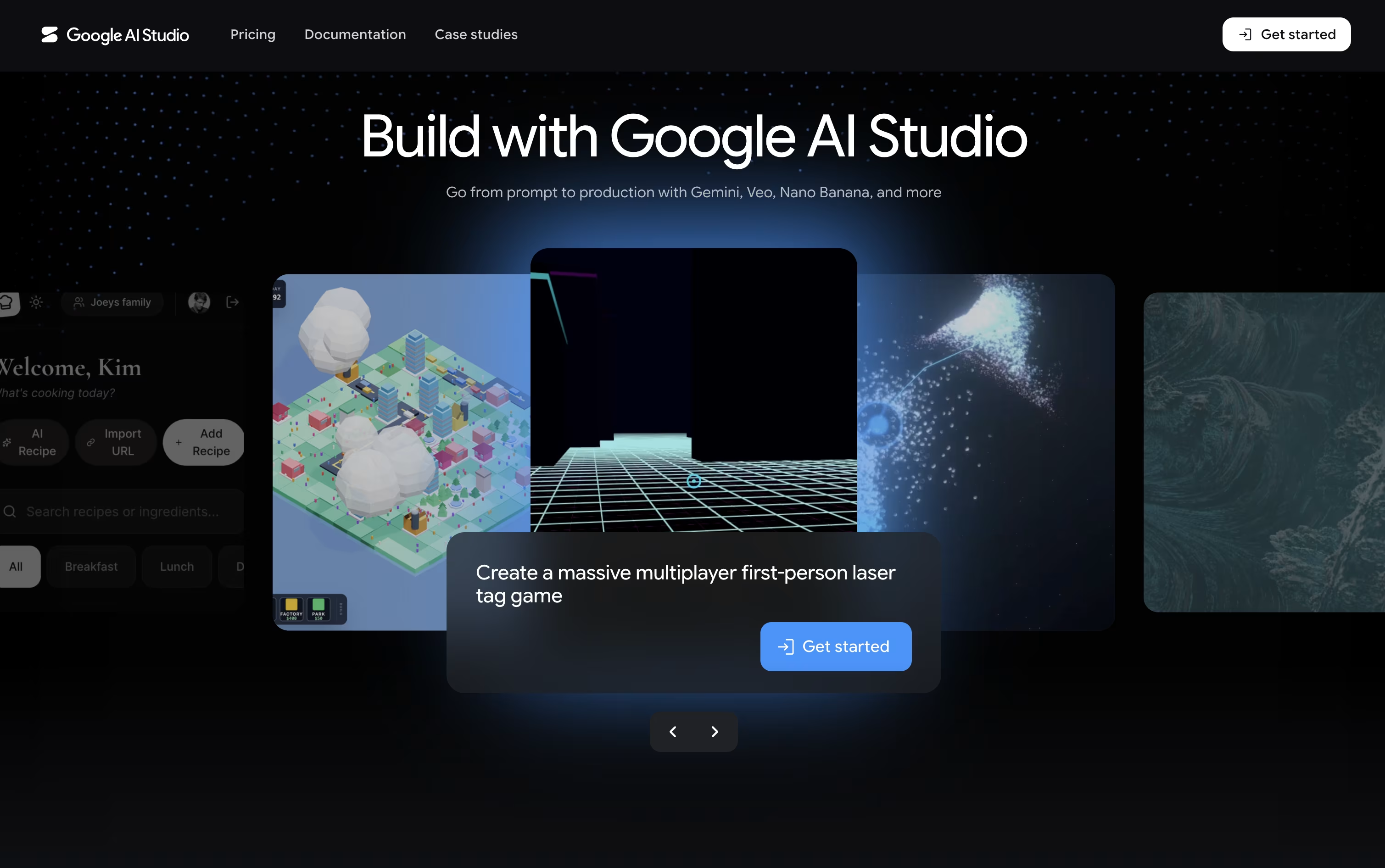
It goes beyond text too, letting you create images, video, audio, and music, and even hold live voice and video conversations with the AI through Gemini Live.
The standout feature is Build mode, where describing an app in everyday language produces a working React or Android app, along with a live preview you can adjust just by describing the change.
Getting started costs nothing on the Free plan, though usage is limited. The Paid plan bills by the token, so a model like Gemini 3.6 Flash runs about $1.50 per million input tokens and $7.50 per million output tokens, and it adds higher limits and batch discounts.
Larger organizations can move to the Enterprise plan for dedicated support, stronger security, and pricing built around their scale.

CREAO is a "no-code AI app builder" that turns natural language descriptions into working software applications. When you describe your app idea in simple words, CREAO's AI automatically builds the complete application including the user interface, backend systems, database, and web hosting.
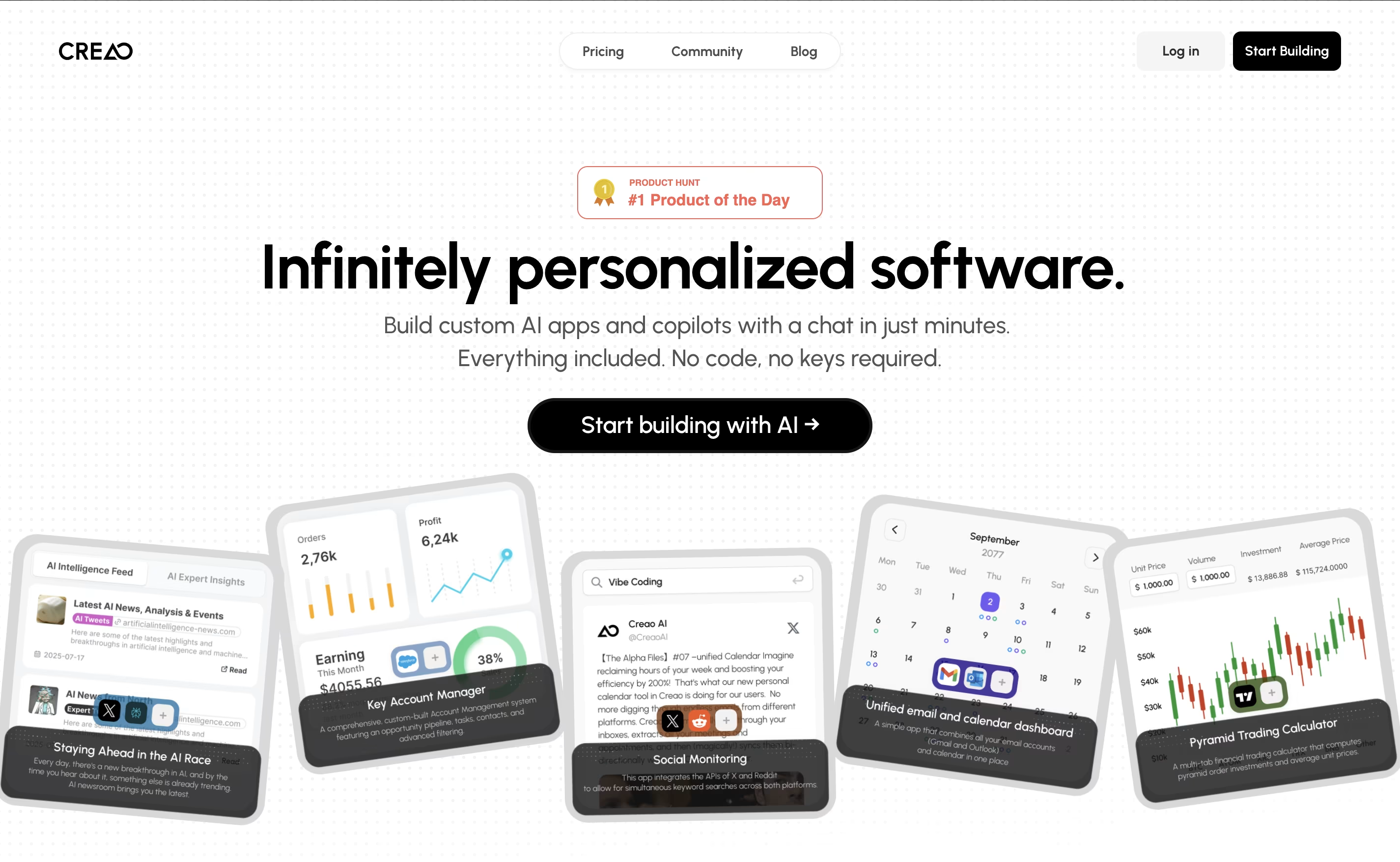
What makes CREAO special is that every app it creates is "AI-native," meaning each one includes a smart AI assistant that understands your specific workflow and data. This built-in copilot can answer questions, manage information, and help users complete complex tasks within the app.
The platform also offers easy connections to popular business tools and services, so your custom app can work alongside your existing software. This makes it perfect for creating internal business tools, customer portals, or workflow management systems.

Langflow is an open-source platform for building AI applications through a visual interface. You create workflows by connecting building blocks called components. Each component performs a specific task, such as loading data, talking to an AI model, or storing information in a database.
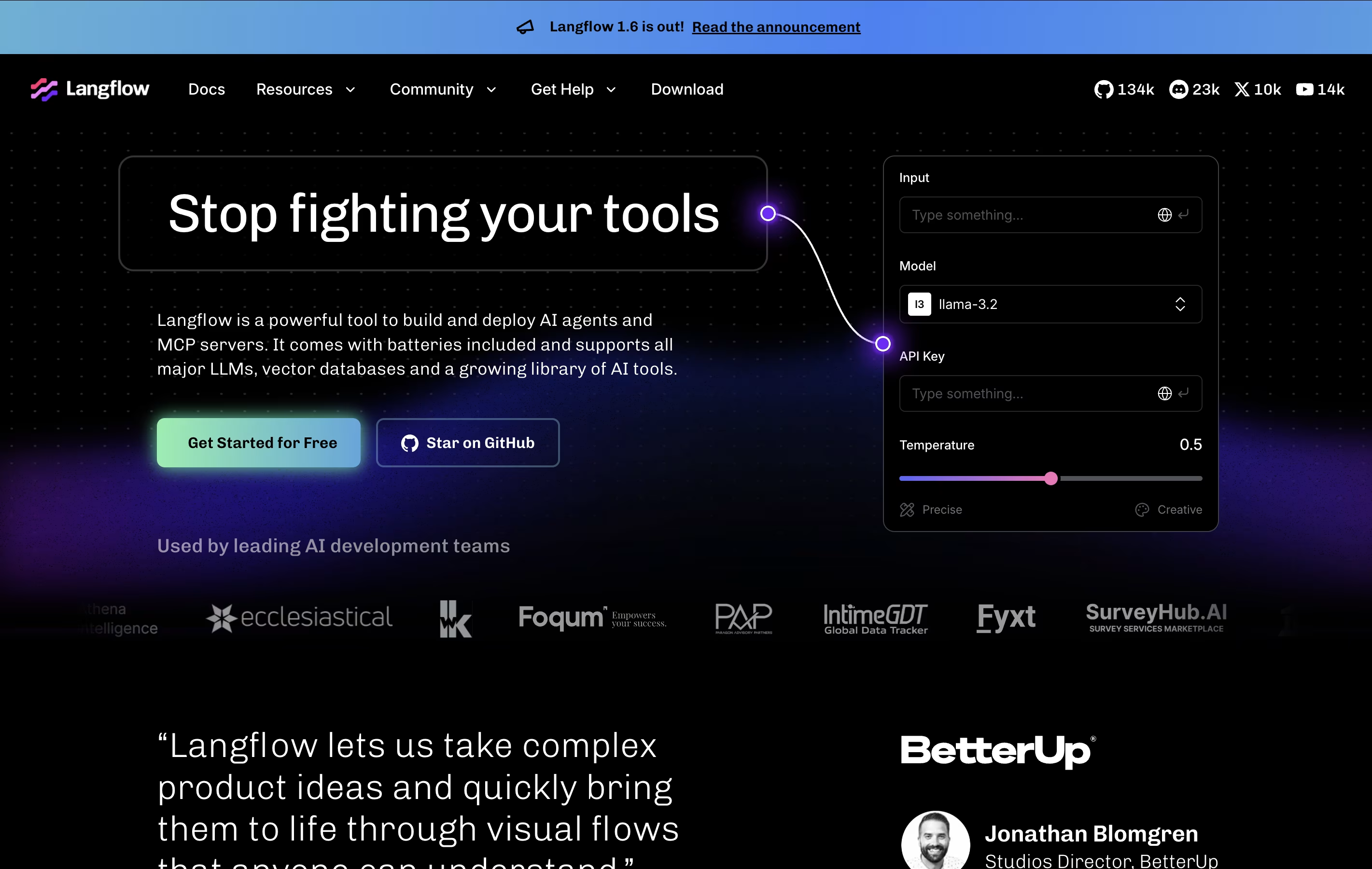
The platform supports agents that can make decisions, use tools, and perform multiple tasks automatically. It also enables Retrieval Augmented Generation (RAG), which lets AI applications search through your documents and provide accurate answers based on your specific data.
There is no cost to use Langflow. It's completely free and open-source. You only pay for external services you connect to it, such as AI model providers like OpenAI or cloud hosting if you choose to deploy your application online.

StackAI is a platform where you build AI agents through a visual canvas. Instead of coding, you drag components onto a screen and connect them together. These components can be language models, your company documents, or connections to other software you use.
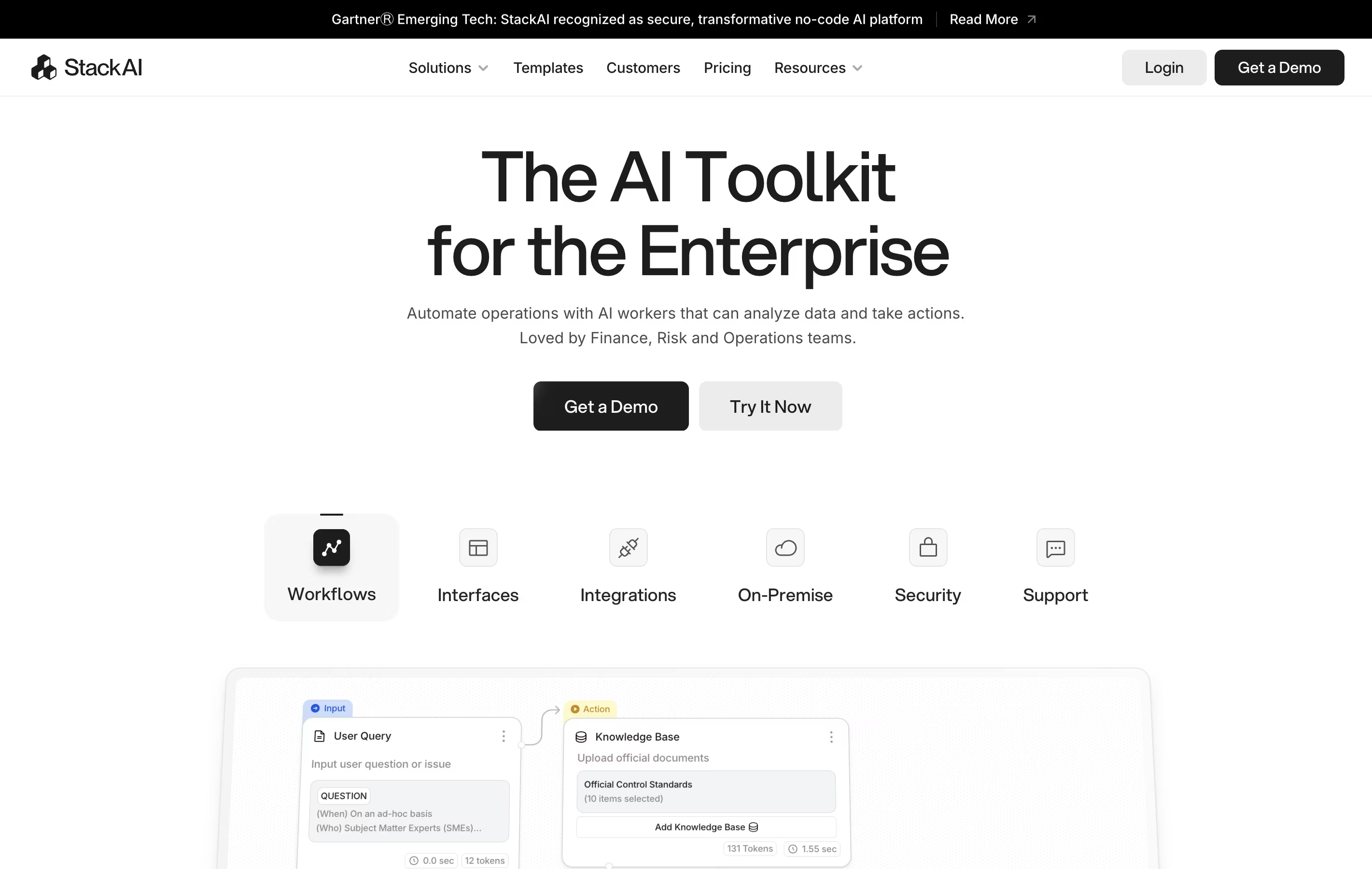
The platform specializes in helping businesses automate their internal processes. You can build chatbots that answer employee questions, systems that analyze documents, or tools that generate reports from your data. Everything runs in a secure environment that follows industry rules for data protection.
StackAI works with multiple AI models from companies like OpenAI and Anthropic. You can also choose where your data lives, including keeping everything on your own servers if needed for extra security.

Vellum is a platform that helps you create AI applications from start to finish. You can build chatbots, content tools, data analysis systems, or custom AI assistants. The platform works with all major AI models including GPT-4, Claude, and open source options.
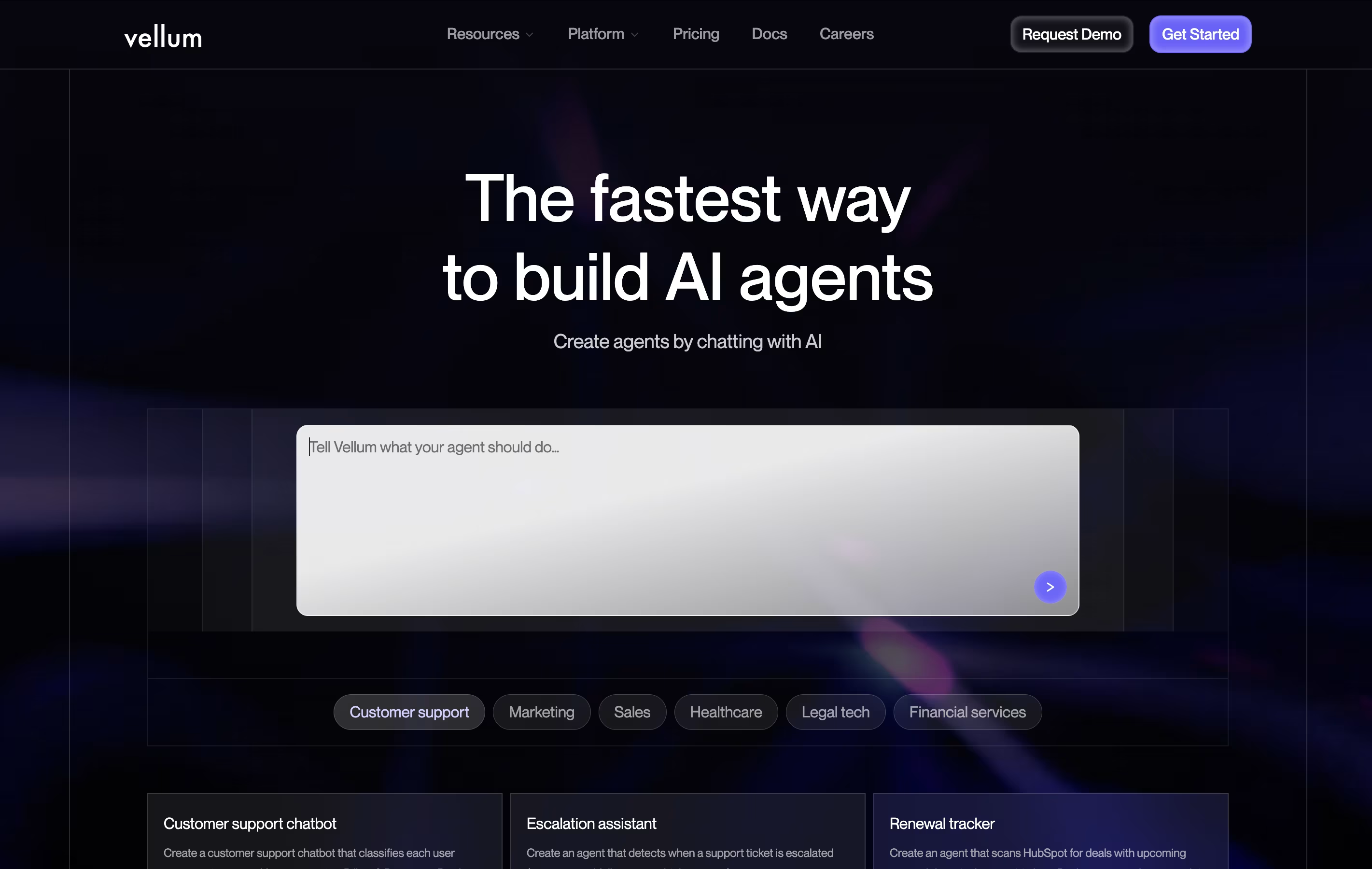
What makes Vellum different is its agent builder. You describe what you want your AI to do in plain language, and it automatically creates the workflow. You can connect your AI to business tools like HubSpot, Slack, and Google Drive. The platform includes testing tools to check quality before launch and monitoring to track how well things work after launch.
Both technical and non-technical team members can use Vellum. Developers set up connections and security, while other team members adjust prompts and workflows without touching code.

Flowise is a visual development platform for creating AI-powered applications using large language models. Think of it as building blocks for AI: you drag components onto a canvas and connect them together to create smart systems.
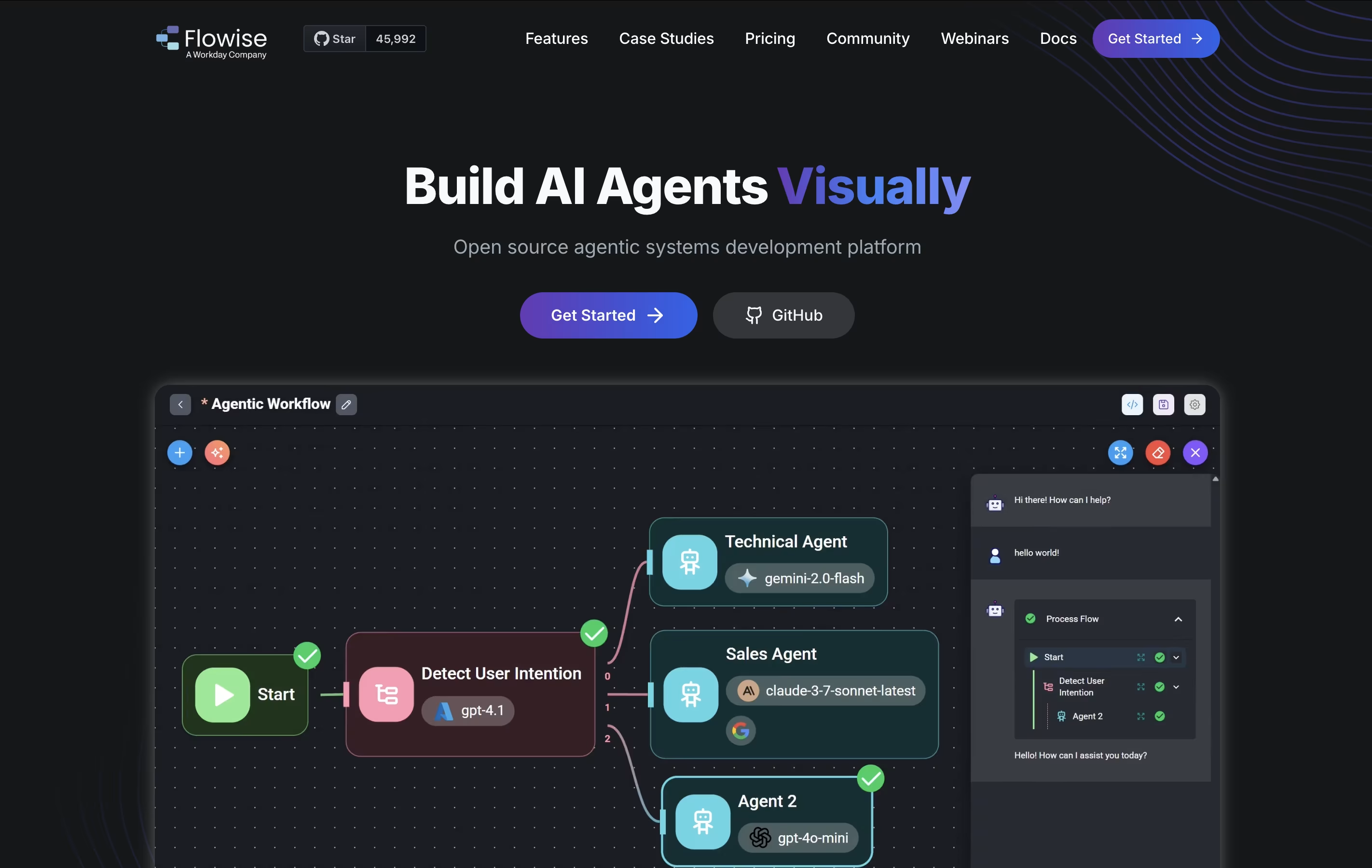
The platform lets you build chatbots that understand documents, create AI agents that can perform tasks automatically, and set up workflows that combine multiple AI tools. It supports retrieval-augmented generation, which means your AI can pull information from your own documents and databases to give accurate answers.
You can start with ready-made templates or build custom solutions from scratch. Flowise works with both cloud-based and locally-hosted AI models, giving you flexibility in how you deploy your applications. The platform is open-source, meaning the community constantly adds new features and improvements.

Questflow is a decentralized AI automation platform that orchestrates multiple AI agents to complete tasks automatically across different platforms. Think of it as having a team of smart digital workers who never get tired and can handle repetitive tasks 24/7.
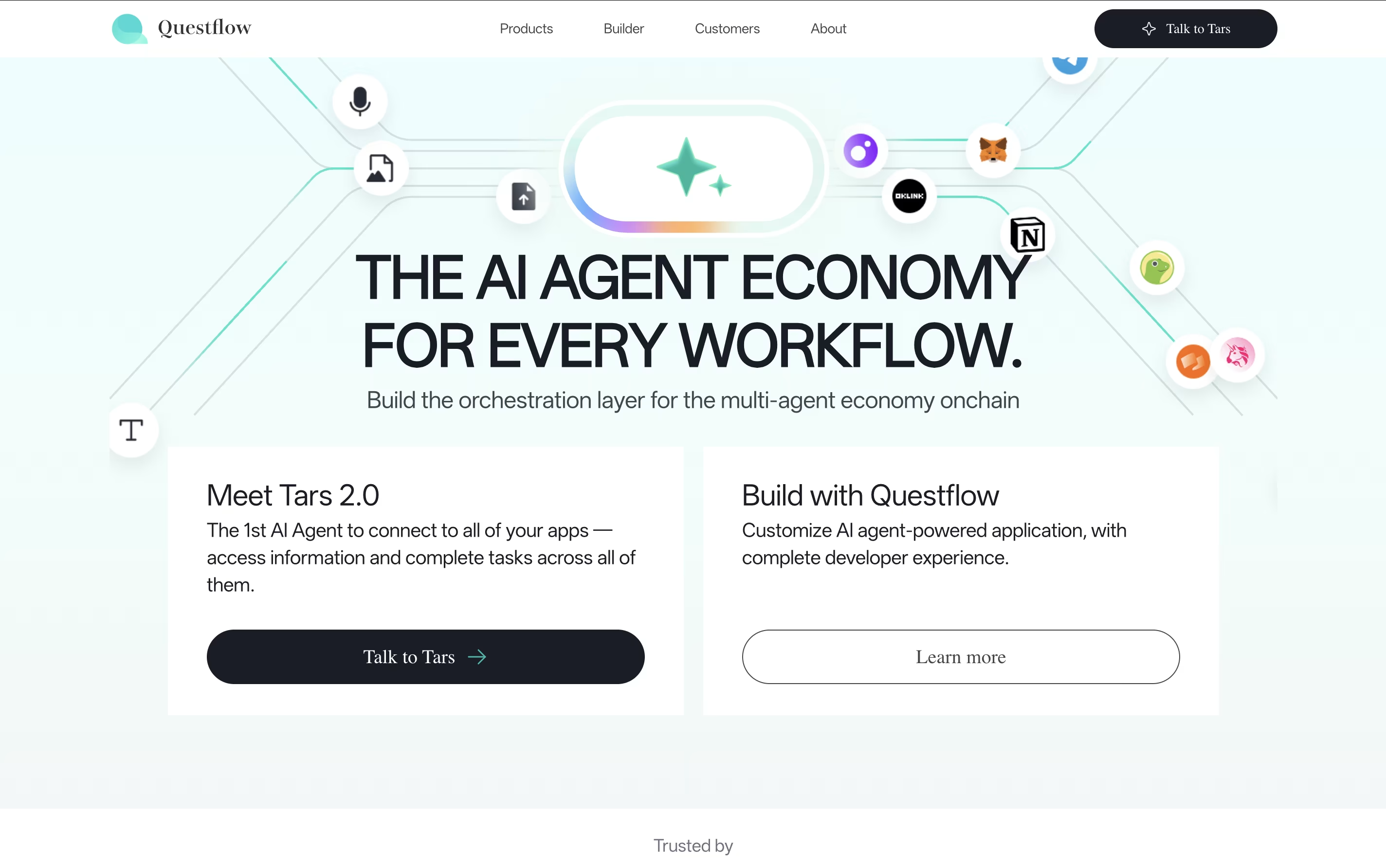
The platform uses a no-code approach, meaning you don't need programming skills to create powerful automation workflows. You simply describe what you want to accomplish, and Questflow's AI agents figure out how to do it. What makes it special is the multi-agent approach - instead of one AI doing everything, different specialized agents work together like a real team.
The platform also uses blockchain technology with QF Coin for secure transactions and rewards. Founded by experts in AI and automation, Questflow aims to make AI accessible to everyone, from small businesses to large enterprises.

AgentX is a tool that helps you create multiple AI agents that work together as a team. Each agent can focus on specific tasks like customer support, sales follow-ups, or data analysis. Unlike simple chatbots, these agents can collaborate with each other to complete complex jobs.
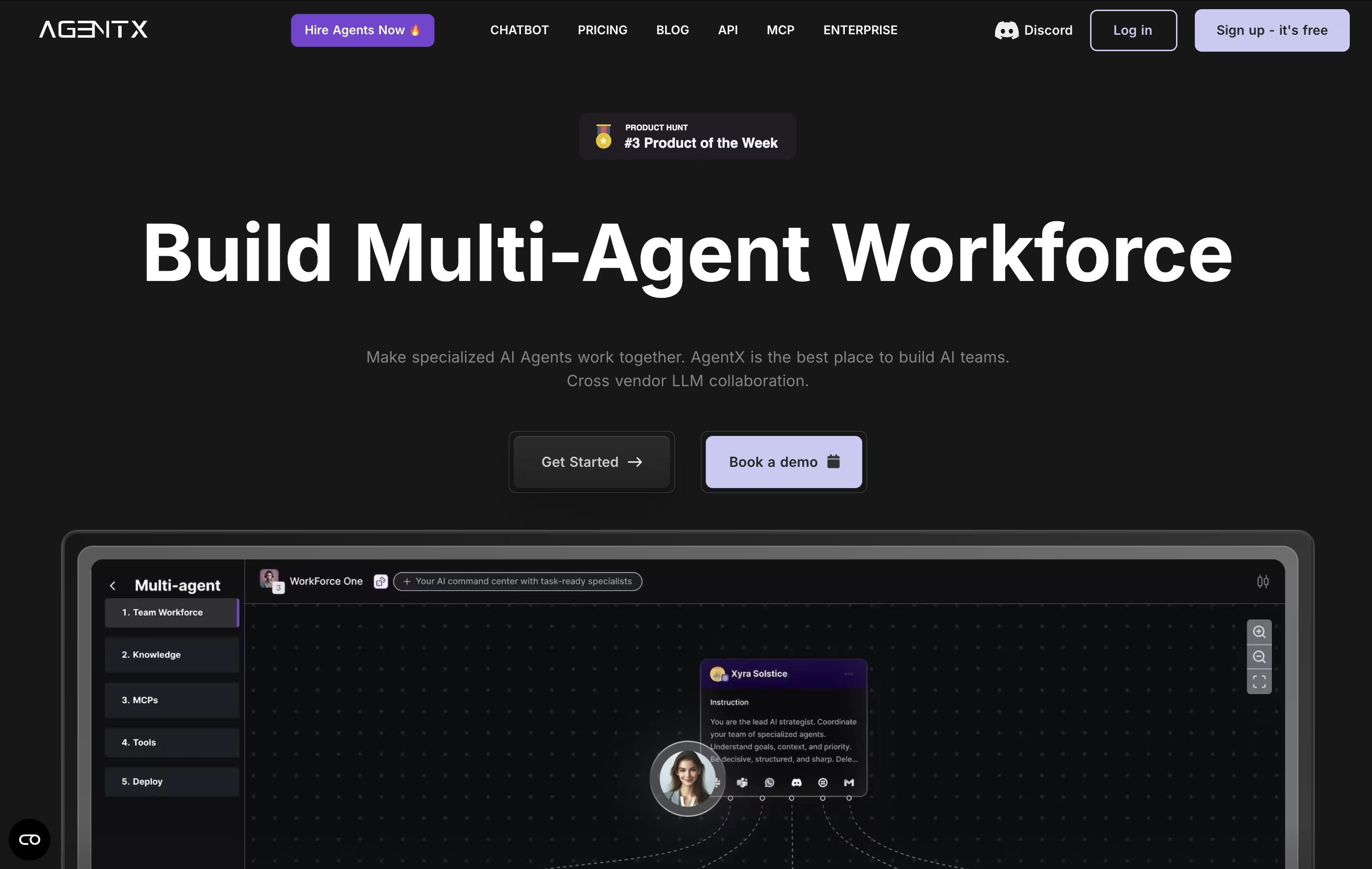
The platform supports all major AI models including GPT-4, Claude, and Gemini. You can choose which model works best for each task. Your agents can access your company documents, connect to databases, and use external tools automatically.
AgentX includes a drag-and-drop builder that makes creating agents simple. You can deploy your agents on websites, messaging apps like Slack and Discord, or use them internally. The system handles everything from simple questions to multi-step business processes without requiring technical knowledge.
GPTBots is a tool that helps businesses create AI agents using a simple drag-and-drop interface. You don't need any programming skills to use it. These AI agents can talk to customers, answer questions, automate workflows, and find information from your company's documents and databases.
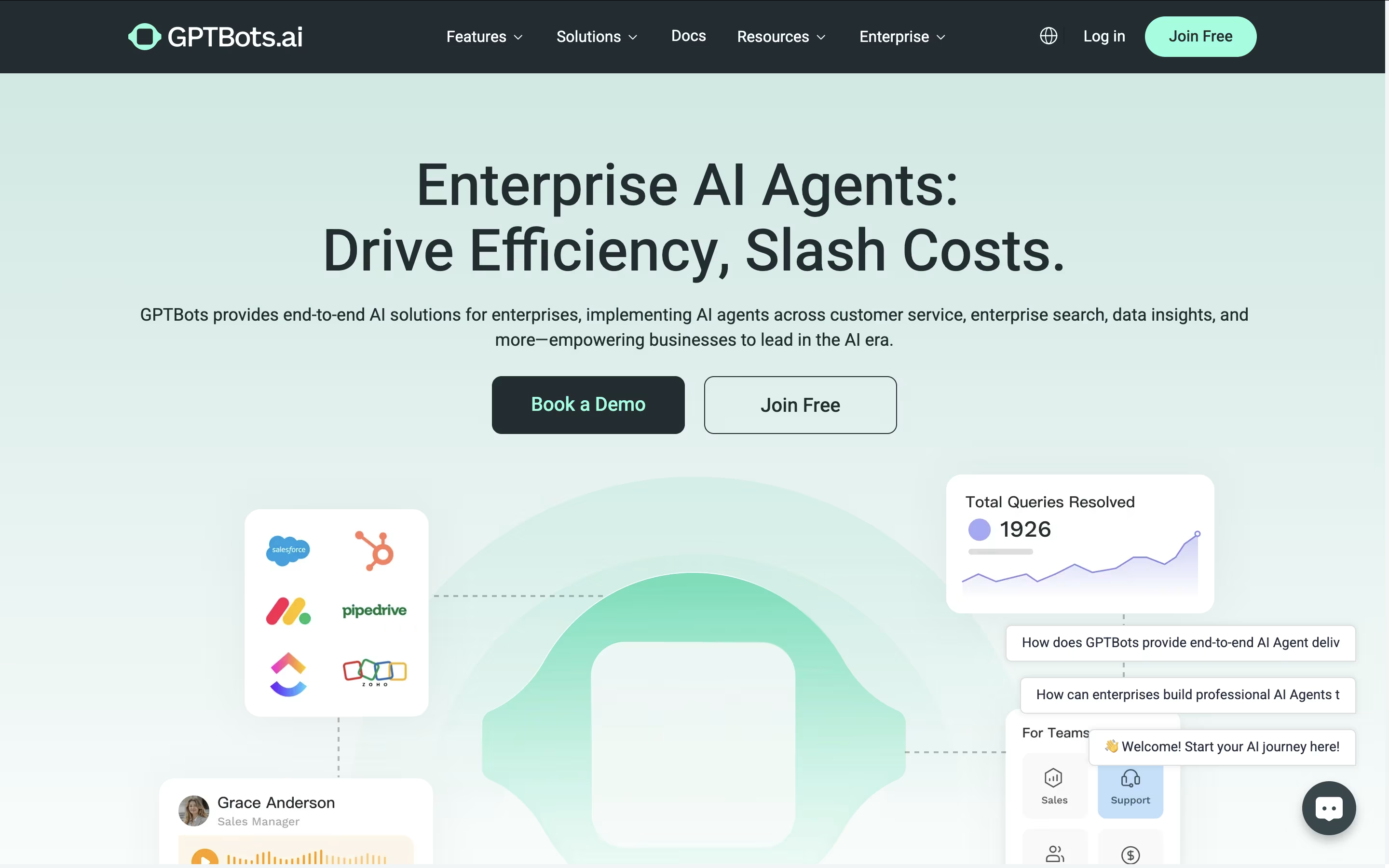
The platform supports multiple types of AI agents. Simple agents work for basic conversations, while flow-agents handle complex processes with multiple steps. Multi-agent systems can work together like a team to solve bigger problems. GPTBots works with popular AI models including ChatGPT, Claude, and DeepSeek.
You can also customize how your AI agents work, what they know, and which tools they can use. This makes GPTBots suitable for many different business needs.

Instead of a plain chat box, camelAI gives its agent a real computer that keeps running and remembers your project. You type what you want in plain English, and it builds a complete application, covering the frontend, backend, database, and API in one go.
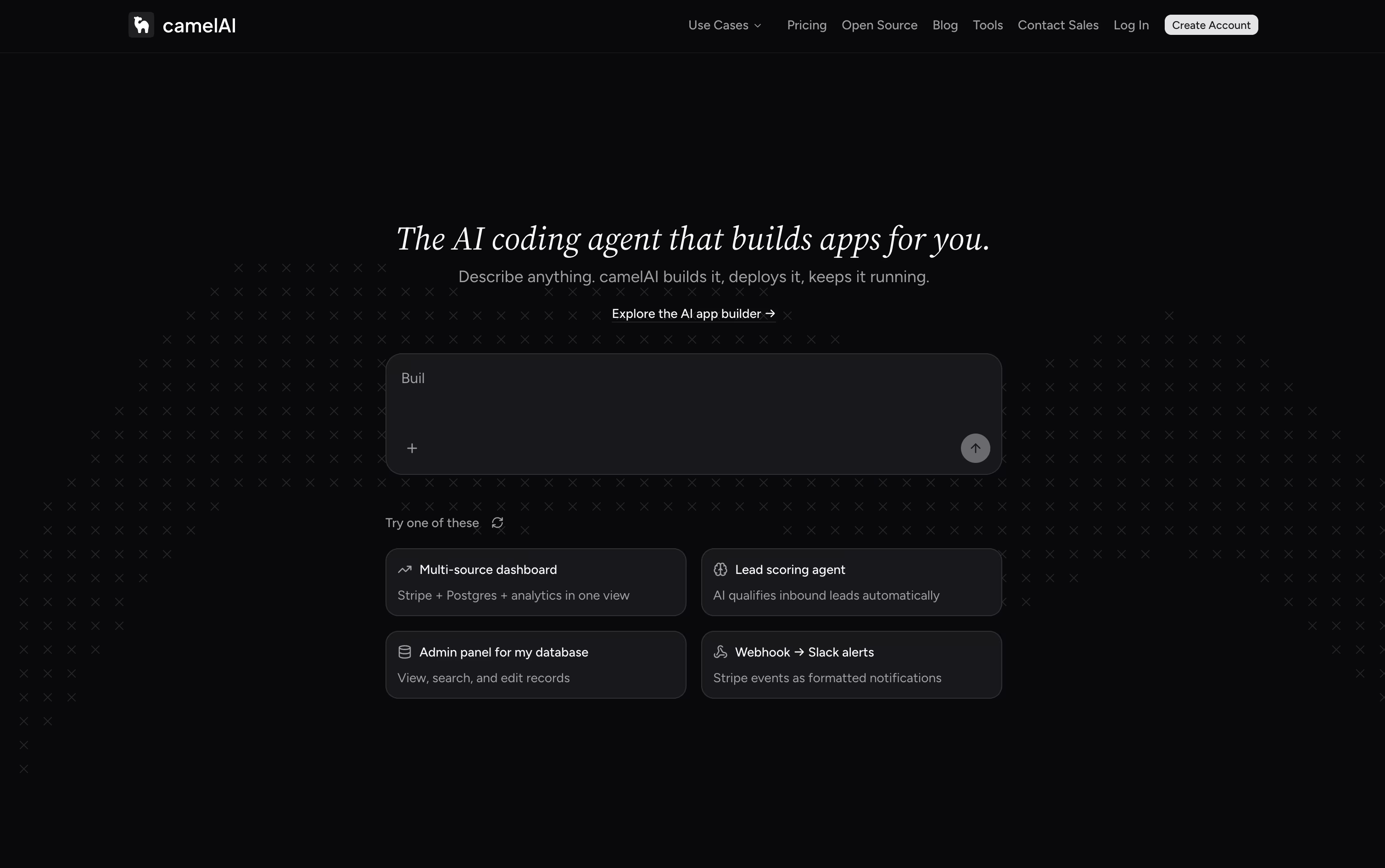
The finished app is published to a live URL right away, with SSL and domain setup handled automatically. Because the workspace saves your files and history, the agent already knows your project when you come back, and you can chat with it over email or Slack too.
Over 50 integrations come ready to use, such as Postgres, Stripe, HubSpot, and Slack, and you can schedule the agent to run jobs on its own, like checking Stripe metrics or emailing a summary report.
Getting started is free, with the Free plan giving 1 workspace, 3 apps, and 5 GB storage using your own API key. The Starter plan runs $10 a month, and the Pro plan, the most popular option, is $40 a month with unlimited apps and domains.
For teams, the Team plan costs $50 per seat monthly with a 3 seat minimum, adding shared workspaces and role based permissions. Enterprise plans are custom priced and include SSO, dedicated support, and compliance features.
Every paid plan comes with a 7 day free trial, and an open source, self hostable version of camelAI is on the way as well.

Think of Manus as an assistant that actually does the work instead of just talking about it. You describe a goal, and it breaks the job into steps, then uses a browser, code, and files to carry it out.
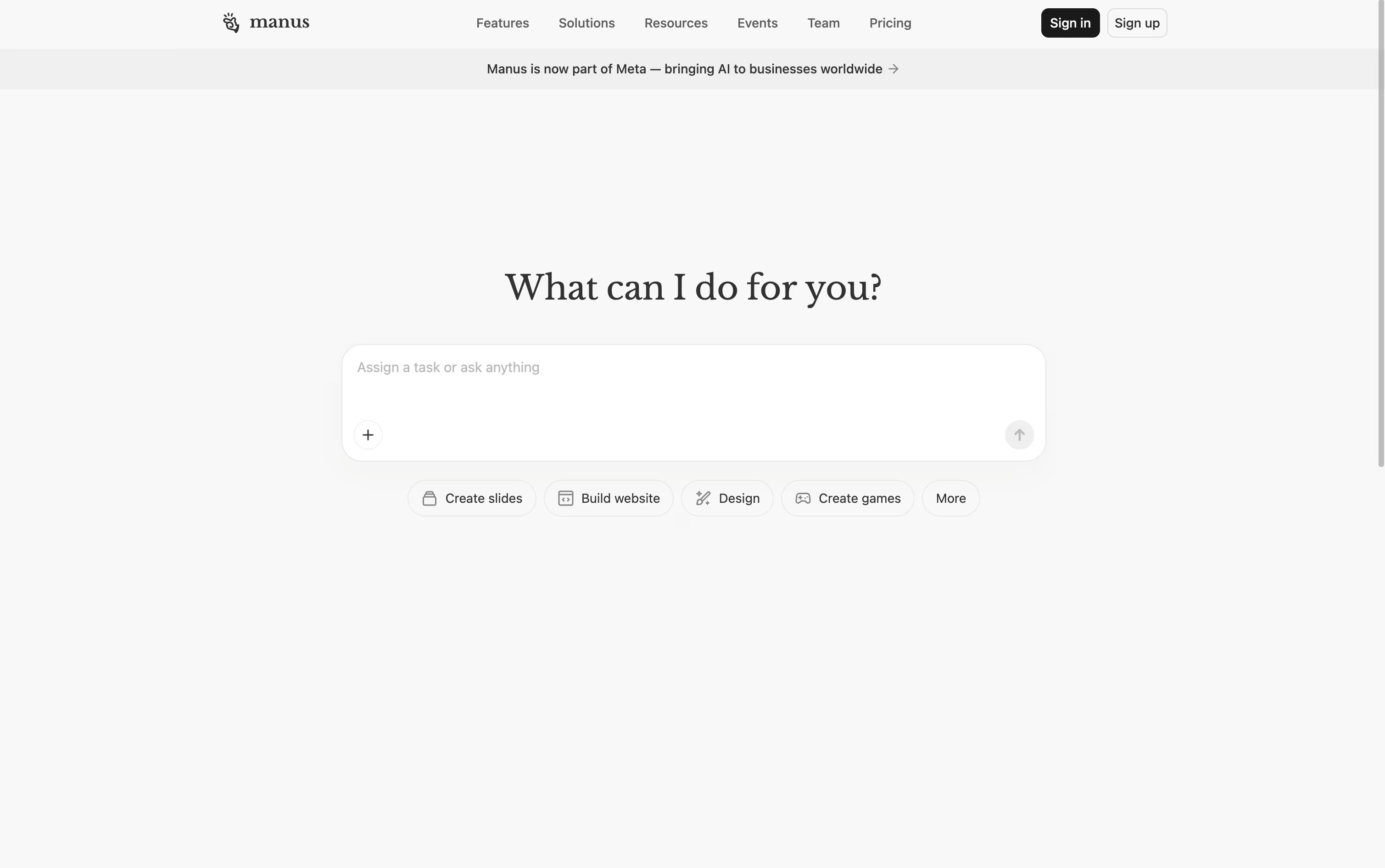
It handles research at scale, builds working websites and apps from a plain description, writes and designs full slide decks, and creates images, video, or music when needed. Since tasks run in the cloud, you can walk away and get notified when it finishes, or stay and guide it along the way.
It fits into tools you already use too, connecting with Slack, email, and Google Drive, plus a Browser Operator that works inside your own browser using your saved logins.
On pricing, the Standard plan is $20 a month with 4,000 credits, the Customizable plan is $40 a month with 8,000 credits, and the Productivity plan is $200 a month with 40,000 credits and a free cloud computer included. Paying yearly saves 17 percent.
Larger teams can move to custom business plans, which come with stronger security and compliance certifications built in.

Moveo.AI is a conversational AI platform that helps businesses build intelligent chatbots and virtual agents without coding. The platform stands out because it uses its own private language models instead of relying on external AI services like ChatGPT or Claude.
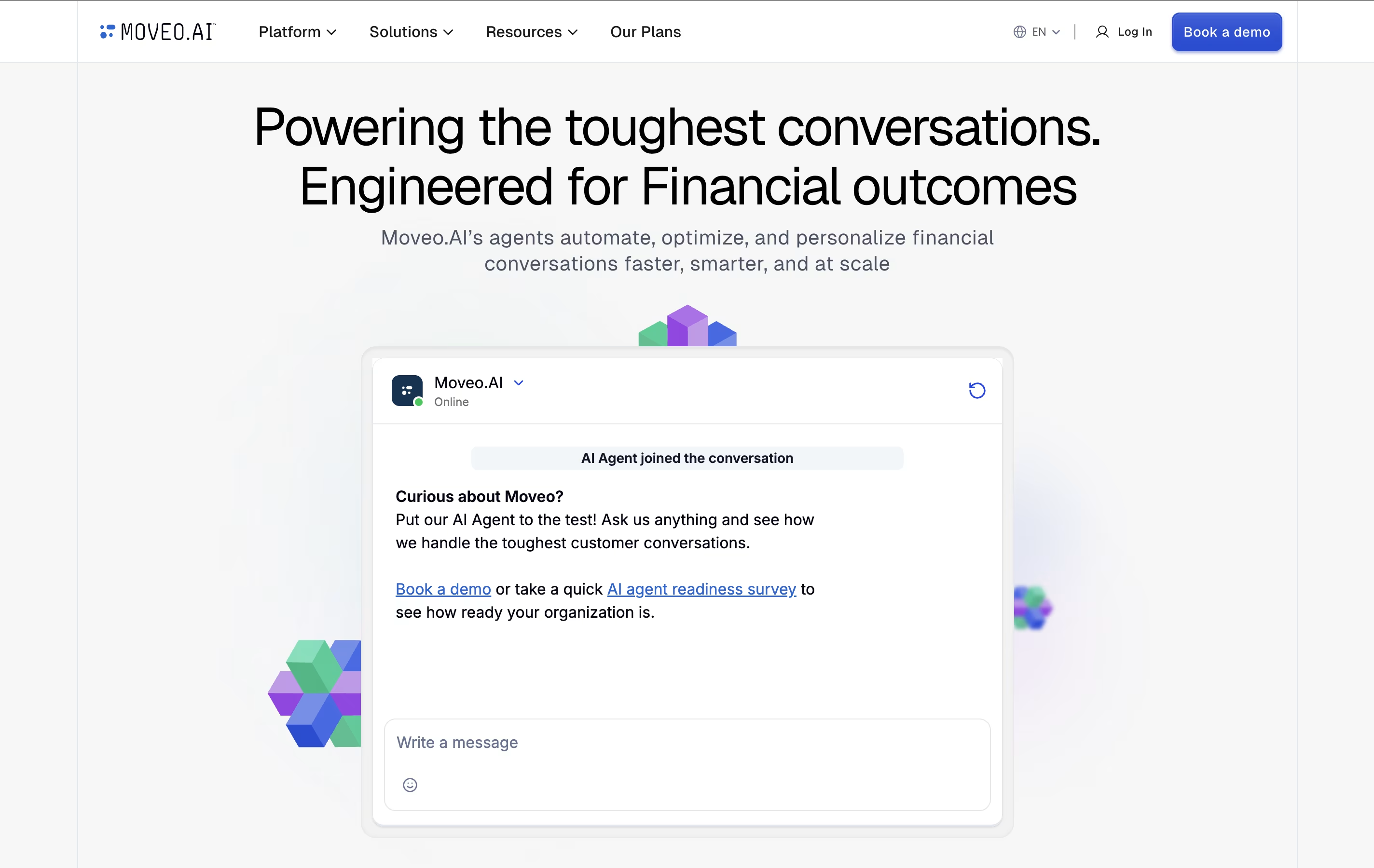
The main difference from regular chatbot builders is sophistication. Moveo's AI agents can understand complex customer requests, handle spelling mistakes and slang, extract important information from conversations, and even learn from past interactions to get better over time. The platform offers a simple drag-and-drop interface that anyone can use to create smart chatbots.
Founded in 2020, Moveo.AI has raised $2.6 million in funding and serves over 2 million monthly users across 21+ languages. The company has offices in New York, Athens, and São Paulo, working with global brands like Allianz, Viva, and Kaizen Gaming. Their focus is making AI accessible to businesses of all sizes.

Trigger.dev is an open source background jobs framework that allows developers to create reliable, long-running tasks directly in their codebase. Think of it as a better way to handle any job that takes more than a few seconds to complete, without worrying about timeouts or server management.
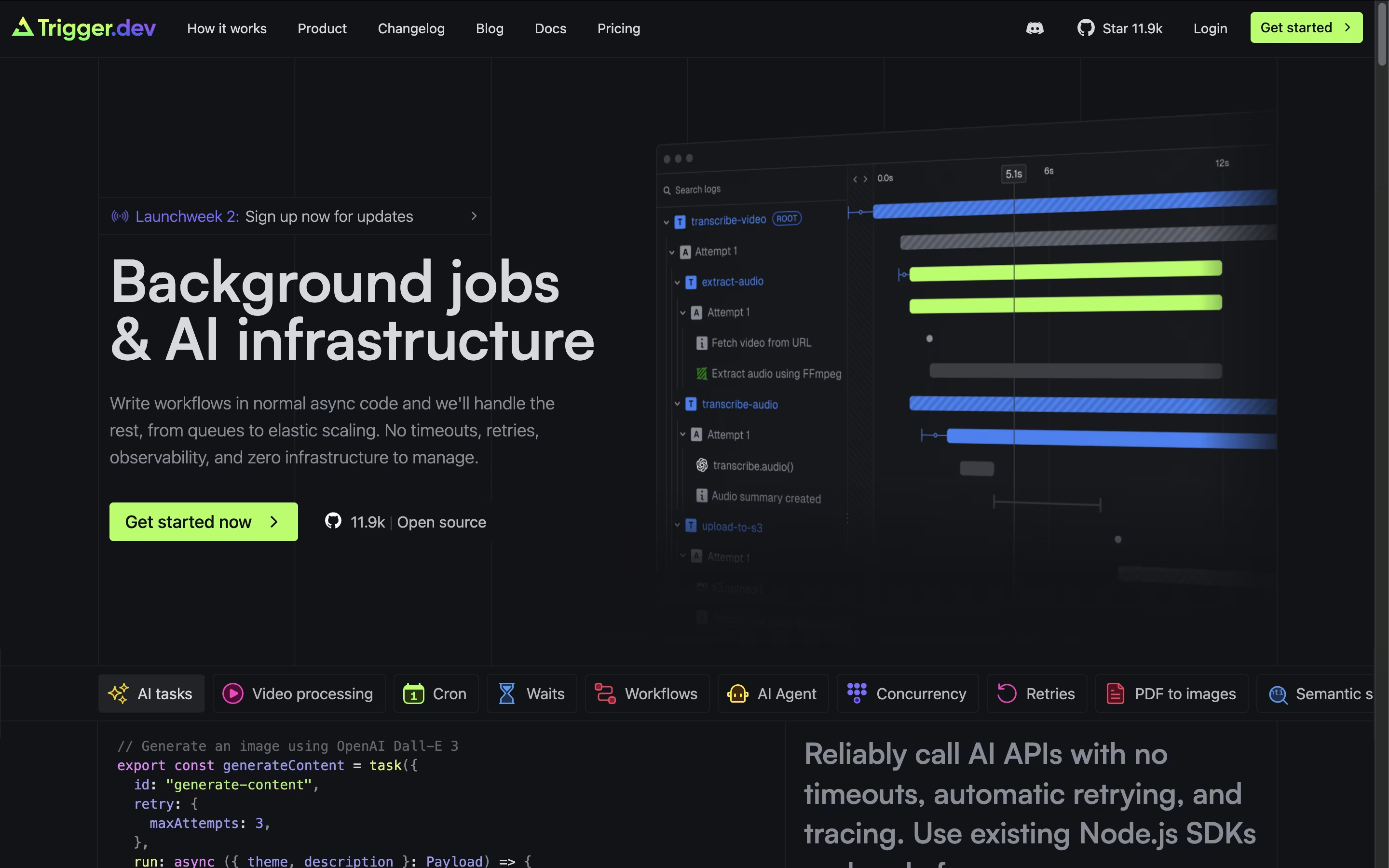
The platform excels at tasks like AI content generation, video processing, data analysis, email campaigns, and complex workflows that traditional serverless functions struggle with. What makes Trigger.dev special is its simplicity - you write regular JavaScript or TypeScript code, deploy it through their CLI, and it runs on their managed infrastructure with no timeout limits.
With automatic retries, real-time monitoring, and seamless integration with your existing codebase, Trigger.dev handles the complex parts of background job management while you focus on building great features. It supports multiple environments and can be self-hosted or used as a cloud service.

Tonkean is an enterprise-grade process orchestration platform that uses artificial intelligence to automate and coordinate business workflows across teams and systems. Think of it as the missing link between all your business applications, creating seamless experiences for employees who need to get things done.
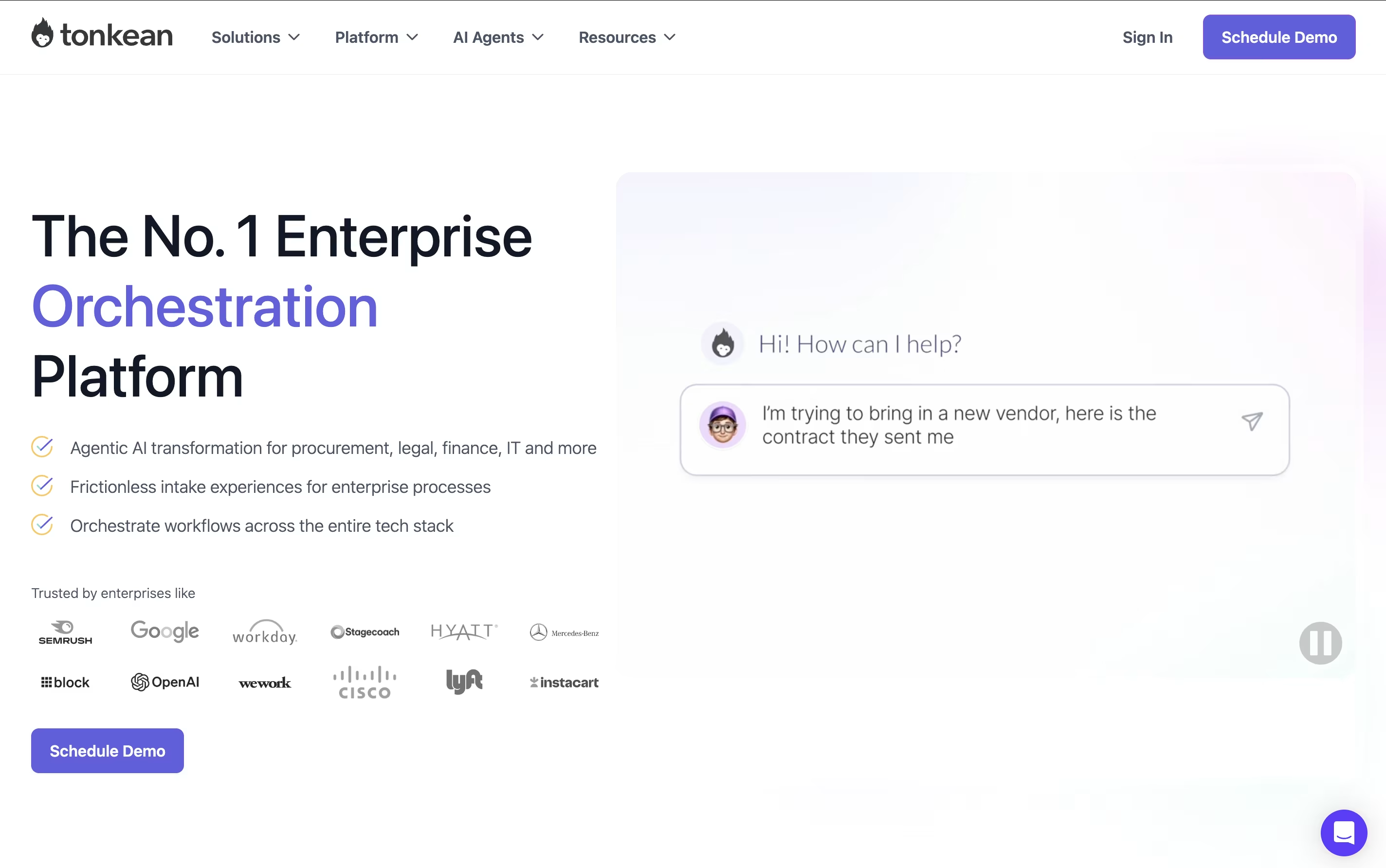
The platform specializes in "process orchestration," which means it doesn't just automate individual tasks—it manages entire workflows that involve multiple people, departments, and software systems. For example, when someone submits a purchase request, Tonkean can automatically check company policies, route it to the right approver, create purchase orders in your procurement system, and send updates to everyone involved.
Founded in 2015 and trusted by companies like Google, Netflix, and Instacart, Tonkean stands out because it requires no coding skills and works with your existing tools. You can build complex automated processes using simple drag-and-drop tools, making it accessible to business users rather than just IT professionals.

Integry is an enterprise-grade integration platform that serves as the bridge between SaaS applications and hundreds of third-party tools. Unlike traditional integration solutions, Integry focuses on embedded, user-facing integrations that work directly within your product interface.
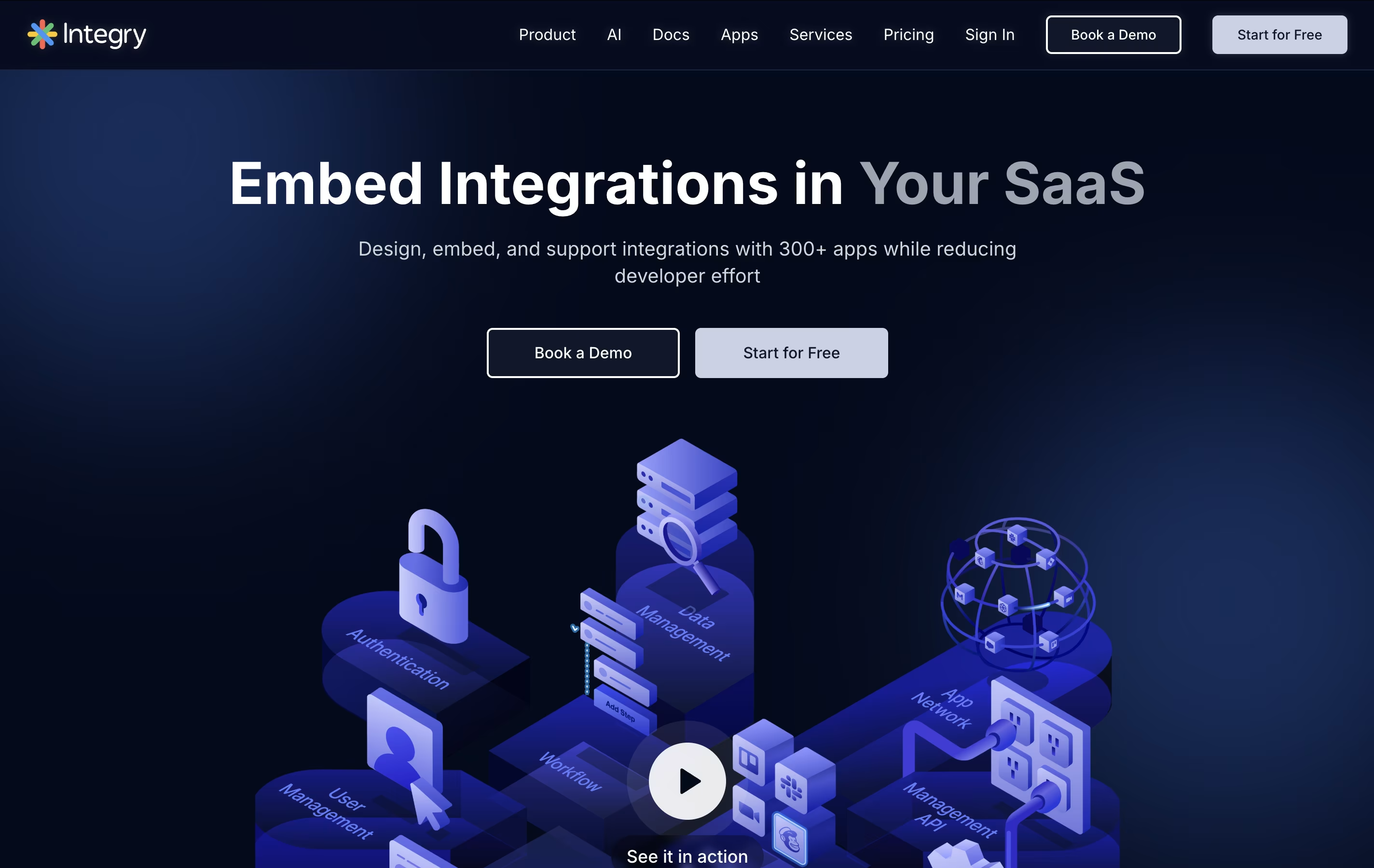
The platform offers AI-powered function calling capabilities, allowing artificial intelligence systems to predict and execute actions across different applications automatically. This makes it particularly valuable for AI agents and chatbots that need to interact with external tools.
Integry handles the complex technical aspects of integrations including OAuth authentication, data mapping, error handling, and API management. The visual programming environment lets product teams build sophisticated workflows without writing code, while the white-label components ensure the integration experience matches your brand perfectly.

Instead of hiring a developer or piecing together separate tools, Base44 lets you describe an app in plain English and get a working version back right away.
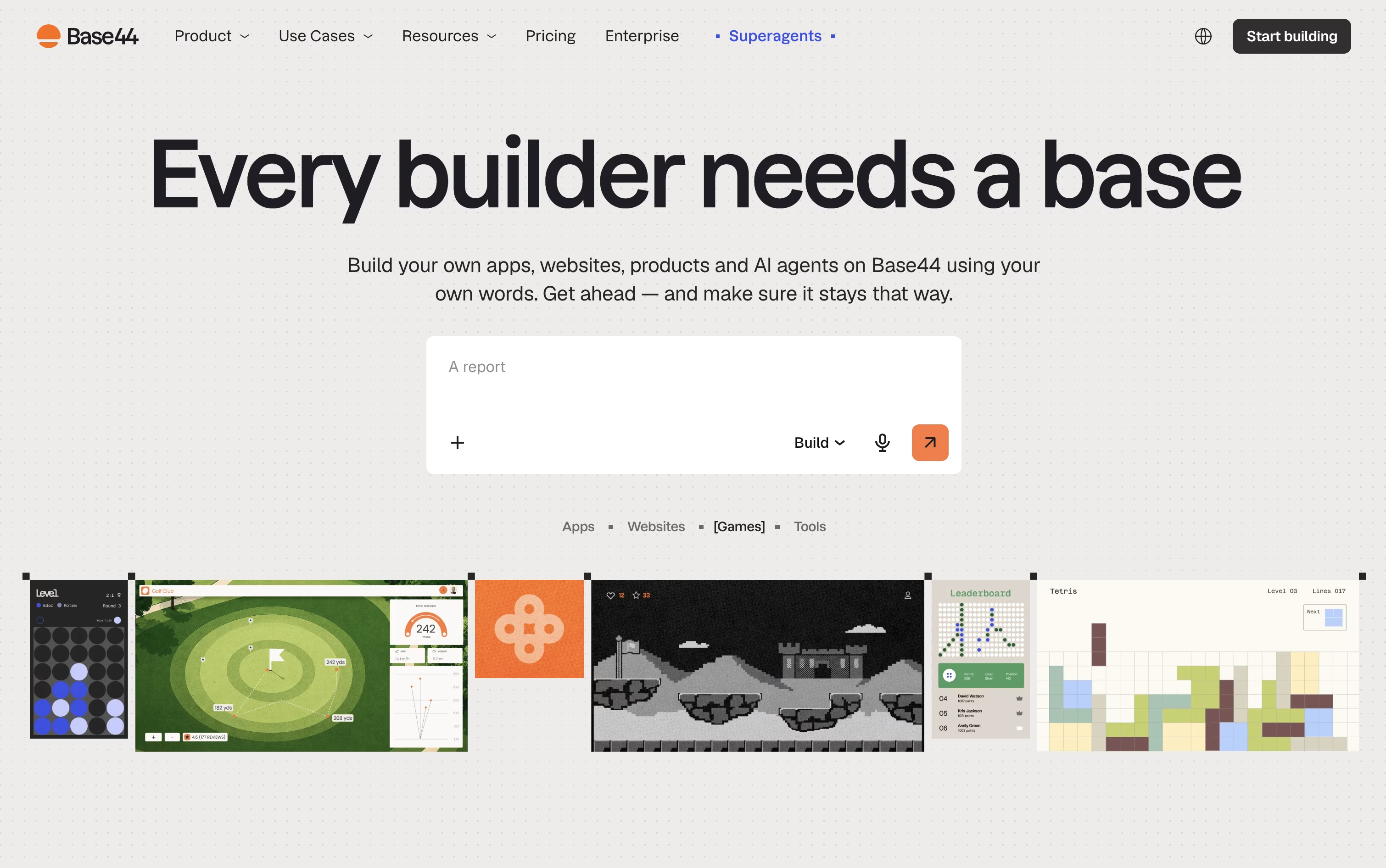
It handles the pages, the database, the login system, and the backend logic in one go, and you refine it further just by chatting with the AI.
Trying it out costs nothing, the free plan gives you 25 message credits a month and room for up to 5 apps.
Once you need more, the Starter plan at $20 a month removes the app limit and opens up code editing, while the Builder plan at $50 a month adds backend functions, AI model choice, and custom domains.
Pro and Elite raise the credit caps for heavier use, and Base44 also builds Superagents, AI helpers that handle tasks like follow-ups and scheduling on their own.
Larger organizations can move to a custom-priced Enterprise plan with single sign-on and dedicated support.