Best 12+ Tools for Voice AI Agent Building in 2026
Last Updated: August 28, 2026
Building an AI system that can hold a natural spoken conversation involves more than text-based chat logic. Voice AI Agent Building tools help design and configure AI agents capable of voice-based interaction.
Developers use voice agent building tools to create assistants that can handle spoken conversations end to end.
 VoxImplant
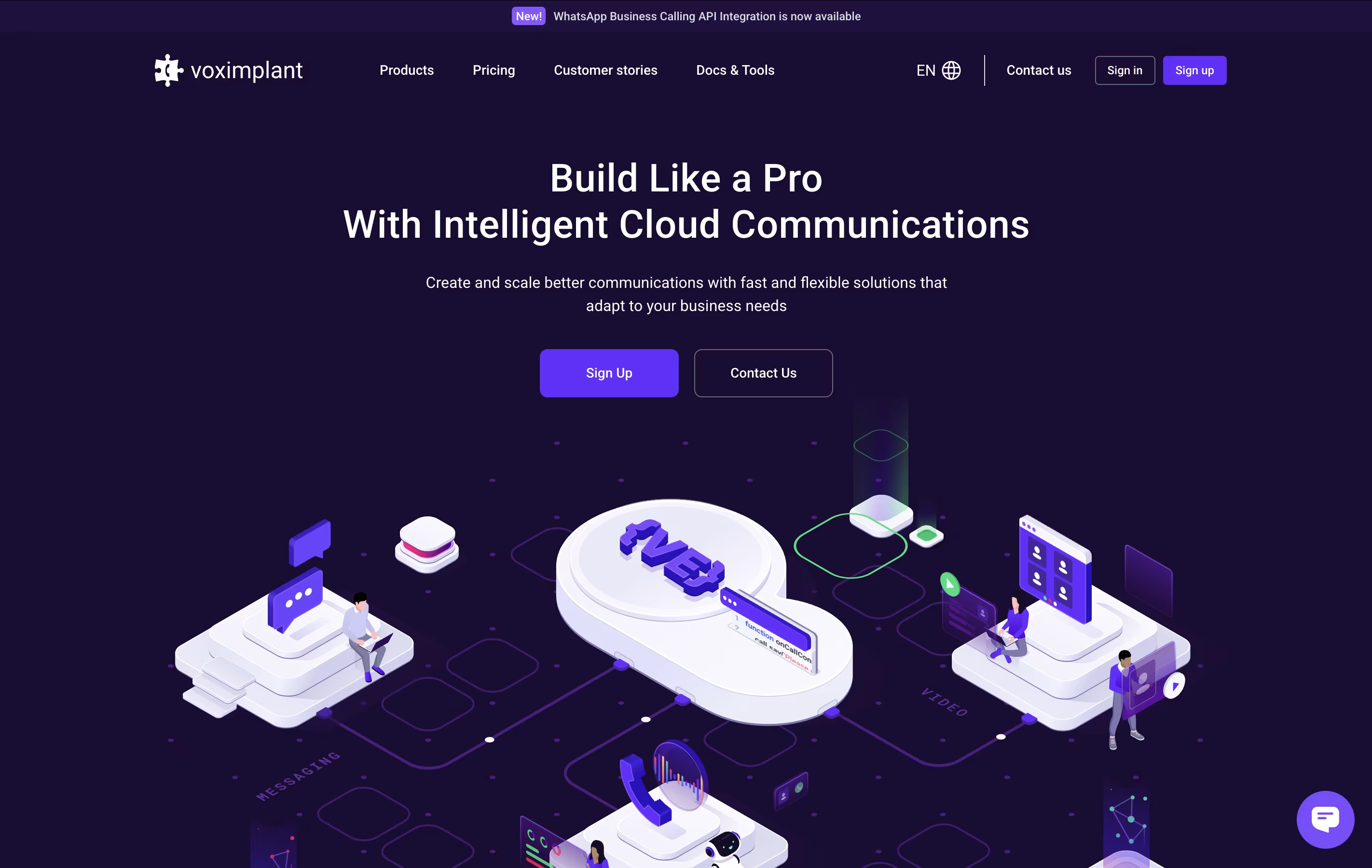 VoxImplantCloud Communication APIs for Voice, Video & AI Contact Centers,
  VideoSDK
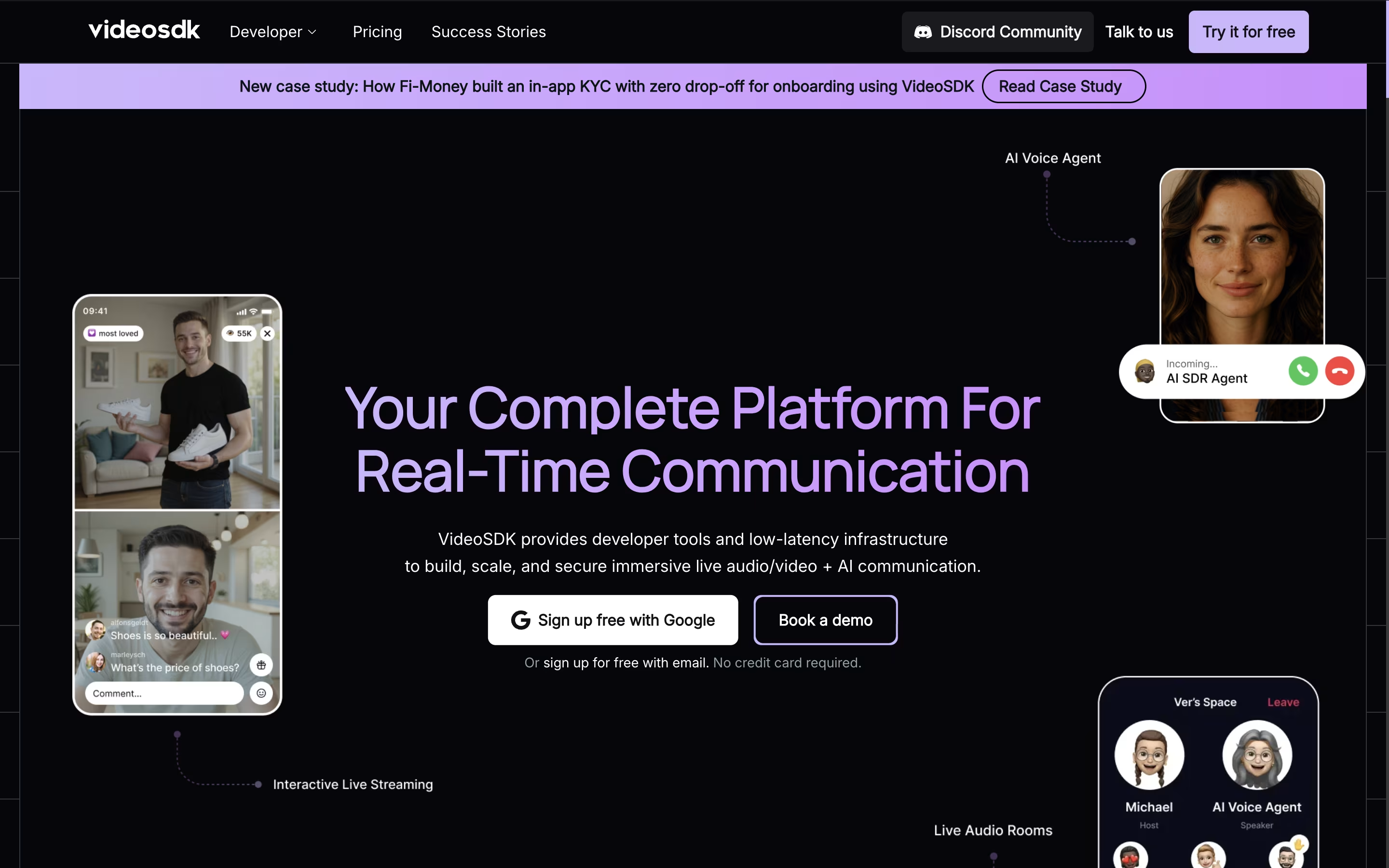 VideoSDKReal-Time Video & Voice API Platform for Developers, and
  LiveKit
 LiveKitOpen-Source Real-Time Video, Audio & AI Platform are the best for Voice AI Agent Building. So, let’s take a closer look at all 12+ tools.

VoxImplant is a comprehensive cloud communications platform that enables businesses and developers to integrate voice, video, and messaging capabilities into their applications and services. Founded in 2013 and based in Palo Alto, the company serves millions of users worldwide through its innovative Communication Platform as a Service (CPaaS) solution.
The platform consists of two main products: VoxImplant Platform, which provides APIs and SDKs for custom development, and VoxImplant Kit, an omnichannel contact center solution. VoxImplant Platform supports multiple programming languages and frameworks including iOS, Android, React Native, Flutter, Unity, and web applications. The service includes advanced features like AI-powered voice bots, natural language processing, call recording, transcription, and seamless integration with popular AI providers like OpenAI, Google Gemini, and Dialogflow, making it perfect for creating sophisticated communication experiences.
VideoSDK is a real-time communication platform that provides APIs and software tools for developers to build video and voice applications. Instead of creating video calling systems from scratch, developers can use VideoSDK's ready-made tools to add features like video meetings, live streaming, screen sharing, and AI-powered voice agents to their apps.
The platform works across all devices and operating systems, including web browsers, mobile apps, and desktop applications. It uses advanced technology to ensure smooth video quality even with poor internet connections and provides global infrastructure with 150ms worldwide latency.
VideoSDK offers both free and paid plans, starting with 10,000 free minutes every month. This makes it perfect for startups, small businesses, and large companies that need reliable video communication features without building everything from scratch.
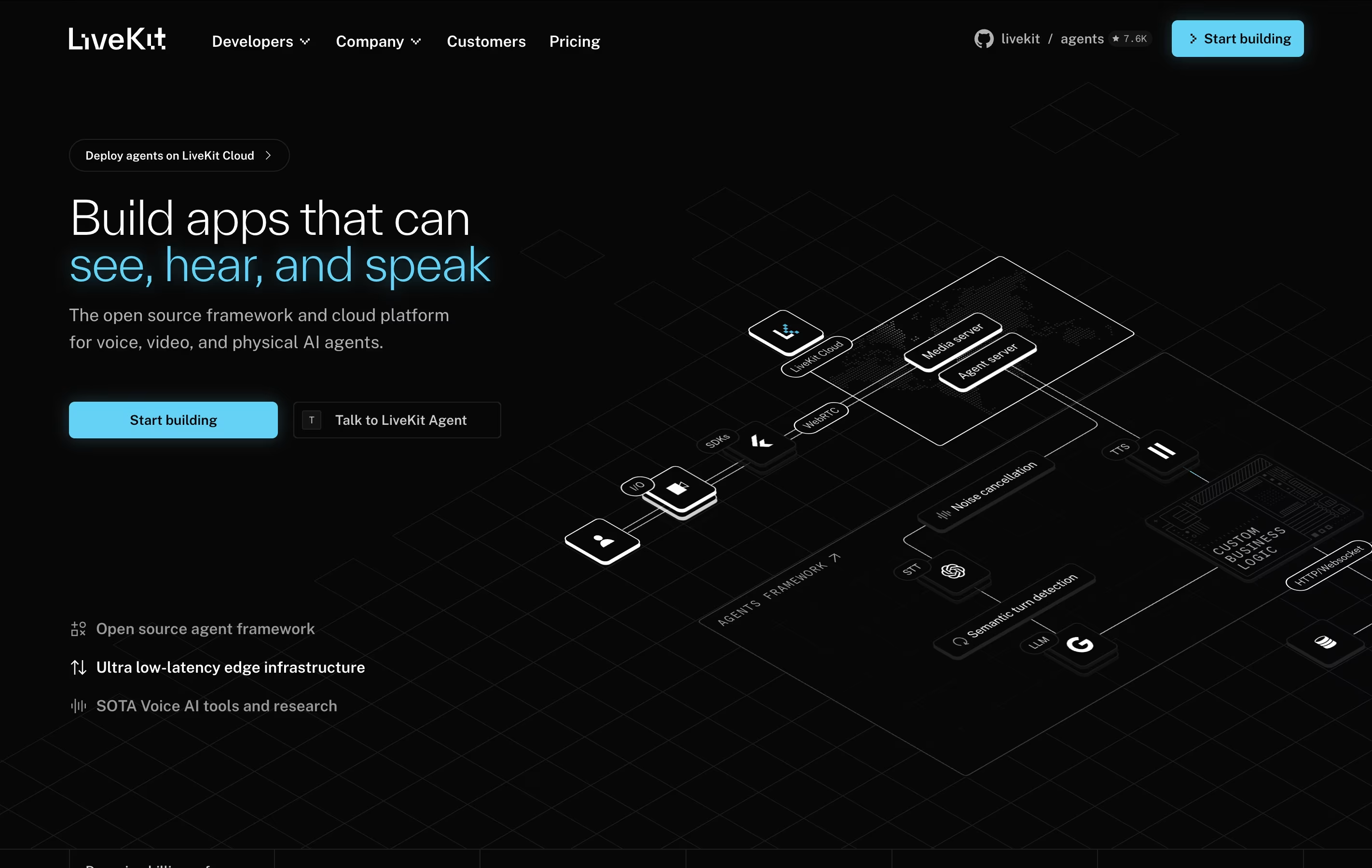
LiveKit is a complete real-time communication platform that uses WebRTC technology to enable low-latency audio, video, and data exchange between users and AI agents. Unlike traditional communication tools, LiveKit is built specifically for developers who want to create custom real-time experiences.
The platform consists of several parts: the open-source LiveKit server that handles media routing, client SDKs for all major platforms, and LiveKit Cloud for managed hosting. It uses a Selective Forwarding Unit (SFU) architecture, which means it can efficiently handle many participants without heavy server processing.
LiveKit is especially strong for AI applications. It can connect voice agents to phone systems, enable real-time transcription, and support multimodal AI that can see and hear simultaneously. Whether you want to build a simple video chat or a complex AI assistant, LiveKit provides the foundation you need.

Retell AI helps you build AI voice agents that actually hold a conversation, instead of forcing callers through a rigid phone menu.
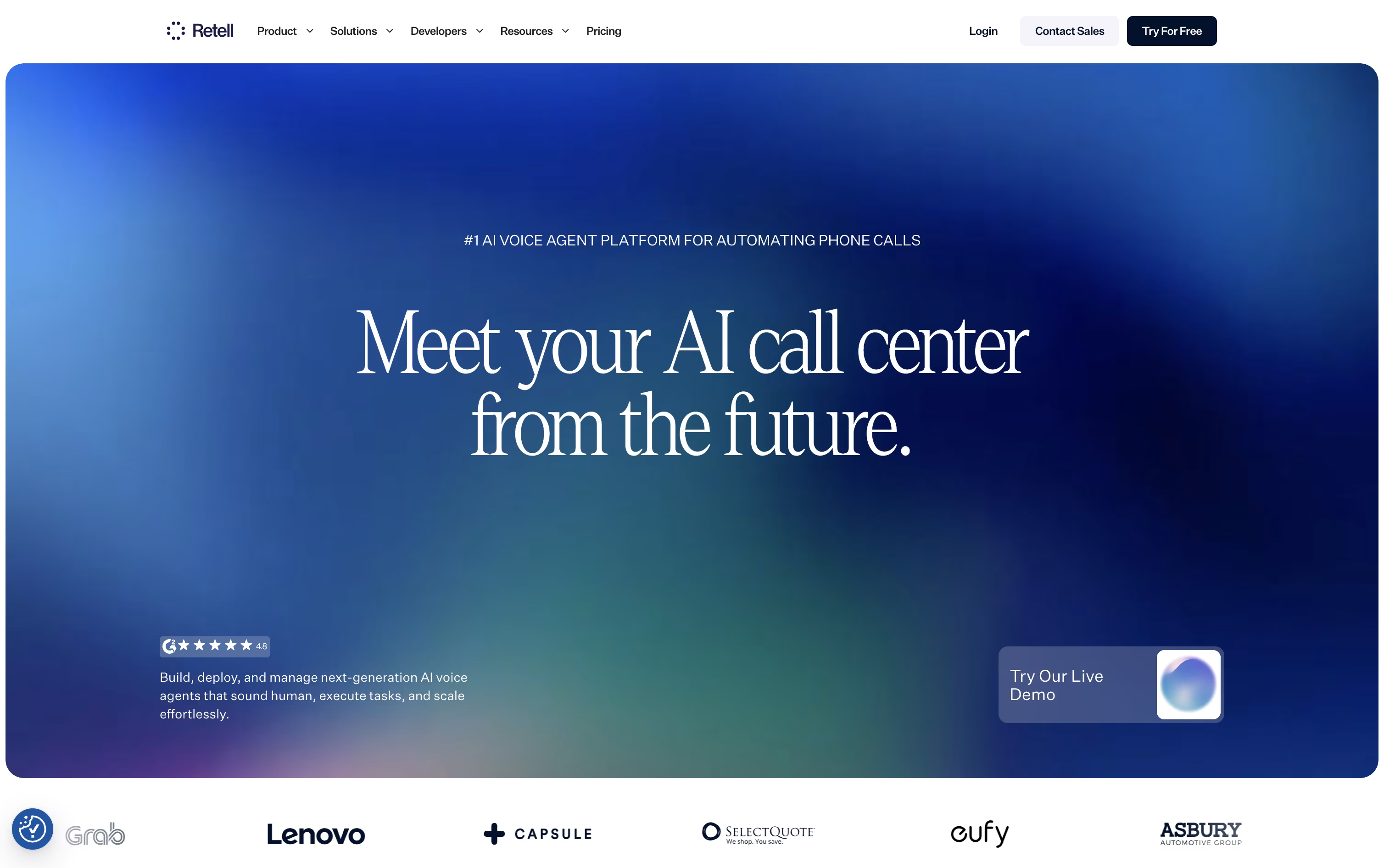
Agents can be built with a node based flow builder for structured calls, or with prompts for more flexible conversations, and they can pull from a knowledge base or your CRM while talking.
Mid call, an agent can book an appointment, send an SMS, detect voicemail, or hand the caller to a human with full context passed along.
On the pricing side, everything runs pay as you go. Voice agents typically cost between $0.07 and $0.31 per minute based on the LLM, voice, and telephony chosen, and chat agents start around $0.002 per message. Signing up is free and comes with $10 in credits plus 20 free concurrent calls.
Bigger organizations can choose the Enterprise plan instead, which is custom priced and includes a dedicated server, custom contracts, single sign on, and full time dedicated support.
Security wise, it is HIPAA and GDPR ready with SOC 2 certification, and it includes simulation testing and live monitoring so you can see exactly how calls are going.

NLPearl helps you build AI agents that actually talk with customers on the phone or over text, rather than reading from a script or bouncing calls around a menu.
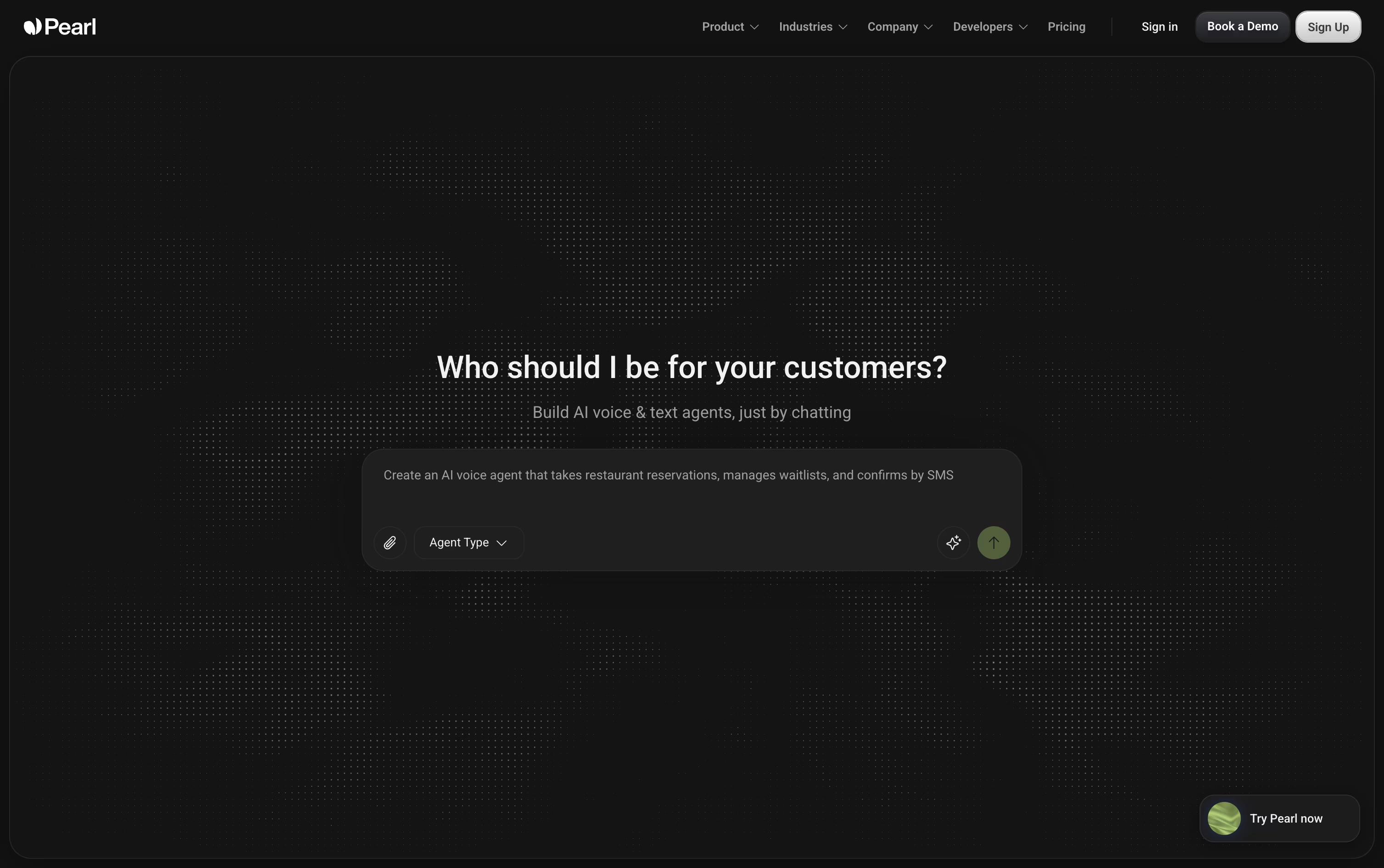
Using PearlVibe, you type out what the agent should do and it puts together the conversation rules, knowledge, and actions like booking a slot or sending a follow up message.
The Starter plan costs $50 a month for 2,500 credits and 1 agent, while Companion at $195 a month steps up to 15,000 credits and 5 agents, and Manager at $779 a month gives 65,000 credits and 10 agents.
Per minute voice pricing and per message text pricing both drop as you move up the tiers, and Enterprise plans are custom priced with dedicated servers and unlimited extra users.
It also connects with Twilio, your own VoIP setup, and more than 100 other business tools, all backed by GDPR and SOC 2 security.

Synthflow lets businesses build AI voice agents without writing code, handling phone calls as well as chat, SMS, and WhatsApp messages from one platform.
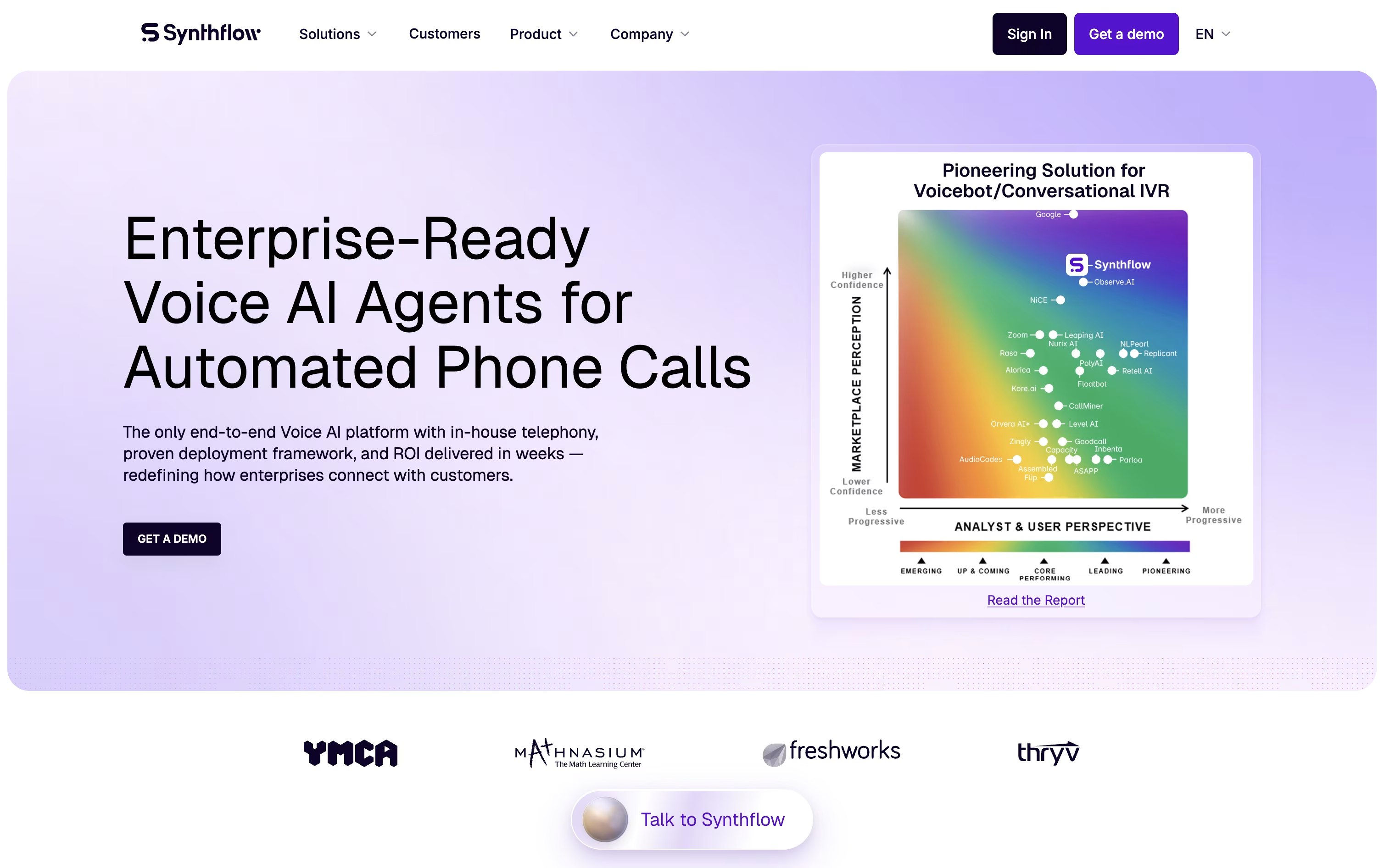
Instead of leaning only on outside phone providers, it operates its own telephony network, which helps keep response times low and calls reliable, with backup systems if anything fails.
Before an agent goes live, it can be run through many simulated calls to catch problems early, and once live, teams get real time monitoring, call logs, and analytics to track how it performs.
Agents can also plug into over 200 outside tools, such as CRMs, calendars, and contact center platforms, letting them schedule appointments, update customer records, and pass difficult calls to a person with the full conversation history attached.
On pricing, Synthflow publishes details only for its Enterprise tier, starting from $30,000 a year, roughly $2,500 monthly, though the real cost is shaped by things like call volume, telephony needs, integrations, and security requirements.
This Enterprise tier also bundles in SLA terms, dedicated support, setup help, staff training, and continued optimization, aimed at organizations wanting a fully supported rollout.

Building a voice AI agent from scratch usually means wiring together speech recognition, a language model, and speech synthesis yourself. Vapi handles that real-time plumbing so developers can spend their time on prompts, tools, and the actual conversation flow.
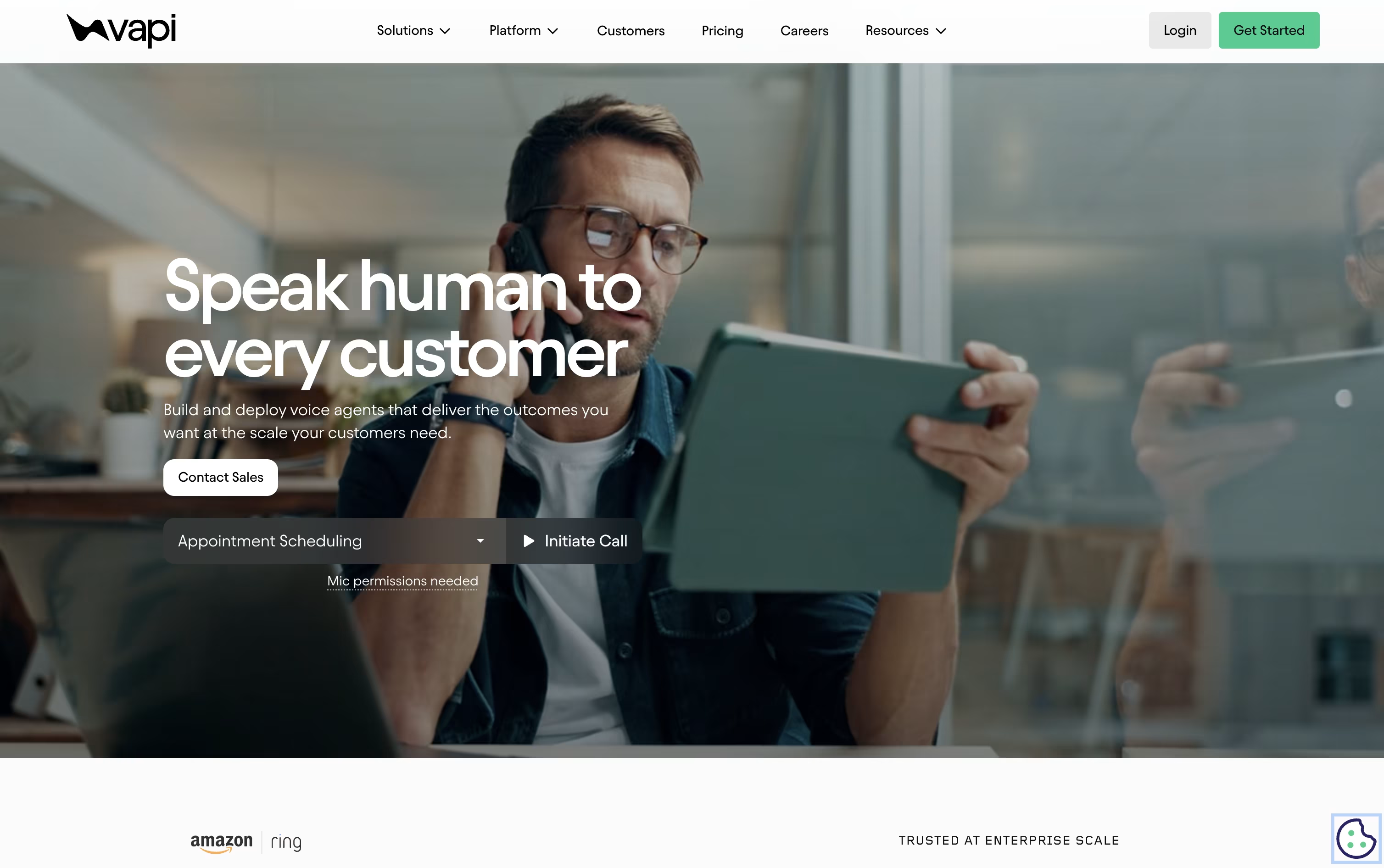
Each agent is made up of a speech to text step, a language model, and a text to speech step, all of which can be swapped or brought in with your own API keys. Agents can place or receive phone calls, trigger outside tools and APIs, and pass conversations between specialized assistants when a task gets more complex.
Well known teams such as Amazon Ring and Intuit rely on Vapi for support, sales, and scheduling calls, backed by built-in monitoring, recordings, and analytics for ongoing improvement.
The Build plan is usage based, starting at $0.05 per minute for voice calls and $0.0005 per message for chat, and it includes 60+ minutes and 10 concurrent calls. Model provider costs are charged at cost, and fall to $0 when you use your own API key.
Bigger organizations can choose Scale, an annual contract with a fixed platform fee, committed volume, and enterprise extras like SSO, SOC 2, and a dedicated support team, with pricing shared on request.

Bland AI lets teams create phone agents that carry on real, back and forth conversations rather than reading from a fixed script. It works for both calls coming in and calls going out.
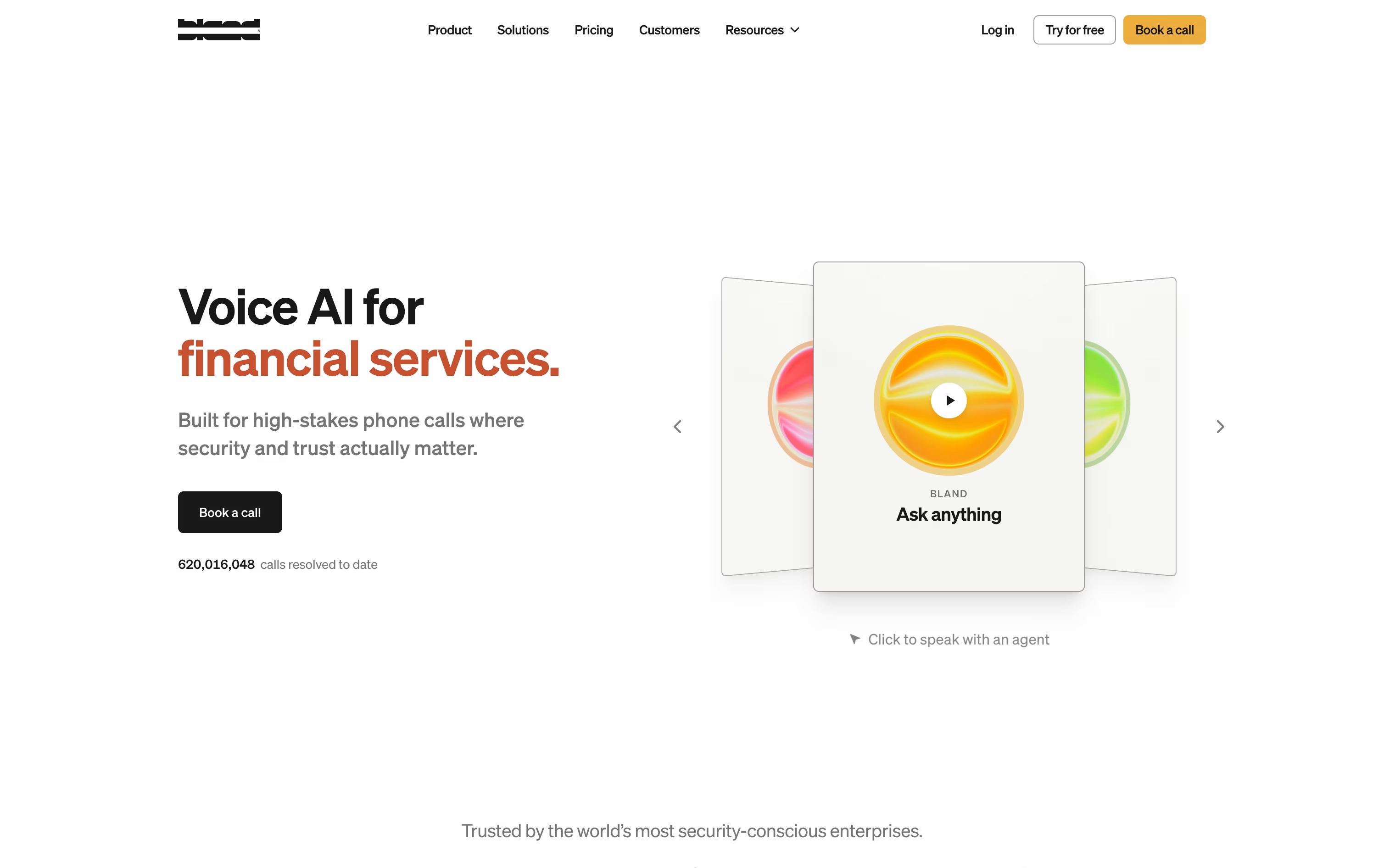
It is mostly used by businesses that need to follow rules closely, like healthcare, insurance, and financial services, where a call still needs to sound natural even while following compliance steps.
Building an agent can be done visually, through plain English instructions, or directly through the API, and agents can pull in company documents, trigger outside tools, and pass a call to a human when needed.
On pricing, the Start tier is $0.14 per minute with no monthly charge. Build moves to $0.12 per minute with a $299 monthly fee, and Scale lowers this further to $0.11 per minute with a $499 monthly fee, each unlocking higher call volumes.
Enterprise pricing is custom and brings dedicated infrastructure, on prem options, custom voices, and added security like single sign on and signed agreements for regulated data.
Because the voice and language models are built in house, calls tend to hold up well even during long or unpredictable conversations.

Tavus is an AI video platform that creates digital twins capable of both generating scripted videos and having real-time conversations. Think of it as your personal video clone that can speak any language, discuss any topic, and appear in unlimited videos without you ever recording again.
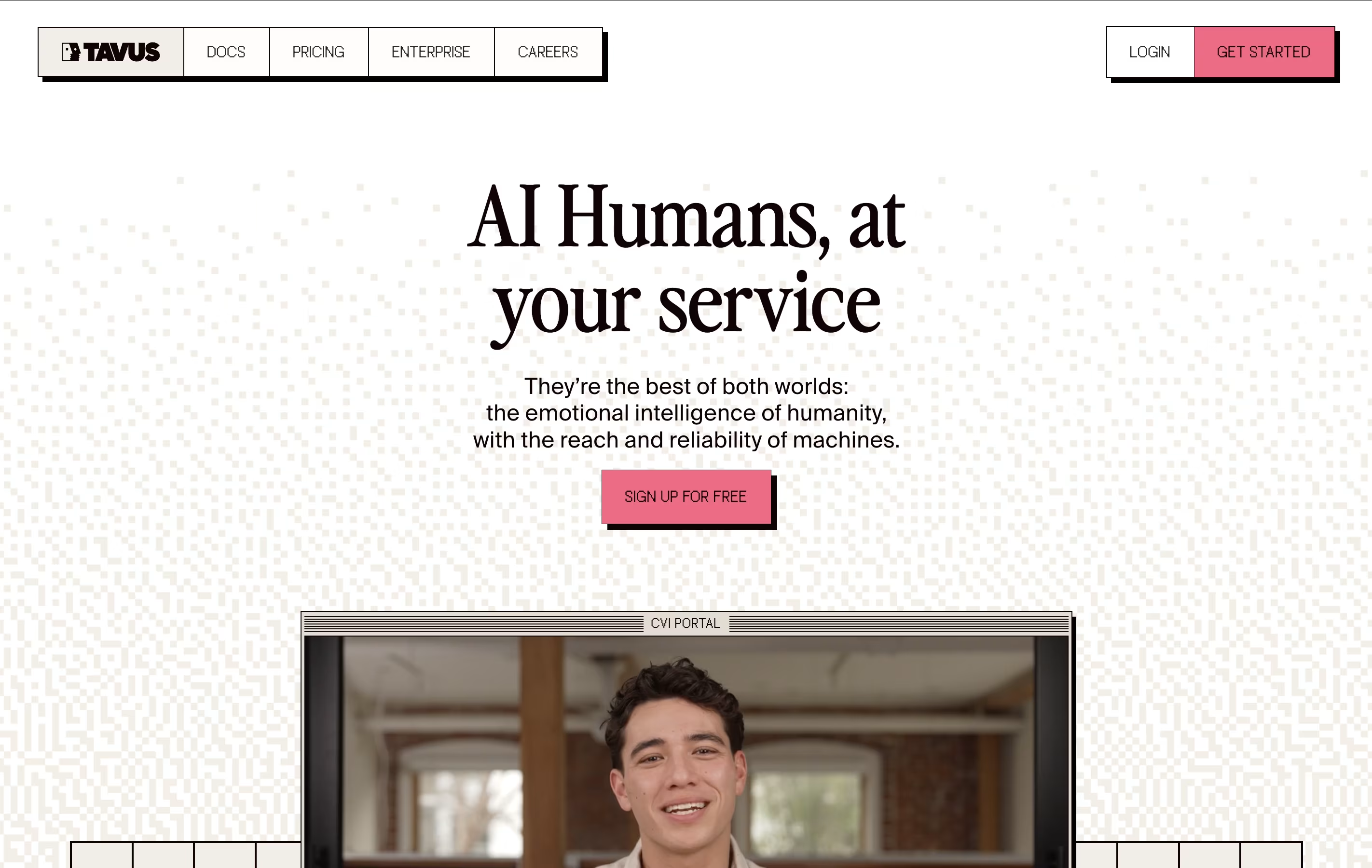
The platform uses advanced AI models including their Phoenix technology to generate realistic facial movements, expressions, and voice synchronization. What sets Tavus apart is its dual capability: you can either create traditional video content from text scripts or build interactive conversational experiences where your digital twin responds to live questions and conversations.
The technology works by analyzing your facial features, voice patterns, and speaking style from just two minutes of training footage. Within 6-9 hours, you have a digital replica that looks, sounds, and behaves like you, ready to create unlimited content or engage in real-time conversations with anyone.
Cloudonix is a "Communications Platform as a Service" (CPaaS) that provides voice APIs, SIP trunking, and development tools for building voice applications. The platform is designed to add "superpowers" to AI voice agents by connecting them to phone systems, carriers, and business applications.
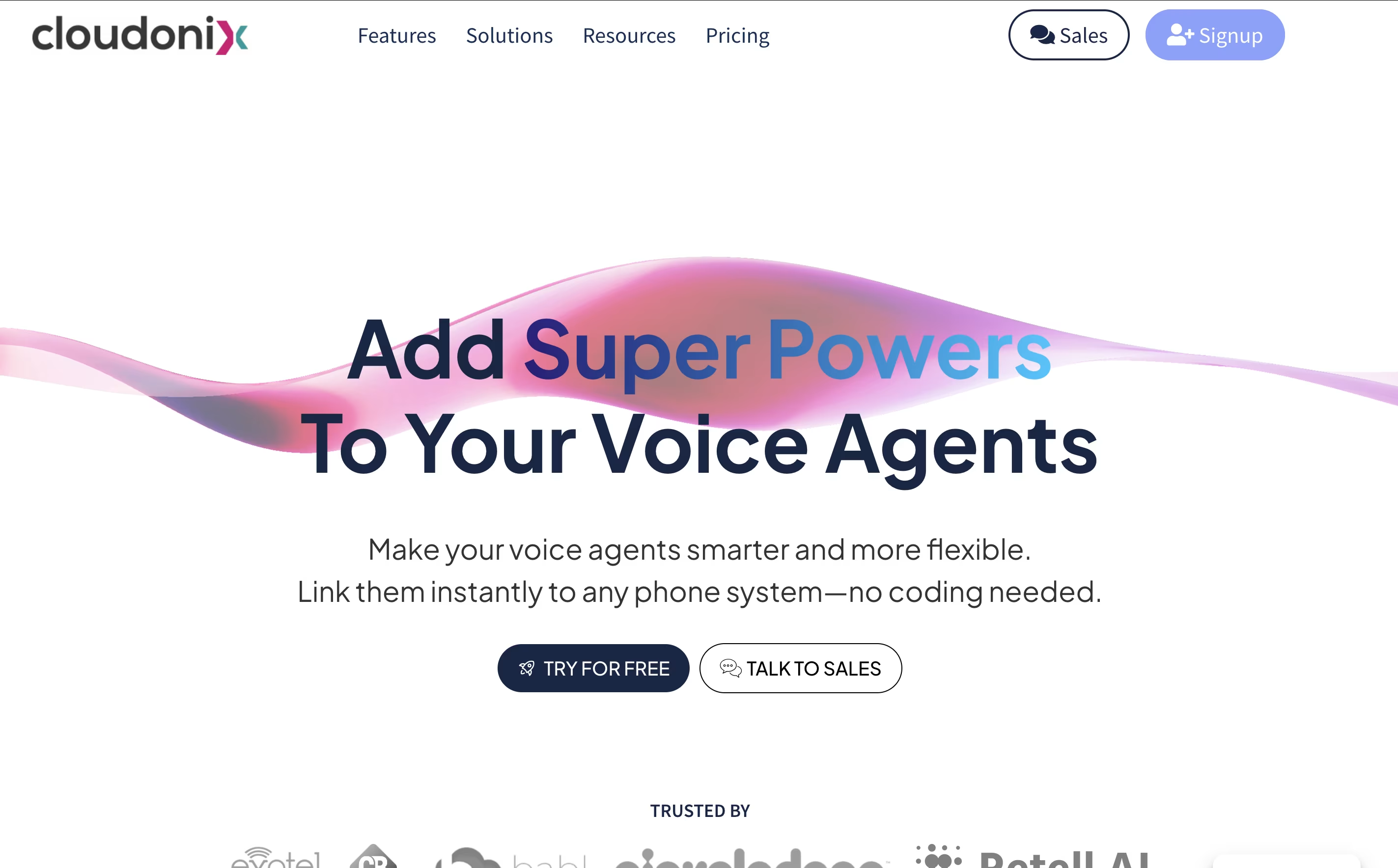
It uses a special programming language called CXML (Cloudonix XML) that makes building voice apps simple. The platform also offers no-code tools through Make.com integration, so businesses can create voice solutions without programming skills.
Cloudonix supports popular AI voice platforms like VAPI, ReTell, and 11Labs, making it easy to connect voice agents to real phone calls. It also provides mobile and web SDKs for developers who want to add voice calling features to their apps.

Voiceflow is a collaborative AI agent platform that allows teams to design, develop, and deploy conversational AI experiences without coding. Think of it as a visual builder for smart chatbots and voice assistants that can understand and respond to customer questions naturally.
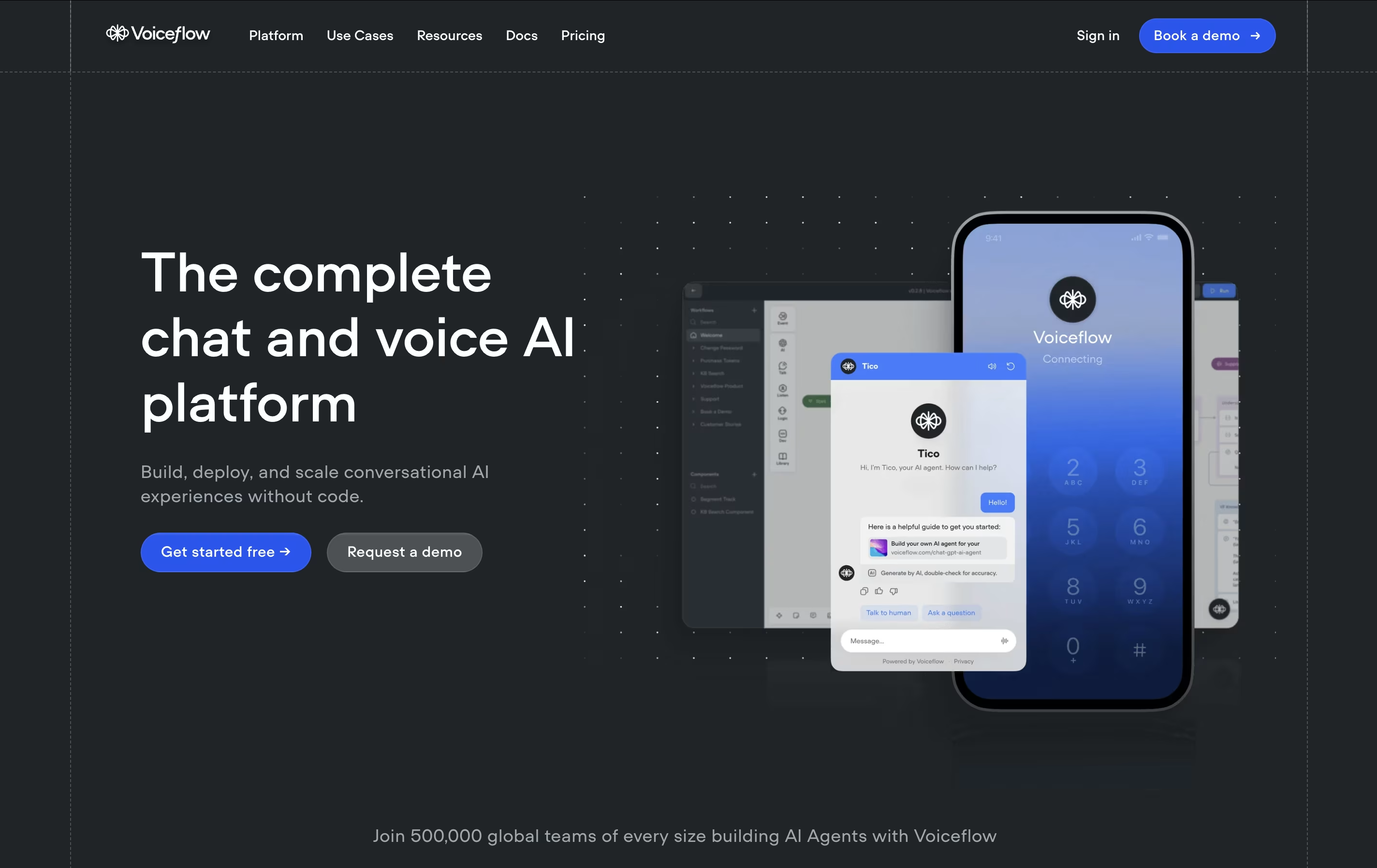
The platform uses a drag-and-drop canvas where you create conversation flows, add AI capabilities, and connect to your business systems. What makes Voiceflow special is its ability to work with multiple AI models like GPT-4, Claude, and Gemini, giving you flexibility in how your agents respond.
You can train these agents on your own content, documents, and data to provide accurate, company-specific answers. The platform supports both text-based chatbots for websites and voice agents for phone systems, making it versatile for different business needs.

Most voice assistants read text out loud without any real feel for the moment. Hume AI takes a different approach, building an Empathic Voice Interface that listens for tone and emotion, then responds in a voice that actually matches how the conversation feels.
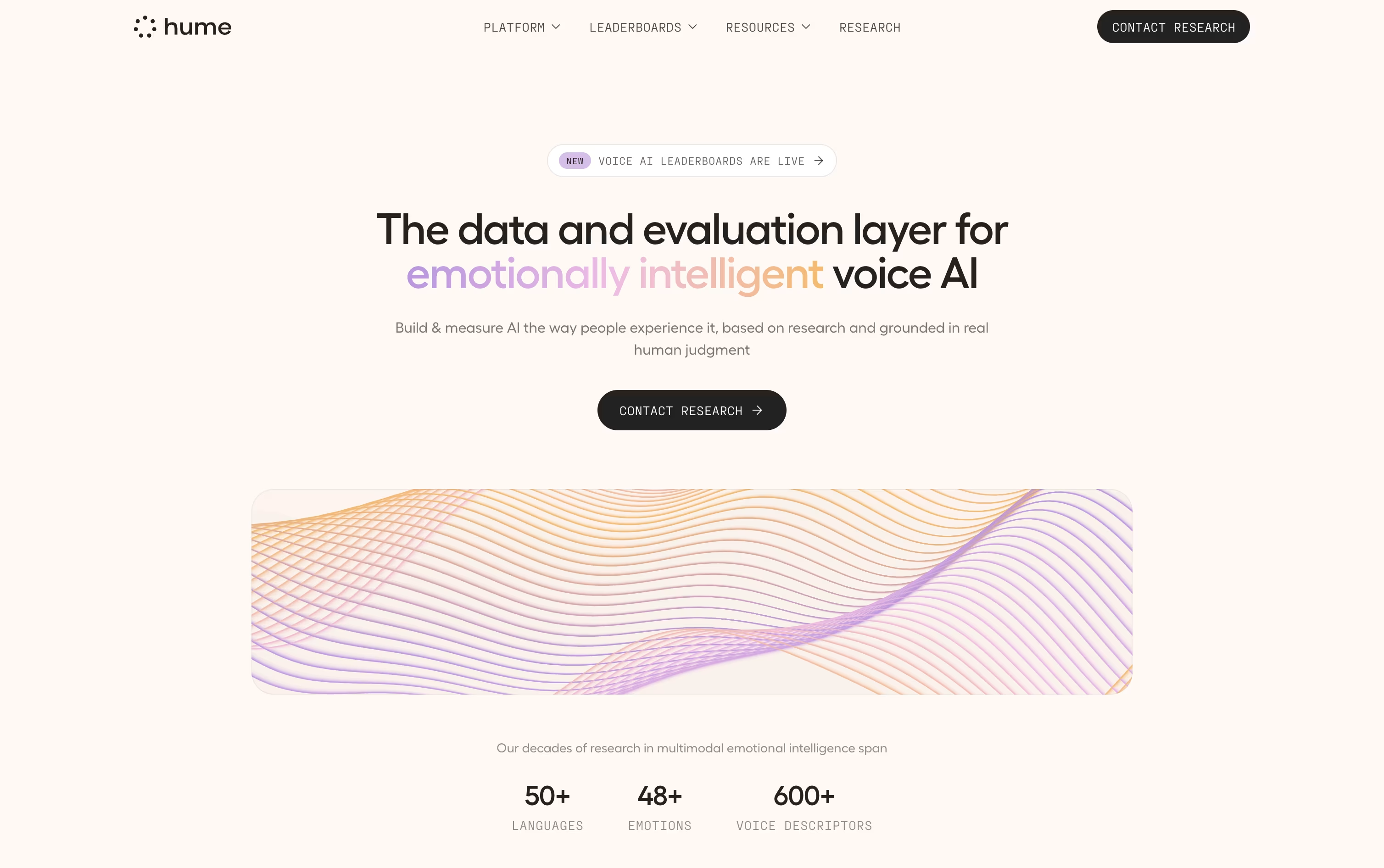
Its Octave text-to-speech model works the same way, using context to control pitch, pace, and emphasis rather than reading in a flat, mechanical voice.
A free plan is available with 10,000 characters of speech and 5 minutes of voice conversation each month, enough to try things out.
From there, Starter starts at $3 a month, with Creator, Pro, Scale, and Business each stepping up in usage, request speed, and lower overage pricing along the way.
Businesses that need more can move to a custom Enterprise plan, which includes unlimited team seats, Slack based support, and compliance with SOC 2 Type II, GDPR, and HIPAA.
Since Hume's voice layer works with outside models such as Claude, GPT, and Gemini, teams can change the brain behind the assistant without changing how it sounds.
Deepgram gives developers one platform for speech-to-text, text-to-speech, and real-time voice agents, instead of stitching together separate tools.
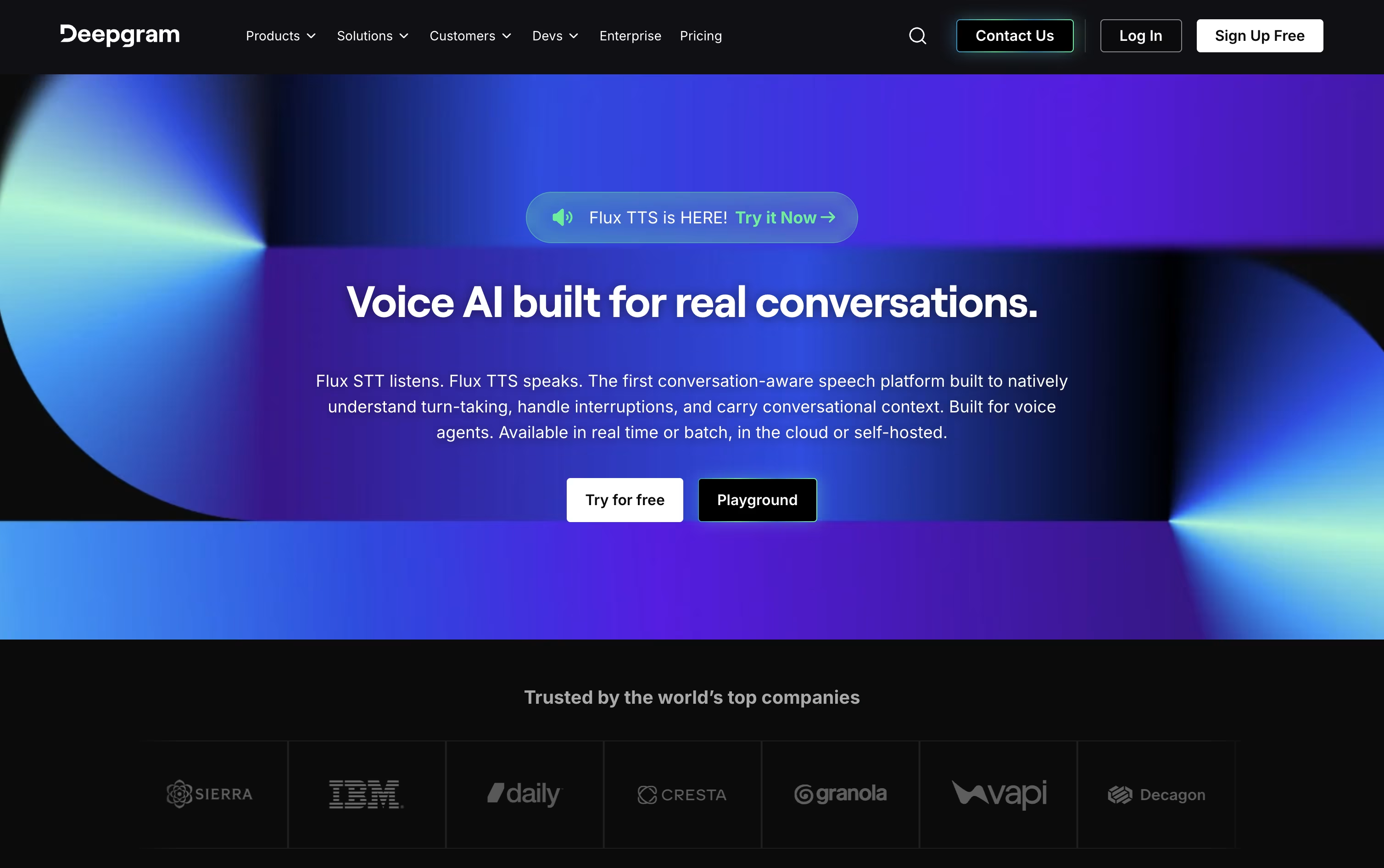
Its Nova-3 and Flux models transcribe audio quickly and accurately in more than 45 languages, with built-in speaker labels, formatting, and redaction of private information.
On the speech side, Aura voice models generate natural sounding replies fast, and the Voice Agent API ties listening, reasoning, and speaking together into one smooth, low-latency conversation.
New users start on Pay As You Go, which comes with a $200 free credit and charges only for actual usage after that.
Growth suits busier teams for $4,000 or more a year in prepaid credits, bringing lower rates on most services and higher concurrency limits.
Larger organizations can move to Enterprise, a custom priced plan through sales that adds dedicated support, custom models, and options to self-host for stricter data control.

Murf AI is built around turning written text into speech that sounds genuinely human, drawing from over 200 voices in more than 35 languages and accents. The same platform also covers voice agents for calls and chat, video dubbing, and voice cloning.
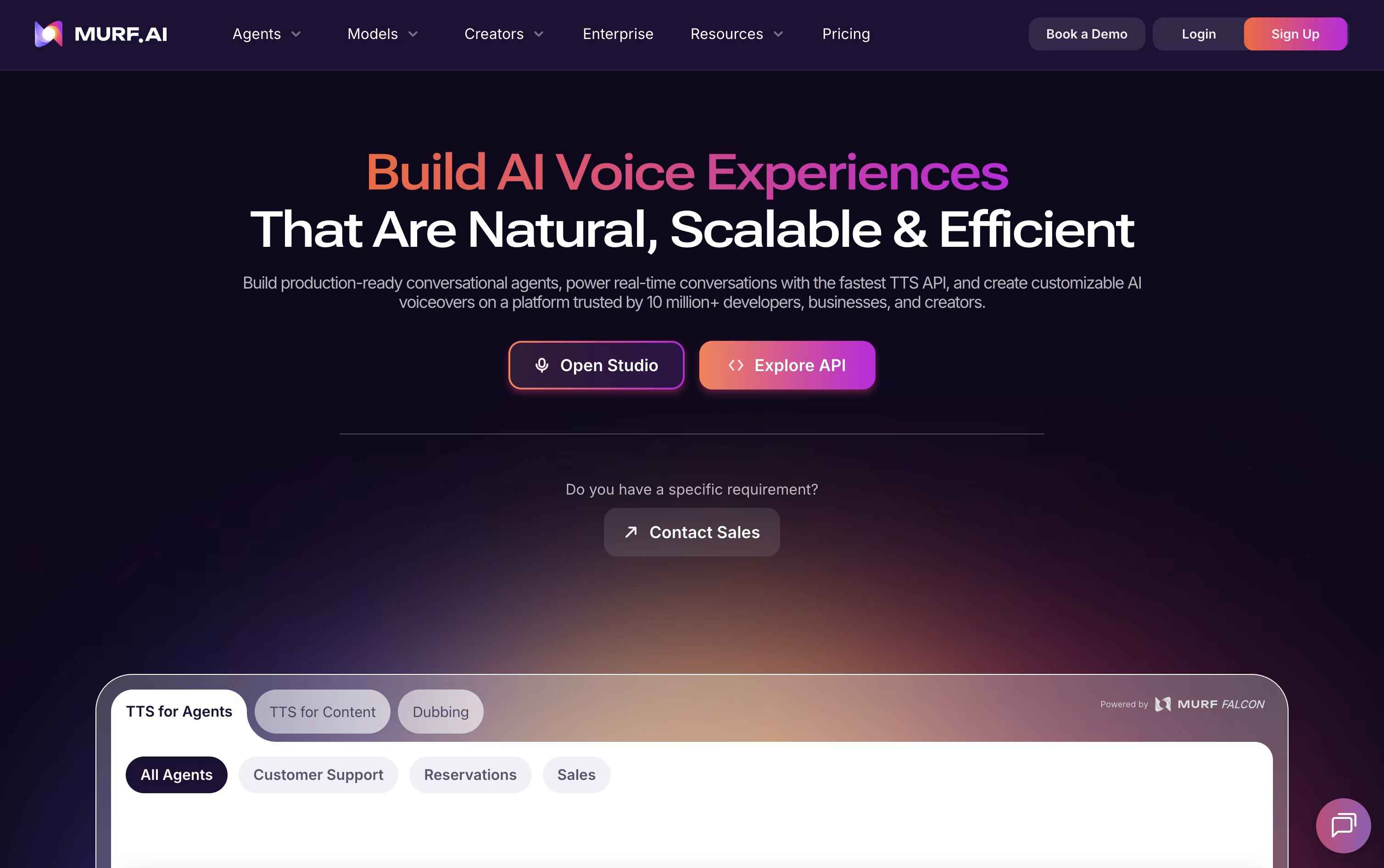
The Studio editor gives you control over pitch, speed, emphasis, pauses, and pronunciation, letting you mix multiple voices in one project before exporting audio you can use commercially.
Getting started costs nothing, since the Free plan includes 10 projects and 10 minutes of voice generation.
Creator picks up from there at $19 a month on the yearly plan, or $29 month to month, unlocking 100 projects, 2 hours of monthly voice generation, unlimited downloads, and commercial rights.
Business steps up to $66 a month yearly, or $99 monthly, and adds 8 hours of generation along with emphasis, variability, and PowerPoint support.
Bigger organizations can request a custom Enterprise plan with unlimited generation and dedicated account support, while Dub and API pricing are billed separately by usage.

Agora is a Platform-as-a-Service (PaaS) that provides real-time communication APIs for developers. Instead of building video calling or live streaming technology from scratch, developers can use Agora's ready-made tools to add these features to their apps quickly.
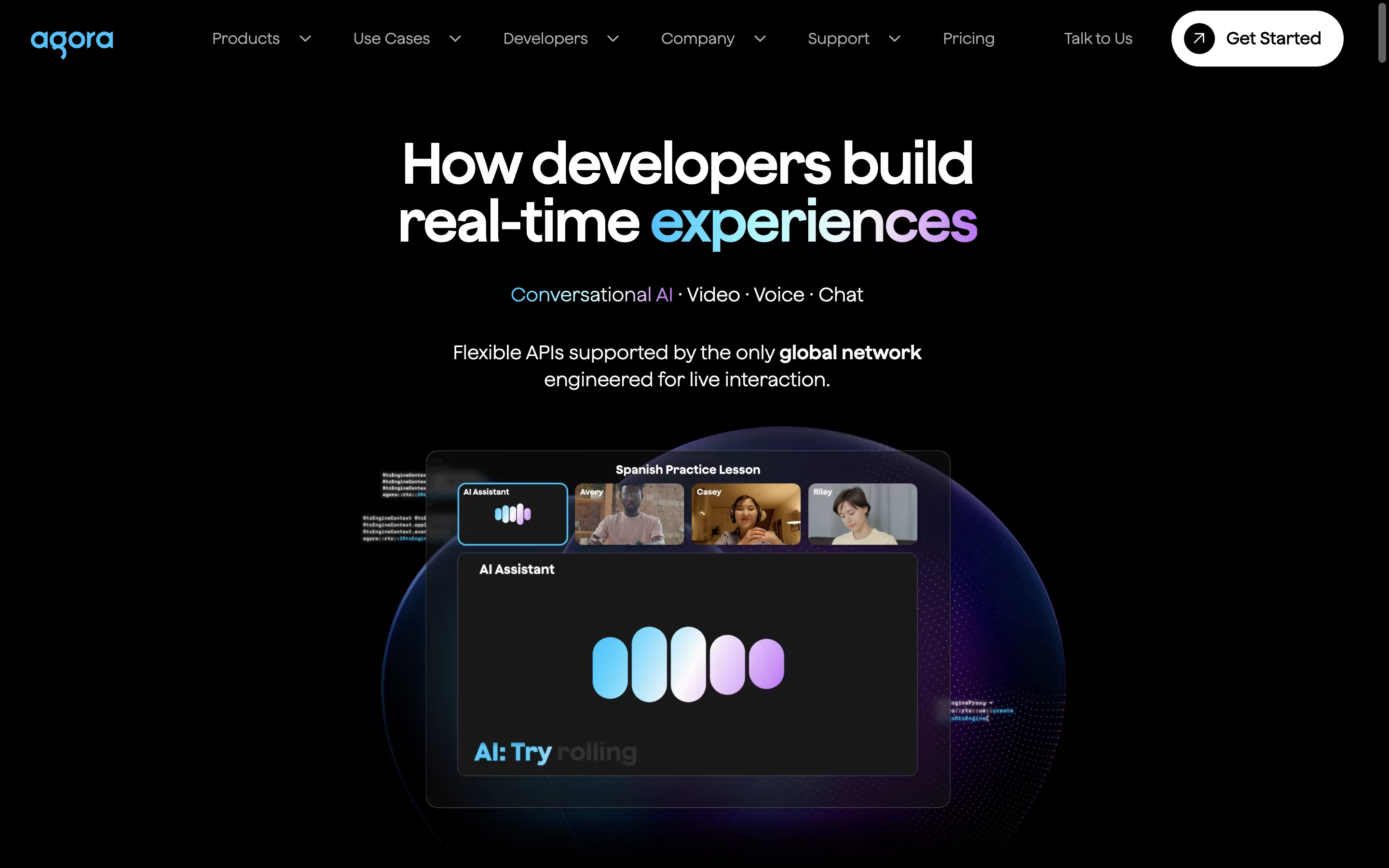
The platform offers SDKs (software development kits) for most programming languages and devices, including mobile apps, websites, and desktop applications. Agora's main strength is its global network called SD-RTN (Software-Defined Real-time Network), which automatically finds the best path for audio and video data to travel between users.
Key products include Video Calling APIs, Interactive Live Streaming, Voice Calling, Cloud Recording, and AI-powered features like noise reduction. The platform also provides analytics tools to monitor call quality and usage. Agora is publicly traded on NASDAQ under the symbol "API."

ElevenLabs is best known for making AI speech that actually sounds human, with natural pauses, tone, and emotion instead of a flat robotic voice. On top of speech, it can clone a voice from a short sample, dub videos into dozens of languages, generate music and sound effects, and run voice agents that talk to customers over the phone or in chat.
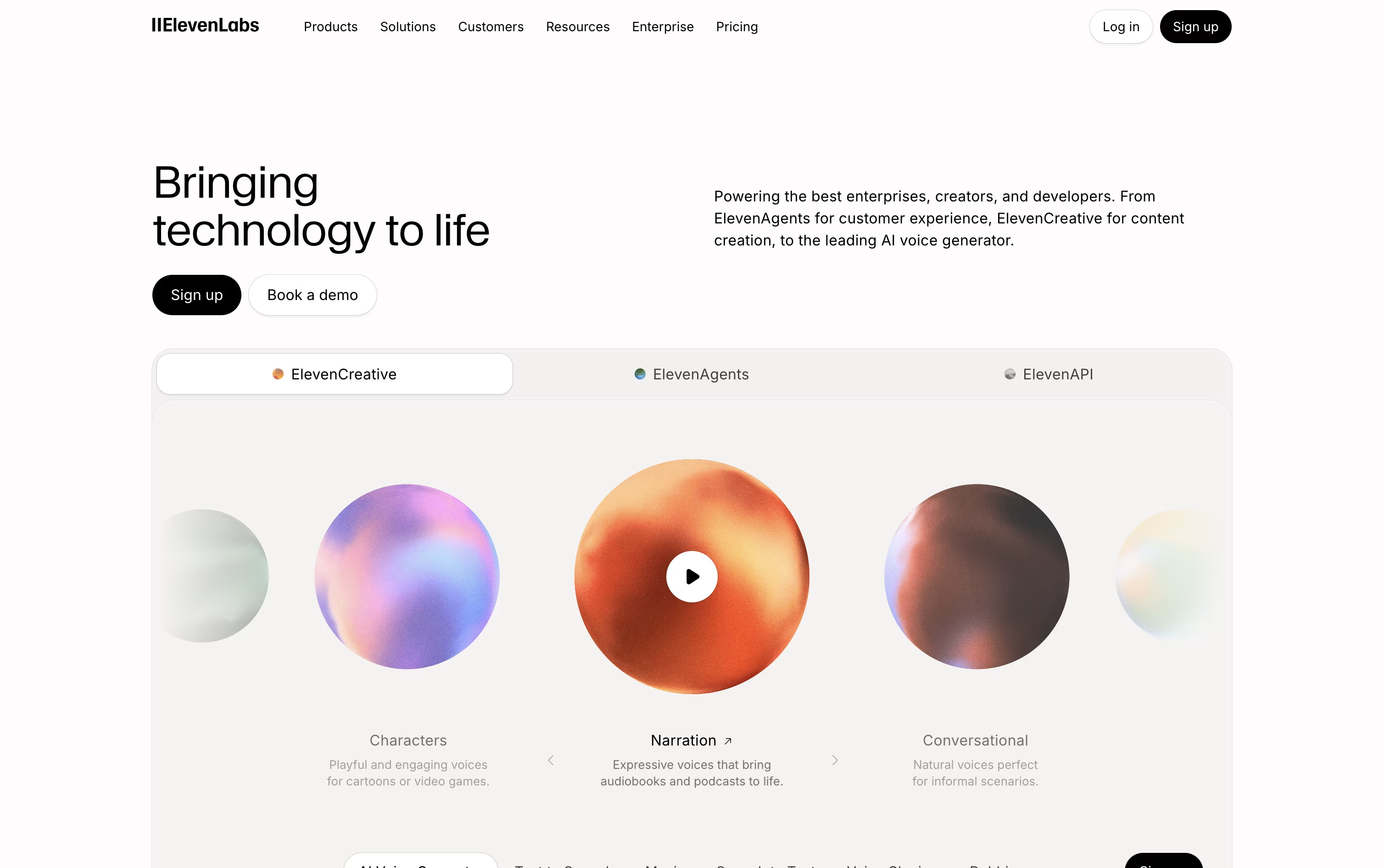
There are three main ways to use it. ElevenCreative is a web based studio built for content creators making podcasts, ads, and short videos. ElevenAgents lets you design and launch conversational voice and chat bots without needing to write code. ElevenAPI opens up the same technology to developers through a REST API with ready made Python and JavaScript SDKs.
The Free plan gives 10,000 credits a month so anyone can try the basics at no cost. Starter is $6 a month and adds commercial licensing plus instant voice cloning. Creator, the most popular tier, is normally $22 a month, sometimes offered at $11 for the first month, and includes professional grade voice cloning with a much larger credit allowance.
Bigger needs are covered by Pro at $99 a month, Scale at $299 a month with shared workspace seats, and Business at $990 a month with ten seats and lower cost, low latency speech. Enterprise pricing is discussed directly with the ElevenLabs team and includes custom security and priority support.
Since every plan draws from the same underlying voice and audio models, the quality does not drop as you scale up, whether you are producing a single video or running thousands of live customer calls.