Best 10 Typecast Alternatives in 2026
Last Updated: August 25, 2026
Typecast is an AI voice generator built by Neosapience that turns text into natural, emotionally expressive speech. Instead of a flat robotic voice, it uses voices recorded by real actors and a model called SSFM to add feeling and pacing.
Its Smart Emotion feature reads your script line by line and picks a fitting tone automatically, though you can also set emotions like happy, sad, or angry, and adjust pitch and speed by hand.
The best alternative to Typecast is  ElevenLabs
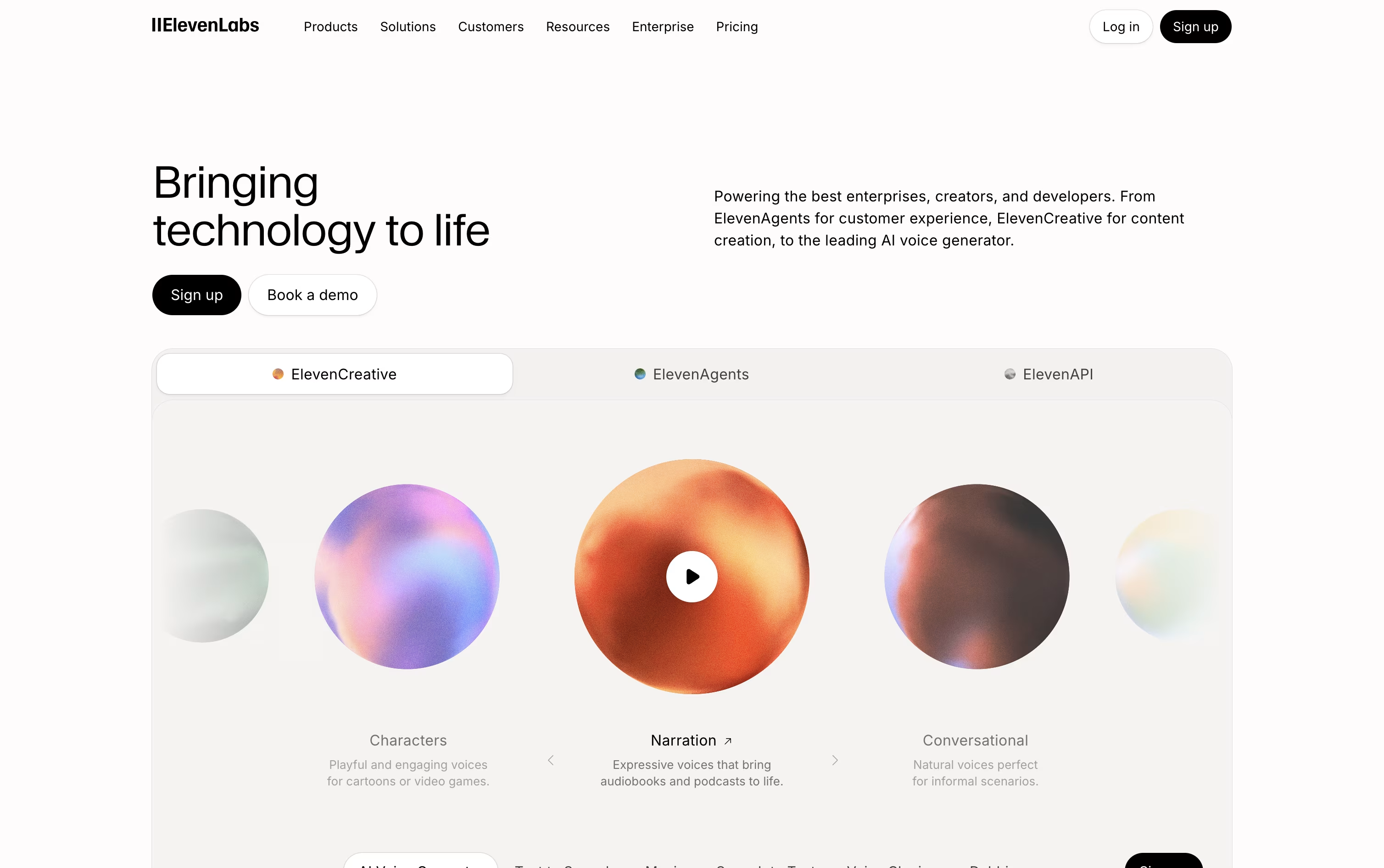 ElevenLabsRealistic AI Voice & Audio Tools.
  Murf AI
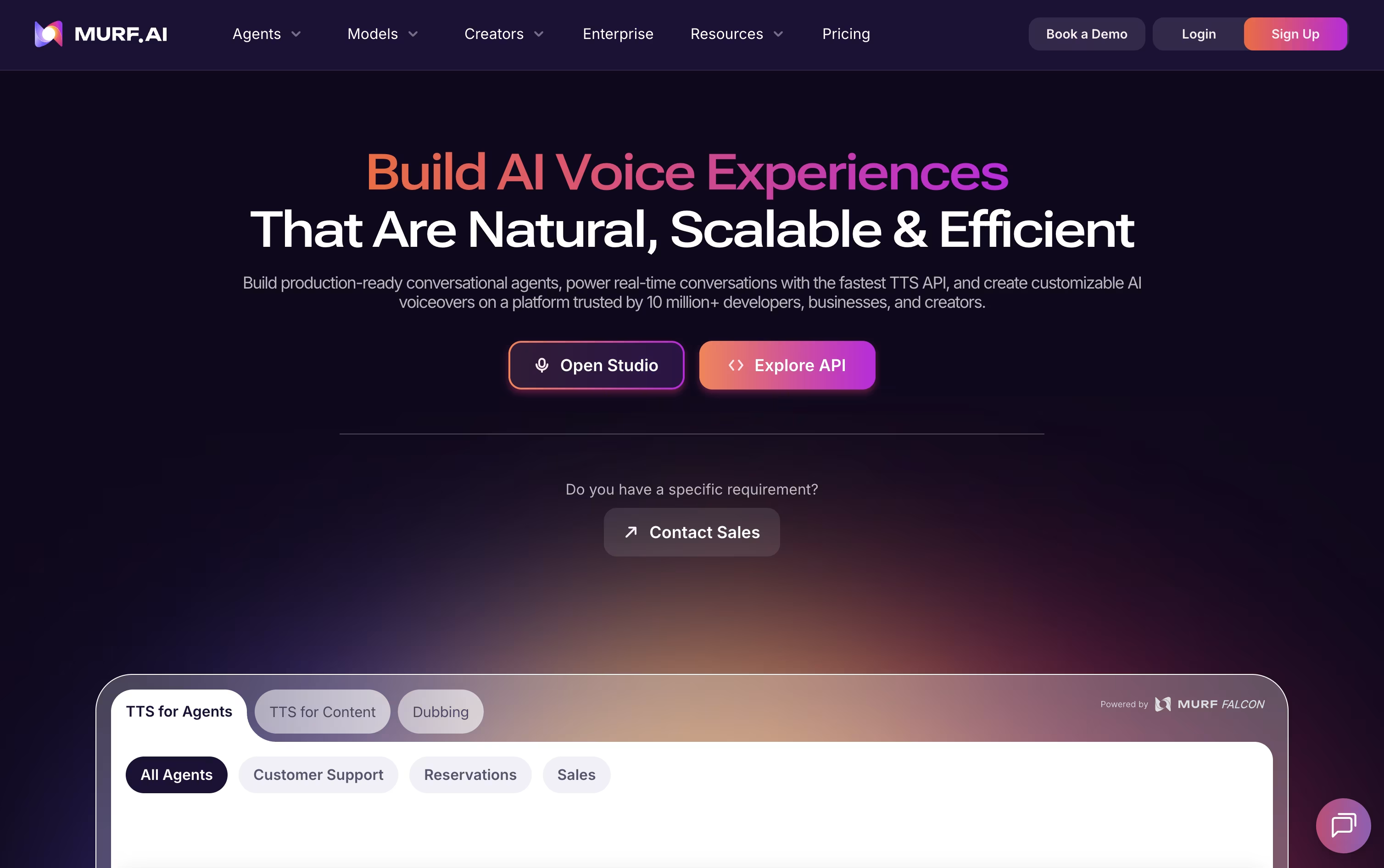 Murf AIRealistic AI Voices, Agents & Dubbing and
  Speechify
 SpeechifyTurn Any Text Into Natural AI Voices are also among the best options for Text-to-Speech Generation.
So, here are the 10 best alternatives to Typecast:

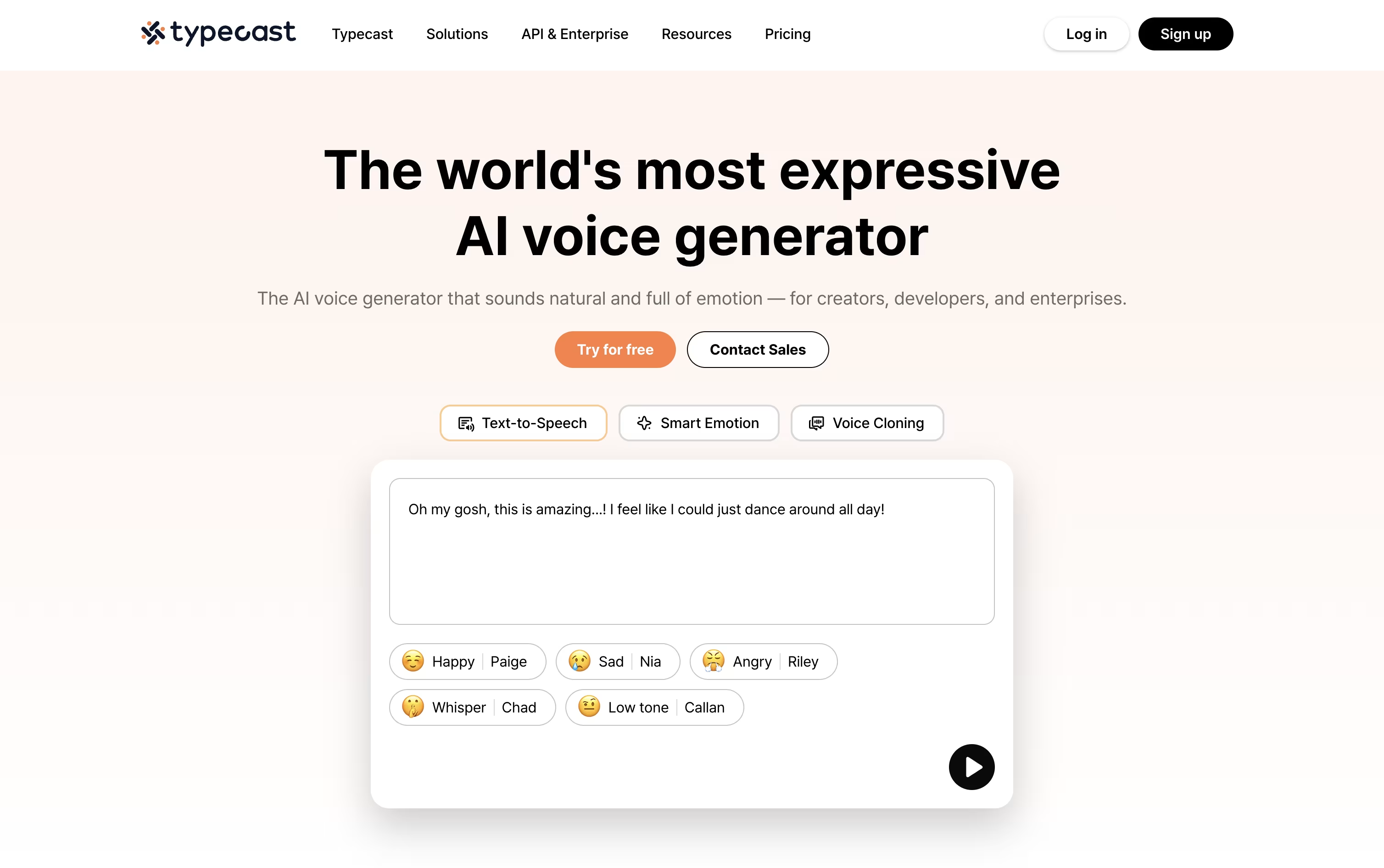
ElevenLabs is an AI audio platform that turns written text into speech that sounds like a real person talking, complete with emotion and natural pacing. Beyond speech, it can clone voices, translate and dub videos into other languages, write full music tracks, create sound effects, and build voice agents that can answer phone calls or chat with customers.
The platform is split into three main parts. ElevenCreative is a browser based studio for creators who want to make podcasts, ads, or social videos. ElevenAgents is built for designing conversational voice and chat bots that can handle real tasks like support or bookings. ElevenAPI gives developers full access to these tools through a REST API with Python and JavaScript SDKs.
Pricing starts with a Free plan offering 10,000 credits a month for basic use. Starter costs $6 a month and unlocks commercial rights and voice cloning. Creator is $22 a month, often discounted to $11 for the first month, and is the most popular plan thanks to professional voice cloning and a big jump in credits.
Larger teams can move up to Pro at $99 a month, Scale at $299 a month with team seats, or Business at $990 a month with ten seats and cheaper, low latency speech. Enterprise plans are custom priced and add dedicated support, custom security, and higher usage limits.
Because the same models power all three products, quality stays consistent whether you are editing a video in the Studio, running a phone agent, or calling the API directly, making it a solid pick for anyone who needs believable AI audio at any scale.
Murf AI turns text into natural, human like speech using more than 200 voices across 35+ languages and accents. It also powers real time voice agents, video dubbing, and voice cloning, so one platform covers voiceover creation, localization, and conversational AI.
Inside the Studio editor you can fine tune pitch, speed, emphasis, and pronunciation, add multiple voices to one project, and export commercial ready audio.
The Free plan costs nothing and gives 10 projects with 10 minutes of voice generation to try things out.
Creator starts at $19 a month billed yearly, or $29 billed monthly, with 100 projects and 2 hours of voice generation plus unlimited downloads and commercial rights.
Business runs from $66 a month yearly, or $99 monthly, adding 8 hours of generation, emphasis and variability controls, and PowerPoint integration.
Larger teams can move to a custom Enterprise plan with unlimited generation, single sign on, and dedicated support, while the separate Dub and API products use their own usage based pricing.
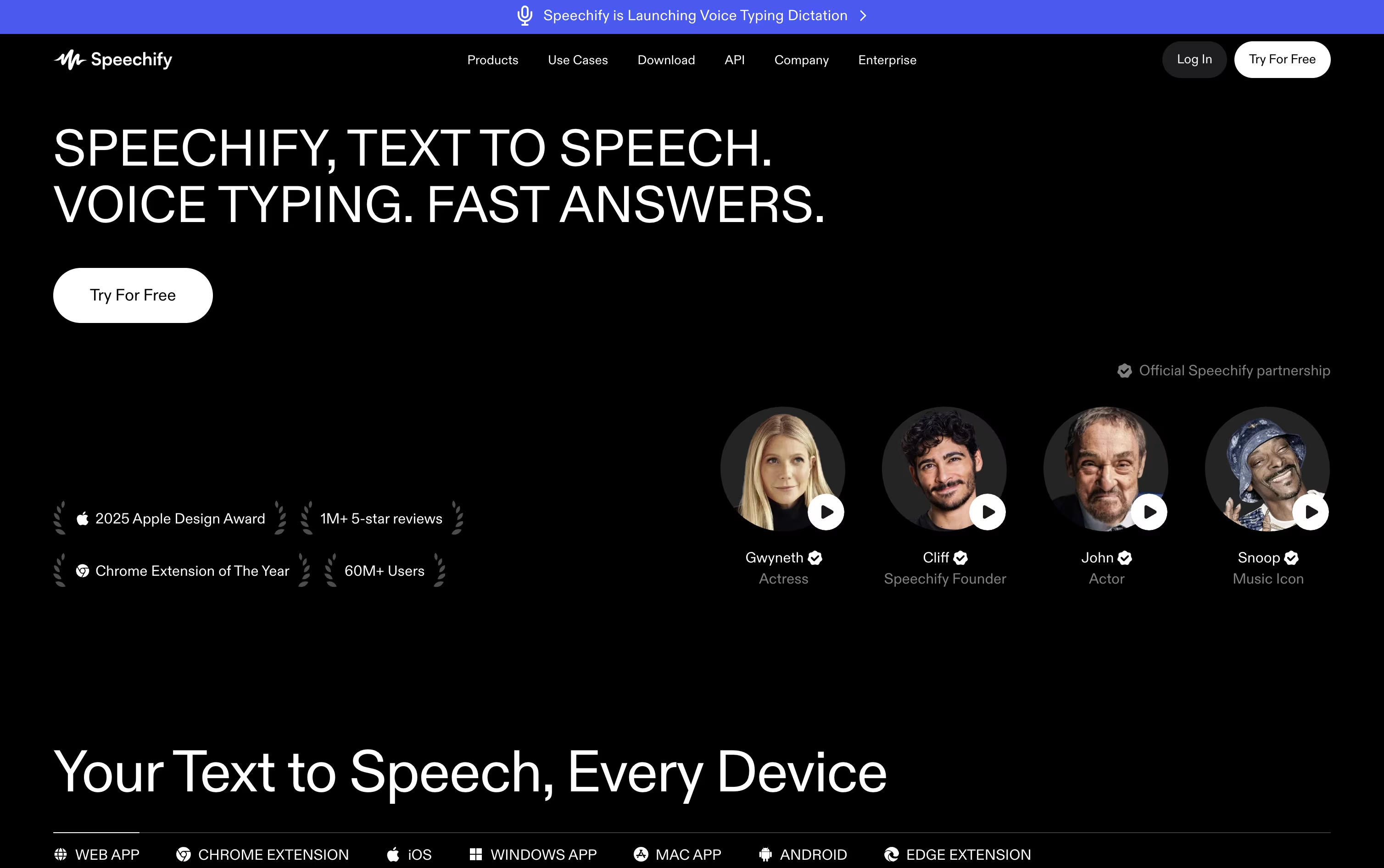
Speechify turns written content into natural sounding audio, so you can listen instead of read. Upload a document, paste text, add a link, or scan a printed page with your camera, and one of over a thousand realistic voices reads it back to you in more than 60 languages.
Beyond listening, you can talk to your content directly, asking the built in Voice AI Assistant for a summary, an explanation, or a quiz to check what you remember.
The free plan covers basic text to speech with a handful of robotic voices. Premium costs $29 a month, or $139 a year for about 60% savings, and adds natural voices, faster playback up to 4.5 times normal speed, voice typing, AI podcasts, and cloud sync across devices.
Creators who want to produce voiceovers, dub videos, or clone a voice can use the separate Speechify Studio product, with plans from $100 to $300 a year.
Developers get their own SpeechifyAI API, with a free tier and paid plans starting at $10 a month, up to custom Enterprise pricing for large scale voice agents.

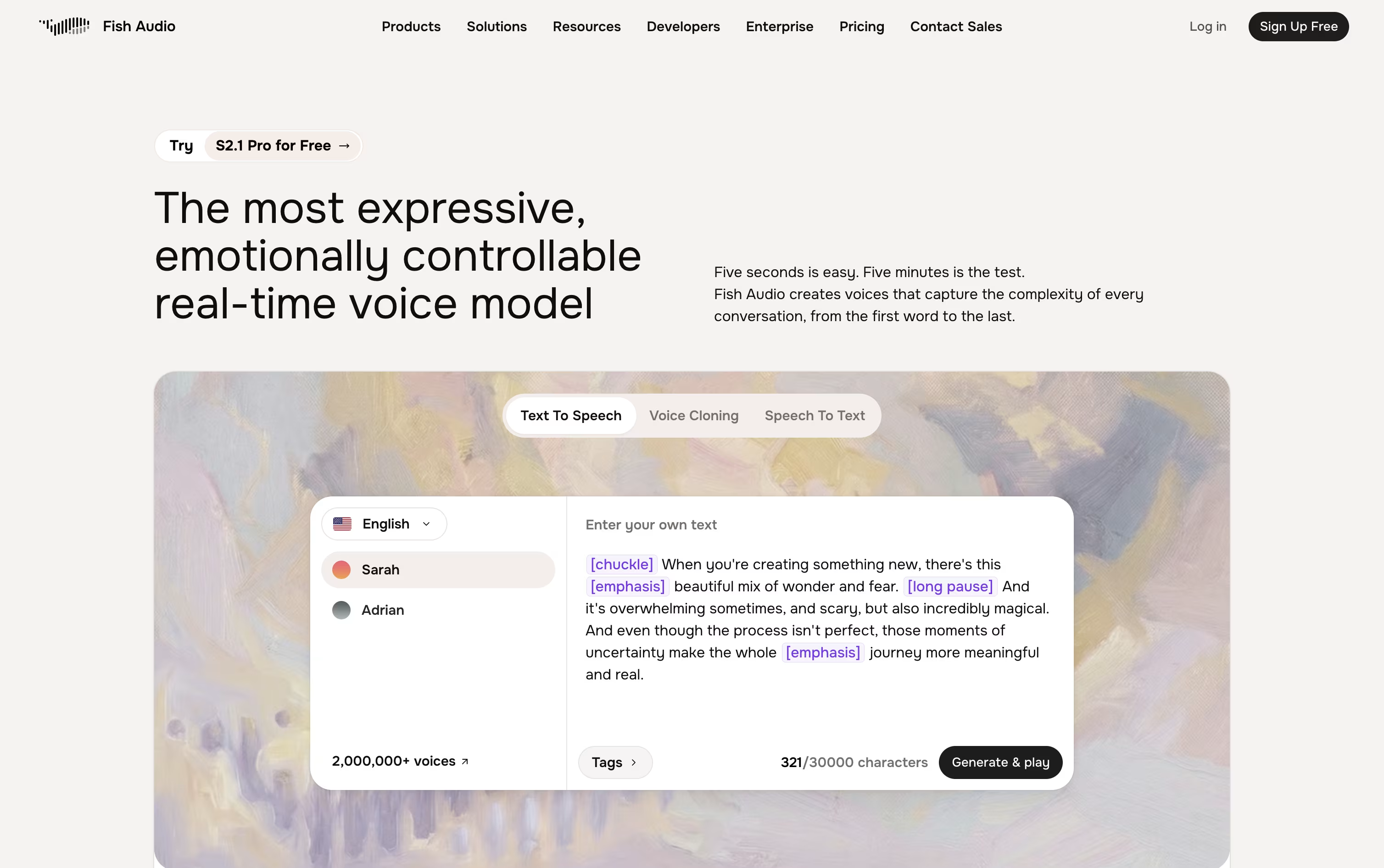
Fish Audio turns written text into natural, expressive speech and can clone a voice from just a short recording. It also transcribes speech to text, changes one voice into another, and includes tools for sound effects, audio separation, and translation.
The free plan costs nothing and includes 8,000 credits a month, enough for about 7 minutes of generated audio, along with 3 public voice slots.
Paid plans start with Plus at $7.50 a month, or $5.50 a month billed annually, adding 250,000 monthly credits, private voice slots, and commercial use rights.
Pro costs $50 a month, or $37.50 a month billed annually, and raises the limit to 2 million credits, 3 team seats, and 5 professional voice slots.
Max is built for larger teams at $999 a month, or $749 a month billed annually, with 25 million monthly credits and 10 team seats. Enterprise plans use custom pricing for organizations that need on-premise deployment or SOC2 compliance.
Developers can also use the pay-as-you-go API, billed by usage for text-to-speech, transcription, and voice design requests, without needing a subscription.

Inworld AI is a realtime voice platform built for natural, human-like conversations. It began as an AI character engine for games and has grown into full voice infrastructure used for agents, customer support, and interactive media.
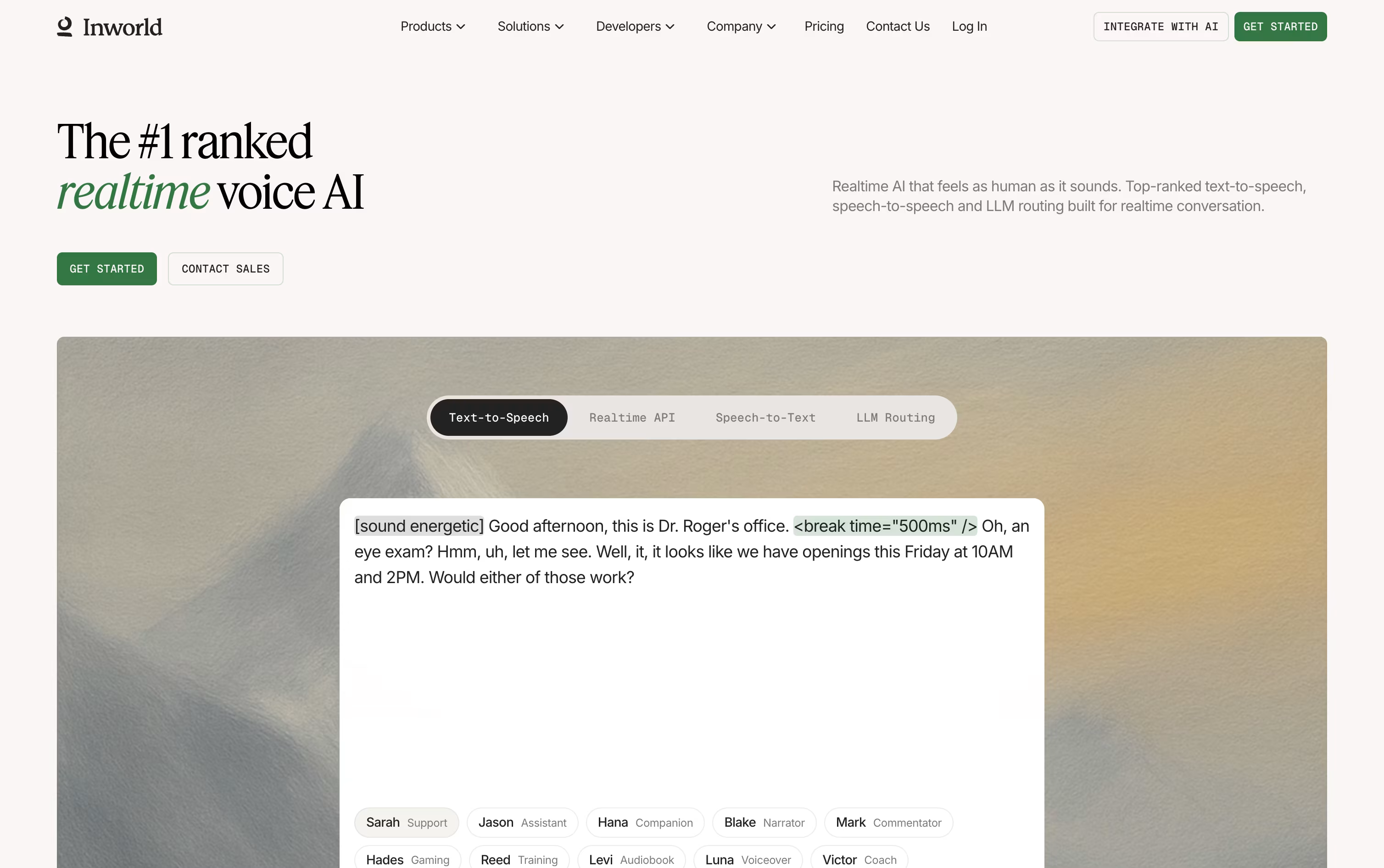
The platform's core products include Realtime Text-to-Speech, Speech-to-Text, and a combined Realtime API that handles full speech-to-speech conversations in one connection. An LLM Router gives access to over 220 AI models through a single endpoint.
Pricing starts with a free On-Demand plan that includes 70 minutes of TTS, 100 custom voices, and access to the Realtime API. Paid plans move from Creator at $25 a month, to Builder at $100, Developer at $300, and Growth at $1,500 a month, each unlocking lower usage rates, more custom voices, and higher concurrency limits.
Standard TTS is billed per million characters and ranges from $25 down to $12.50 depending on the plan, while Enterprise customers can get rates as low as $5. Speech-to-text is billed per hour, starting at $0.15 and dropping to $0.10 on paid plans.
Enterprise plans offer custom pricing, on-premises deployment, EU and India data residency, and dedicated account support, along with SOC 2 Type II, HIPAA, and GDPR compliance across the platform.

Smallest AI is a voice AI company built around small, fast models instead of one large general model. The idea is that many specialized models can react in real time and handle voice more naturally than a single huge model.
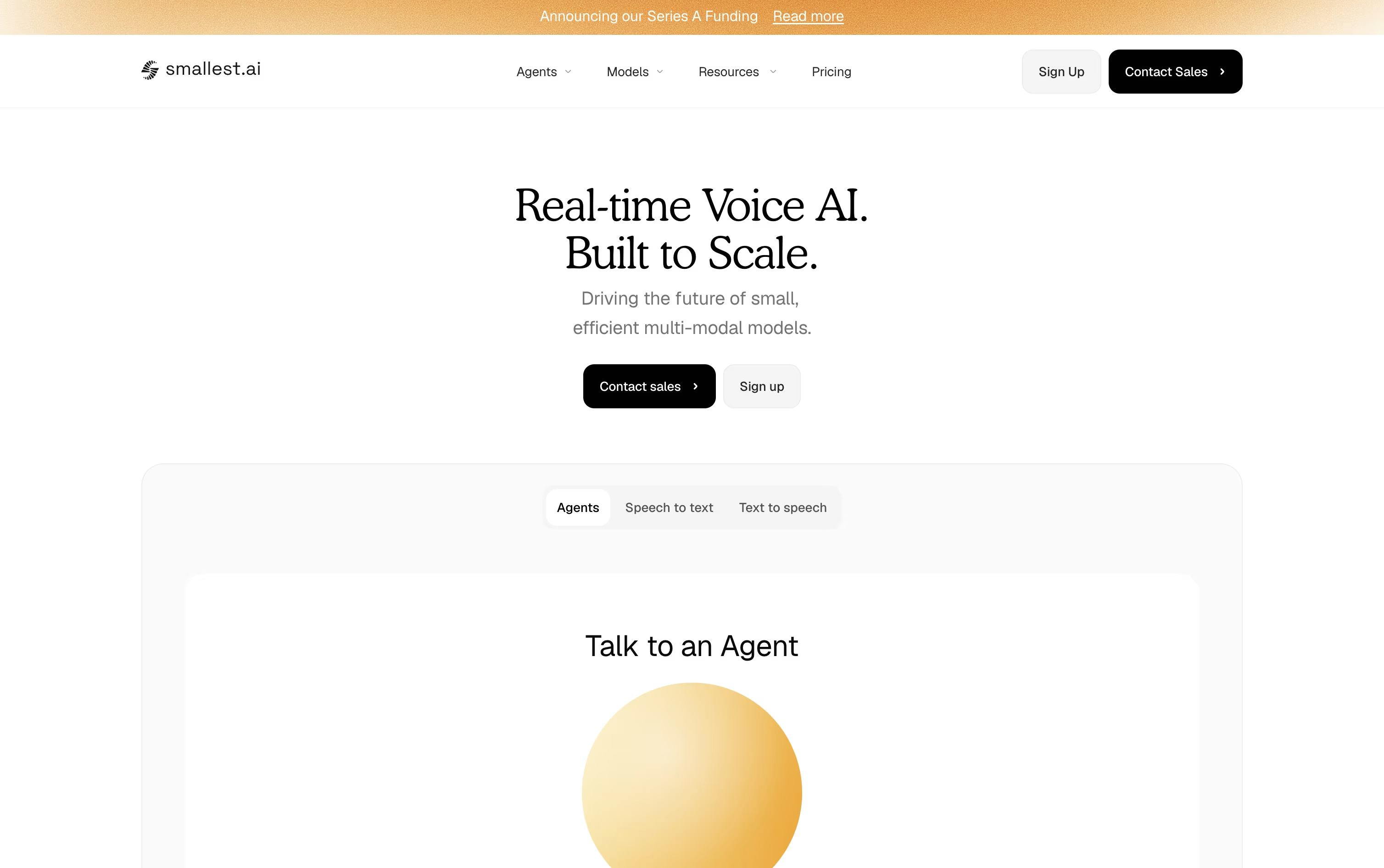
Its core products include Lightning for text to speech, Pulse for speech to text, Hydra for speech to speech, and Electron, a compact language model built for reasoning during voice conversations.
On top of these models, the Atoms platform lets teams build, test, and launch voice agents without writing code, complete with knowledge bases, campaigns, and phone number support.
Pricing follows a pay as you go structure. New accounts get $10 in free credits, then pay per minute for agent calls, per character for text to speech, and small add-on fees for things like knowledge base storage and PII removal.
Larger organizations can move to the Enterprise plan, which offers custom pricing, dedicated infrastructure, on-premise deployment, and compliance support such as HIPAA and SOC2, with call costs as low as $0.05 per minute.
Rime AI turns text into natural sounding speech for voice agents, phone calls, and IVR systems. It is built for real conversations, not just reading text out loud.
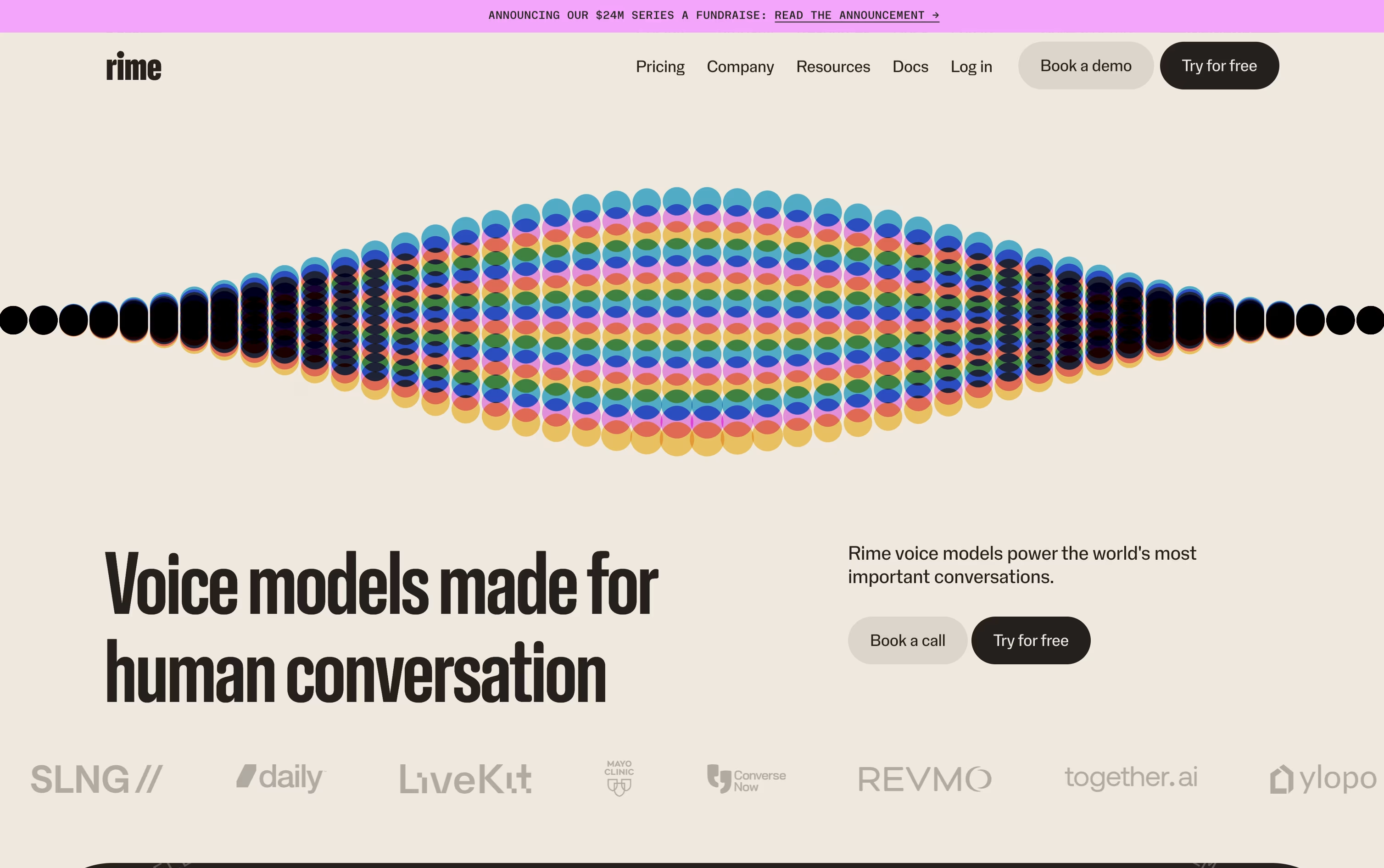
You only pay for what you use, starting at $0.03 per 1,000 characters, and new users get about 800 minutes free without needing a credit card.
Two voice models are available. Mist v3 is built for speed, while Coda is built for natural, expressive speech and supports more languages.
Rime also supports 20 concurrent voice generations on the Starter plan, plus streaming, word level timestamps, and exact pronunciation control for names and codes.
Enterprise customers get custom volume pricing, unlimited generations, unlimited voice cloning, and options to run Rime on the cloud, on prem, or inside a private network.
With HIPAA compliance and SOC 2 Type II reports, Rime is built to handle sensitive conversations at scale.

Hume AI builds voice technology that pays attention to how something is said, not just what is said. Its Empathic Voice Interface listens to tone and rhythm in real time and answers back in a voice that fits the moment.
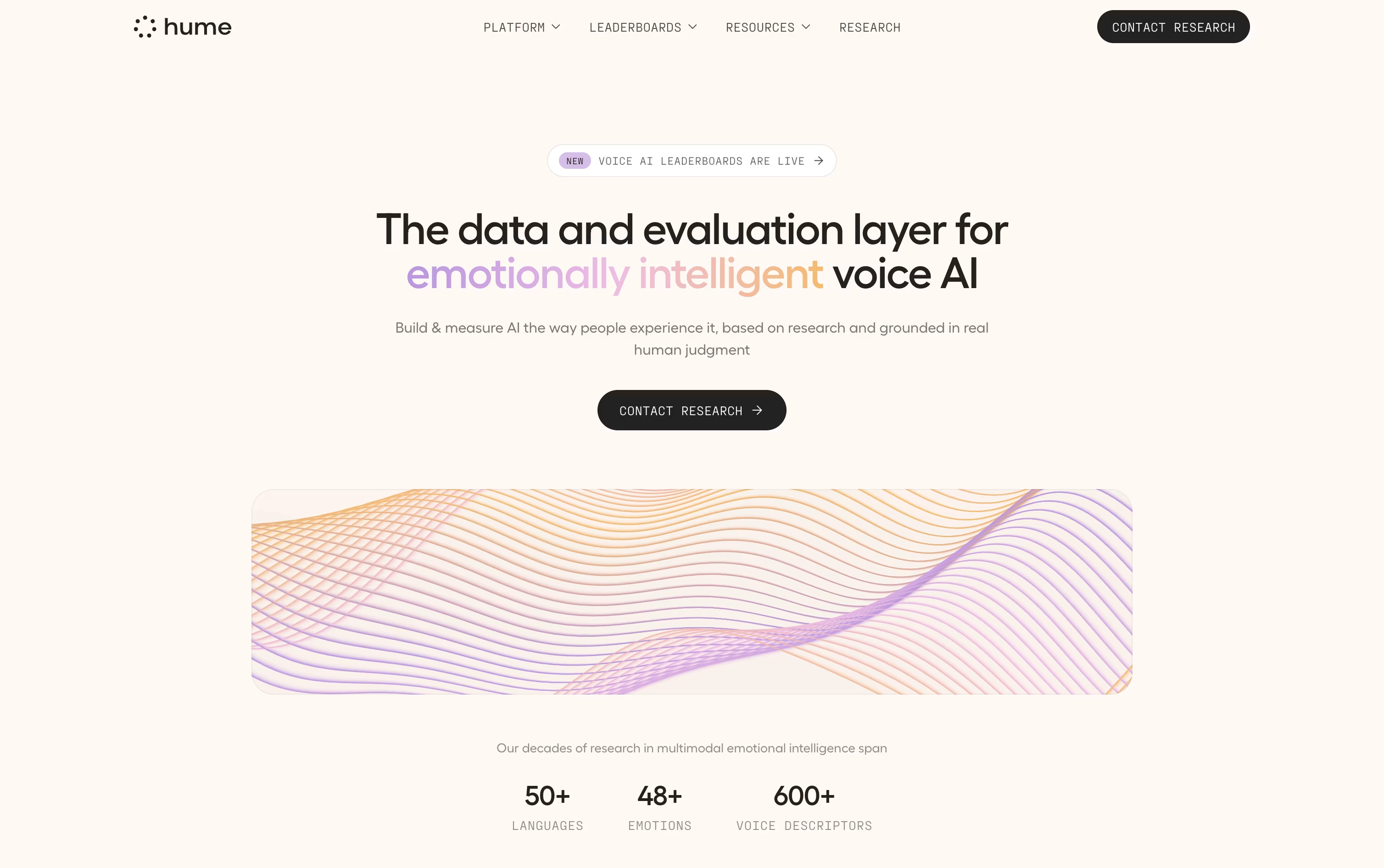
Its Octave text-to-speech model reads written text aloud with natural pacing and emotion, and both products support cloning a voice from a short audio clip.
Getting started costs nothing. The free plan includes 10,000 text-to-speech characters and 5 minutes of voice conversation each month.
Paid plans begin at $3 a month for Starter and rise through Creator, Pro, Scale, and Business, each adding more monthly usage, faster request limits, and lower per-unit overage costs.
Larger teams can pick an Enterprise plan with custom usage, unlimited seats, Slack support, and SOC 2 Type II, GDPR, and HIPAA compliance.
Because the voice layer works with outside language models like Claude and GPT, teams can swap the thinking behind the conversation without touching how it sounds.
Deepgram is a voice AI platform that turns spoken audio into text, turns text back into natural speech, and powers real-time voice agents, all from one API.
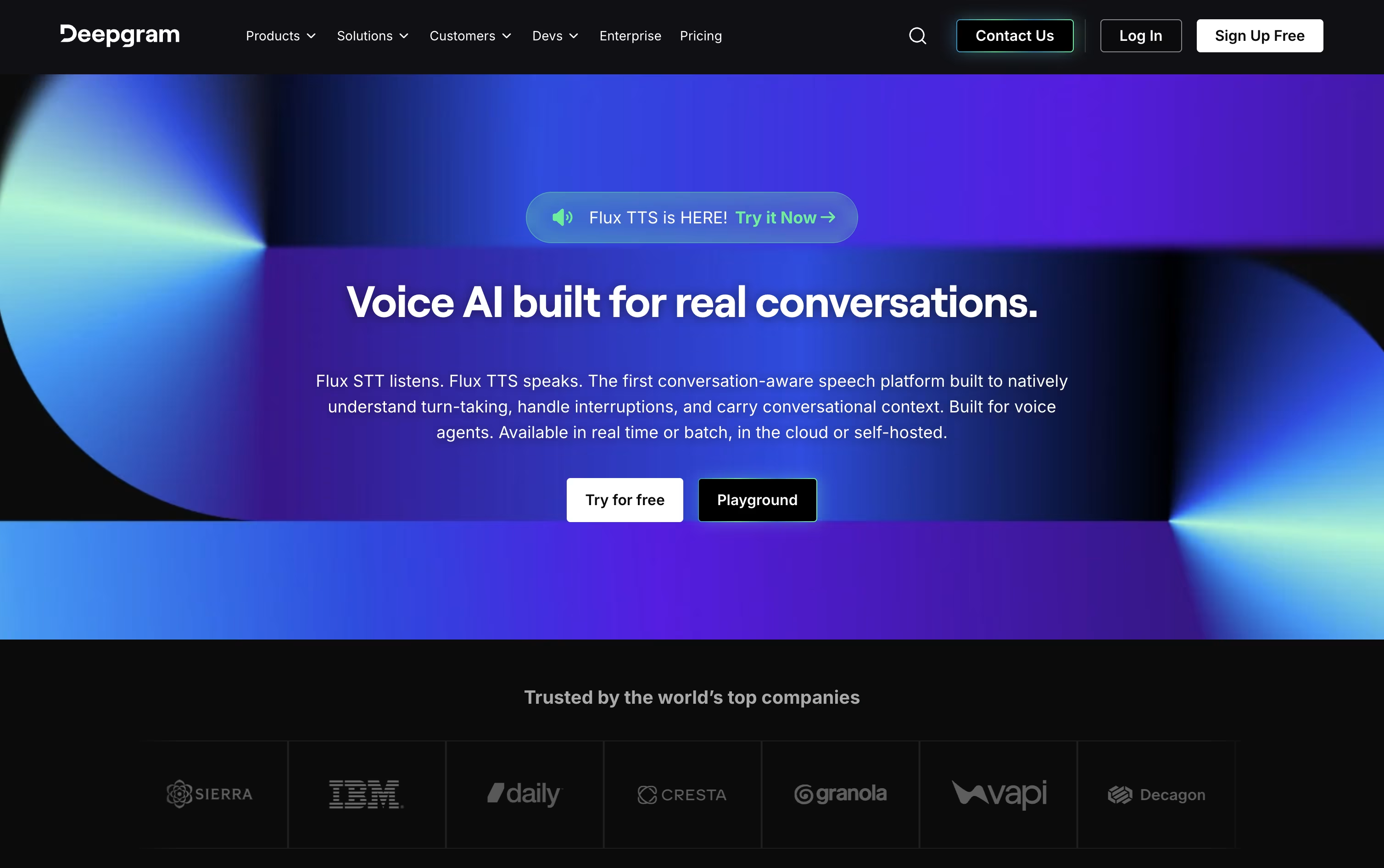
Its Nova-3 and Flux models handle fast, accurate transcription across 45 plus languages, with features like speaker labels, smart formatting, and automatic redaction of sensitive details.
The Aura voice models produce natural sounding speech with low latency, while the Voice Agent API brings listening, thinking, and speaking together into one real-time pipeline that handles interruptions smoothly.
Pricing starts with Pay As You Go, which includes a $200 free credit and no minimum spend. Growth costs $4,000 or more a year in prepaid credits and unlocks lower per-minute rates and higher usage limits.
Enterprise plans are custom priced through sales and add dedicated support, custom models, and flexible deployment, including fully self-hosted setups for teams with strict data or compliance needs.

Cartesia builds voice AI tools that sound natural and respond fast enough for real conversations. It grew out of research on State Space Models, a design built for speed and handling long stretches of context well.
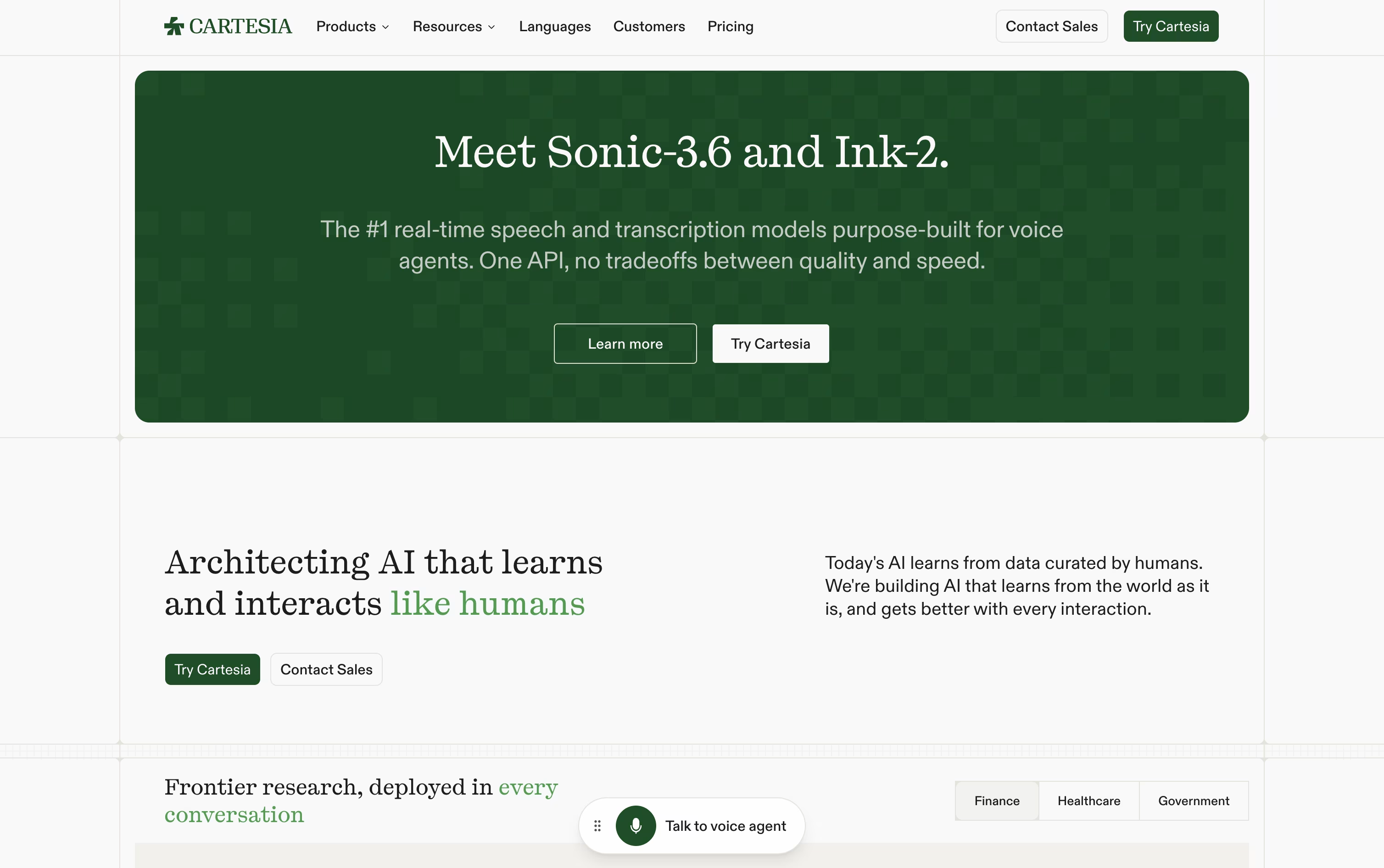
The platform is built around three parts. Sonic turns text into speech that sounds human, Ink turns speech into text while tracking when someone starts and stops talking, and Line ties both together so you can build full voice agents with your own logic.
Pricing starts with a Free plan at $0 a month, giving 20K credits and basic access to Text to Speech and Speech to Text.
Pro costs $5 a month and adds commercial use rights plus instant voice cloning, while Startup at $49 a month adds professional voice cloning and organization accounts.
Scale runs $299 a month with priority support and higher concurrency, and Enterprise offers custom pricing with SSO, compliance agreements, and dedicated support.
Extra usage, like phone numbers or call minutes, is billed separately, and every plan can be paused or cancelled at any time.