

Best 11 AI Agent Builder Tools in 2026
Last Updated: August 4, 2026
Building an AI agent that can take autonomous actions, not just answer questions, requires the right orchestration tools. AI Agent Builders let developers design, test, and deploy AI agents capable of completing multi step tasks on their own.
These tools are used by developers, product teams, and AI engineers building automated agents for support, research, or operational tasks. As agent capabilities grow, these builders are becoming a core part of how teams add autonomous AI features to their products.
 Google AI Studio
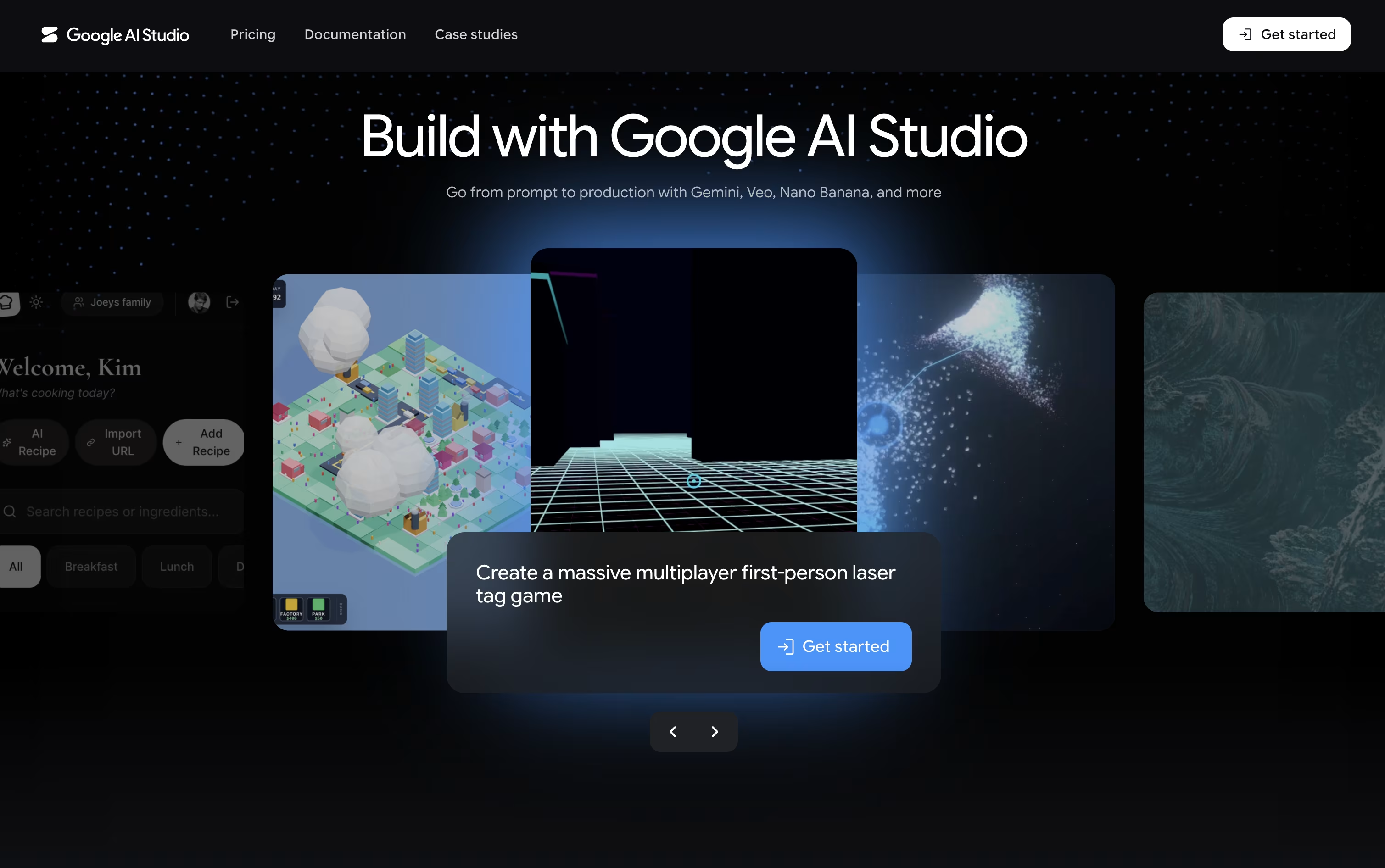 Google AI StudioBuild Apps with Gemini AI Models,
  camelAI
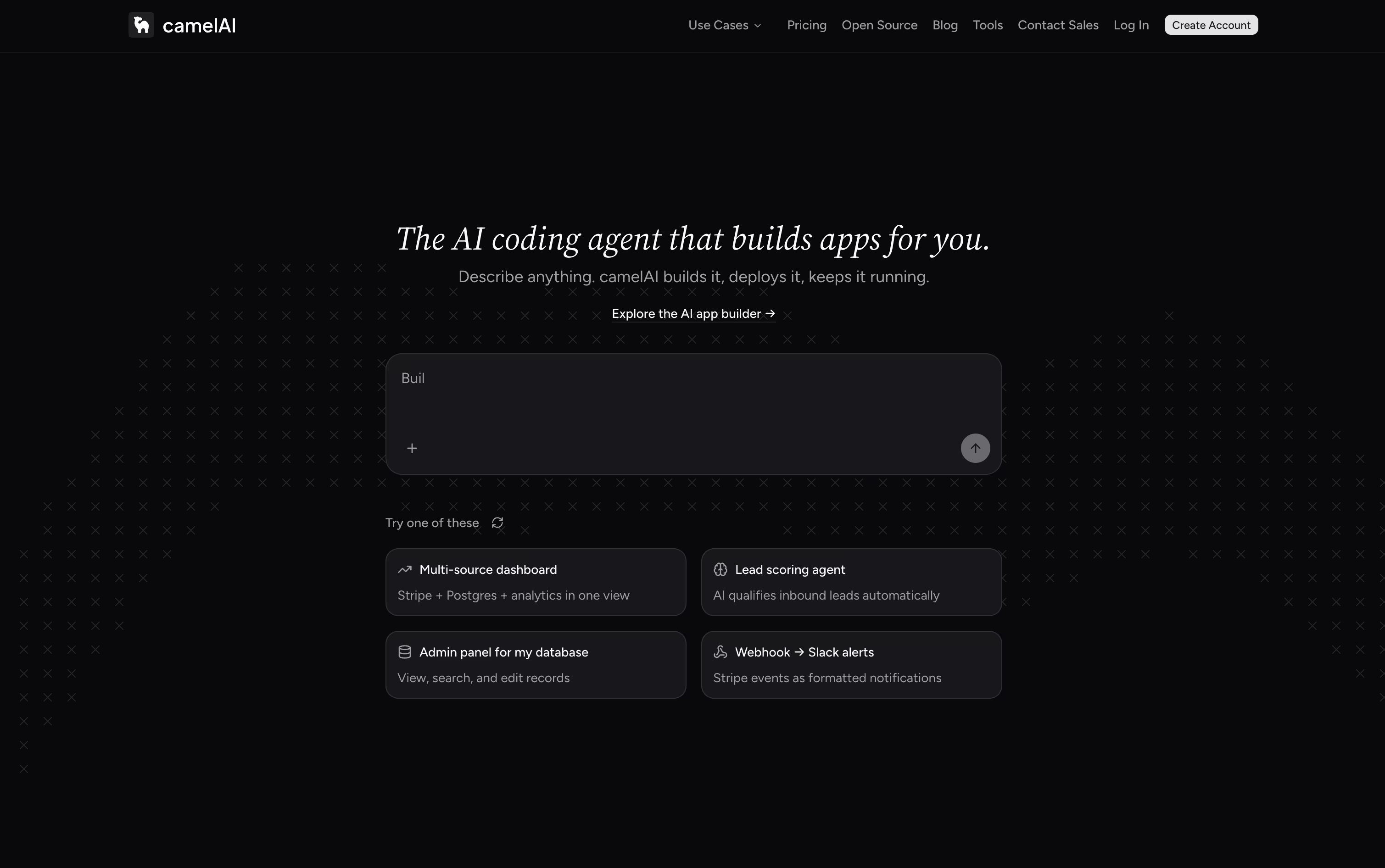 camelAIAI Software Engineer That Deploys Apps, and
  Manus
Manus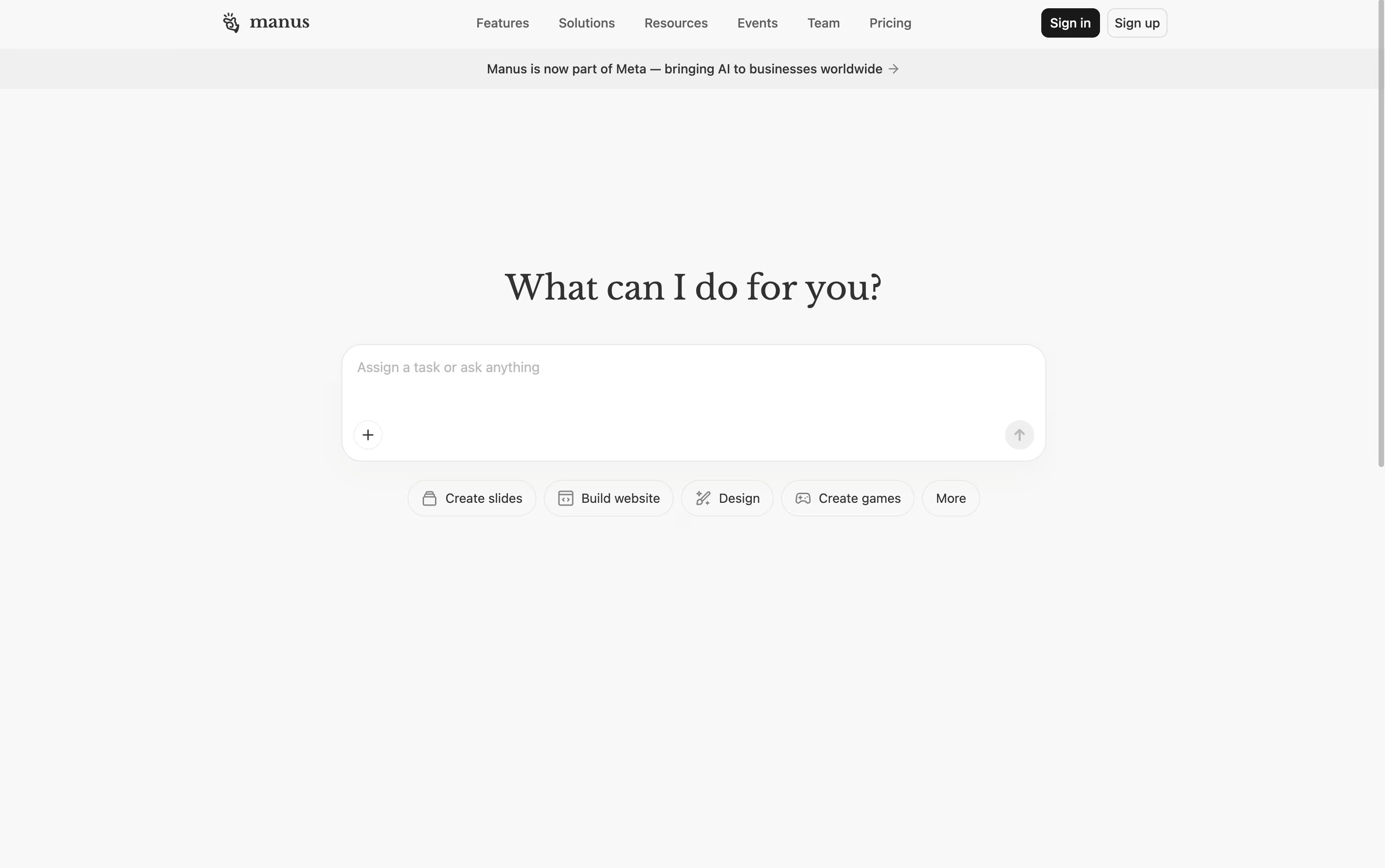 ManusThe AI Agent That Plans and Executes Tasks are the best for AI Agent Builder. So, let’s take a closer look at all 11 tools.
Think of Google AI Studio as a free workshop for Google's Gemini models. You can chat with a model, tweak its settings, and see how it responds, all inside your browser with no setup needed.
It goes beyond text too, letting you create images, video, audio, and music, and even hold live voice and video conversations with the AI through Gemini Live.
The standout feature is Build mode, where describing an app in everyday language produces a working React or Android app, along with a live preview you can adjust just by describing the change.
Getting started costs nothing on the Free plan, though usage is limited. The Paid plan bills by the token, so a model like Gemini 3.6 Flash runs about $1.50 per million input tokens and $7.50 per million output tokens, and it adds higher limits and batch discounts.
Larger organizations can move to the Enterprise plan for dedicated support, stronger security, and pricing built around their scale.
Instead of a plain chat box, camelAI gives its agent a real computer that keeps running and remembers your project. You type what you want in plain English, and it builds a complete application, covering the frontend, backend, database, and API in one go.
The finished app is published to a live URL right away, with SSL and domain setup handled automatically. Because the workspace saves your files and history, the agent already knows your project when you come back, and you can chat with it over email or Slack too.
Over 50 integrations come ready to use, such as Postgres, Stripe, HubSpot, and Slack, and you can schedule the agent to run jobs on its own, like checking Stripe metrics or emailing a summary report.
Getting started is free, with the Free plan giving 1 workspace, 3 apps, and 5 GB storage using your own API key. The Starter plan runs $10 a month, and the Pro plan, the most popular option, is $40 a month with unlimited apps and domains.
For teams, the Team plan costs $50 per seat monthly with a 3 seat minimum, adding shared workspaces and role based permissions. Enterprise plans are custom priced and include SSO, dedicated support, and compliance features.
Every paid plan comes with a 7 day free trial, and an open source, self hostable version of camelAI is on the way as well.
Think of Manus as an assistant that actually does the work instead of just talking about it. You describe a goal, and it breaks the job into steps, then uses a browser, code, and files to carry it out.
It handles research at scale, builds working websites and apps from a plain description, writes and designs full slide decks, and creates images, video, or music when needed. Since tasks run in the cloud, you can walk away and get notified when it finishes, or stay and guide it along the way.
It fits into tools you already use too, connecting with Slack, email, and Google Drive, plus a Browser Operator that works inside your own browser using your saved logins.
On pricing, the Standard plan is $20 a month with 4,000 credits, the Customizable plan is $40 a month with 8,000 credits, and the Productivity plan is $200 a month with 40,000 credits and a free cloud computer included. Paying yearly saves 17 percent.
Larger teams can move to custom business plans, which come with stronger security and compliance certifications built in.

Instead of hiring a developer or piecing together separate tools, Base44 lets you describe an app in plain English and get a working version back right away.
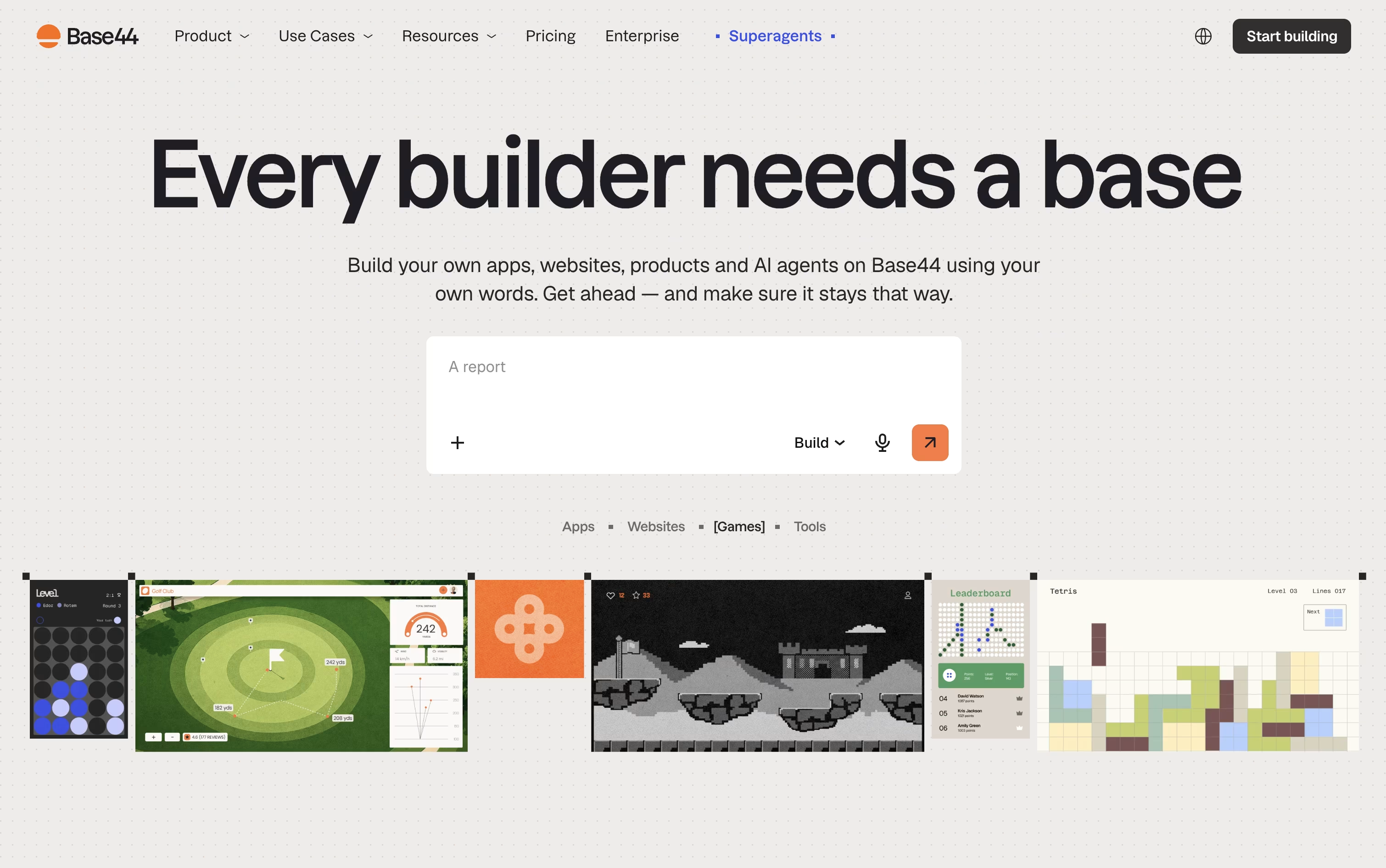
It handles the pages, the database, the login system, and the backend logic in one go, and you refine it further just by chatting with the AI.
Trying it out costs nothing, the free plan gives you 25 message credits a month and room for up to 5 apps.
Once you need more, the Starter plan at $20 a month removes the app limit and opens up code editing, while the Builder plan at $50 a month adds backend functions, AI model choice, and custom domains.
Pro and Elite raise the credit caps for heavier use, and Base44 also builds Superagents, AI helpers that handle tasks like follow-ups and scheduling on their own.
Larger organizations can move to a custom-priced Enterprise plan with single sign-on and dedicated support.

Langflow is an open-source platform for building AI applications through a visual interface. You create workflows by connecting building blocks called components. Each component performs a specific task, such as loading data, talking to an AI model, or storing information in a database.
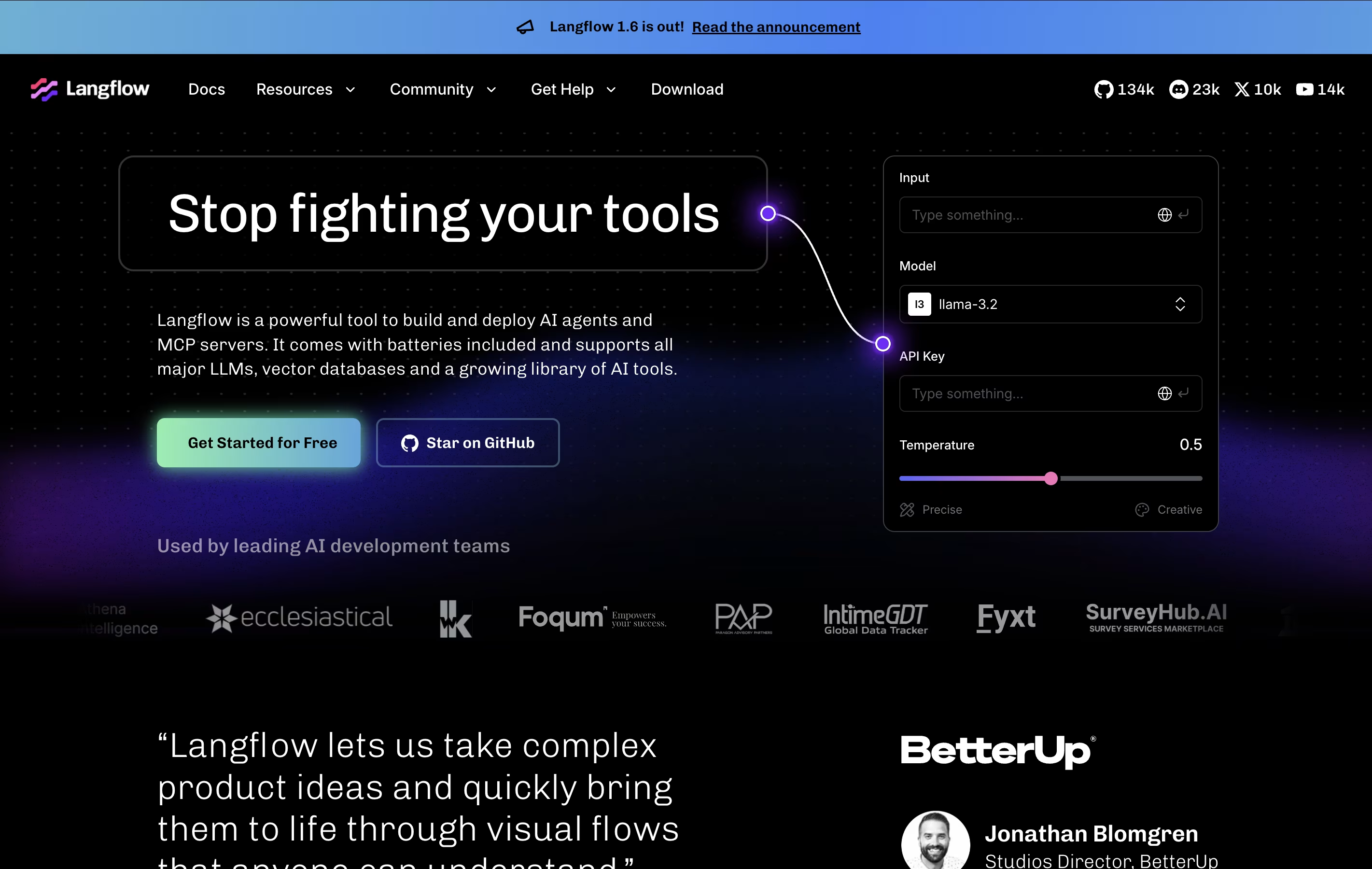
The platform supports agents that can make decisions, use tools, and perform multiple tasks automatically. It also enables Retrieval Augmented Generation (RAG), which lets AI applications search through your documents and provide accurate answers based on your specific data.
There is no cost to use Langflow. It's completely free and open-source. You only pay for external services you connect to it, such as AI model providers like OpenAI or cloud hosting if you choose to deploy your application online.

Dify is a complete platform for building AI-powered applications using a visual interface. You can create workflows by connecting different components without writing code. The platform supports many AI models from providers like OpenAI, Anthropic, and others, letting you switch between them easily.
The platform includes tools for managing knowledge bases, creating custom agents, and monitoring application performance. It offers both cloud-based service and self-hosted options, giving you control over where your data lives. The visual workflow builder lets you design complex logic through simple drag-and-drop actions.
Dify is open-source, meaning a community of developers constantly improves it. This makes it reliable and feature-rich while remaining free to use for basic needs, with premium plans available for advanced features.

StackAI is a platform where you build AI agents through a visual canvas. Instead of coding, you drag components onto a screen and connect them together. These components can be language models, your company documents, or connections to other software you use.
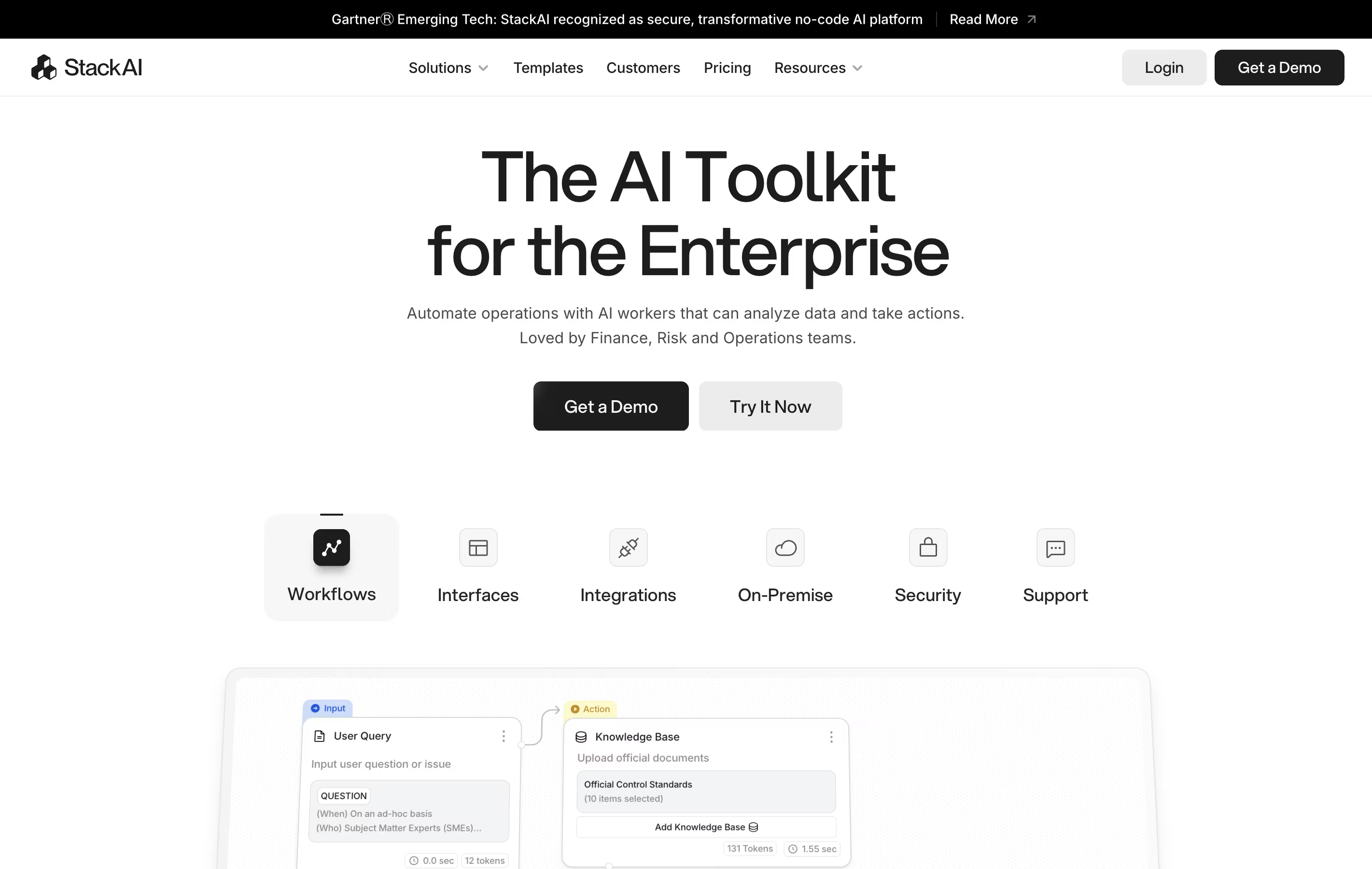
The platform specializes in helping businesses automate their internal processes. You can build chatbots that answer employee questions, systems that analyze documents, or tools that generate reports from your data. Everything runs in a secure environment that follows industry rules for data protection.
StackAI works with multiple AI models from companies like OpenAI and Anthropic. You can also choose where your data lives, including keeping everything on your own servers if needed for extra security.

Vellum is a platform that helps you create AI applications from start to finish. You can build chatbots, content tools, data analysis systems, or custom AI assistants. The platform works with all major AI models including GPT-4, Claude, and open source options.
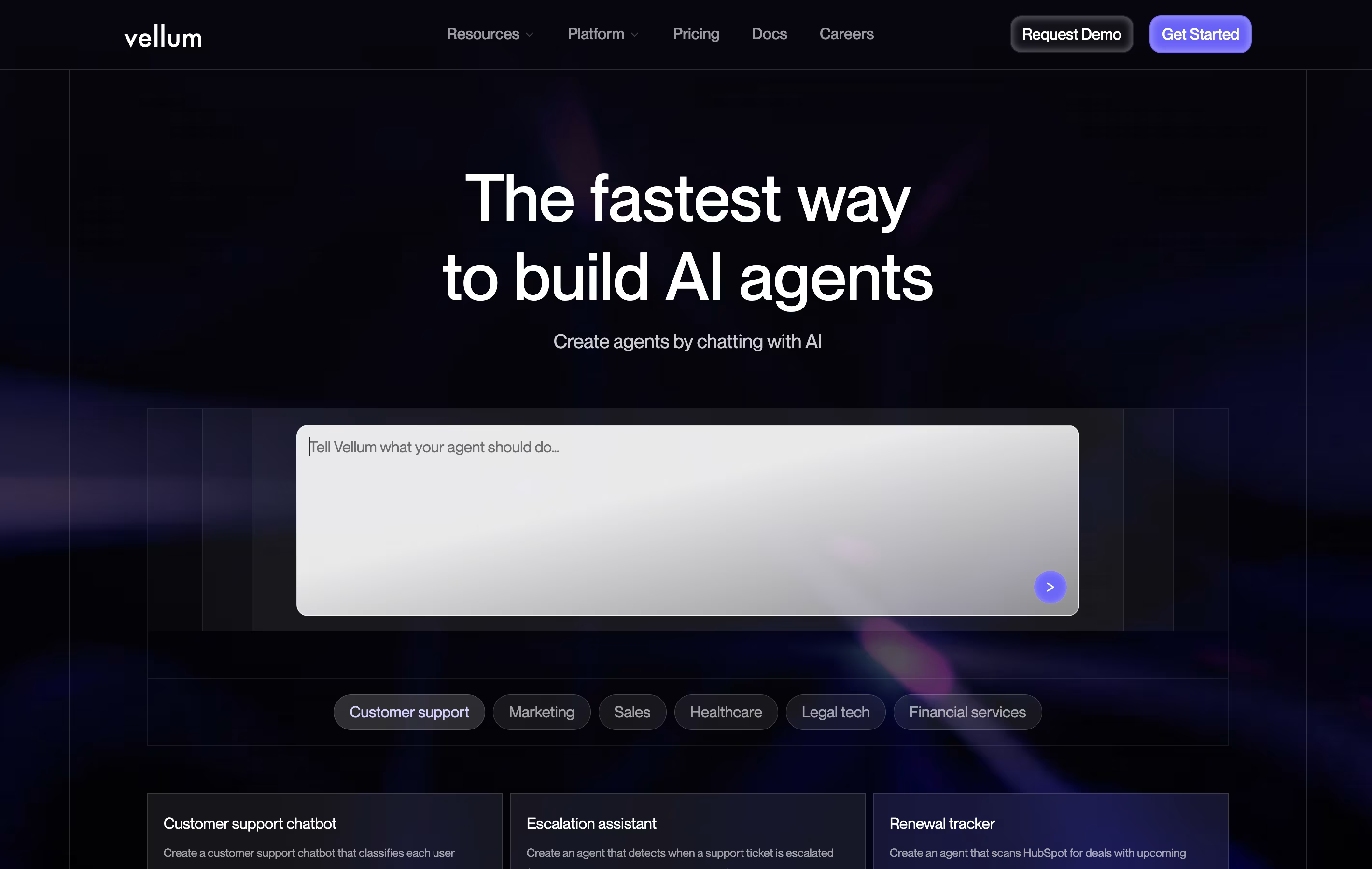
What makes Vellum different is its agent builder. You describe what you want your AI to do in plain language, and it automatically creates the workflow. You can connect your AI to business tools like HubSpot, Slack, and Google Drive. The platform includes testing tools to check quality before launch and monitoring to track how well things work after launch.
Both technical and non-technical team members can use Vellum. Developers set up connections and security, while other team members adjust prompts and workflows without touching code.

Flowise is a visual development platform for creating AI-powered applications using large language models. Think of it as building blocks for AI: you drag components onto a canvas and connect them together to create smart systems.
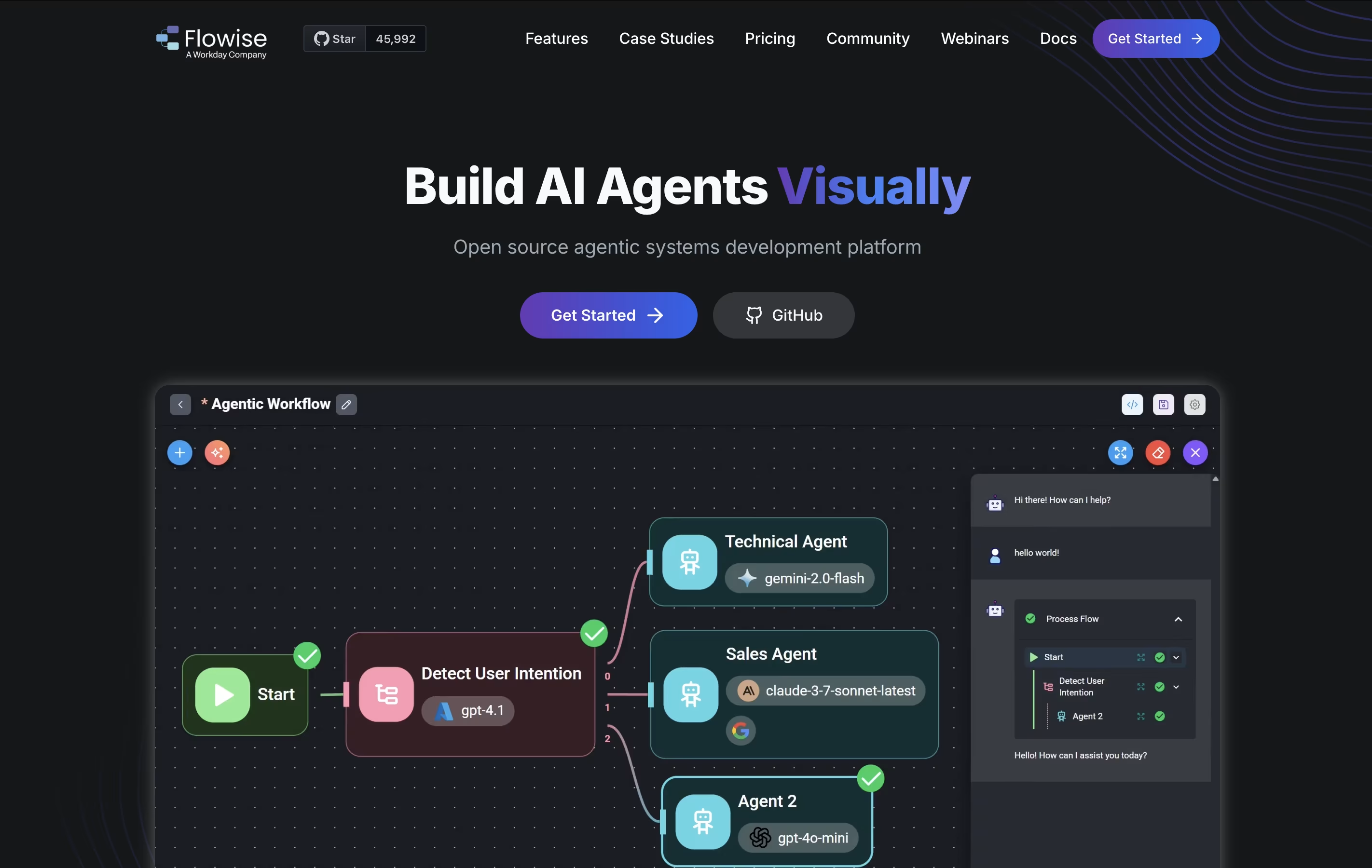
The platform lets you build chatbots that understand documents, create AI agents that can perform tasks automatically, and set up workflows that combine multiple AI tools. It supports retrieval-augmented generation, which means your AI can pull information from your own documents and databases to give accurate answers.
You can start with ready-made templates or build custom solutions from scratch. Flowise works with both cloud-based and locally-hosted AI models, giving you flexibility in how you deploy your applications. The platform is open-source, meaning the community constantly adds new features and improvements.

AgentX is a tool that helps you create multiple AI agents that work together as a team. Each agent can focus on specific tasks like customer support, sales follow-ups, or data analysis. Unlike simple chatbots, these agents can collaborate with each other to complete complex jobs.
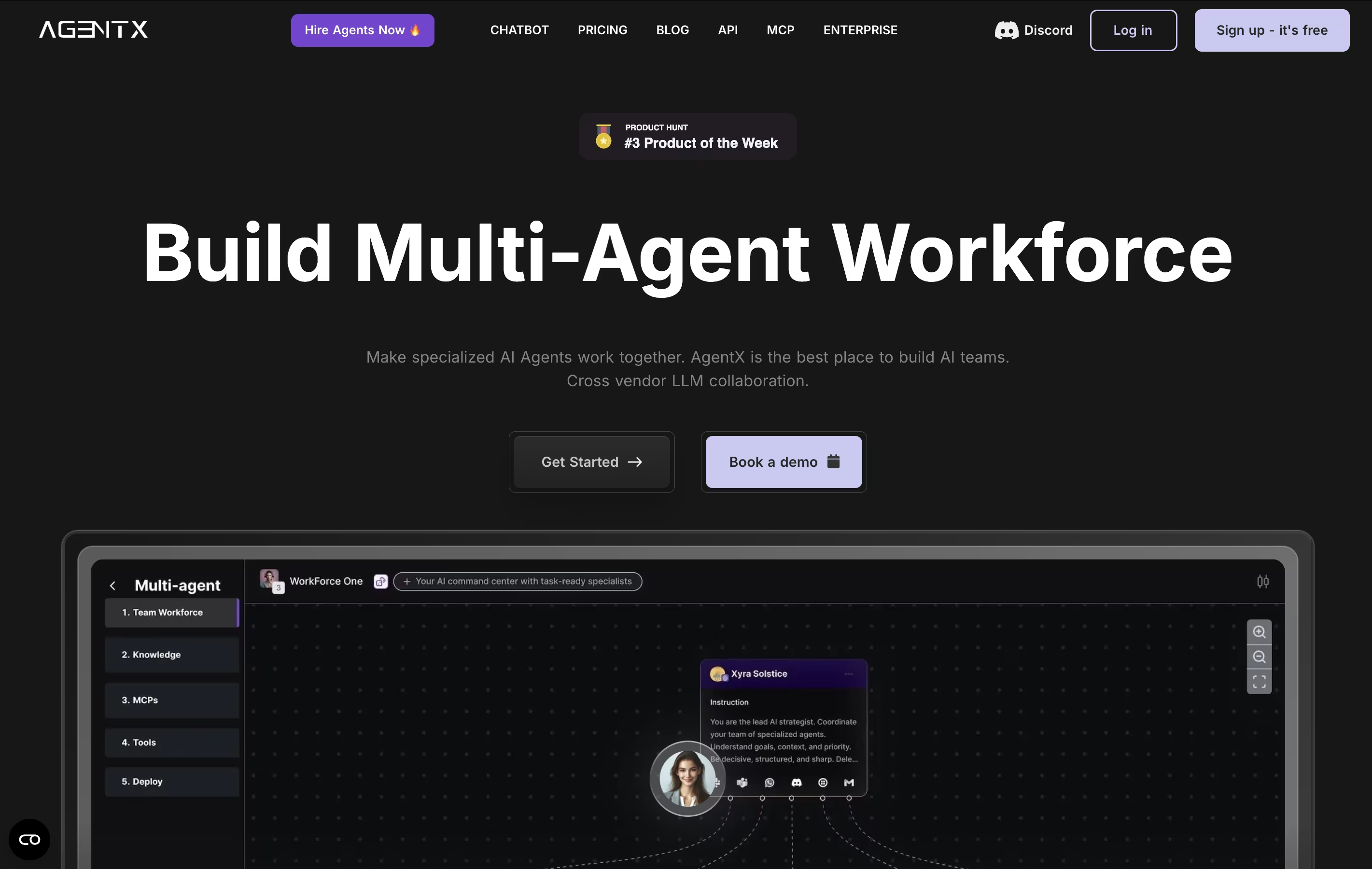
The platform supports all major AI models including GPT-4, Claude, and Gemini. You can choose which model works best for each task. Your agents can access your company documents, connect to databases, and use external tools automatically.
AgentX includes a drag-and-drop builder that makes creating agents simple. You can deploy your agents on websites, messaging apps like Slack and Discord, or use them internally. The system handles everything from simple questions to multi-step business processes without requiring technical knowledge.

GPTBots is a tool that helps businesses create AI agents using a simple drag-and-drop interface. You don't need any programming skills to use it. These AI agents can talk to customers, answer questions, automate workflows, and find information from your company's documents and databases.
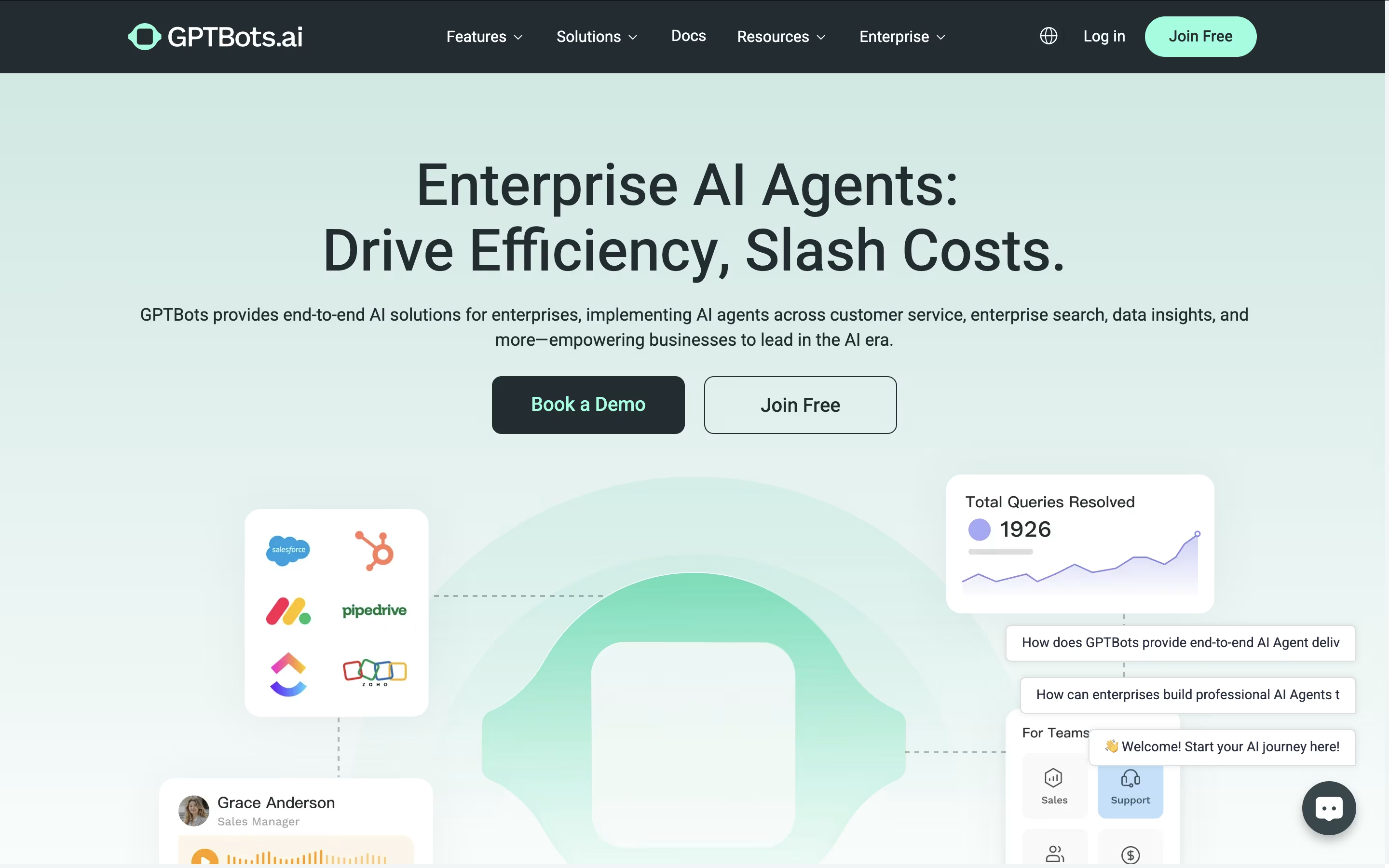
The platform supports multiple types of AI agents. Simple agents work for basic conversations, while flow-agents handle complex processes with multiple steps. Multi-agent systems can work together like a team to solve bigger problems. GPTBots works with popular AI models including ChatGPT, Claude, and DeepSeek.
You can also customize how your AI agents work, what they know, and which tools they can use. This makes GPTBots suitable for many different business needs.
Related to
AI Agent Builder