

Best 6 Relational Databases Tools in 2026
Last Updated: October 24, 2025
Structured data with clear relationships between records is still the backbone of most business applications. Relational Databases organize data into tables with defined relationships, offering strong consistency and reliable querying.
These platforms remain the standard choice for developers and enterprises building applications that depend on structured, consistent data. Decades of tooling and expertise make relational databases a dependable foundation for most software projects.
 Supabase
 SupabaseOpen-Source Backend Platform with Postgres Database,
  Neon
Neon NeonServerless Postgres Database with Branching and Autoscaling, and
  Nhost
Nhost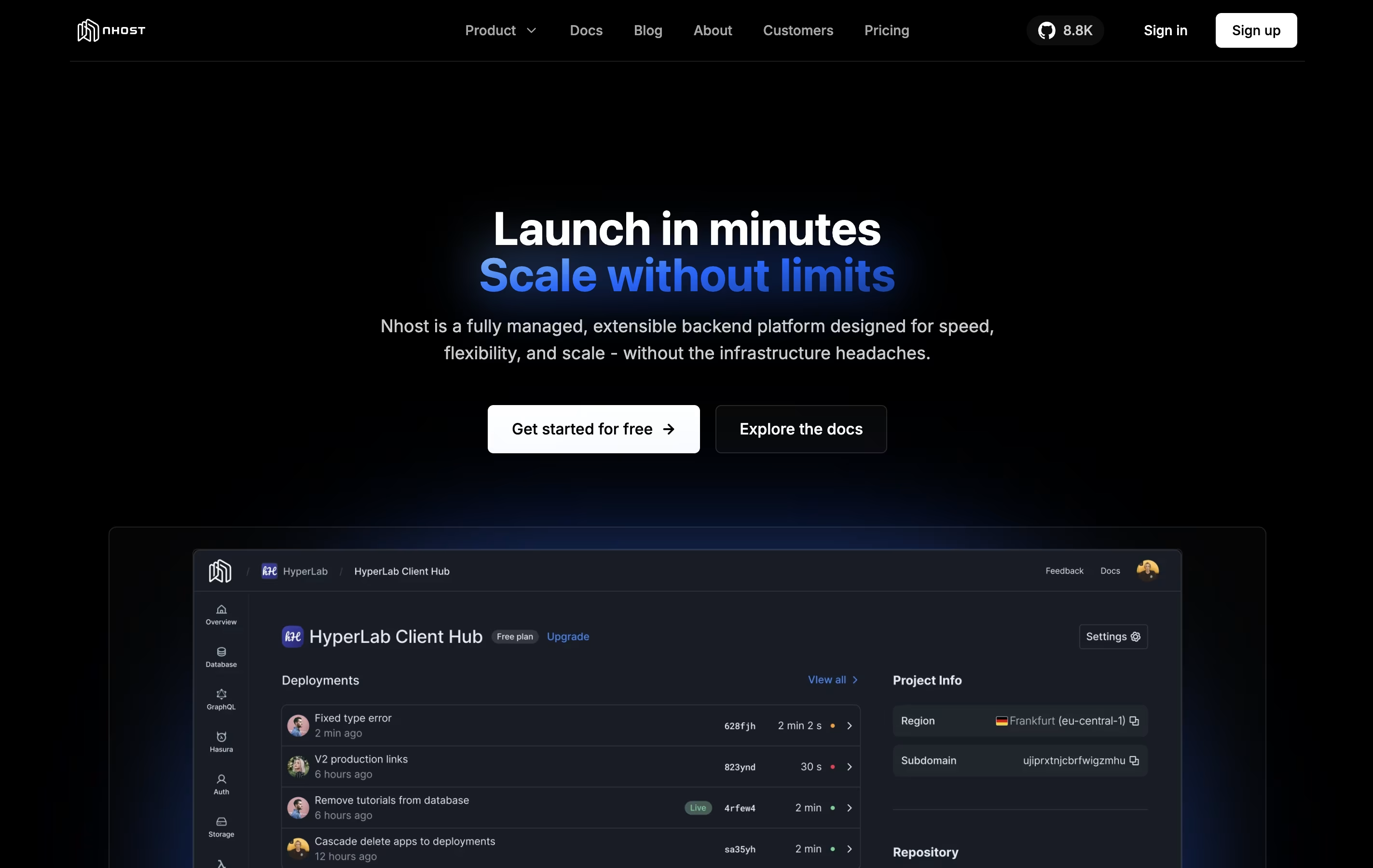 NhostOpen Source Backend Platform with GraphQL are the best for Relational Databases. So, let’s take a closer look at all 6 tools.
Supabase is a complete backend platform that gives you all the tools needed to build modern applications. At its core is a Postgres database, which is known for being stable and feature-rich. You can store data, create tables, and manage relationships without writing complex code.
Beyond the database, Supabase includes user authentication with support for email, social logins, and phone numbers. It also has file storage for images and documents, real-time features for live updates, and edge functions to run custom code. Everything connects through simple APIs that are automatically created from your database structure.
What makes Supabase different is that it is completely open-source. You can host it yourself or use their cloud service, and you never get locked into their platform.
Neon is a cloud database service built on Postgres, the most trusted open source database. It separates storage and computing power into two independent parts, allowing each to scale separately. This design means your database can grow or shrink automatically based on your needs, and it can even scale down to zero when not in use to save money.
The standout feature is database branching. Just like creating a branch in Git to test new code, you can create a branch of your database to test changes without affecting your main data. These branches are created instantly and use minimal extra storage thanks to a copy-on-write system. Neon is perfect for developers who want a powerful database without the complexity of traditional database management.
Nhost is a complete backend service that provides everything needed to build modern applications. You get a PostgreSQL database, a real-time GraphQL API, user authentication with multiple sign-in options, file storage for images and documents, and the ability to run custom code.
Unlike traditional backend setup that requires technical expertise in servers and security, Nhost handles all of this automatically. The platform is fully open-source, meaning you own your data and can move it anywhere without being locked into one provider.
It runs on cloud servers with automatic backups and updates. You can develop your project locally on your computer, then deploy it with a simple push to GitHub. Everything scales automatically as your user base grows.

PlanetScale is a database hosting service that runs on cloud platforms like AWS and Google Cloud. It supports two database types: Vitess for MySQL workloads and native Postgres for PostgreSQL applications. Both options come with high availability built in, using one primary database and two backup copies spread across different data centers.
The platform stands out with features like database branching, which works similar to Git branches for code. You can test changes safely before applying them to production. It also includes query monitoring tools that show which database operations are slow or using too many resources.
PlanetScale offers different service levels from pay-as-you-go pricing for startups to enterprise plans where they manage databases in your own cloud account.

PocketBase is a backend solution that puts all essential backend features into one small file. Unlike traditional backends that need multiple services and databases, PocketBase includes an embedded SQLite database with real-time updates, built-in user authentication, file storage system, and a web-based admin panel.
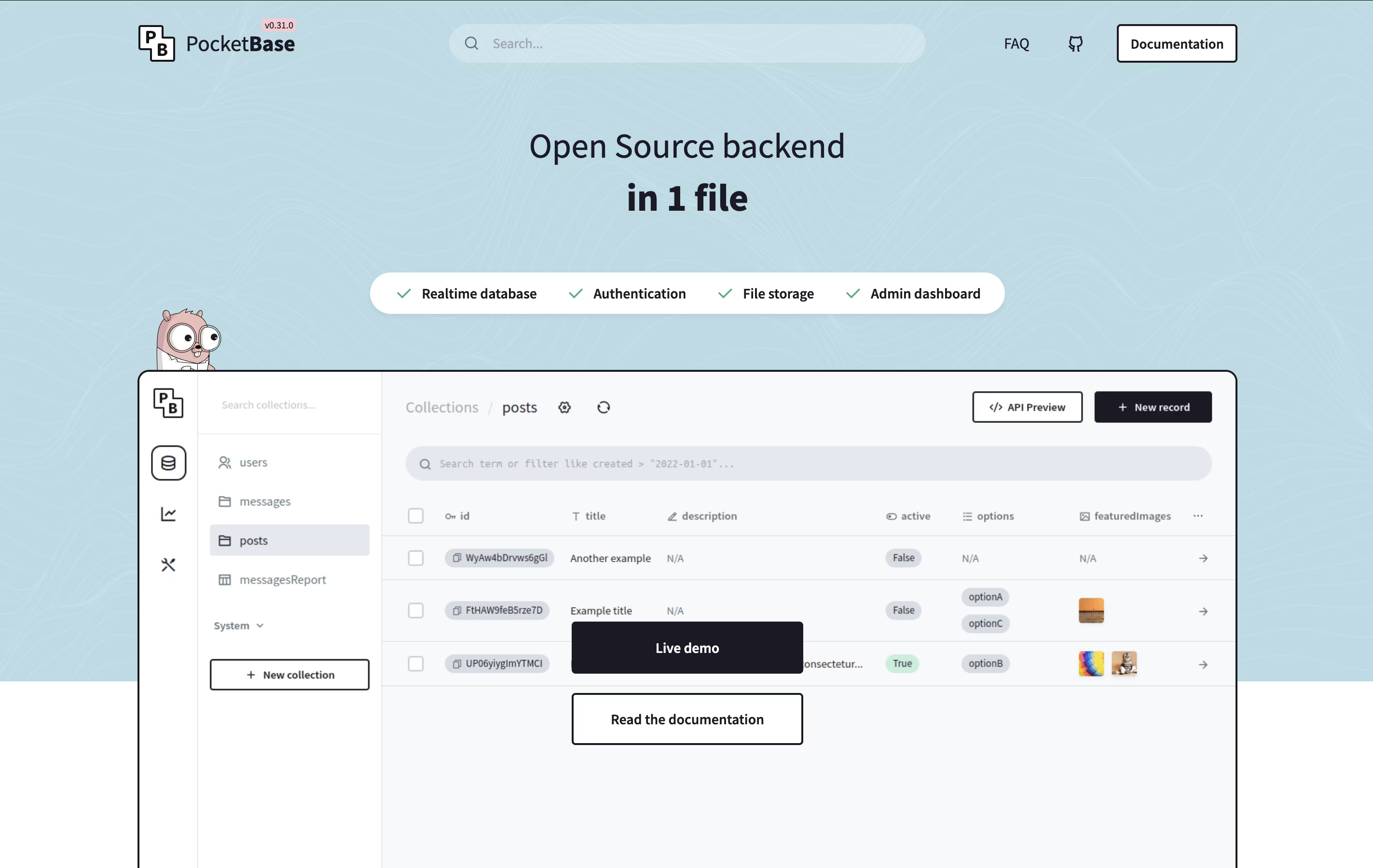
The tool is designed to be simple. You download one file, run it, and your backend is ready. It supports over 15 login methods including email, password, and social logins like Google, Facebook, and GitHub. Developers can interact with it through easy REST APIs or use the official JavaScript and Dart libraries.
PocketBase is self-hosted, meaning you control your data and can run it on your own server or computer.

Turso is a database service that takes SQLite and makes it ready for large-scale production use. You can create as many databases as you need, and they work just like SQLite but with added cloud features. Each database can be replicated to different parts of the world, making your app faster for users everywhere.
It includes native vector search, which is important for AI applications that use language models. You can also create database branches for testing, similar to how you branch code in Git. The embedded replicas feature lets you run a local copy of your database inside your app, giving you super-fast data access even when offline. This makes Turso ideal for modern apps that need both speed and reliability.
Related to
Relational Databases