Best 6 Voice AI Infrastructure Tools in 2026
Last Updated: August 24, 2026
Building a voice application means stitching together speech recognition, natural language understanding, text-to-speech, and telephony into a single low-latency pipeline. Voice AI Infrastructure tools handle this heavy lifting for you, offering APIs and SDKs for real-time transcription, voice cloning, conversational agents, and call automation so developers don't have to build everything from scratch.
These platforms are built for developers, startups, and enterprises creating voice assistants, AI call centers, IVR systems, and interactive voice products at scale. With features like low-latency streaming, multilingual support, and easy integration into existing telephony or CRM systems, they make it possible to launch production-ready voice experiences in days instead of months.
 AssemblyAI
 AssemblyAISpeech-to-Text and Voice AI APIs,
  Cartesia
 CartesiaFast, Natural Voice AI for Developers, and
  Vapi
Vapi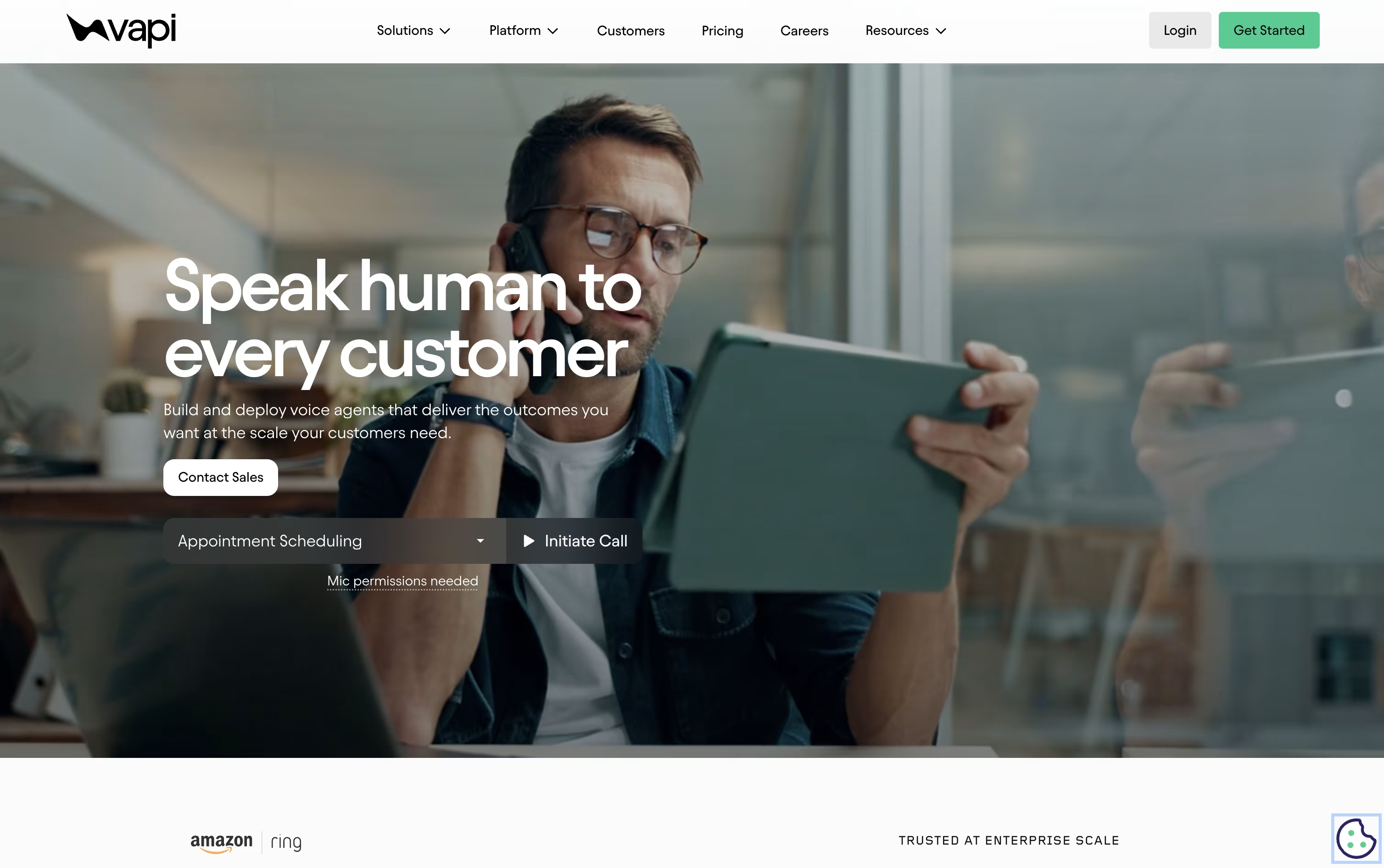 VapiBuild and Deploy Voice AI Agents Today are the best for Voice AI Infrastructure. So, let’s take a closer look at all 6 tools.

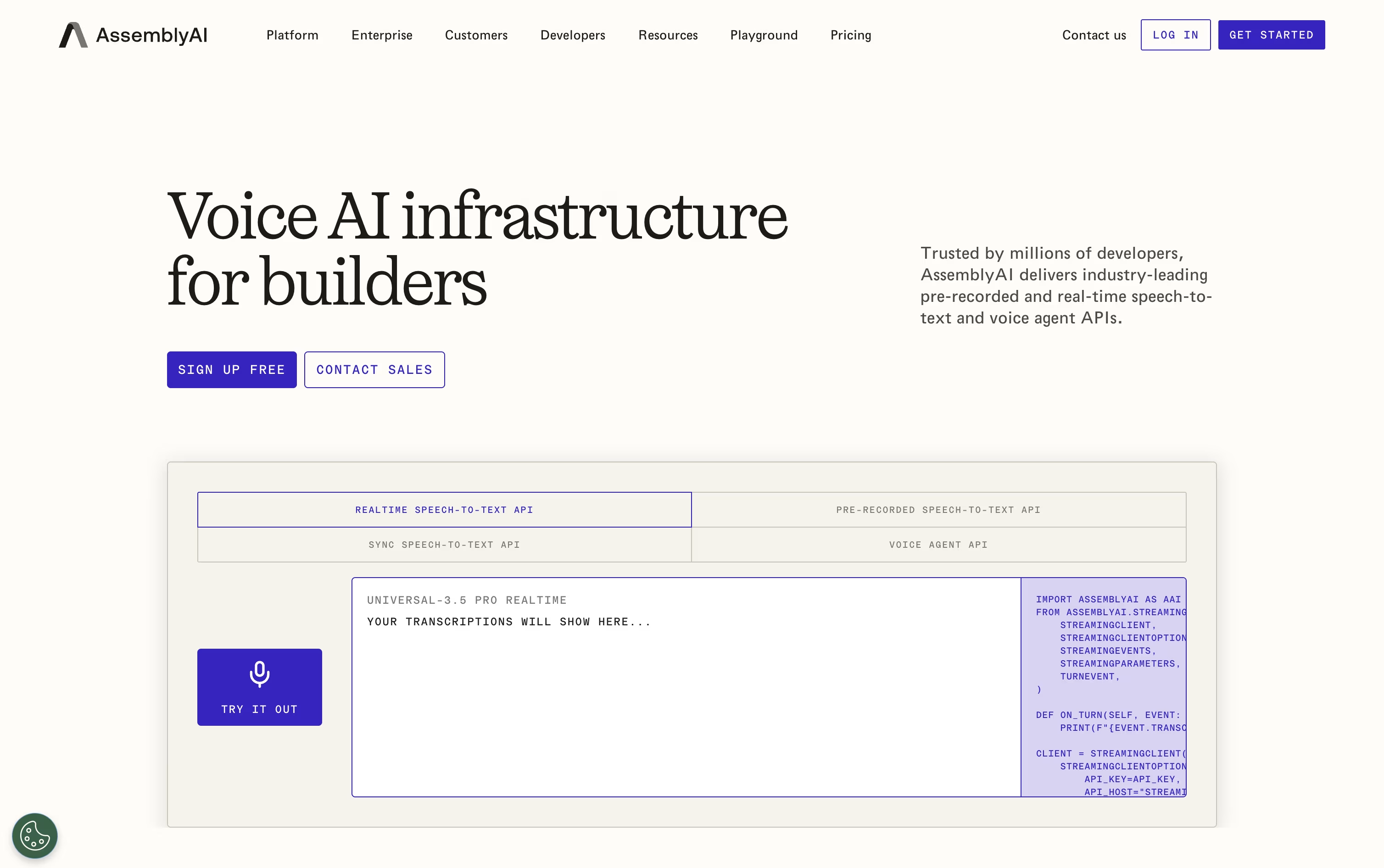
AssemblyAI gives developers a way to turn audio and video into text and insights without building speech models from scratch.
You can send in a finished recording for batch processing, stream live audio for realtime captions, or use the Sync API when you just need a quick transcript from a short clip in one call.
The Universal-3.5 Pro model is built for real conversations, working across 18 languages, labeling different speakers, and picking up medical and technical words accurately.
On top of the transcript, Speech Understanding can summarize the audio, detect sentiment and topics, translate it, and pull out names, dates, and other details.
Everything is billed per hour of audio processed, starting around $0.15 an hour, with extra features priced as small add-ons.
Teams building voice agents can instead use the Voice Agent API at $4.50 an hour, which already includes the speech model, a conversation focused language model, and text-to-speech together.
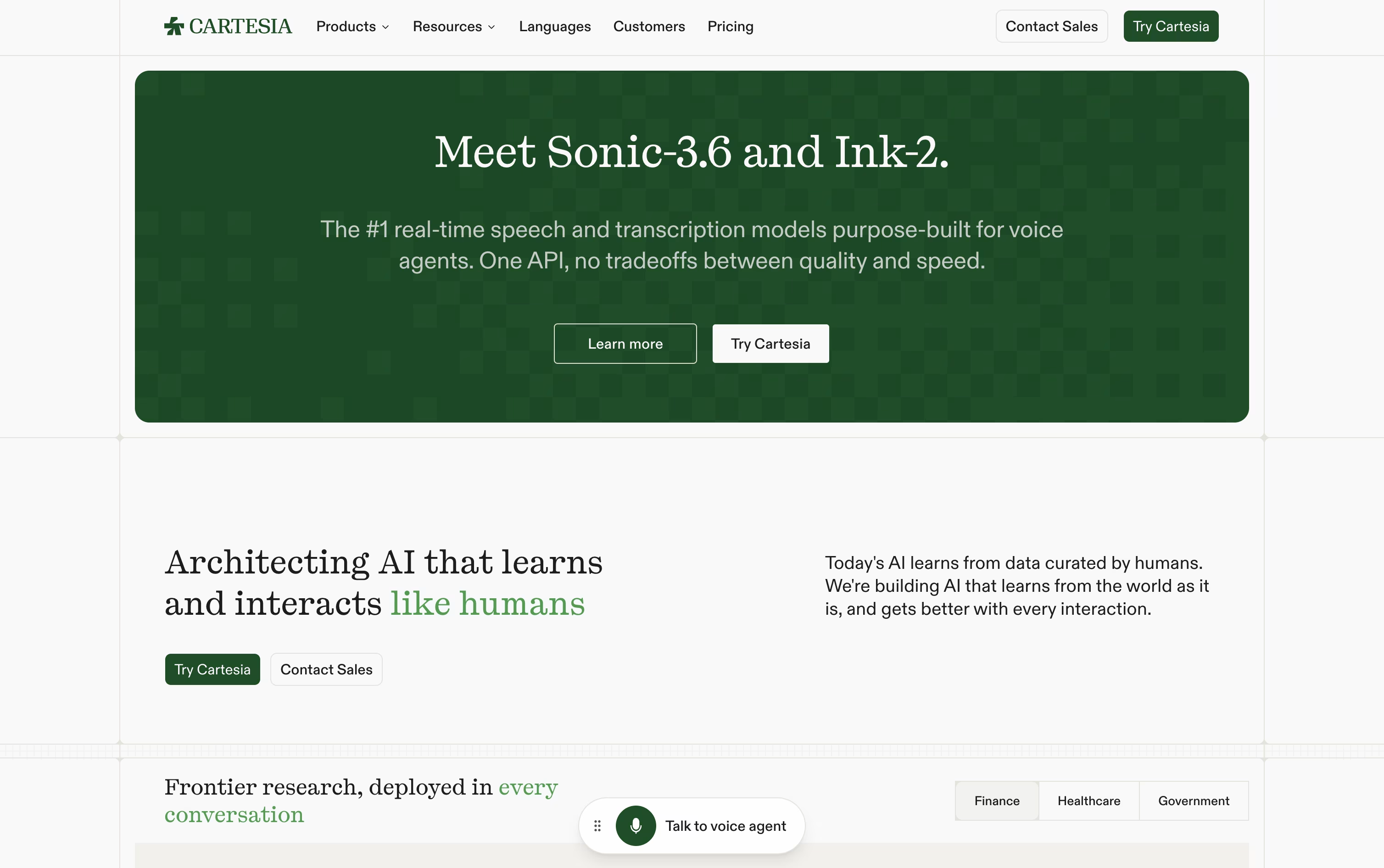
Cartesia is a voice AI platform focused on speed and natural sound, built by researchers behind State Space Models, an approach designed for quick responses and long context handling.
Three tools sit at its core. Sonic converts text into human sounding speech, Ink listens and turns speech into text while detecting when a speaker starts and stops, and Line combines both into full voice agents you control with your own code.
The Free plan costs nothing and includes 20K monthly credits along with basic Text to Speech and Speech to Text access.
Moving up, Pro at $5 a month unlocks commercial use and instant voice cloning, and Startup at $49 a month adds professional voice cloning plus organization support.
Scale, at $299 a month, brings priority support and higher concurrency, while Enterprise offers custom pricing with SSO and compliance features for larger teams.
Phone numbers and call minutes are billed on top of a plan, and any subscription can be paused or stopped whenever needed.
Building a voice AI agent from scratch usually means wiring together speech recognition, a language model, and speech synthesis yourself. Vapi handles that real-time plumbing so developers can spend their time on prompts, tools, and the actual conversation flow.
Each agent is made up of a speech to text step, a language model, and a text to speech step, all of which can be swapped or brought in with your own API keys. Agents can place or receive phone calls, trigger outside tools and APIs, and pass conversations between specialized assistants when a task gets more complex.
Well known teams such as Amazon Ring and Intuit rely on Vapi for support, sales, and scheduling calls, backed by built-in monitoring, recordings, and analytics for ongoing improvement.
The Build plan is usage based, starting at $0.05 per minute for voice calls and $0.0005 per message for chat, and it includes 60+ minutes and 10 concurrent calls. Model provider costs are charged at cost, and fall to $0 when you use your own API key.
Bigger organizations can choose Scale, an annual contract with a fixed platform fee, committed volume, and enterprise extras like SSO, SOC 2, and a dedicated support team, with pricing shared on request.

Smallest AI builds compact, fast AI models for voice conversations rather than relying on one large model for everything. This approach lets each model react quickly and handle speech in a natural way.
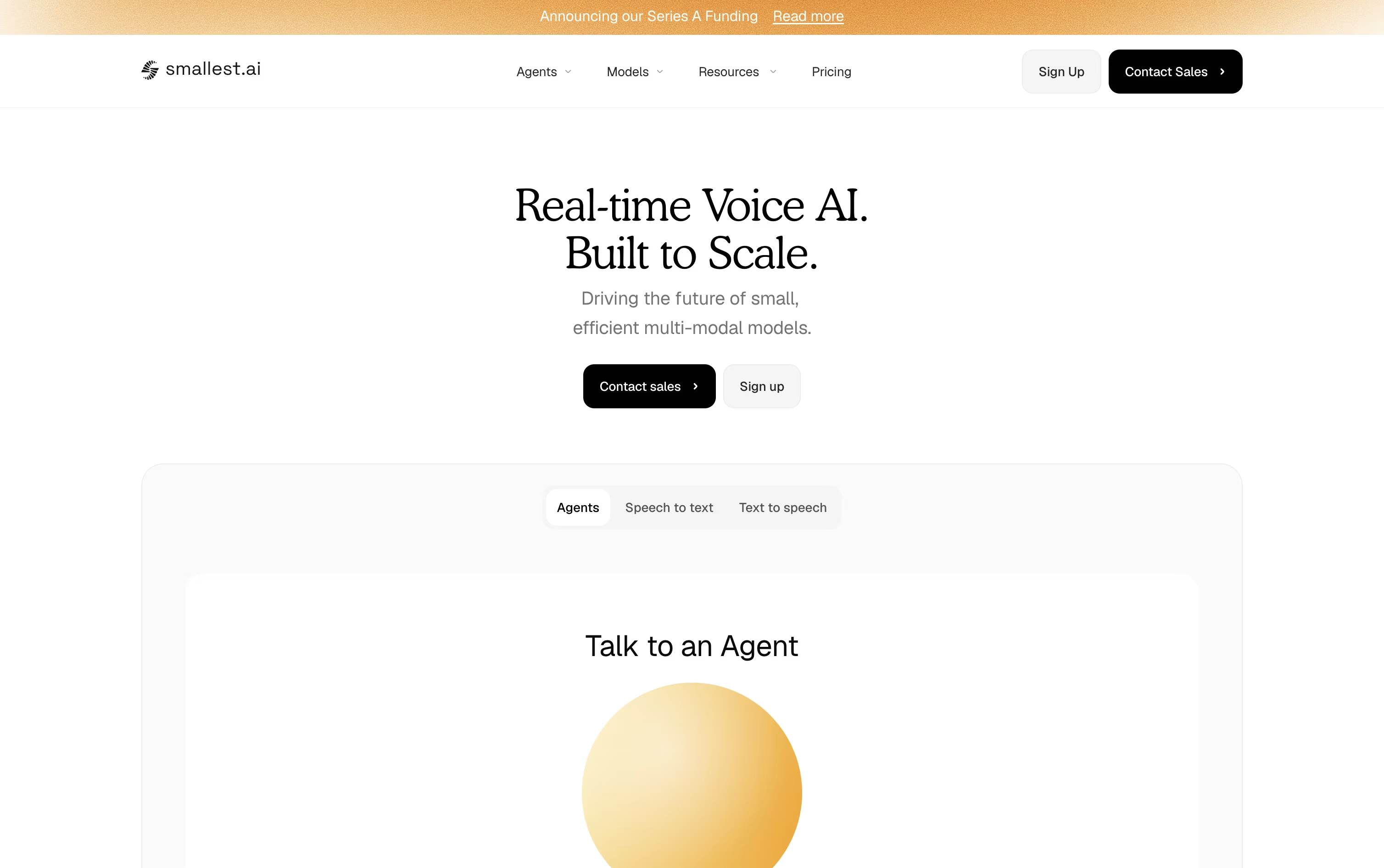
The platform's main models are Lightning for turning text into speech, Pulse for turning speech into text, Hydra for direct speech to speech conversation, and Electron, a small language model that handles reasoning during a call.
Teams that want to build voice agents can use Atoms, a no-code platform for creating, testing, and launching agents, along with knowledge bases and calling campaigns.
Billing works on a pay as you go basis. New users start with $10 in free credits, then usage is billed per minute for calls, per character for speech generation, and small fees for extras like knowledge base queries.
Bigger teams can choose the Enterprise plan for custom pricing, dedicated infrastructure, on-premise options, and compliance support, with per minute agent costs starting as low as $0.05.

Deepgram gives developers one platform for speech-to-text, text-to-speech, and real-time voice agents, instead of stitching together separate tools.
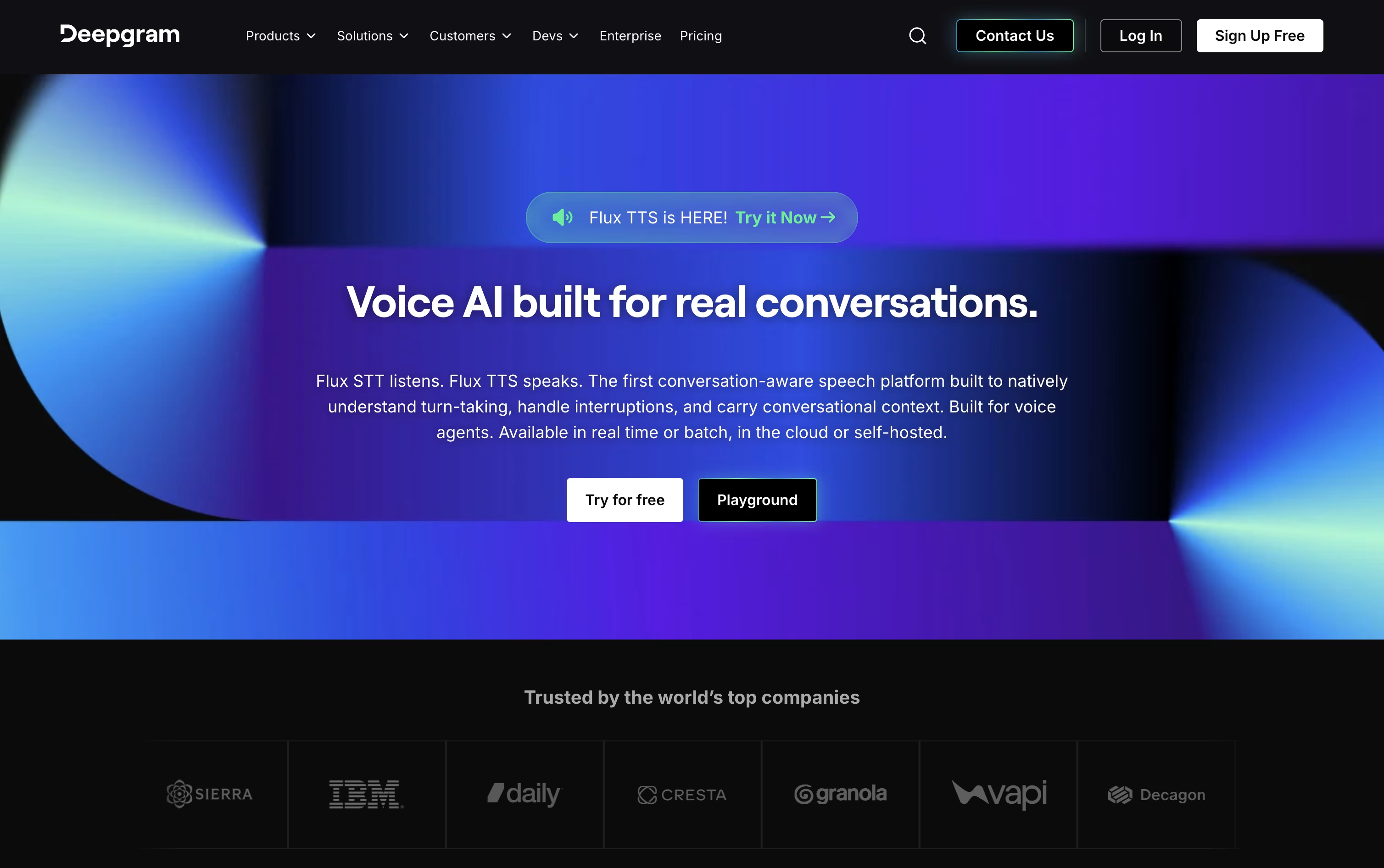
Its Nova-3 and Flux models transcribe audio quickly and accurately in more than 45 languages, with built-in speaker labels, formatting, and redaction of private information.
On the speech side, Aura voice models generate natural sounding replies fast, and the Voice Agent API ties listening, reasoning, and speaking together into one smooth, low-latency conversation.
New users start on Pay As You Go, which comes with a $200 free credit and charges only for actual usage after that.
Growth suits busier teams for $4,000 or more a year in prepaid credits, bringing lower rates on most services and higher concurrency limits.
Larger organizations can move to Enterprise, a custom priced plan through sales that adds dedicated support, custom models, and options to self-host for stricter data control.

Rime AI converts text into speech that sounds like a real person talking, which makes it a strong fit for voice agents, customer calls, and automated phone systems.
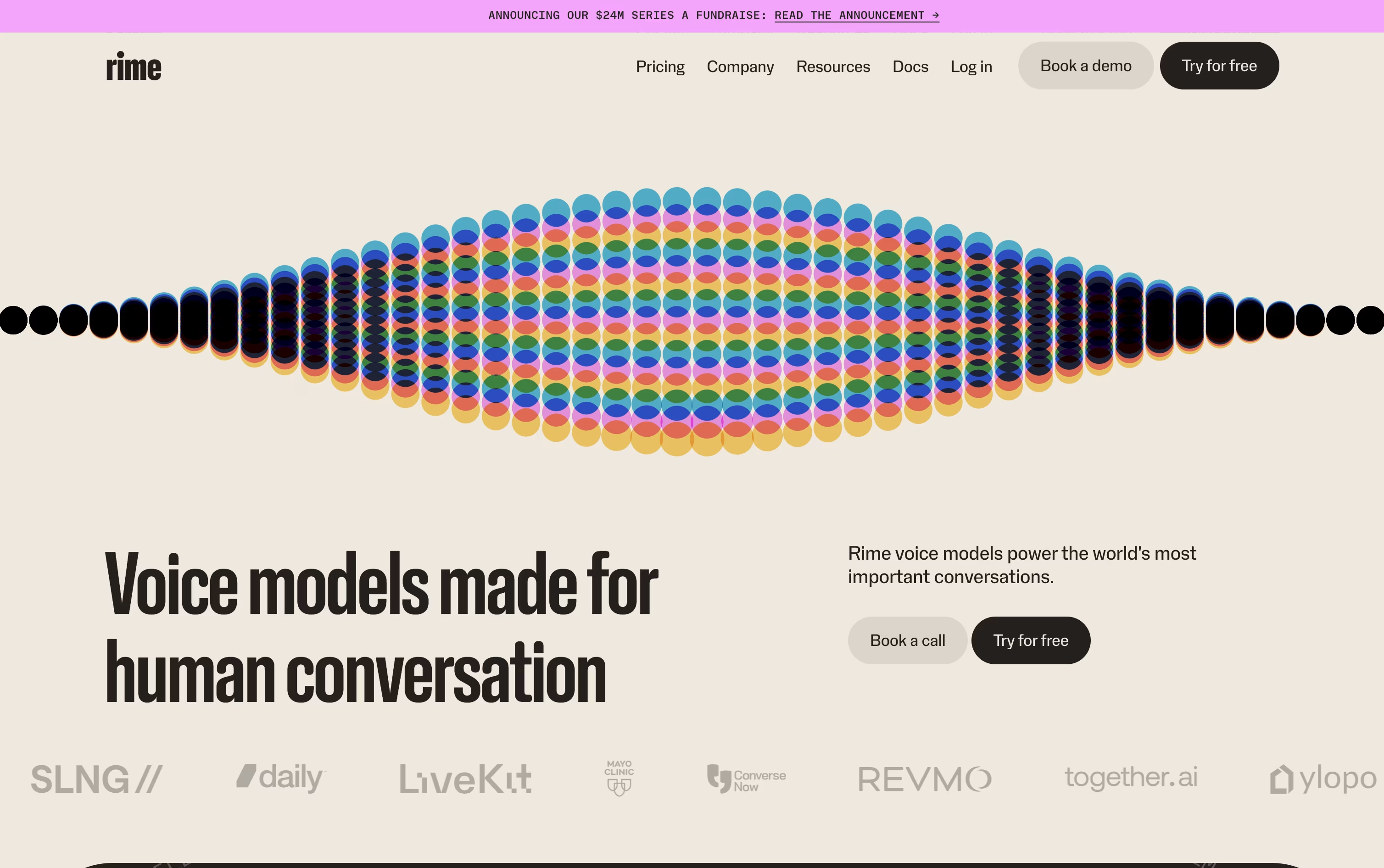
Pricing is usage based, so you only pay for what you generate. It starts at $0.03 per 1,000 characters, and new accounts get roughly 800 minutes free with no credit card needed.
Two models are offered. Mist v3 responds the fastest, while Coda focuses on natural, expressive sounding speech and covers more languages.
The Starter plan supports 20 concurrent voice generations along with streaming audio, word level timestamps, and precise control over how names and numbers are pronounced.
Bigger teams can move to Enterprise for custom pricing, unlimited concurrent generations, unlimited voice cloning, and cloud, on prem, or private network deployment.
Enterprise customers also get HIPAA compliance and SOC 2 Type II reporting for handling sensitive conversations safely.