
Best 3 Tools for Continuous Integration in 2026
Last Updated: September 22, 2025
Merging code changes from multiple developers can introduce bugs if it is not tested carefully at every step. Continuous Integration tools automatically test and validate code changes as they are merged, catching issues early.
Development teams use continuous integration to keep a codebase stable even as multiple people contribute changes regularly.
 Appliku
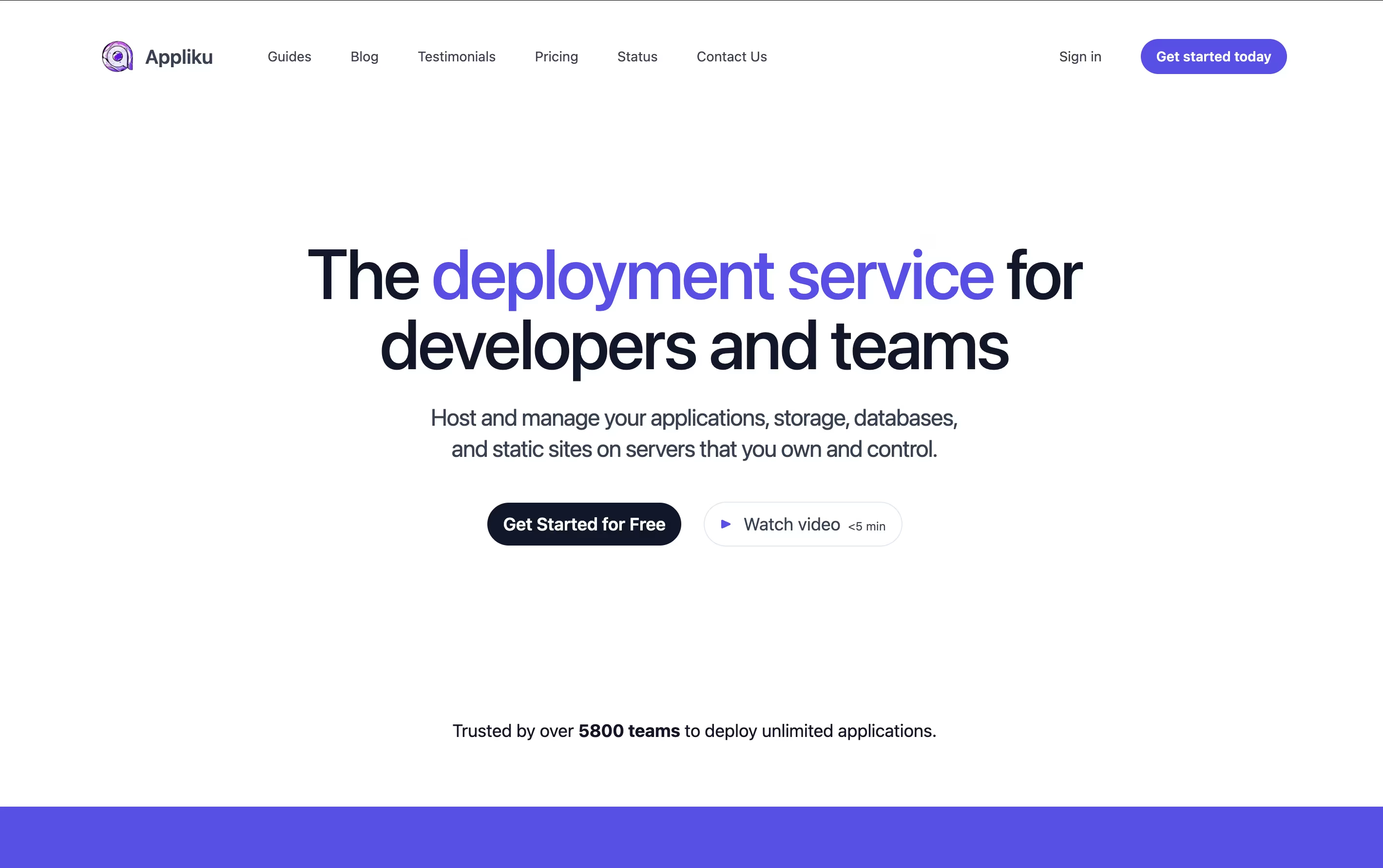 ApplikuSimple Python Django App Deployment Platform,
  Gumloop
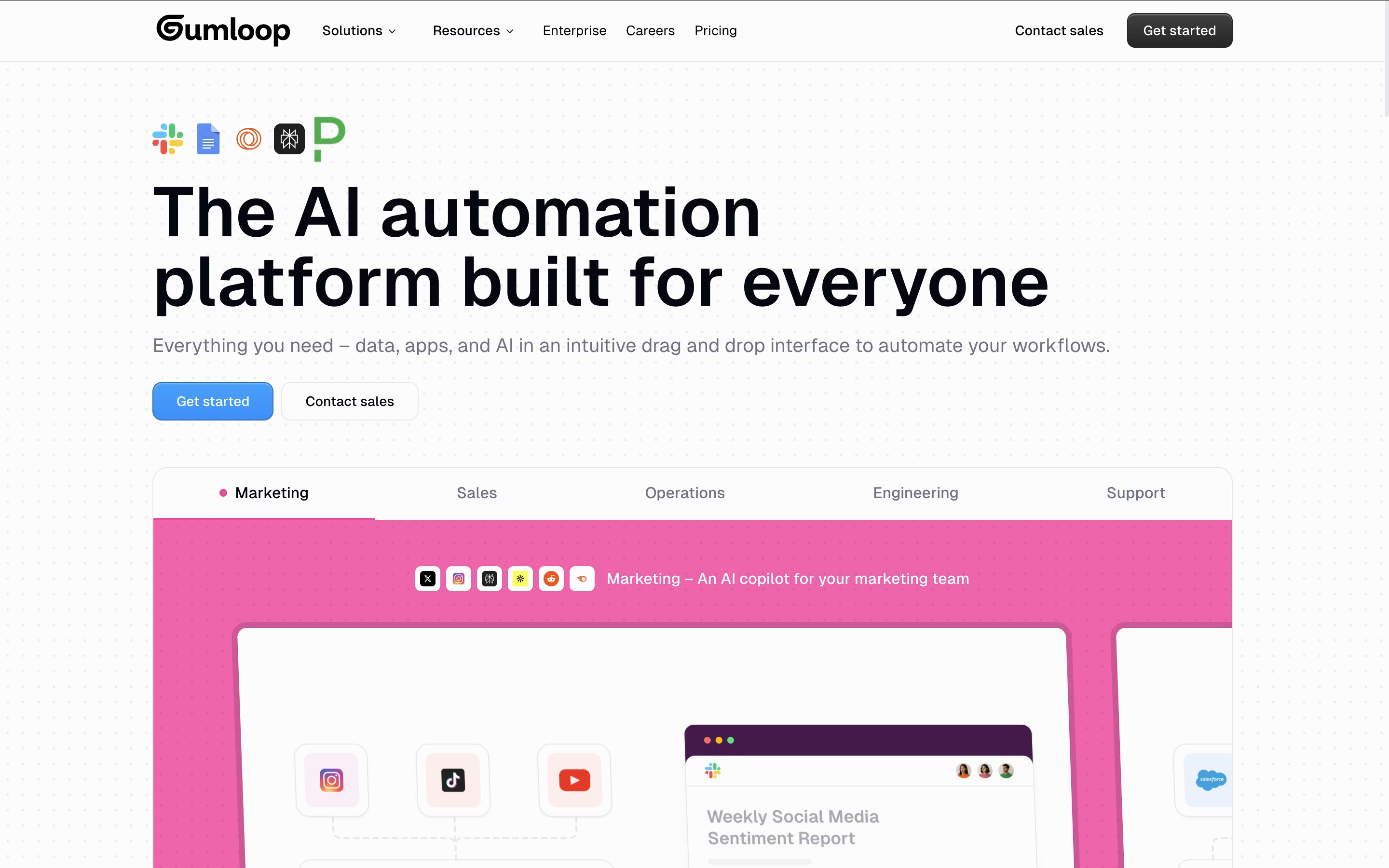 GumloopNo-Code AI Automation Platform, and
  Pulumi
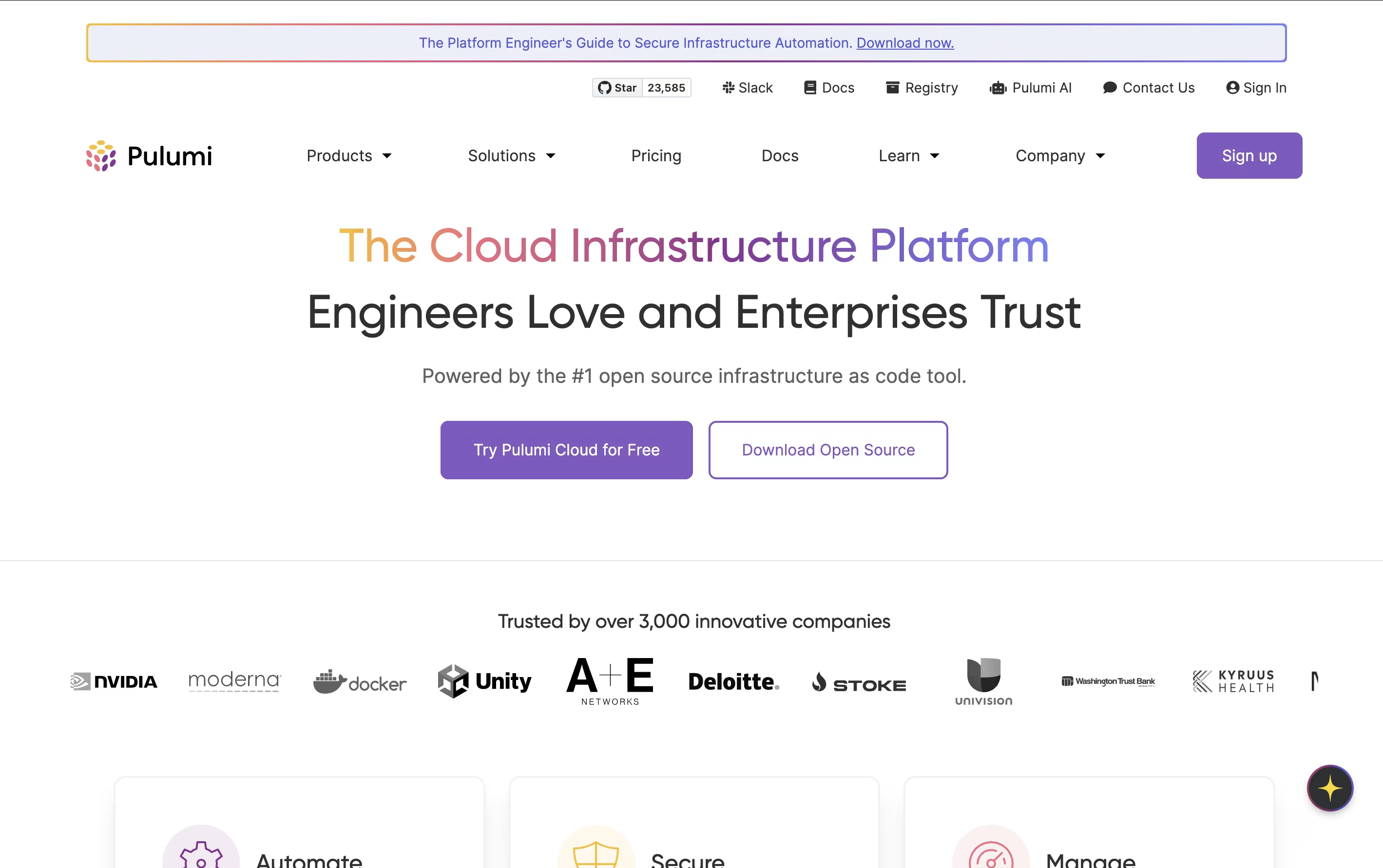 PulumiInfrastructure as Code in Any Language are the best for Continuous Integration. So, let’s take a closer look at all 3 tools.
Appliku is a deployment automation platform designed to simplify server management and application deployment for developers and teams. Think of it as a bridge between complex server administration and easy-to-use hosting platforms.
The service works by connecting to your existing cloud servers (like AWS, DigitalOcean, or any Ubuntu server) and automatically setting up everything needed to run your applications. It uses Docker and Nginx behind the scenes to create a reliable hosting environment without requiring you to learn server management.
What makes Appliku special is its BYOS (Bring-Your-Own-Server) approach. You keep full control over your hosting costs and server specifications while getting the same easy deployment experience as premium hosting platforms. Founded to help developers focus on building rather than server management, Appliku supports Python, Django, and other web applications with automatic Git-based deployments.
Gumloop is an AI-native automation platform designed to help businesses automate complex workflows using artificial intelligence and machine learning. Think of it as a visual programming tool that connects your favorite business applications with cutting-edge AI models.
The platform works by letting users drag and drop "nodes" (individual components) onto a visual canvas to build complete automation workflows. These nodes can be anything from web scrapers and document processors to AI models like GPT-4 and Claude. Users connect these nodes together to create "flows" that can handle complex business processes automatically.
Founded in 2023, Gumloop has quickly gained popularity among teams at companies like Webflow, Instacart, and Shopify. What makes it special is its AI-first approach - instead of just moving data between apps, it can actually process, analyze, and make decisions about that data using artificial intelligence. This makes it perfect for automating tasks that previously required human judgment.
Pulumi is an open-source infrastructure as code platform that allows developers to define, deploy, and manage cloud infrastructure using familiar programming languages instead of proprietary domain-specific languages. Think of it as bringing software engineering practices to infrastructure management.
The platform consists of three main products: Pulumi IaC for infrastructure management, Pulumi ESC for secrets and configuration management, and Pulumi Insights for AI-powered infrastructure analytics. What sets Pulumi apart is its use of real programming languages, enabling developers to write infrastructure code with loops, conditionals, functions, and all the features they're used to.
Pulumi manages infrastructure declaratively while providing the flexibility of imperative programming. Each resource is tracked and managed through state files, ensuring consistent and predictable deployments. The platform integrates with existing CI/CD pipelines and supports policy as code for security and compliance requirements.