Best 4 Tools for Pull Request Summarization in 2026
Last Updated: August 19, 2026
A pull request with dozens of changed files can be genuinely hard to size up at a glance, especially for a reviewer who was not involved in writing it. Pull request summarization reads through the full diff and produces a concise overview of what changed and why, so reviewers know what they are walking into before opening a single file.
This makes reviews faster and more focused, since time is spent evaluating the actual decisions made rather than reconstructing intent from scratch. It is especially useful for large or cross-cutting changes where the full context would otherwise take real effort to piece together.
 Sourcery
 SourceryAI Code Review & Security Scanning,
  Macroscope
 MacroscopeAI Engineering Understanding Engine, and
  CodeRabbit
 CodeRabbitAI-Powered Code Review for Teams are the best for Pull Request Summarization. So, let’s take a closer look at all 4 tools.

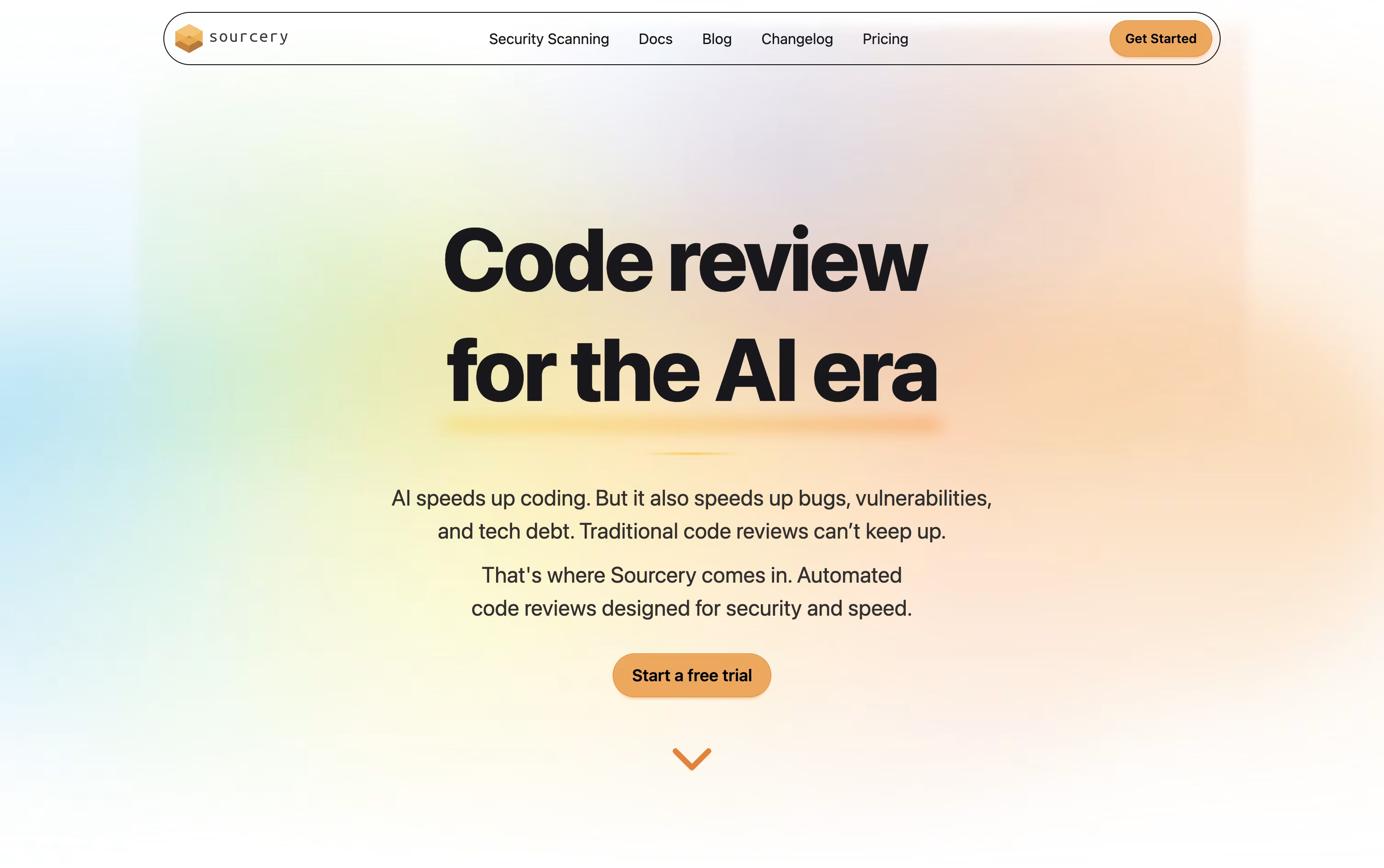
Sourcery reviews pull requests automatically on GitHub and GitLab, leaving summaries, diagrams, and line by line comments so nothing important gets missed before code is merged.
Inside your editor, it goes further with on-demand reviews, live refactoring suggestions, and an AI chat that understands the code you have open, plus a quality score for every function you write.
Public and open source repos get all of this for free, including basic security scans for up to 3 repositories.
Moving to Pro at $12 per seat a month unlocks private repo reviews and scanning for 10 repositories, while Team at $24 per seat a month adds daily scans, analytics, and the ability to bring your own AI model.
Larger organizations can reach out for Enterprise pricing, which adds self-hosting and a dedicated support manager.
Code is only held briefly during a scan and never used to train any model, which keeps the whole process private.
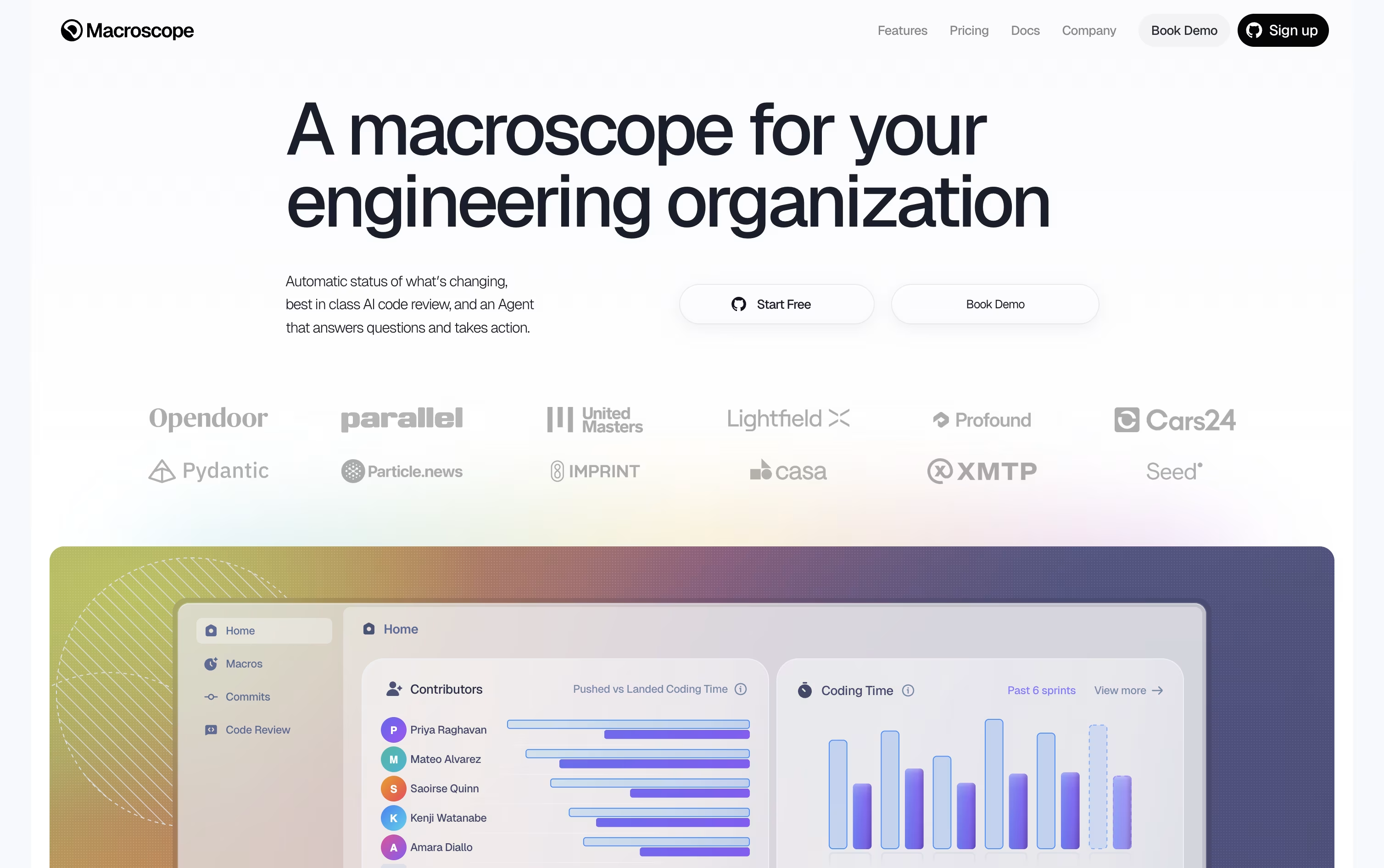
Think of Macroscope as an extra set of eyes on your GitHub repos. It checks every pull request for real bugs, not just style issues, and explains what actually changed in plain language.
It does this by building a graph of the codebase, tracing how functions and files connect, so its comments and summaries are based on the real structure of the code.
It also acts as an assistant you can ask questions to in Slack or GitHub, and it can create tickets, open pull requests, or apply small fixes on its own.
Costs scale with use. Reviews are priced by the size of the code checked, status updates by the number of commits, and the agent by credits spent answering or acting.
Every new account starts with $100 of free usage, and bigger teams can switch to a custom priced Enterprise plan with extra support and legal agreements.
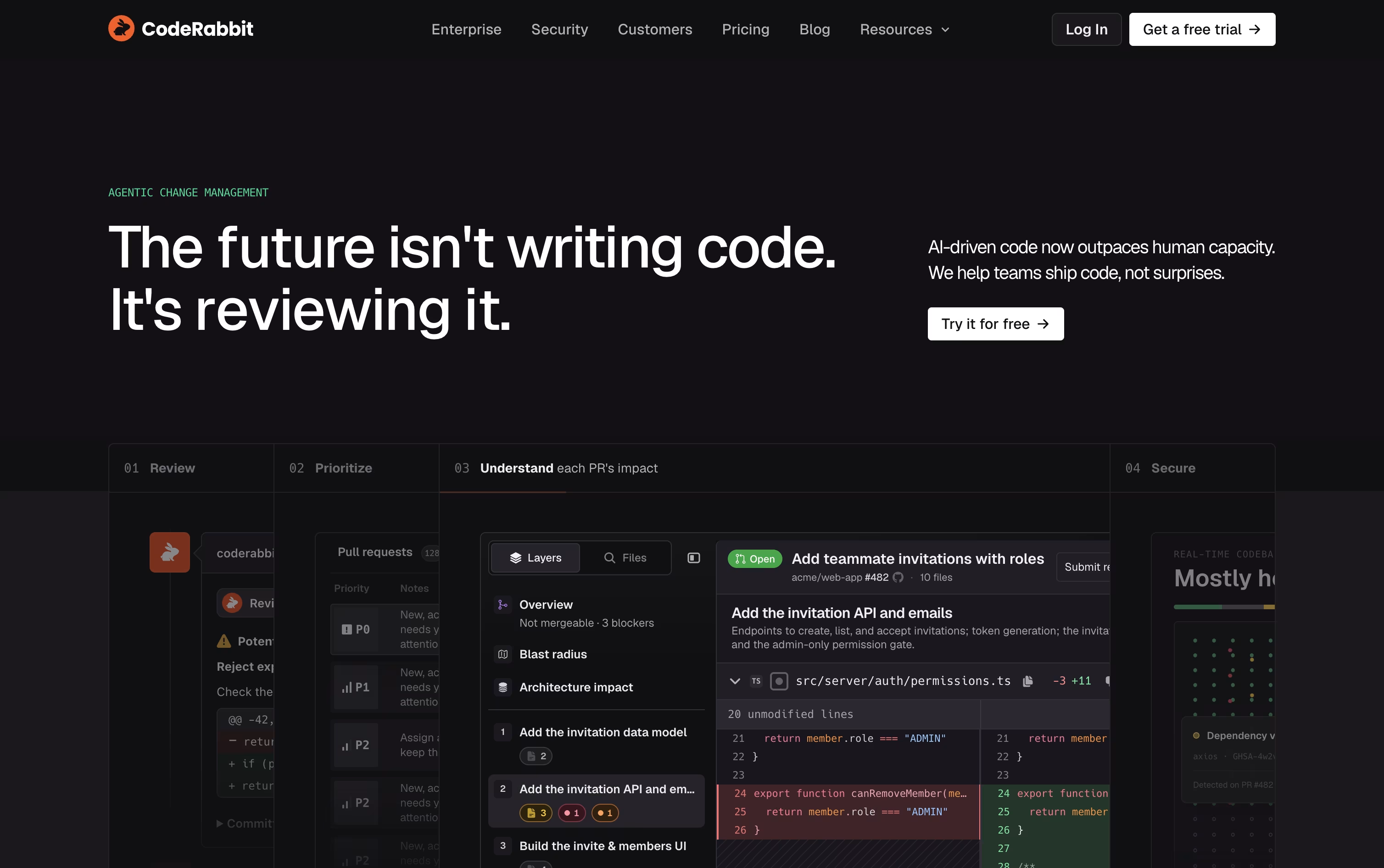
Think of CodeRabbit as an AI reviewer that sits inside your pull request process. It reads new and updated code, then leaves clear comments, summaries, and diagrams instead of a wall of raw diffs.
It blends large language models with over 40 static analysis and security tools, along with context from your codebase and prior feedback, to flag bugs, security risks, and style problems before they slip through.
Support spans GitHub, GitLab, Bitbucket, and Azure DevOps, along with IDE extensions for VS Code, Cursor, and Windsurf, a CLI for local reviews, and Slack and Discord agents for team chat.
Open source projects can use it for free. Paid plans start with Pro at $30 per user a month, or $24 a month if billed yearly, covering PR and CLI reviews, one-click fixes, and learnings.
Pro Plus runs $60 per user a month, or $48 billed yearly, and unlocks multi-repo analysis, custom pre-merge checks, unit test generation, and post-merge automation.
Larger teams can move to Enterprise for custom pricing, which adds SSO, RBAC, audit logs, API access, and self-hosting, and both paid plans include a 14-day free trial.

Most code review tools only look at what changed in a pull request. CodeAnt AI instead reads your whole codebase, your infrastructure files, and even your commit history, so its AI agents can trace real attack paths instead of guessing.
Every pull request gets an automatic review with plain language explanations, severity ranking, and fixes you can apply with a single click.
On the offensive side, CodeAnt AI runs autonomous pentests, chaining together exploits across 500 plus attack types to show what is genuinely exploitable, not just theoretically risky.
It also handles secret scanning, dependency checks, cloud misconfiguration detection, and dev metrics for tracking team output over time.
AI Code Review begins with a free 14 day trial, then runs $30 per user a month, or $24 on yearly billing. Code Security and Code Quality both start at $250 a month for 10 users, falling to $200 yearly, and Dev Metrics runs $25 per user monthly or $20 yearly.
AI Pentesting offers one free scan with low and medium findings always free, and an Enterprise tier with custom pricing is available across every product.