

Best 4 Tools for Web Scraping in 2026
Last Updated: September 22, 2025
Collecting information from many websites by hand is slow and does not scale well. Web Scraping tools automatically extract structured data from websites, whether that is prices, listings, or public information.
Analysts and developers use web scraping to gather large amounts of data without manually copying it page by page.
 Hexomatic
 HexomaticNo-Code Web Scraping & Automation Platform,
  Apify
Apify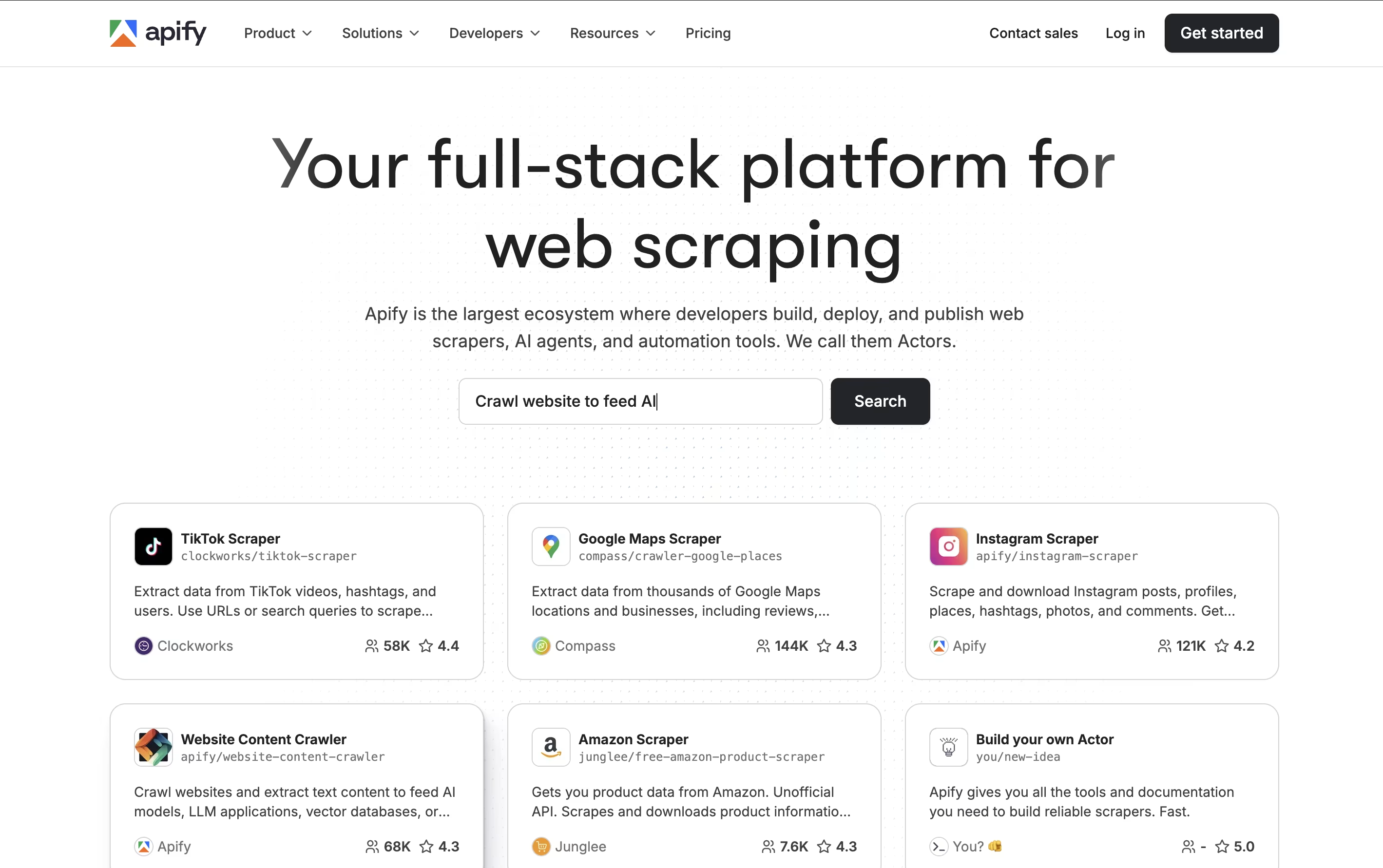 ApifyWeb Scraping Platform with 6,000+ Tools, and
  Browser Use
 Browser UseAI Browser Automation Framework for Smart Web Tasks are the best for Web Scraping. So, let’s take a closer look at all 4 tools.
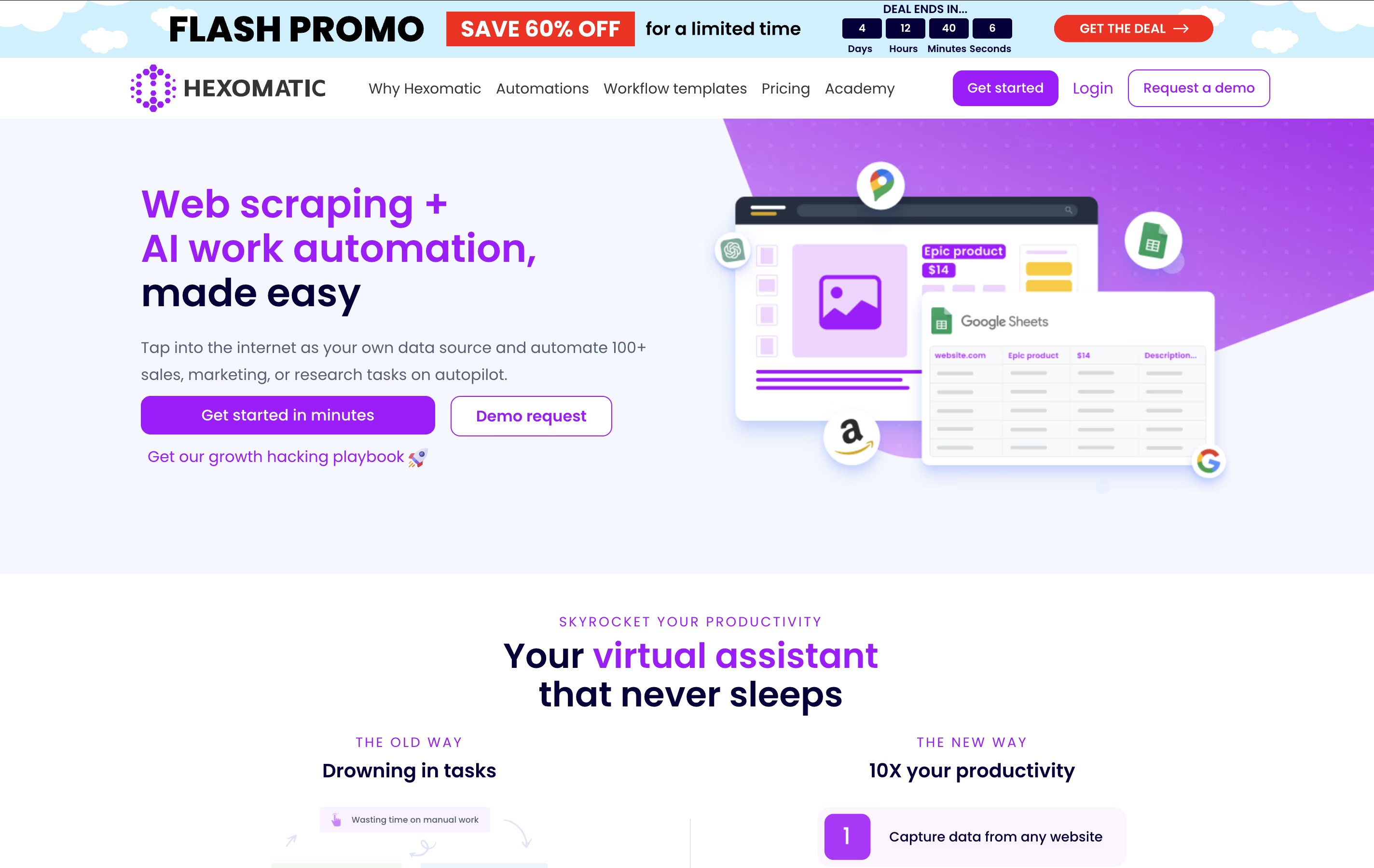
Hexomatic is a no-code automation platform designed to help businesses extract data from websites and automate time-consuming tasks. Think of it as your digital assistant that can visit websites, collect information, and perform actions automatically without any technical knowledge required.
The platform works by combining web scraping capabilities with workflow automation. You can create "recipes" to extract specific data from websites like product prices, contact information, or social media profiles. Then, use over 100 built-in automations to process this data - validate emails, translate content, generate reports, or send notifications.
What makes Hexomatic special is its visual, drag-and-drop interface that lets anyone build complex automation workflows. It runs continuously in the cloud, so your automations work even when you're offline. The platform also includes AI-powered features through integrations with ChatGPT and Google Gemini for advanced content creation and data analysis tasks.
Apify is a comprehensive web scraping and browser automation platform designed to help businesses extract data from websites at scale. Think of it as a marketplace combined with a powerful infrastructure that handles all the complex technical parts of web scraping for you.
The platform hosts over 6,000 pre-built scrapers and automation tools called "Actors" that can extract data from popular websites like Google Maps, Instagram, Amazon, LinkedIn, and many others. Each Actor is like a specialized robot that knows exactly how to navigate and collect data from specific websites. The main difference from building your own scrapers is simplicity: instead of dealing with proxies, browser management, and anti-bot measures, you just choose an Actor, configure it, and let it run. Founded in 2015, Apify has become the largest ecosystem for web scraping tools, serving over 10,000 customers worldwide.
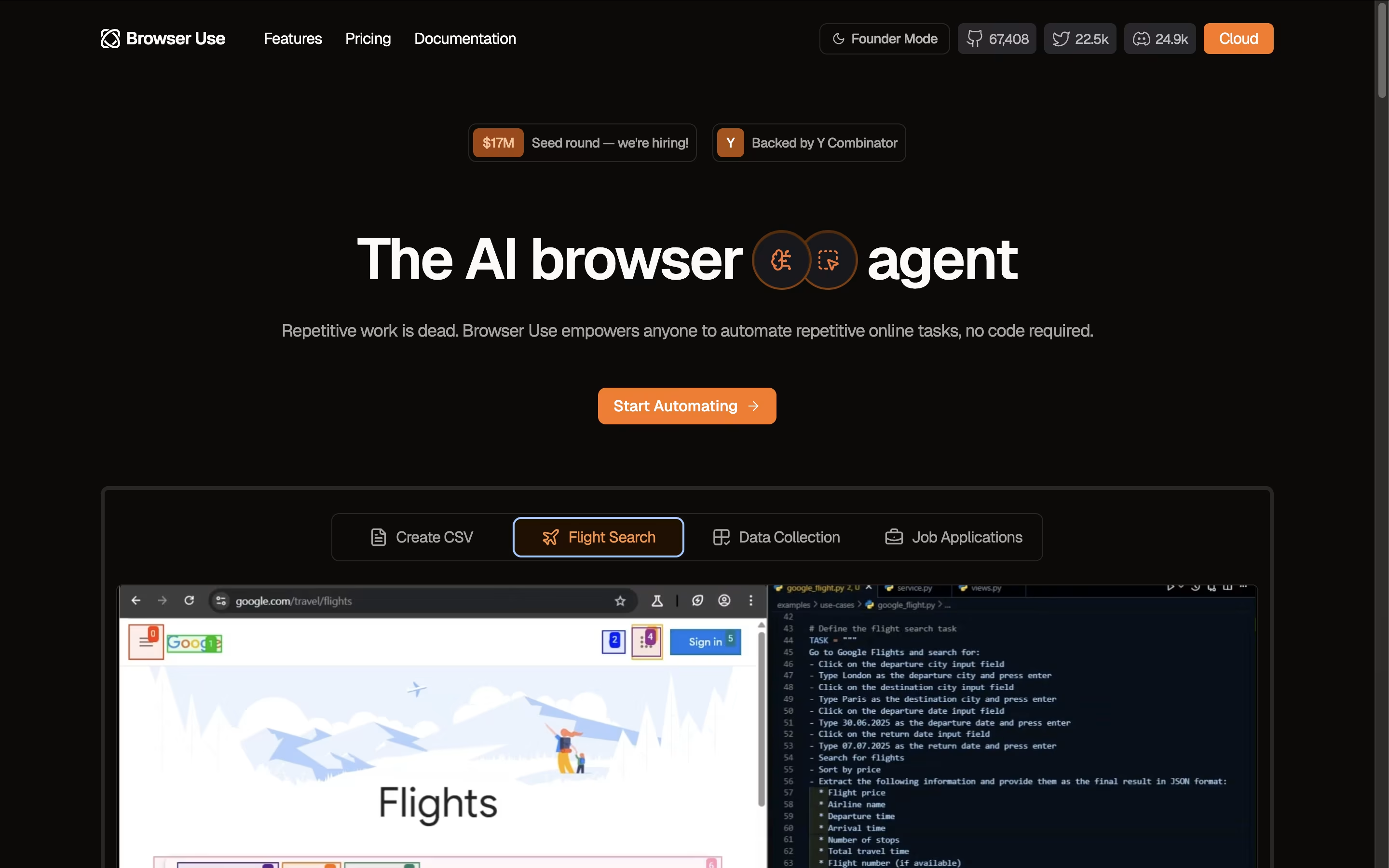
Browser Use is an AI-powered browser automation framework designed to make websites accessible for artificial intelligence agents. Think of it as giving AI the ability to see and interact with web pages just like a human would, but much faster and more accurately.
The key innovation lies in how Browser Use converts website elements like buttons, forms, and menus into a text-based format that AI models can easily understand and manipulate. Unlike traditional automation tools that rely on rigid scripts, Browser Use uses large language models to make intelligent decisions about how to navigate and interact with websites.
The framework supports multiple AI models including OpenAI GPT, Claude, Google AI, and others. It offers both an open-source version for developers and a cloud API service for businesses. Browser Use excels at complex tasks like logging into websites, extracting dynamic content, filling forms with contextual data, and performing multi-step web workflows automatically.

Gumloop is an AI-native automation platform designed to help businesses automate complex workflows using artificial intelligence and machine learning. Think of it as a visual programming tool that connects your favorite business applications with cutting-edge AI models.
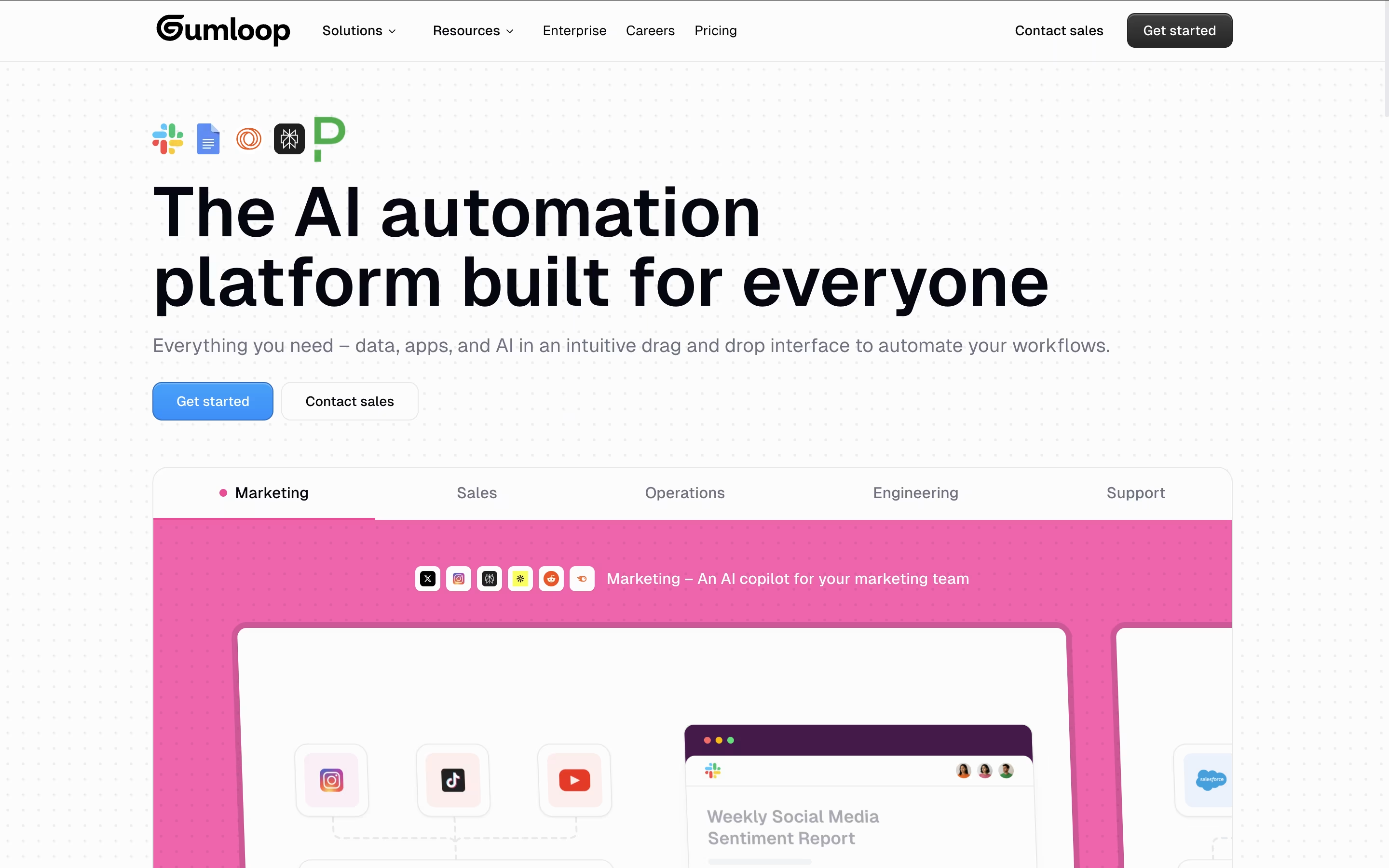
The platform works by letting users drag and drop "nodes" (individual components) onto a visual canvas to build complete automation workflows. These nodes can be anything from web scrapers and document processors to AI models like GPT-4 and Claude. Users connect these nodes together to create "flows" that can handle complex business processes automatically.
Founded in 2023, Gumloop has quickly gained popularity among teams at companies like Webflow, Instacart, and Shopify. What makes it special is its AI-first approach - instead of just moving data between apps, it can actually process, analyze, and make decisions about that data using artificial intelligence. This makes it perfect for automating tasks that previously required human judgment.