
Best 7 Development Frameworks Tools in 2026
Last Updated: August 4, 2026
Building software from the ground up on every project would be inefficient, which is why most developers rely on established frameworks. Development Frameworks provide the structure, libraries, and conventions needed to build applications faster and more consistently.
These tools are foundational for developers and engineering teams building web, mobile, or backend applications. Choosing the right framework has a significant impact on development speed and long term maintainability.
 Meku
Meku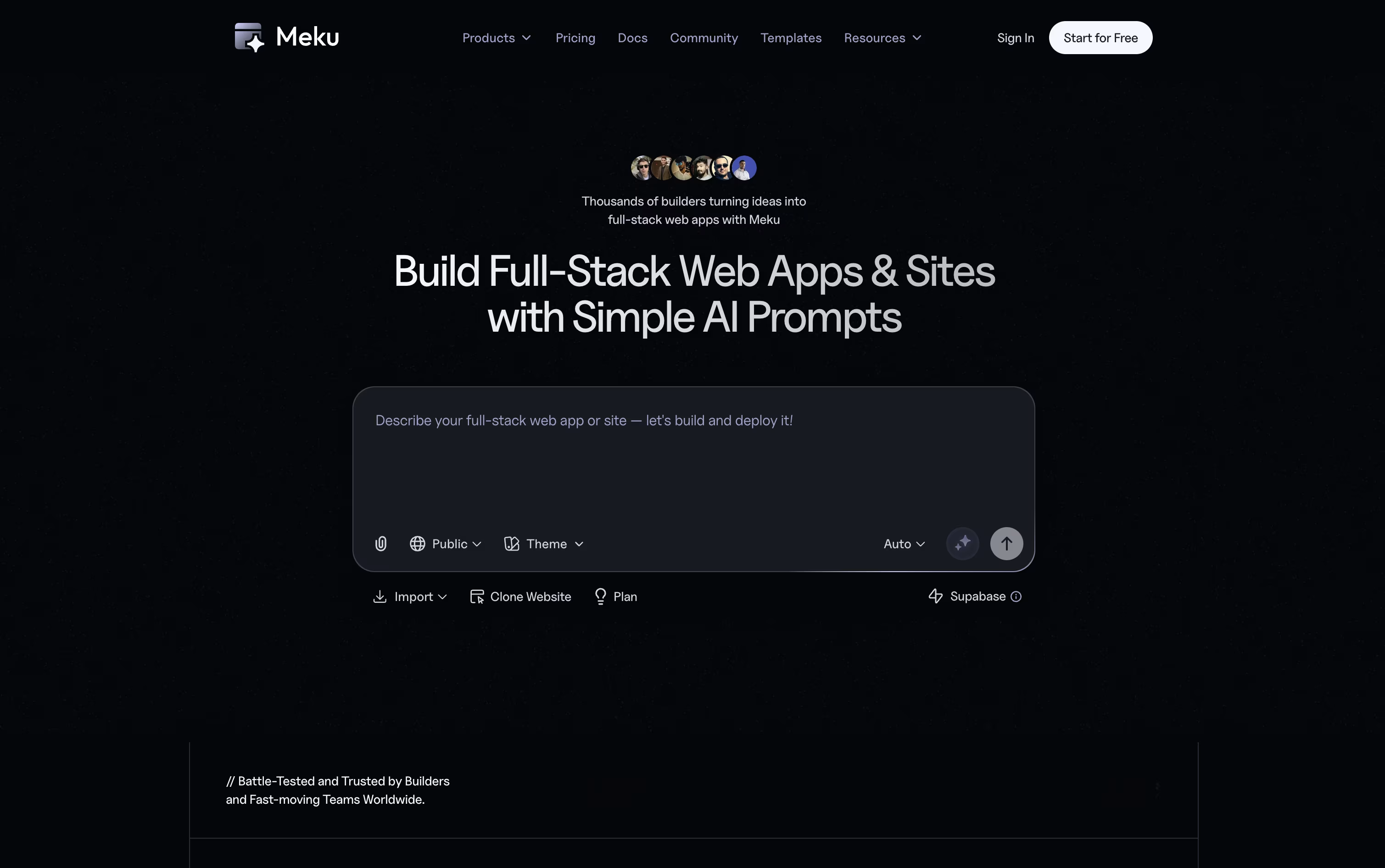 MekuBuild Real Web Apps From Simple Prompts,
  Tempo
Tempo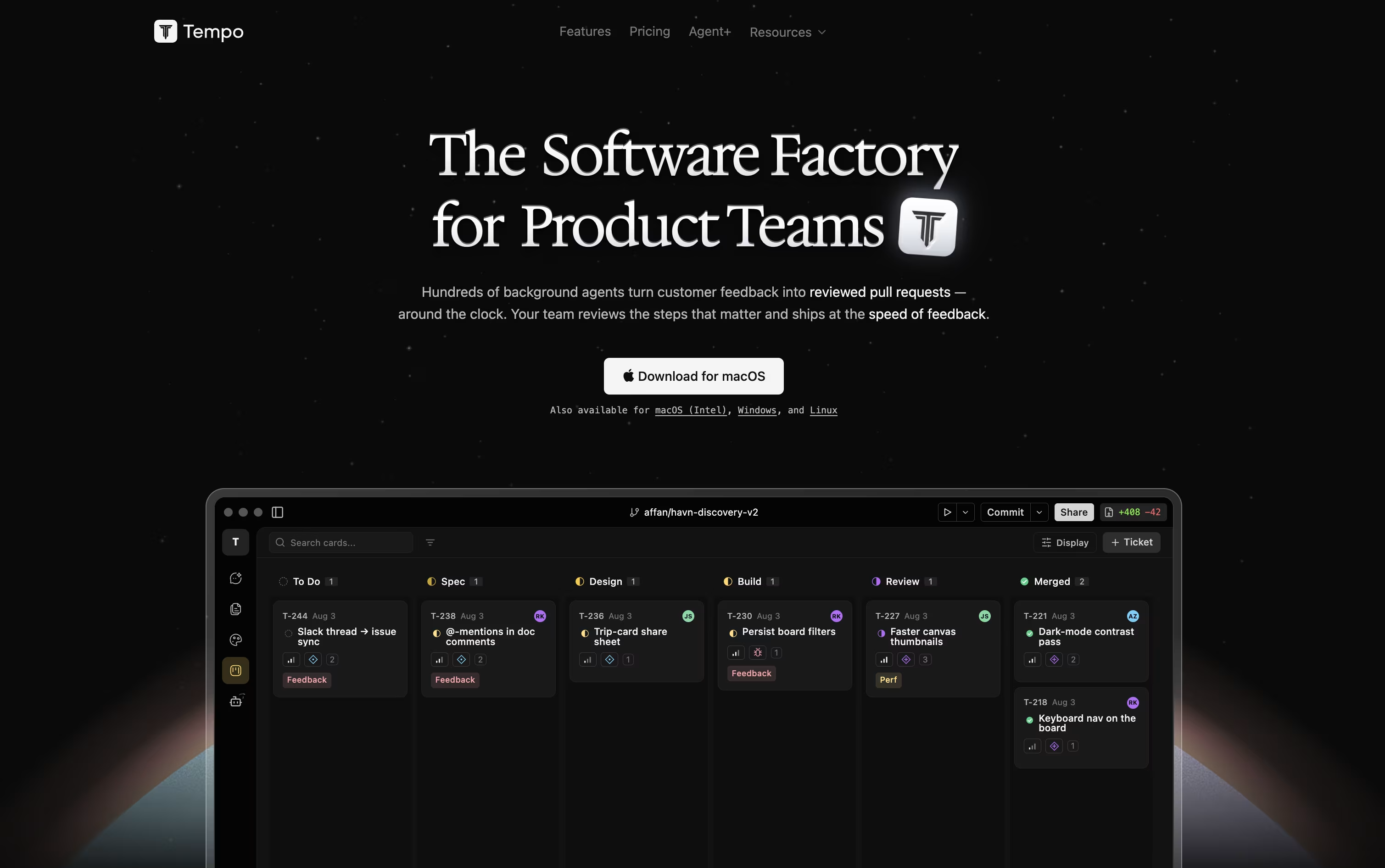 TempoCode-First Workspace for Product Teams, and
  Reflex
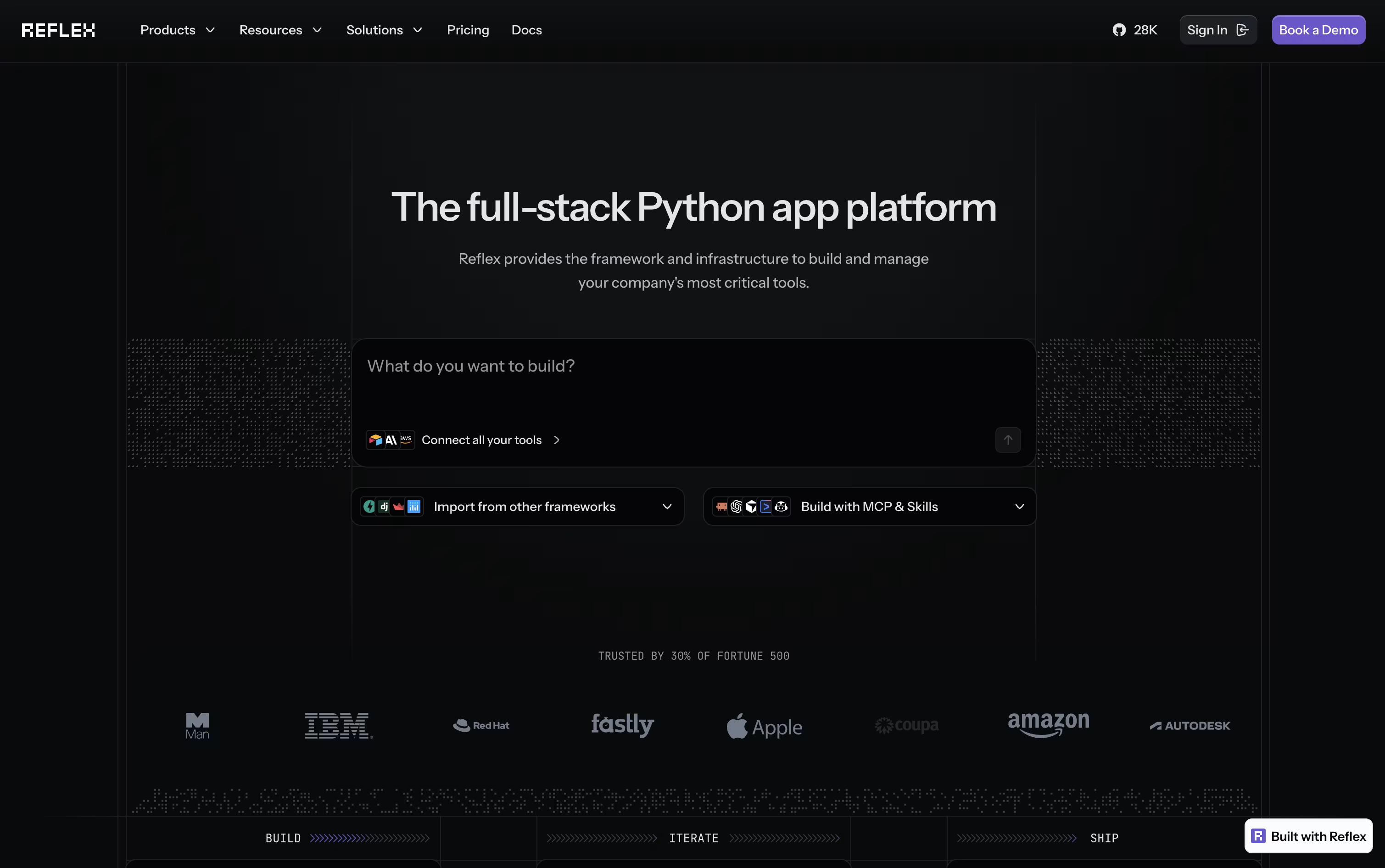 ReflexBuild Full-Stack Apps in Pure Python are the best for Development Frameworks. So, let’s take a closer look at all 7 tools.

Meku lets you build real websites and apps just by describing what you want in plain words. It puts together a working first version in under a minute, with a clean, modern look already in place.
From there, you can shape the project through chat. Ask Meku to change a page, add a feature, or fix something, and you will see it update live as you go.
It also reads Figma files and turns them into working code, and connects with GitHub and Supabase so your project can have logins, a database, and proper version control.
The Free plan costs nothing and gives you 100 credits a month with three public projects. Starter is $16 a month, or $12 a month billed yearly, and opens up private projects, exports, and integrations.
Pro runs $25 a month with more credits and room for a bigger team, and Growth at $49 a month covers larger teams that need more projects, domains, and members.
On any paid plan you can export your code and run it anywhere, so your project is always fully yours.
Product teams often lose time switching between design tools, docs, and separate trackers. Tempo solves this by keeping design, planning, tasks, and AI agents inside one workspace connected to your actual codebase.
Its Canvas feature turns your React components into a live, editable design surface, so changes reflect the real app instead of a mockup. Docs works like a simple writing tool for specs and notes, and Issues gives you a Kanban board to track work.
AI agents can be chatted with directly, using Claude or OpenAI models, and they make code changes safely inside their own git branch. You can also build custom agents that run automatically based on triggers such as issue updates or Slack messages.
Getting started costs nothing with the Starter plan, which includes 100 AI messages a month and room for up to 10 team members. Growing teams can move to the Team plan at $20 per seat a month for unlimited issues and documents.
For companies that want features built for them, Agent+ starts at $500 a month, pairing AI agents with human engineers and designers who review every change, typically delivering within 48 to 72 hours.
Tempo is built for React, Next.js, and Expo projects, and runs as a web app or desktop app on macOS, Windows, and Linux.
Building a website usually means juggling JavaScript, HTML, CSS, and a separate backend. Reflex removes that split by letting you write the entire app, interface and logic, in one Python codebase.
Your Python components get converted into a React frontend automatically, while a FastAPI backend handles the logic. WebSockets keep the two connected in real time, so any change in your data appears on screen right away.
If you would rather not code from scratch, the built-in AI Builder can generate a full working app from a short description or even a screenshot, along with basic tests.
Getting started is free, with 50 monthly credits and one hosted app included. Stepping up to Pro brings 2,000 credits, 10 hosted apps, and custom domains for $200 a month, though it is priced at just $3 a month for a limited time.
For companies that need more control, the Enterprise plan adds dedicated infrastructure, team workspaces, and security features like SSO and HIPAA support, with pricing built around each organization's needs.

Keboola is a comprehensive data platform that handles your entire data stack as a service. Instead of managing separate tools for extraction, transformation, storage, and orchestration, everything works together in one integrated environment. The platform connects to virtually any data source through its extensive library of 700+ native connectors and API integrations.
Users can transform data using familiar programming languages without worrying about infrastructure, scaling, or maintenance. Keboola automatically handles data storage using powerful cloud warehouses like Snowflake, BigQuery, and Redshift. The platform includes built-in automation, monitoring, data lineage tracking, and governance features. It supports various deployment models from fully managed multi-tenant setups to private cloud installations, making it suitable for organizations with different security and compliance requirements.

Codemagic is a cloud-based Continuous Integration and Continuous Delivery platform built specifically for mobile app development. Think of it as your personal build farm in the cloud that handles all the complex parts of app development automatically.
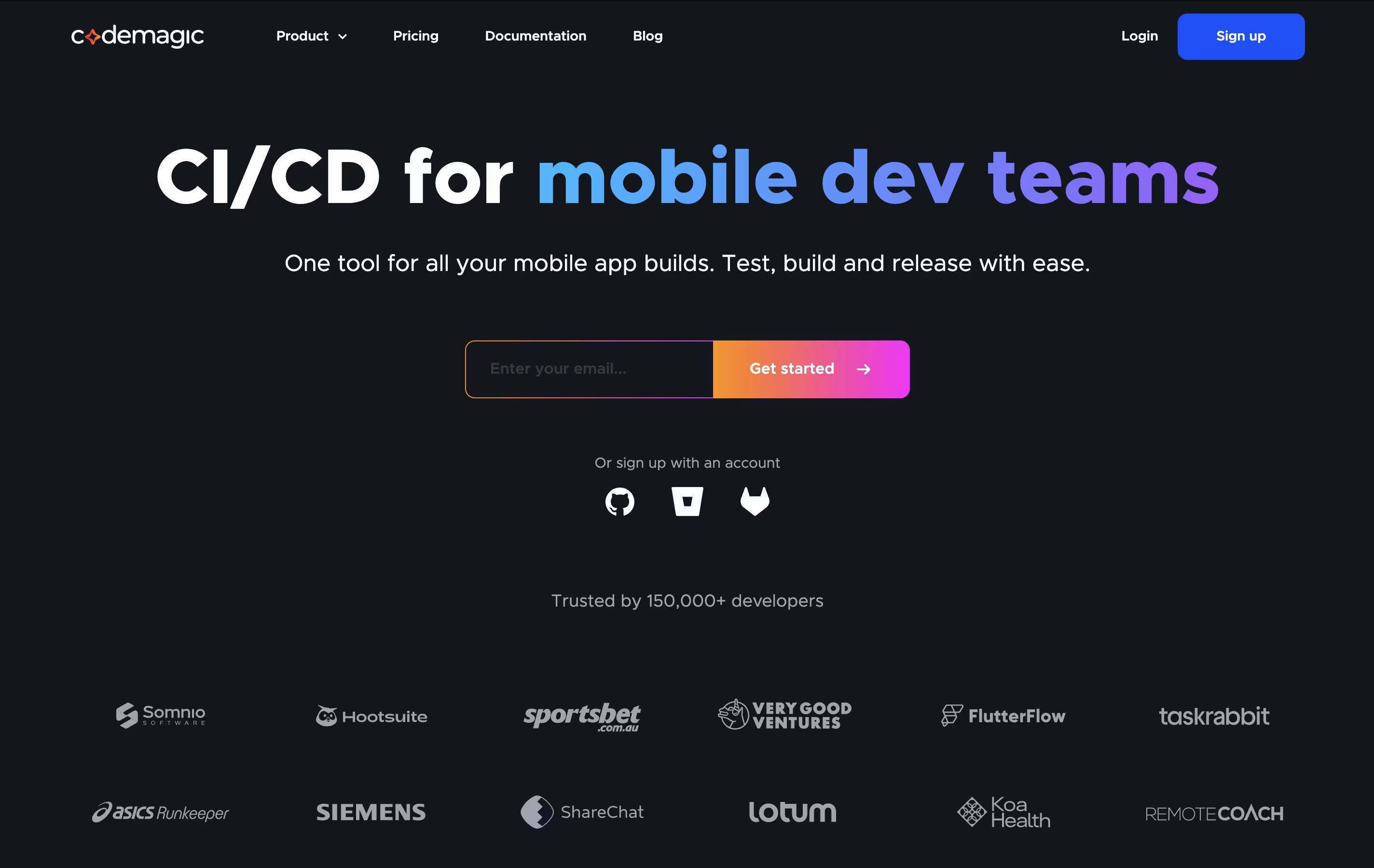
The platform supports multiple mobile frameworks including Flutter, React Native, native iOS and Android, Unity, Kotlin Multiplatform Mobile, and Ionic. What makes Codemagic special is its focus on mobile development challenges like code signing, device testing, and app store publishing. The platform runs on powerful Apple Silicon machines, making builds significantly faster than traditional solutions.
Founded in 2018, Codemagic was the first CI/CD provider to offer Apple Silicon machines to developers. It integrates seamlessly with GitHub, GitLab, Bitbucket, and Azure DevOps, automatically triggering builds when you push code. The result is faster development cycles and more reliable app releases.

Svix is a webhooks-as-a-service platform that takes the pain out of sending webhooks. Think of webhooks as notifications that your app sends to other apps when something important happens - like when a payment is processed or a user signs up.
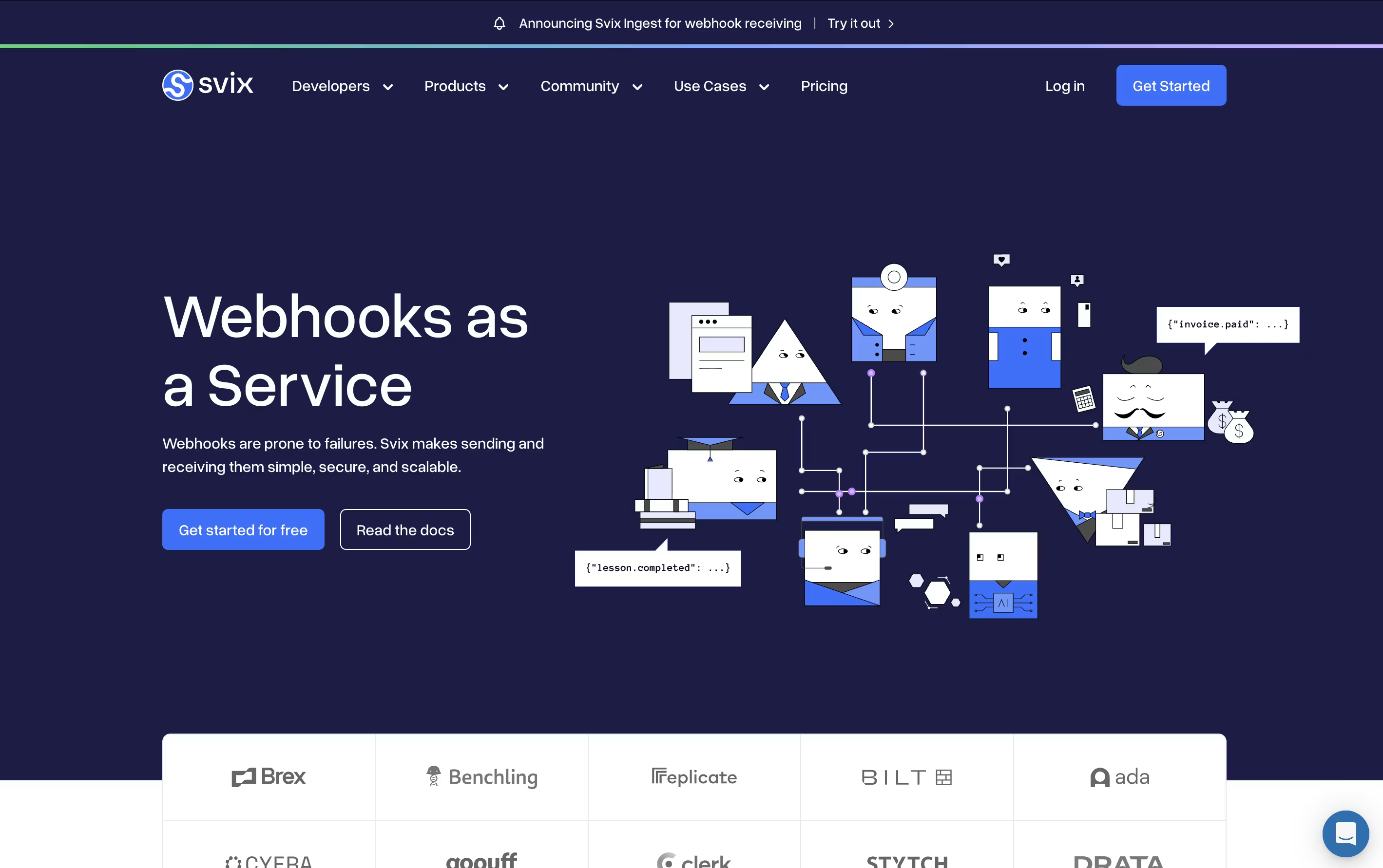
Instead of building your own webhook system from scratch, Svix provides a complete solution with just a simple API call. It handles all the technical challenges: automatic retries when endpoints fail, secure message signing, real-time monitoring, and scaling from zero to billions of messages.
Founded in 2021 and backed by Y Combinator and Andreessen Horowitz, Svix serves companies from startups to Fortune 500 enterprises. The platform is both available as a hosted service and open-source, giving you flexibility in how you deploy it.

Thunder Client is a REST API testing tool that lives inside Visual Studio Code. You can send requests, check responses, and organize your API tests without opening another program. It works just like other API testing tools but runs directly in your code editor.
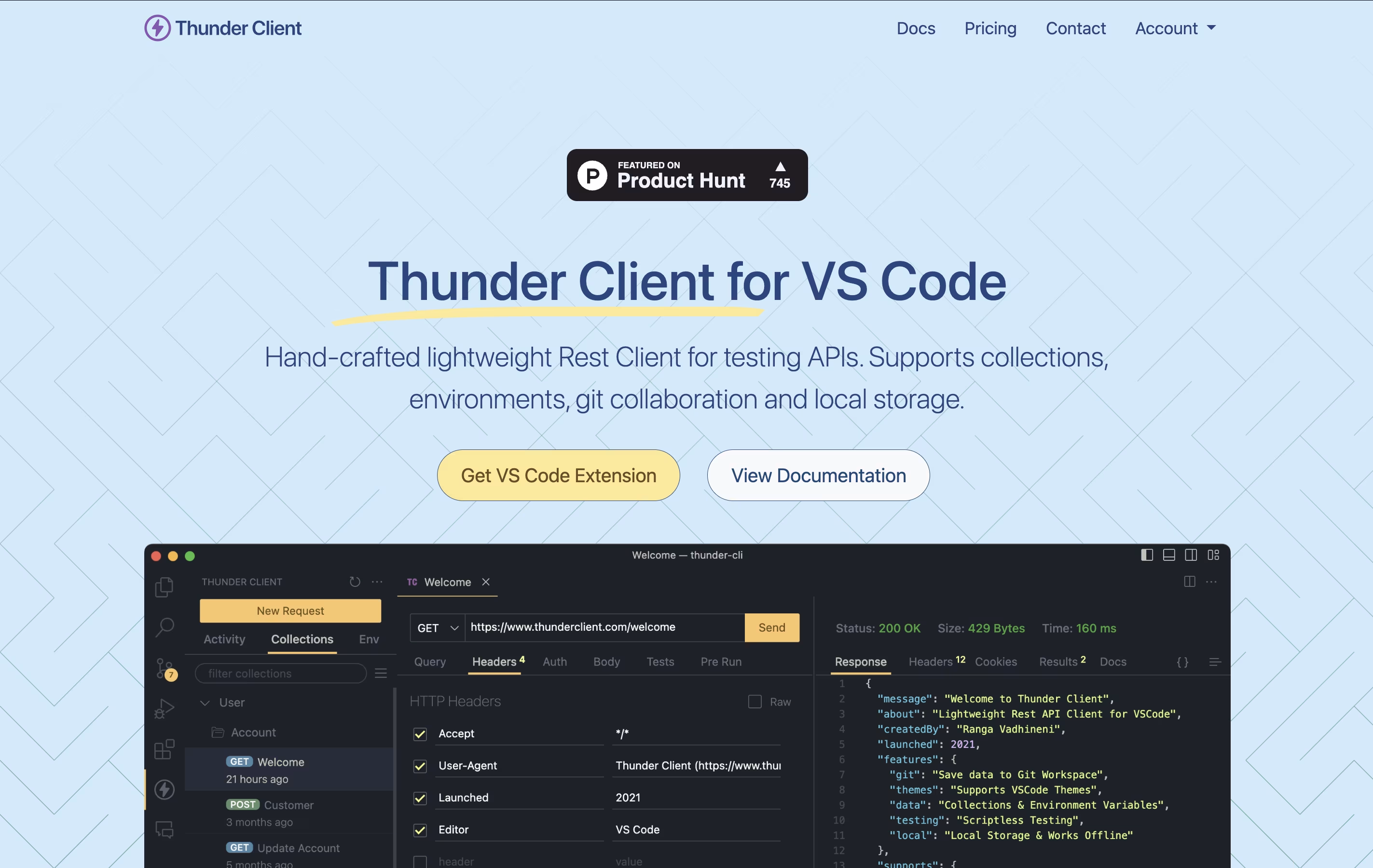
The extension saves all your requests and settings on your own computer. This makes it fast, private, and able to work without internet. You can also save your testing data to Git repositories, making it easy to share with your team.
Thunder Client offers both free and paid versions. The free version works great for basic testing, while paid plans add features like unlimited test runs, team management tools, and advanced testing options for businesses.