

Best 2 Zero-Trust Security Platforms Tools in 2026
Last Updated: October 26, 2025
Traditional perimeter based security assumes everything inside the network can be trusted, an assumption that no longer holds up well. Zero-Trust Security Platforms verify every access request regardless of location, treating no user or device as automatically trusted.
These platforms are increasingly adopted by enterprises and security teams protecting distributed, remote, and cloud based environments. Continuous verification significantly reduces the damage a single compromised credential can cause.
 Silverfort
 SilverfortComplete Identity Security for Hybrid Environments and
  Pomerium
 PomeriumZero Trust Access Proxy for Secure Application Access are the best for Zero-Trust Security Platforms. So, let’s take a closer look at both tools.
Silverfort is an identity security platform that protects organizations from attacks that use stolen passwords and compromised accounts. It works by integrating with your existing identity systems like Active Directory, Microsoft Entra, and cloud providers to monitor every login attempt across your entire network.
What makes Silverfort special is its ability to protect systems that other security tools cannot reach. This includes old legacy applications, command-line tools, service accounts, and industrial systems. The platform requires no agents or proxies, meaning you do not need to install software on servers or change how your applications work.
Silverfort provides features like universal multi-factor authentication, real-time threat detection, privileged account protection, and service account security. It helps organizations stop lateral movement attacks, prevent ransomware spread, and meet compliance requirements.
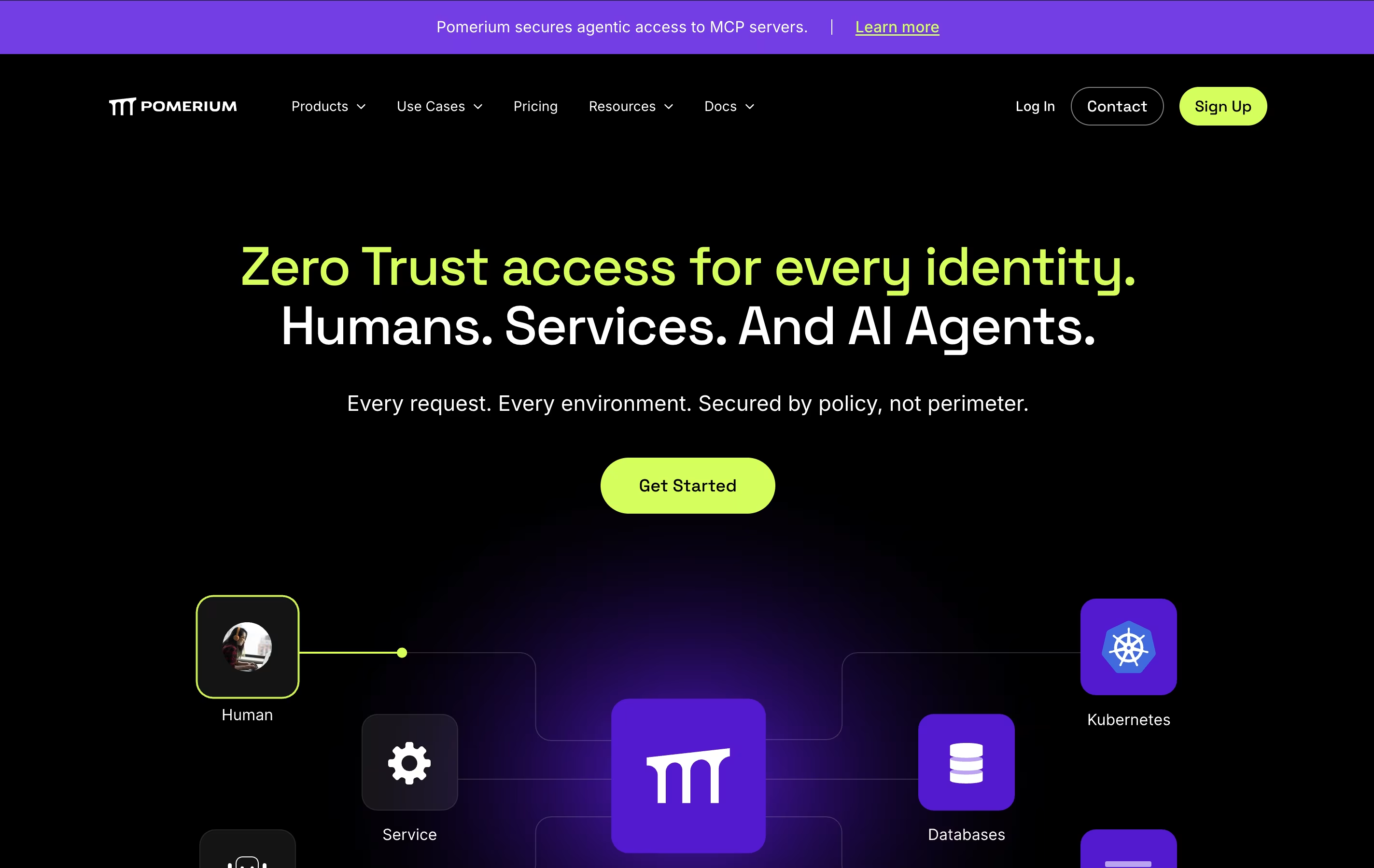
Pomerium is a zero trust access proxy that sits between users and internal applications. It verifies identity and permission before allowing access to any resource. The tool works by connecting to your existing identity provider like Google, Okta, Azure, or others.
When someone tries to access an application, Pomerium checks their identity, device status, and other factors against your security rules. Only if everything matches will it grant access. This happens in real time for every request, not just once during login.
Pomerium is open source and can be self-hosted, meaning your data stays under your control. It offers both free and paid versions, with the paid options adding team features and support for larger organizations.
Related to
Zero-Trust Security Platforms