ToolQuestor Logo

Best 15 Open Source Albato Alternatives in 2026

Last Updated: August 15, 2026

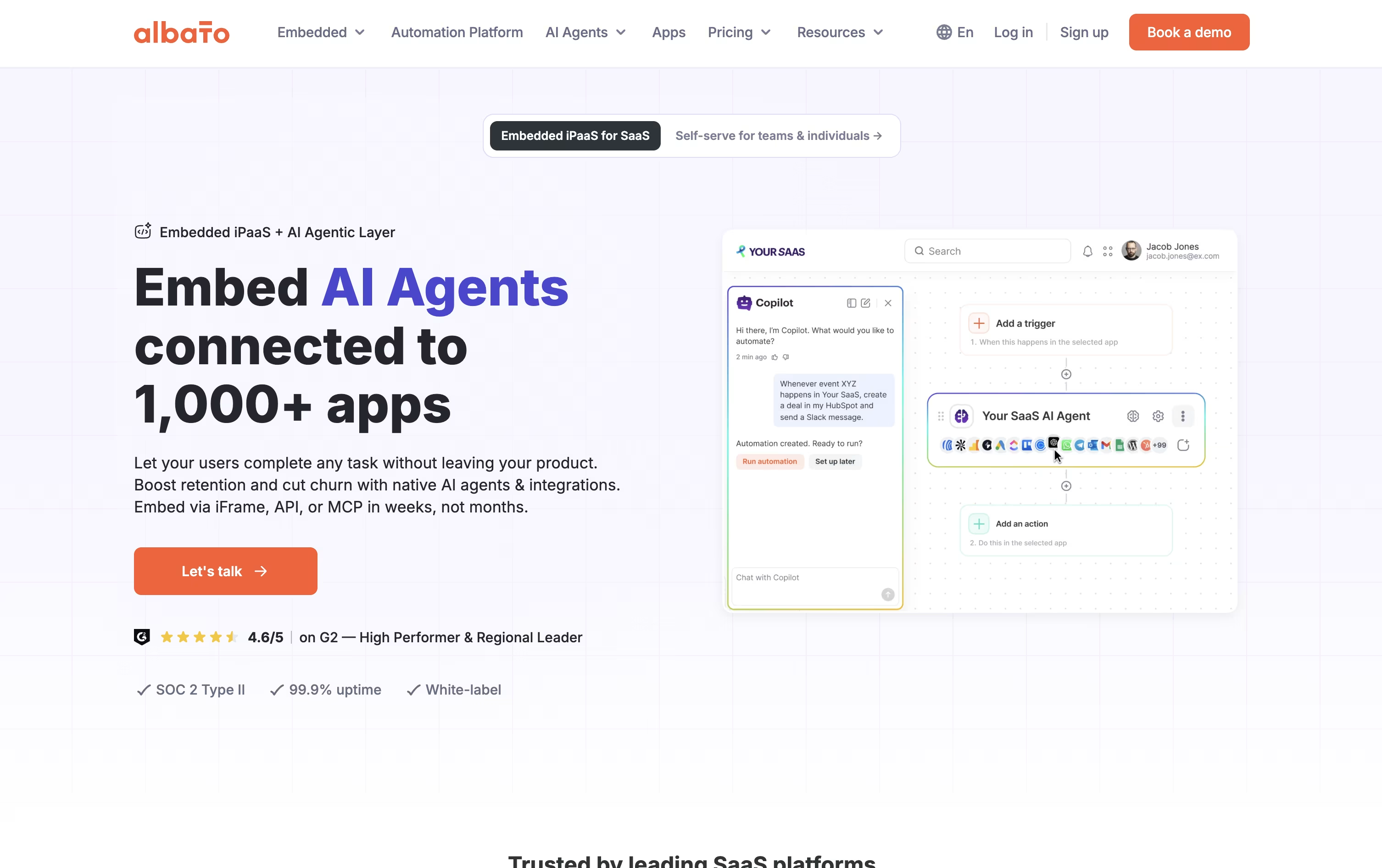
Albato is an AI-powered integration platform built to connect different apps and automate workflows without any coding required. Think of it as a smart bridge that helps your business apps talk to each other automatically.

The platform uses artificial intelligence to make setup easier and supports over 800 popular business applications including Google Sheets, Slack, Facebook, HubSpot, and many more. What makes Albato special is its no-code approach combined with powerful AI features that guide you through creating automations.

The best alternative to Albato is n8n logo n8n. Pipedream logo Pipedream and Activepieces logo Activepieces are also among the best options for Workflow Automation.

So, here are the 12+ best alternatives to Albato:

202.3k
60.4k
NOASSERTION
View Repo

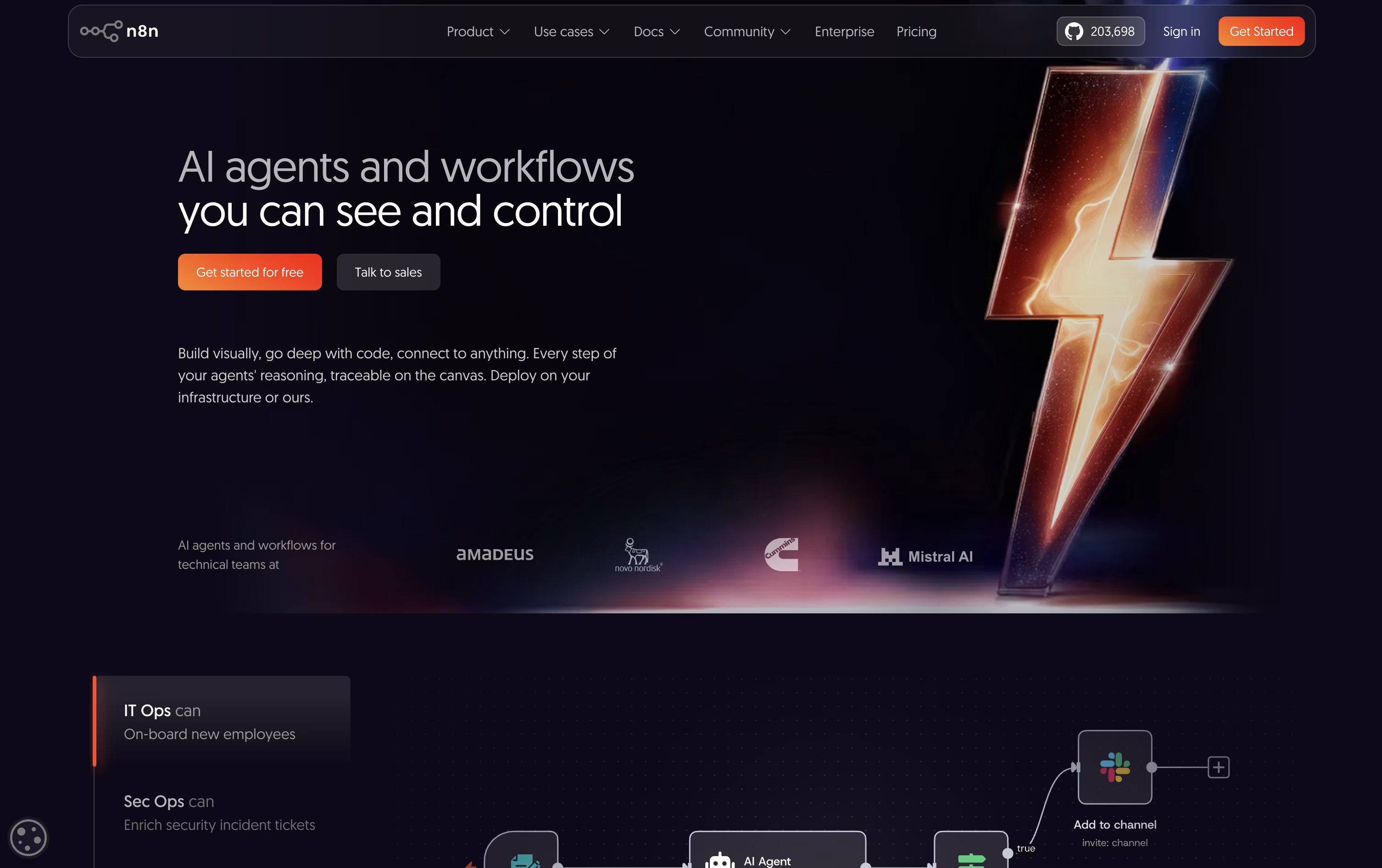
n8n is a fair-code workflow automation platform that uniquely combines visual building with custom coding capabilities. Think of it as a powerful middle ground between simple automation tools and complex programming frameworks.

n8n screenshot

The platform uses a node-based visual editor where each node represents a specific action like sending emails, updating databases, or calling APIs. You can connect these nodes to create workflows that automate repetitive tasks across hundreds of different apps and services. What makes n8n special is its flexibility – when visual building isn't enough, you can write JavaScript or Python code directly in the workflow.

Founded in 2019, n8n has gained popularity among technical teams because of its fair-code license model, which ensures the source code remains visible and allows self-hosting. The platform serves over 200,000 active users and 3,000+ enterprise customers worldwide, making it one of the most trusted automation tools for developers and technical teams.

11.6k
5.8k
NOASSERTION
View Repo

Pipedream is a serverless workflow automation platform designed specifically for developers who need to connect different applications and APIs. Think of it as a bridge that lets your apps talk to each other automatically.

Pipedream screenshot

Unlike traditional automation tools, Pipedream gives you the power to write custom code when needed while providing thousands of pre-built components for common tasks. The platform handles all the infrastructure, authentication, and scaling automatically, so you can focus on building workflows instead of managing servers.

Each workflow is a series of steps that run when triggered by events like new emails, API calls, or scheduled times. With support for major programming languages and integration with popular services like Slack, Google Sheets, GitHub, and Stripe, Pipedream makes it easy to automate almost any business process or technical workflow.

24k
4.1k
NOASSERTION
View Repo

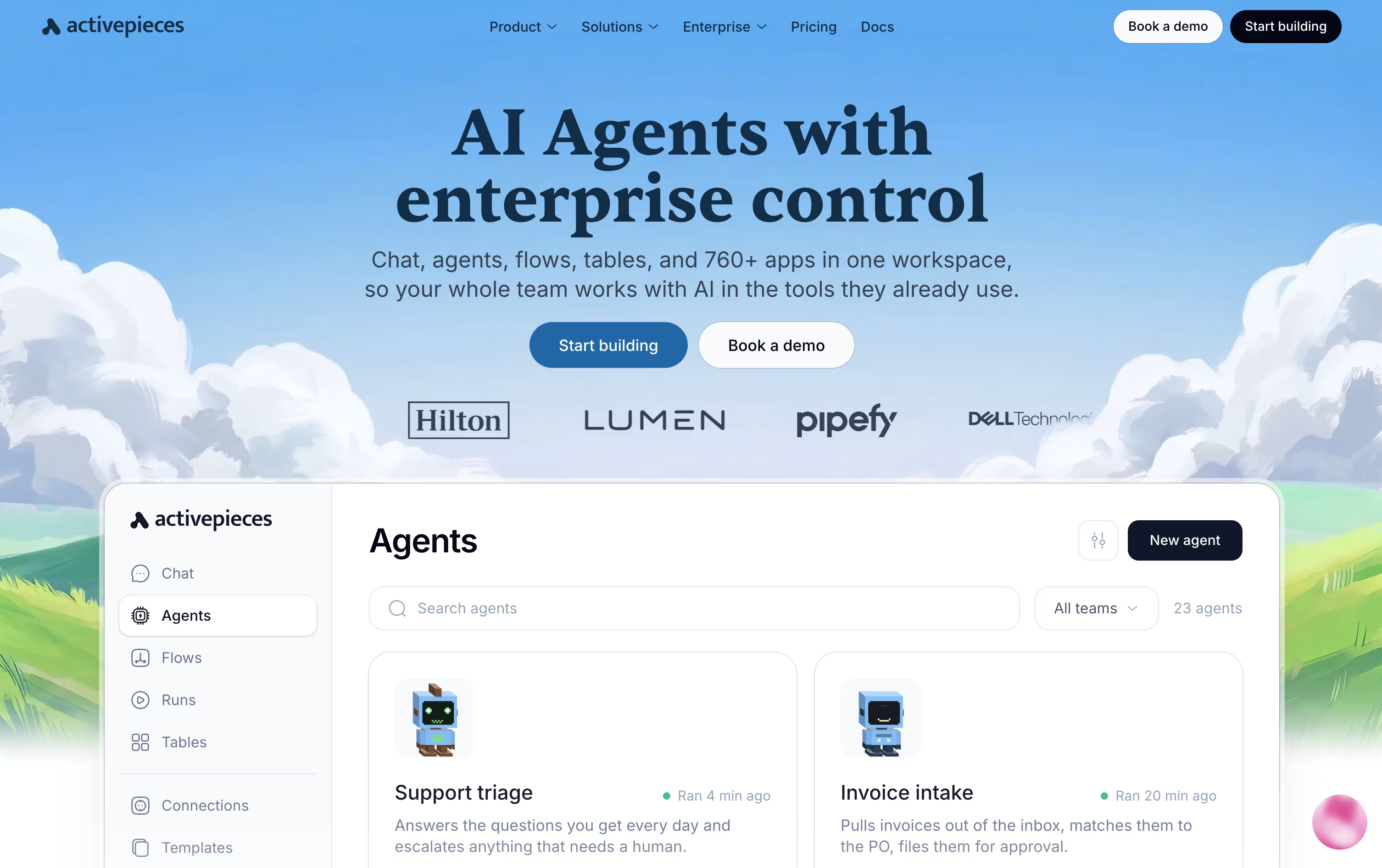
Activepieces is a workflow automation platform that connects your business apps and creates automatic actions between them. You build flows by dragging steps onto a canvas, choosing when things should happen and what actions to take. Unlike basic automation tools, Activepieces includes AI agents that can make smart decisions and handle complex tasks on their own.

Activepieces screenshot

The platform offers both cloud-hosted and self-hosted versions. This means you can run it on your own servers for complete data privacy, or use their cloud service for quick setup. It supports over 350 integrations including Google Sheets, Slack, Gmail, and AI tools like ChatGPT. You can also write custom code when needed, making it flexible for both simple and advanced automation needs.

5.8k
341
NOASSERTION
View Repo

Inngest is an event-driven durable execution platform built to run reliable, multi-step workflows on any platform without managing infrastructure. Think of it as a mix between traditional queues and modern serverless functions, but much better.

Inngest screenshot

It uses step functions and incorporates real-time event processing, enabling developers to build complex workflows that can run for days or months with automatic error recovery. The main difference from regular workflow tools is simple: instead of setting up queues and managing state, you write normal code and Inngest handles all the infrastructure complexity.

Each step in your workflow automatically retries on failure and maintains state between executions, allowing you to easily build reliable systems. Founded in 2021, this tool has become popular because it eliminates infrastructure headaches and makes complex workflows easy. You can write functions in TypeScript, Python, or Go and deploy anywhere.

153.6k
9.9k
MIT
View Repo

Langflow is an open-source platform for building AI applications through a visual interface. You create workflows by connecting building blocks called components. Each component performs a specific task, such as loading data, talking to an AI model, or storing information in a database.

Langflow screenshot

The platform supports agents that can make decisions, use tools, and perform multiple tasks automatically. It also enables Retrieval Augmented Generation (RAG), which lets AI applications search through your documents and provide accurate answers based on your specific data.

There is no cost to use Langflow. It's completely free and open-source. You only pay for external services you connect to it, such as AI model providers like OpenAI or cloud hosting if you choose to deploy your application online.

23.7k
2.5k
Apache-2.0
View Repo

Prefect is a Python-based workflow management system that turns regular functions into production-ready data pipelines. You write your code in normal Python, add a few simple markers (called decorators), and Prefect handles the scheduling, monitoring, and error recovery automatically.

Prefect screenshot

The tool works in two ways: you can run it on your own servers (open-source version) or use their hosted cloud service. Both options give you a clean dashboard to see what's running, what failed, and where problems occurred. Prefect automatically retries failed tasks, caches results to save time, and sends alerts when issues arise.

What makes Prefect special is its flexibility. It works with your existing code without forcing you to restructure everything, making it easier to adopt than many alternatives.

55.4k
24.9k
NOASSERTION
View Repo

Flowise is a visual development platform for creating AI-powered applications using large language models. Think of it as building blocks for AI: you drag components onto a canvas and connect them together to create smart systems.

Flowise screenshot

The platform lets you build chatbots that understand documents, create AI agents that can perform tasks automatically, and set up workflows that combine multiple AI tools. It supports retrieval-augmented generation, which means your AI can pull information from your own documents and databases to give accurate answers.

You can start with ready-made templates or build custom solutions from scratch. Flowise works with both cloud-based and locally-hosted AI models, giving you flexibility in how you deploy your applications. The platform is open-source, meaning the community constantly adds new features and improvements.

16.1k
2.3k
Apache-2.0
View Repo

Dagster is a tool that helps organize and run your data workflows automatically. Think of it as a smart manager for all your data tasks. Instead of manually running scripts or remembering which files depend on others, Dagster handles this for you.

Dagster screenshot

What makes Dagster different is how it thinks about data. It tracks your tables, files, and models as important items (called assets) rather than just focusing on the jobs that create them. This helps you see how all your data connects together.

The platform includes features for testing your code before it goes live, checking data quality automatically, and showing you how much your data processes cost. You can use it on your own servers or in the cloud through their managed service.

46.6k
17.7k
Apache-2.0
View Repo

Apache Airflow is a tool that helps you create and manage automated workflows for processing data. Think of it as a smart coordinator that runs your tasks in the right order, at the right time, and handles problems when they occur.

Apache Airflow screenshot

You define your workflows using Python code, which means you can use all the tools you already know. Each workflow is called a DAG, which shows how your tasks connect and depend on each other. Airflow comes with a visual web dashboard where you can see your workflows running, check logs, and restart failed tasks.

The platform works with cloud services like AWS, Google Cloud, and Azure, plus hundreds of other tools through ready-made connections. You can run it on your own servers or use managed services like Astronomer.

27.9k
2.9k
Apache-2.0
View Repo

Kestra is a workflow orchestration platform that turns your tasks and processes into automated workflows. Think of it like creating a recipe: you list what needs to happen and when, and Kestra makes sure everything runs in the right order at the right time.

Kestra screenshot

Unlike traditional automation tools that require deep programming knowledge, Kestra uses a straightforward approach. You can build workflows through a visual interface or write them in YAML, which is much easier to read and understand than regular code. The platform can run any programming language, connect to databases, send notifications, process files, and interact with cloud services.

There are two versions available: a free open-source edition for individuals and teams, and an Enterprise edition with advanced features for larger organizations.