

Best 6 Tools for Data Pipeline Building in 2026
Last Updated: October 23, 2025
Moving data reliably from one system to another is rarely as simple as it sounds. Data Pipeline Building tools help design and automate the flow of data between sources, storage, and analysis tools.
Data engineers and analysts use pipeline tools to keep data moving accurately and on schedule without manual intervention at every step.
 Keboola
 KeboolaComplete Data Platform for Integration & AI Automation,
  Prefect
 PrefectOpen-Source Python Workflow Automation, and
  Dagster
 DagsterModern Data Orchestration Platform are the best for Data Pipeline Building. So, let’s take a closer look at all 6 tools.
Keboola is a comprehensive data platform that handles your entire data stack as a service. Instead of managing separate tools for extraction, transformation, storage, and orchestration, everything works together in one integrated environment. The platform connects to virtually any data source through its extensive library of 700+ native connectors and API integrations.
Users can transform data using familiar programming languages without worrying about infrastructure, scaling, or maintenance. Keboola automatically handles data storage using powerful cloud warehouses like Snowflake, BigQuery, and Redshift. The platform includes built-in automation, monitoring, data lineage tracking, and governance features. It supports various deployment models from fully managed multi-tenant setups to private cloud installations, making it suitable for organizations with different security and compliance requirements.
Prefect is a Python-based workflow management system that turns regular functions into production-ready data pipelines. You write your code in normal Python, add a few simple markers (called decorators), and Prefect handles the scheduling, monitoring, and error recovery automatically.
The tool works in two ways: you can run it on your own servers (open-source version) or use their hosted cloud service. Both options give you a clean dashboard to see what's running, what failed, and where problems occurred. Prefect automatically retries failed tasks, caches results to save time, and sends alerts when issues arise.
What makes Prefect special is its flexibility. It works with your existing code without forcing you to restructure everything, making it easier to adopt than many alternatives.
Dagster is a tool that helps organize and run your data workflows automatically. Think of it as a smart manager for all your data tasks. Instead of manually running scripts or remembering which files depend on others, Dagster handles this for you.
What makes Dagster different is how it thinks about data. It tracks your tables, files, and models as important items (called assets) rather than just focusing on the jobs that create them. This helps you see how all your data connects together.
The platform includes features for testing your code before it goes live, checking data quality automatically, and showing you how much your data processes cost. You can use it on your own servers or in the cloud through their managed service.

Apache Airflow is a tool that helps you create and manage automated workflows for processing data. Think of it as a smart coordinator that runs your tasks in the right order, at the right time, and handles problems when they occur.
You define your workflows using Python code, which means you can use all the tools you already know. Each workflow is called a DAG, which shows how your tasks connect and depend on each other. Airflow comes with a visual web dashboard where you can see your workflows running, check logs, and restart failed tasks.
The platform works with cloud services like AWS, Google Cloud, and Azure, plus hundreds of other tools through ready-made connections. You can run it on your own servers or use managed services like Astronomer.

Kestra is a workflow orchestration platform that turns your tasks and processes into automated workflows. Think of it like creating a recipe: you list what needs to happen and when, and Kestra makes sure everything runs in the right order at the right time.
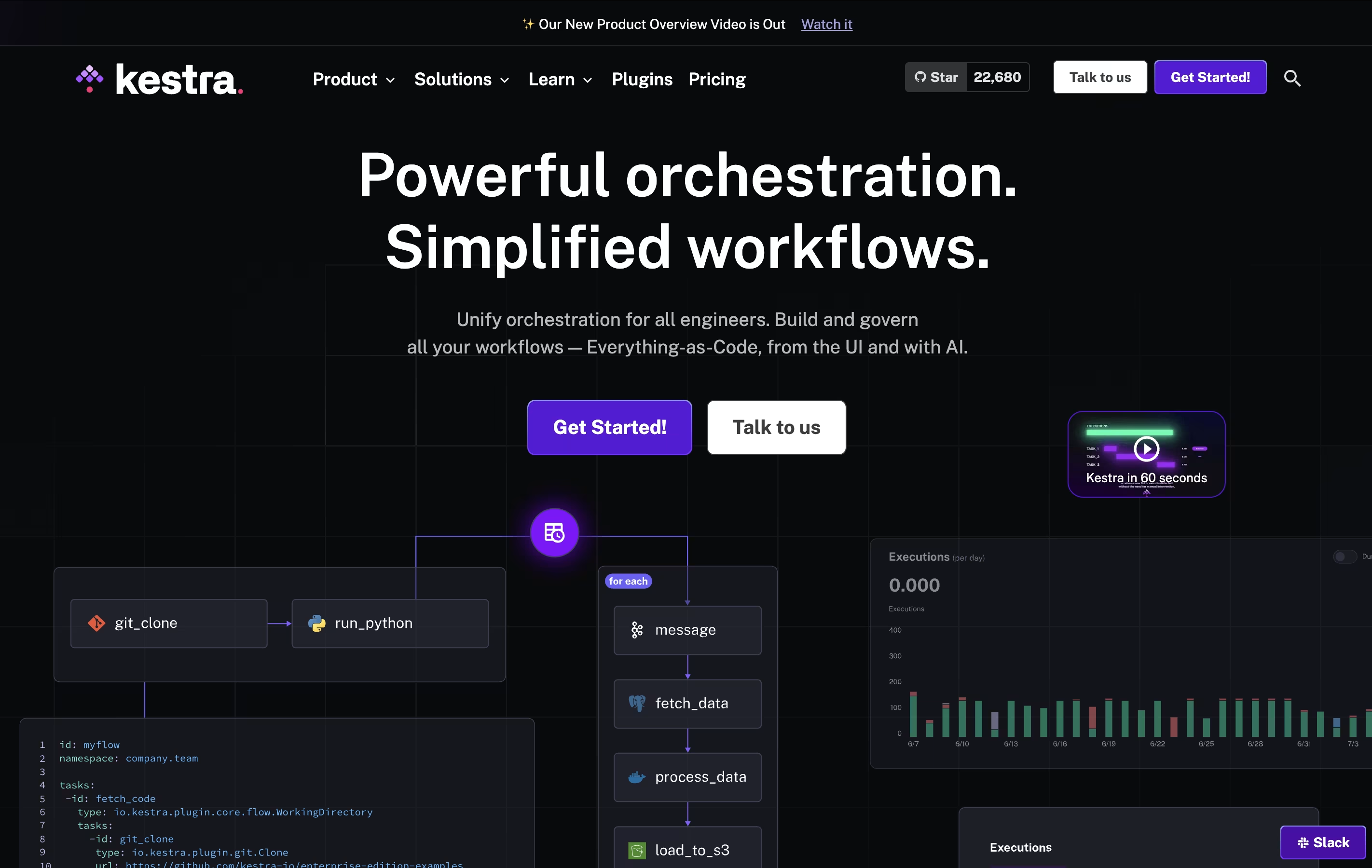
Unlike traditional automation tools that require deep programming knowledge, Kestra uses a straightforward approach. You can build workflows through a visual interface or write them in YAML, which is much easier to read and understand than regular code. The platform can run any programming language, connect to databases, send notifications, process files, and interact with cloud services.
There are two versions available: a free open-source edition for individuals and teams, and an Enterprise edition with advanced features for larger organizations.

Mage AI is a comprehensive data pipeline orchestration platform designed to simplify how teams build, deploy, and manage data workflows. Think of it as a smart workspace that combines notebook-style development with powerful automation features.
The platform offers both open-source and enterprise versions, allowing teams to start free and scale as needed. Mage connects to virtually any data source, from databases and APIs to cloud storage services, making data integration seamless. What sets it apart is its AI-powered assistance that helps write code, optimize performance, and debug issues automatically.
The tool supports multiple programming languages including Python, SQL, and R, giving developers flexibility to work with familiar tools. Built-in features include real-time monitoring, automated testing, version control, and collaboration tools. This makes Mage perfect for data engineers, analysts, and scientists who want to focus on insights rather than infrastructure management.