
Best 12 Tools for MVP Building in 2026
Last Updated: September 9, 2026
Testing a product idea does not require building every feature before finding out if it resonates with users. MVP Building tools help quickly build a minimal, functional version of a product to test with real users.
Founders and product teams use MVP building to validate an idea before investing in a full build.
 Replit
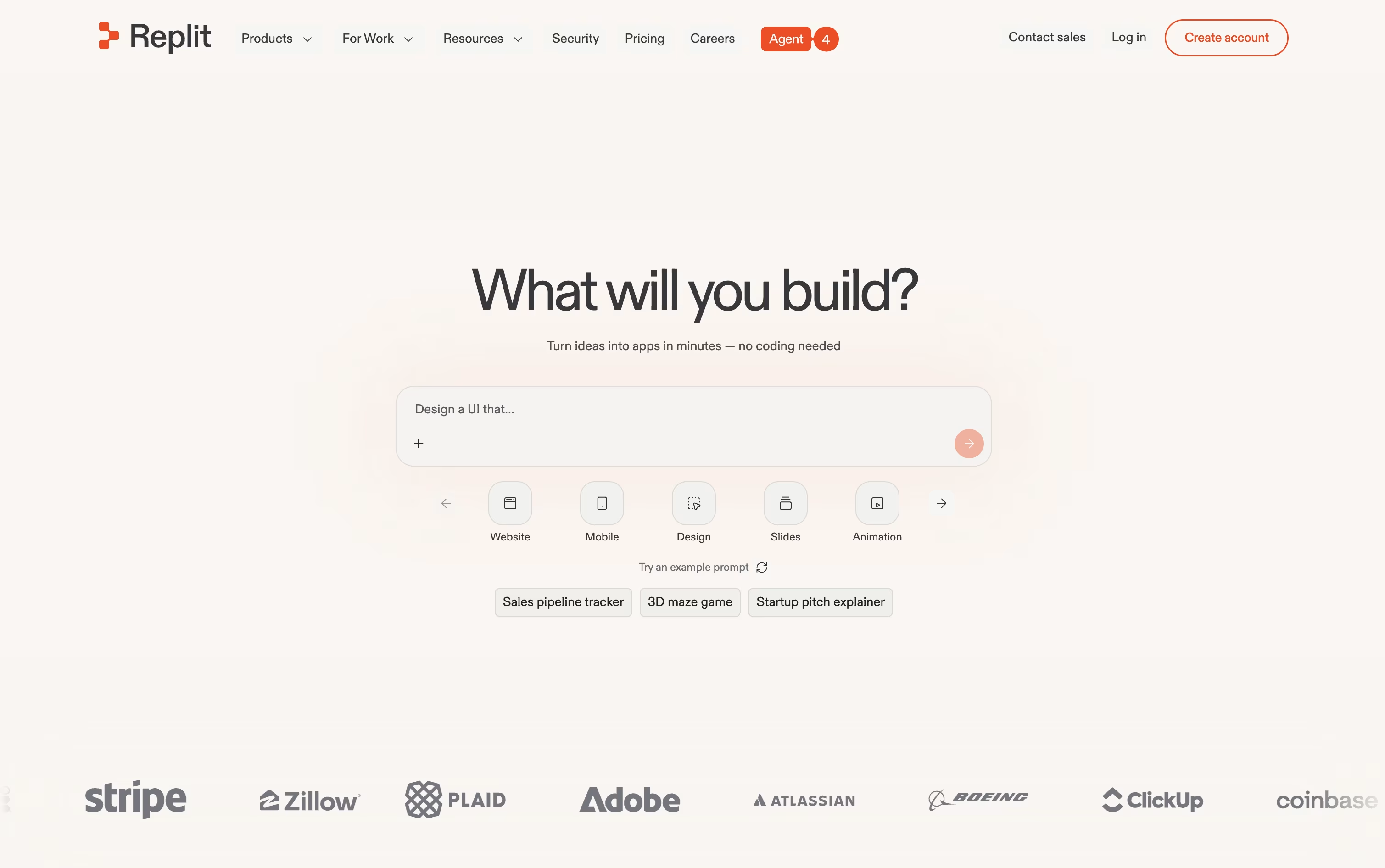 Replit,
  Capacity
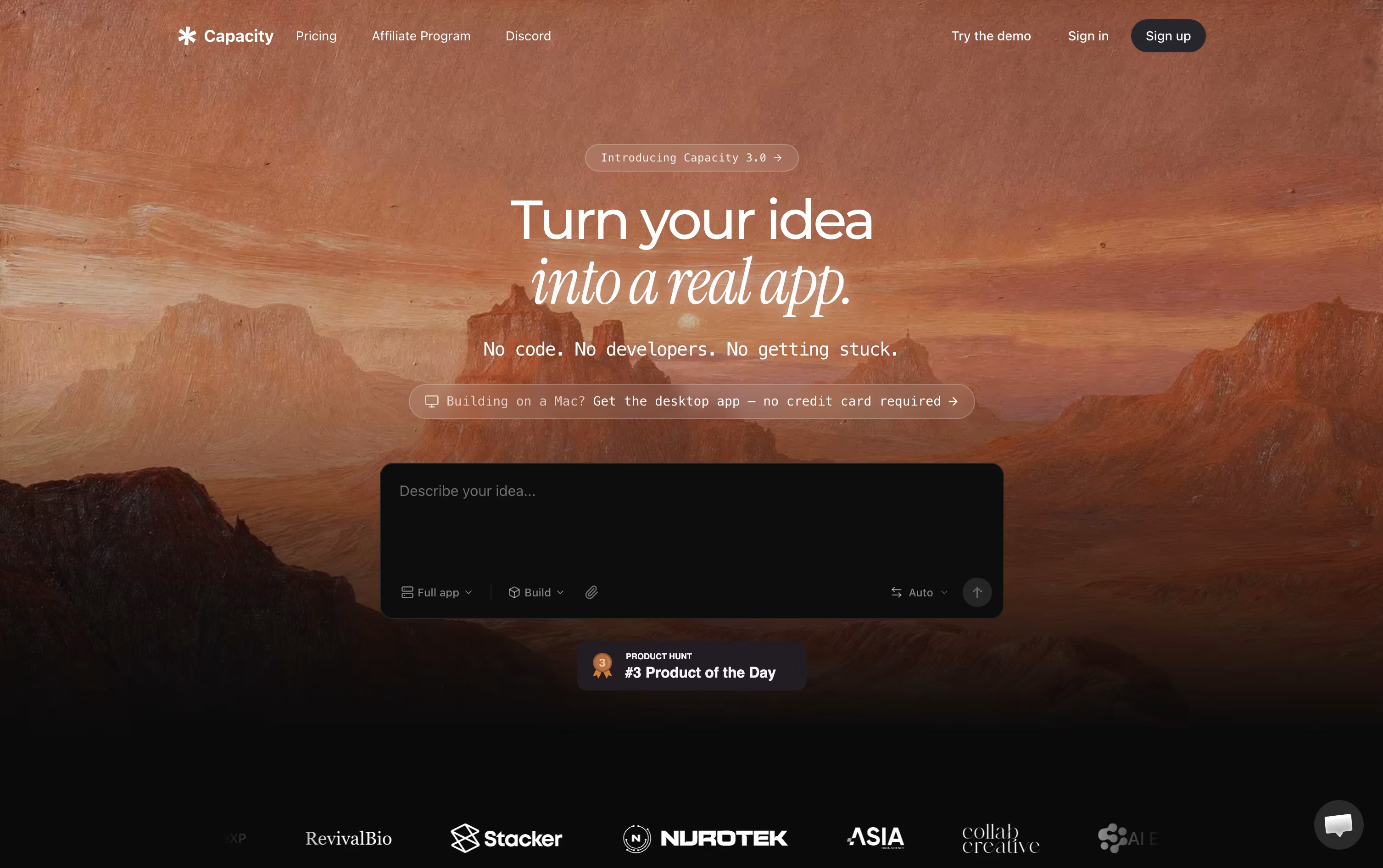 CapacityBuild Full Apps with AI, No Coding, and
  Shipper.now
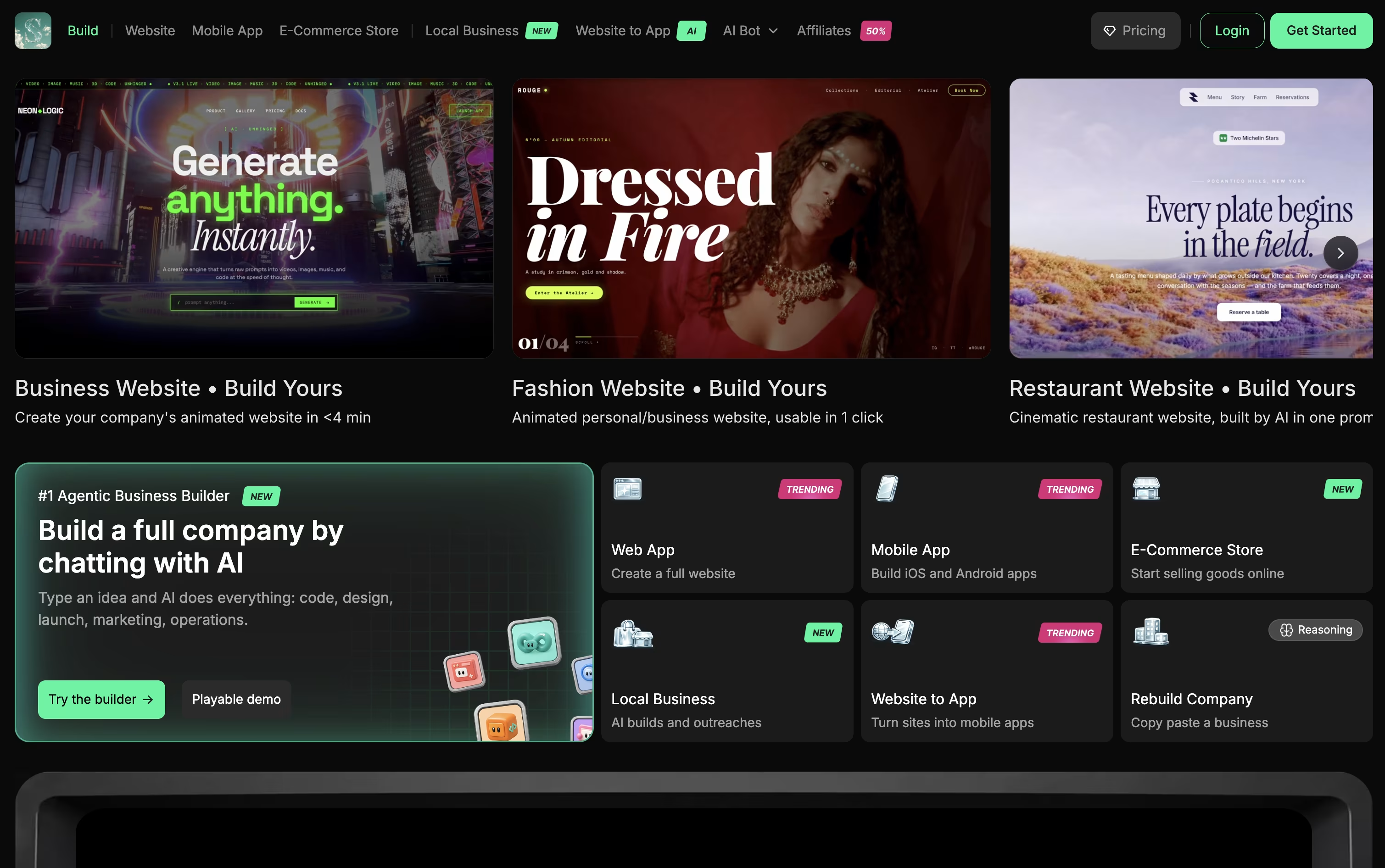 Shipper.now are the best for MVP Building. So, let’s take a closer look at all 12 tools.

Replit lets you build real software just by typing or speaking what you have in mind. The AI Agent takes it from there, planning the work, writing the code, setting up the database, testing the result, and getting it ready to publish, all without you needing to set up anything yourself.
One project can hold many kinds of output at once, such as a website, a mobile app, a slide deck, or a short video, and the Infinite Canvas gives you a visual way to design and adjust things as you go. When a project is big, Parallel Agents can split up the work and handle several parts at the same time.
Anyone can start for free on the Starter plan, which includes daily Agent credits and one published project.
Stepping up to Core runs $20 a month, or $18 a month if you pay yearly, and brings more credits, room for 5 collaborators, and 2 agents working together.
The Pro plan, at $100 a month or $90 a month yearly, is built for professional teams, offering the strongest AI models, 10 parallel agents, and 28 days of database rollbacks.
Larger companies can move to Enterprise for custom pricing with SSO, extra privacy controls, and dedicated support.
With Capacity, you describe your app idea the way you would explain it to a friend, and an AI Co-Founder takes it from there. It asks a few questions about what you are building and who it is for, then generates a full app with a frontend, backend, database, and login already wired together.
You can iterate quickly in Vibe Mode, or use Spec Mode to lay out a clear plan before anything gets built.
Once your app is live, you can preview it, chat to make changes, and publish with a single click. Matching iOS and Android apps can also be generated from the same project.
Plans start at $25 a month for the Starter tier with 100 credits, and scale up to $299 a month for the Business plan with 1,000 credits and a dedicated success manager.
One-time credit packs are also available from $9 if you prefer not to subscribe.
Your code always belongs to you, and full export is available at any time.
Building an app with Shipper.now starts with typing your idea in plain English, whether that is a website, a mobile app, a browser extension, or a chat bot. The AI reasons through the whole project, planning the database, designing the screens, writing the code, and catching its own mistakes.
Rather than just generating code, Shipper.now leans into the idea of an AI co-founder. Its separate Shipper Advisor feature works like a consultant, reviewing your project and suggesting improvements to product, growth, and marketing.
You can try it for free before paying anything. The Pro plan starts at $25 a month with 100 credits, and higher tiers go up to 20,000 credits for $5,000 a month, adding connectors, advanced design options, unlimited teammates, and the AI Advisor.
Shipper Max is built for heavier use, starting at $200 a month for 500 credits and reaching $400 a month for 1,000 credits. It brings priority support, AI Employees, and access to models such as Claude Opus, Gemini, and DeepSeek.
When your app is ready, Shipper takes care of hosting, the database, and logins, and you can point a custom domain at your finished product.

Emergent turns a written idea into a real, working application. You explain what you need in everyday English, and a group of AI agents handles the planning, design, coding, testing, and deployment on your behalf.
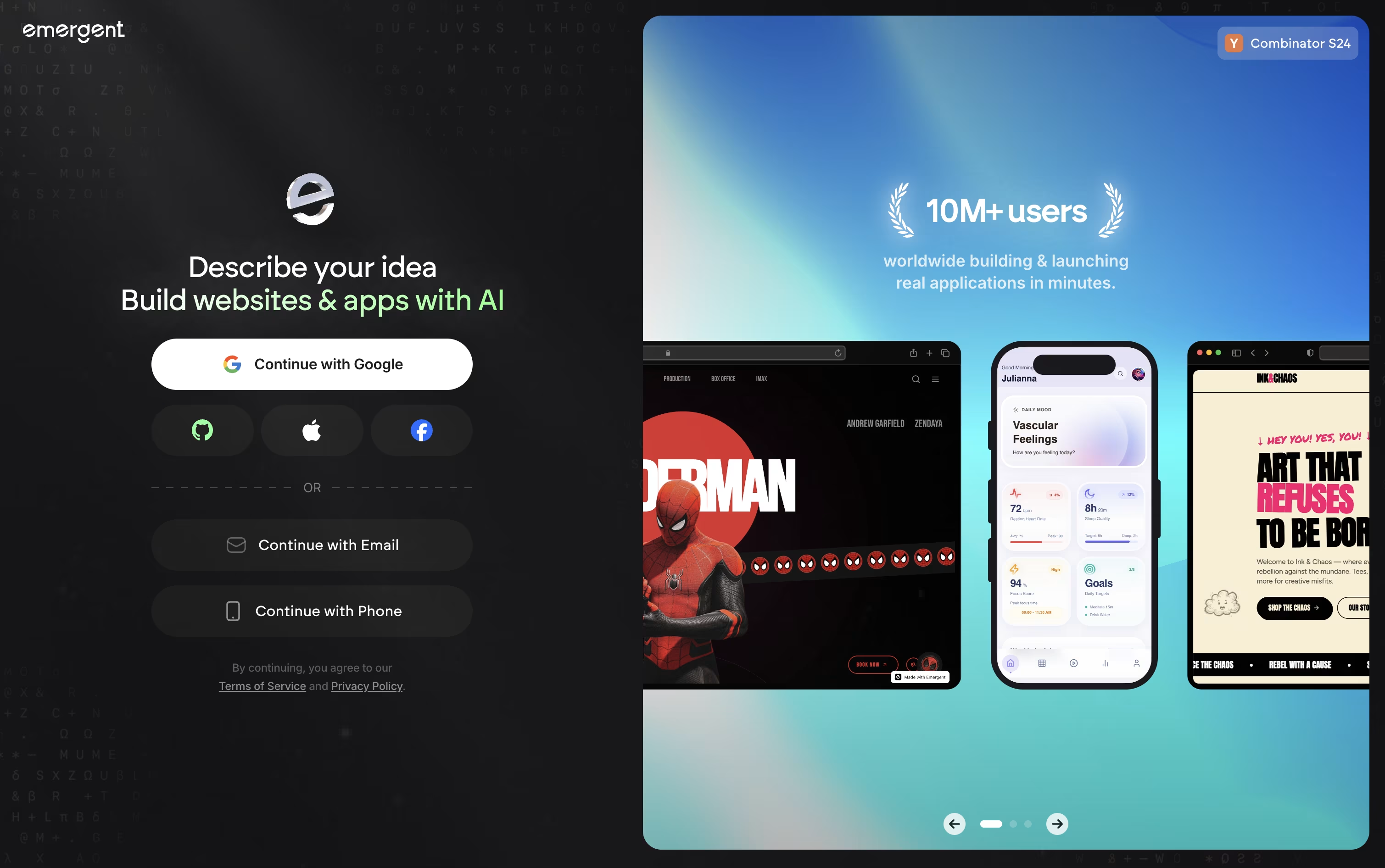
The system builds the entire application, covering the visual design, backend rules, database structure, and account logins, so you are not left with just a frontend mockup.
Getting started is free, with 10 credits included each month and access to the core tools. Moving up to Standard costs $20 monthly, or $17 monthly when paid yearly, and adds private hosting plus GitHub syncing.
The Pro tier runs $200 a month, or $167 a month annually, and gives you a much larger 1 million token memory window, the ability to build your own custom agents, and 750 credits a month.
Companies needing tighter control can move to Business or Enterprise, both priced on request, which bring in single sign on, access controls, audit trails, and private cloud deployment.
With built in connections to GitHub, Stripe, and Supabase and support for both web and mobile builds, Emergent suits solo founders, agencies, and teams that want working software without a long build cycle.

Lovable lets you build a real, working web application just by describing it in everyday language. The AI handles the frontend design, backend logic, database setup, and user login, so you do not need to write code yourself.
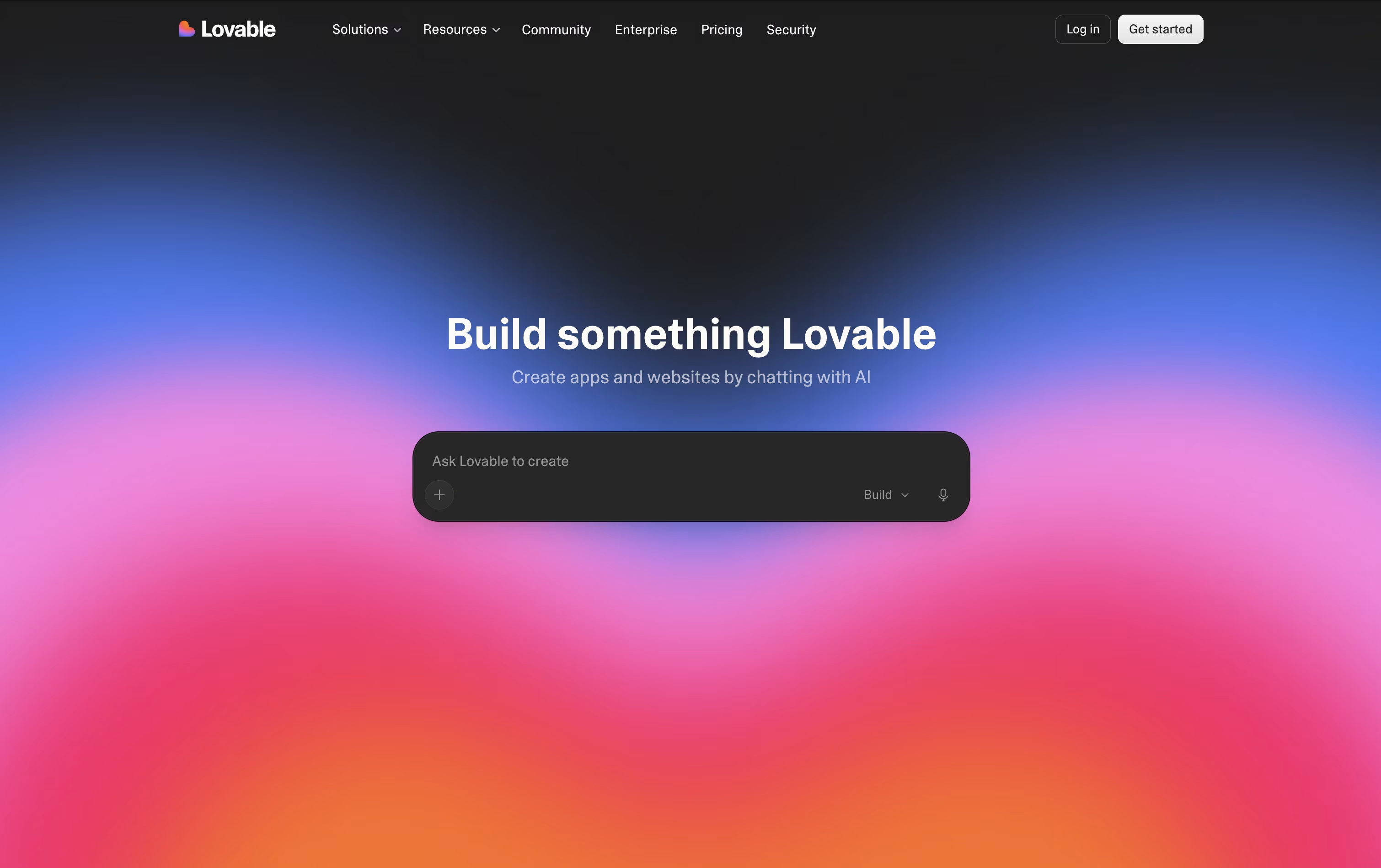
The platform includes its own cloud backend built on Supabase, meaning your app gets a database, file storage, and authentication without any separate setup. You can start a project from a text prompt, a screenshot, or even an existing website link.
Getting started is free, with no credit card required. If you need more, the Pro plan is $25 a month and unlocks custom domains, credit rollovers, and badge removal.
For teams, the Business plan at $50 a month adds shared workspaces, single sign on, and extra security tools. Larger companies can request Enterprise pricing for dedicated support, audit logs, and custom connectors.
When your app is ready, you can publish it with one click or sync the code to GitHub so you fully own it.

A lot of people jump straight into building without stepping back to ask what they should actually build and who will use it. Rocket tries to fix that by combining research, app building, and competitor tracking in one connected workspace.
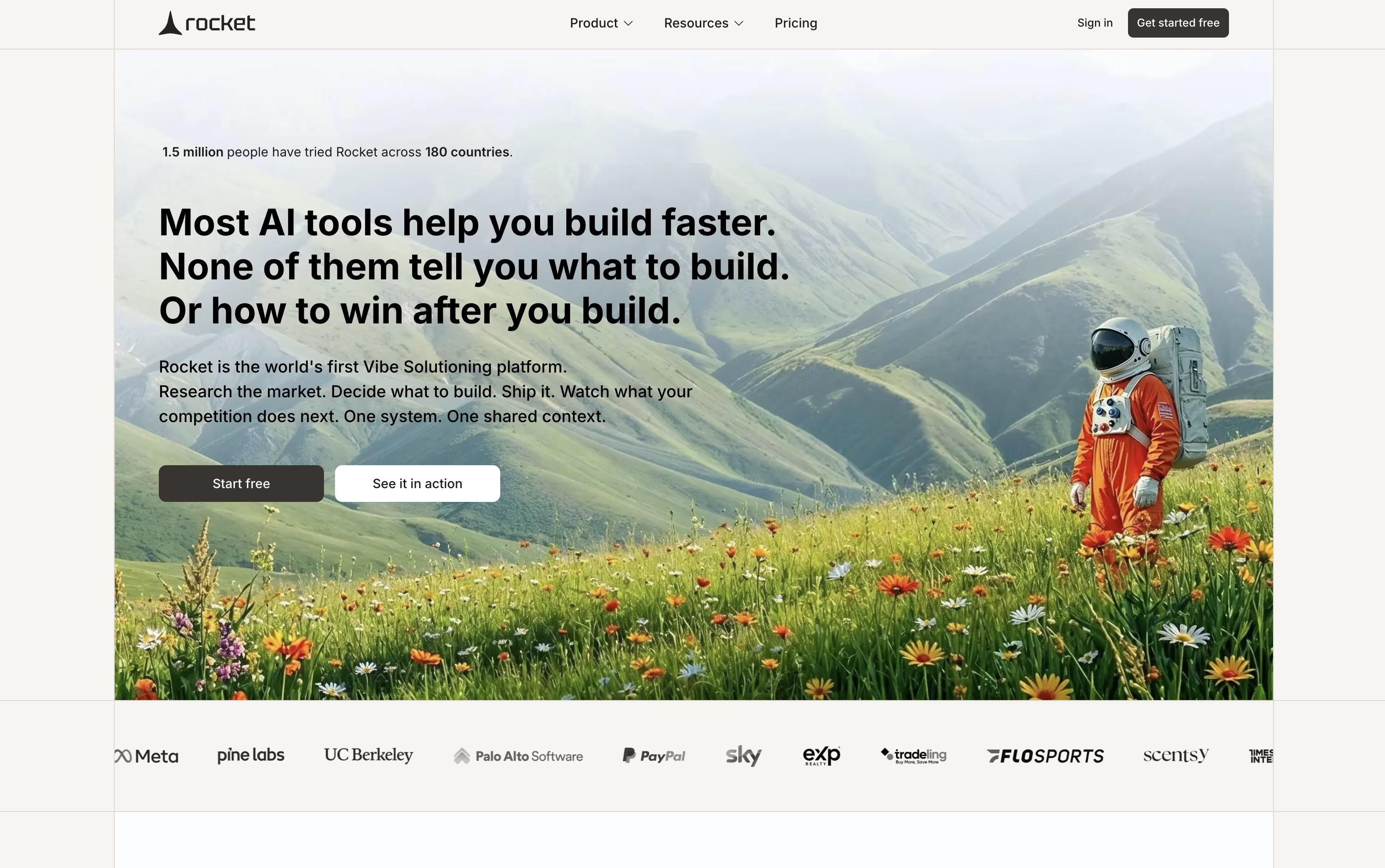
The research side, called Solve, takes any market question and turns it into a clear, evidence backed brief covering strategy, growth ideas, and product direction, which can be exported and shared right away.
The building side, called Build, turns everyday language, a Figma file, or a GitHub repo into a real website, web app, mobile app, or online store, built on solid frameworks like Next.js and Flutter instead of a quick mockup.
The Intelligence side keeps watch on competitors in the background, sending daily updates about pricing changes, new features, and marketing moves.
The Free plan gives newcomers 20 credits to try things out, while Pro, Rocket, and Booster plans add more monthly credits, deeper research, and enterprise features such as single sign on and premium support as needs grow.
Because everything shares the same project context, a finding from research can shape what gets built, and a competitor signal can point straight to the next update.

Think of Manus as an assistant that actually does the work instead of just talking about it. You describe a goal, and it breaks the job into steps, then uses a browser, code, and files to carry it out.
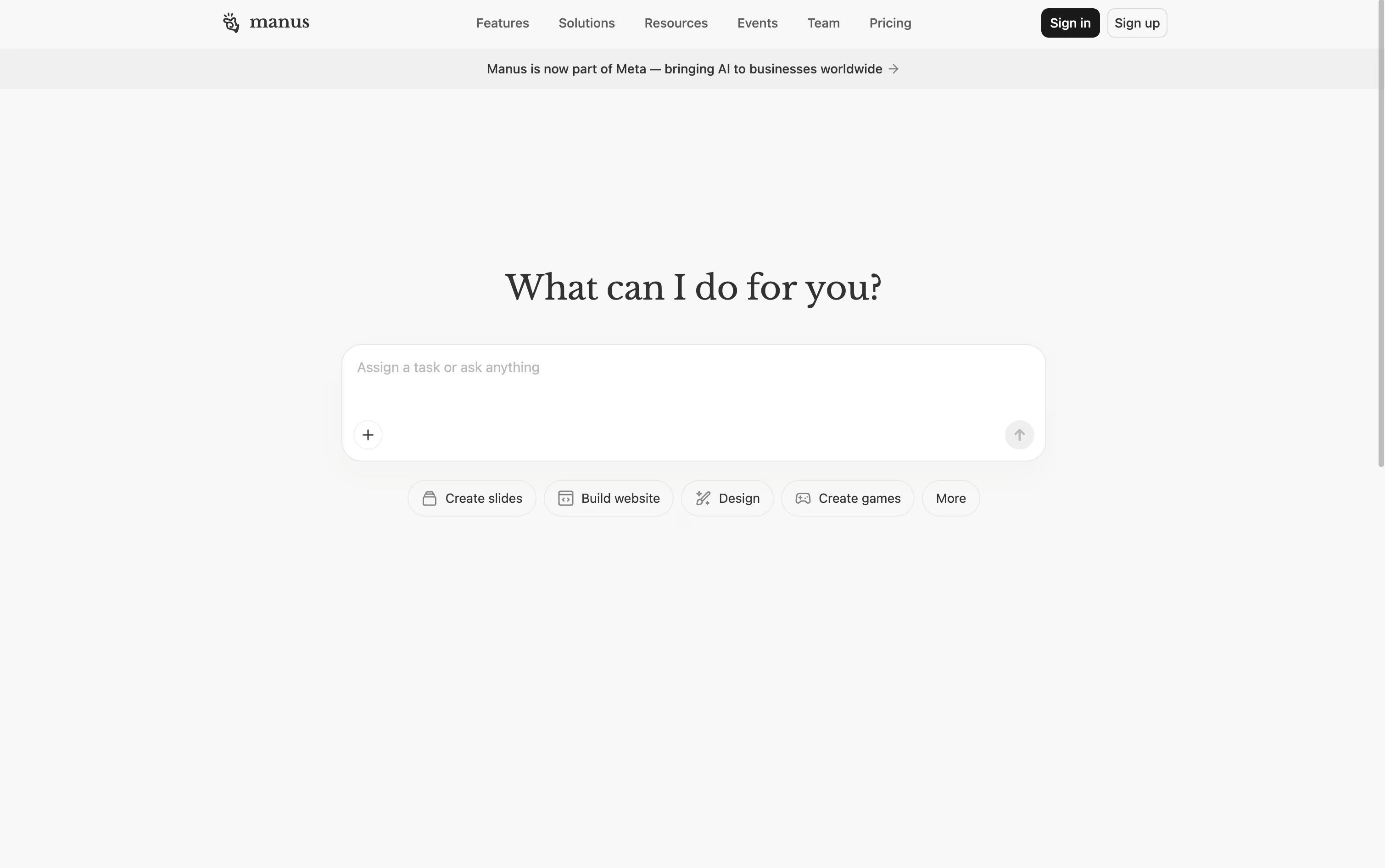
It handles research at scale, builds working websites and apps from a plain description, writes and designs full slide decks, and creates images, video, or music when needed. Since tasks run in the cloud, you can walk away and get notified when it finishes, or stay and guide it along the way.
It fits into tools you already use too, connecting with Slack, email, and Google Drive, plus a Browser Operator that works inside your own browser using your saved logins.
On pricing, the Standard plan is $20 a month with 4,000 credits, the Customizable plan is $40 a month with 8,000 credits, and the Productivity plan is $200 a month with 40,000 credits and a free cloud computer included. Paying yearly saves 17 percent.
Larger teams can move to custom business plans, which come with stronger security and compliance certifications built in.

Bolt, built by StackBlitz, is a coding agent that builds full apps from simple text instructions. Type what you want, and it writes the code, installs what is needed, and opens a live preview right in the browser.
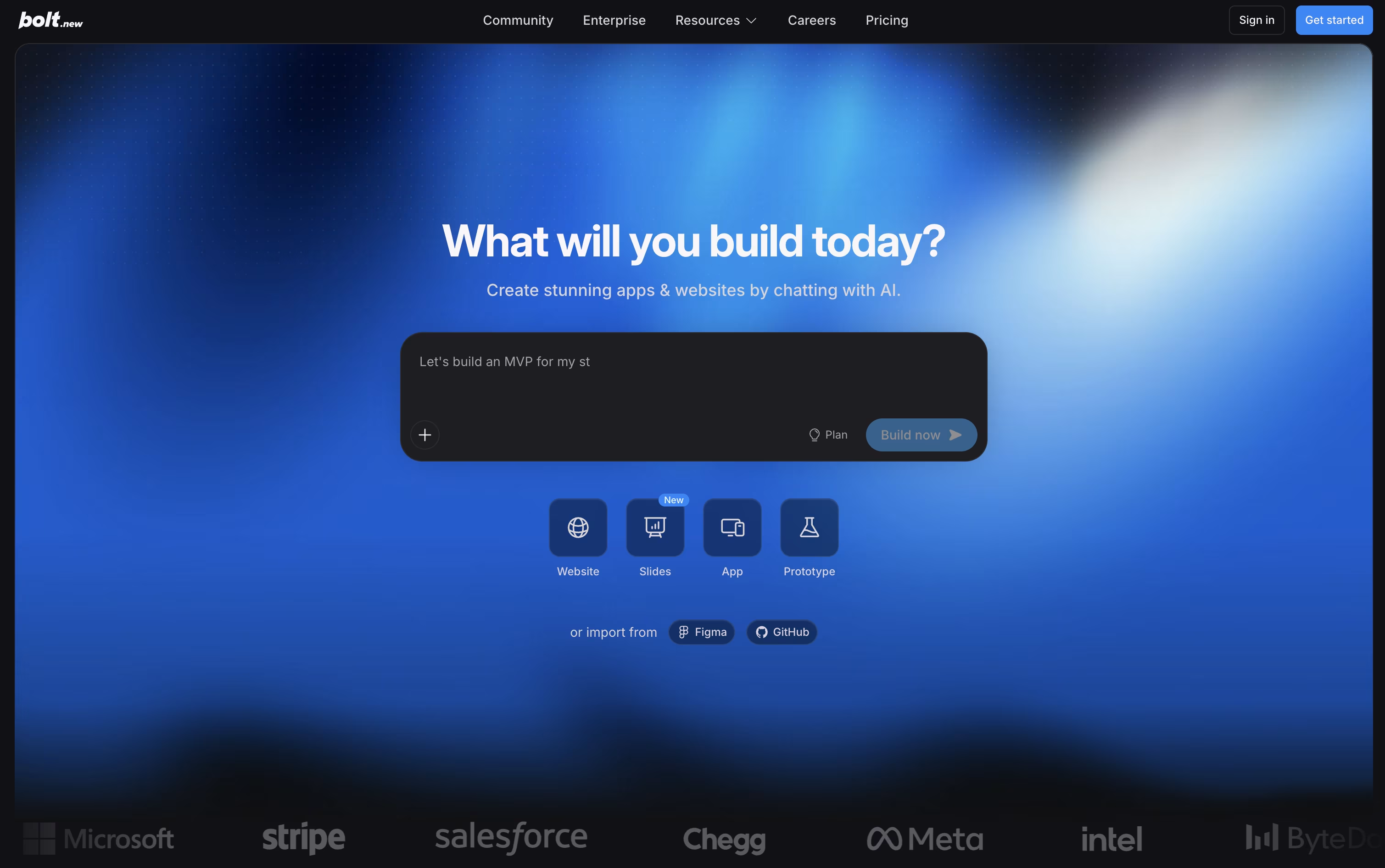
Because it runs on WebContainers, a complete coding environment inside the browser, there is nothing to install on your machine. Claude AI models power the agent, letting it scaffold projects, run servers, and correct errors as the conversation continues.
Getting started costs nothing. The Free plan includes 300K tokens a day, 1M tokens a month, website hosting, and unlimited databases, though the site shows Bolt branding.
Upgrading to Pro runs $25 a month, or $18 a month on the yearly plan. It lifts the daily token cap, gives 10M tokens a month, removes branding, and unlocks custom domains, SEO boosting, and AI image editing.
The Teams plan is $30 per member monthly, or $27 yearly, adding centralized billing and access controls, while Enterprise offers custom pricing with SSO, audit logs, and a dedicated account manager.
With built in support for Figma, GitHub, Supabase, and Stripe, Bolt suits founders, product teams, and developers who want a working app quickly while still owning the code.

Instead of hiring a developer or piecing together separate tools, Base44 lets you describe an app in plain English and get a working version back right away.
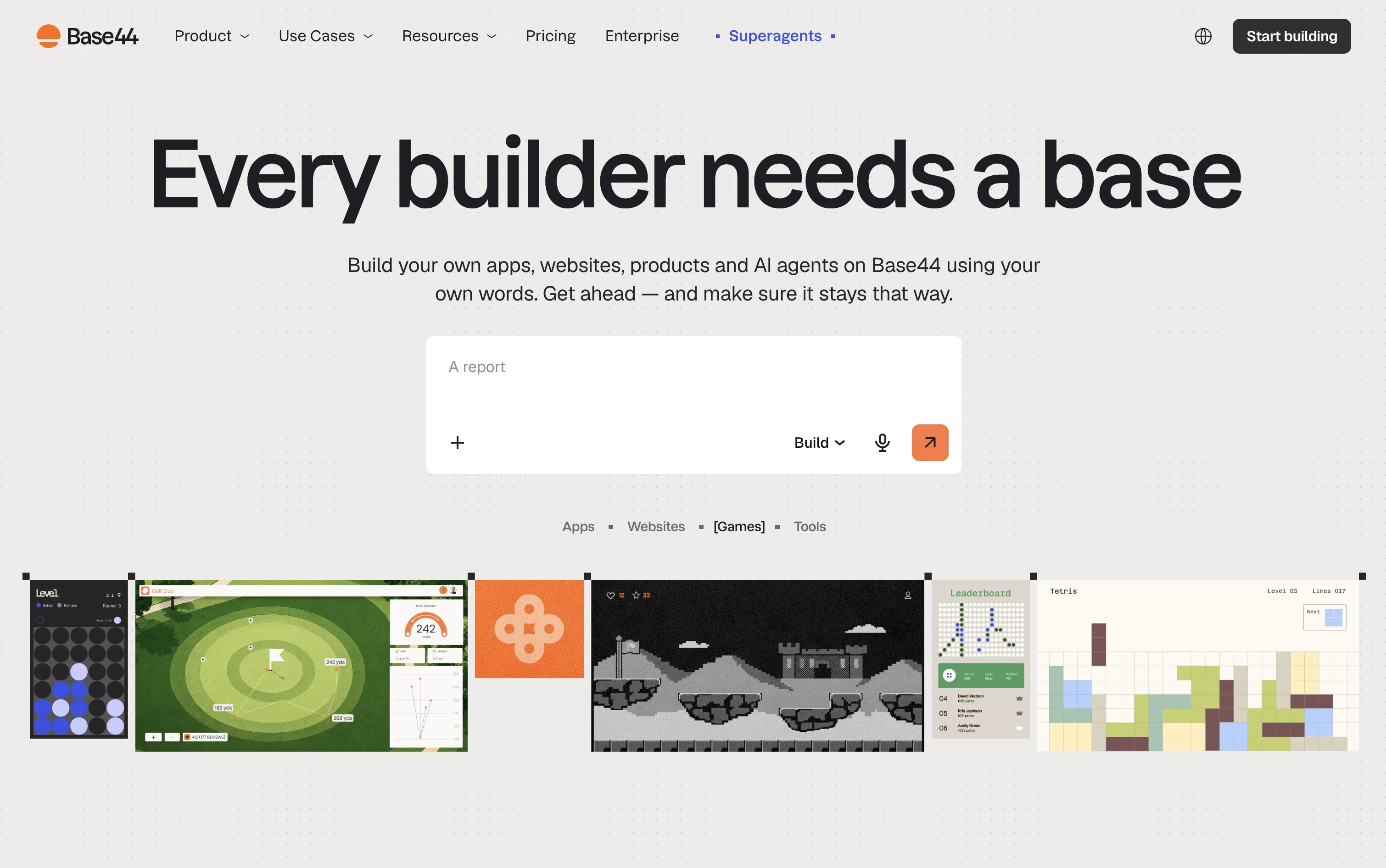
It handles the pages, the database, the login system, and the backend logic in one go, and you refine it further just by chatting with the AI.
Trying it out costs nothing, the free plan gives you 25 message credits a month and room for up to 5 apps.
Once you need more, the Starter plan at $20 a month removes the app limit and opens up code editing, while the Builder plan at $50 a month adds backend functions, AI model choice, and custom domains.
Pro and Elite raise the credit caps for heavier use, and Base44 also builds Superagents, AI helpers that handle tasks like follow-ups and scheduling on their own.
Larger organizations can move to a custom-priced Enterprise plan with single sign-on and dedicated support.

With Softgen, you describe the app you want in everyday language, and the AI handles the planning and coding for you. A quick request like a SaaS dashboard with billing and analytics becomes a real, working project.
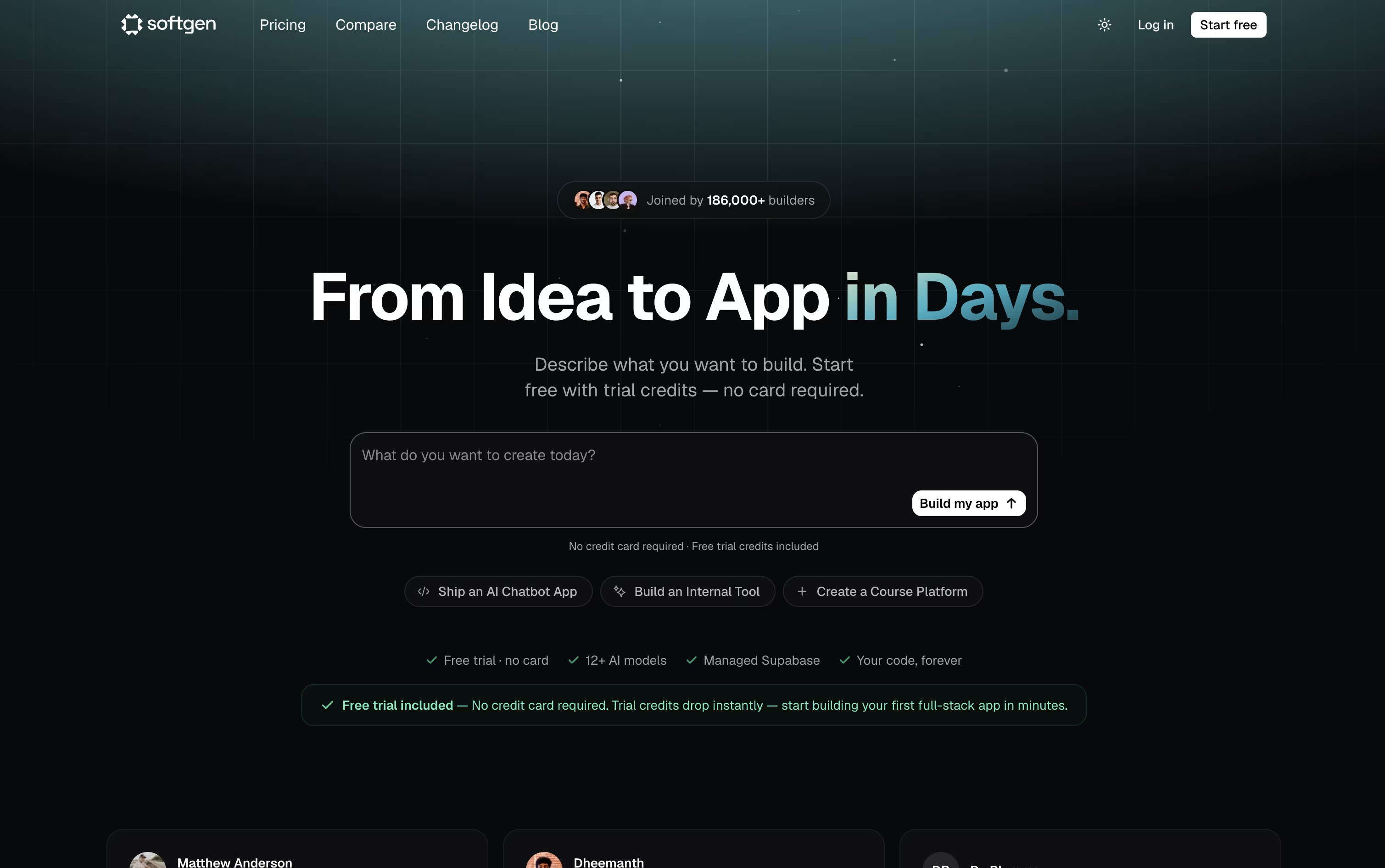
The platform writes the frontend and backend together, sets up the database and login system, and gives you a live preview so you can watch it come together. Further changes just take another chat message.
You can pick from over 12 AI models, including Claude 4.5, GPT 5.4, and Gemini 3.1 Pro, and every project comes with a managed Supabase database, custom domain support, and a Kanban style project board.
Your project is stored as a genuine GitHub repository, so you always own the code and can open it in any editor. Deployment goes straight to your own Vercel account with a single click.
The Starter plan is 25 dollars a month with 500 credits and 10 projects, while the Pro plan is 49 dollars a month with 1,500 credits, unlimited projects, and priority support.
Since the code and hosting belong to you, the app you build stays live even after your subscription ends.

With Anything, you describe the app you want in plain words, and the AI handles the coding, the database, the login screen, and the payments behind the scenes.

One project can produce a website, a web app, and native iPhone and Android apps at the same time, all sharing the same backend.
Getting started costs nothing, since the free plan lets you build public projects with community support.
Moving up, the Pro 20K plan is $24 a month, or $19 a month if billed yearly, and unlocks 20,000 AI credits, private projects, custom domains, and no Anything branding.
Teams with bigger needs can pick the MAX plan, starting at $239 a month for 220,000 credits, or $199 a month yearly, which adds parallel AI agents, automated testing, and faster support.
The standout feature is Anything Max, which tests the app itself like a real visitor, catches errors, and fixes them without you asking.

Building a real app usually means hiring developers or learning to code yourself. Floot skips both by letting you describe your idea in plain language and building the app for you, backend and all.
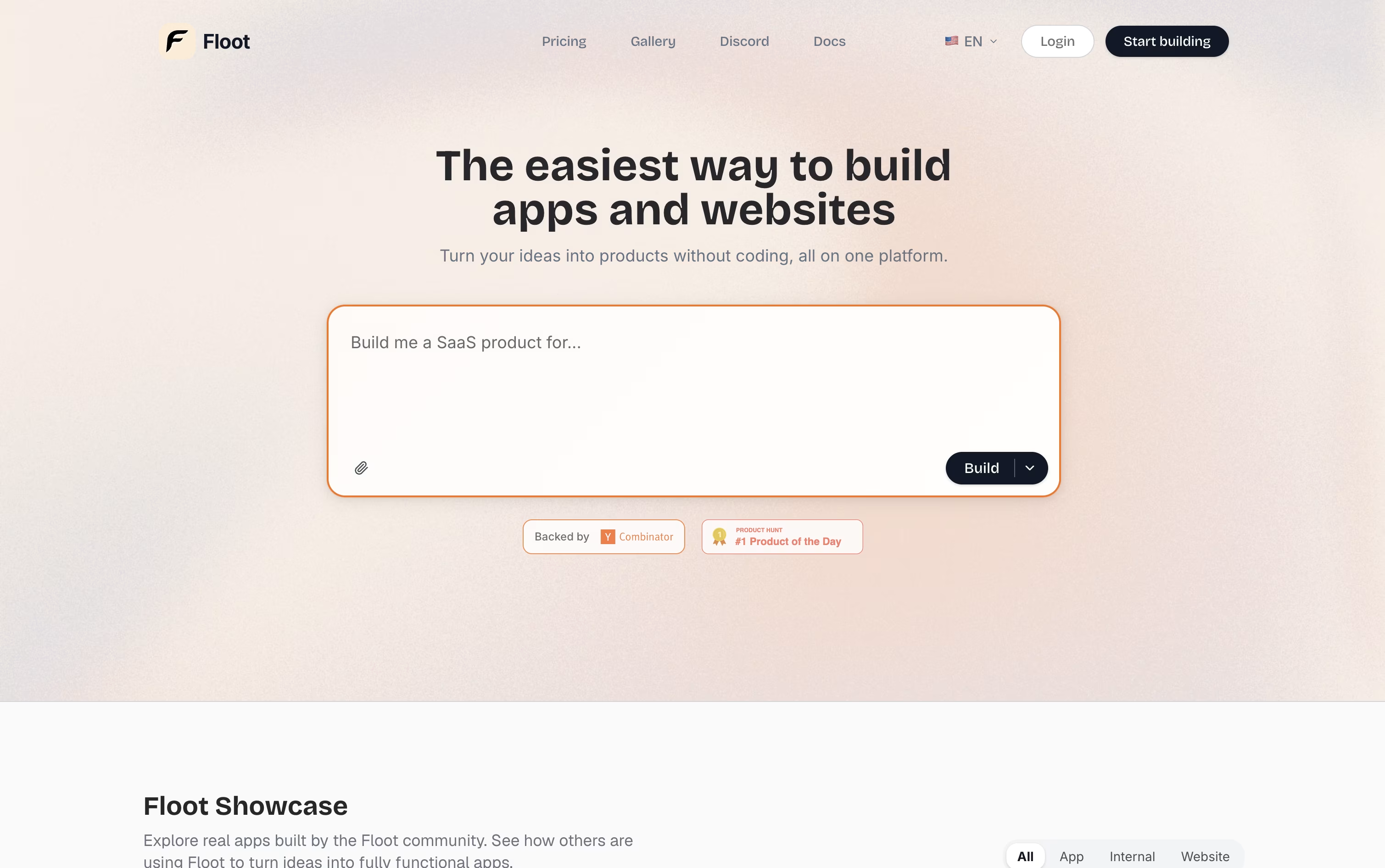
The platform was founded in 2025 by engineers who previously worked at Retool and AWS, and it was built specifically for AI-driven app creation rather than adapted from older coding tools.
Beyond the basic build, Floot adds hosting, a database editor, user logins, SEO tools, and realtime features like live chat and push notifications, so the finished app can serve real customers.
Getting started costs nothing. The Free plan gives you 3,000 AI credits and a small hosting allowance to test your first project.
When you are ready to grow, the Pro plan begins at $25 a month for 25,000 credits, with a $100 a month option for 100,000 credits. It unlocks custom domains, SEO tools, and mobile app export.
Businesses with bigger needs can choose the Enterprise plan, which starts at a $20,000 yearly commitment and includes custom features and dedicated support.