
Best 5 Tools for Cinematic Content Generation in 2026
Last Updated: August 28, 2026
Getting footage that looks like it came from a film set, rather than a phone camera, used to require a crew, lighting rig, and location scout. Cinematic Content Generation tools now produce dramatic camera movement, color grading, and composition using AI, giving creators film-quality visuals from text prompts or basic source clips.
This opens up high-production-value storytelling to solo creators, marketers, and small studios who cannot justify a full shoot for every piece of content. From trailers to brand films, cinematic generation tools make it possible to produce striking visuals on a fraction of the traditional time and budget.
 Kling AI
 Kling AICinematic AI Video & Image Generator,
  PixVerse
 PixVerseTurn Text and Images Into AI Video, and
  Pika
Pika PikaAI Video Generator for Social Media Clips are the best for Cinematic Content Generation. So, let’s take a closer look at all 5 tools.

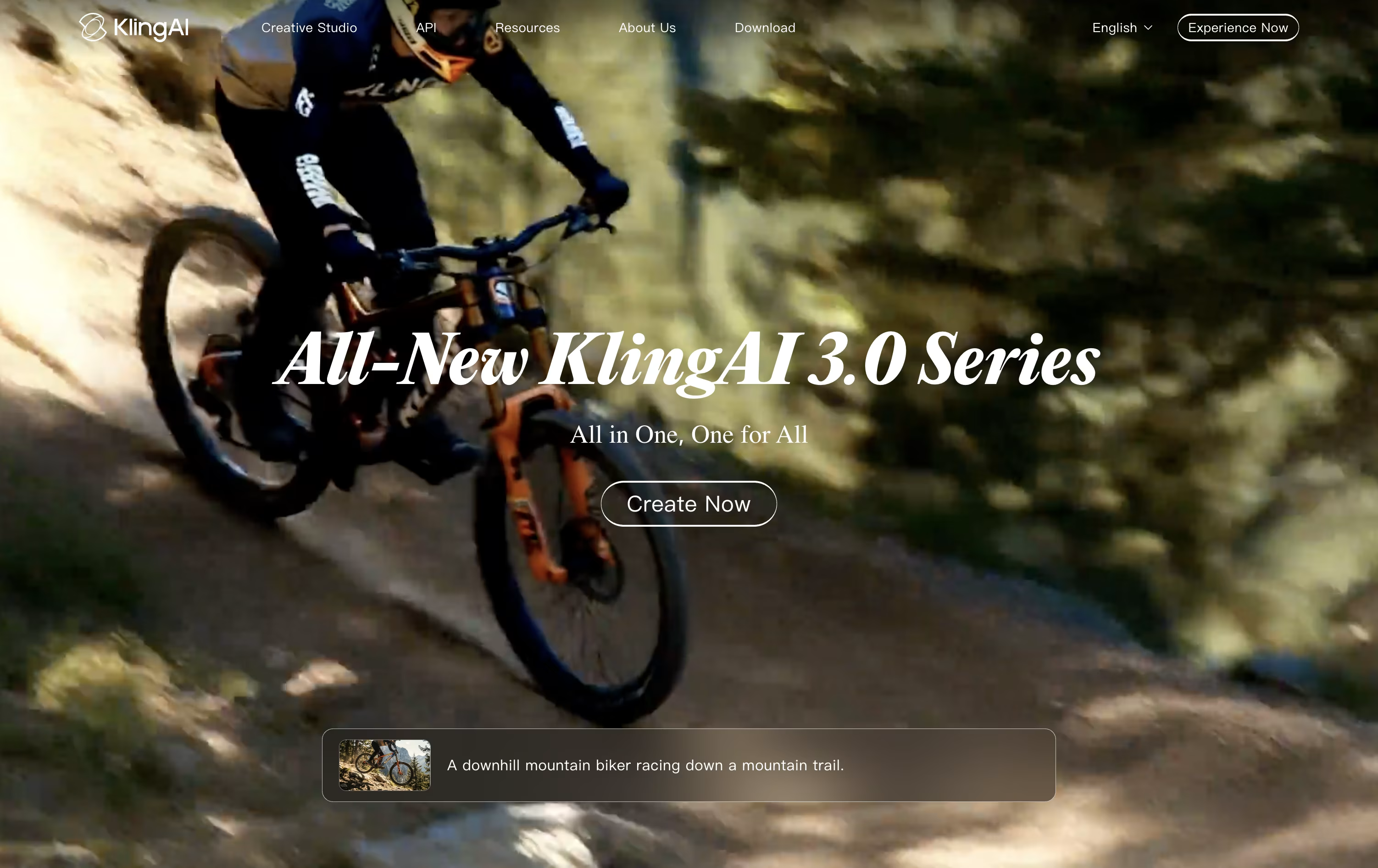
Built by Kuaishou, the company behind the Kuaishou short video app, Kling AI turns prompts, photos, and reference clips into cinematic video and sharp images.
The Kling model series drives the platform, handling realistic movement and physics, and covering Text-to-Video, Image-to-Video, Motion Control, and native audio with lip sync support.
Start and end frame settings keep scene changes smooth, Video Extension stretches clips further, and Canvas Agent turns a script into a multi-shot storyboard automatically.
For images, you can generate from text or a reference photo, then restyle the look, outpaint the frame, or remove unwanted objects.
The API is priced by prepaid units across two separate systems. Video trial packages begin at $9.80 for 100 units, and standard packages range from $700 for 5,000 units to $7,560 for 60,000 units. Image packages cost less per unit, starting at $2.45 for 1,000 units and reaching $5,670 for 1,800,000 units.
Businesses needing more can contact sales for a custom volume plan.
Type a prompt, upload a photo, or add a reference clip, and PixVerse turns it into a short video with camera movement, sound, and even multiple shots stitched into one scene.
Editing tools such as Modify, Restyle, and Extend mean you are not stuck with the first result, you can swap out objects, change the style, or continue a clip with new action.
Anyone can start for free on the Basic plan, which includes 30 credits a day and video up to 540P resolution.
Stepping up to Standard at $10 a month unlocks 720P and 1,200 monthly credits, while Pro at $30 and Premium at $60 raise the credit pool further and open up full 4K output with more generations running side by side.
At the top sits Ultra for $199 a month, cut down from $249, offering the broadest set of unlocked image models, the deepest video model discounts, and free generations whenever Off-Peak Mode applies.
Groups working together can pick Team Ultra at $199 per seat for shared credits and a joint workspace, and larger organizations can reach out for Enterprise pricing that begins at $100 and includes full API access.
Pika, built by Pika Labs, is an AI platform that changes text prompts, photos, or clips into short AI made videos.
Its standout part is a toolkit of playful effects: Pikaffects for surreal one tap transformations, Pikaframes to interpolate motion between two images, Pikascenes to compose scenes from reference pictures, and Pikadditions or Pikaswaps to add or replace elements in footage.
Pikaformance brings still photos to life with lip synced talking or singing, driven by an uploaded audio track.
Pricing starts free with the Basic plan, offering 80 credits a month at 480p resolution.
Standard runs $10 a month, Pro is $35 a month and is the most popular pick, and Fancy reaches $95 a month, each adding more credits, higher resolution, and quicker generation speeds.
Choosing yearly billing saves 20 percent, while no watermark downloads and commercial use are reserved for Pro and Fancy.

Think of Vidu as a video studio that starts with a prompt, a picture, or a handful of reference images, then produces a clip where the same character or object stays recognizable throughout.
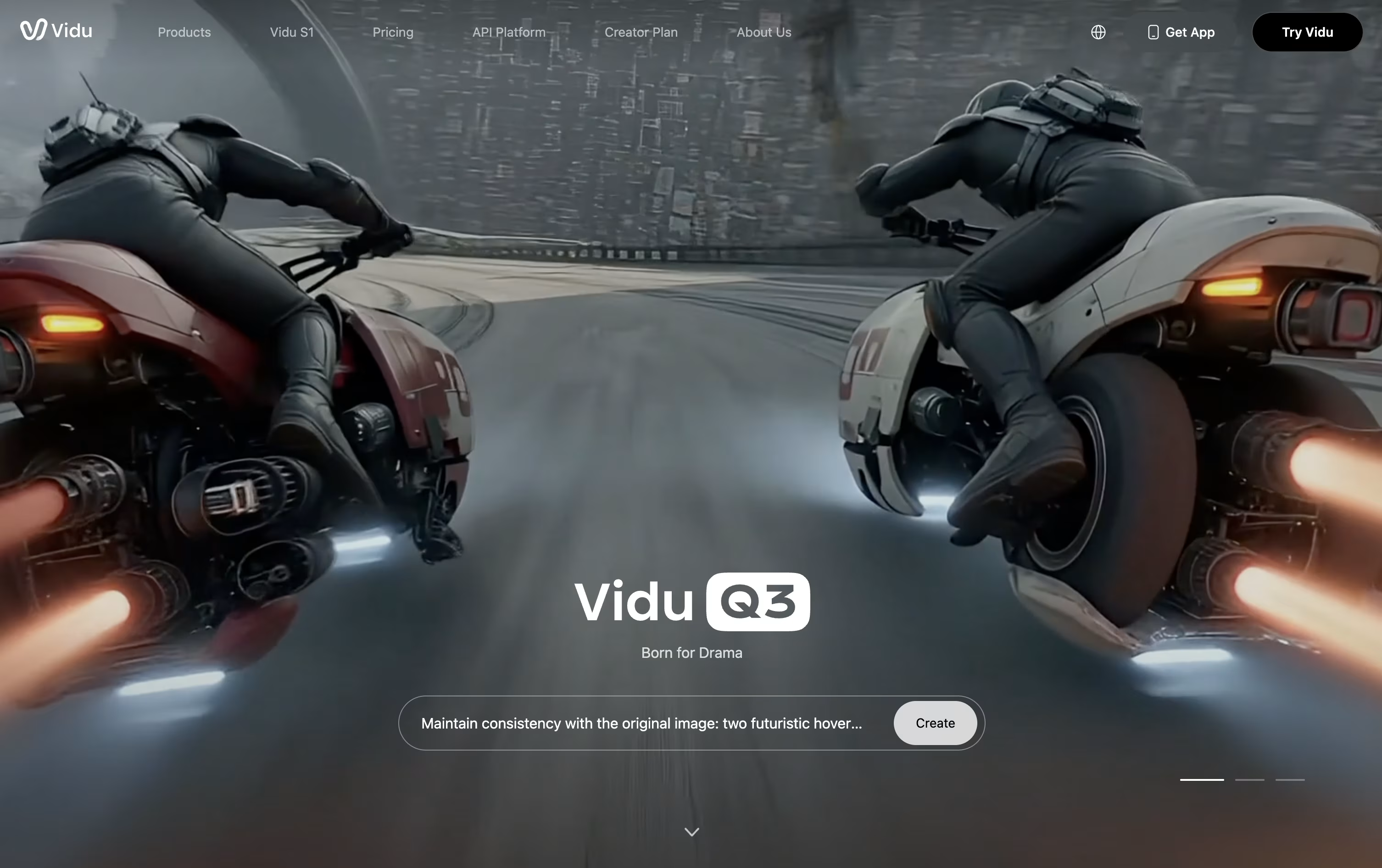
Its toolkit covers photo animation, first and last frame control, and Story Grid for multi shot storytelling. The Vidu Claw agent can build a script, storyboard, and video with minimal input from you, and Vidu S1 offers real time, voice driven control of a digital character.
Getting started costs nothing. The free plan allows 10 references a month, though it skips commercial rights, clean downloads, and higher resolutions.
Stepping up to Standard at $10 a month (or $8 with yearly billing) unlocks 800 credits, roughly 200 videos, and the right to use your videos commercially.
Premium, at $35 a month or $28 yearly, raises that to 4,000 credits and a quicker generation queue. Ultimate, at $99 a month or $79 yearly, tops out at 8,000 credits, unlimited image generation, and a free Off-Peak Mode built for heavy daily use.
Paid plans can also add extra credits at a discount, though Vidu does not issue refunds once you subscribe.

Hedra focuses on one thing especially well: turning a photo and a voice into a believable speaking video. Upload an image, add audio or a script, and it generates natural lip sync along with small facial movements like blinks and head tilts.
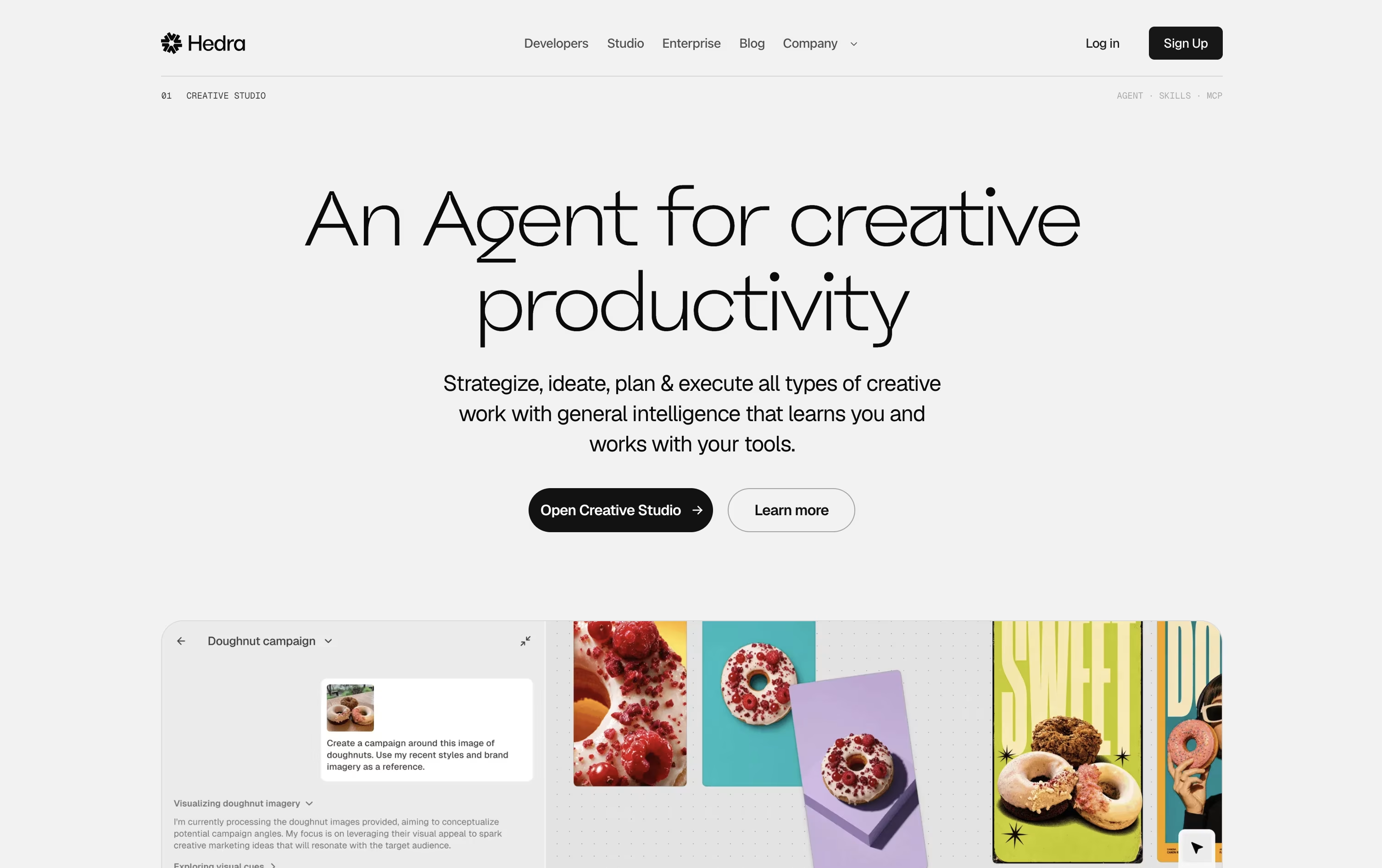
Its Omnia model expands this further by adding full body motion, camera movement, and scene direction, letting characters act out a short performance instead of just talking.
A built in creative agent lets you type out a goal in everyday language, and Hedra handles planning, model selection, and asset creation inside a saved workspace called a Space.
On pricing, Basic costs $15 a month for 1,500 credits, Creator is $30 for 5,400 credits, and both Professional and Teams sit at $75 a month for 14,400 credits with the fastest render speed.
Businesses with bigger needs can move to the Enterprise plan, which includes custom credit volumes, private deployment, and dedicated account support at custom pricing.
It works well for marketing videos, social clips, presenters, and character based storytelling.