
Best 4 Tools for AWS App Deployment in 2026
Last Updated: October 5, 2025
Getting an application running reliably on AWS involves configuring infrastructure correctly before it ever goes live. AWS App Deployment tools help set up and manage the process of deploying applications to AWS.
Developers and DevOps teams use AWS deployment tools to launch and manage applications on the platform more efficiently.
 Appliku
 ApplikuSimple Python Django App Deployment Platform,
  Pulumi
 PulumiInfrastructure as Code in Any Language, and
  BuildShip
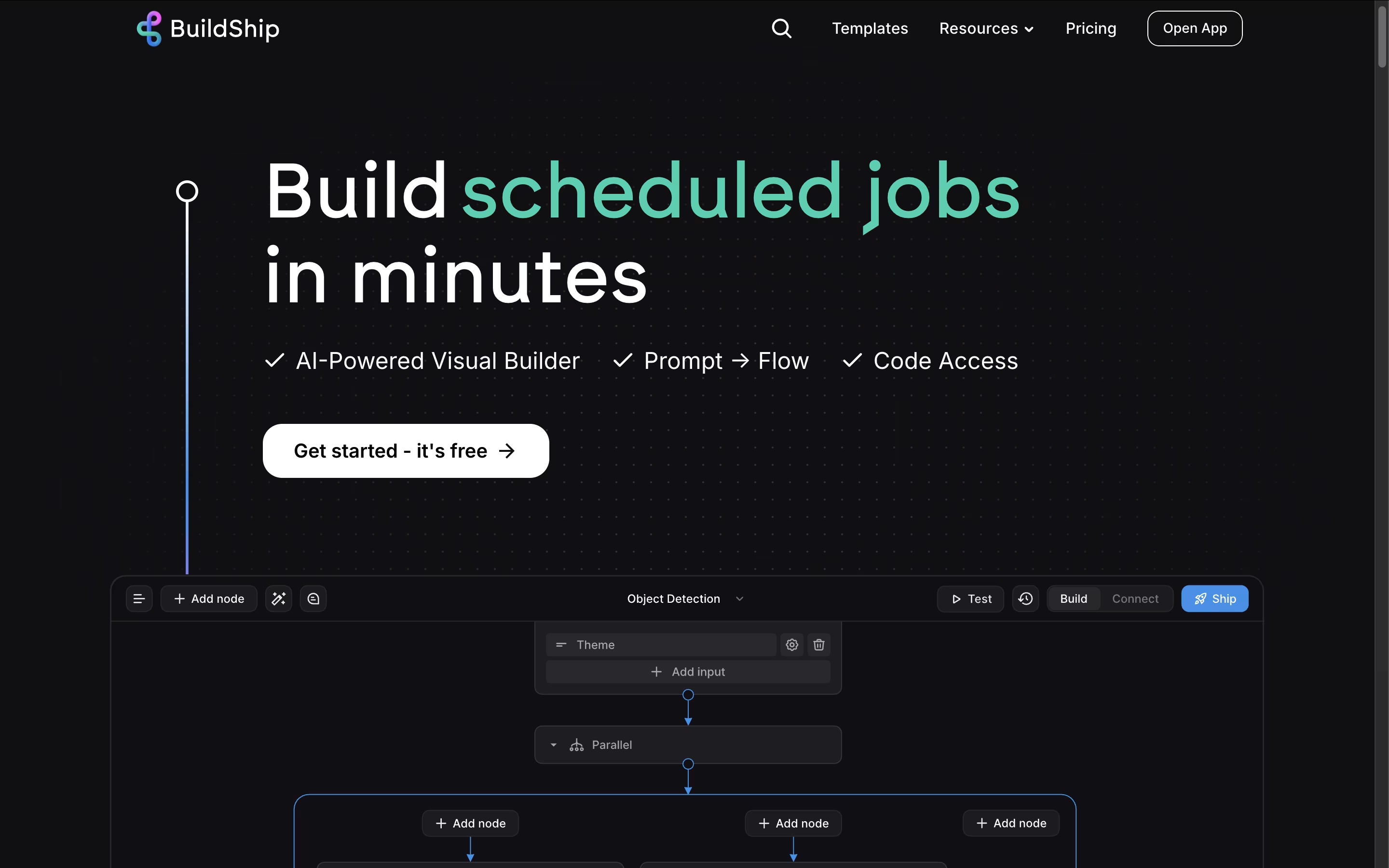 BuildShipAI-Powered Visual Backend Builder for APIs and Workflows are the best for AWS App Deployment. So, let’s take a closer look at all 4 tools.
Appliku is a deployment automation platform designed to simplify server management and application deployment for developers and teams. Think of it as a bridge between complex server administration and easy-to-use hosting platforms.
The service works by connecting to your existing cloud servers (like AWS, DigitalOcean, or any Ubuntu server) and automatically setting up everything needed to run your applications. It uses Docker and Nginx behind the scenes to create a reliable hosting environment without requiring you to learn server management.
What makes Appliku special is its BYOS (Bring-Your-Own-Server) approach. You keep full control over your hosting costs and server specifications while getting the same easy deployment experience as premium hosting platforms. Founded to help developers focus on building rather than server management, Appliku supports Python, Django, and other web applications with automatic Git-based deployments.
Pulumi is an open-source infrastructure as code platform that allows developers to define, deploy, and manage cloud infrastructure using familiar programming languages instead of proprietary domain-specific languages. Think of it as bringing software engineering practices to infrastructure management.
The platform consists of three main products: Pulumi IaC for infrastructure management, Pulumi ESC for secrets and configuration management, and Pulumi Insights for AI-powered infrastructure analytics. What sets Pulumi apart is its use of real programming languages, enabling developers to write infrastructure code with loops, conditionals, functions, and all the features they're used to.
Pulumi manages infrastructure declaratively while providing the flexibility of imperative programming. Each resource is tracked and managed through state files, ensuring consistent and predictable deployments. The platform integrates with existing CI/CD pipelines and supports policy as code for security and compliance requirements.
BuildShip is an AI-powered visual backend builder designed to help businesses and developers create scalable backend infrastructure without extensive coding knowledge. Think of it as a smart toolbox that combines no-code simplicity with low-code flexibility.
The platform uses a node-based system where you can drag and drop pre-built components or ask AI to generate custom nodes for your specific needs. It runs on Google Cloud Platform, ensuring enterprise-grade scalability and security. BuildShip connects seamlessly with popular AI models like ChatGPT, databases like Firebase and PostgreSQL, and hundreds of third-party services.
Founded in 2023 by the team behind Rowy, this platform has become popular because it eliminates the complexity of traditional backend development while giving you full control over your code when needed.

Webiny is a serverless content management system that you install and run inside your own AWS cloud account. It's completely open-source, which means you can see how it works and change it to fit your needs.
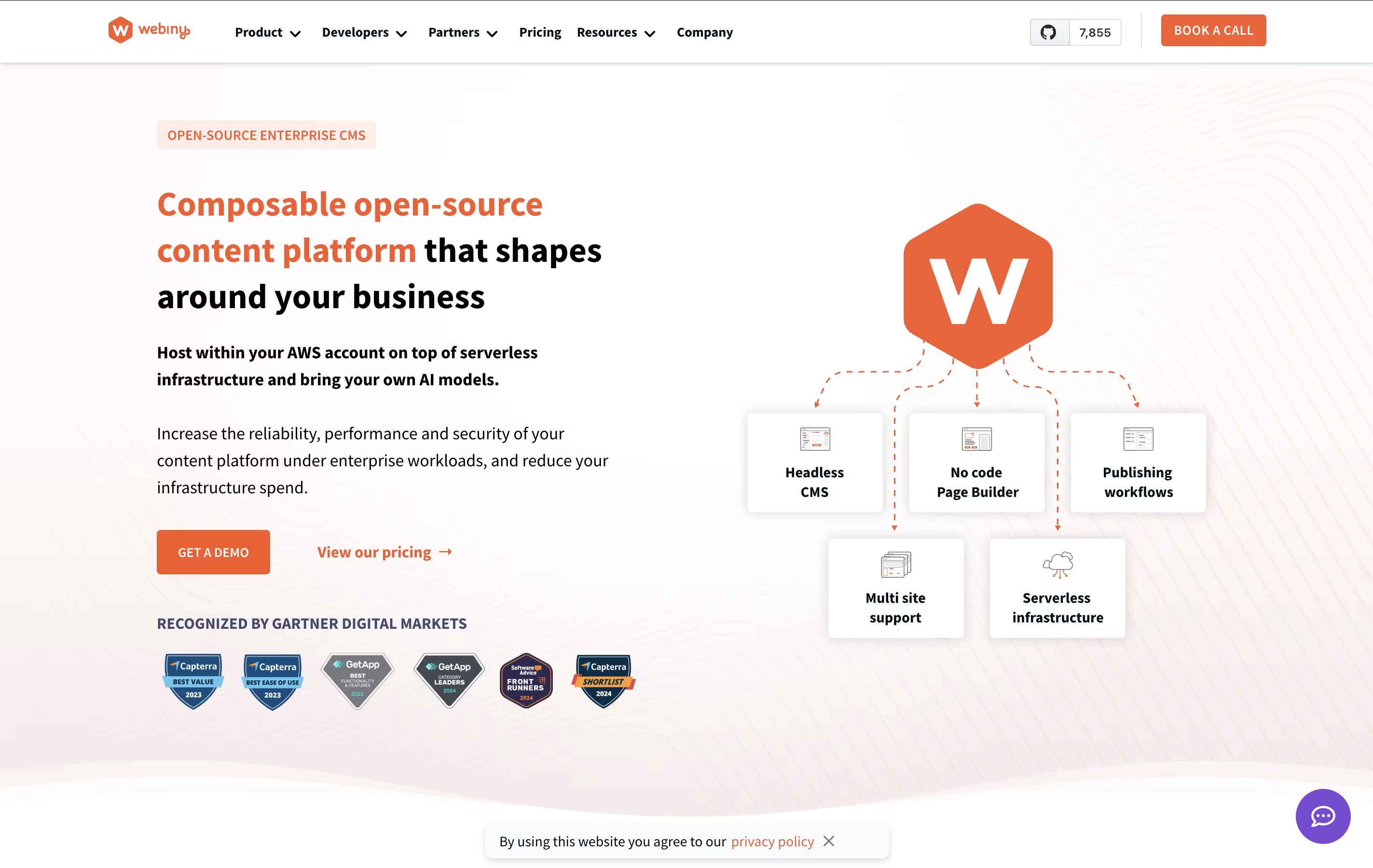
The platform includes four main tools. First, a headless CMS lets you create and store your content. Second, a page builder helps you design website pages by dragging and dropping elements without writing code. Third, a form builder makes it easy to create contact forms and surveys. Fourth, a file manager organizes all your images, videos, and documents.
Because it's serverless, you only pay for what you actually use. Your website can handle both small traffic and millions of visitors without any extra setup. The system automatically scales up or down based on your needs.