

Best 5 Tools for Online Store Setup in 2026
Last Updated: August 19, 2026
Selling products online takes more than just a product page. Online Store Setup gives you everything needed to get started, including product listings, shopping carts, payment processing, and shipping options, all built directly into your website.
Rather than piecing together separate tools for payments, inventory, and checkout, this brings it all under one roof so you can launch faster. It works well for small retailers, dropshippers, and creators who want to sell products or digital downloads without managing complex backend systems.
 Shopify
 ShopifySell Online, In Person, and Everywhere,
  Webflow
 WebflowVisual Website Builder & CMS Platform, and
  Squarespace
 SquarespaceBuild Websites, Stores, and More are the best for Online Store Setup. So, let’s take a closer look at all 5 tools.

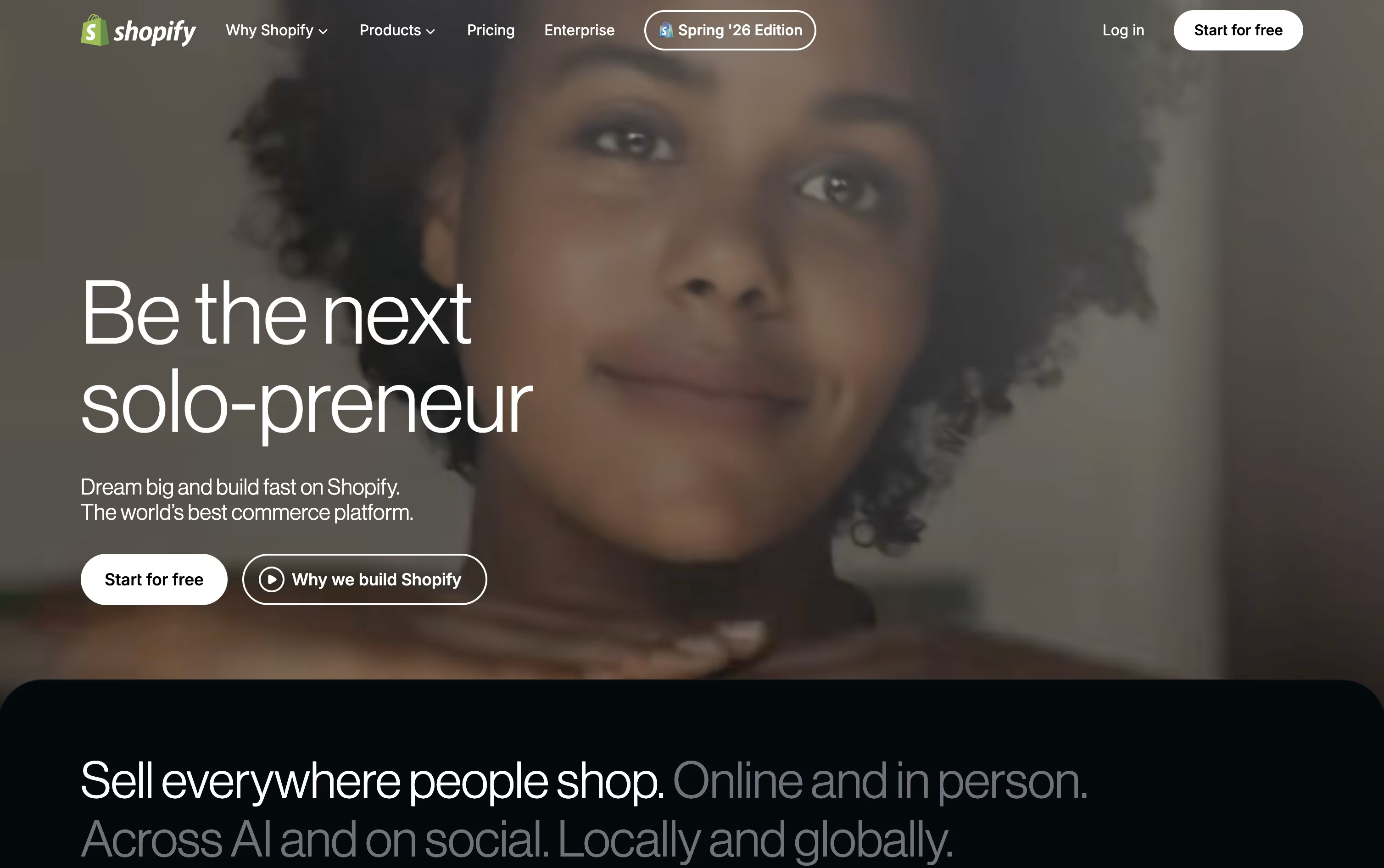
Running a store often means juggling a website, a payment system, and separate tools for shipping and marketing. Shopify combines all of this into one platform, so you can set up a store, list products, and start accepting payments without stitching different services together.
Selling is not limited to your own website. Shopify connects to social media, marketplaces, physical locations through Point of Sale, and newer AI chat experiences, so shoppers can find and buy your products in more places.
The Basic plan costs $25 a month and works well for someone just starting out, while Grow at $65 and Advanced at $399 add more staff seats, lower transaction fees, and stronger API access as a business scales.
Larger companies with complex needs can move to Shopify Plus, which starts from $2,300 a month and unlocks unlimited staff accounts, full checkout customization, and priority support.
Sidekick, the built-in AI assistant, is included on every plan and can help with tasks like writing product descriptions or building automated workflows.
New merchants can try Shopify free for 3 days before paying, and depending on the plan, can earn up to $10,000 in credits.
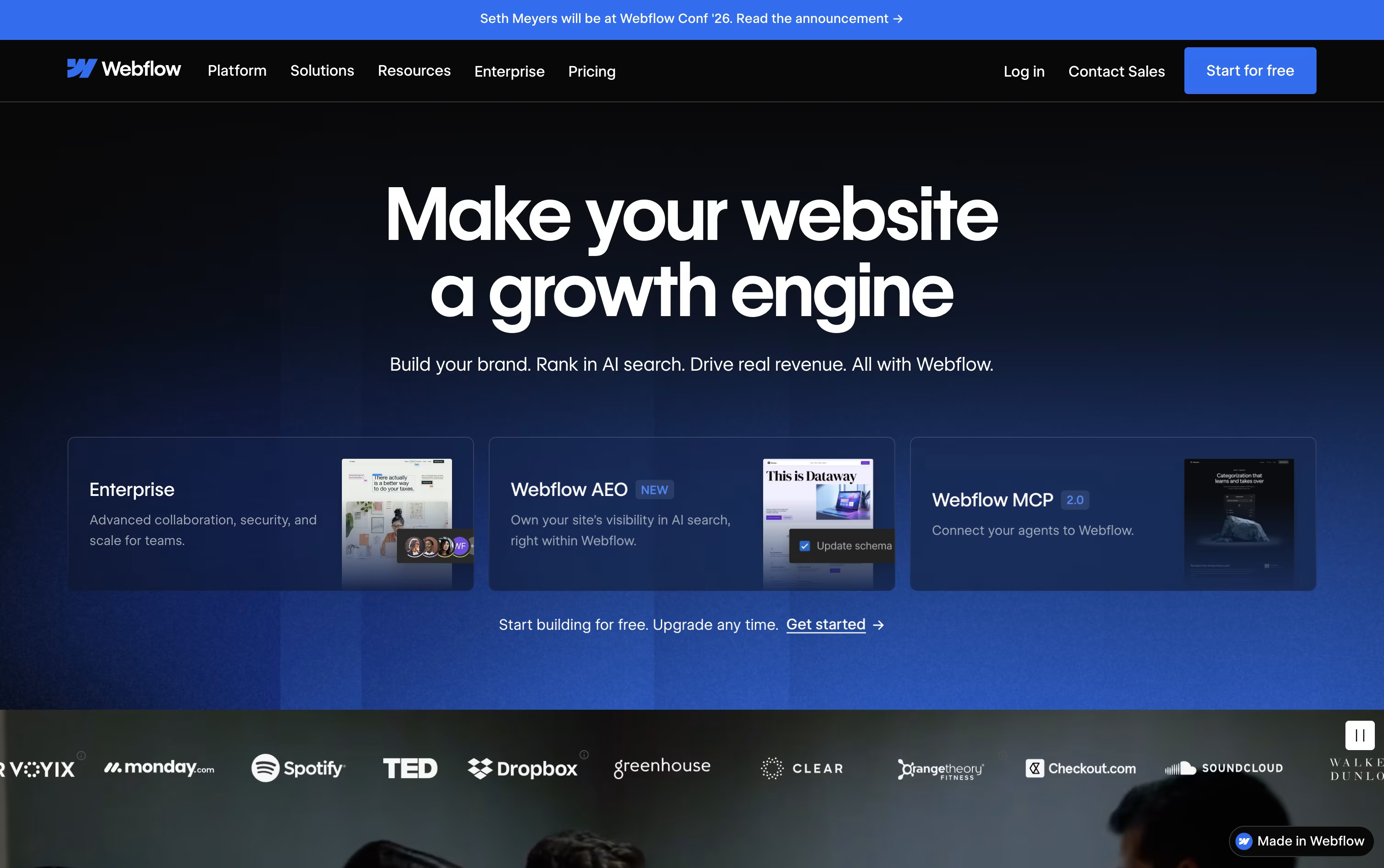
Instead of handing a design to a developer, Webflow lets you build the finished, working website yourself on a visual canvas that outputs clean HTML, CSS, and JavaScript.
A built-in CMS handles blogs and other repeating content, and ecommerce tools let you sell products without a separate platform, all hosted on Webflow's own fast, secure servers.
You can start for free on the Starter plan, then move to Basic at $25 a month or Premium at $39 a month once you need a custom domain, a CMS, or more bandwidth. Yearly billing lowers both prices.
Bigger organizations can choose the Team plan at $2,500 a month, billed annually, which adds governance, publishing controls, and localization tools, while Enterprise buyers get a custom quote and dedicated support.
Optional add-ons for testing, analytics, and translation, along with separate ecommerce and Workspace plans, mean you only pay for what your project needs.
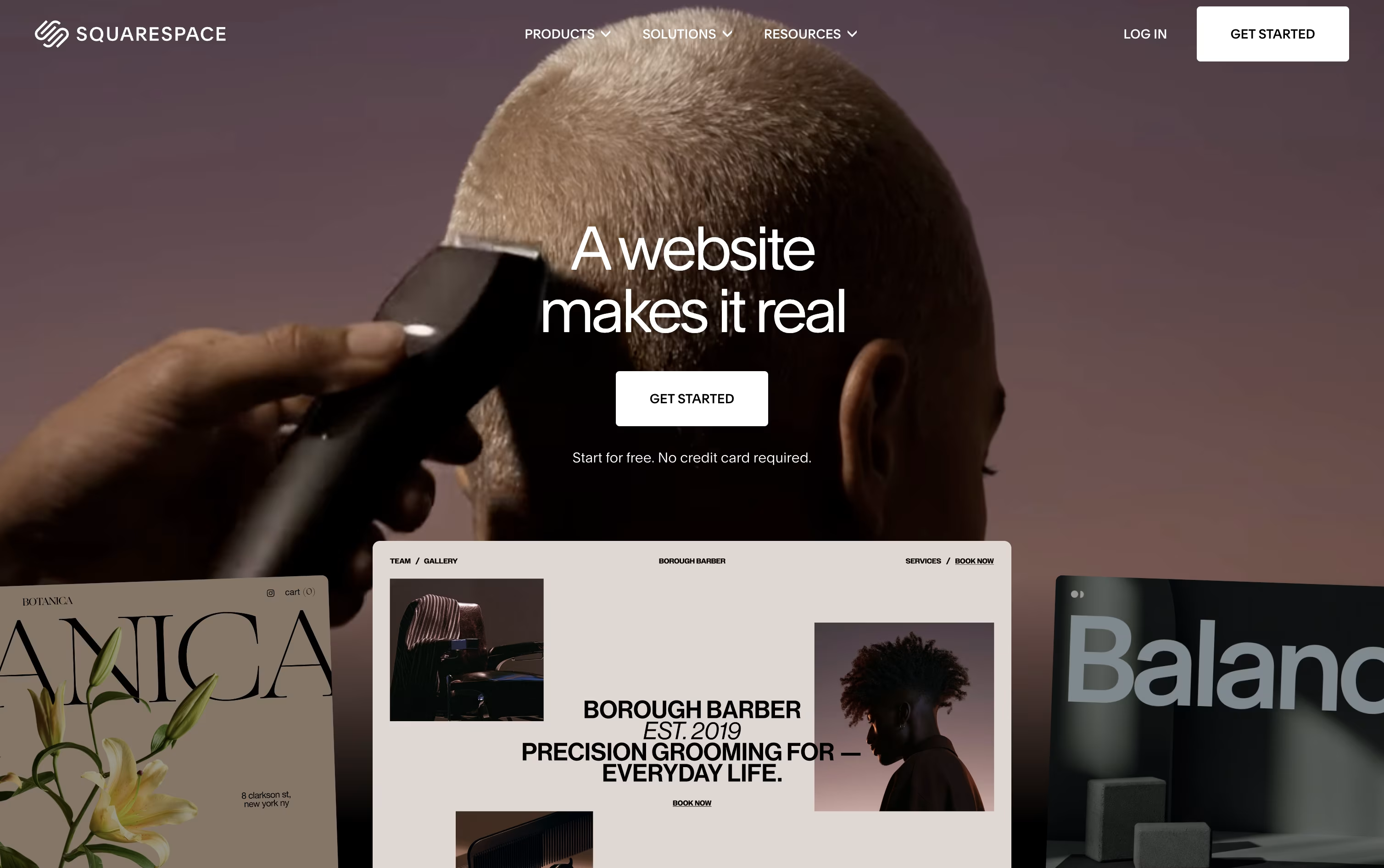
Squarespace combines website building, hosting, and business tools into one platform, aimed at creatives, freelancers, and small businesses who want a professional site without hiring a developer.
You can start from a designer template or use Blueprint AI to generate a complete site, then adjust it with the Fluid Engine editor, which allows free drag and drop placement of text, images, and products on both desktop and mobile layouts.
Beyond design, the platform includes online selling, appointment booking through Acuity, email campaigns, blogging, memberships, and built in analytics, cutting down the need for separate software.
The Basic plan starts at $12 a month billed yearly and covers a solid website with basic selling. Core, at $17 a month, is the recommended step up because it drops the online store transaction fee to zero and unlocks custom code and deeper marketing tools.
Advanced, at $25 a month, offers the lowest fees overall, unlimited video hosting, and the highest AI usage limits.
Businesses with bigger needs can request a custom Premium plan that adds a dedicated account manager and stronger security, and every plan can be tried free for 14 days.
Rather than targeting a single personal website, Duda is aimed at agencies, freelancers, and platforms that need to launch and manage many client sites without extra headcount.
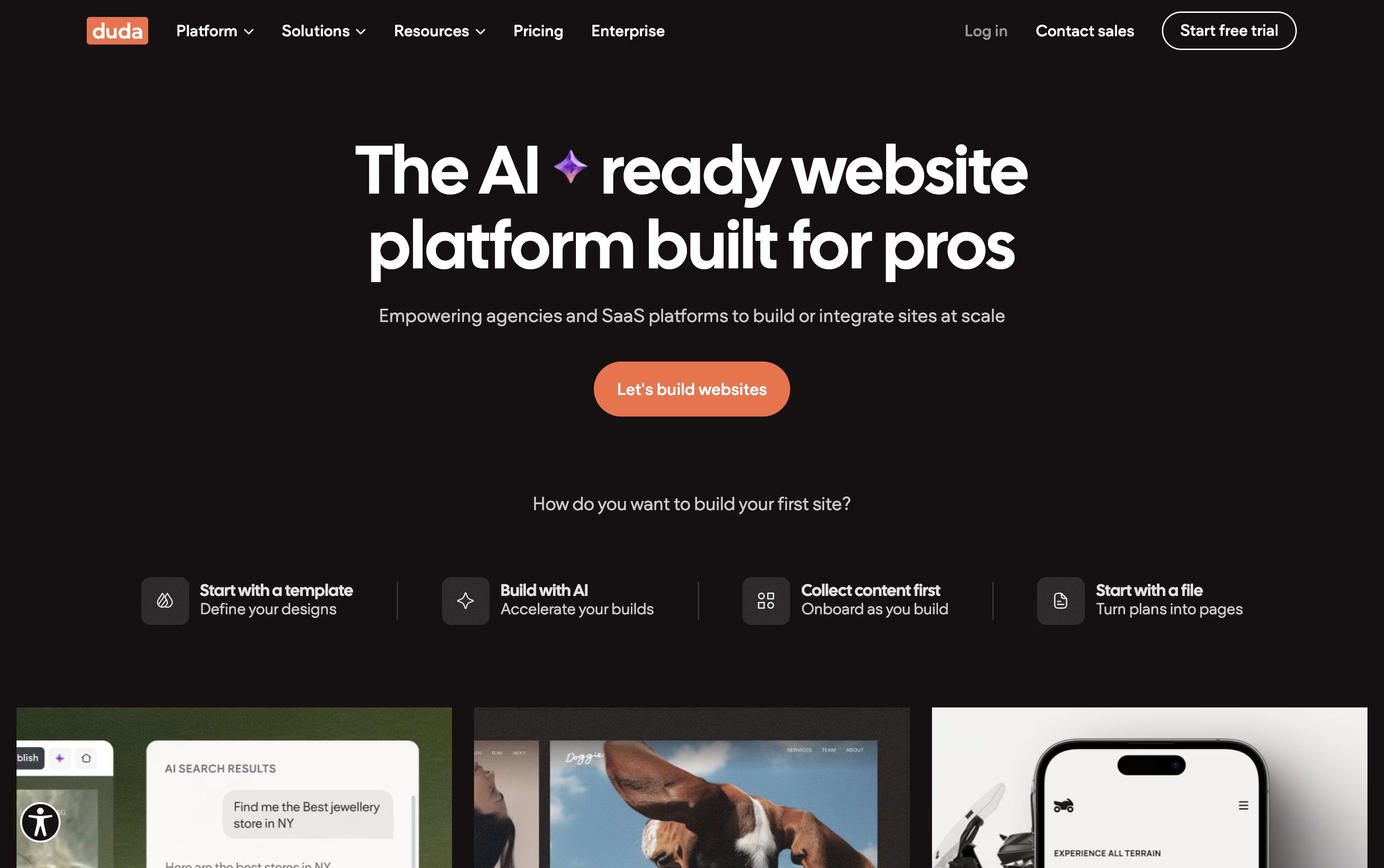
Its AI Stack, led by a conversational Copilot assistant, can draft entire sites, write content, build page sections, and handle SEO work from plain instructions.
Sites are hosted on AWS with strong performance, and built-in AEO tools such as automatic schema markup and AI visibility tracking help pages show up in tools like ChatGPT and Perplexity, not just classic search.
The Basic plan starts at $25 a month with one project, while Team at $39 a month opens up seats, unlimited clients, and role based permissions.
Agency, the most popular option at $69 a month, includes four projects and standard MCP access, and White Label at $199 a month unlocks full white label branding and a custom domain.
Larger organizations can request a Custom plan with advanced security, a dedicated account team, and tailored API access, and every plan opens with a 14 day free trial.

Wix lets anyone build a professional website and run a business from one dashboard, without needing to write code.
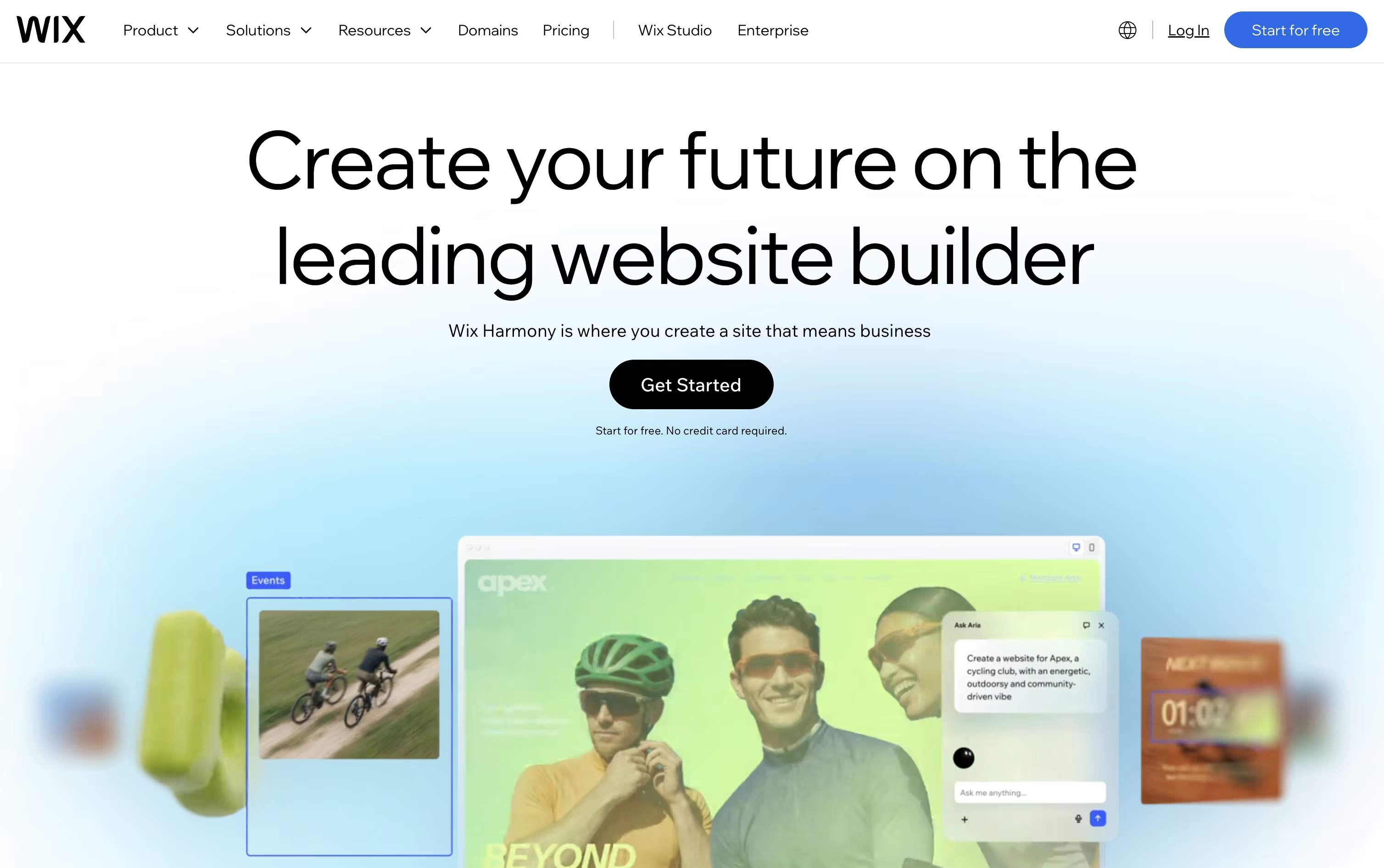
The fastest way to start is Wix Harmony, where you describe your goals in plain language and the Aria AI agent builds a complete site with layout, copy, and visuals that you can then refine by hand.
Once your site is live, built in tools cover online selling, appointment booking, event ticketing, and marketing campaigns, so you rarely need outside apps.
The Free plan costs nothing to start, while paid plans run from Light at $17 a month up to Business Elite at $159 a month, each unlocking more storage, collaborators, and advanced business features.
Agencies and developers can move up to Wix Studio for responsive design control, or use Velo and Wix Headless to build custom functionality on top of the platform.
This mix of easy AI creation and deeper technical tools is what makes Wix useful for beginners and professionals alike.