

Best 5 Tools for System Testing in 2026
Last Updated: October 5, 2025
Confirming that a system behaves correctly as a whole, not just in individual pieces, requires structured testing. System Testing tools help run and track tests across an entire application or platform before release.
QA teams and developers use system testing to catch problems before they reach real users.
 Katalon
 KatalonAI-Powered Test Automation for Web, Mobile, API & Desktop Apps,
  Codemagic
 CodemagicMobile CI/CD Platform for Flutter, iOS, Android Development, and
  GrowthBook
 GrowthBookOpen Source A/B Testing Platform are the best for System Testing. So, let’s take a closer look at all 5 tools.
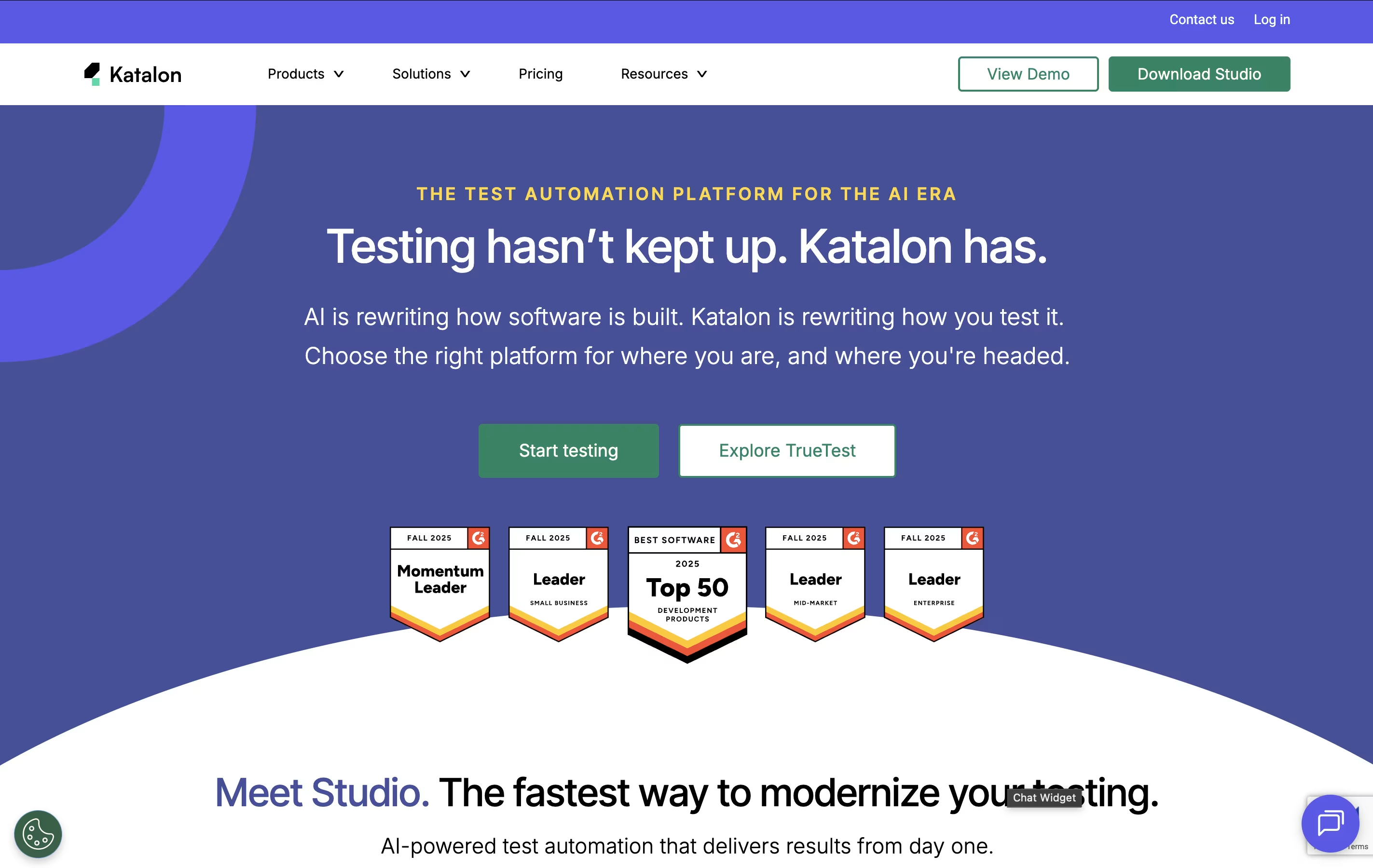
Katalon is a complete testing solution that automates the process of checking if software works correctly. Instead of testing applications manually every time, Katalon lets you create automated tests that run on their own.
The platform supports four main types of testing in one place: web applications, mobile apps (Android and iOS), APIs, and desktop programs. You can create tests using simple point-and-click recording, basic drag-and-drop actions, or by writing code if you prefer more control.
Katalon uses artificial intelligence to make testing easier. The AI can write test code from simple instructions, explain existing code, fix tests when websites change, and spot problems automatically. Tests can run on your computer or in the cloud.
Codemagic is a cloud-based Continuous Integration and Continuous Delivery platform built specifically for mobile app development. Think of it as your personal build farm in the cloud that handles all the complex parts of app development automatically.
The platform supports multiple mobile frameworks including Flutter, React Native, native iOS and Android, Unity, Kotlin Multiplatform Mobile, and Ionic. What makes Codemagic special is its focus on mobile development challenges like code signing, device testing, and app store publishing. The platform runs on powerful Apple Silicon machines, making builds significantly faster than traditional solutions.
Founded in 2018, Codemagic was the first CI/CD provider to offer Apple Silicon machines to developers. It integrates seamlessly with GitHub, GitLab, Bitbucket, and Azure DevOps, automatically triggering builds when you push code. The result is faster development cycles and more reliable app releases.
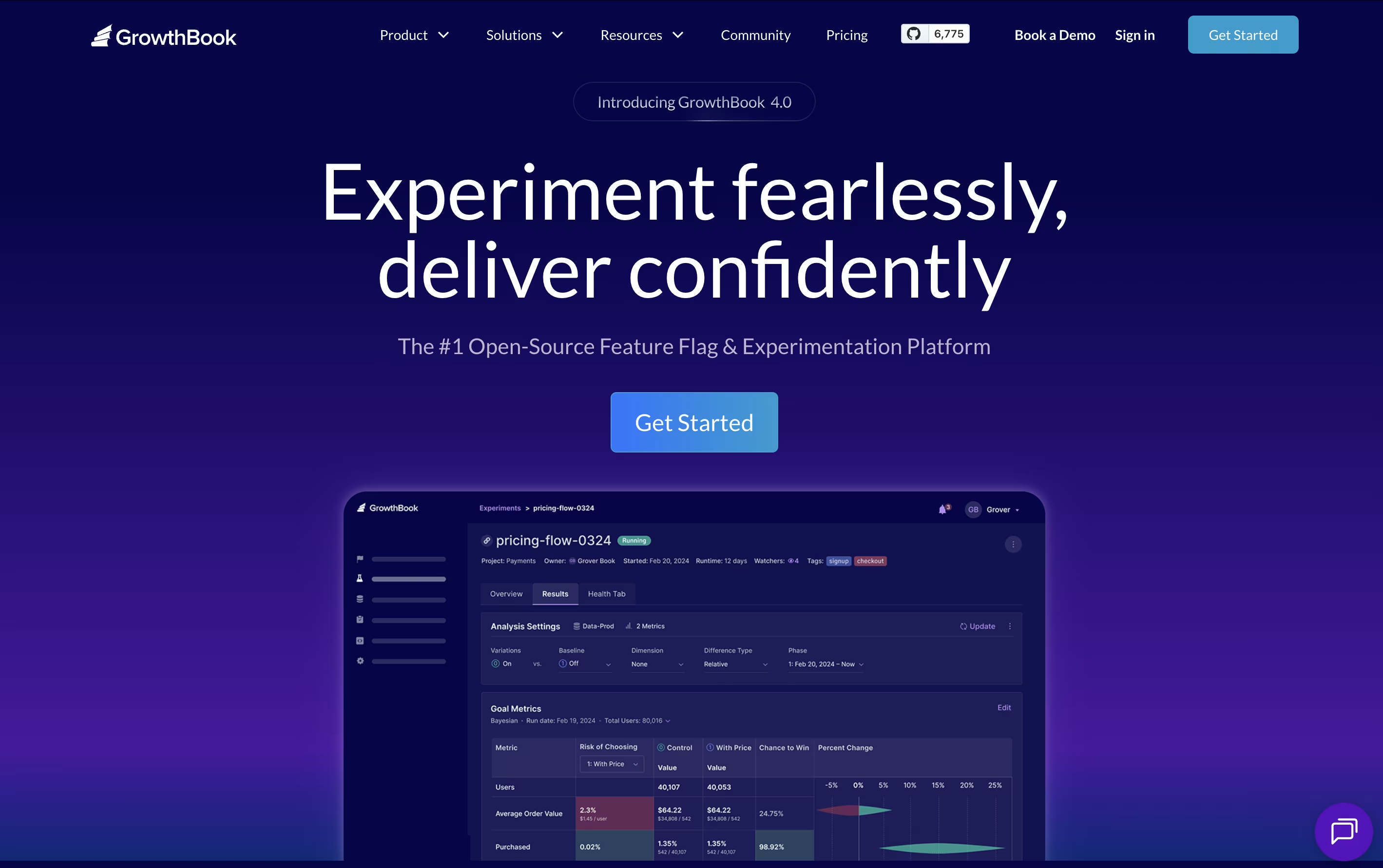
GrowthBook is an open-source feature flagging and A/B testing platform designed to help companies release features safely and measure their impact with confidence. Think of it as your complete experimentation toolkit that works with your existing data setup.
The platform combines two essential capabilities: feature flags that let you control who sees new features and when, and A/B testing tools that help you understand which changes actually improve your product. What makes GrowthBook special is its warehouse-native approach - it connects directly to your data sources like BigQuery, Snowflake, or Google Analytics instead of requiring you to send data elsewhere.
Founded in 2021, GrowthBook has grown rapidly and now powers experiments at thousands of companies. You can use it as a hosted cloud service or install it on your own servers for complete control and privacy.

Roboflow is a complete computer vision development platform that makes building AI models simple and fast. Think of it as the missing piece that connects your images to working AI applications. The platform handles every step of the computer vision pipeline, from organizing your data to deploying models that can recognize objects, detect defects, or analyze scenes in real-time.
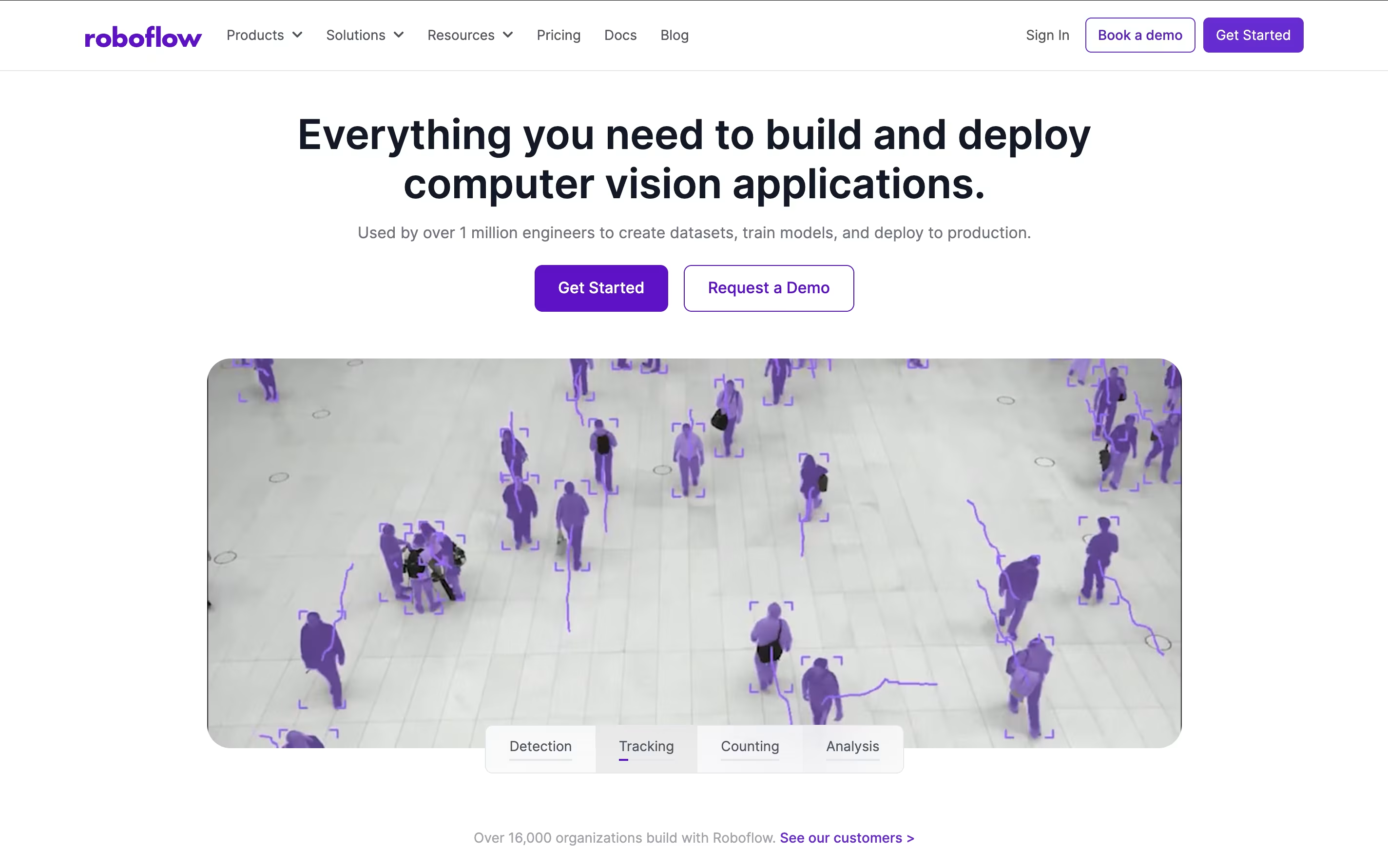
Unlike traditional approaches that require deep technical expertise, Roboflow provides user-friendly tools that work together seamlessly. You can upload images, label them with smart AI assistance, train state-of-the-art models with one click, and deploy them anywhere from cloud APIs to edge devices. The platform includes access to thousands of pre-trained models and datasets through Roboflow Universe, making it possible to start with existing solutions and customize them for your specific needs.

Browser Use is an AI-powered browser automation framework designed to make websites accessible for artificial intelligence agents. Think of it as giving AI the ability to see and interact with web pages just like a human would, but much faster and more accurately.
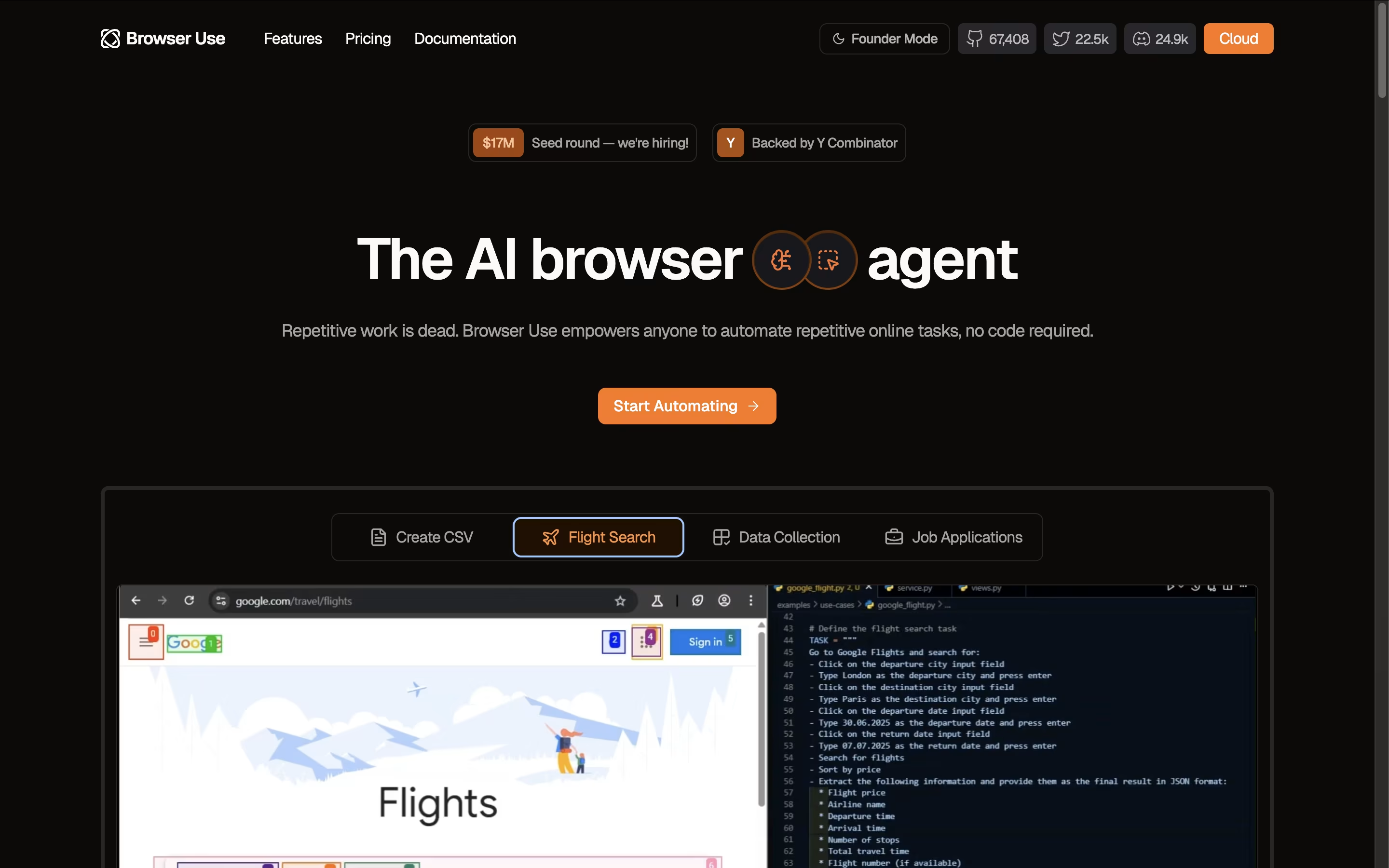
The key innovation lies in how Browser Use converts website elements like buttons, forms, and menus into a text-based format that AI models can easily understand and manipulate. Unlike traditional automation tools that rely on rigid scripts, Browser Use uses large language models to make intelligent decisions about how to navigate and interact with websites.
The framework supports multiple AI models including OpenAI GPT, Claude, Google AI, and others. It offers both an open-source version for developers and a cloud API service for businesses. Browser Use excels at complex tasks like logging into websites, extracting dynamic content, filling forms with contextual data, and performing multi-step web workflows automatically.