

Best 6 Tools for Multi-Source Information Analysis in 2026
Last Updated: August 15, 2026
Answering a complex question often means pulling from several different sources rather than just one. Multi-Source Information Analysis tools combine and analyze information across multiple sources at once.
Researchers and analysts use multi-source analysis to build a more complete picture than any single source could provide.
 Perplexity
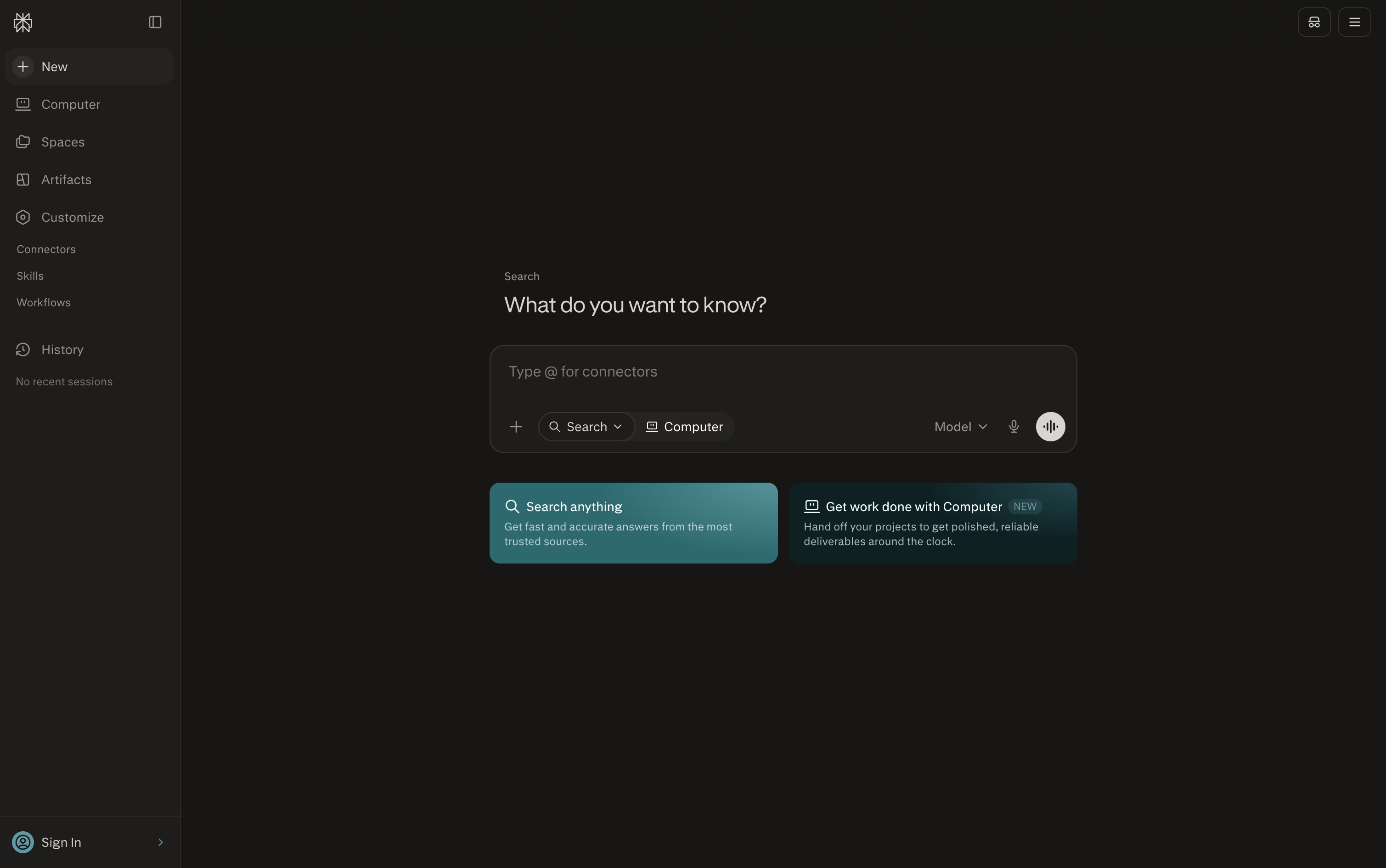 PerplexityAI Powered Search With Real Answers,
  Claude
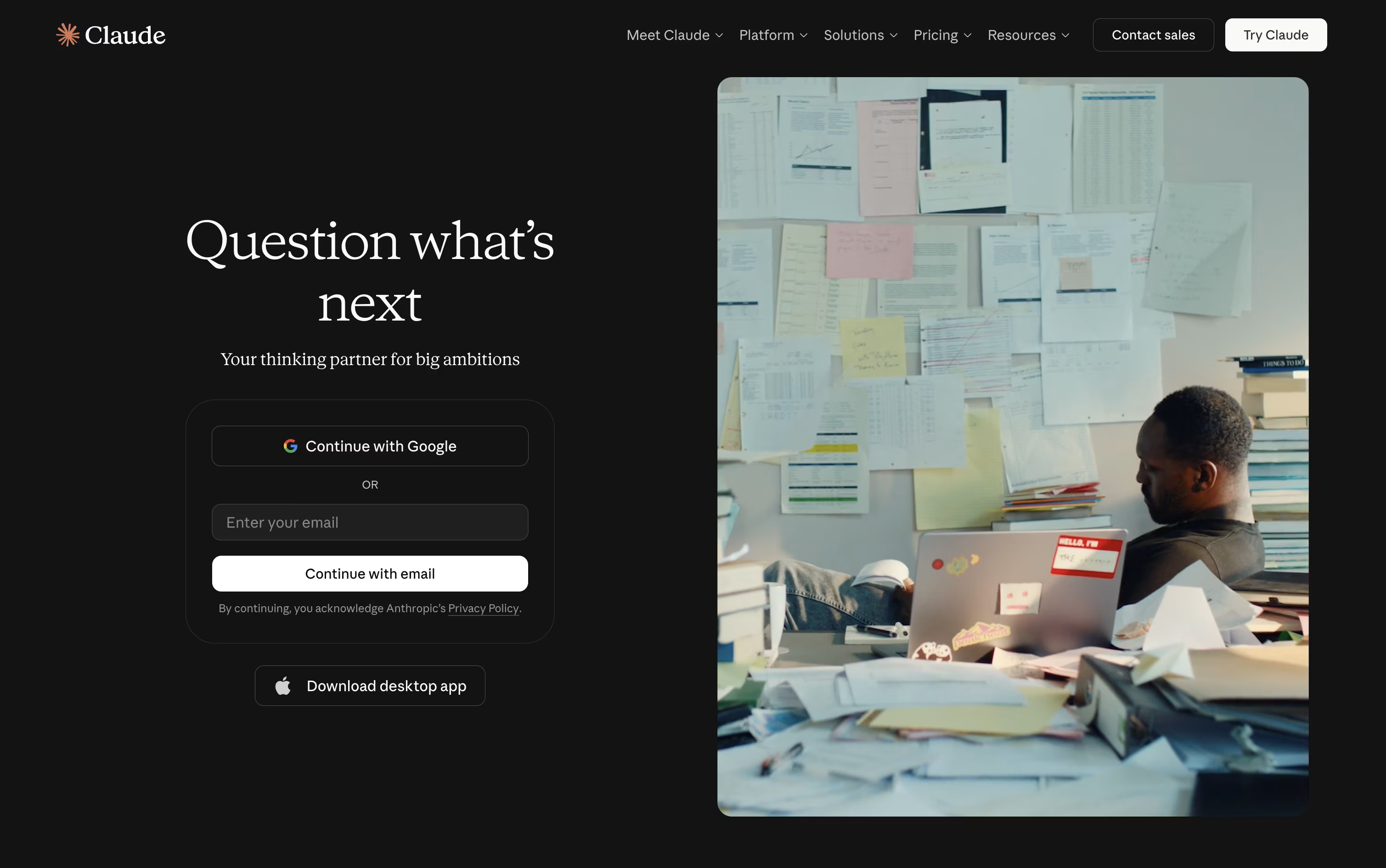 ClaudeAI Assistant for Chat, Code, and Work, and
  Grok
Grok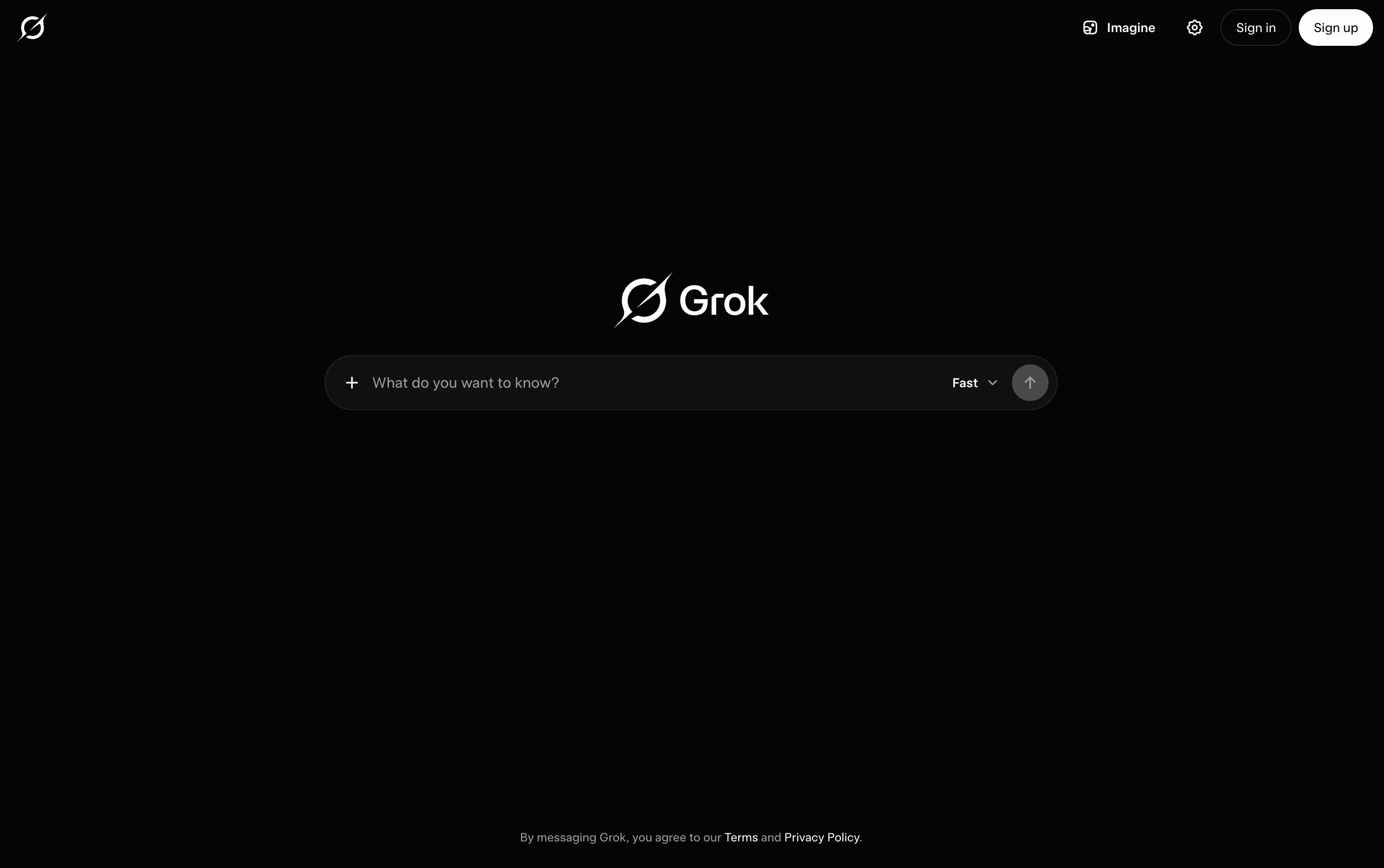 GrokxAI's Real-Time AI Assistant & Chatbot are the best for Multi-Source Information Analysis. So, let’s take a closer look at all 6 tools.

Ask Perplexity a question and it searches the current web before writing a plain answer, with the pages it used listed right underneath so you can check them yourself.
A second question in the same chat picks up naturally from the first, so it feels more like a conversation than a fresh search each time.
Getting started costs nothing. The free plan gives unlimited everyday searches and citations on every answer using solid AI models.
Once you want more, the Pro plan at $20 a month opens up Perplexity Computer, extra AI models such as GPT and Claude, file uploads, and access to premium sources.
For nonstop use, Max runs $200 a month with the widest model access and 10,000 credits every month, while businesses can pick Enterprise Pro at $34 per seat a month or Enterprise Max at $271 per seat a month, billed yearly, both adding stronger security and team controls.
Since answers are built from live pages, they tend to hold up well on anything that changed recently, so it is still worth glancing at the sources before quoting something important.
Many people start using Claude simply to chat, but it quickly turns into a tool for writing, coding, and research as well. It runs on the web, desktop, and mobile apps, and it remembers earlier conversations through memory and projects.
Claude can pull in current information from the web, write and debug code, read through files, and put together documents or spreadsheets for you. For bigger jobs, Claude Code lets developers work directly inside coding projects, while Claude Cowork handles multi step tasks outside of coding, like research or reports.
It also links up with tools like Slack, Google Workspace, and Microsoft 365, so it can pull in context from where you already work.
Getting started costs nothing, the free plan includes chat, search, and basic file tools. Moving to Pro at $20 a month opens up Claude Code, Claude Cowork, and unlimited projects, and Max plans starting at $100 a month raise the usage limits even further.
Businesses can pick team seats priced per person, or move up to Claude Enterprise for custom pricing with added security and compliance features.
Whether it is a quick question or a longer project, Claude adjusts to handle both.
Built by xAI, Grok is an AI assistant designed to answer questions honestly and stay useful even as facts change day to day. It first appeared in late 2023 and is now available on the web, mobile apps, and through a developer API.
A key part of Grok is its connection to live data. It checks the web and X as it answers, so replies stay current instead of relying only on older training information.
It does more than chat too. Grok can write and fix code, create images and short video clips, and hold spoken conversations. Its Grok Build tool works as a coding agent that can edit files and run commands in a real project.
Anyone can start for free, which includes real time search, voice mode, and connectors. SuperGrok costs $30 a month and unlocks the Grok 4.5 model along with image and video generation.
For groups, the Business plan runs $30 a month per seat and adds team management and access controls, while Enterprise is a custom priced plan built for larger companies with extra security needs.

Type a question or a task into ChatGPT and it responds in plain language, whether that means a quick answer, a written draft, or a finished piece of work.

Powered by the GPT-5.x models, it switches between fast responses and deeper reasoning depending on how hard the request is, and it keeps track of what you asked earlier so follow ups make sense.
It also reads images, listens and speaks through voice mode, searches the web with sources attached, and can dig through many pages at once using Deep Research. ChatGPT Work takes on longer jobs such as building documents or simple websites, and Codex handles coding tasks end to end.
Getting started costs nothing on the Free plan, though features are limited. Go adds more room for $8 a month, and Plus at $20 a month brings GPT-5.6, deeper research, and tools like Projects and custom GPTs.
Heavier users can move to Pro from $100 a month for top usage and models. Teams get Business at $20 per user monthly on yearly billing, or $25 monthly, and larger organizations can request custom Enterprise pricing with stronger security.
Gemini is the AI assistant built into the Google apps you already use every day, from Gmail and Docs to Search and Chrome.
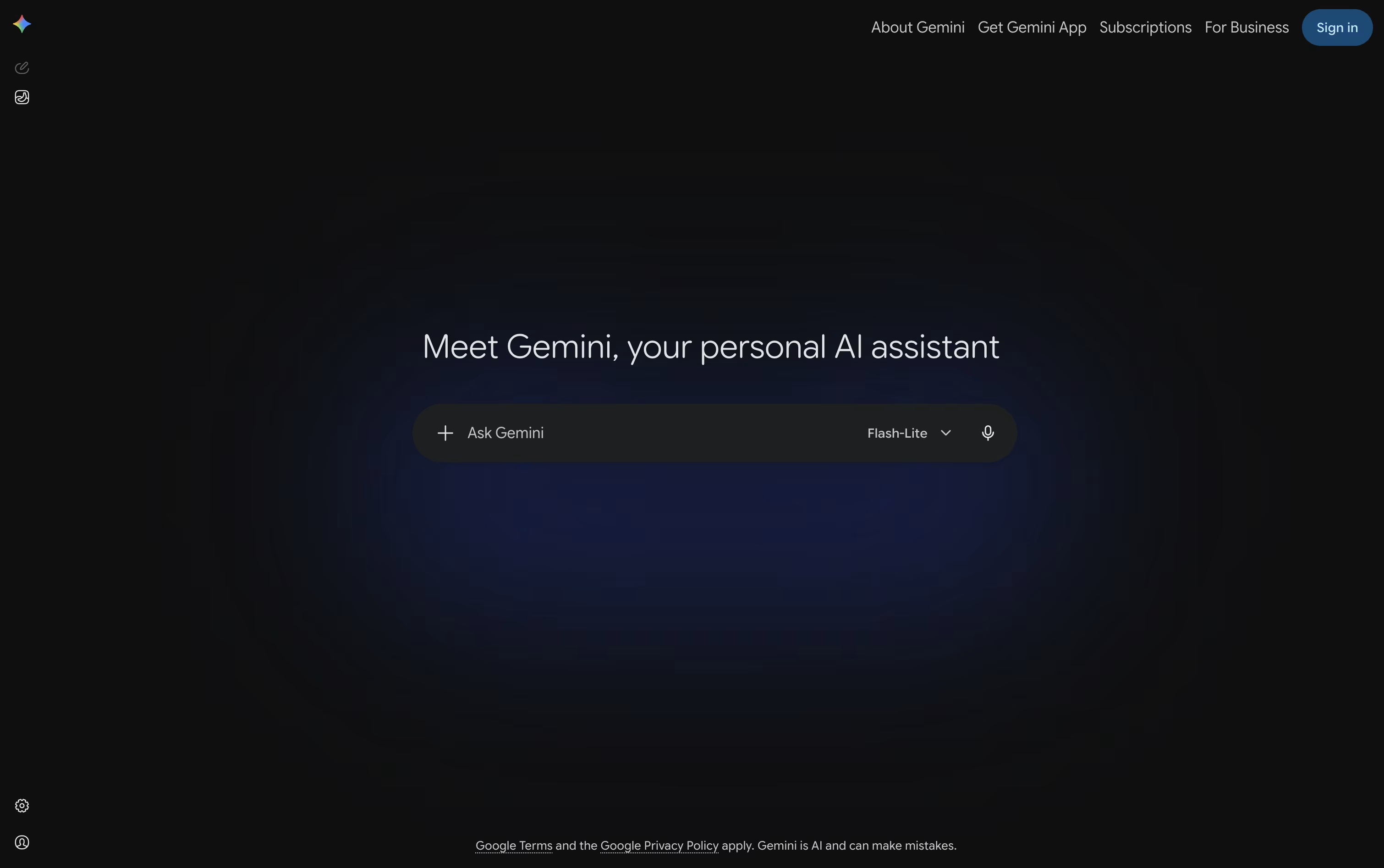
You can type, talk, or show it your camera or screen, and it answers using text, images, audio, or video, whatever fits the task.
Deep Research lets it browse the web on its own and hand back a full, sourced report, while Canvas gives you a shared space to write, code, or build a page together.
The free plan covers everyday use with 15 GB of storage at no cost.
Paying $4.99 a month for Google AI Plus, $19.99 a month for Google AI Pro, or from $99.99 a month for Google AI Ultra unlocks higher usage limits, stronger models, and much more storage.
Custom Gems and Gemini Live round it out, making it useful for quick questions as well as longer projects.

Genspark AI is an advanced AI agent engine that serves as both a next-generation search platform and an autonomous task automation system. At its core, Genspark uses specialized AI agents that work together to deliver personalized, real-time results through custom-generated pages called Sparkpages.
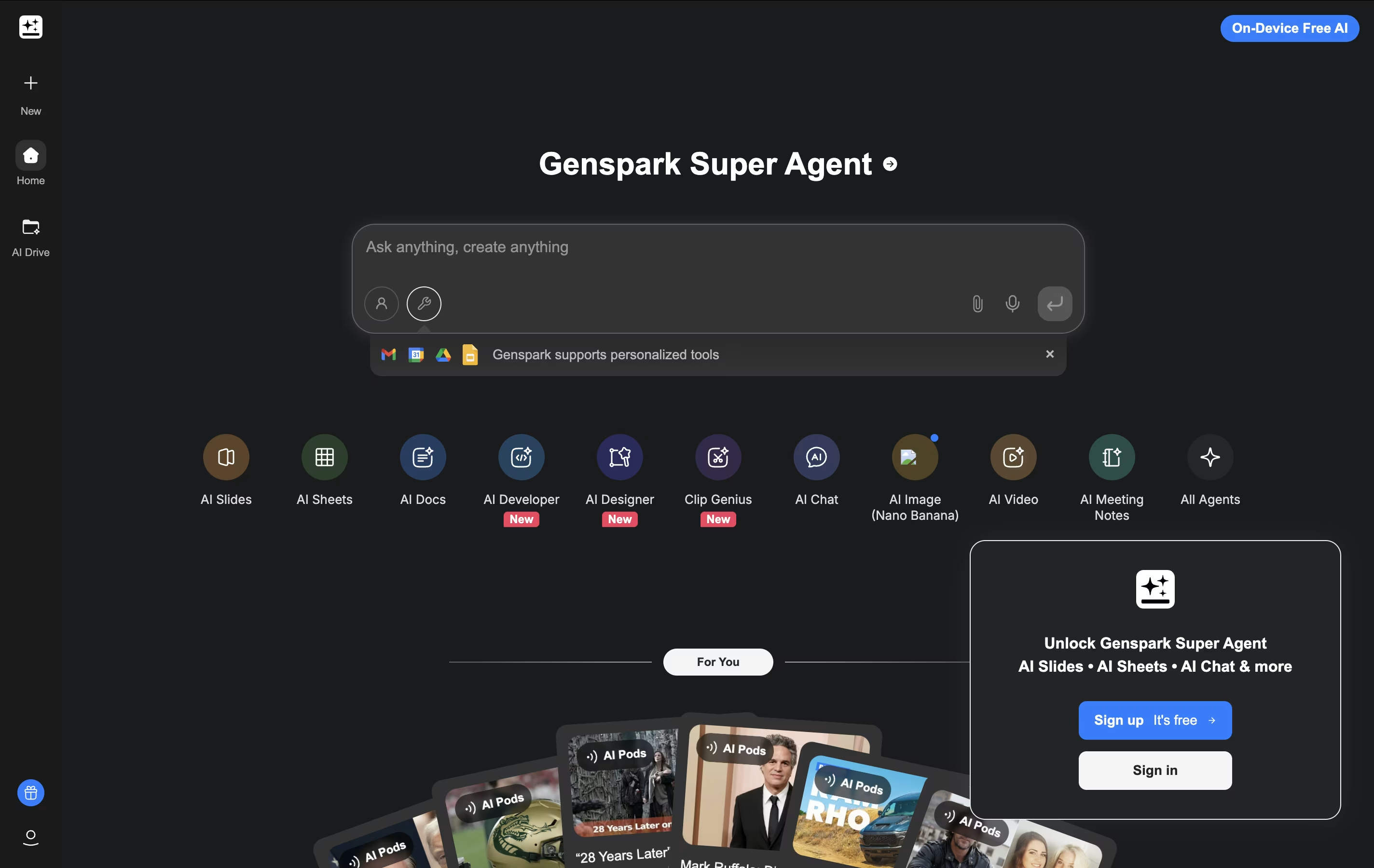
What makes Genspark unique is its Super Agent functionality. Instead of just providing information, it can actually execute tasks in the real world. The platform integrates over 80 specialized tools and combines multiple large language models (including GPT-4 and Claude) to handle everything from research and content creation to making actual phone calls and building functional websites.
The system operates on a multi-agent framework where different AI specialists handle specific types of queries and tasks. This approach ensures highly accurate, unbiased results free from commercial influences, while providing users with interactive, editable content that goes far beyond traditional search results.