API Hub vs Fern: Features, Pricing and User Reviews 2026
API Hub
Complete Platform for API Design, Testing, and Documentation
API Hub
Complete Platform for API Design, Testing, and Documentation
What are API Hub and Fern?
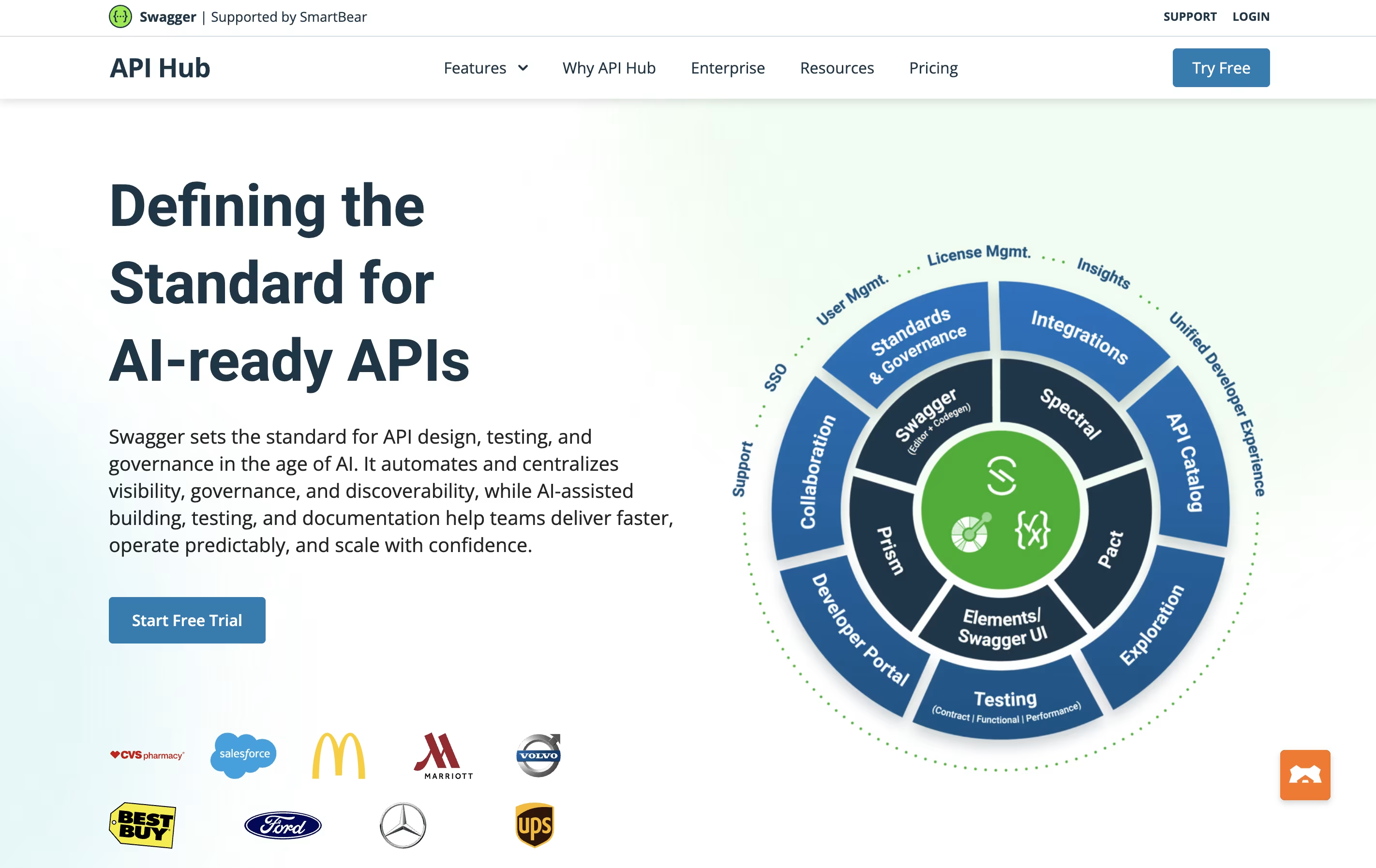
API Hub is an all-in-one platform for the complete API development process. It lets you design APIs using a visual editor or code, test them automatically, create documentation, and share with users through branded portals.
The platform works with OpenAPI and AsyncAPI standards, supporting both traditional REST APIs and event-driven architectures. It includes tools for checking that your APIs follow your team's rules, generating mock servers for testing, and validating contracts between services.
Teams can work together with version control, commenting features, and role-based permissions. The platform connects with popular development tools like GitHub, CI/CD pipelines, and API management systems. Whether you need basic API design or complex enterprise workflows, API Hub provides the features you need.

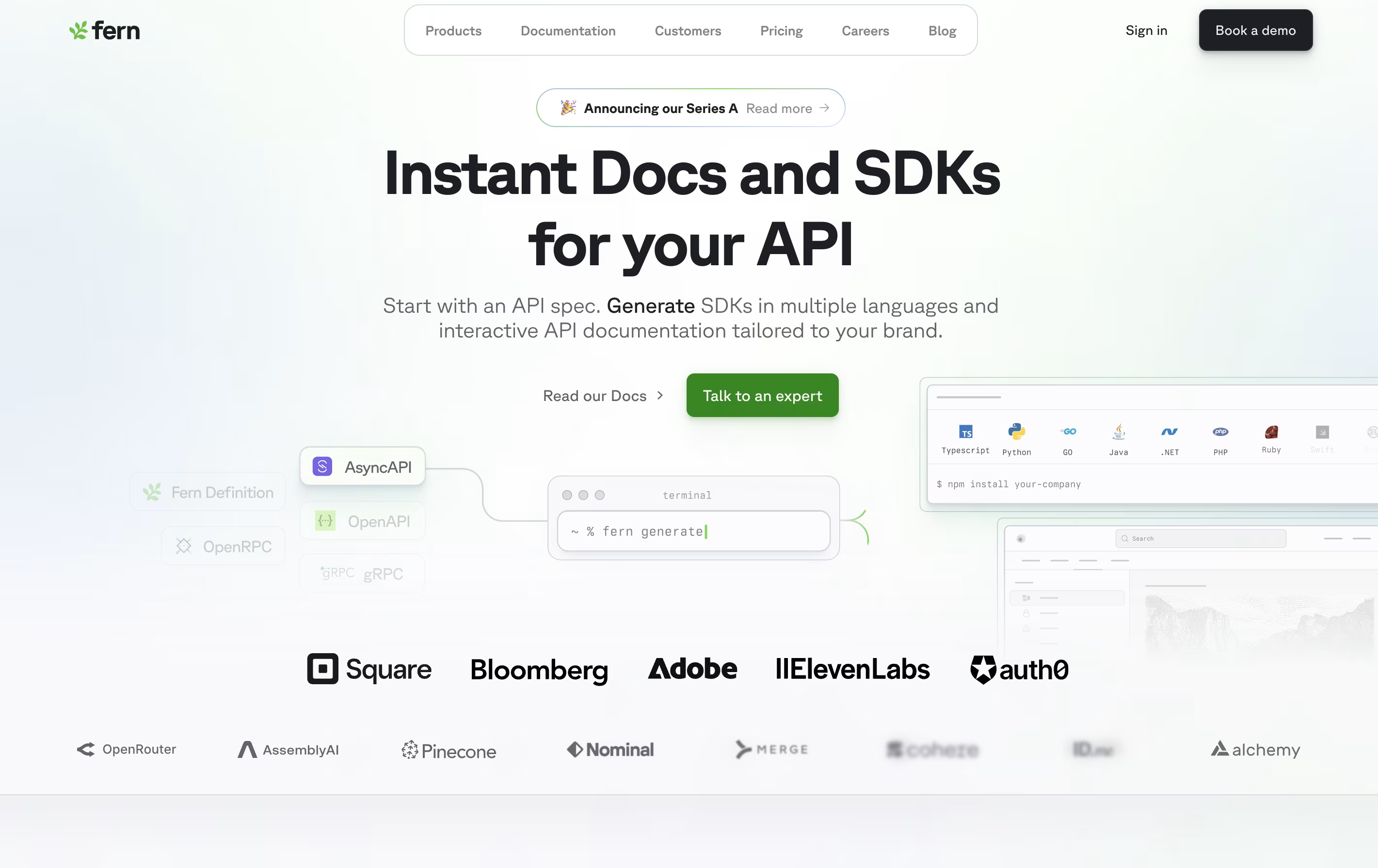
Fern is a platform that automatically generates SDKs and API documentation from your API definition. You provide your OpenAPI, AsyncAPI, or gRPC specification, and Fern creates ready-to-use client libraries in languages like TypeScript, Python, Go, Java, Ruby, C#, PHP, and Swift.
The platform also builds documentation websites that look professional and match your brand identity. These sites include interactive API references, code examples, and a playground where developers can test your API without leaving the documentation.
Fern is open source and available on GitHub. It integrates with your existing workflow by publishing SDKs directly to package registries like npm and PyPI. The tool is designed for companies that want to provide a great developer experience without dedicating engineering resources to manual SDK maintenance.
Features of API Hub and Fern
OpenAPI and AsyncAPI specification support
AI-assisted API design and generation
Visual form editor and code editor
Automatic style validation and linting
Mock server generation
Contract testing with AI automation
Sequential and parallel test execution
Branded documentation portals
Team collaboration with comments
Version control integration
Code generation for multiple languages
CI/CD pipeline integration
Automatic SDK generation in 8+ programming languages
Stripe-style API documentation websites
Direct publishing to package registries
OpenAPI and AsyncAPI support
Interactive API playground with live testing
Custom branding and domain support
Built-in OAuth 2.0 and authentication
Automatic pagination and retry logic
WebSocket and SSE support
Version control with Git
AI-powered search assistant
Open source on GitHub
Use Cases of API Hub and Fern
Pricing of API Hub and Fern
API Hub offers flexible pricing plans to match different team sizes and needs.
The Individual plan starts at €27.90 per user per month. It includes code generation, editor access, form-based editing, 5 domains for component libraries, 1 public product portal, 10 contracts, 10 AI credits, and 50 test executions. This plan works well for solo developers or small projects.
The Team plan costs €39.06 per user per month. It adds 10 domains, 2 public products, 20 contracts, system accounts, webhooks, and maintains 50 test executions. Perfect for small teams starting to scale their API work.
The Enterprise plan is priced at €65.84 per user per month. It provides 5 public products, 50 contracts, role-based access control, 50 webhooks, and 100 test executions. Designed for growing companies with more complex needs.
The Enterprise Plus plan requires custom pricing and includes unlimited contracts, products, webhooks, test executions, and advanced features like custom API templates.
Add-ons are also available: Portal Pro (€26.78/month), Contract Testing Pro (€26.16/month), Enterprise SSO (€5.58/month), and Test Pro (€33.50/month).
Fern offers separate pricing for SDKs and documentation to fit different team needs.
For SDK generation, there are three tiers available:
Basic Plan ($250/month per SDK): Supports up to 50 endpoints with REST API support, automated publishing, and schema validation. Billed annually.
Pro Plan ($600/month per SDK): Includes up to 150 endpoints, WebSockets, webhooks, dedicated Slack support, and advanced features like pagination and OAuth. Billed annually.
Enterprise Plan (Custom pricing): Offers unlimited endpoints, SDK migration services, enterprise support with SLAs, GitHub issue monitoring, and custom code maintenance.
For documentation, pricing includes:
Basic Plan ($400/month): Stripe-like API reference, API playground, custom domain, and built-in components. Billed annually.
Pro Plan ($1,000/month): Everything in Basic plus custom React components, authenticated docs, role-based access control, and AI search capabilities. Billed annually.
Enterprise Plan (Custom pricing): Includes white-glove content migration, custom integrations, SSO authentication, design services, and enterprise support.
FAQs: API Hub vs Fern
Reviews: API Hub vs Fern
Based on 0 reviews
Based on 0 reviews
Compare API Hub With Other Tools
Mintlify
AI-Powered Documentation Platform for Developers

Redocly
Beautiful API Documentation and Developer Portals

Apidog

Stoplight
Visual API Design and Documentation

Readme
Interactive API Documentation & Developer Hubs

Theneo
AI-Powered API Documentation Generator for Beautiful Developer Docs

GitBook
Create Beautiful Documentation with AI-Powered Features

Document360
AI-Powered Knowledge Base for Teams

Confluence
Team Workspace for Documentation
Compare Fern With Other Tools
Mintlify
AI-Powered Documentation Platform for Developers
Redocly
Beautiful API Documentation and Developer Portals
Apidog
Stoplight
Visual API Design and Documentation
Readme
Interactive API Documentation & Developer Hubs
Theneo
AI-Powered API Documentation Generator for Beautiful Developer Docs
GitBook
Create Beautiful Documentation with AI-Powered Features
Document360
AI-Powered Knowledge Base for Teams
Confluence
Team Workspace for Documentation