Best 7 Bland AI Alternatives in 2026
Last Updated: August 24, 2026
Bland AI helps companies build phone agents that speak and listen like a real person, for both inbound and outbound calls. It is aimed at businesses that handle sensitive or complicated calls, such as healthcare, insurance, and finance.
Agents are built using a visual pathway builder, plain English prompts, or the API. They can look things up, use company knowledge bases, call outside tools mid conversation, and hand off to a human when needed.
The best alternative to Bland AI is  VideoSDK
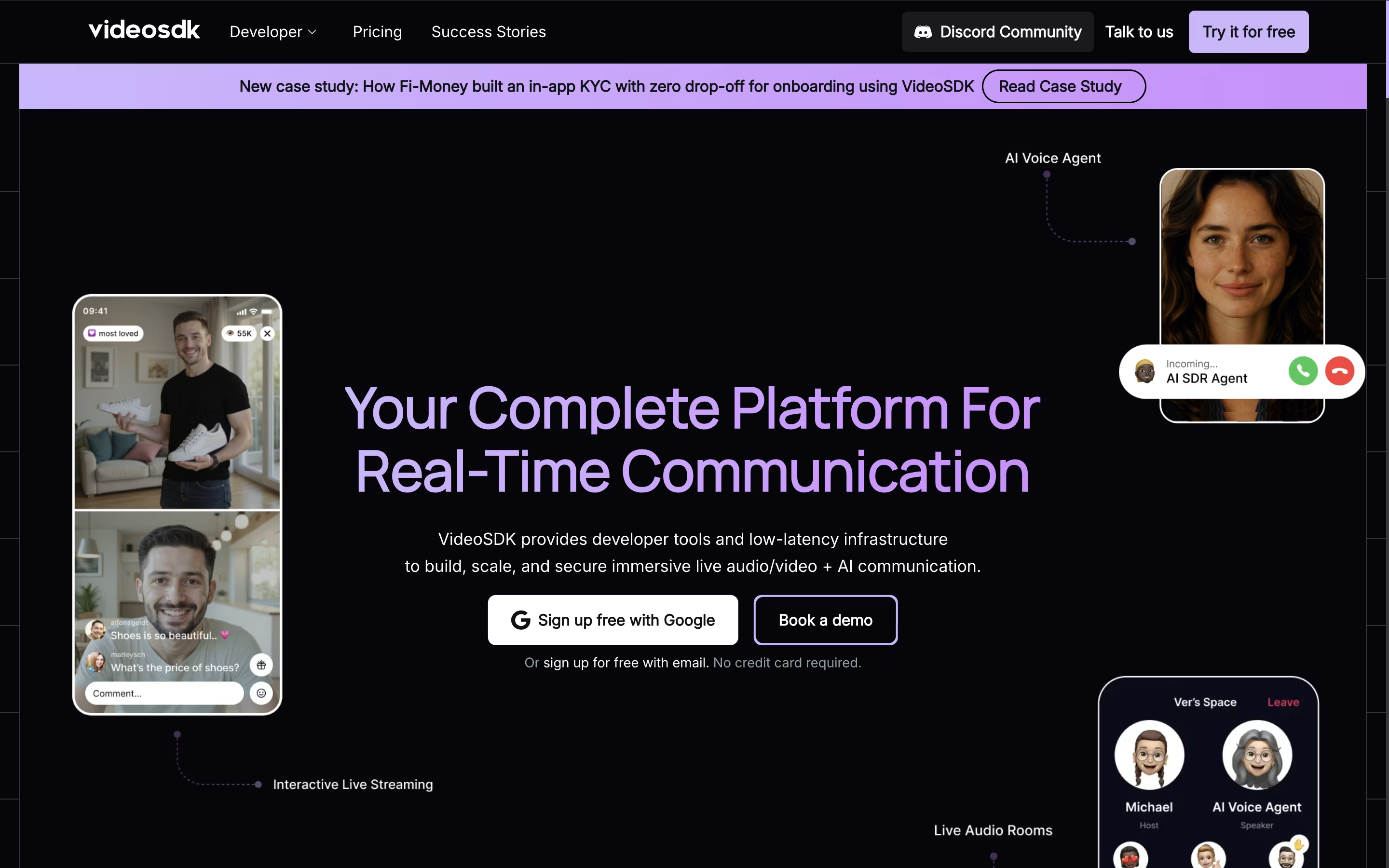 VideoSDKReal-Time Video & Voice API Platform for Developers.
  Retell AI
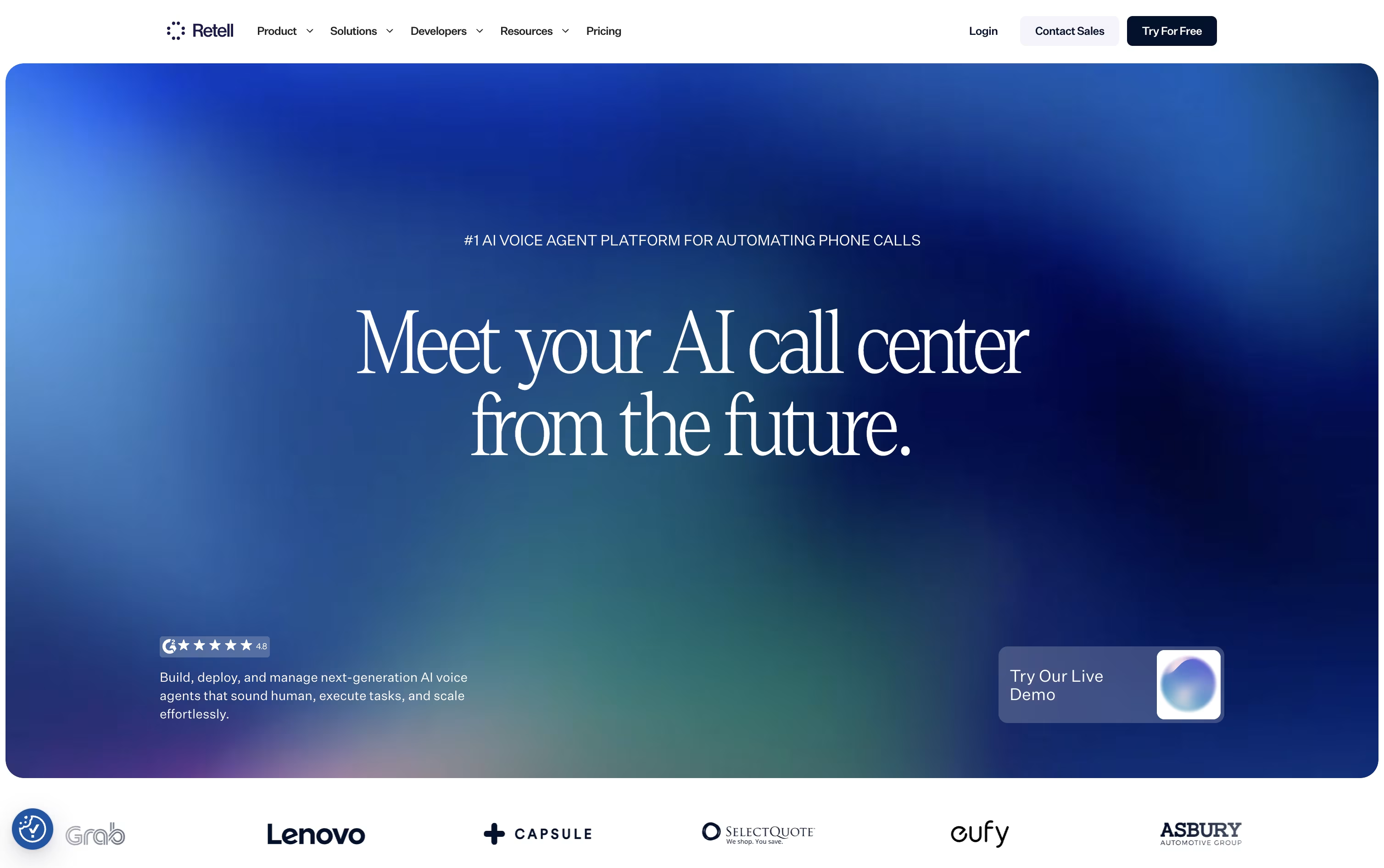 Retell AIHumanlike Voice Agents for Phone Calls and
  VoxImplant
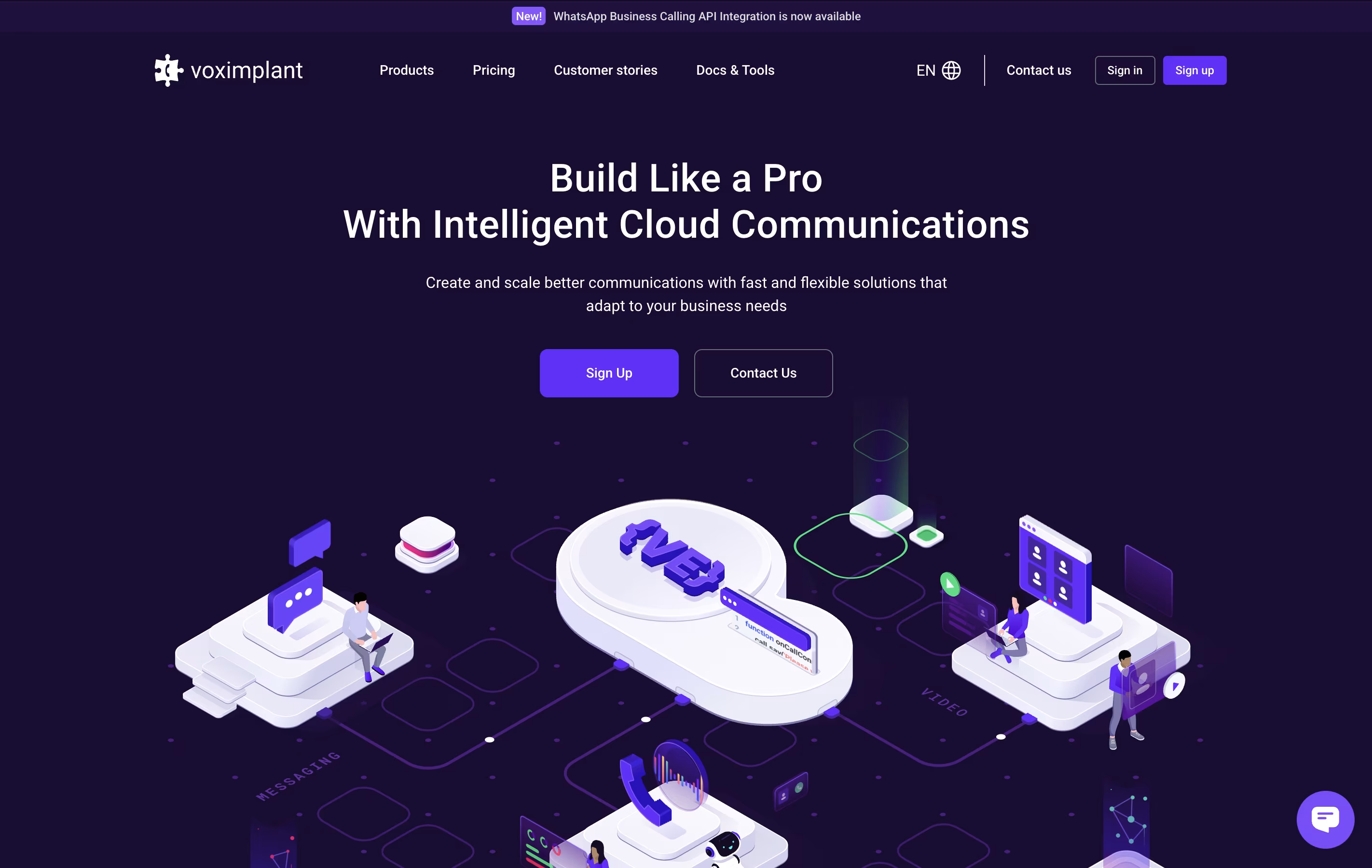 VoxImplantCloud Communication APIs for Voice, Video & AI Contact Centers are also among the best options for Voice AI Agent Building.
So, here are the 7 best alternatives to Bland AI:

VideoSDK is a real-time communication platform that provides APIs and software tools for developers to build video and voice applications. Instead of creating video calling systems from scratch, developers can use VideoSDK's ready-made tools to add features like video meetings, live streaming, screen sharing, and AI-powered voice agents to their apps.
The platform works across all devices and operating systems, including web browsers, mobile apps, and desktop applications. It uses advanced technology to ensure smooth video quality even with poor internet connections and provides global infrastructure with 150ms worldwide latency.
VideoSDK offers both free and paid plans, starting with 10,000 free minutes every month. This makes it perfect for startups, small businesses, and large companies that need reliable video communication features without building everything from scratch.
Retell AI is a voice AI platform built for teams that want their AI agents to sound like real people on the phone, not robotic menu systems.
You build agents using a visual flow builder or simple prompts, then connect them to knowledge bases, CRMs like Salesforce and HubSpot, and calendars, so agents can look things up and take real actions mid call.
Agents can transfer calls to a human with full context, detect voicemail, send texts, and handle both inbound and outbound calls at scale through SIP trunking or providers like Twilio.
Pricing is pay as you go, so you only pay for the voice minutes or chat messages you actually use. Voice pricing usually lands between $0.07 and $0.31 a minute depending on the model and voice you pick, while chat starts from about $0.002 per message. New accounts get $10 in free credits and 20 free concurrent calls to start.
Larger teams can move to the Enterprise plan, which is custom priced and adds a dedicated server, single sign on, custom contracts, and 24/7 support with a dedicated portal.
It also comes with HIPAA and GDPR compliance, SOC 2 certification, and tools for testing, monitoring, and reviewing every call, making it a solid fit for contact centers and healthcare scheduling.
VoxImplant is a comprehensive cloud communications platform that enables businesses and developers to integrate voice, video, and messaging capabilities into their applications and services. Founded in 2013 and based in Palo Alto, the company serves millions of users worldwide through its innovative Communication Platform as a Service (CPaaS) solution.
The platform consists of two main products: VoxImplant Platform, which provides APIs and SDKs for custom development, and VoxImplant Kit, an omnichannel contact center solution. VoxImplant Platform supports multiple programming languages and frameworks including iOS, Android, React Native, Flutter, Unity, and web applications. The service includes advanced features like AI-powered voice bots, natural language processing, call recording, transcription, and seamless integration with popular AI providers like OpenAI, Google Gemini, and Dialogflow, making it perfect for creating sophisticated communication experiences.

LiveKit is a complete real-time communication platform that uses WebRTC technology to enable low-latency audio, video, and data exchange between users and AI agents. Unlike traditional communication tools, LiveKit is built specifically for developers who want to create custom real-time experiences.
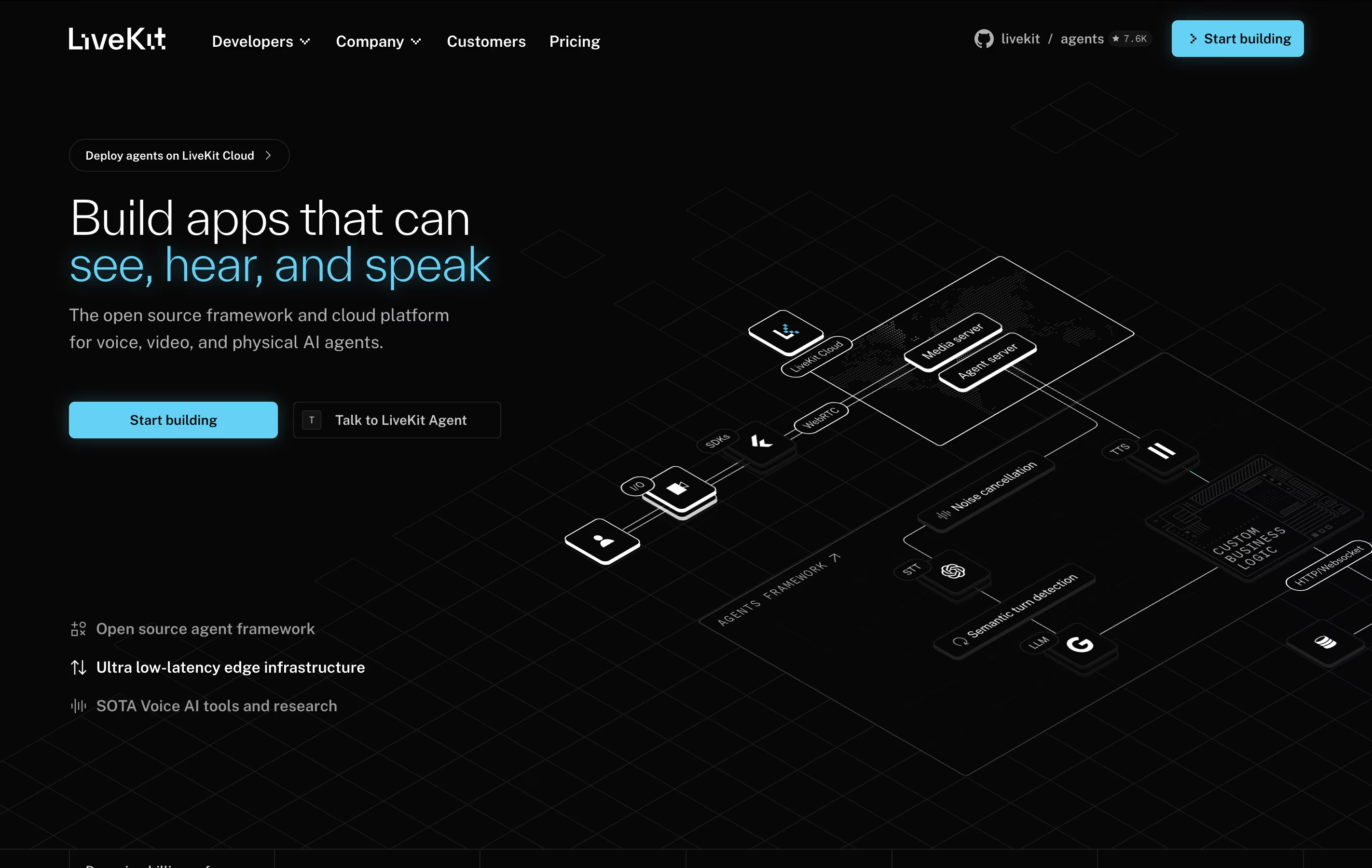
The platform consists of several parts: the open-source LiveKit server that handles media routing, client SDKs for all major platforms, and LiveKit Cloud for managed hosting. It uses a Selective Forwarding Unit (SFU) architecture, which means it can efficiently handle many participants without heavy server processing.
LiveKit is especially strong for AI applications. It can connect voice agents to phone systems, enable real-time transcription, and support multimodal AI that can see and hear simultaneously. Whether you want to build a simple video chat or a complex AI assistant, LiveKit provides the foundation you need.

NLPearl lets you build AI agents that hold real phone and text conversations with your customers instead of routing them through menus or basic chatbots.
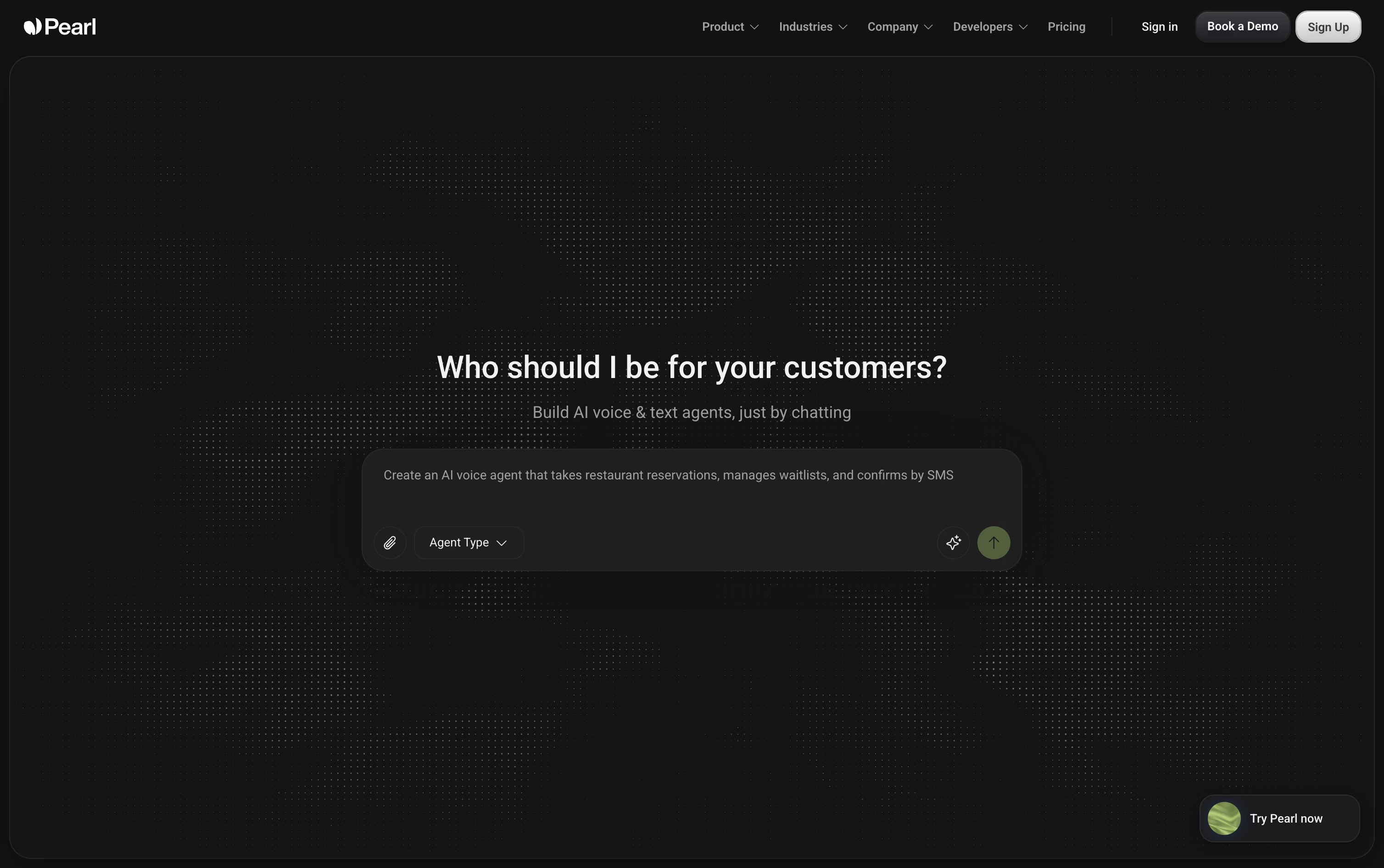
You describe the agent in a simple prompt using PearlVibe, and it builds out the conversation logic, knowledge base, and actions like booking or sending messages.
Pricing starts at $50 a month for the Starter plan with 2,500 credits and 1 agent, moving up to $195 a month for Companion with 15,000 credits and 5 agents, and $779 a month for Manager with 65,000 credits and 10 agents.
Voice and text usage get cheaper per minute and per message as you move up the plans, and Enterprise offers custom pricing with dedicated servers, priority support, and unlimited extra users.
You can connect Twilio, your own VoIP, and over 100 other tools, and every plan includes GDPR and SOC 2 level security.

Vapi is a platform built for developers who want to create voice AI agents that can hold real phone conversations. Instead of stitching together speech recognition, a language model, and speech synthesis on your own, Vapi manages that real-time infrastructure so you can focus on writing the conversation logic.
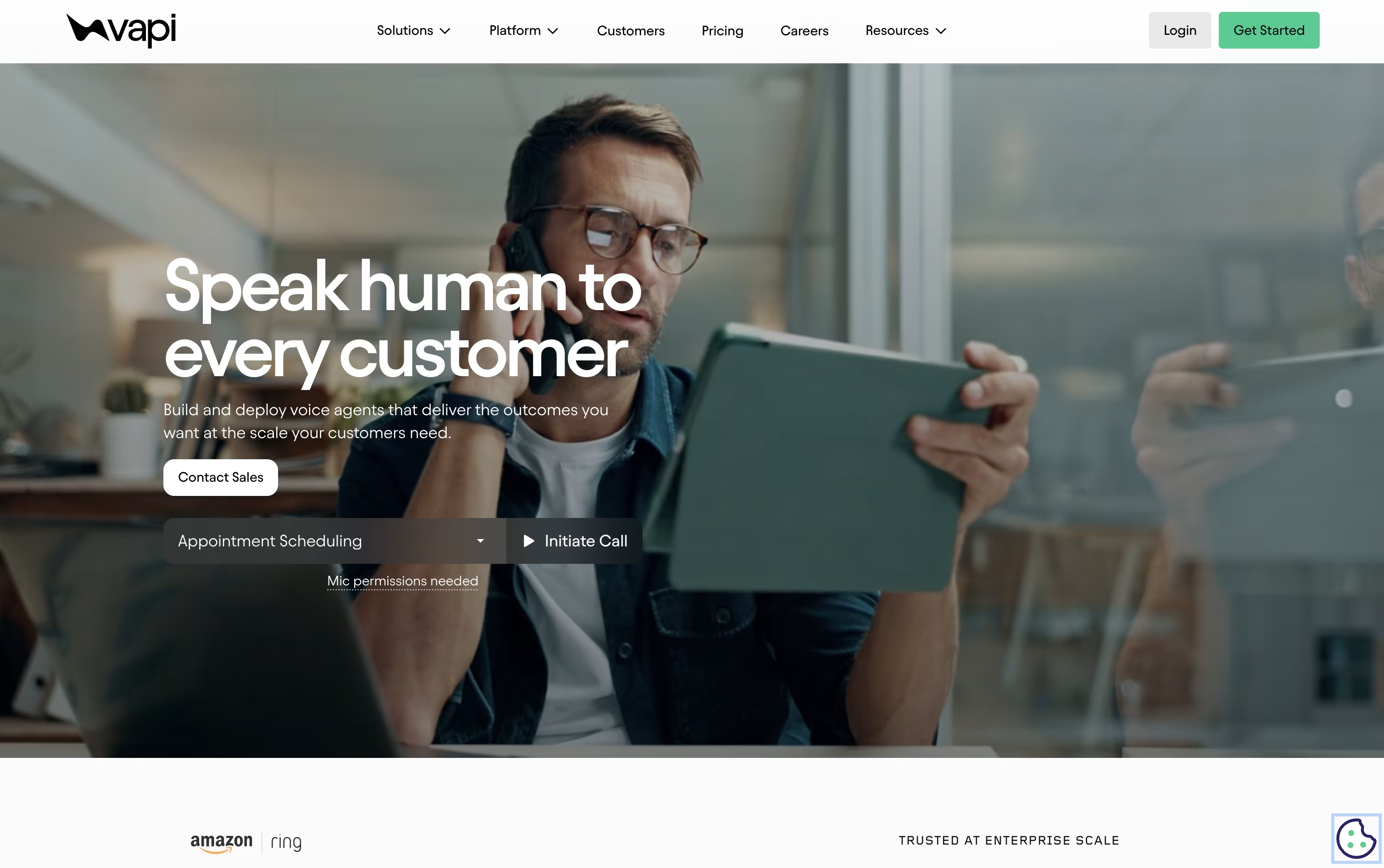
Every agent combines a speech to text engine, a language model, and a text to speech engine, and you can mix providers or bring your own API keys. Agents can answer or place calls, send SMS, call outside tools and APIs, and hand off between specialized assistants for more complex journeys.
Companies like Amazon Ring and Intuit use Vapi to power support, sales, and scheduling calls, and the platform includes monitoring, call recordings, and analytics to help teams keep improving their agents.
On pricing, the Build plan is pay as you go, starting at $0.05 per minute for calls and $0.0005 per message for chat, with 60+ minutes and 10 concurrent calls included. Model provider costs are billed at cost, and can drop to $0 if you supply your own API key.
Larger teams can move to the Scale plan, an annual contract with a fixed platform fee, committed volume, and enterprise features like SSO, SOC 2, and a dedicated support team, with pricing available on request.

Synthflow is a no-code platform for building AI voice agents that handle phone calls, along with chat, SMS, and WhatsApp conversations, for businesses.
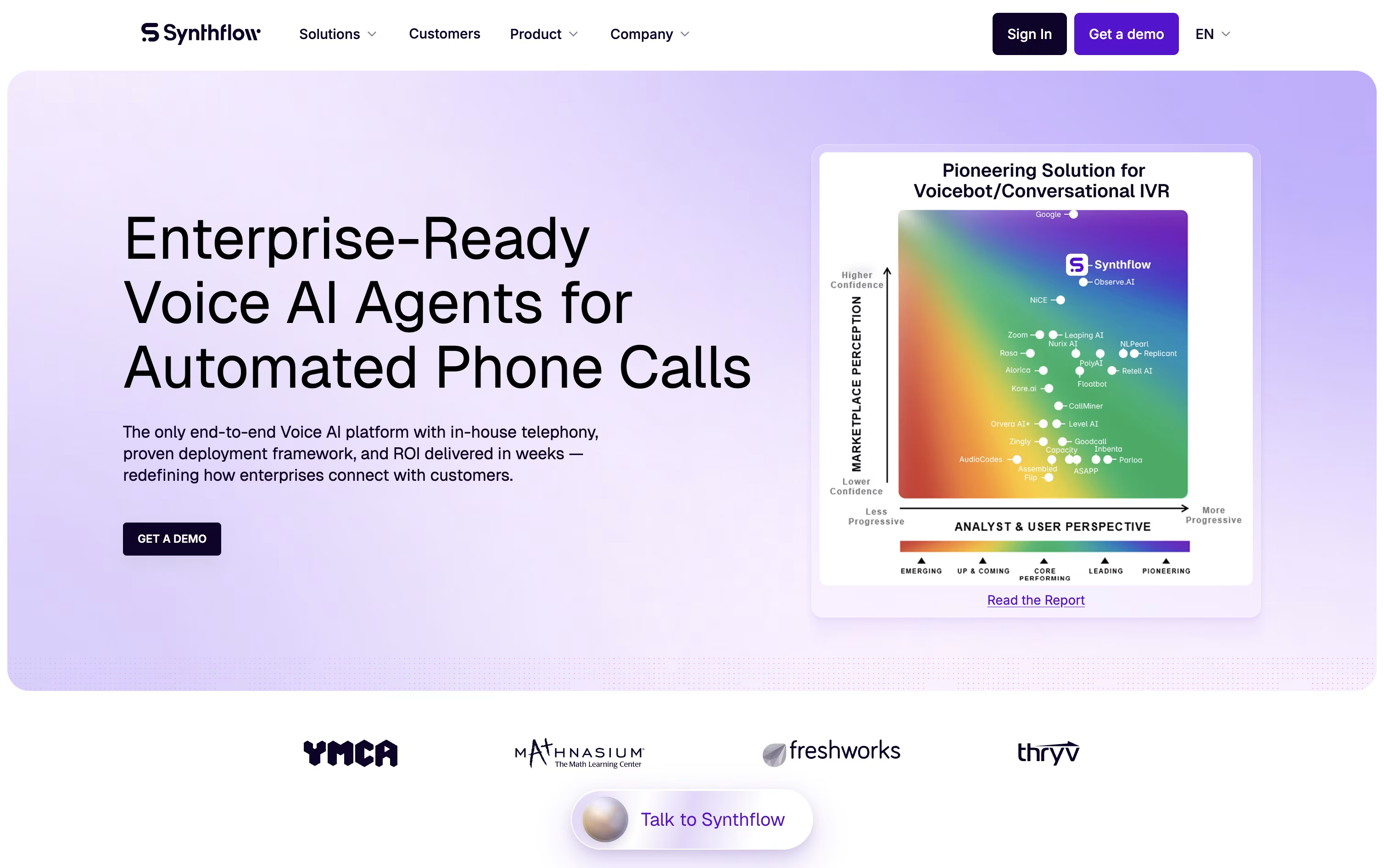
It runs on its own telephony network instead of relying only on outside providers, which keeps calls fast and dependable, with automatic failover if something goes wrong.
Before going live, teams can test agents through hundreds of simulated calls, then track performance afterward with live monitoring, detailed logs, and analytics dashboards.
Agents connect with more than 200 tools, including CRMs, calendars, and contact center systems, so they can book appointments, update records, and warmly transfer tricky calls to a real person with full context.
Pricing is published only for the Enterprise plan, which starts at $30,000 a year, about $2,500 a month, with the final cost scoped around call volume, telephony setup, integrations, and security needs.
That Enterprise plan covers SLA and support terms, implementation, onboarding, training, and ongoing optimization, making it suited to companies that want full support while rolling out voice automation.