Best 14+ Zite Alternatives in 2026
Last Updated: September 9, 2026
Zite is a no-code platform that turns plain English requests into working business software. Type what you need, and the AI builds the pages, sets up a database, and adds the right logic and login screens for you.
It grew out of Fillout, the forms company, and became Zite in 2026 after adding tools for planning, visual editing, authentication, and databases.
The best alternative to Zite is  Base44
 Base44Build Full Web Apps with AI, No Code.
  Rocket
 RocketAI-Powered Vibe Solutioning Platform and
  Softr
Softr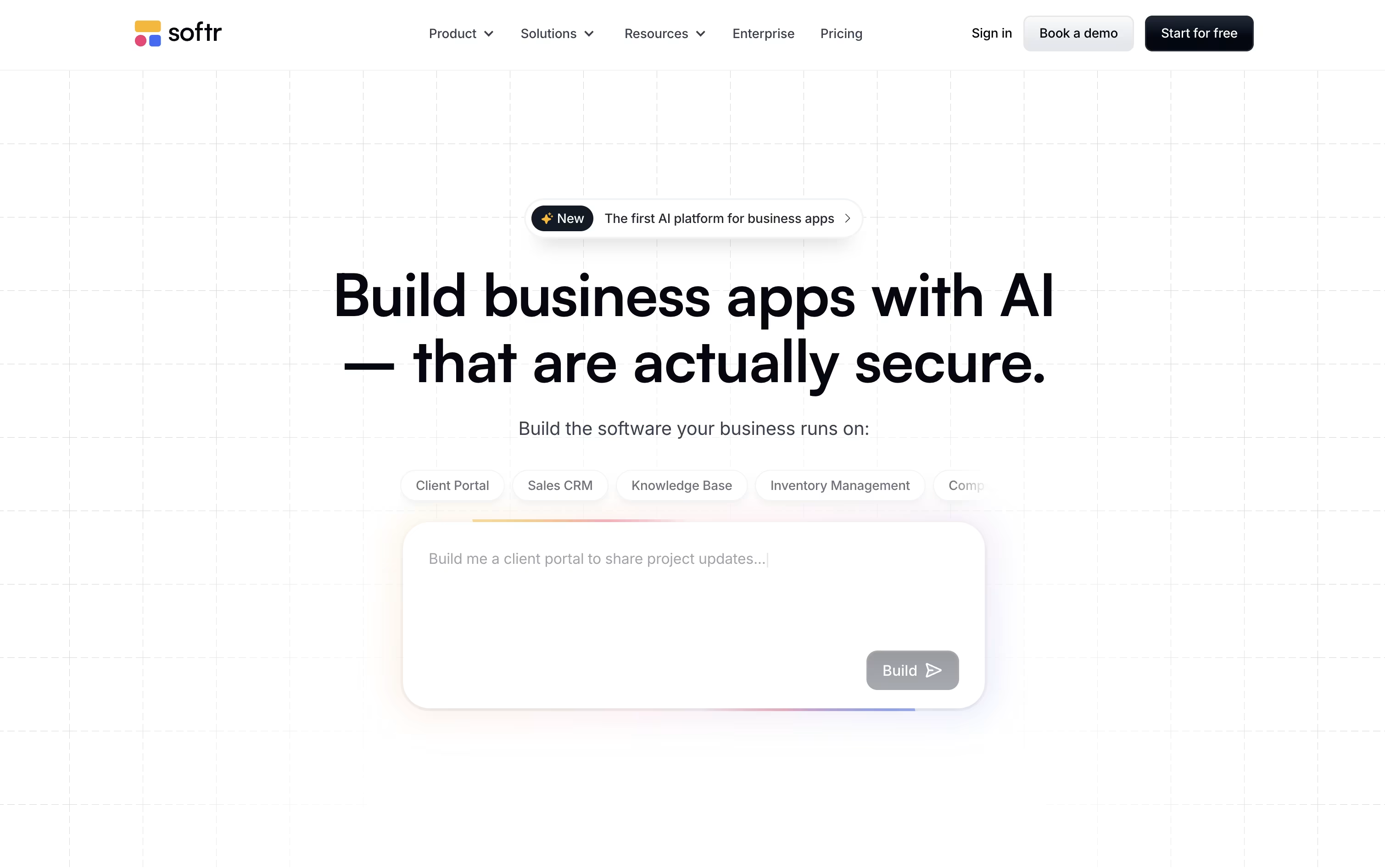 SoftrNo-Code Platform for Business Software are also among the best options for Custom App Development.
So, here are the 12+ best alternatives to Zite:

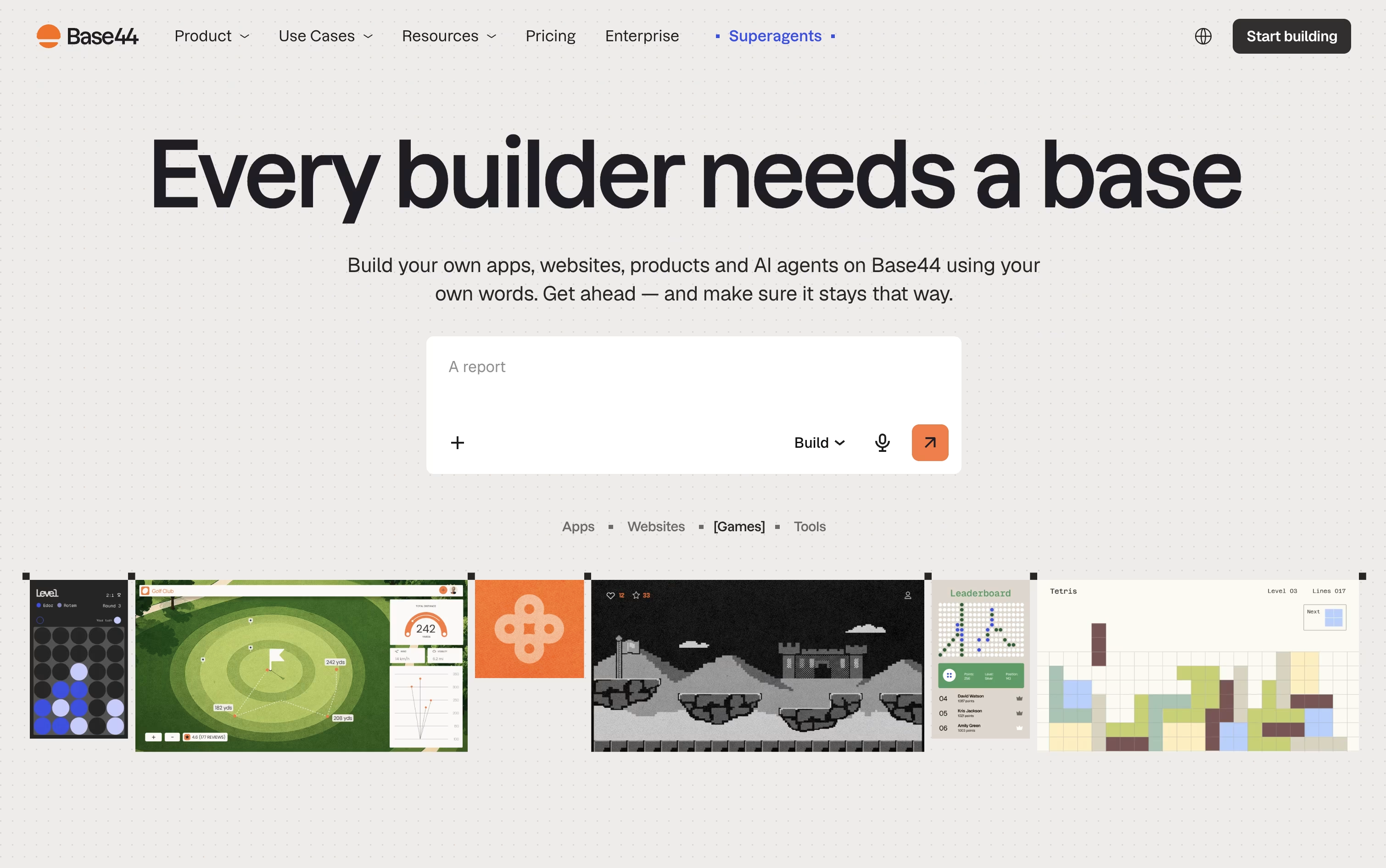
Base44 lets you describe an app in plain English and get back a real, working product, not just a mockup. It builds the pages, database, login system, and backend logic all at once.
You keep shaping the app by chatting with the AI, asking it to add a dashboard, change colors, or connect a tool like Slack or Notion.
The free plan costs nothing and includes 25 message credits and up to 5 apps, which is enough to try things out.
Paid plans start at $20 a month for the Starter tier, which unlocks unlimited apps and in-app code edits. The Builder plan at $50 a month adds backend functions and custom domains, while Pro and Elite raise the credit limits further.
You can also build AI agents called Superagents that run tasks on their own, and larger teams can get a custom-priced Enterprise plan with single sign-on and dedicated support.
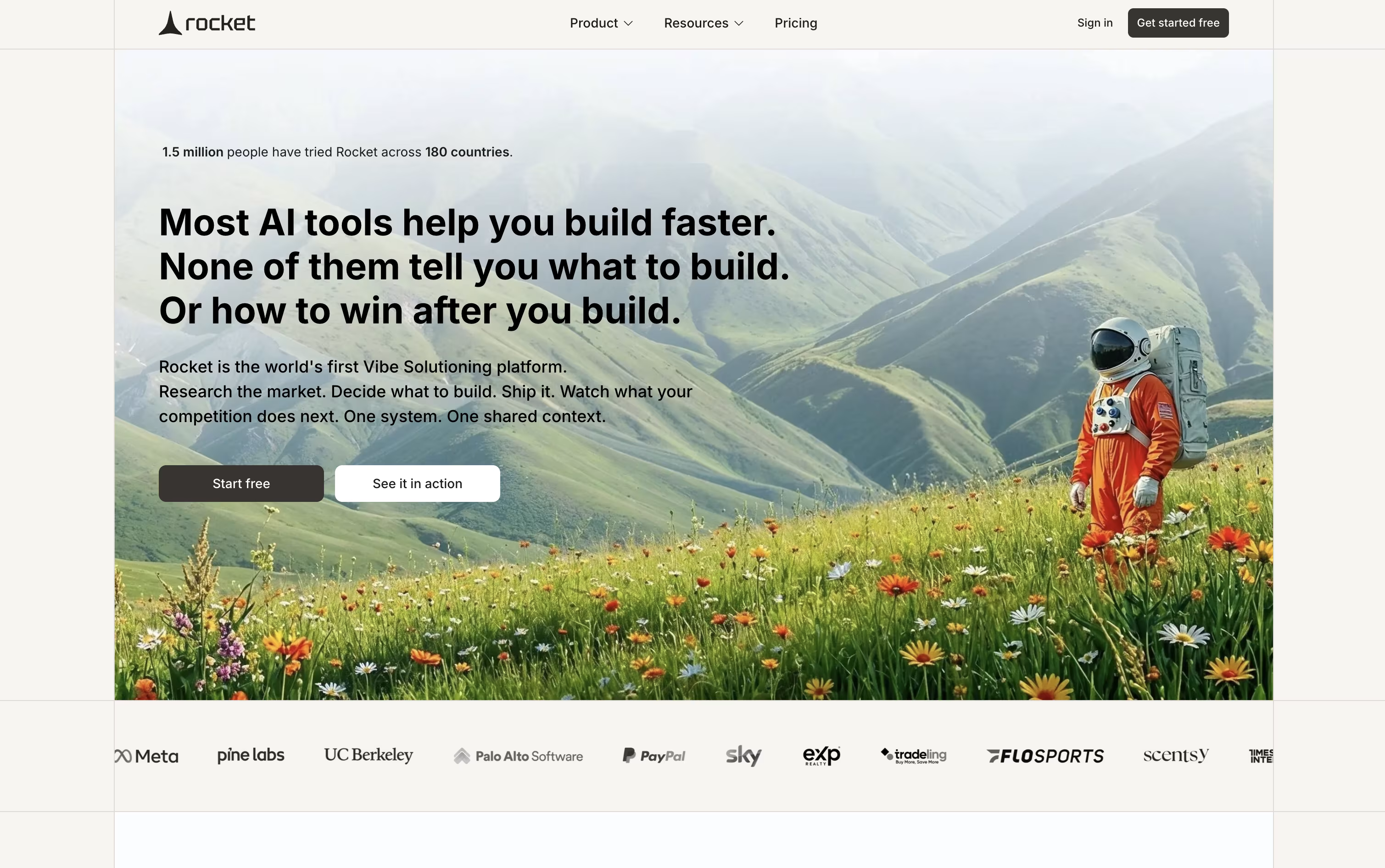
Rocket is an AI powered platform built for people who want to go from idea to working product without switching between a dozen tools. It combines three connected parts: Solve for research, Build for creating real apps, and Intelligence for tracking competitors, all sharing the same project context.
Solve turns a business question into a clear report backed by evidence, covering market analysis, growth ideas, and product direction, ready to export as a PDF, HTML, or slide deck.
Build lets you turn plain language prompts, Figma designs, or GitHub repos into production ready websites, web apps, mobile apps, and online stores, using real frameworks like Next.js and Flutter rather than throwaway prototypes.
Intelligence quietly watches your competitors and sends daily briefs on pricing, messaging, and product changes, so you always know what is happening in your market.
Pricing starts with a free plan that includes 20 credits, moving up to Pro at $25 a month, Rocket at $50 a month, and Booster at $250 a month for power users and larger teams, all with yearly discounts of 20 percent.
With visual editing, full code access, one click deploy, and support for dozens of connectors, Rocket works well for solo founders, product teams, and anyone who wants both the thinking and the building handled in one place.
Softr is a no-code platform for building real business software, like client portals, CRMs, dashboards, and internal tools, without writing traditional code.
You can describe what you need in plain language and let the AI Co-Builder generate the pages, database, and workflows, or use the visual drag and drop editor for full control.
It comes with its own native database, AI agents that can enrich and update records automatically, and workflows for multi step automations, along with connections to tools like Airtable, Google Sheets, and HubSpot.
Pricing starts with a free plan for individuals, then moves to Basic at $59 a month, Professional at $167 a month, and Business at $323 a month, with cheaper rates when billed yearly. An Enterprise plan with custom pricing is available for larger teams.
Softr is SOC 2 certified and GDPR ready, so it holds up well for teams that need secure, permission based business software rather than just quick prototypes.

Bolt is an AI coding agent from StackBlitz that turns plain text prompts into real, working apps. You describe what you want to build, and Bolt writes the code, sets up the project, and shows a live preview, all inside your browser.
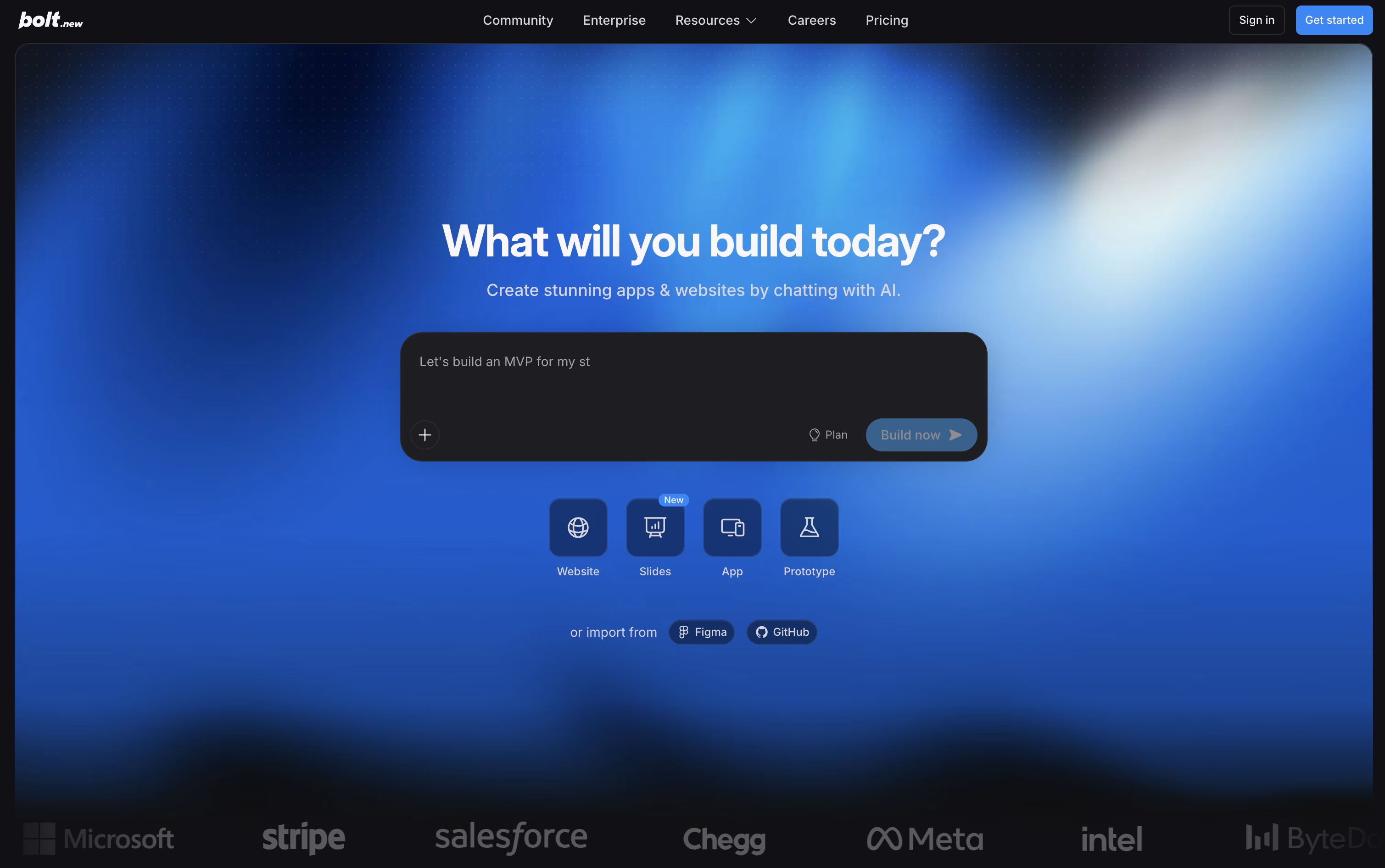
It runs on WebContainers, a full Node.js environment built into the browser, so there is no local setup needed. The AI itself is powered mainly by Claude models, and it can scaffold projects, install packages, run servers, and fix bugs as you chat.
The Free plan gives you 300K tokens a day and 1M tokens a month, with website hosting and unlimited databases, though your site carries Bolt branding.
The Pro plan costs $25 a month, or $18 a month billed yearly. It removes the daily limit, starts you at 10M tokens a month, drops the Bolt branding, and adds custom domains, SEO boosting, and AI image editing.
Teams costs $30 per member a month, or $27 yearly, and adds centralized billing and team access controls. Larger organizations can move to Enterprise for custom pricing with SSO, audit logs, and dedicated support.
Bolt also connects with Figma, GitHub, Supabase, and Stripe, making it a solid choice for founders, product teams, and developers who want to move fast without losing control of their code.

Anything lets you build a real working app just by chatting about what you want. Say you need a booking app or an online store, and the AI writes the code, sets up a database, adds login, and connects payments on its own.
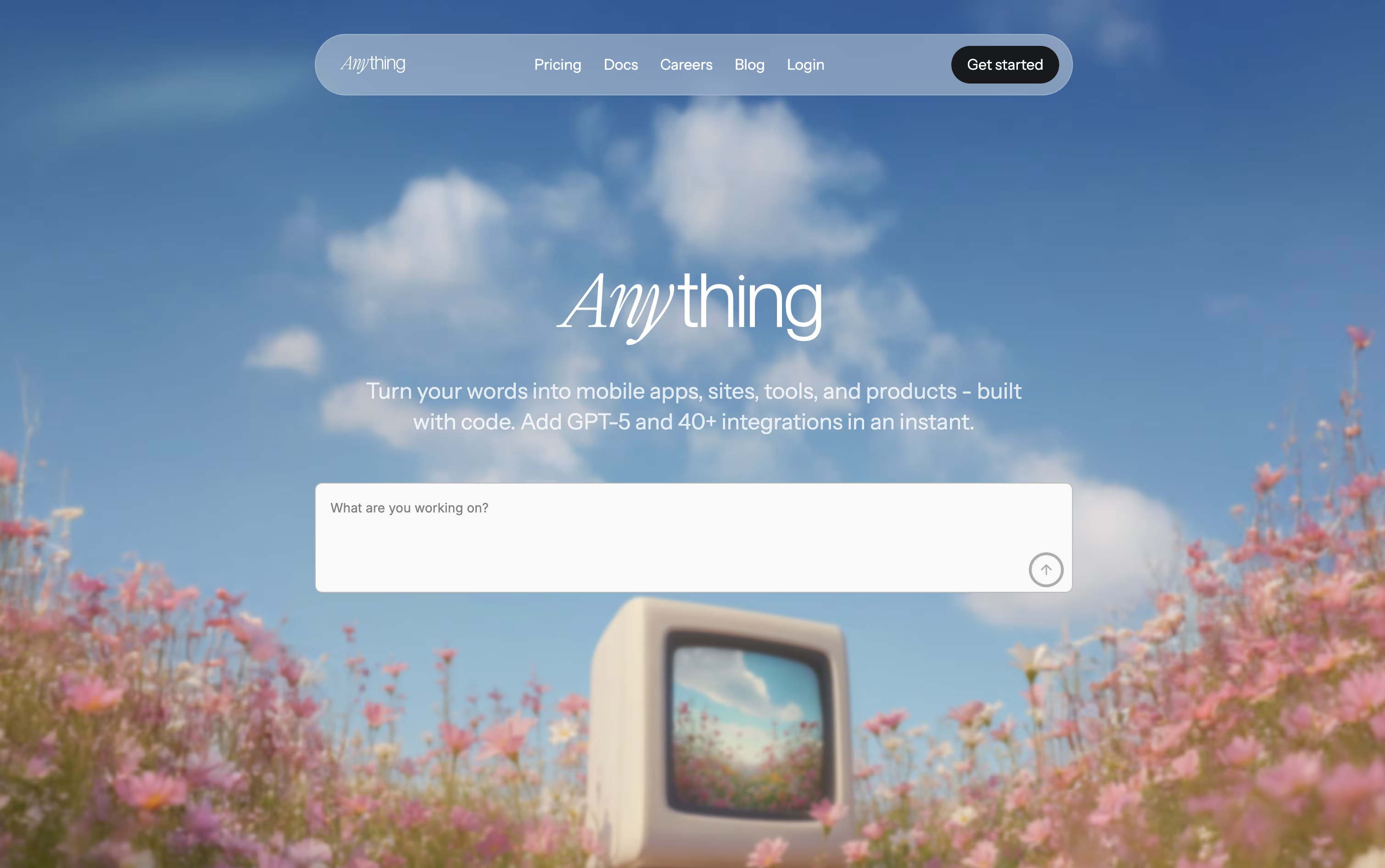
It can build web apps, websites, and native iOS and Android apps from the same project, so one description powers every platform.
There is a free plan to get started with public projects and community support.
The Pro 20K plan costs $24 a month, or $19 a month billed yearly, and adds 20,000 monthly AI credits, private projects, custom domains, and removes Anything branding.
For bigger projects, the MAX plan starts at $239 a month for 220,000 credits, or $199 a month billed yearly, and adds multiple AI agents working at once, automated testing, and priority support.
Anything Max mode goes further by opening the app like a real user, clicking through it, finding bugs, and fixing them automatically until it works.
Bubble is a no-code platform for building real web and mobile apps without writing traditional code. It combines a drag-and-drop editor, a built-in database, and a visual workflow builder so you can design the look and the logic of your app in one place.
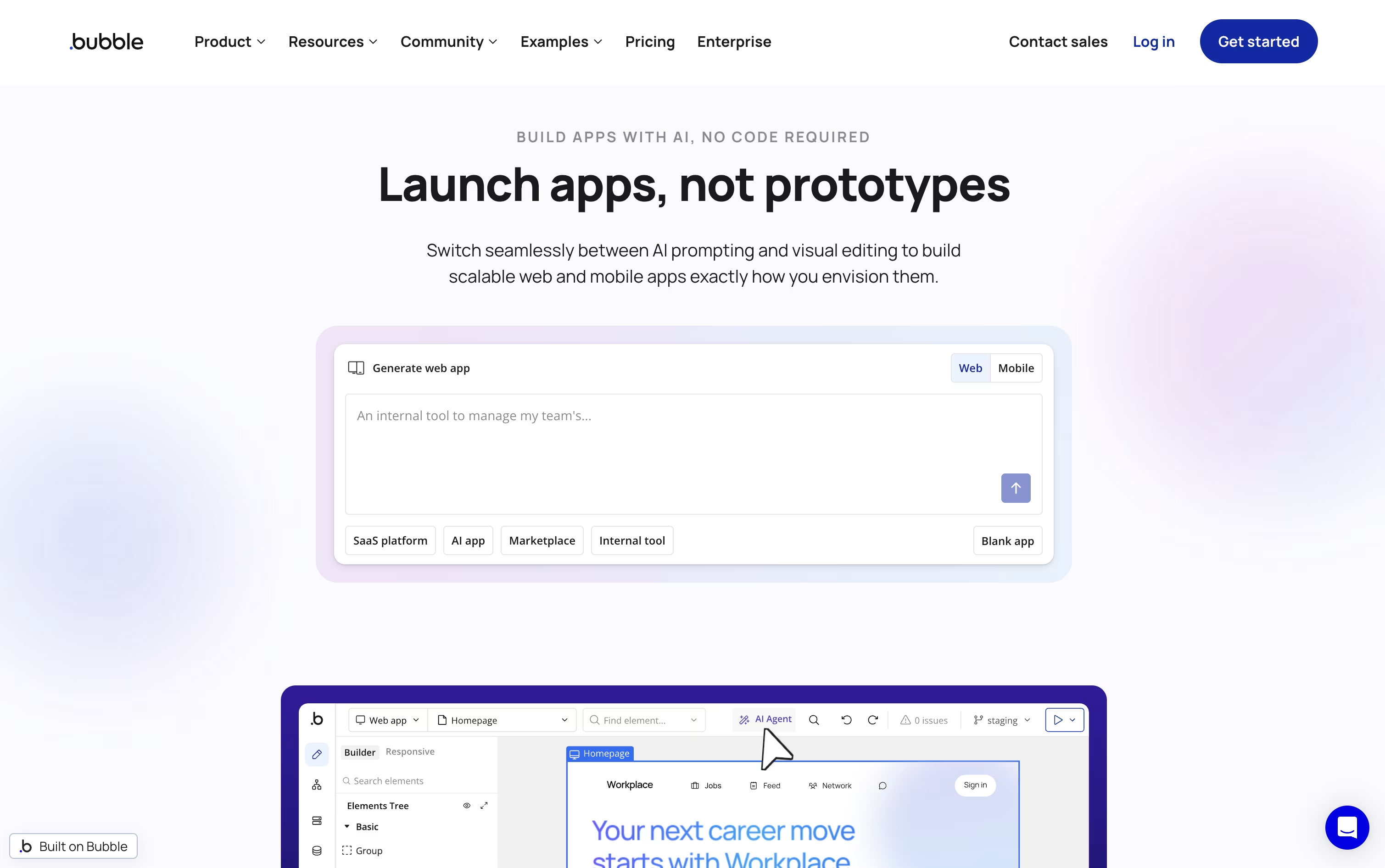
You can start from a blank page, a template, or describe your idea to the AI App Generator, which creates a working structure you can then refine by hand. An in-editor AI Agent can also help you build data types, workflows, and expressions as you go.
Bubble supports native iOS and Android apps that share the same database and logic as your web app, so you only need to manage one system.
Pricing starts at $0 a month for a development-only Free plan. The Starter plan runs $69 a month, Growth is $249 a month, and Team is $649 a month for web and mobile together, with lower annual rates. Enterprise pricing is custom.
With thousands of plugins, an API Connector, and SOC 2 Type II compliant hosting on AWS, Bubble is built to support real, growing products rather than just prototypes.

Lovable is an AI powered tool that builds full working web apps from plain text descriptions. Instead of writing code line by line, you describe what you want in a chat, and the AI creates the frontend, backend, database, and login system for you.
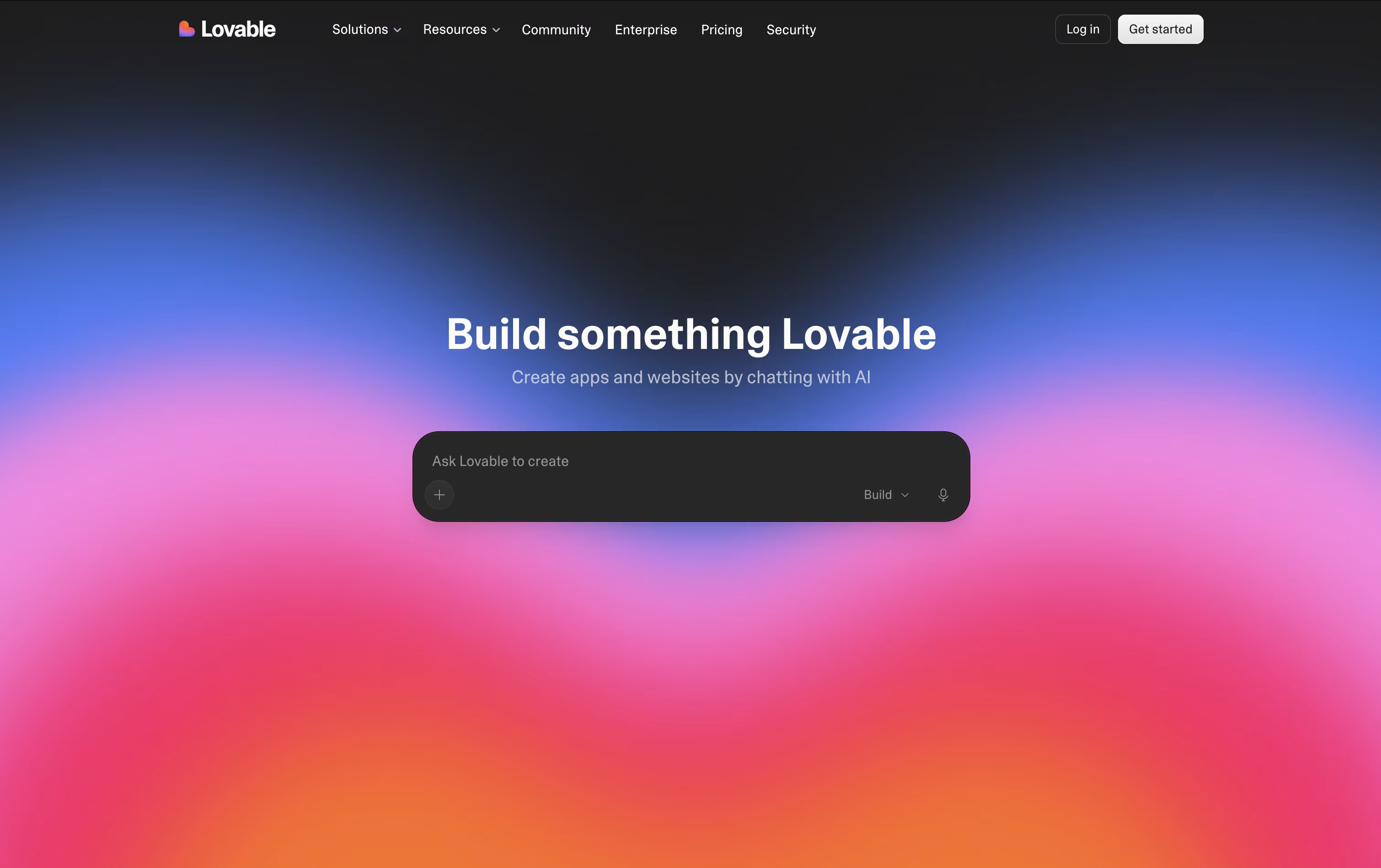
It grew out of an earlier open source project and now includes a built in cloud backend powered by Supabase, so there is no need to set up your own server. You can also upload screenshots, documents, or a website link to help start a new project.
Lovable is free to start, with no credit card needed. The Pro plan costs $25 a month and adds custom domains, credit rollovers, and removes the Lovable badge from your app.
The Business plan is $50 a month and adds team workspaces, single sign on, and a security center for growing companies. Larger organizations can move to the Enterprise plan, which offers custom pricing with dedicated support and audit logs.
Once your app is built, you can publish it instantly with one click or connect it to GitHub to fully own and continue the code elsewhere.

Emergent is a platform that builds full software applications from plain English descriptions. Instead of writing code yourself, you describe what you want, and a team of AI agents plans, designs, codes, tests, and deploys the app for you.
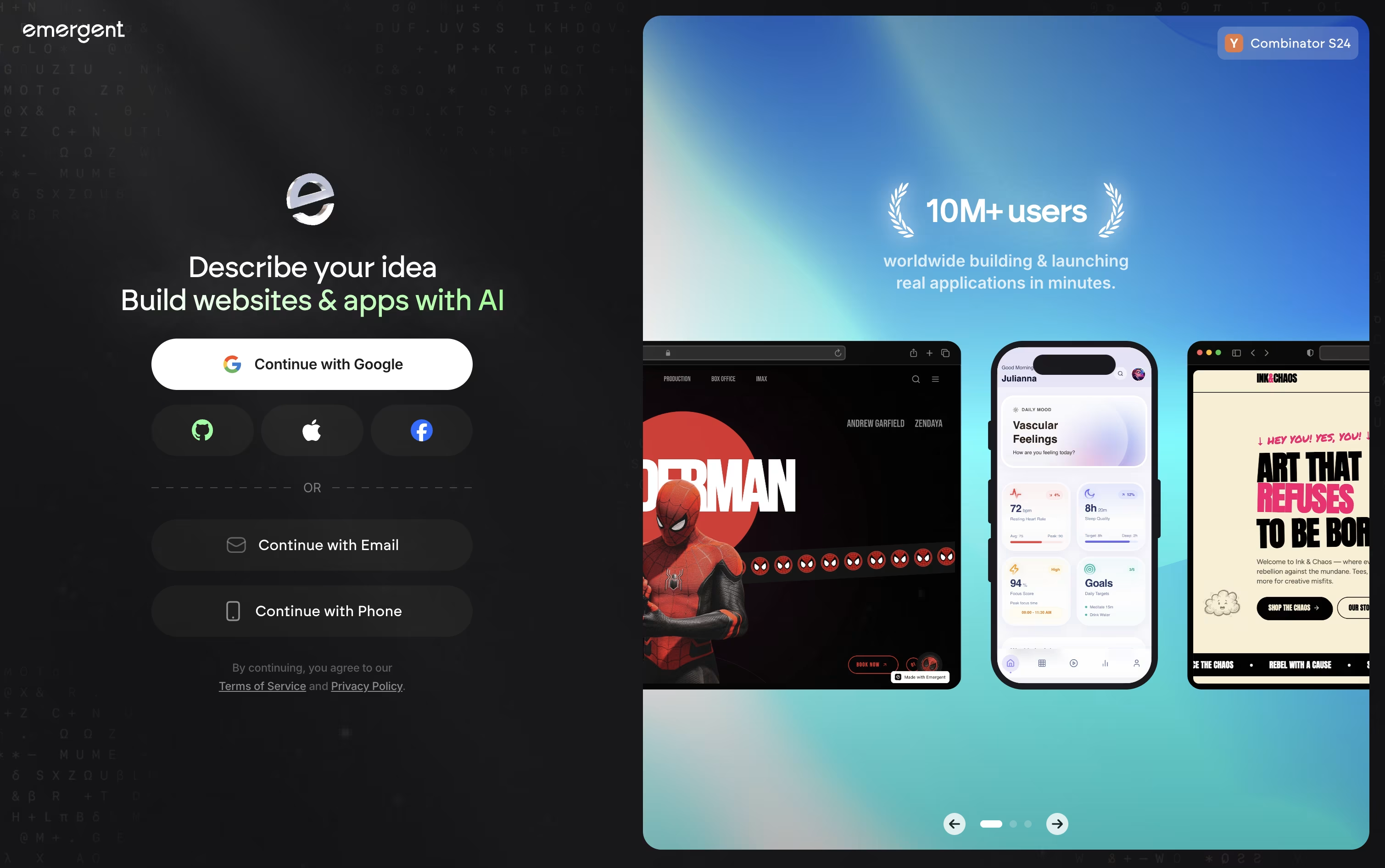
It handles the whole stack, from the frontend look and feel to backend logic, databases, and user logins. You can keep chatting with it to add features or fix issues, and watch the changes happen in a live preview.
The Free plan costs nothing and includes 10 monthly credits with access to core features. The Standard plan is $20 a month, or $17 a month if billed yearly, and adds private hosting, 100 credits, and GitHub integration.
The Pro plan costs $200 a month, or $167 a month yearly, and unlocks a 1 million token context window, custom AI agents, and 750 monthly credits, built for serious builders and AI startups.
Larger teams can choose the Business or Enterprise plans, which are priced individually and add role based access, single sign on, audit logs, and the option to deploy in your own private cloud.
Because it connects with tools like GitHub, Stripe, and Supabase, and supports both web and mobile apps, Emergent works well for founders, small teams, and developers who want to move from idea to working app quickly.

Meku is a tool that turns plain text into working websites and apps. You describe what you want to build, and it creates a working version in under a minute, complete with a clean, modern design.
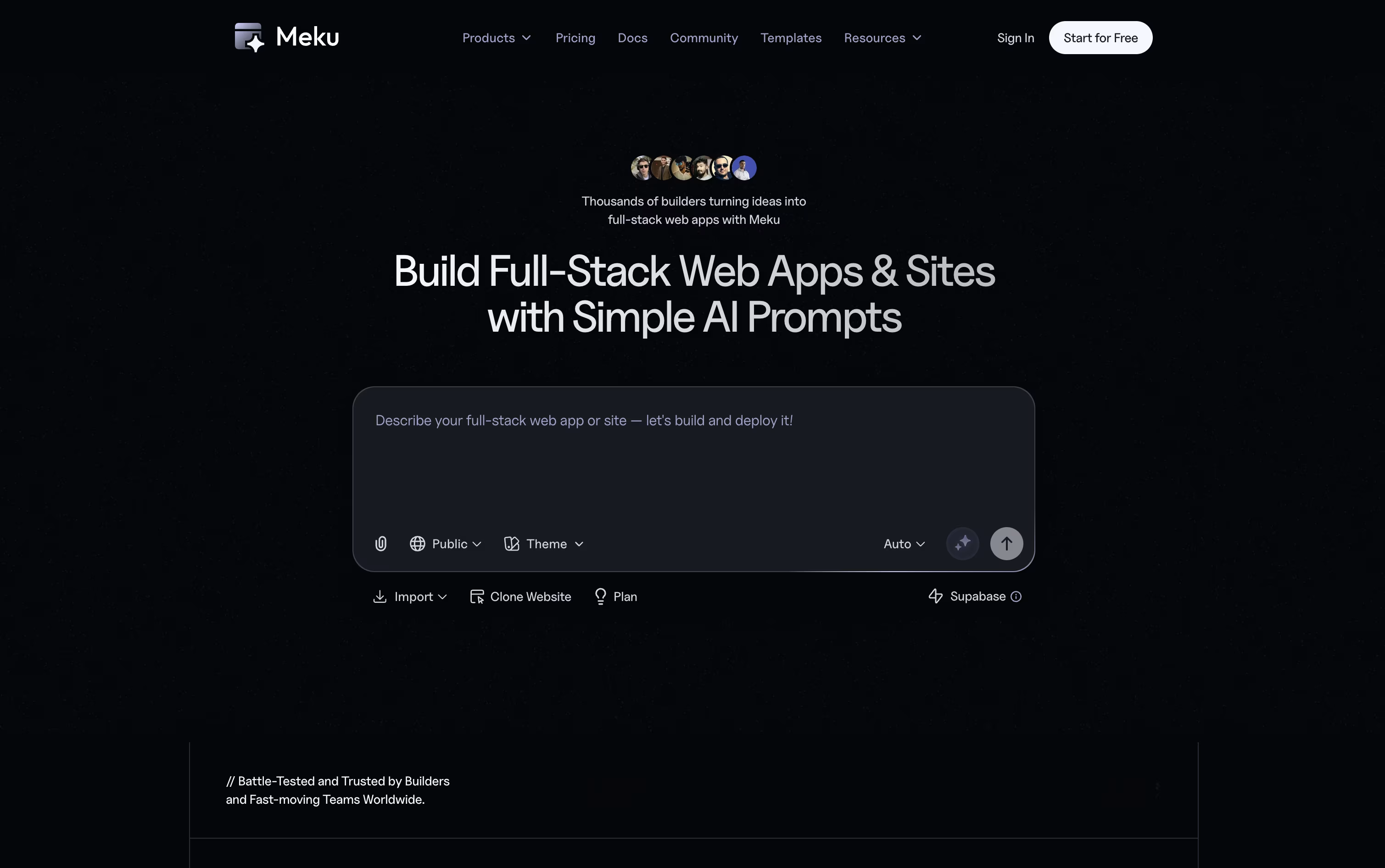
Once your first version is ready, you can keep improving it through chat. Ask for changes, add pages, or fix issues, and watch the updates happen live in front of you.
Meku also connects with Figma, so you can turn existing designs into working code, and with GitHub and Supabase, so you can add version control, logins, and databases to your project.
Getting started costs nothing. The Free plan gives you 100 credits a month and three public projects. The Starter plan costs $16 a month, or $12 a month when billed yearly, and unlocks private projects, code export, and full integrations.
The Pro plan, priced at $25 a month, adds more credits, premium templates, and space for a bigger team, while the Growth plan at $49 a month is built for larger teams needing more projects and members.
Every paid plan lets you export your full code and host it wherever you want, so you are never locked into one platform.

Rork is a platform that turns a plain English chat into a real, working app. You describe what you want to build, and an AI agent plans the screens, writes the code, tests it, and fixes any errors along the way.
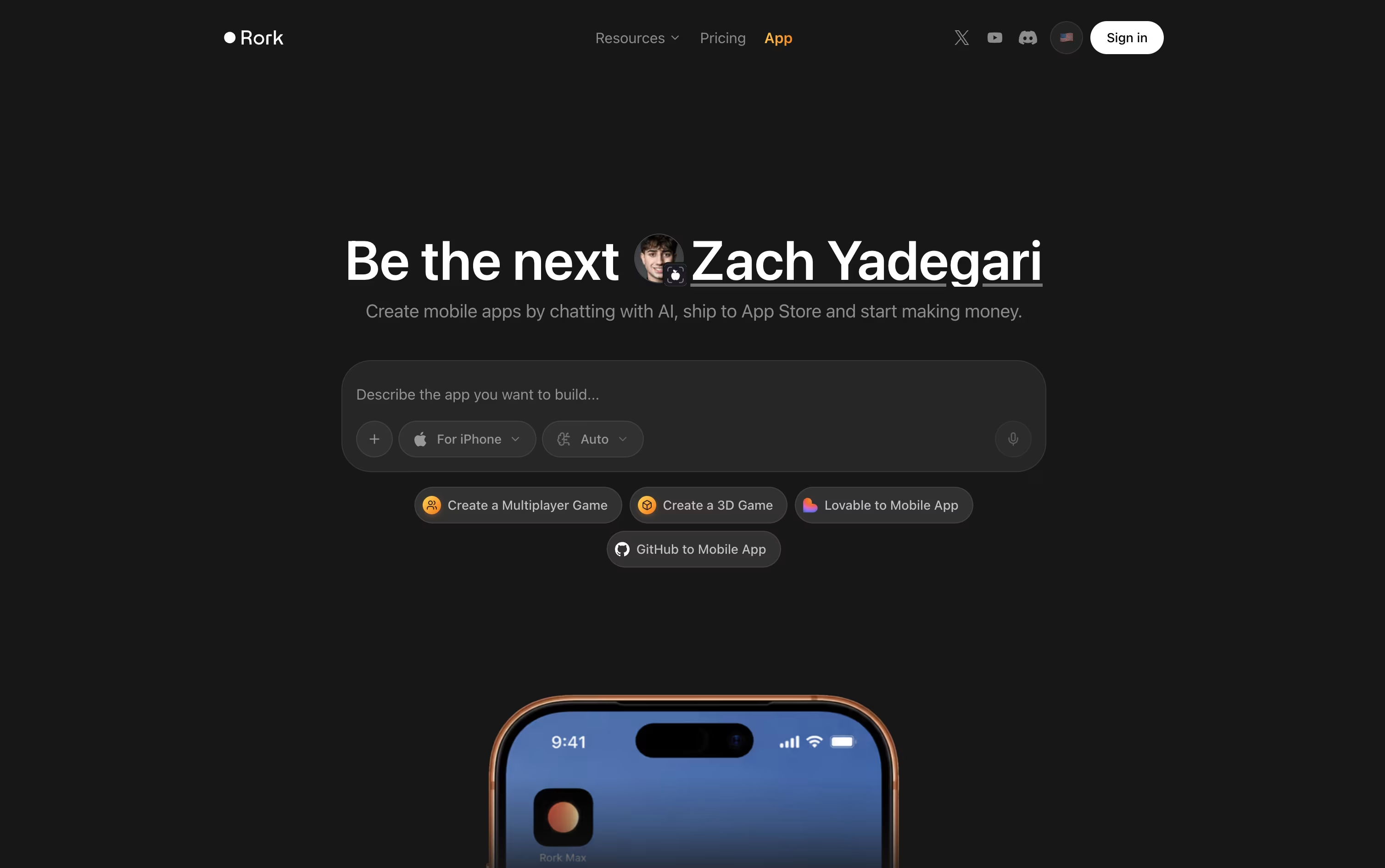
It comes in two modes. Rork Pro builds cross platform apps with React Native and Expo, so they run on iPhone, Android, and the web. Rork Max goes further, compiling fully native SwiftUI apps built just for Apple devices, including iPad, Apple Watch, and Vision Pro.
The free plan costs nothing and gives you 5 AI credits a month plus a trial of Rork Max, which is great for learning the platform or testing a small idea.
Rork Pro costs $20 a month and includes 100 credits, private projects, and Android builds using Kotlin and Compose. Rork Max starts at $200 a month for 1,000 credits, with higher tiers available for teams that need more.
Paid plans unlock features like your own database, third party integrations, payments, notifications, and full code export through GitHub. When your app is ready, built in tools help you publish straight to the App Store and Google Play.

Manus is an AI agent built to finish real work, not just answer questions. You give it a goal in plain language, and it plans the steps, opens a browser, writes code, and pulls together a finished result on its own.
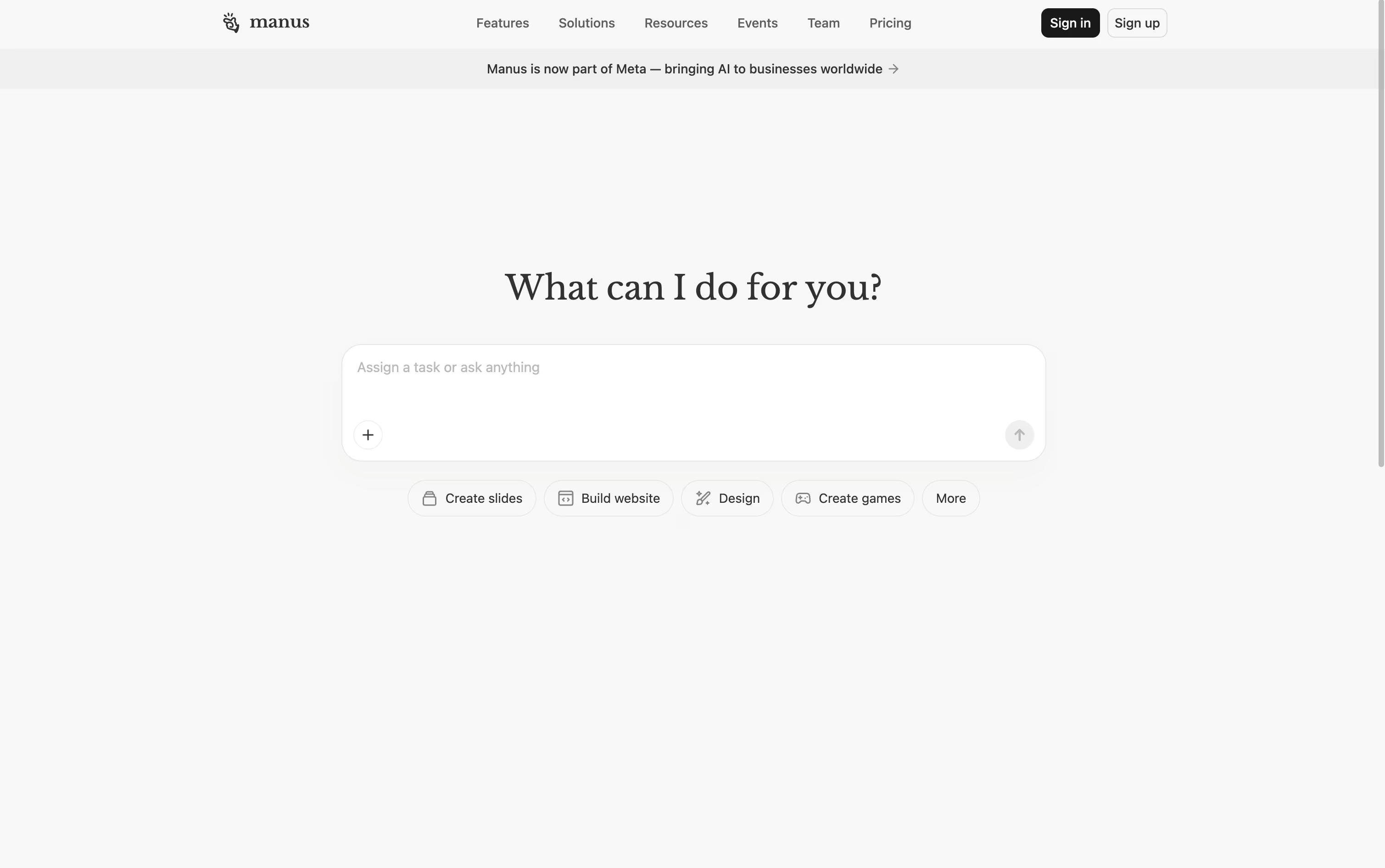
It can research a topic in depth, build a full website or app complete with a database and login, put together a polished slide deck, or generate images, video, and even music. Tasks run in the cloud, so you can close the app and get notified once the work is done, or watch and step in at any point.
Manus also connects with tools people already use, including Slack, Gmail, and Google Drive, along with a Browser Operator that lets it act inside your own browser using your logins.
Pricing starts at $20 a month for the Standard plan with 4,000 credits, moving up to $40 a month for 8,000 credits, and $200 a month for 40,000 credits plus a free cloud computer. Annual billing saves 17 percent.
Teams and businesses can get custom plans with enterprise-grade security and compliance certifications, making Manus a fit for individuals and larger organizations alike.

FlutterFlow is a visual builder for making real apps without writing every line of code by hand. You drag and drop widgets to design your screens, then use a visual logic editor to make buttons, forms, and pages actually work.
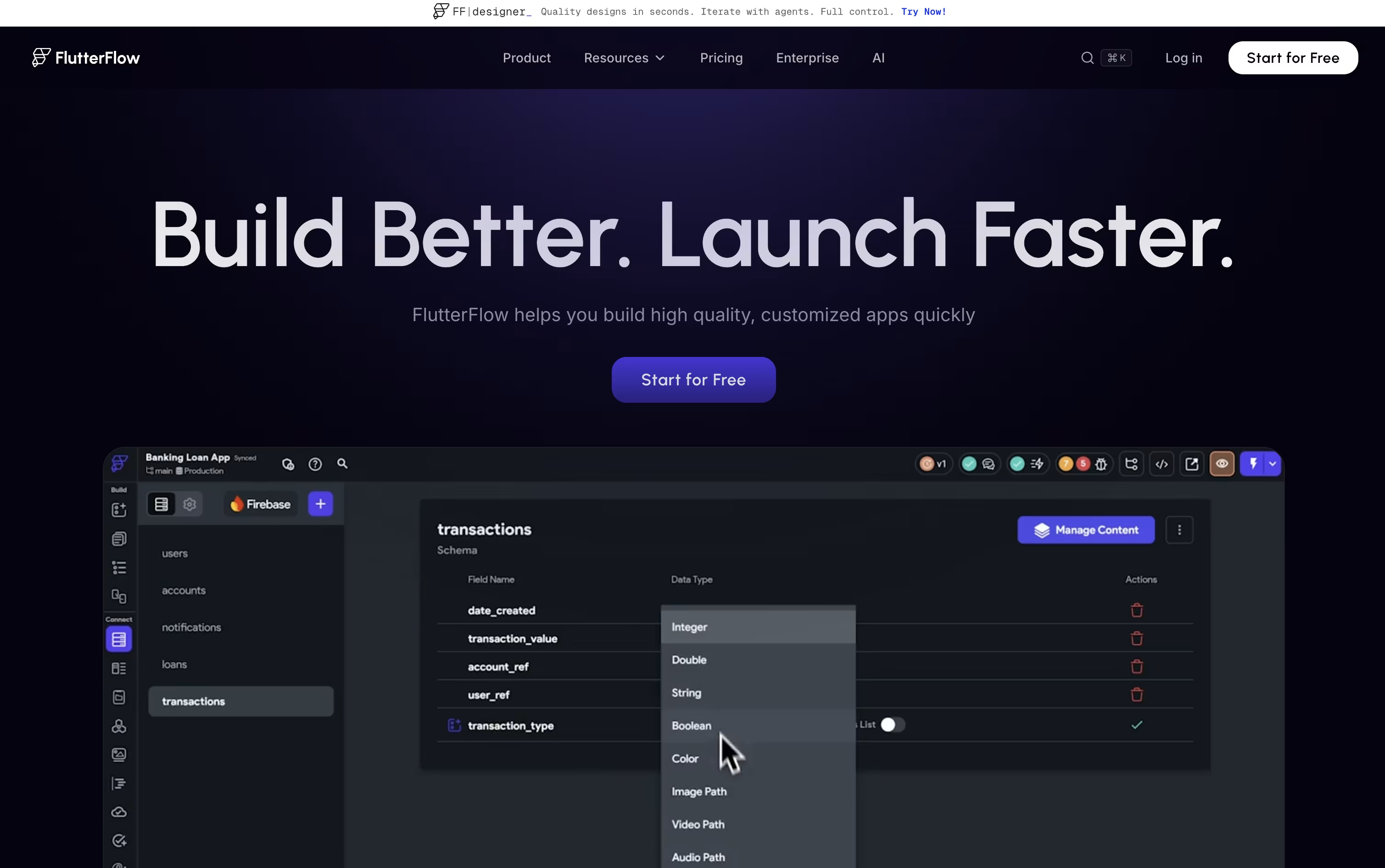
Because it is built on Google's Flutter framework, the app you build is not stuck inside the tool. You can export clean, working code at any time and keep full ownership of it.
It connects easily to Firebase, Supabase, or your own backend, and includes AI tools that can generate pages, write logic, and test your app for you through Test Pilot.
The Free plan covers 2 projects and basic tools. The Basic plan starts at $23.40 a month and unlocks code export and unlimited projects. Growth starts at $48 a month for small teams, and Business starts at $90 a month for teams of up to 5, with custom Enterprise pricing for larger companies.
Whether you are a beginner testing an idea or a developer wanting to move faster, FlutterFlow gives you a fast start and a clear path to real, shippable code.

Readdy lets you build a website by simply describing what you want. Type a sentence about your business, upload a reference image, paste a link to a site you like, or pick from over 500 templates, and Readdy generates a full multi page site with layout, text, and images already in place.
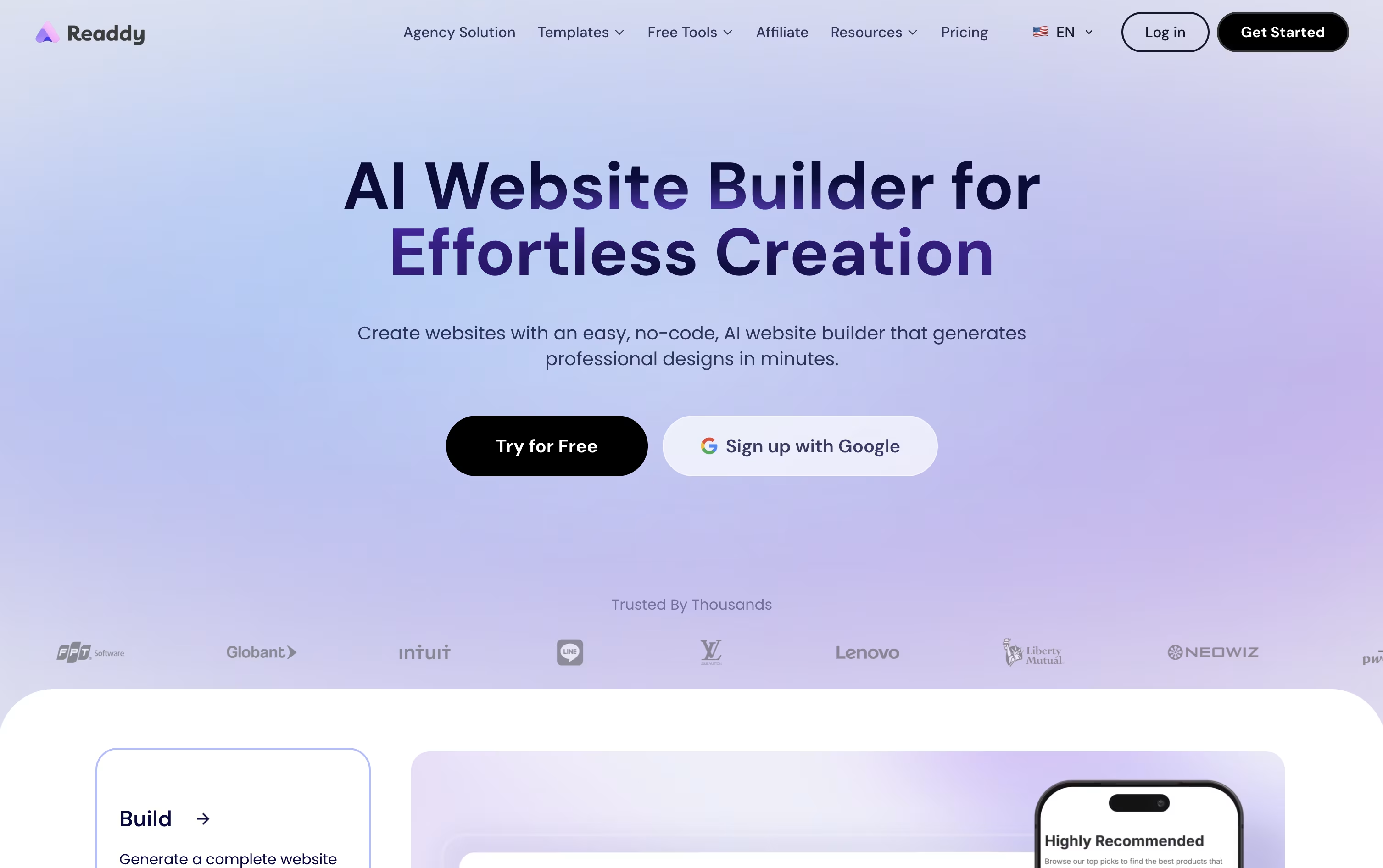
Editing is just as simple. Click any element to change its text, color, or spacing, or type a plain instruction like "add a hover effect to this button." Readdy also includes backend tools such as forms, logins, databases, and file storage, handled automatically through its built in Readdy Backend.
For more control, a full code editor lets you view and edit the underlying React, Tailwind, and TypeScript files, and you can export the entire project as a ready to run zip file at any time.
The Free plan gives 250 credits a month with no live site included. Starter begins at $25 a month for one site, moving up through Pro at $40, Agency at $120, and Agency Pro at $199 a month with white label tools and code export. Yearly billing cuts the price by up to 60 percent.
An Ultimate plan is also available for large teams needing unlimited sites, credits, and users.

Atoms is a no-code platform where a team of AI agents builds your app for you instead of one single assistant. You describe your idea and agents handle research, planning, design, coding, and even marketing.
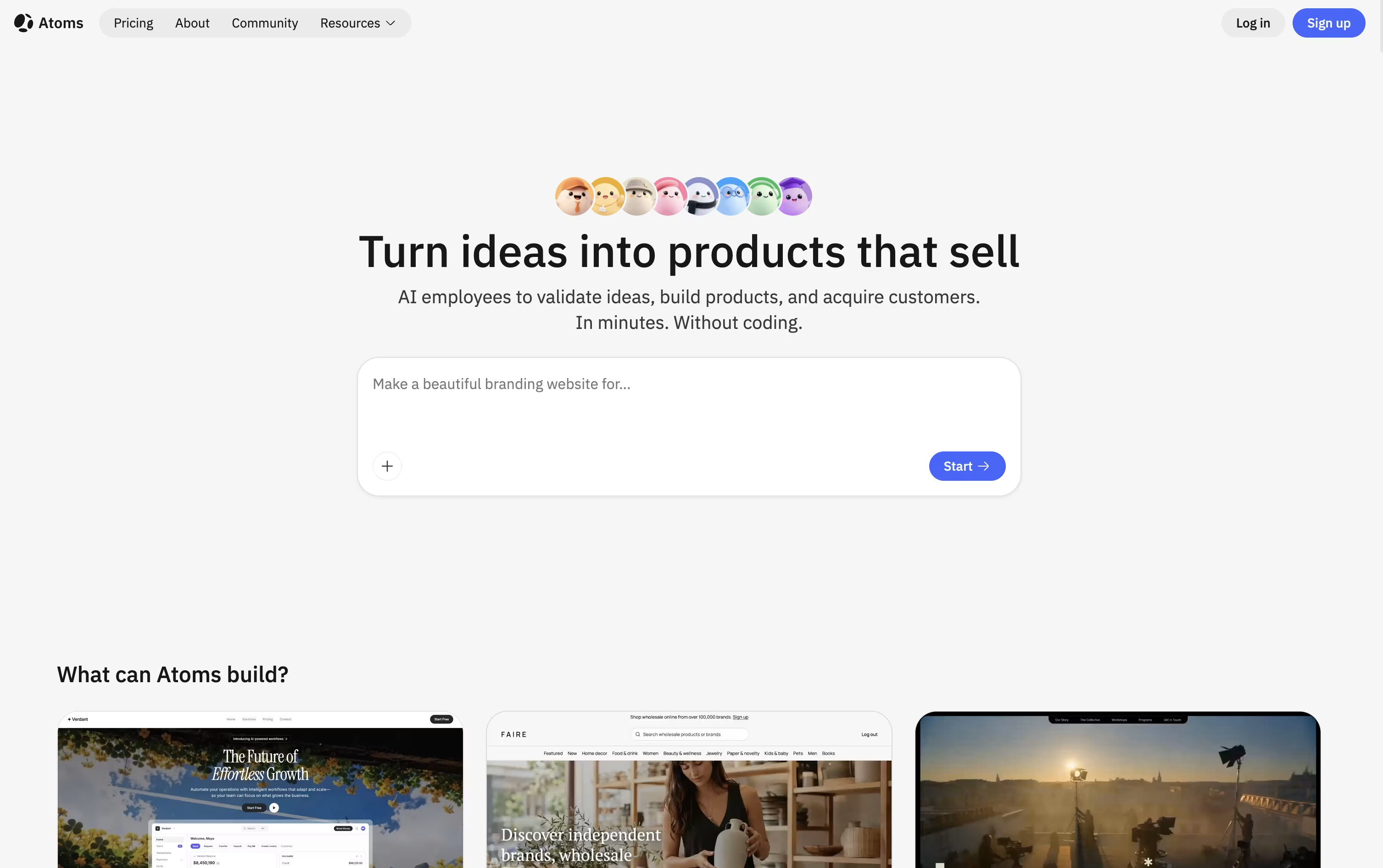
Behind the idea sits real software, agents write the frontend and backend, add login and a database, connect Stripe for payments, and deploy the finished app to a live link.
Once your app is live, other agents step in to help it grow, adding SEO friendly pages and running Google Ads campaigns, while a data agent looks at how people are using your app.
Atoms is free to start, with 15 daily credits, 2 GB storage, and 2 backend projects. The Pro plan begins at $20 a month for 100 credits and adds private projects, custom domains, and unlimited backend projects.
The Max plan starts at $100 a month for 500 credits and adds 100 GB storage, twice the compute power, and Race Mode, which runs your prompt through several AI models at once. Yearly billing saves up to 21% on both paid plans.
You can also export your code or connect it to GitHub at any time, so you always keep ownership of what you build.

Reflex is a Python framework that lets you build a complete web app, frontend and backend, without touching JavaScript or HTML. You write everything in Python, and Reflex handles turning it into a working website.
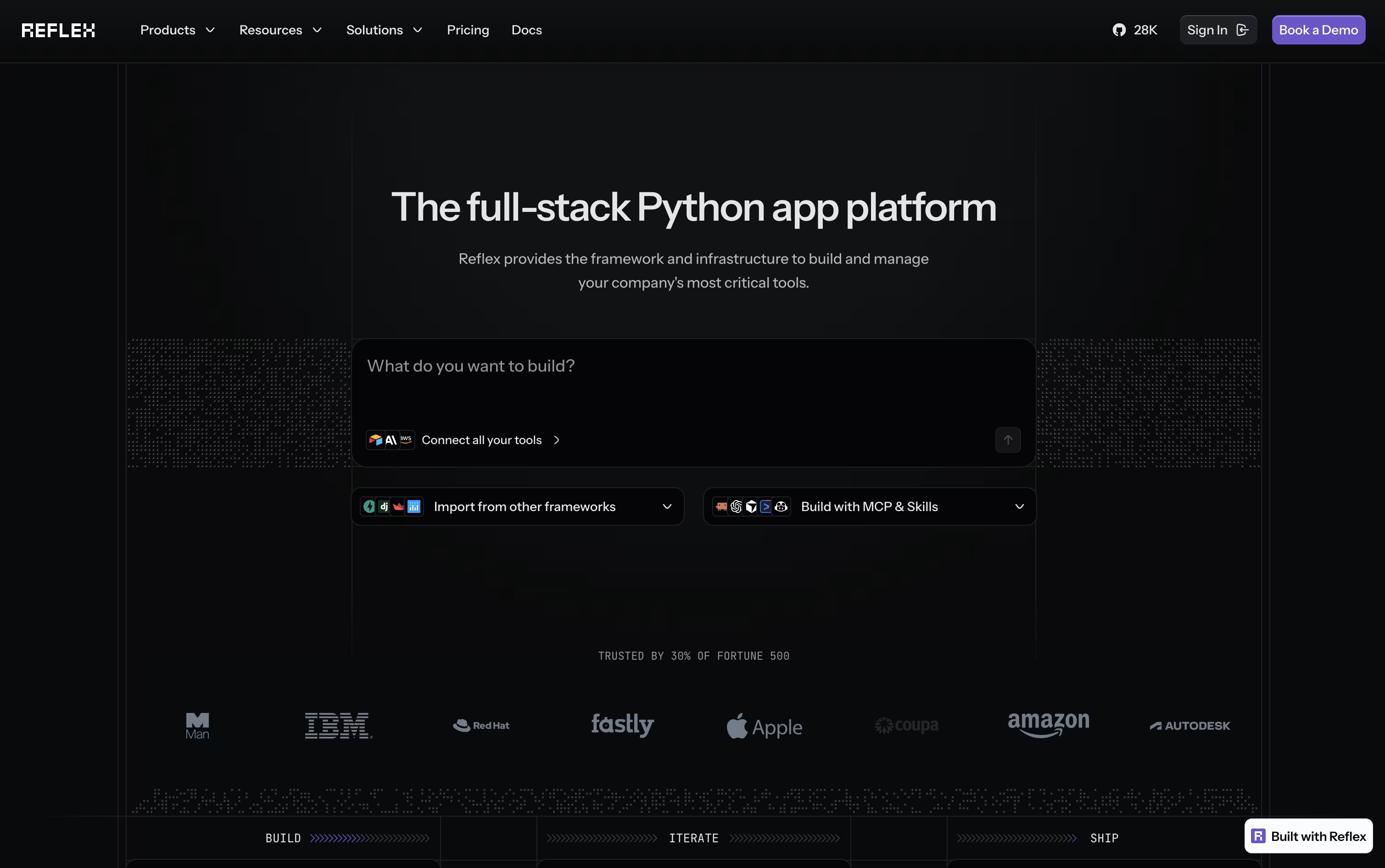
Behind the scenes, Reflex compiles your code into a React frontend and runs a FastAPI backend, connected through WebSockets so the page updates instantly whenever your data changes.
It also comes with an AI Builder tool. You describe your app idea in plain text, or upload a screenshot, and Reflex writes a working Python app for you, tests included.
The Free plan costs nothing and gives you 50 monthly credits and one hosted app, good for learning or small projects. The Pro plan is normally $200 a month, though it is currently discounted to $3 a month, and adds 2,000 credits, 10 hosted apps, and custom domains.
Larger teams can move to the Enterprise plan, which offers custom pricing, dedicated infrastructure, single sign-on, and HIPAA-ready deployment for sensitive projects.

Tempo is a workspace built for product teams that ties design, planning, and coding together around your real codebase. Instead of jumping between separate design tools, docs, and trackers, everything lives in one connected place.
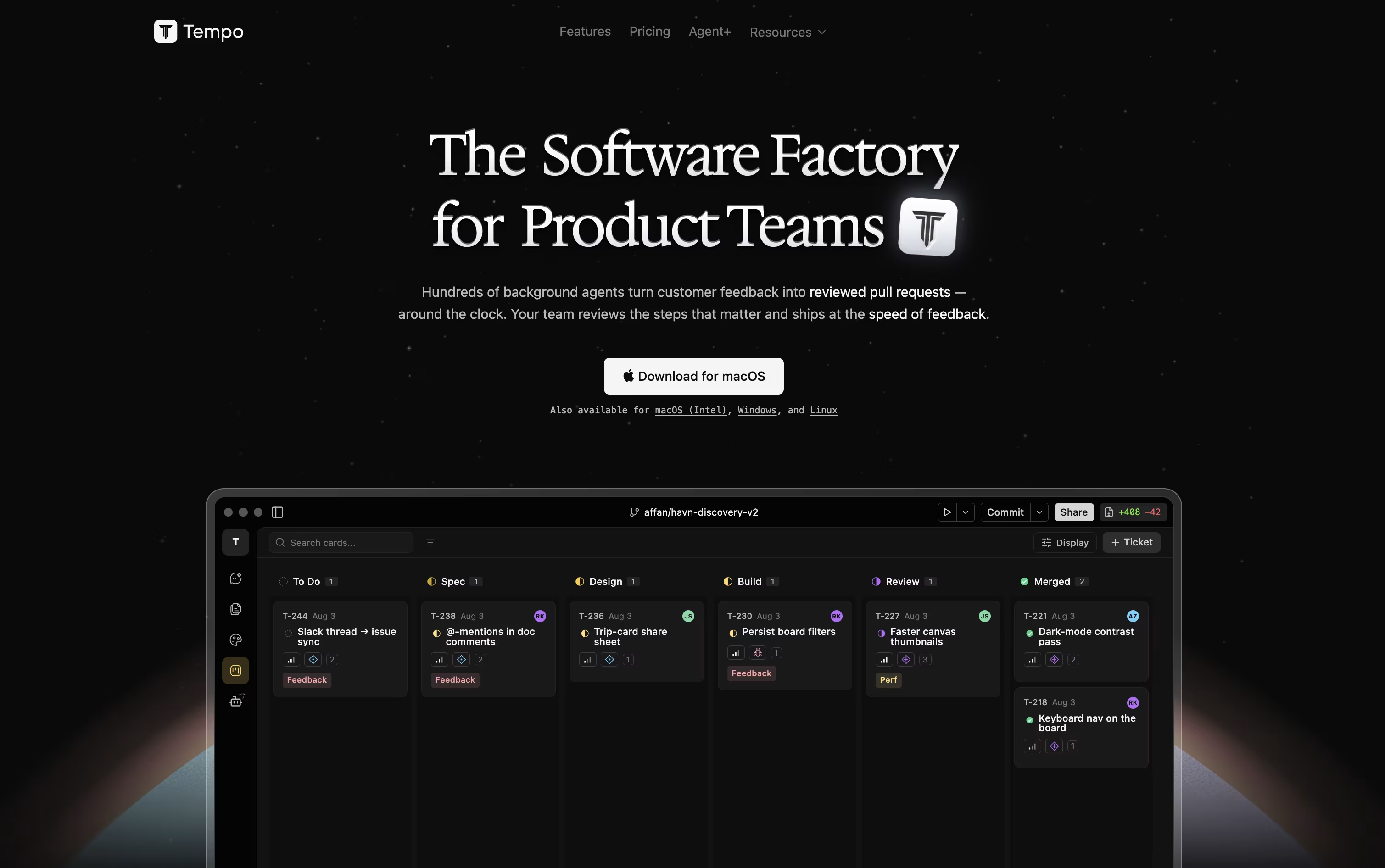
The Canvas lets you design directly on live React components, so what you see updates as the code changes. Docs gives you a simple space to write specs and plans, while Issues offers a Kanban board for tracking tasks.
AI agents sit at the center of it all. You can chat with Claude or OpenAI models that read your project and make changes safely in their own branch, or set up custom agents that respond to triggers like Slack messages or GitHub events.
Pricing starts with a free Starter plan offering 100 AI messages a month for small teams. The Team plan costs $20 per seat a month and removes most limits. For businesses that want AI agents and real engineers building features for them, Agent+ starts at $500 a month with delivery in 48 to 72 hours.
Tempo works best with React apps using Vite, Next.js, or Expo, and is available as both a web app and desktop app for macOS, Windows, and Linux.

camelAI is an AI coding agent that works on its own persistent computer rather than a simple chat window. You describe an app, dashboard, internal tool, or automation in plain English, and it builds the frontend, backend, database, and API routes together.
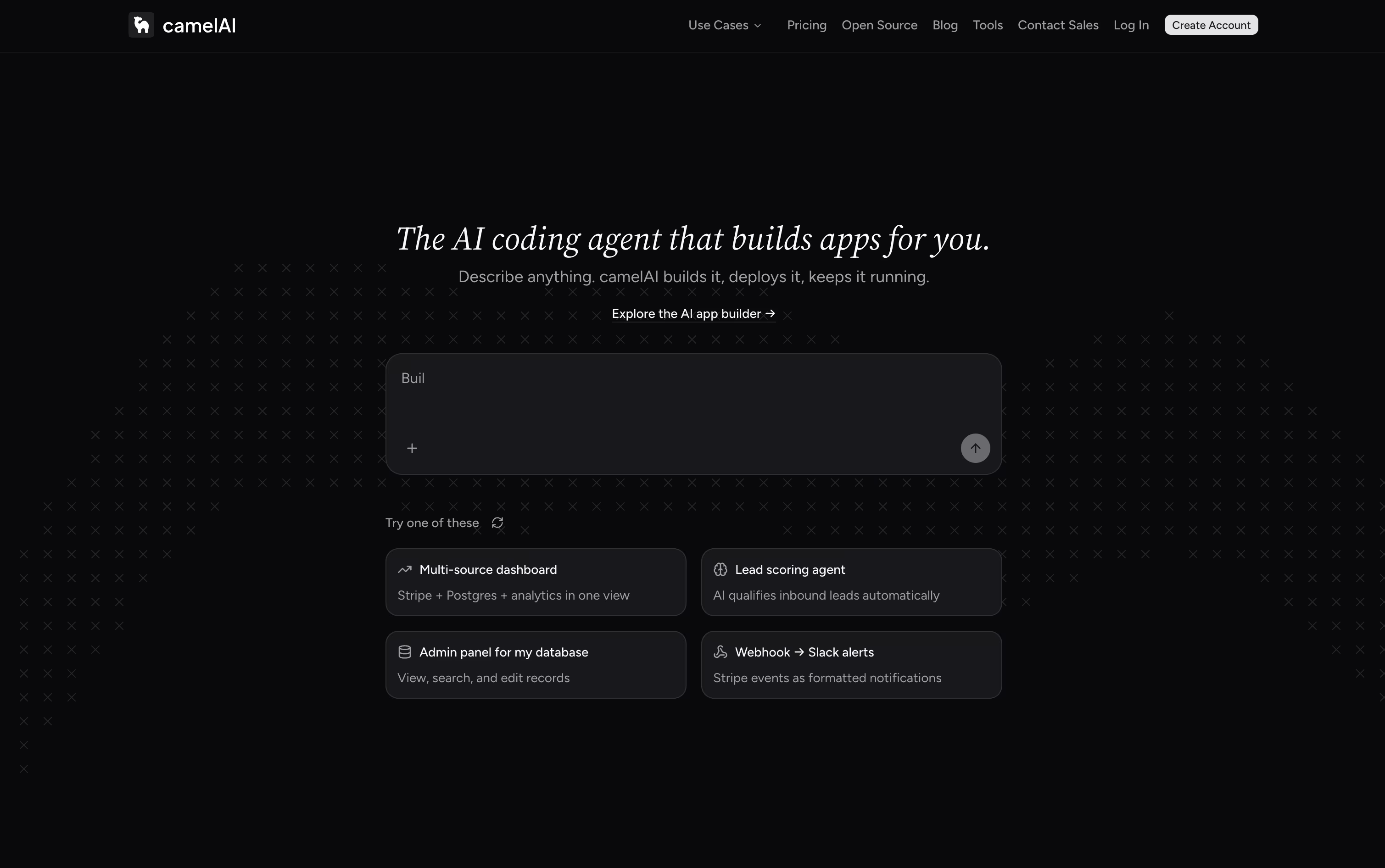
Once built, the app deploys straight to a live URL with SSL and a custom domain handled for you, so there is no separate hosting step. The workspace remembers your files and past conversations, so the agent keeps full context each time you return, and you can also reach it through email or Slack.
It connects to more than 50 tools out of the box, including Postgres, Snowflake, Stripe, Salesforce, and GitHub, and can run scheduled tasks like sending a weekly report to Slack or syncing a database automatically.
The Free plan costs $0 a month and covers 1 workspace, 3 deployed apps, and 5 GB storage using your own API key. The Starter plan is $10 a month with $10 in monthly credits, and the Pro plan is $40 a month with unlimited apps and domains.
Teams can use the Team plan at $50 per seat a month for shared workspaces and role based access, while Enterprise pricing is custom and adds SSO, dedicated support, and compliance certifications like HIPAA and SOC 2.
Paid plans include a 7 day free trial, and camelAI is also becoming open source, so teams can self host it and use any AI model of their choice.
Replit is a platform that turns your ideas into working software just by describing them in plain language. Instead of writing code line by line, you tell the AI Agent what you want to build, and it plans the project, writes the code, sets up the database, tests everything, and gets it ready to publish.
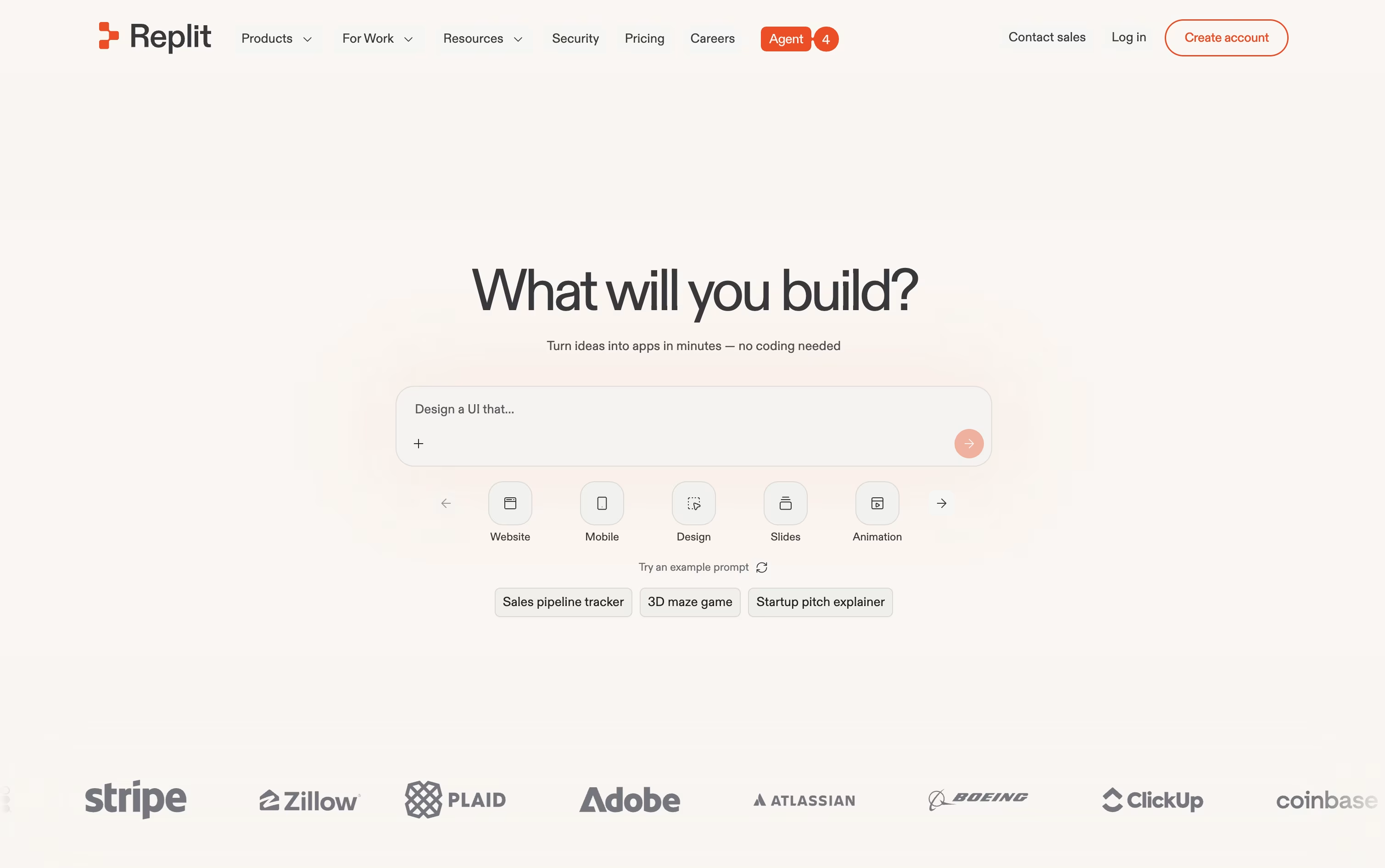
You can build many kinds of things in one project, including web apps, mobile apps, websites, slide decks, videos, and spreadsheets. Tools like the Infinite Canvas let you design visually, while Parallel Agents let several AI agents work on different parts of your project at once.
The Starter plan is free and lets you try the platform with daily Agent credits, a built-in database, and one published project.
The Core plan costs $20 a month, or $18 a month billed yearly, and adds more credits, up to 5 collaborators, and 2 parallel agents.
The Pro plan costs $100 a month, or $90 a month billed yearly, and unlocks the most powerful AI models, up to 10 parallel agents, and 28 day database rollbacks for professional teams.
For larger organizations, Replit Enterprise offers custom pricing with single sign-on, advanced privacy controls, and dedicated support.

Floot is a no-code platform built for people who want to launch real apps without writing code. You describe what you need in plain language, and Floot builds the frontend, backend, database, and login system together as one working app.
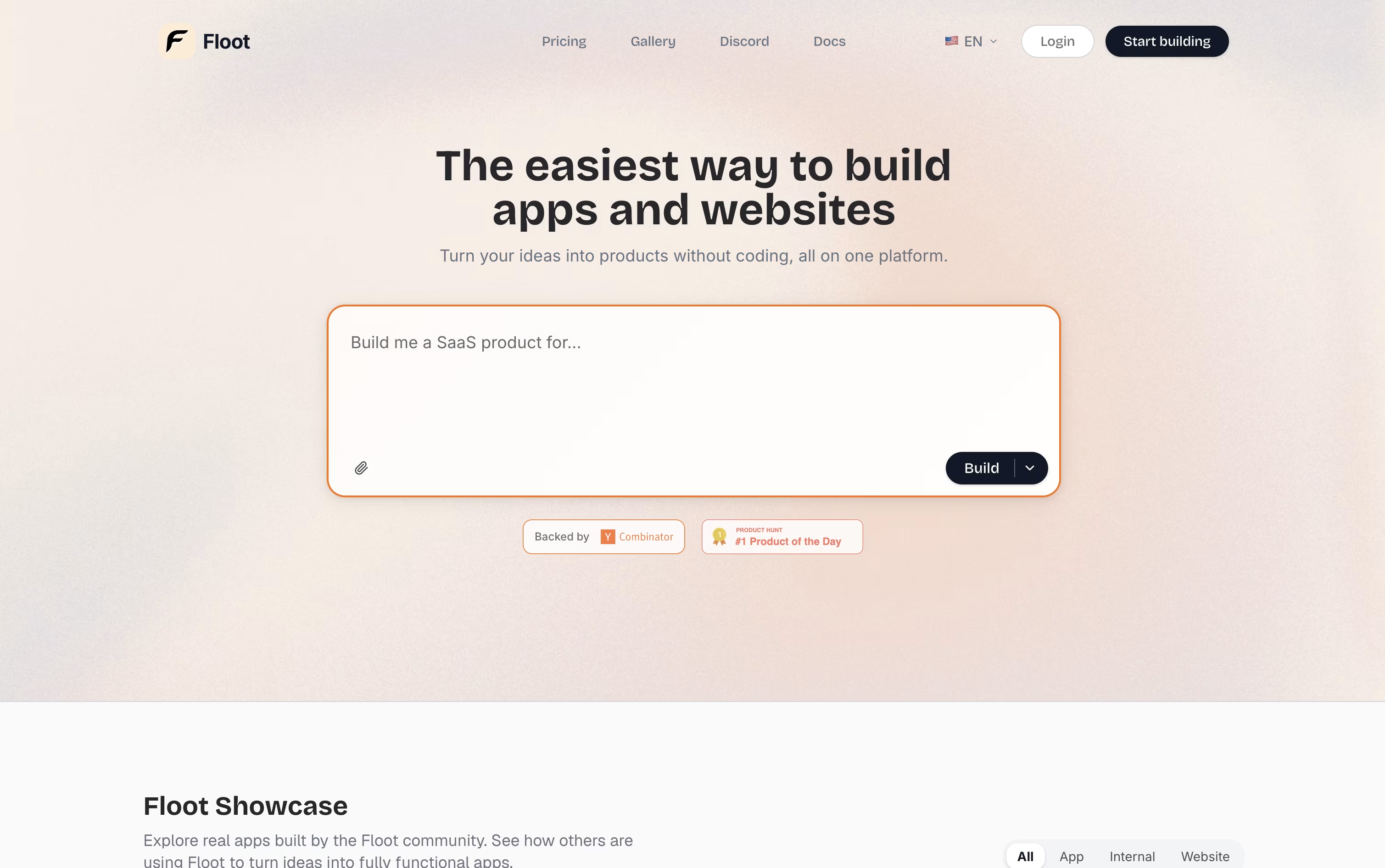
It was started in 2025 by former engineers from Retool and AWS, and it is designed from the ground up to work well with AI rather than adding AI on top of older tools.
Floot handles hosting for you, along with SEO tools, realtime updates, background jobs, and push notifications, so your app is ready to handle real users and traffic, not just a demo.
The Free plan costs $0 a month and comes with 3,000 AI credits and a small hosting allowance, which is enough to try things out.
The Pro plan starts at $25 a month for 25,000 credits, or $100 a month for 100,000 credits, and adds custom domains, SEO tools, priority support, and mobile app conversion.
Larger teams can move to the Enterprise plan, which offers custom pricing starting at a $20,000 yearly commitment, along with 1-on-1 consultations and dedicated support.
Google AI Studio is a free playground where you can chat with Google's Gemini models, test prompts, and compare answers before writing any code. Everything runs in the browser, so there is nothing to install to get started.
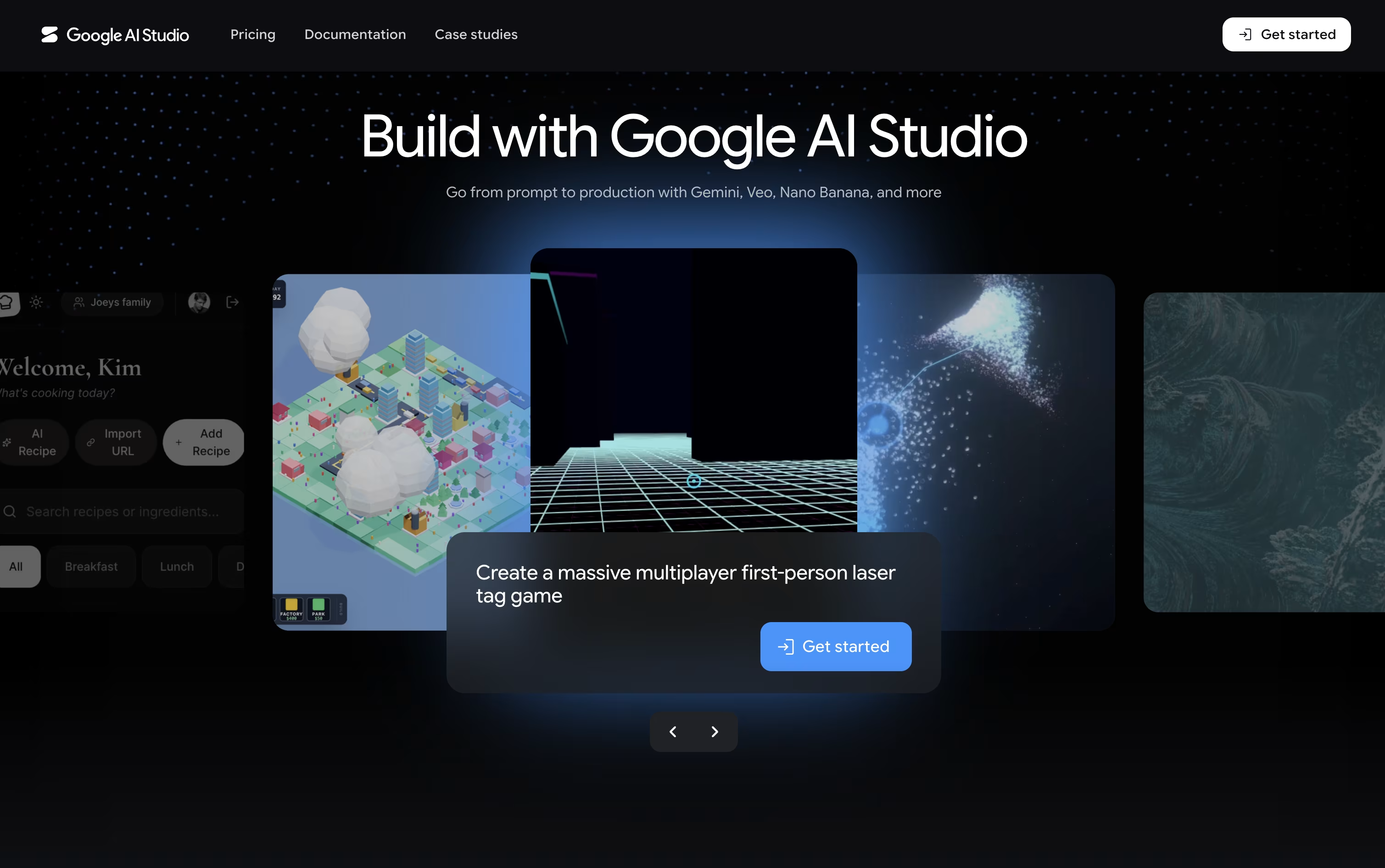
Beyond simple chat, it can generate images, video, audio, and music, and it supports real time voice and video conversations through Gemini Live. Files, documents, and even full codebases can be uploaded for the AI to read and understand.
Its Build mode turns a plain language description into a working React web app or native Android app, complete with a live preview you can edit by pointing and typing.
The Free plan gives limited model access with no cost, while the Paid plan charges per token, for example Gemini 3.6 Flash costs $1.50 per million input tokens and $7.50 per million output tokens, and unlocks higher rate limits and batch pricing.
An Enterprise plan adds dedicated support, advanced security, and volume discounts for larger teams, with custom pricing based on needs.

Durable turns a short business description into a full website in about thirty seconds, complete with pages, text, and images that match your industry. From there, everything a small business needs lives in one dashboard instead of scattered across separate apps.
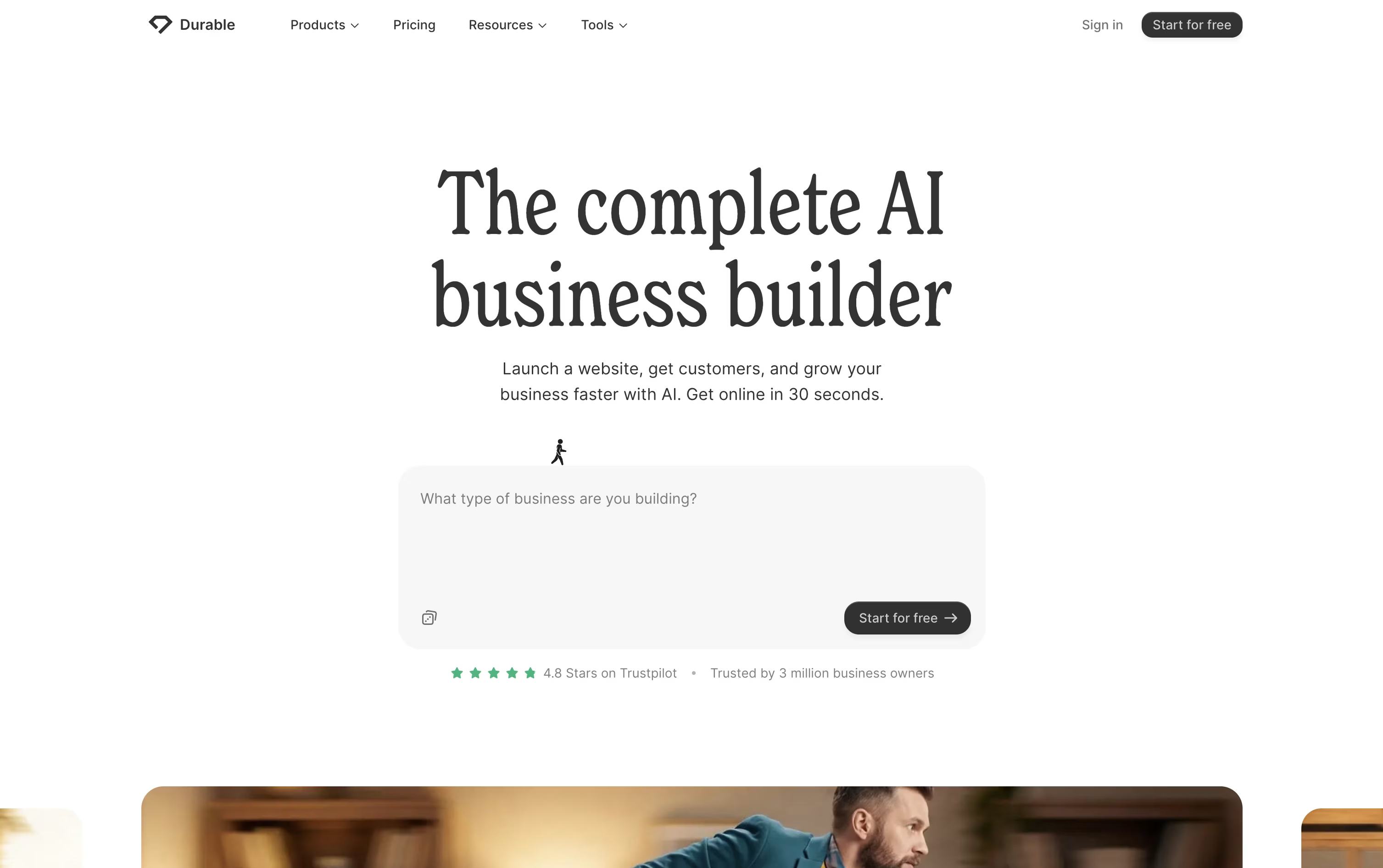
The built-in CRM keeps track of every lead that comes in through your site, while online booking lets customers schedule time with you and syncs straight to your calendar. An always-on AI assistant can write marketing copy, reply to leads, and suggest next steps for your business at any time.
Pricing starts with a free plan that includes a basic AI website, simple CRM, and a small number of AI images and chat messages each month.
The Launch plan costs $25 a month, or $22 a month when billed yearly, and adds a professional website, SEO and GEO tools to help you show up in Google and AI search, unlimited bookings, and higher AI limits.
The Grow plan costs $49 a month, or $41 a month yearly, and adds unlimited team members, expert onboarding, and even higher AI usage for growing businesses.

Capacity lets you build real apps by simply describing what you want, without writing any code yourself. An AI Co-Founder asks about your goals, your users, and the look you want, then puts together a working app with a frontend, backend, database, and login all connected.
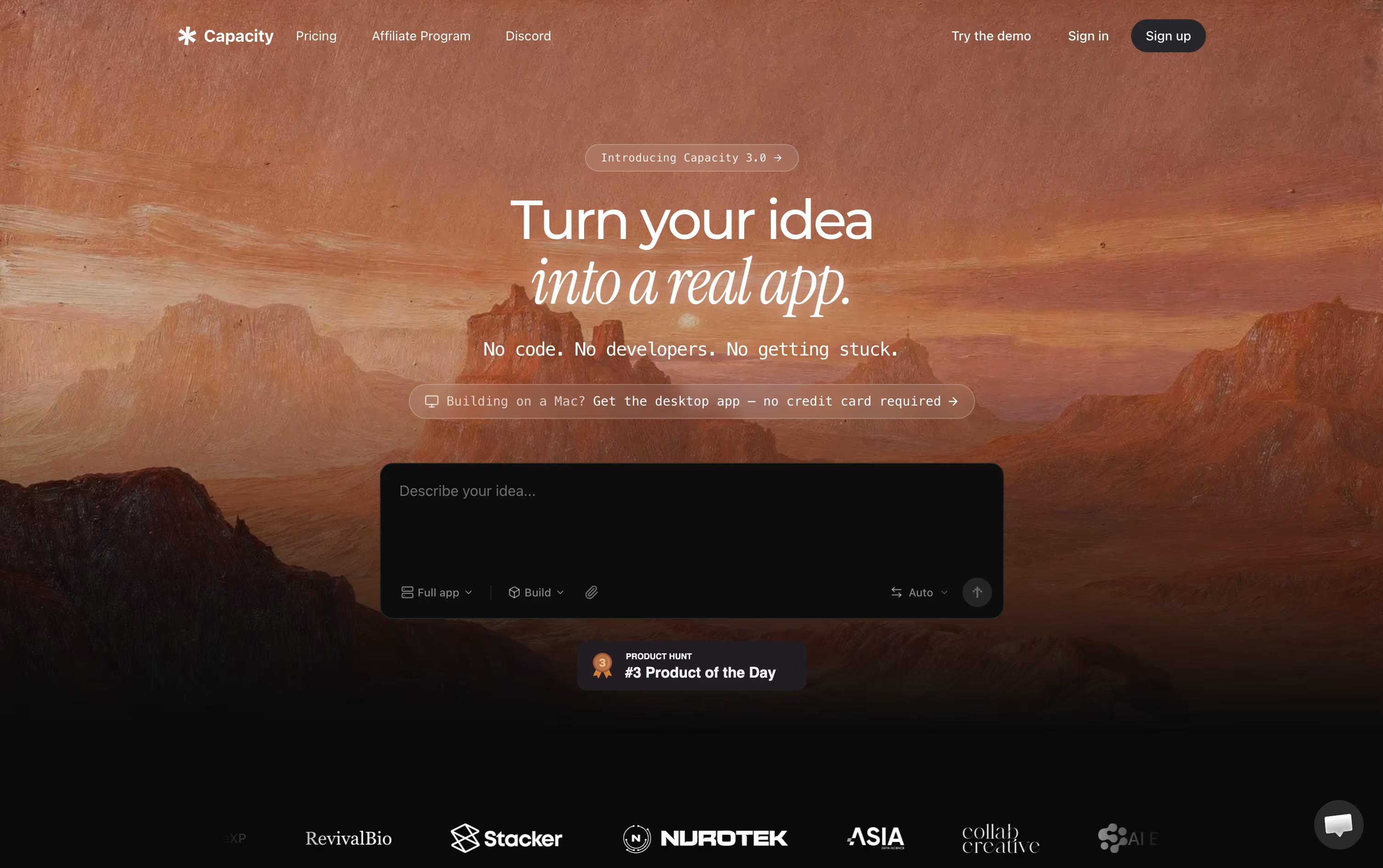
You can move fast with Vibe Mode, or plan things out first with Spec Mode before the app gets built.
The apps you build are not just demos. They support real logins, saved data, payments, and background tasks, and you can also generate matching iOS and Android apps that share the same backend.
Pricing starts at the Starter plan for $25 a month with 100 credits, going up to Growth at $69, Professional at $129, and Business at $299 a month with 1,000 credits.
If you would rather not subscribe, one-time credit packs start at $9 for 10 credits.
Whatever plan you choose, you always own your code and can export it whenever you like.

Glide is a no-code and AI-powered platform that turns spreadsheets, databases, or simple prompts into full working business apps. Instead of writing code, you connect your data and let Glide build the screens, layout, and workflows around it.
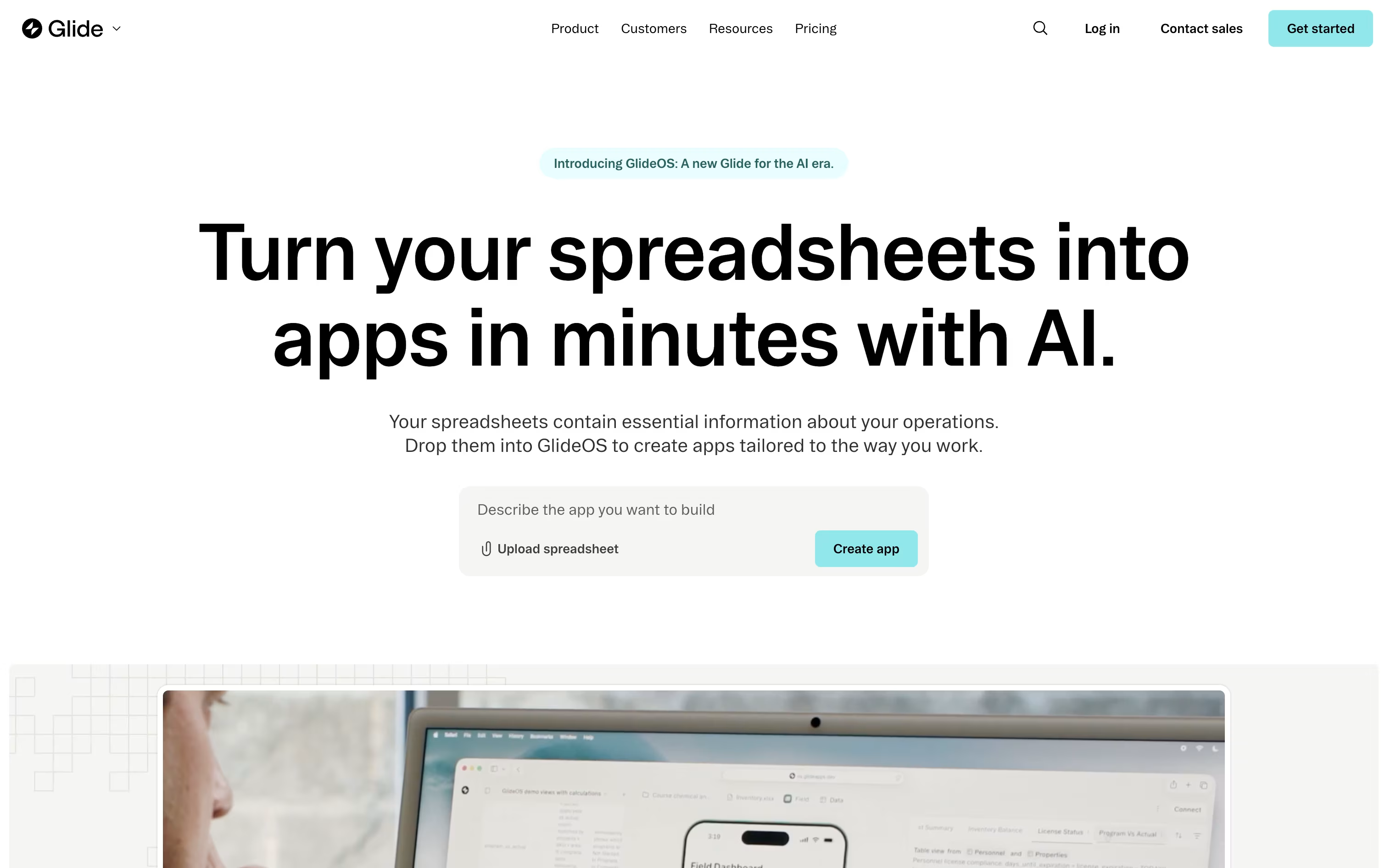
The AI-first version, called GlideOS, can read an uploaded spreadsheet along with its formulas and formatting, ask a few clarifying questions, and generate a working app in around 5 minutes. You can then keep improving it just by chatting with it.
Getting started costs nothing. The Free plan lets you build unlimited draft apps with up to 25,000 rows of data. Individuals can move up to Explorer at $19 a month or Maker at $49 a month, billed yearly, to publish live apps with more users and custom branding.
For companies, the Business plan is $199 a month billed yearly, includes a 14 day free trial, unlimited apps, 30 team users, plus workflows, integrations, and API access.
Larger organizations can choose Enterprise for custom pricing, adding single sign-on, enterprise data connectors, dedicated account managers, and stronger security controls.
Because it connects to Google Sheets, Airtable, and SQL databases, Glide works well for inventory systems, sales tools, dashboards, and internal portals without hiring developers.
Adalo is a no-code app builder that turns a plain description or a drag-and-drop design into a working app for phones and the web. Its AI assistant, called Ada, can set up screens, a database, and navigation just from a short prompt, and it can also make changes when you describe new features.
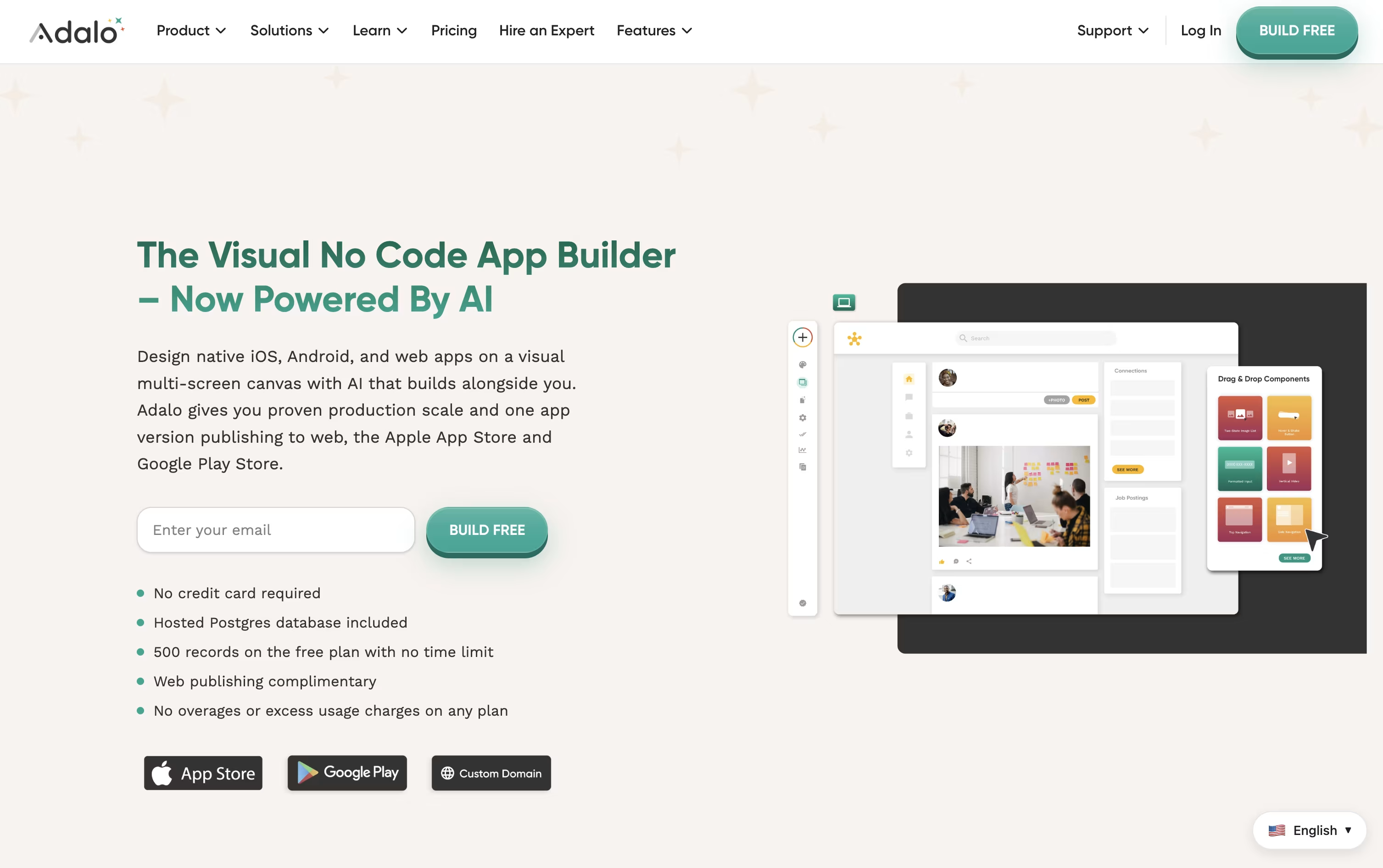
Everything sits on a built-in database, so you can add users, lists, forms, and logic without touching any code. You can also connect outside data from Google Sheets, Airtable, or your own APIs.
The free plan is a good place to learn and test ideas, with unlimited screens and test apps, though it does not publish to app stores.
Paid plans start at $45 a month and add web publishing, app store publishing, custom domains, and more editors as you move up. The Professional plan adds custom integrations and push notifications, while the Team plan unlocks API access and priority support.
Bigger organizations can use Adalo Blue, a managed service with dedicated infrastructure and custom builds.

Shipper.now is an AI tool that builds full working apps from a simple chat prompt. You describe what you want, such as a website, mobile app, browser extension, or bot, and the AI plans the database, designs the interface, writes the code, and fixes its own errors along the way.
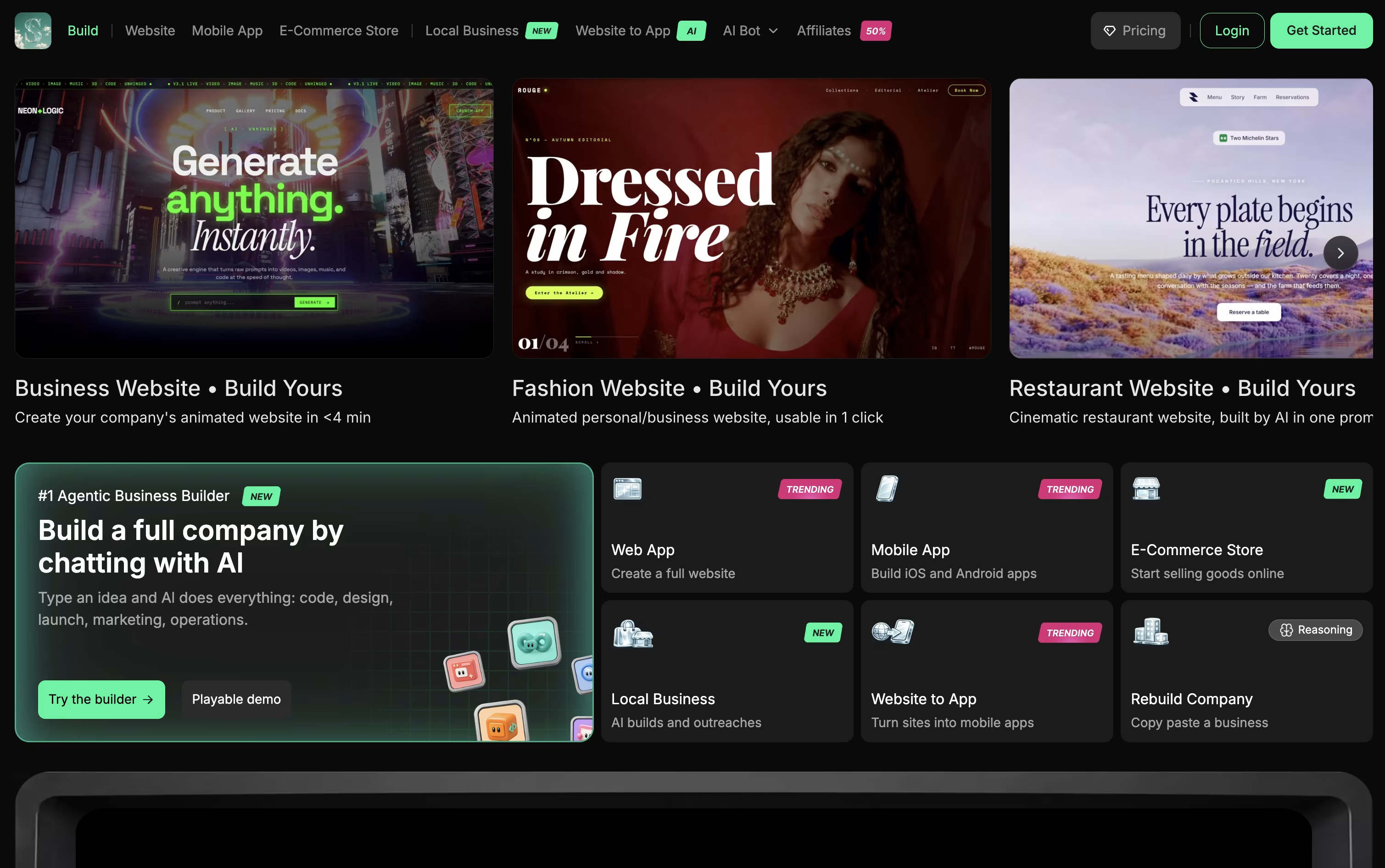
It calls itself more than a code generator, positioning as an AI co-founder. Alongside the builder, Shipper Advisor acts like a separate consultant, offering product, growth, and marketing advice based on your project.
A free plan lets you start building right away. The Pro plan begins at $25 a month for 100 credits and scales up to 20,000 credits for $5,000 a month, unlocking connectors, advanced design tools, unlimited teammates, and the AI Advisor.
For bigger needs, Shipper Max starts at $200 a month for 500 credits, rising to $400 a month for 1,000 credits. It adds priority support, AI Employees, and access to premium models like Claude Opus, Gemini, and DeepSeek.
Once your app is built, Shipper hosts it for you, database, login, and all, and lets you connect a custom domain to go live.

Hostinger Horizons lets you build a website, web app, or online store just by describing what you want in plain words. You can type your idea, speak it out loud, or upload an image, and the tool builds a working project for you right away.
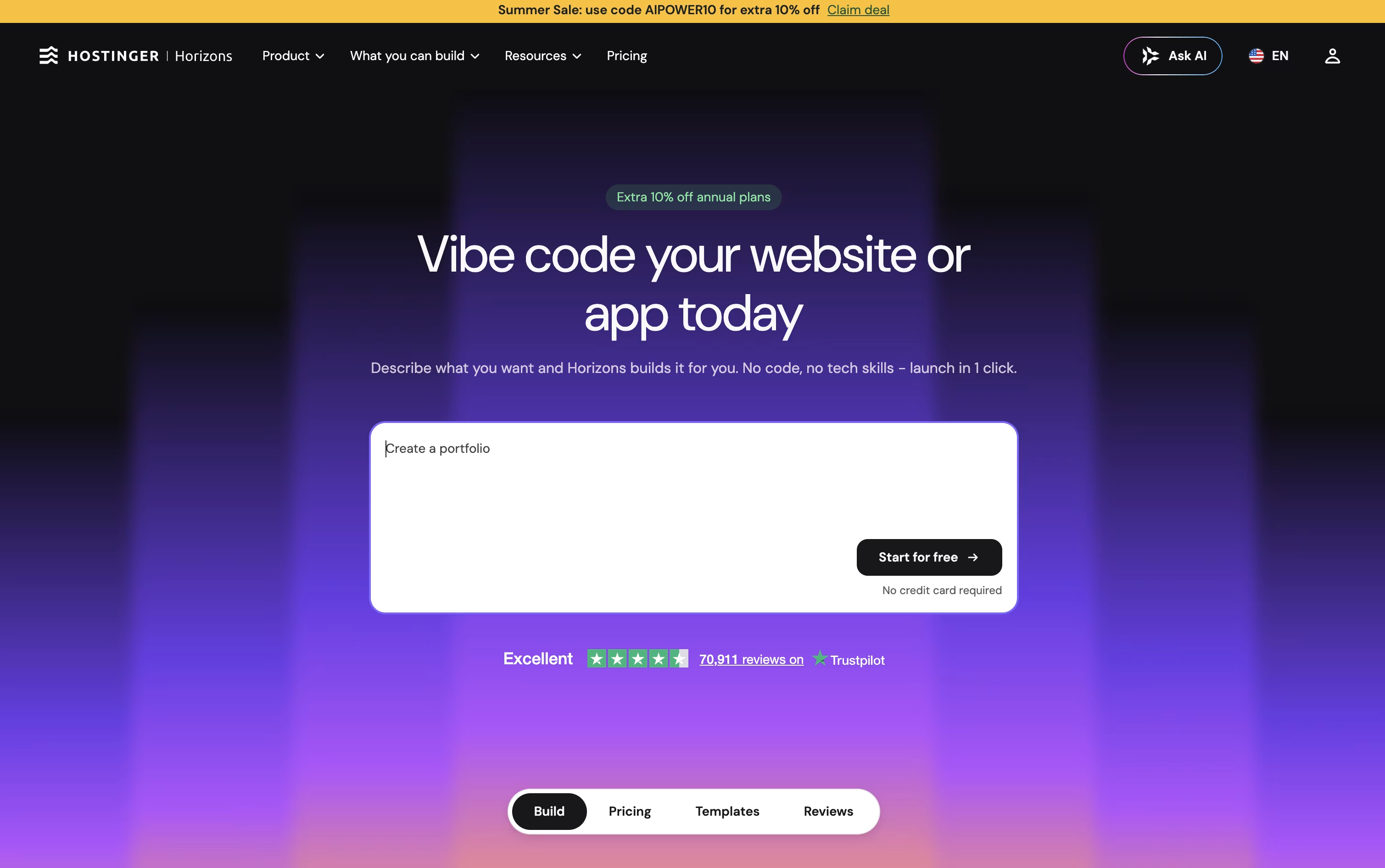
Once your project is created, you can keep chatting with it to add new pages, change the design, or add features like a login system, a chatbot, or a product catalog. There is also a code editor for anyone who wants more control.
The free plan gives you 5 AI credits with no credit card needed. Paid plans start at $6.99 a month for the Explorer plan with 30 AI credits, going up to $13.99 a month for the Starter plan with 70 credits, and $39.99 a month for the Hobbyist plan with 200 credits.
Paid plans also add useful extras like a free domain and hosting for a year, priority support, analytics, and the ability to sell products or subscriptions online.
Since the tool builds real working code behind the scenes, you can launch your project with one click and it goes live using Hostinger's own hosting, domains, and email systems.

Softgen lets you build a full working web app just by describing it in plain English. You explain what you want, like a dashboard with logins and payments, and the AI plans the project before writing the frontend and backend code for you.
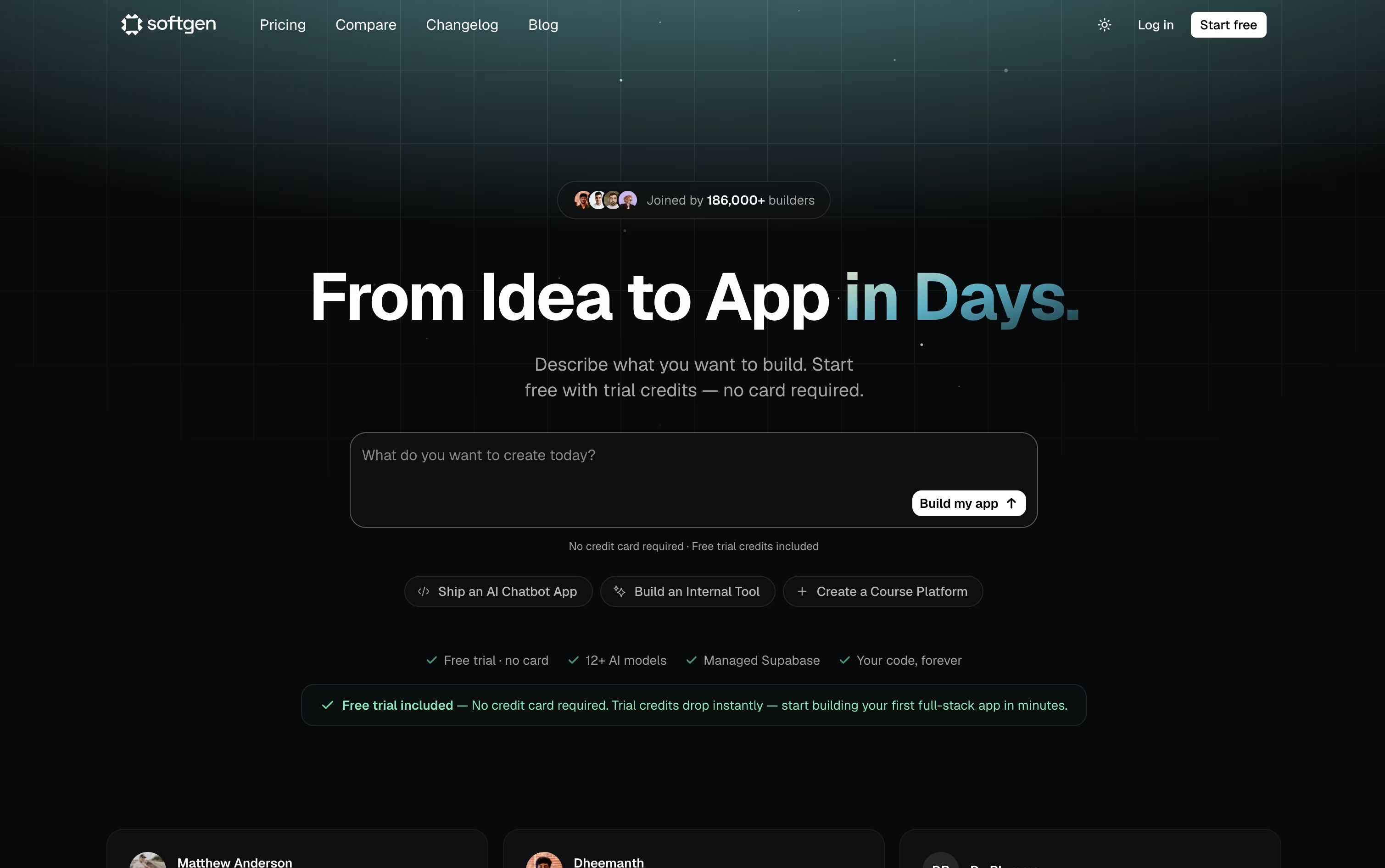
As you chat, it sets up the database, user accounts, and file storage, and gives you a live preview so you can see the app take shape right away. Asking for changes or new features is as simple as sending another message.
You get access to 12 or more AI models, including Claude 4.5, GPT 5.4, and Gemini 3.1 Pro, plus a managed Supabase database, custom domains, and a built-in project board. Every project is a real GitHub repository you fully own, and you deploy it to your own Vercel account with one click.
Pricing starts at 25 dollars a month for the Starter plan, with 500 credits and up to 10 projects. The Pro plan costs 49 dollars a month, with 1,500 credits, unlimited projects, team collaboration, and priority support.
Because you keep full ownership of the code and hosting, your app keeps running even if you stop your subscription later.