Best 9 Tools for Voice Assistant Deployment in 2026
Last Updated: August 24, 2026
Getting a voice assistant live and working reliably requires more than just building the underlying model. Voice Assistant Deployment tools help launch and manage voice assistants in a production environment.
Product and engineering teams use voice deployment tools to bring voice assistants into real-world use.
 VideoSDK
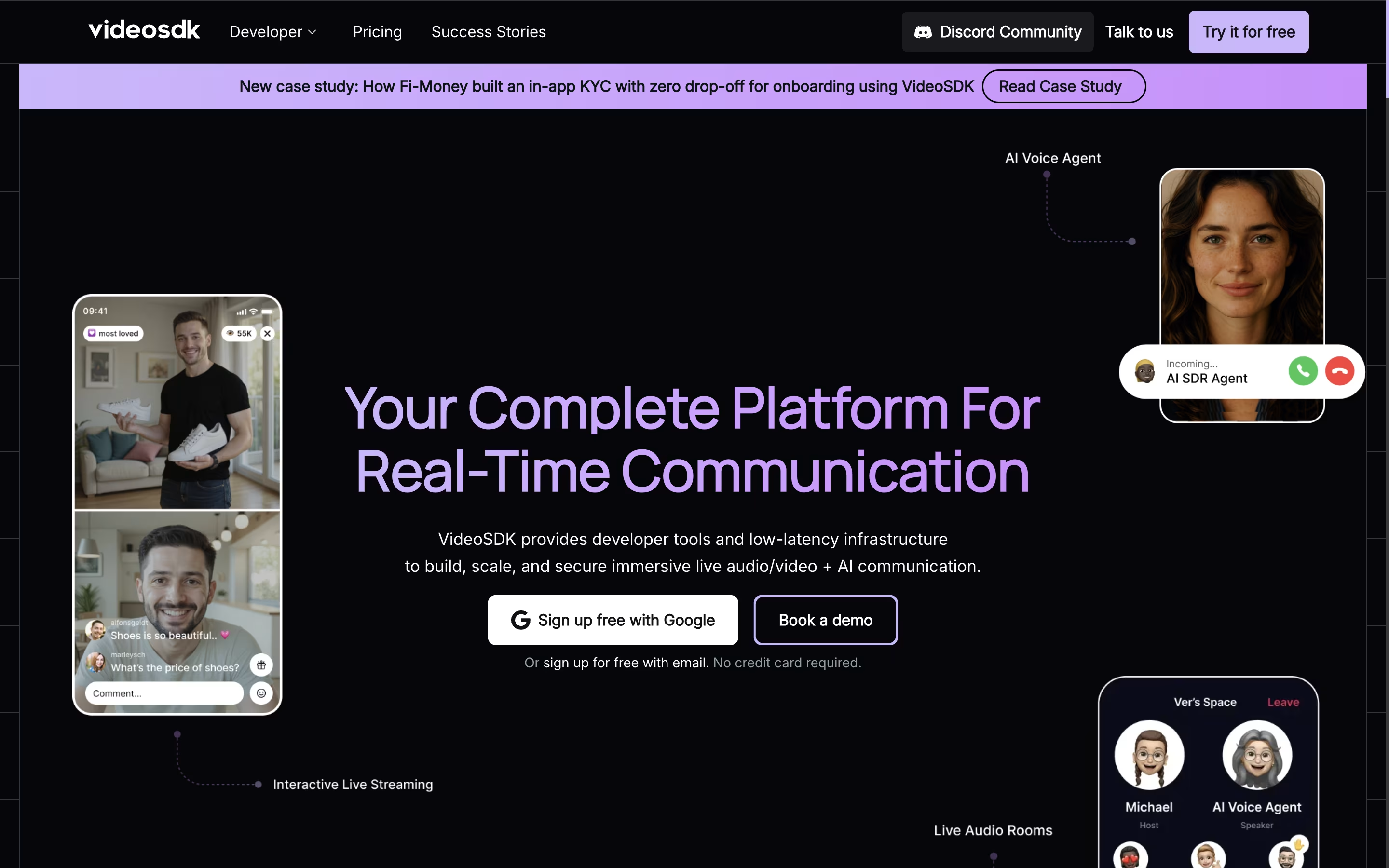 VideoSDKReal-Time Video & Voice API Platform for Developers,
  LiveKit
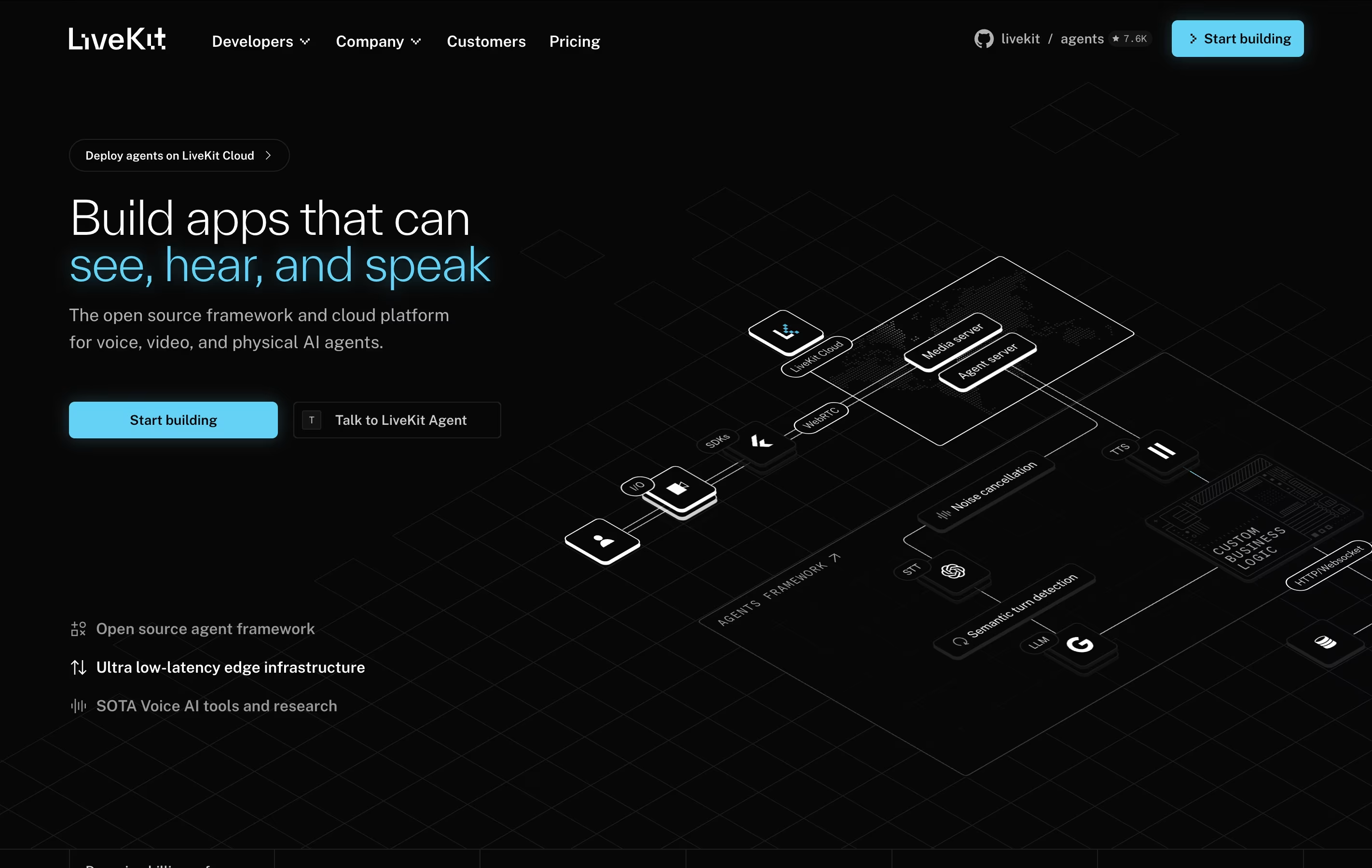 LiveKitOpen-Source Real-Time Video, Audio & AI Platform, and
  Retell AI
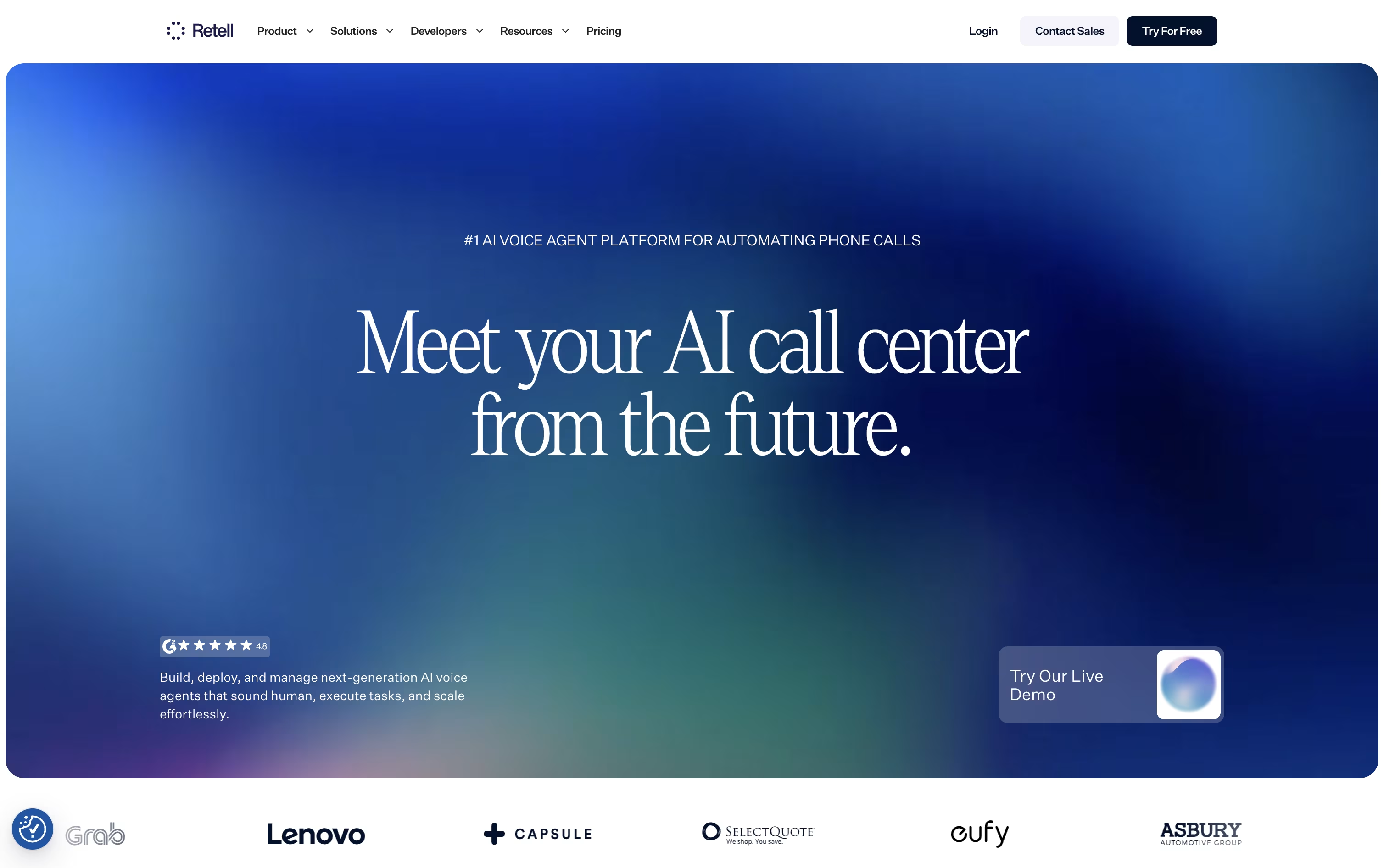 Retell AIHumanlike Voice Agents for Phone Calls are the best for Voice Assistant Deployment. So, let’s take a closer look at all 9 tools.

VideoSDK is a real-time communication platform that provides APIs and software tools for developers to build video and voice applications. Instead of creating video calling systems from scratch, developers can use VideoSDK's ready-made tools to add features like video meetings, live streaming, screen sharing, and AI-powered voice agents to their apps.
The platform works across all devices and operating systems, including web browsers, mobile apps, and desktop applications. It uses advanced technology to ensure smooth video quality even with poor internet connections and provides global infrastructure with 150ms worldwide latency.
VideoSDK offers both free and paid plans, starting with 10,000 free minutes every month. This makes it perfect for startups, small businesses, and large companies that need reliable video communication features without building everything from scratch.
LiveKit is a complete real-time communication platform that uses WebRTC technology to enable low-latency audio, video, and data exchange between users and AI agents. Unlike traditional communication tools, LiveKit is built specifically for developers who want to create custom real-time experiences.
The platform consists of several parts: the open-source LiveKit server that handles media routing, client SDKs for all major platforms, and LiveKit Cloud for managed hosting. It uses a Selective Forwarding Unit (SFU) architecture, which means it can efficiently handle many participants without heavy server processing.
LiveKit is especially strong for AI applications. It can connect voice agents to phone systems, enable real-time transcription, and support multimodal AI that can see and hear simultaneously. Whether you want to build a simple video chat or a complex AI assistant, LiveKit provides the foundation you need.
Retell AI helps you build AI voice agents that actually hold a conversation, instead of forcing callers through a rigid phone menu.
Agents can be built with a node based flow builder for structured calls, or with prompts for more flexible conversations, and they can pull from a knowledge base or your CRM while talking.
Mid call, an agent can book an appointment, send an SMS, detect voicemail, or hand the caller to a human with full context passed along.
On the pricing side, everything runs pay as you go. Voice agents typically cost between $0.07 and $0.31 per minute based on the LLM, voice, and telephony chosen, and chat agents start around $0.002 per message. Signing up is free and comes with $10 in credits plus 20 free concurrent calls.
Bigger organizations can choose the Enterprise plan instead, which is custom priced and includes a dedicated server, custom contracts, single sign on, and full time dedicated support.
Security wise, it is HIPAA and GDPR ready with SOC 2 certification, and it includes simulation testing and live monitoring so you can see exactly how calls are going.

NLPearl helps you build AI agents that actually talk with customers on the phone or over text, rather than reading from a script or bouncing calls around a menu.
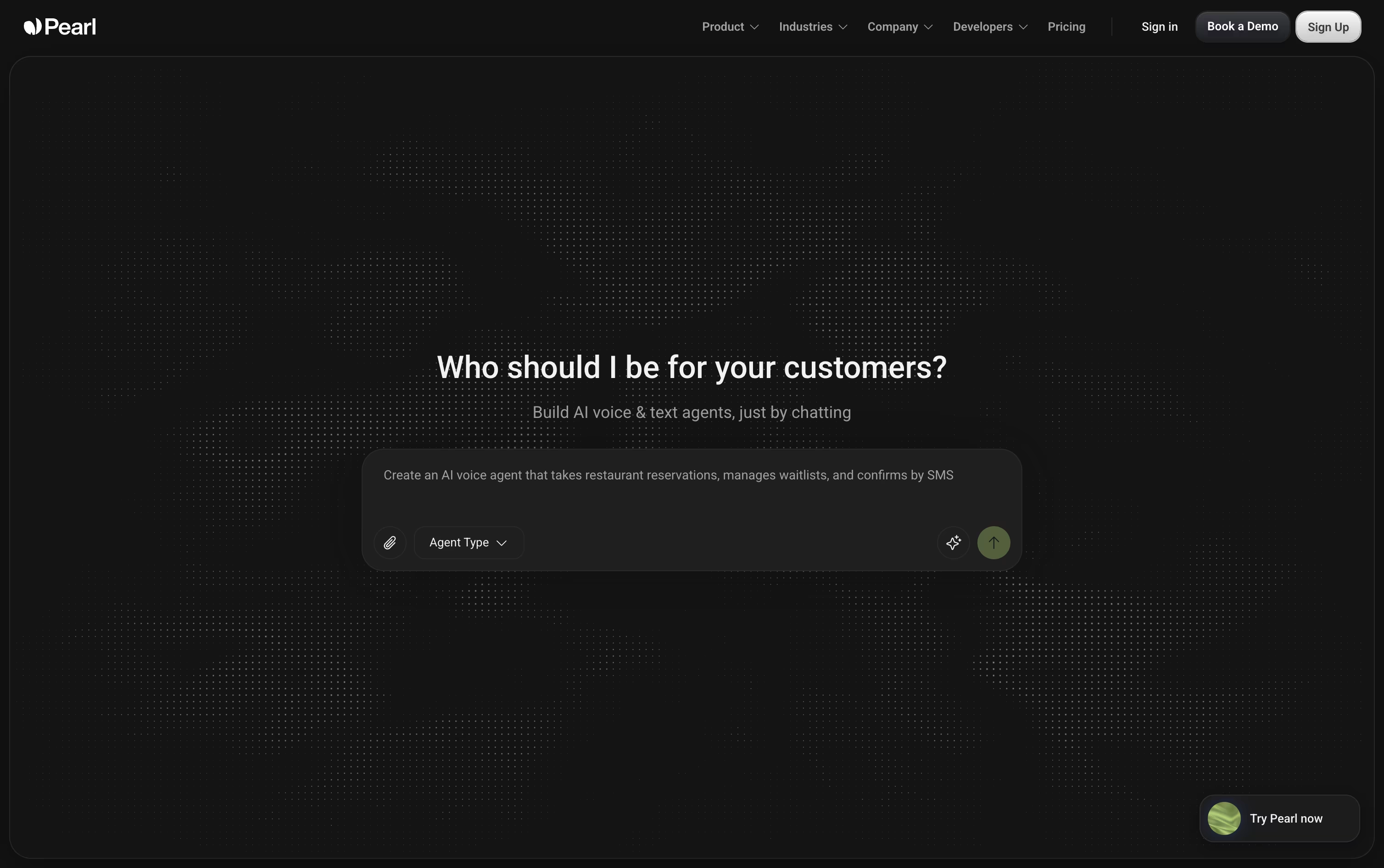
Using PearlVibe, you type out what the agent should do and it puts together the conversation rules, knowledge, and actions like booking a slot or sending a follow up message.
The Starter plan costs $50 a month for 2,500 credits and 1 agent, while Companion at $195 a month steps up to 15,000 credits and 5 agents, and Manager at $779 a month gives 65,000 credits and 10 agents.
Per minute voice pricing and per message text pricing both drop as you move up the tiers, and Enterprise plans are custom priced with dedicated servers and unlimited extra users.
It also connects with Twilio, your own VoIP setup, and more than 100 other business tools, all backed by GDPR and SOC 2 security.

Synthflow lets businesses build AI voice agents without writing code, handling phone calls as well as chat, SMS, and WhatsApp messages from one platform.
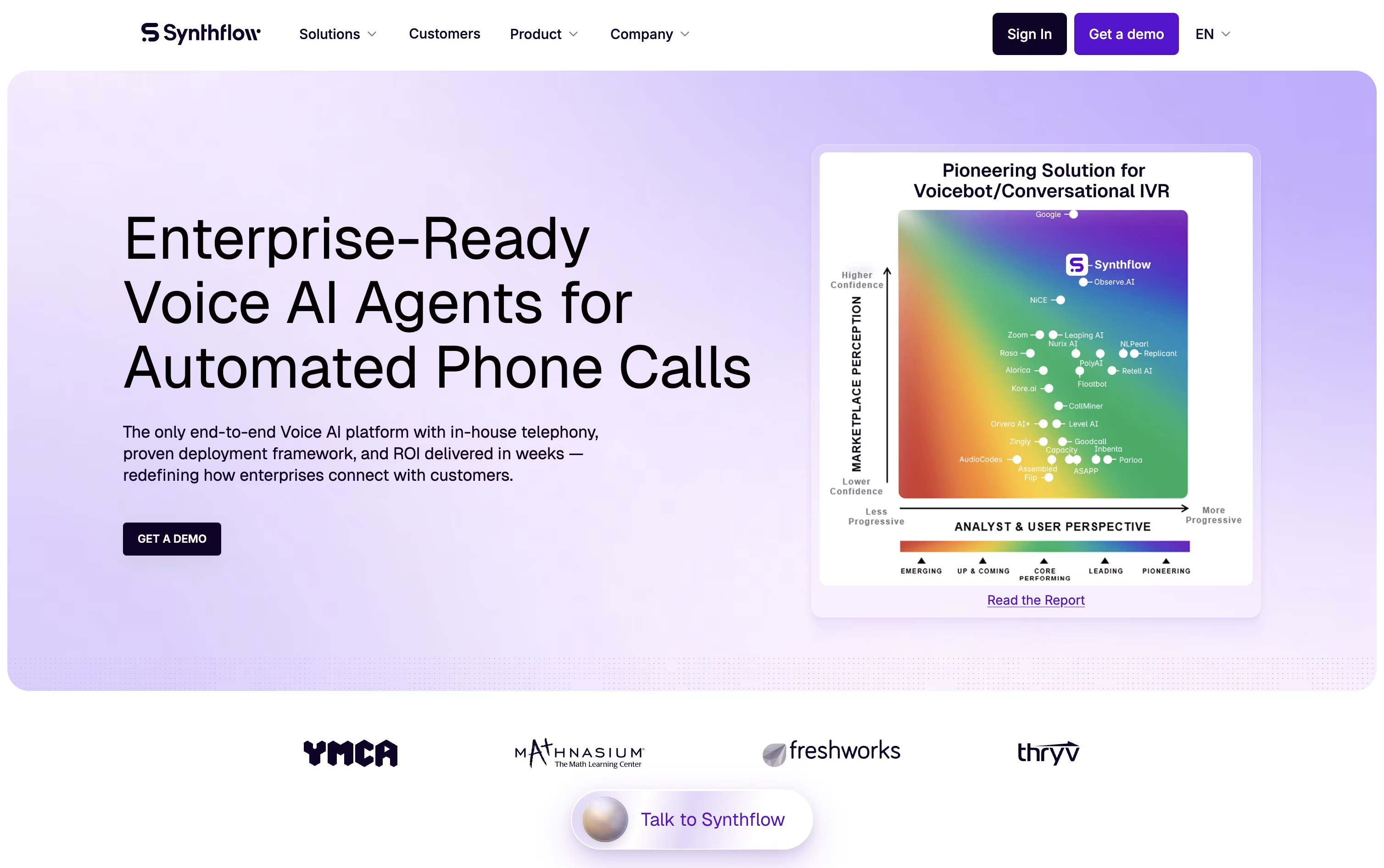
Instead of leaning only on outside phone providers, it operates its own telephony network, which helps keep response times low and calls reliable, with backup systems if anything fails.
Before an agent goes live, it can be run through many simulated calls to catch problems early, and once live, teams get real time monitoring, call logs, and analytics to track how it performs.
Agents can also plug into over 200 outside tools, such as CRMs, calendars, and contact center platforms, letting them schedule appointments, update customer records, and pass difficult calls to a person with the full conversation history attached.
On pricing, Synthflow publishes details only for its Enterprise tier, starting from $30,000 a year, roughly $2,500 monthly, though the real cost is shaped by things like call volume, telephony needs, integrations, and security requirements.
This Enterprise tier also bundles in SLA terms, dedicated support, setup help, staff training, and continued optimization, aimed at organizations wanting a fully supported rollout.

Building a voice AI agent from scratch usually means wiring together speech recognition, a language model, and speech synthesis yourself. Vapi handles that real-time plumbing so developers can spend their time on prompts, tools, and the actual conversation flow.
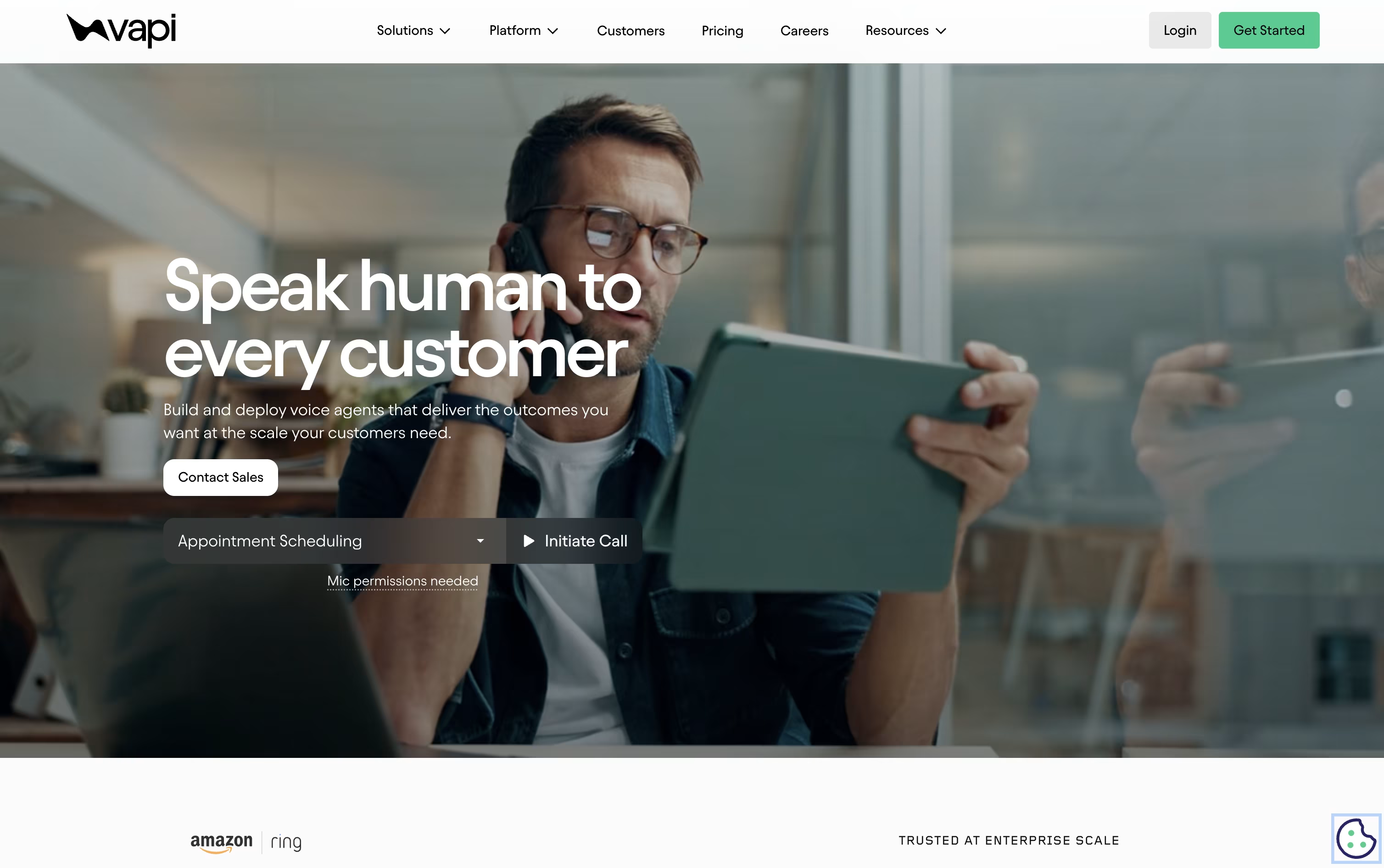
Each agent is made up of a speech to text step, a language model, and a text to speech step, all of which can be swapped or brought in with your own API keys. Agents can place or receive phone calls, trigger outside tools and APIs, and pass conversations between specialized assistants when a task gets more complex.
Well known teams such as Amazon Ring and Intuit rely on Vapi for support, sales, and scheduling calls, backed by built-in monitoring, recordings, and analytics for ongoing improvement.
The Build plan is usage based, starting at $0.05 per minute for voice calls and $0.0005 per message for chat, and it includes 60+ minutes and 10 concurrent calls. Model provider costs are charged at cost, and fall to $0 when you use your own API key.
Bigger organizations can choose Scale, an annual contract with a fixed platform fee, committed volume, and enterprise extras like SSO, SOC 2, and a dedicated support team, with pricing shared on request.

Bland AI lets teams create phone agents that carry on real, back and forth conversations rather than reading from a fixed script. It works for both calls coming in and calls going out.
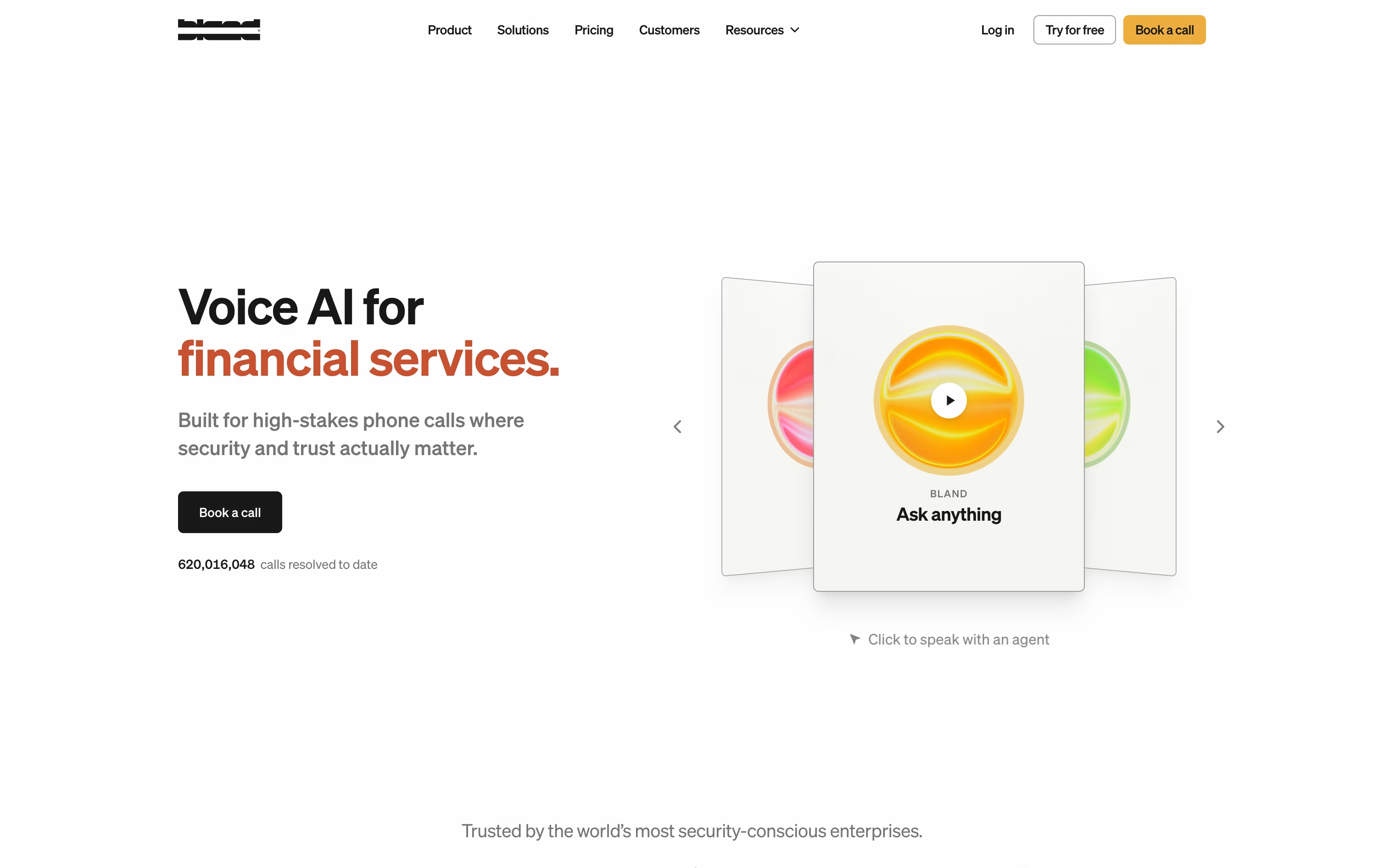
It is mostly used by businesses that need to follow rules closely, like healthcare, insurance, and financial services, where a call still needs to sound natural even while following compliance steps.
Building an agent can be done visually, through plain English instructions, or directly through the API, and agents can pull in company documents, trigger outside tools, and pass a call to a human when needed.
On pricing, the Start tier is $0.14 per minute with no monthly charge. Build moves to $0.12 per minute with a $299 monthly fee, and Scale lowers this further to $0.11 per minute with a $499 monthly fee, each unlocking higher call volumes.
Enterprise pricing is custom and brings dedicated infrastructure, on prem options, custom voices, and added security like single sign on and signed agreements for regulated data.
Because the voice and language models are built in house, calls tend to hold up well even during long or unpredictable conversations.

Cloudonix is a "Communications Platform as a Service" (CPaaS) that provides voice APIs, SIP trunking, and development tools for building voice applications. The platform is designed to add "superpowers" to AI voice agents by connecting them to phone systems, carriers, and business applications.
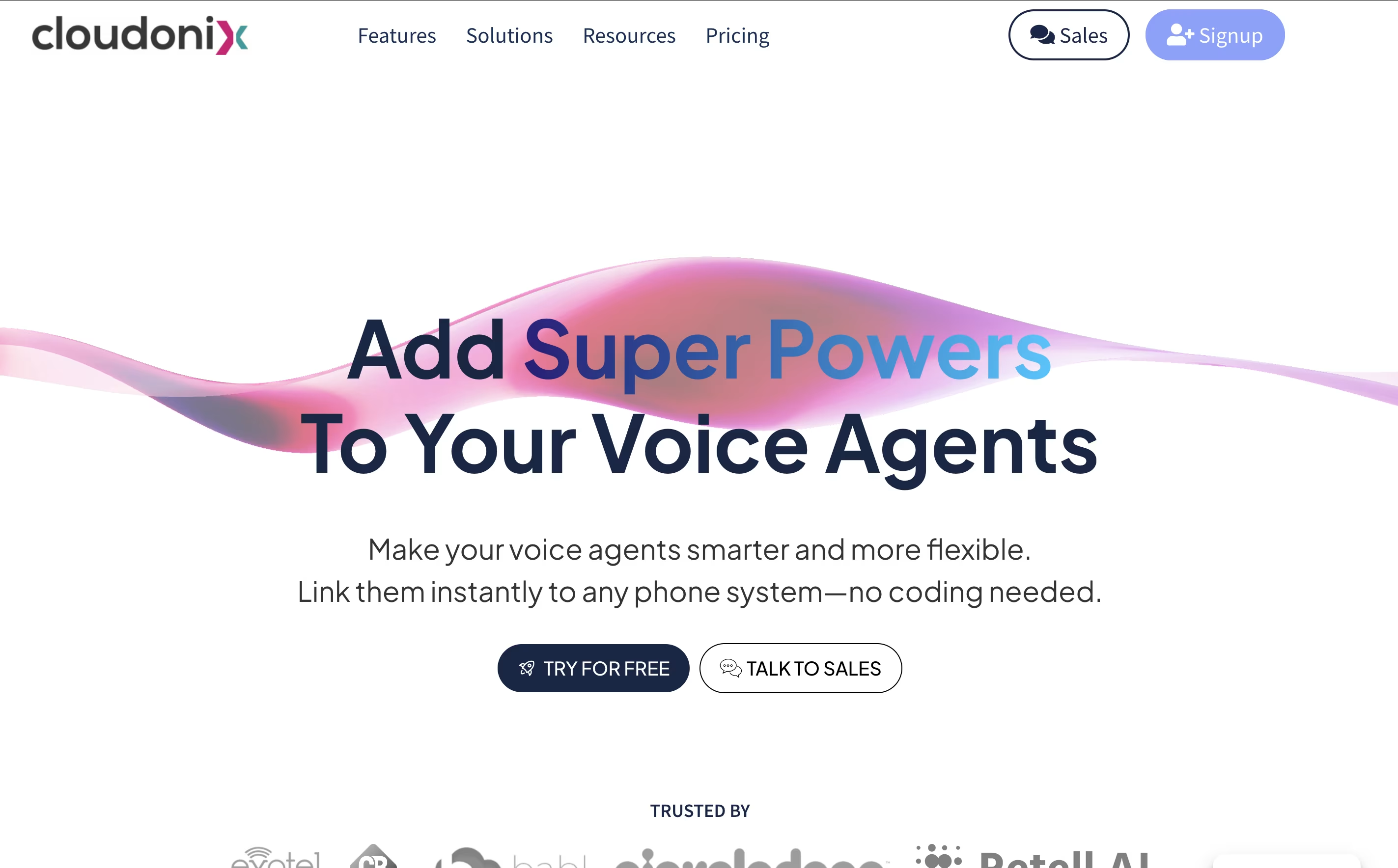
It uses a special programming language called CXML (Cloudonix XML) that makes building voice apps simple. The platform also offers no-code tools through Make.com integration, so businesses can create voice solutions without programming skills.
Cloudonix supports popular AI voice platforms like VAPI, ReTell, and 11Labs, making it easy to connect voice agents to real phone calls. It also provides mobile and web SDKs for developers who want to add voice calling features to their apps.

Voiceflow is a collaborative AI agent platform that allows teams to design, develop, and deploy conversational AI experiences without coding. Think of it as a visual builder for smart chatbots and voice assistants that can understand and respond to customer questions naturally.
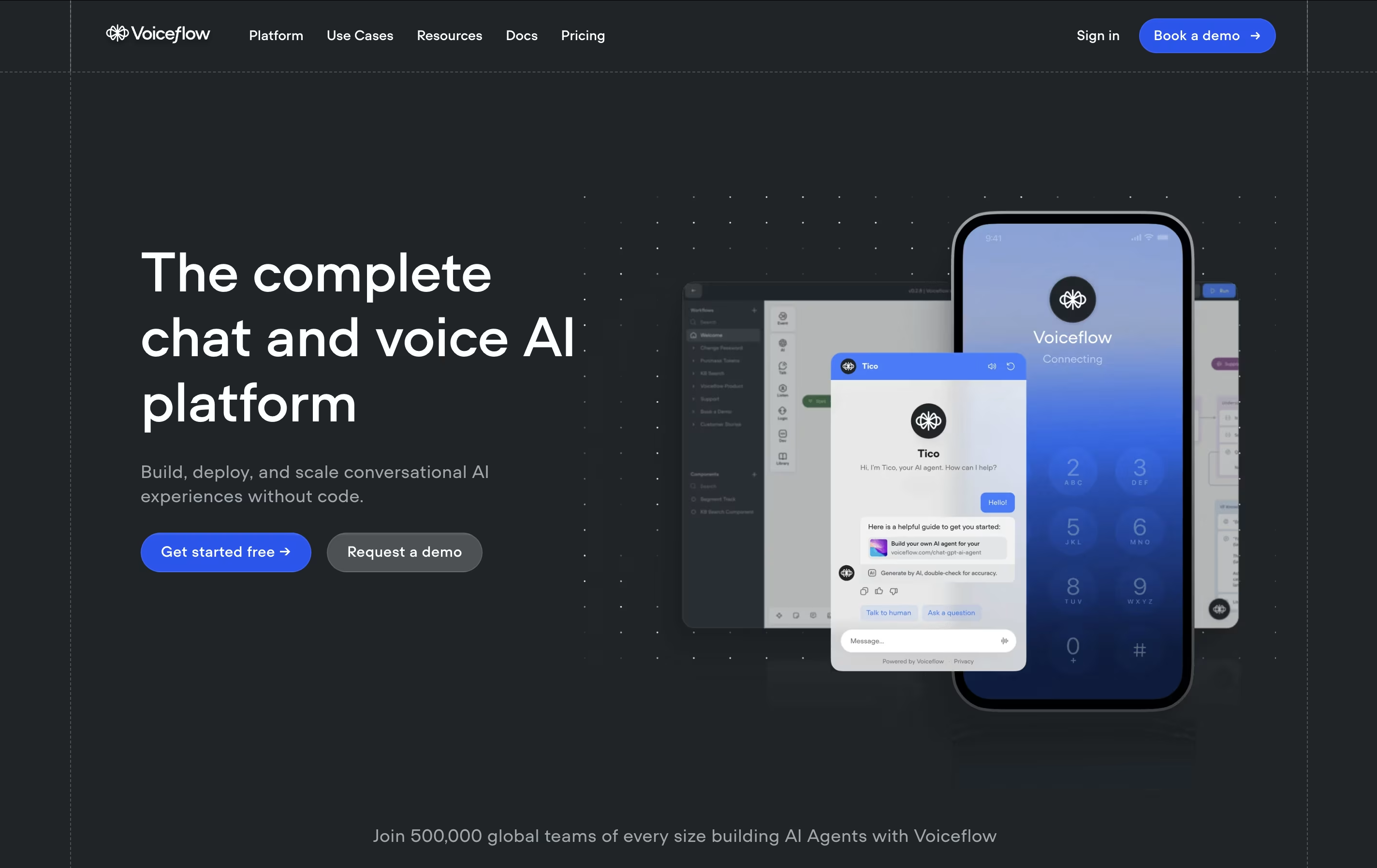
The platform uses a drag-and-drop canvas where you create conversation flows, add AI capabilities, and connect to your business systems. What makes Voiceflow special is its ability to work with multiple AI models like GPT-4, Claude, and Gemini, giving you flexibility in how your agents respond.
You can train these agents on your own content, documents, and data to provide accurate, company-specific answers. The platform supports both text-based chatbots for websites and voice agents for phone systems, making it versatile for different business needs.