Best 12+ Tools for Full-Stack Web App Generation in 2026
Last Updated: September 9, 2026
Building both the frontend and backend of a web application from scratch is a significant undertaking. Full-Stack Web App Generation tools help generate a working application across both layers at once.
Developers and founders use full-stack generation to get a functional starting point much faster than building everything manually.
 Lovable
 LovableBuild Full Apps With Simple Prompts,
  Emergent
 EmergentBuild Full-Stack Apps with AI Agents, and
  Zite
Zite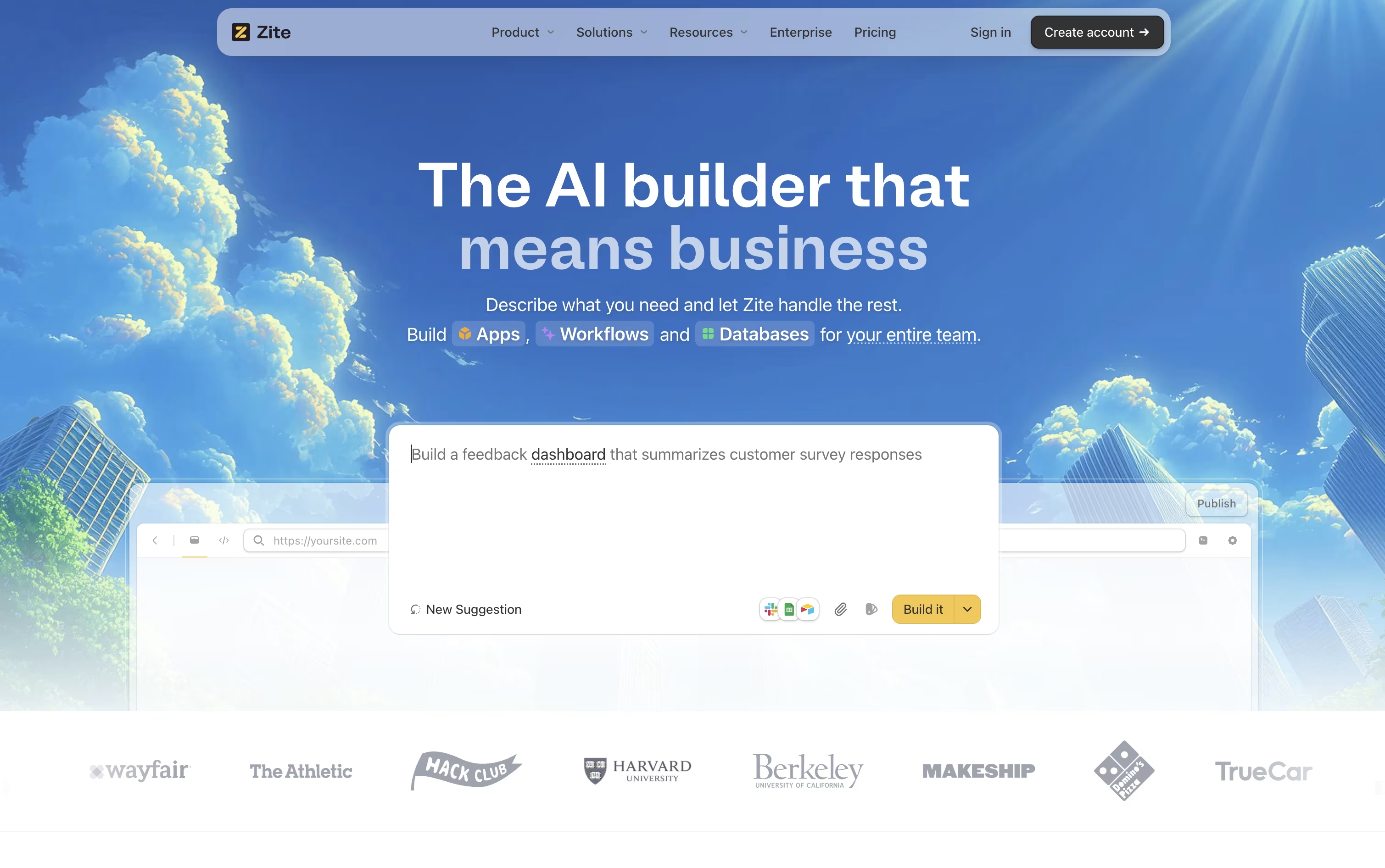 ZiteAI No-Code Platform for Business Tools are the best for Full-Stack Web App Generation. So, let’s take a closer look at all 12+ tools.

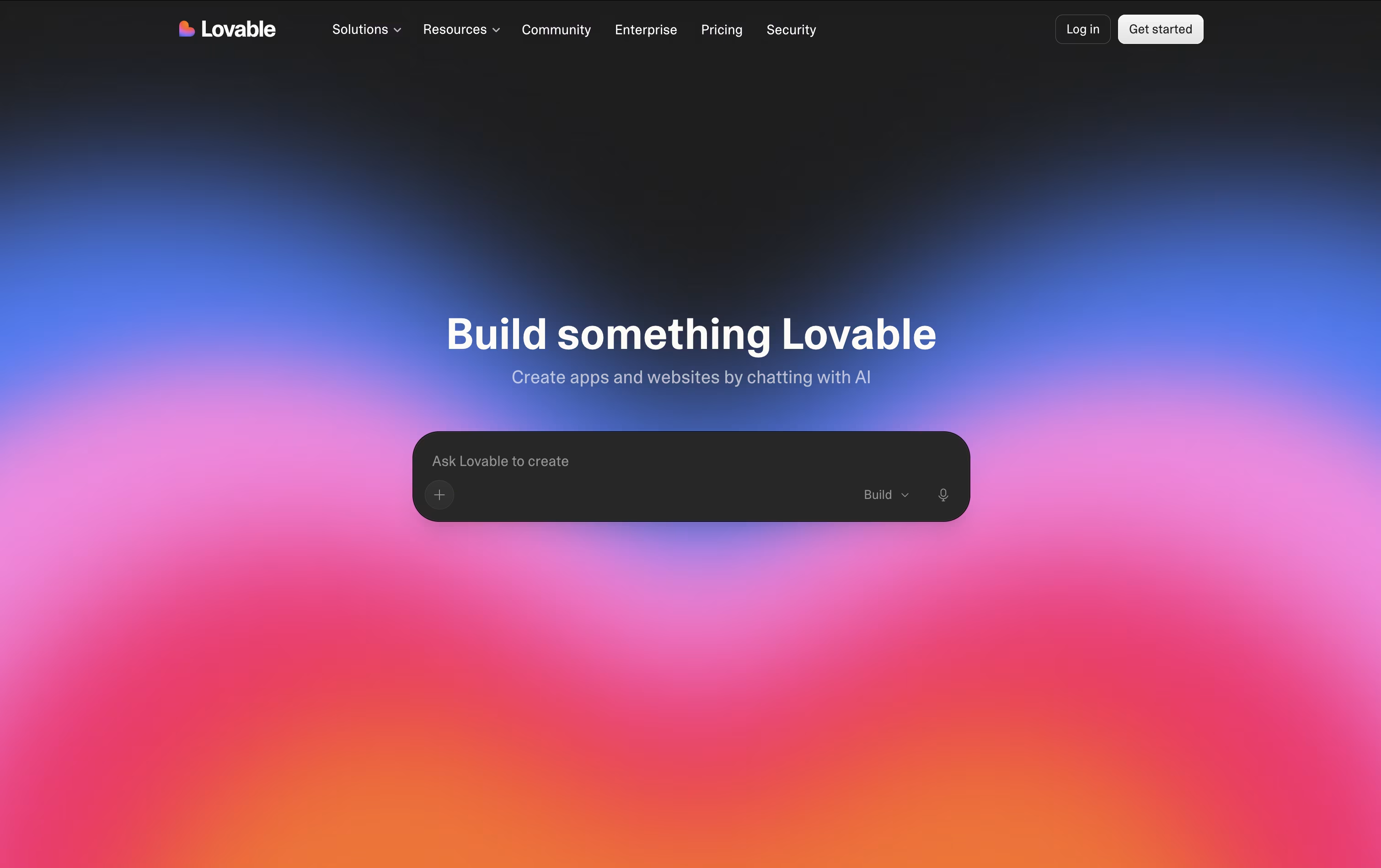
Lovable lets you build a real, working web application just by describing it in everyday language. The AI handles the frontend design, backend logic, database setup, and user login, so you do not need to write code yourself.
The platform includes its own cloud backend built on Supabase, meaning your app gets a database, file storage, and authentication without any separate setup. You can start a project from a text prompt, a screenshot, or even an existing website link.
Getting started is free, with no credit card required. If you need more, the Pro plan is $25 a month and unlocks custom domains, credit rollovers, and badge removal.
For teams, the Business plan at $50 a month adds shared workspaces, single sign on, and extra security tools. Larger companies can request Enterprise pricing for dedicated support, audit logs, and custom connectors.
When your app is ready, you can publish it with one click or sync the code to GitHub so you fully own it.
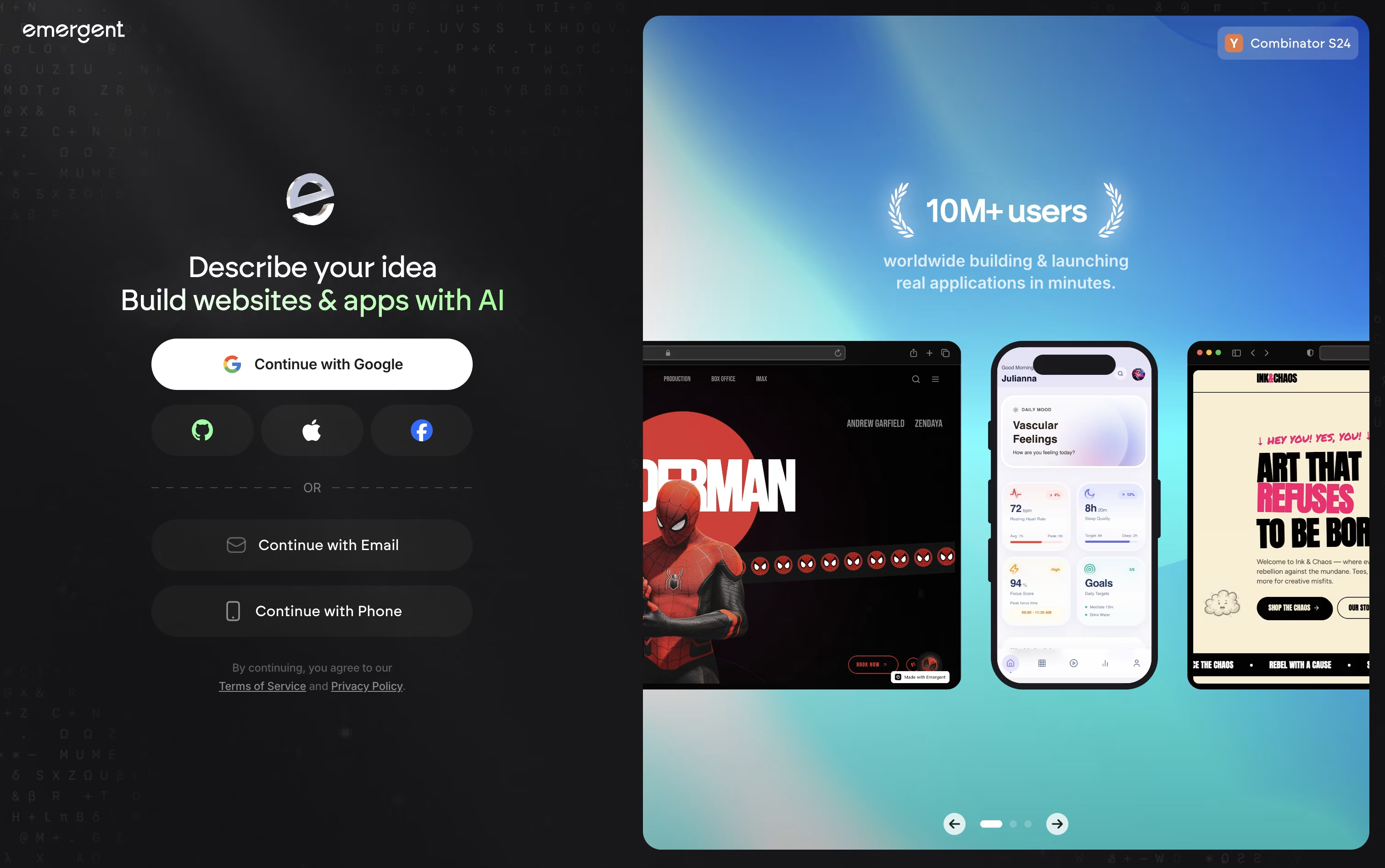
Emergent turns a written idea into a real, working application. You explain what you need in everyday English, and a group of AI agents handles the planning, design, coding, testing, and deployment on your behalf.
The system builds the entire application, covering the visual design, backend rules, database structure, and account logins, so you are not left with just a frontend mockup.
Getting started is free, with 10 credits included each month and access to the core tools. Moving up to Standard costs $20 monthly, or $17 monthly when paid yearly, and adds private hosting plus GitHub syncing.
The Pro tier runs $200 a month, or $167 a month annually, and gives you a much larger 1 million token memory window, the ability to build your own custom agents, and 750 credits a month.
Companies needing tighter control can move to Business or Enterprise, both priced on request, which bring in single sign on, access controls, audit trails, and private cloud deployment.
With built in connections to GitHub, Stripe, and Supabase and support for both web and mobile builds, Emergent suits solo founders, agencies, and teams that want working software without a long build cycle.
Building a business app usually means hiring developers or wrestling with complicated tools. Zite skips that by letting you describe the app you want in plain English and having AI build it for you.
The platform started life as part of Fillout, a forms company, before the team renamed it Zite in 2026 and folded in ideas around planning, visual editing, and databases from two acquired teams.
Once your app is generated, you can adjust it through chat, a visual editor, or a flowchart view of the workflow logic, and everything sits on top of a built in database with no per-user fees.
Getting started costs nothing on the Free plan, which includes 5,000 database records and 1,000 workflow runs a month.
Growing teams can move up to Pro at $19 a month, Business at $69 a month, or the Team Bundle at $300 a month, each unlocking more credits, records, and features such as custom domains and unlimited brand kits.
Larger organizations can reach out for Enterprise pricing, which adds single sign-on, audit logs, and dedicated support.

A lot of people jump straight into building without stepping back to ask what they should actually build and who will use it. Rocket tries to fix that by combining research, app building, and competitor tracking in one connected workspace.
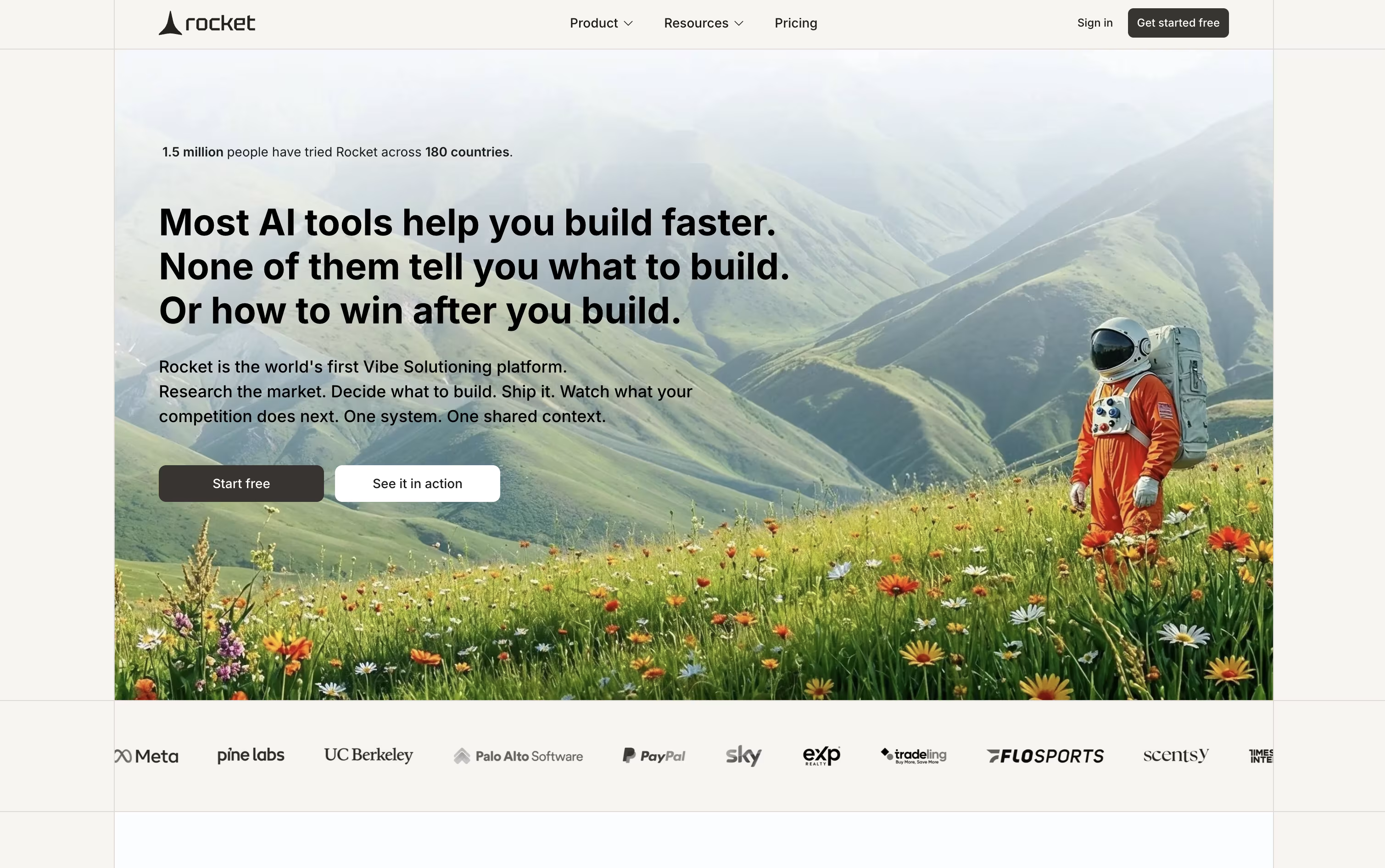
The research side, called Solve, takes any market question and turns it into a clear, evidence backed brief covering strategy, growth ideas, and product direction, which can be exported and shared right away.
The building side, called Build, turns everyday language, a Figma file, or a GitHub repo into a real website, web app, mobile app, or online store, built on solid frameworks like Next.js and Flutter instead of a quick mockup.
The Intelligence side keeps watch on competitors in the background, sending daily updates about pricing changes, new features, and marketing moves.
The Free plan gives newcomers 20 credits to try things out, while Pro, Rocket, and Booster plans add more monthly credits, deeper research, and enterprise features such as single sign on and premium support as needs grow.
Because everything shares the same project context, a finding from research can shape what gets built, and a competitor signal can point straight to the next update.

Meku lets you build real websites and apps just by describing what you want in plain words. It puts together a working first version in under a minute, with a clean, modern look already in place.
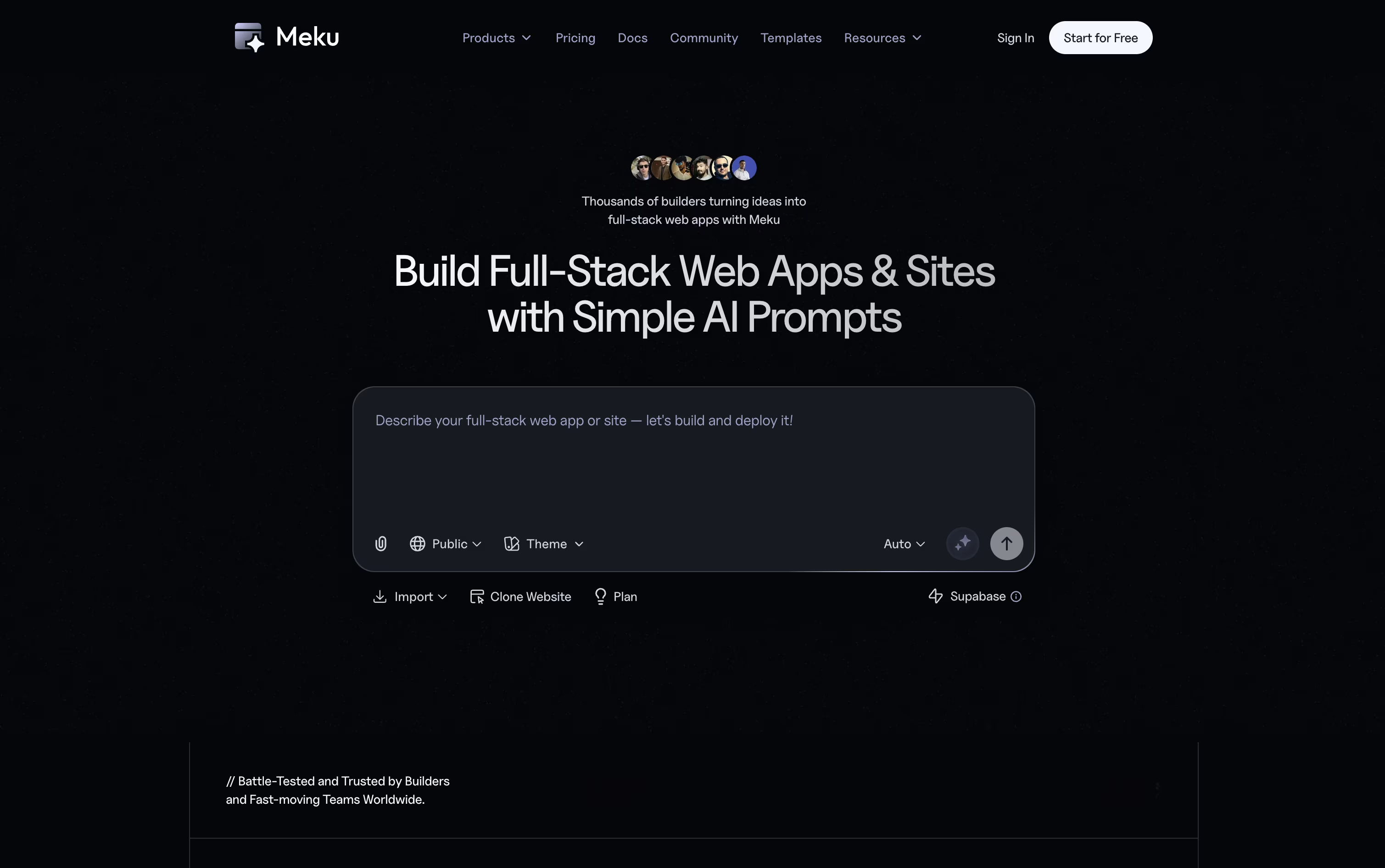
From there, you can shape the project through chat. Ask Meku to change a page, add a feature, or fix something, and you will see it update live as you go.
It also reads Figma files and turns them into working code, and connects with GitHub and Supabase so your project can have logins, a database, and proper version control.
The Free plan costs nothing and gives you 100 credits a month with three public projects. Starter is $16 a month, or $12 a month billed yearly, and opens up private projects, exports, and integrations.
Pro runs $25 a month with more credits and room for a bigger team, and Growth at $49 a month covers larger teams that need more projects, domains, and members.
On any paid plan you can export your code and run it anywhere, so your project is always fully yours.

Instead of a plain chat box, camelAI gives its agent a real computer that keeps running and remembers your project. You type what you want in plain English, and it builds a complete application, covering the frontend, backend, database, and API in one go.
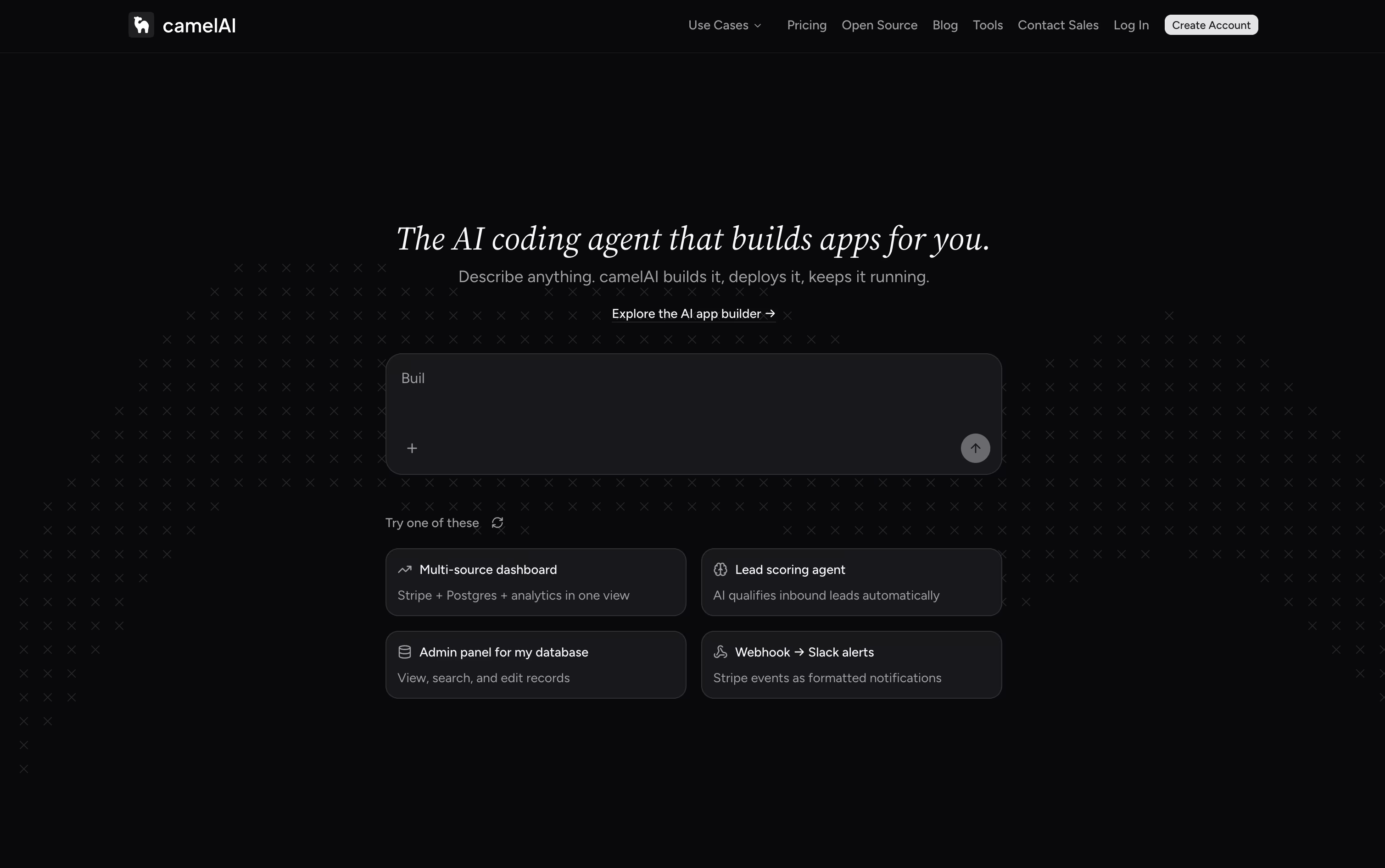
The finished app is published to a live URL right away, with SSL and domain setup handled automatically. Because the workspace saves your files and history, the agent already knows your project when you come back, and you can chat with it over email or Slack too.
Over 50 integrations come ready to use, such as Postgres, Stripe, HubSpot, and Slack, and you can schedule the agent to run jobs on its own, like checking Stripe metrics or emailing a summary report.
Getting started is free, with the Free plan giving 1 workspace, 3 apps, and 5 GB storage using your own API key. The Starter plan runs $10 a month, and the Pro plan, the most popular option, is $40 a month with unlimited apps and domains.
For teams, the Team plan costs $50 per seat monthly with a 3 seat minimum, adding shared workspaces and role based permissions. Enterprise plans are custom priced and include SSO, dedicated support, and compliance features.
Every paid plan comes with a 7 day free trial, and an open source, self hostable version of camelAI is on the way as well.

Product teams often lose time switching between design tools, docs, and separate trackers. Tempo solves this by keeping design, planning, tasks, and AI agents inside one workspace connected to your actual codebase.
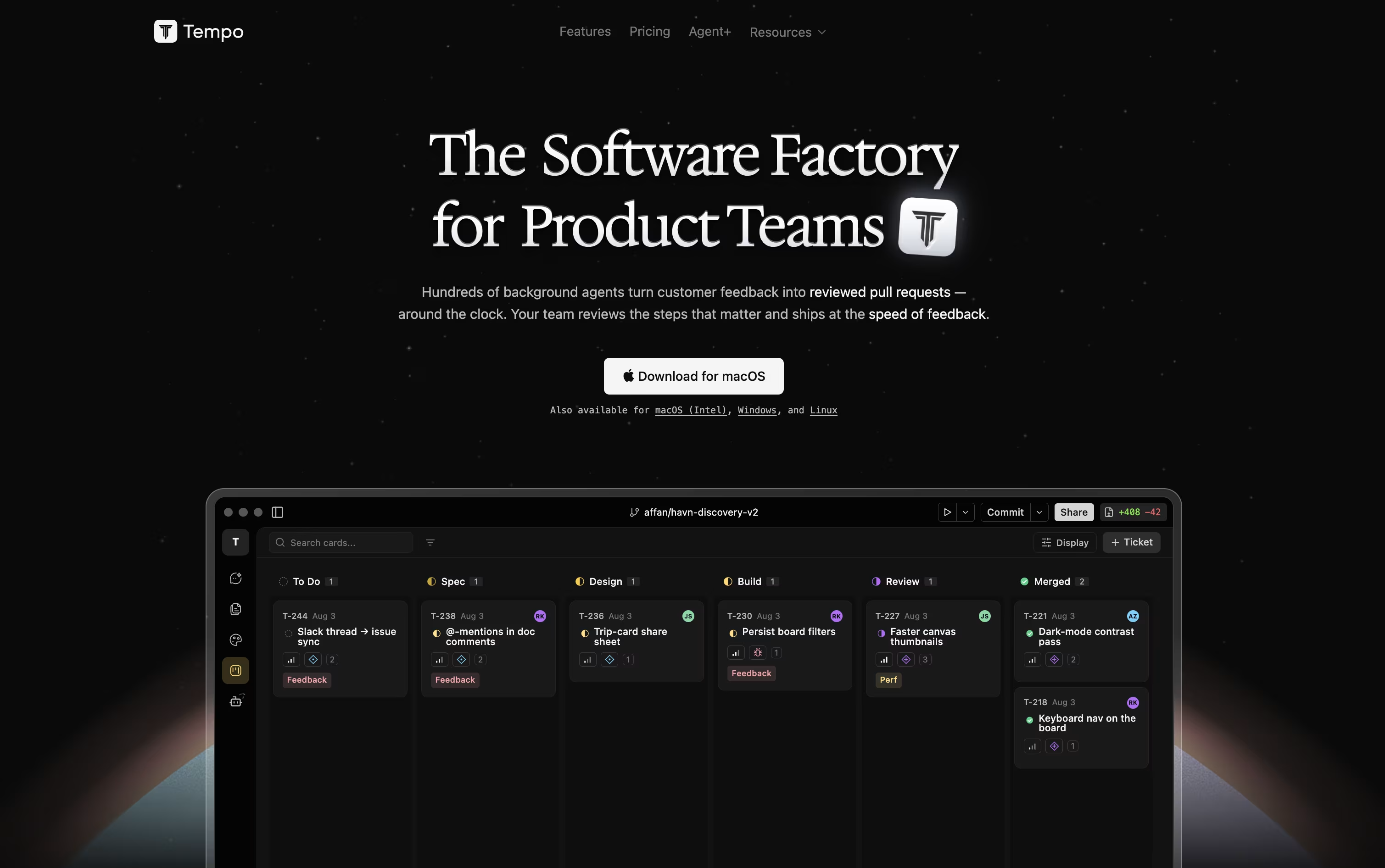
Its Canvas feature turns your React components into a live, editable design surface, so changes reflect the real app instead of a mockup. Docs works like a simple writing tool for specs and notes, and Issues gives you a Kanban board to track work.
AI agents can be chatted with directly, using Claude or OpenAI models, and they make code changes safely inside their own git branch. You can also build custom agents that run automatically based on triggers such as issue updates or Slack messages.
Getting started costs nothing with the Starter plan, which includes 100 AI messages a month and room for up to 10 team members. Growing teams can move to the Team plan at $20 per seat a month for unlimited issues and documents.
For companies that want features built for them, Agent+ starts at $500 a month, pairing AI agents with human engineers and designers who review every change, typically delivering within 48 to 72 hours.
Tempo is built for React, Next.js, and Expo projects, and runs as a web app or desktop app on macOS, Windows, and Linux.

Think of Manus as an assistant that actually does the work instead of just talking about it. You describe a goal, and it breaks the job into steps, then uses a browser, code, and files to carry it out.
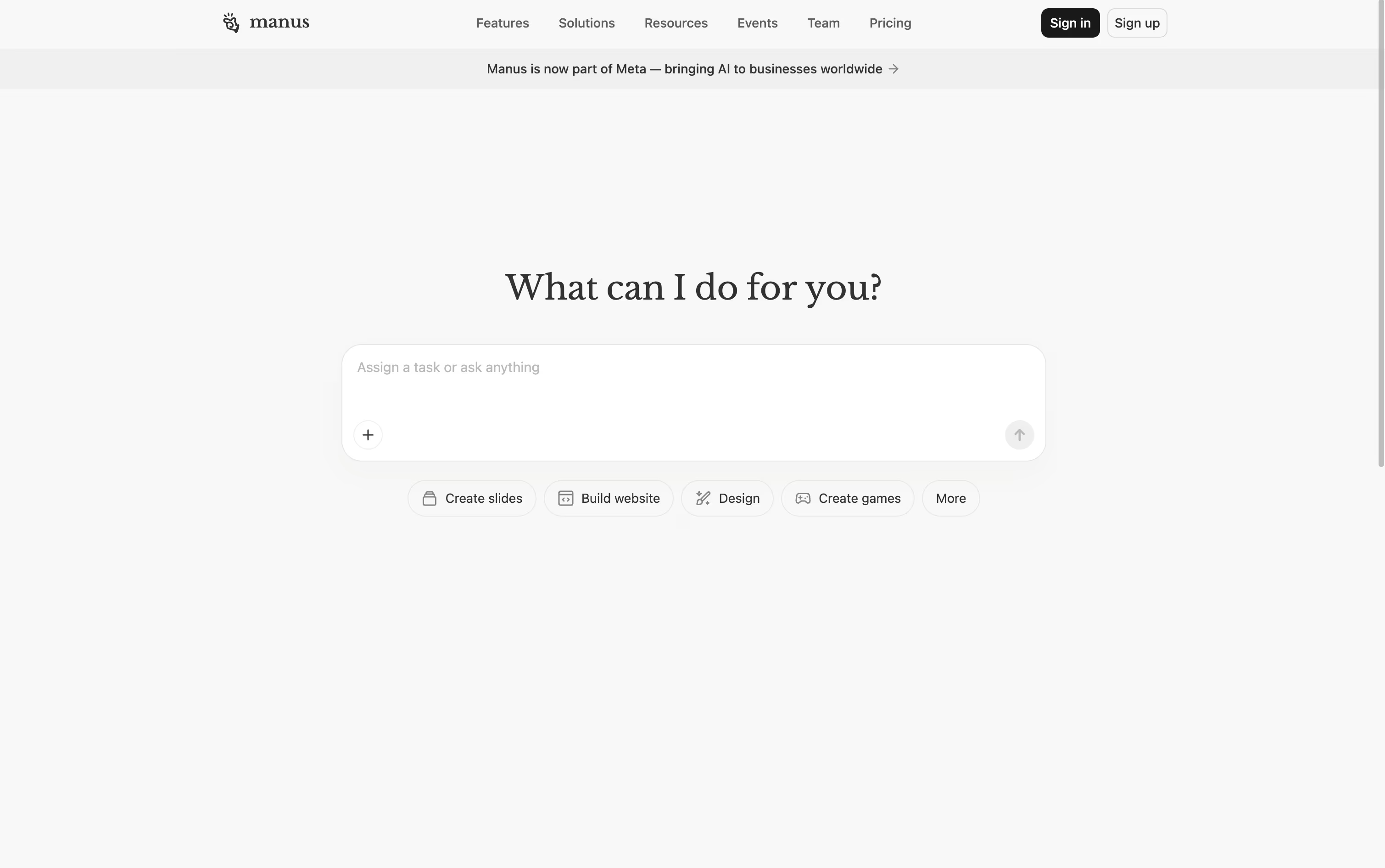
It handles research at scale, builds working websites and apps from a plain description, writes and designs full slide decks, and creates images, video, or music when needed. Since tasks run in the cloud, you can walk away and get notified when it finishes, or stay and guide it along the way.
It fits into tools you already use too, connecting with Slack, email, and Google Drive, plus a Browser Operator that works inside your own browser using your saved logins.
On pricing, the Standard plan is $20 a month with 4,000 credits, the Customizable plan is $40 a month with 8,000 credits, and the Productivity plan is $200 a month with 40,000 credits and a free cloud computer included. Paying yearly saves 17 percent.
Larger teams can move to custom business plans, which come with stronger security and compliance certifications built in.

Building a website usually means juggling JavaScript, HTML, CSS, and a separate backend. Reflex removes that split by letting you write the entire app, interface and logic, in one Python codebase.
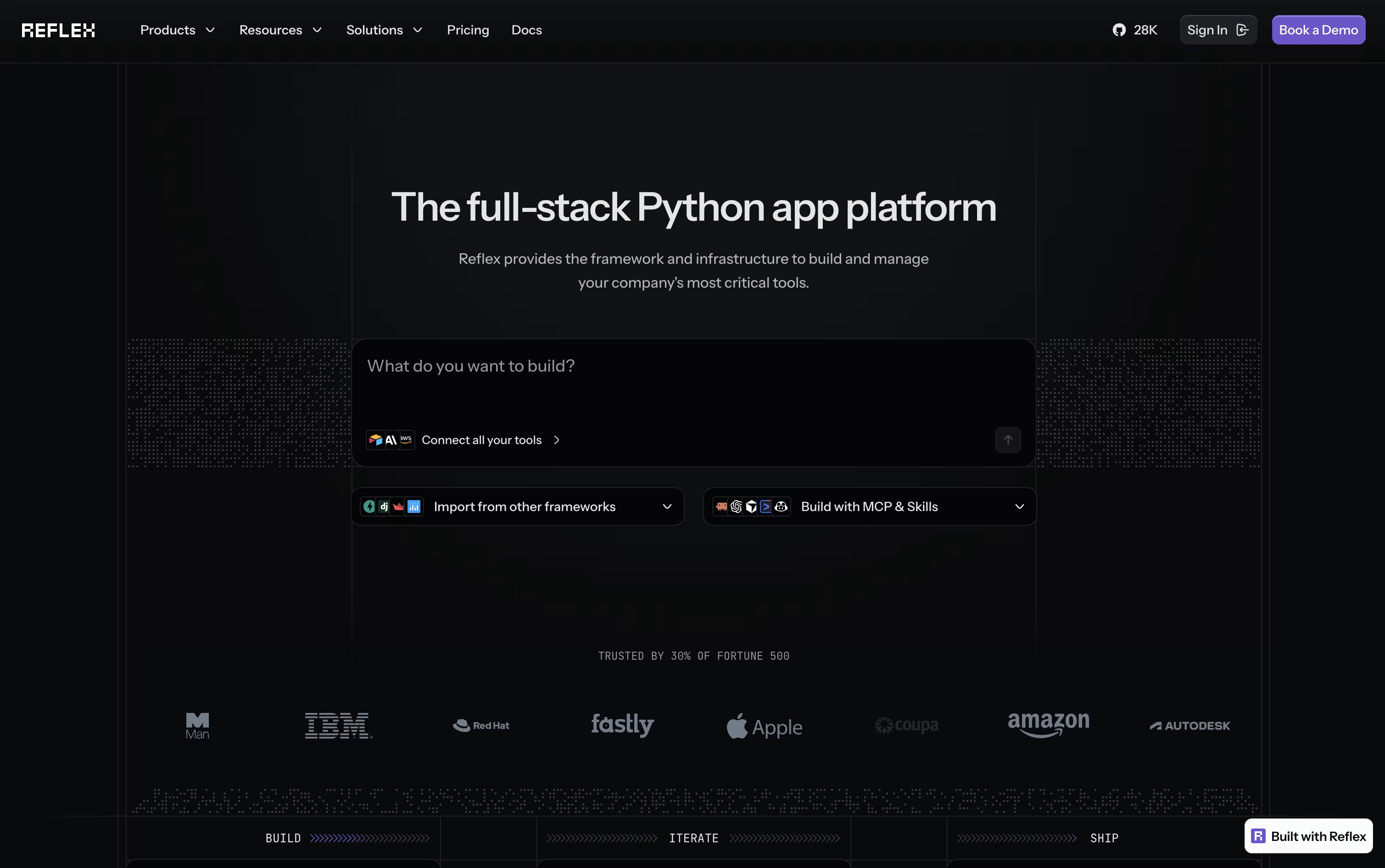
Your Python components get converted into a React frontend automatically, while a FastAPI backend handles the logic. WebSockets keep the two connected in real time, so any change in your data appears on screen right away.
If you would rather not code from scratch, the built-in AI Builder can generate a full working app from a short description or even a screenshot, along with basic tests.
Getting started is free, with 50 monthly credits and one hosted app included. Stepping up to Pro brings 2,000 credits, 10 hosted apps, and custom domains for $200 a month, though it is priced at just $3 a month for a limited time.
For companies that need more control, the Enterprise plan adds dedicated infrastructure, team workspaces, and security features like SSO and HIPAA support, with pricing built around each organization's needs.

With Anything, you describe the app you want in plain words, and the AI handles the coding, the database, the login screen, and the payments behind the scenes.
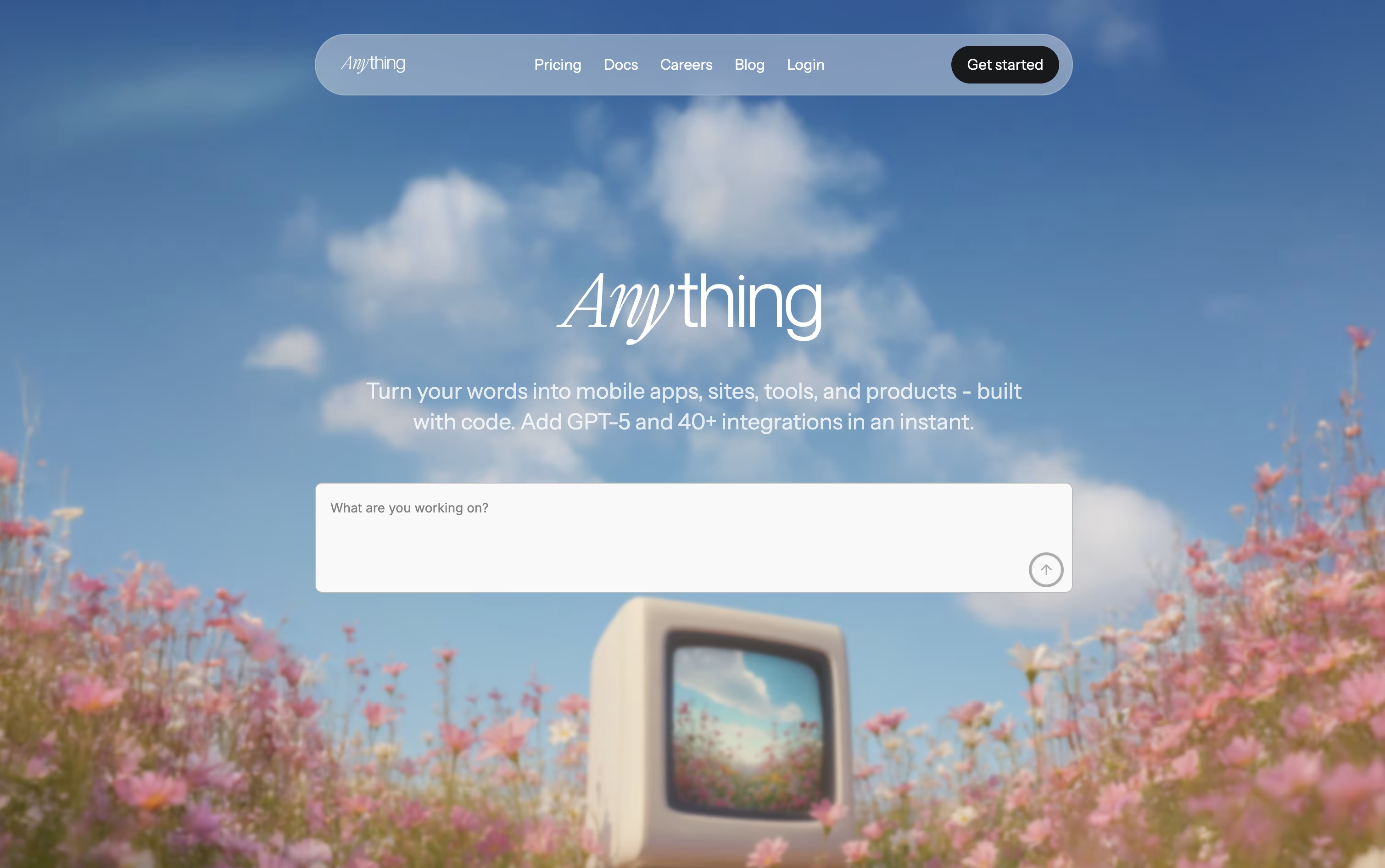
One project can produce a website, a web app, and native iPhone and Android apps at the same time, all sharing the same backend.
Getting started costs nothing, since the free plan lets you build public projects with community support.
Moving up, the Pro 20K plan is $24 a month, or $19 a month if billed yearly, and unlocks 20,000 AI credits, private projects, custom domains, and no Anything branding.
Teams with bigger needs can pick the MAX plan, starting at $239 a month for 220,000 credits, or $199 a month yearly, which adds parallel AI agents, automated testing, and faster support.
The standout feature is Anything Max, which tests the app itself like a real visitor, catches errors, and fixes them without you asking.

Bolt, built by StackBlitz, is a coding agent that builds full apps from simple text instructions. Type what you want, and it writes the code, installs what is needed, and opens a live preview right in the browser.
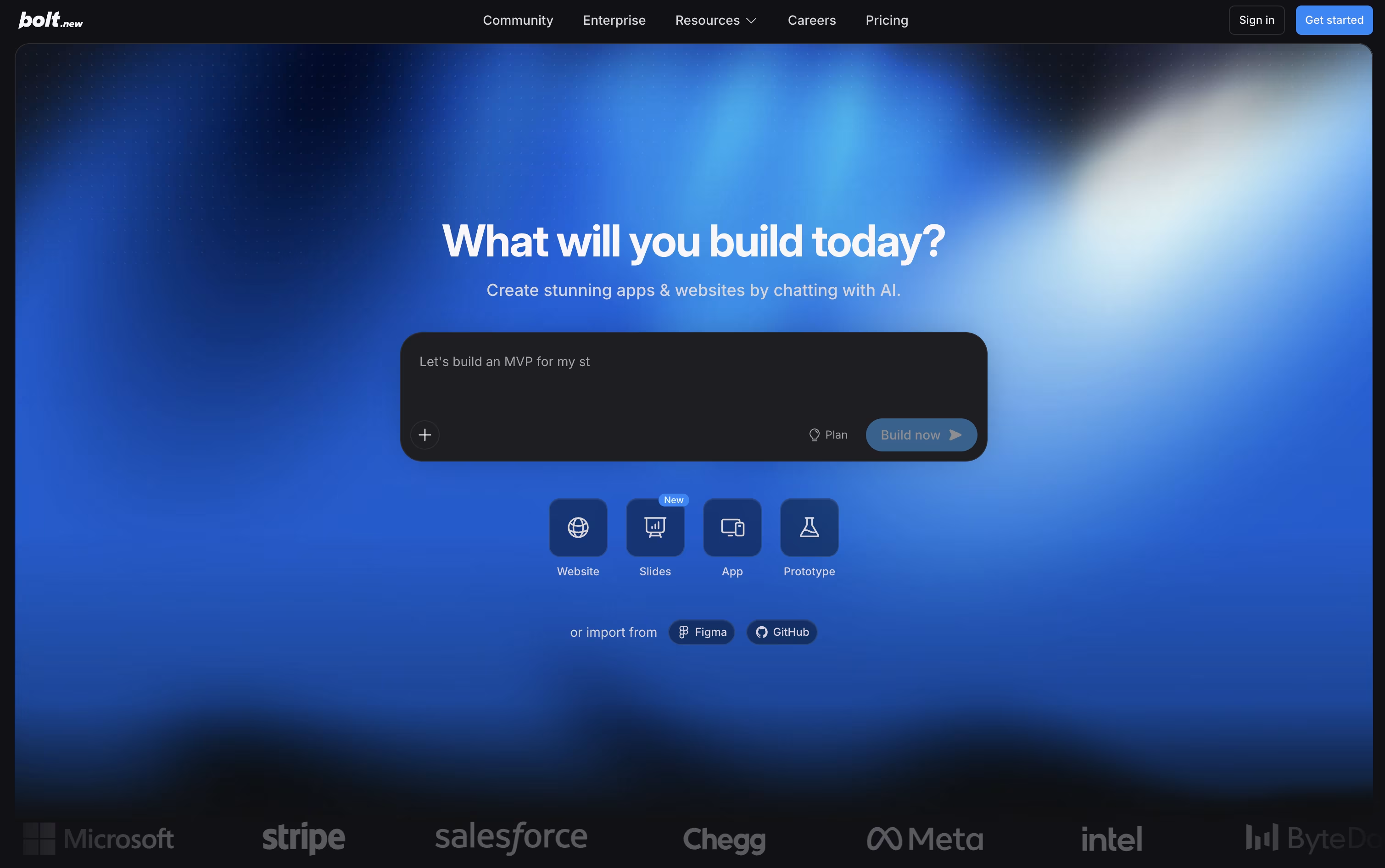
Because it runs on WebContainers, a complete coding environment inside the browser, there is nothing to install on your machine. Claude AI models power the agent, letting it scaffold projects, run servers, and correct errors as the conversation continues.
Getting started costs nothing. The Free plan includes 300K tokens a day, 1M tokens a month, website hosting, and unlimited databases, though the site shows Bolt branding.
Upgrading to Pro runs $25 a month, or $18 a month on the yearly plan. It lifts the daily token cap, gives 10M tokens a month, removes branding, and unlocks custom domains, SEO boosting, and AI image editing.
The Teams plan is $30 per member monthly, or $27 yearly, adding centralized billing and access controls, while Enterprise offers custom pricing with SSO, audit logs, and a dedicated account manager.
With built in support for Figma, GitHub, Supabase, and Stripe, Bolt suits founders, product teams, and developers who want a working app quickly while still owning the code.

Instead of hiring a developer or piecing together separate tools, Base44 lets you describe an app in plain English and get a working version back right away.
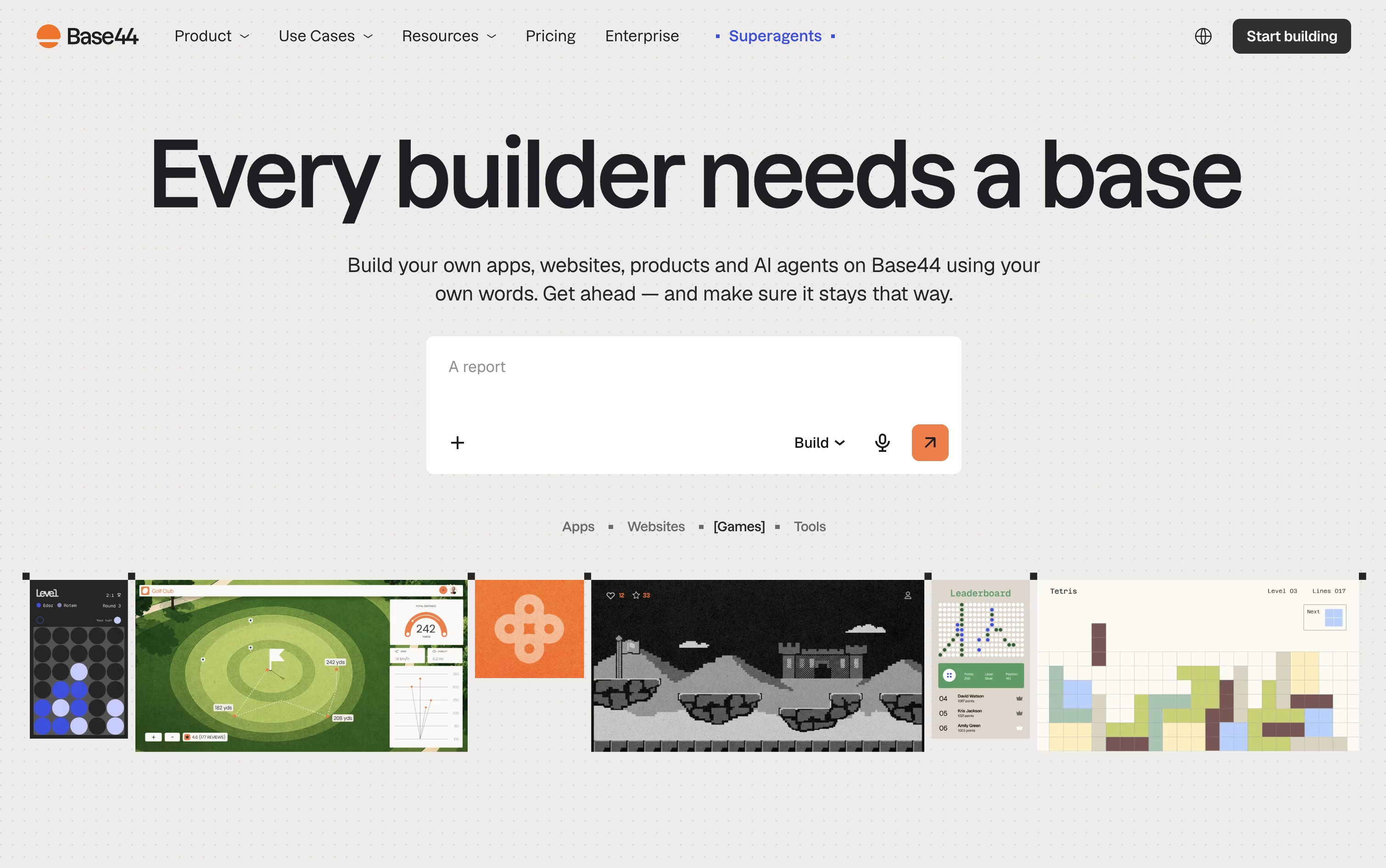
It handles the pages, the database, the login system, and the backend logic in one go, and you refine it further just by chatting with the AI.
Trying it out costs nothing, the free plan gives you 25 message credits a month and room for up to 5 apps.
Once you need more, the Starter plan at $20 a month removes the app limit and opens up code editing, while the Builder plan at $50 a month adds backend functions, AI model choice, and custom domains.
Pro and Elite raise the credit caps for heavier use, and Base44 also builds Superagents, AI helpers that handle tasks like follow-ups and scheduling on their own.
Larger organizations can move to a custom-priced Enterprise plan with single sign-on and dedicated support.

Instead of chatting with one AI to write code, Atoms hands your idea to a small team of AI agents that each play a different role, like a real software company.
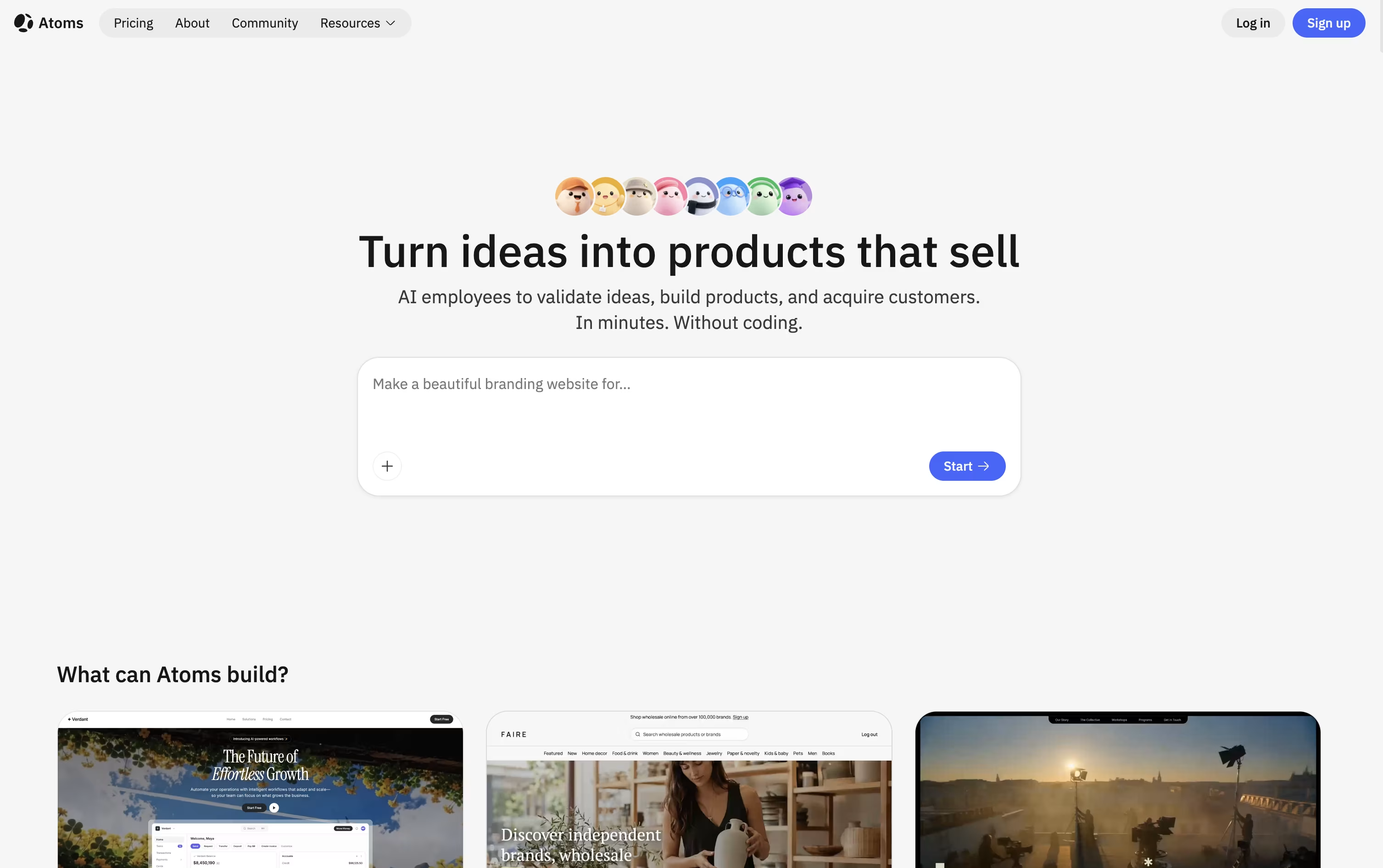
One agent researches your market, another turns your idea into a clear plan, and others handle the actual coding, covering both the frontend and backend along with login, a database, and Stripe payments.
After launch, an SEO agent optimizes your pages for search, an ads agent can run Google Ads for you, and a data agent tracks how your app is performing.
You can start for free, which gives 15 daily credits, 2 GB of storage, and 2 backend projects. The Pro plan starts at $20 a month for 100 credits and unlocks private projects, custom domains, and unlimited backend projects.
For heavier use, Max starts at $100 a month for 500 credits, offering 100 GB storage, double the compute resources, and Race Mode to compare results from multiple AI models. Choosing yearly billing saves up to 21%.
Whenever you want, you can export your project's code or sync it with GitHub, so your work is never locked inside the platform.

With Capacity, you describe your app idea the way you would explain it to a friend, and an AI Co-Founder takes it from there. It asks a few questions about what you are building and who it is for, then generates a full app with a frontend, backend, database, and login already wired together.
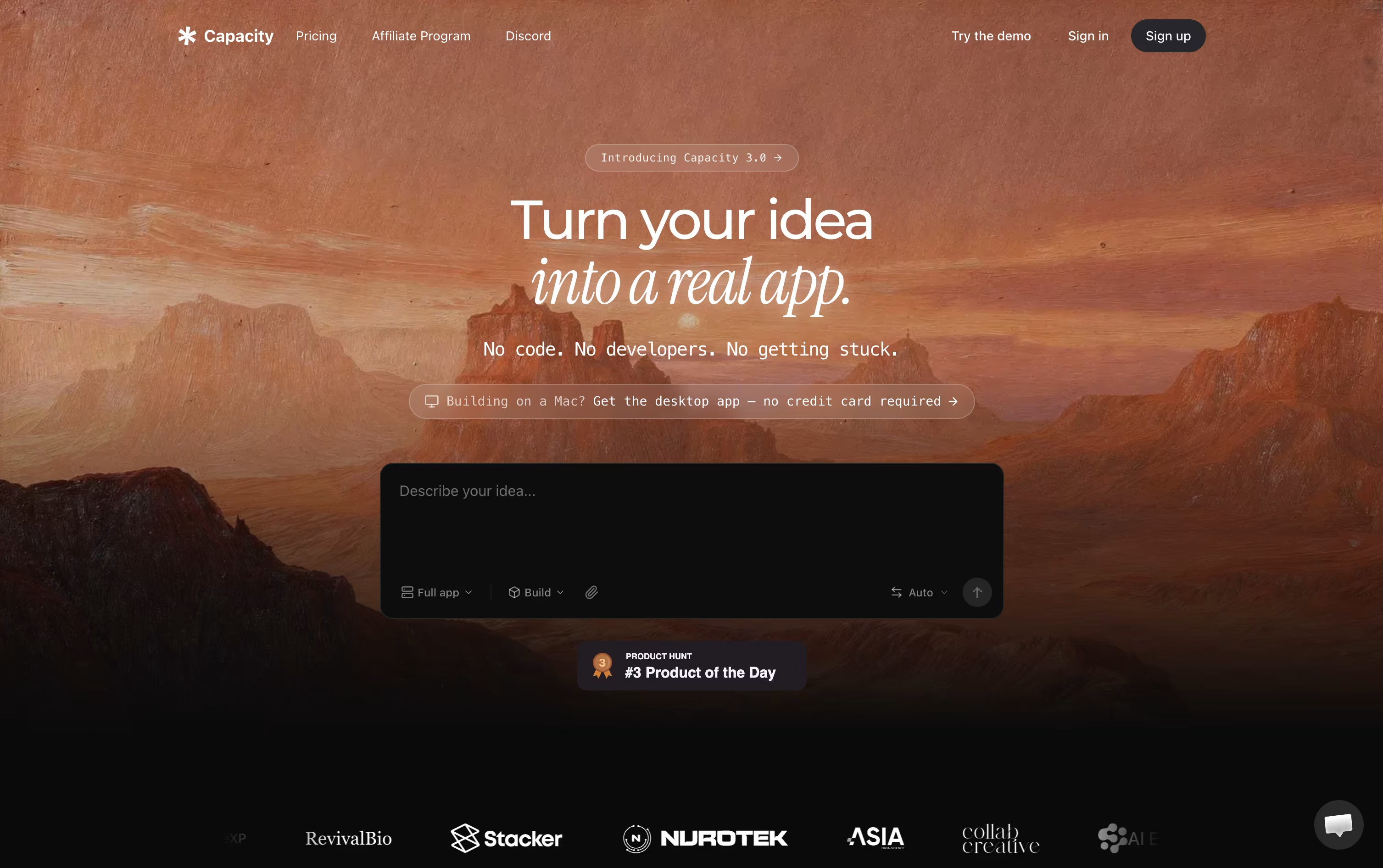
You can iterate quickly in Vibe Mode, or use Spec Mode to lay out a clear plan before anything gets built.
Once your app is live, you can preview it, chat to make changes, and publish with a single click. Matching iOS and Android apps can also be generated from the same project.
Plans start at $25 a month for the Starter tier with 100 credits, and scale up to $299 a month for the Business plan with 1,000 credits and a dedicated success manager.
One-time credit packs are also available from $9 if you prefer not to subscribe.
Your code always belongs to you, and full export is available at any time.

Building a real app usually means hiring developers or learning to code yourself. Floot skips both by letting you describe your idea in plain language and building the app for you, backend and all.
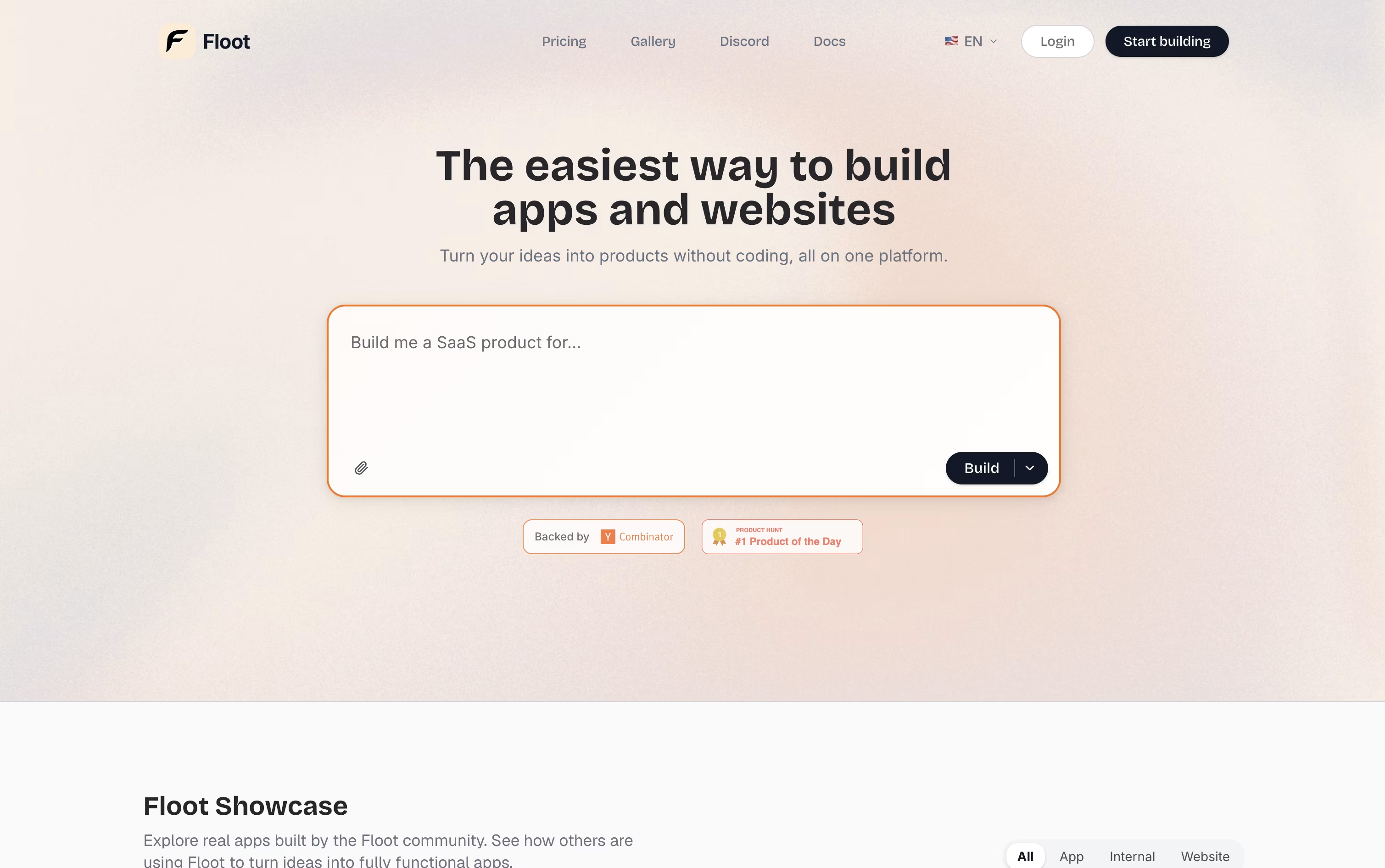
The platform was founded in 2025 by engineers who previously worked at Retool and AWS, and it was built specifically for AI-driven app creation rather than adapted from older coding tools.
Beyond the basic build, Floot adds hosting, a database editor, user logins, SEO tools, and realtime features like live chat and push notifications, so the finished app can serve real customers.
Getting started costs nothing. The Free plan gives you 3,000 AI credits and a small hosting allowance to test your first project.
When you are ready to grow, the Pro plan begins at $25 a month for 25,000 credits, with a $100 a month option for 100,000 credits. It unlocks custom domains, SEO tools, and mobile app export.
Businesses with bigger needs can choose the Enterprise plan, which starts at a $20,000 yearly commitment and includes custom features and dedicated support.
Gadget is an AI-powered, full-stack development platform designed to accelerate web application development by eliminating repetitive boilerplate code and setup tasks. Think of it as a complete development environment that includes everything you need: a Node.js backend, React frontend, PostgreSQL database, and serverless hosting, all integrated and ready to use.
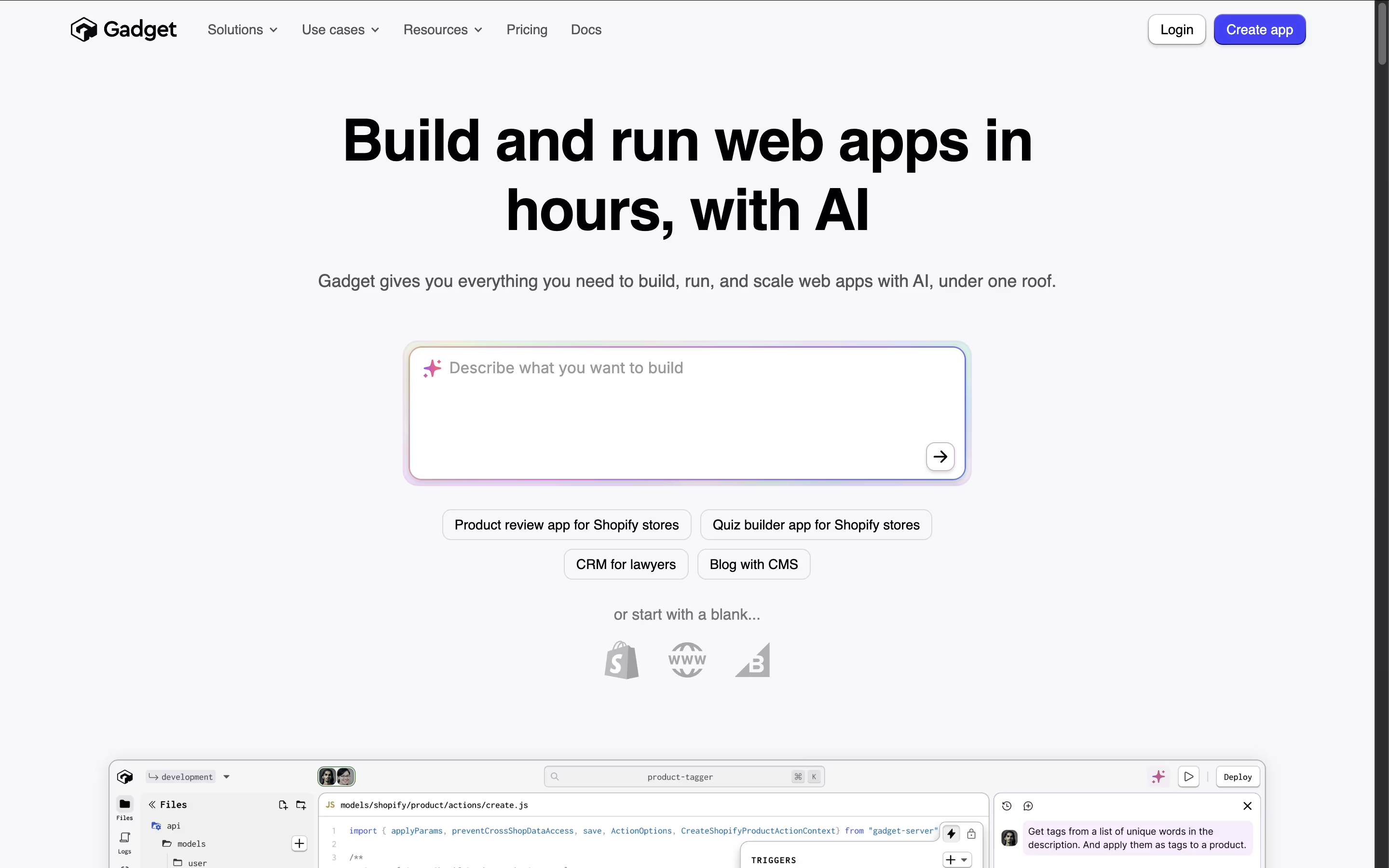
The platform automatically generates APIs, handles authentication, manages databases, and provides built-in connections to popular services like Shopify and BigCommerce. What makes Gadget special is its AI assistant that understands your specific app and helps write code, create database tables, and handle deployment tasks.
Unlike no-code tools that limit customization, Gadget gives you full control over your code while removing the tedious setup work. Founded by ex-Shopify executives, it combines best practices with smart automation to help developers build applications up to 10 times faster than traditional methods.

Building an app with Shipper.now starts with typing your idea in plain English, whether that is a website, a mobile app, a browser extension, or a chat bot. The AI reasons through the whole project, planning the database, designing the screens, writing the code, and catching its own mistakes.
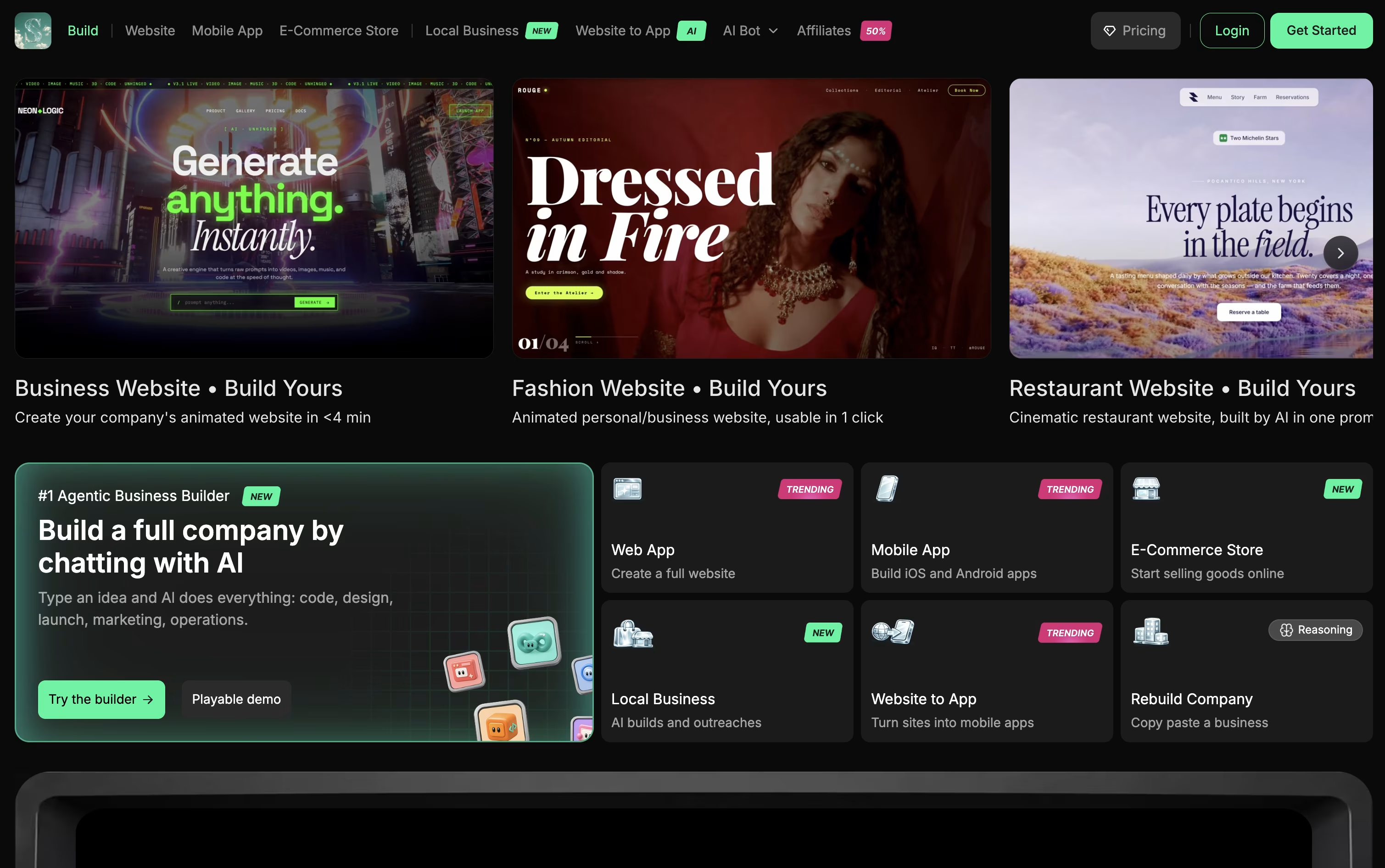
Rather than just generating code, Shipper.now leans into the idea of an AI co-founder. Its separate Shipper Advisor feature works like a consultant, reviewing your project and suggesting improvements to product, growth, and marketing.
You can try it for free before paying anything. The Pro plan starts at $25 a month with 100 credits, and higher tiers go up to 20,000 credits for $5,000 a month, adding connectors, advanced design options, unlimited teammates, and the AI Advisor.
Shipper Max is built for heavier use, starting at $200 a month for 500 credits and reaching $400 a month for 1,000 credits. It brings priority support, AI Employees, and access to models such as Claude Opus, Gemini, and DeepSeek.
When your app is ready, Shipper takes care of hosting, the database, and logins, and you can point a custom domain at your finished product.

With Softgen, you describe the app you want in everyday language, and the AI handles the planning and coding for you. A quick request like a SaaS dashboard with billing and analytics becomes a real, working project.
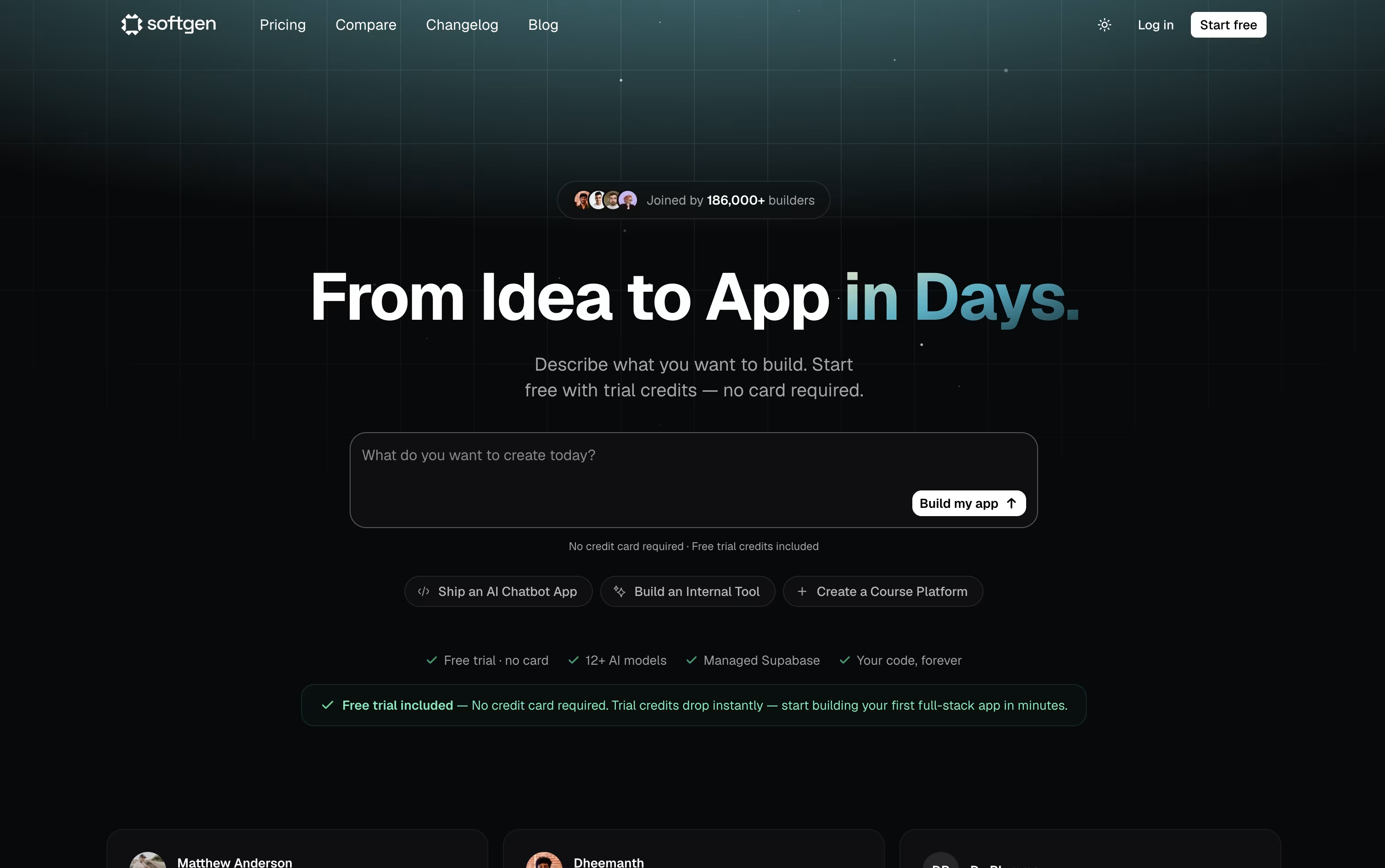
The platform writes the frontend and backend together, sets up the database and login system, and gives you a live preview so you can watch it come together. Further changes just take another chat message.
You can pick from over 12 AI models, including Claude 4.5, GPT 5.4, and Gemini 3.1 Pro, and every project comes with a managed Supabase database, custom domain support, and a Kanban style project board.
Your project is stored as a genuine GitHub repository, so you always own the code and can open it in any editor. Deployment goes straight to your own Vercel account with a single click.
The Starter plan is 25 dollars a month with 500 credits and 10 projects, while the Pro plan is 49 dollars a month with 1,500 credits, unlimited projects, and priority support.
Since the code and hosting belong to you, the app you build stays live even after your subscription ends.

Building a website usually means learning to code or hiring someone who can. Hostinger Horizons skips that step by letting you describe your idea in normal language, through text, voice, or even a picture, and turning it into a real project.
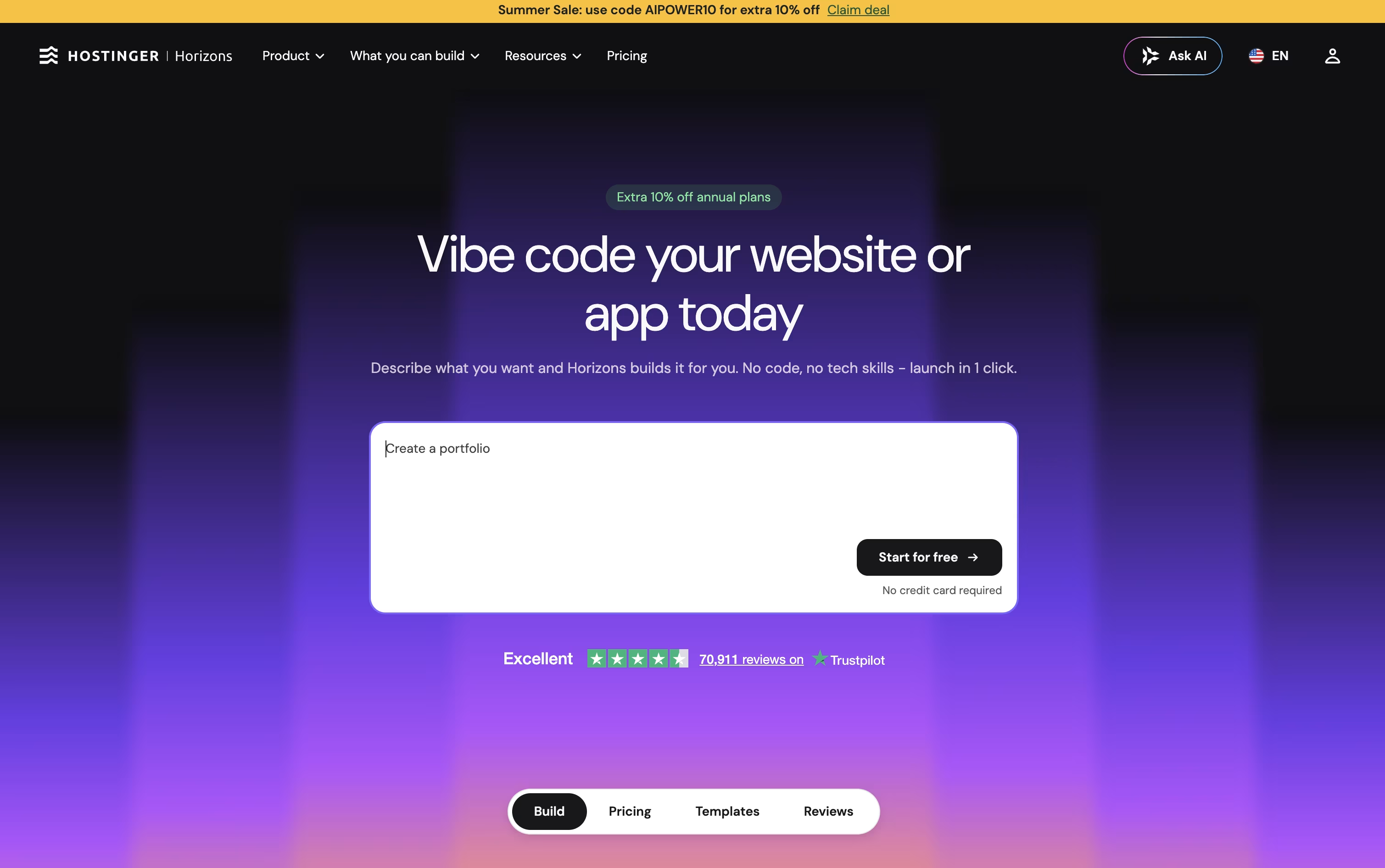
After the first version is ready, you simply keep talking to it to make changes, such as adding a login page, a store, or a chatbot. If you prefer, a full code editor is there too for hands-on edits.
Starting out is free, with 5 AI credits and no card needed. From there, the Explorer plan costs $6.99 a month for 30 credits, the Starter plan is $13.99 a month for 70 credits, and the Hobbyist plan runs $39.99 a month for 200 credits.
Paying plans throw in a free domain and hosting for the first year, quicker support, visitor analytics, and tools to sell products or subscriptions.
Every project is built with working code, so publishing takes one click and your site runs on Hostinger's own hosting, domains, and email setup.
Building an app usually means hiring developers or learning to code. Bubble skips that step by letting you design, connect, and launch a real app visually.
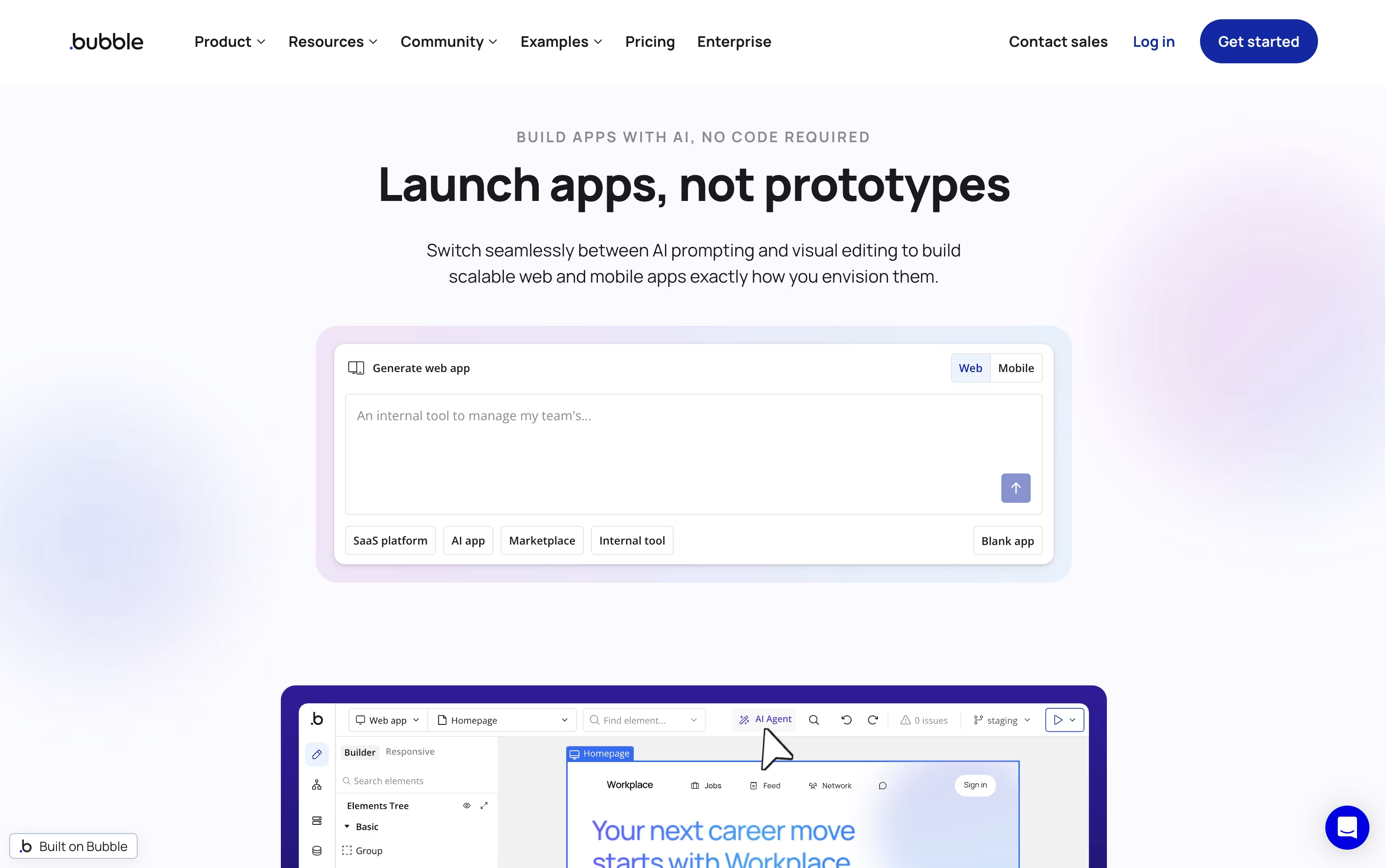
Its editor includes a built-in database, a drag-and-drop interface, and a workflow system for defining what happens when users interact with your app.
You can describe your app to the AI App Generator and get a working starting point in minutes, then keep editing visually or with help from the in-editor AI Agent.
Because Bubble also builds native iOS and Android apps from the same project, your web and mobile apps share one database and one set of workflows.
The Free plan costs nothing and is meant for early development. Starter begins at $69 a month, Growth at $249 a month, and Team at $649 a month, each with a lower annual rate. Larger teams can talk to sales for custom Enterprise pricing.
Backed by AWS hosting, SOC 2 Type II compliance, and a large plugin marketplace, Bubble is built for apps meant to grow.

If you're used to switching between an editor, a terminal, and separate AI tools, Devin Desktop puts all of that in one place. Made by Cognition AI and previously called Windsurf, it centers around an Agent Command Center that shows every agent you're running, whether local or in the cloud.
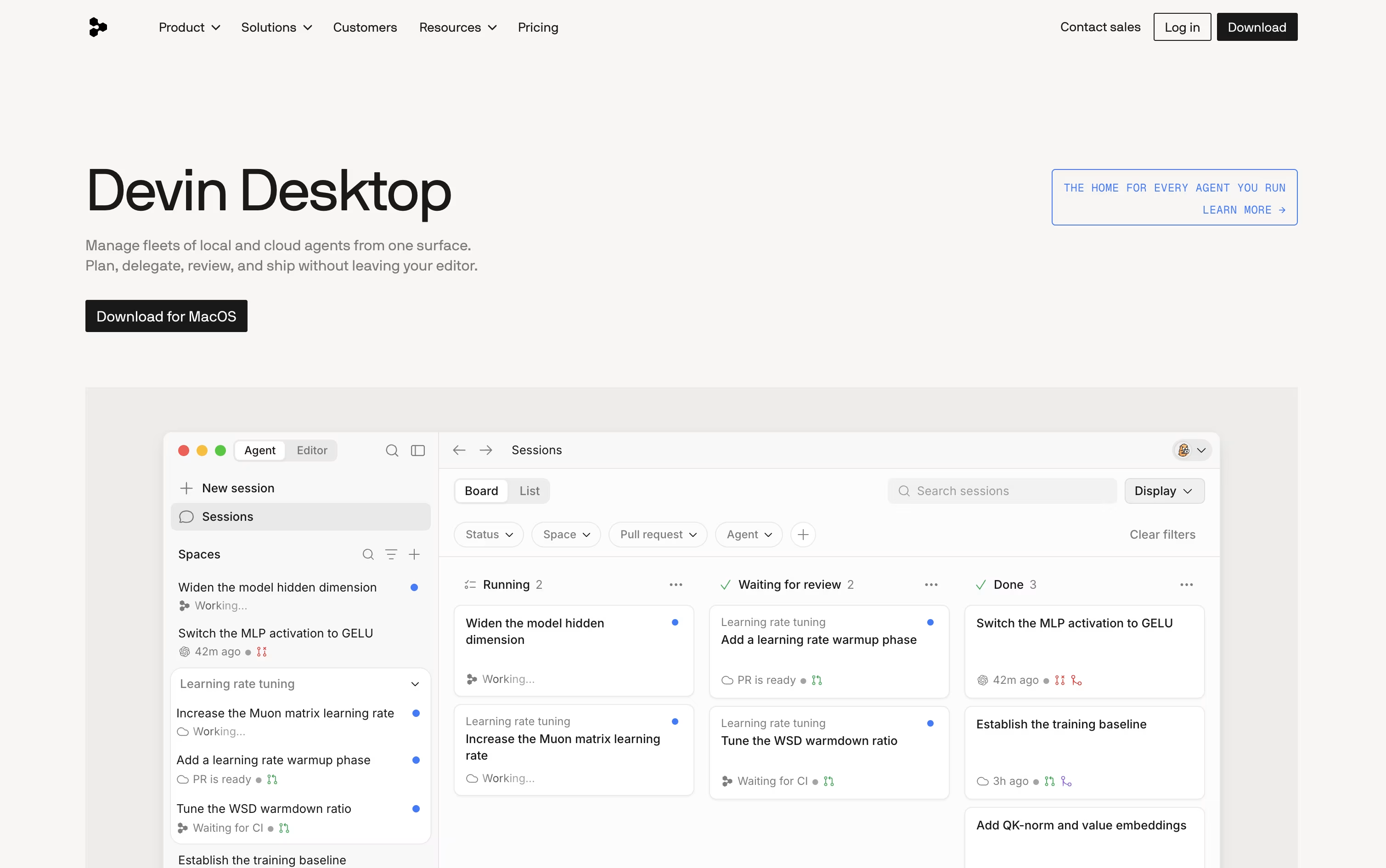
It still functions as a full IDE, so debugging, Git, extensions, and an integrated terminal are all available whenever you want to work by hand.
Because it supports the open Agent Client Protocol, other agents such as Codex and Claude Agent can run right alongside Devin's own agents, all sharing project context through Spaces so nothing needs to be re-explained.
The Free plan gives you a light quota to try things out, along with unlimited inline edits and Tab completions at no cost.
Moving up, Pro costs $20 a month for higher quotas and frontier models, and Max costs $200 a month for teams that need significantly more capacity.
Teams start at $80 a month plus $40 per seat, and Enterprise adds custom pricing, SSO, and private cloud deployment for larger organizations.

ZCode is a free desktop app that puts an AI agent in charge of the coding work rather than just offering suggestions in a sidebar. You describe the outcome you want, and it plans, edits files, runs terminal commands, and reviews its own results until the job is done.
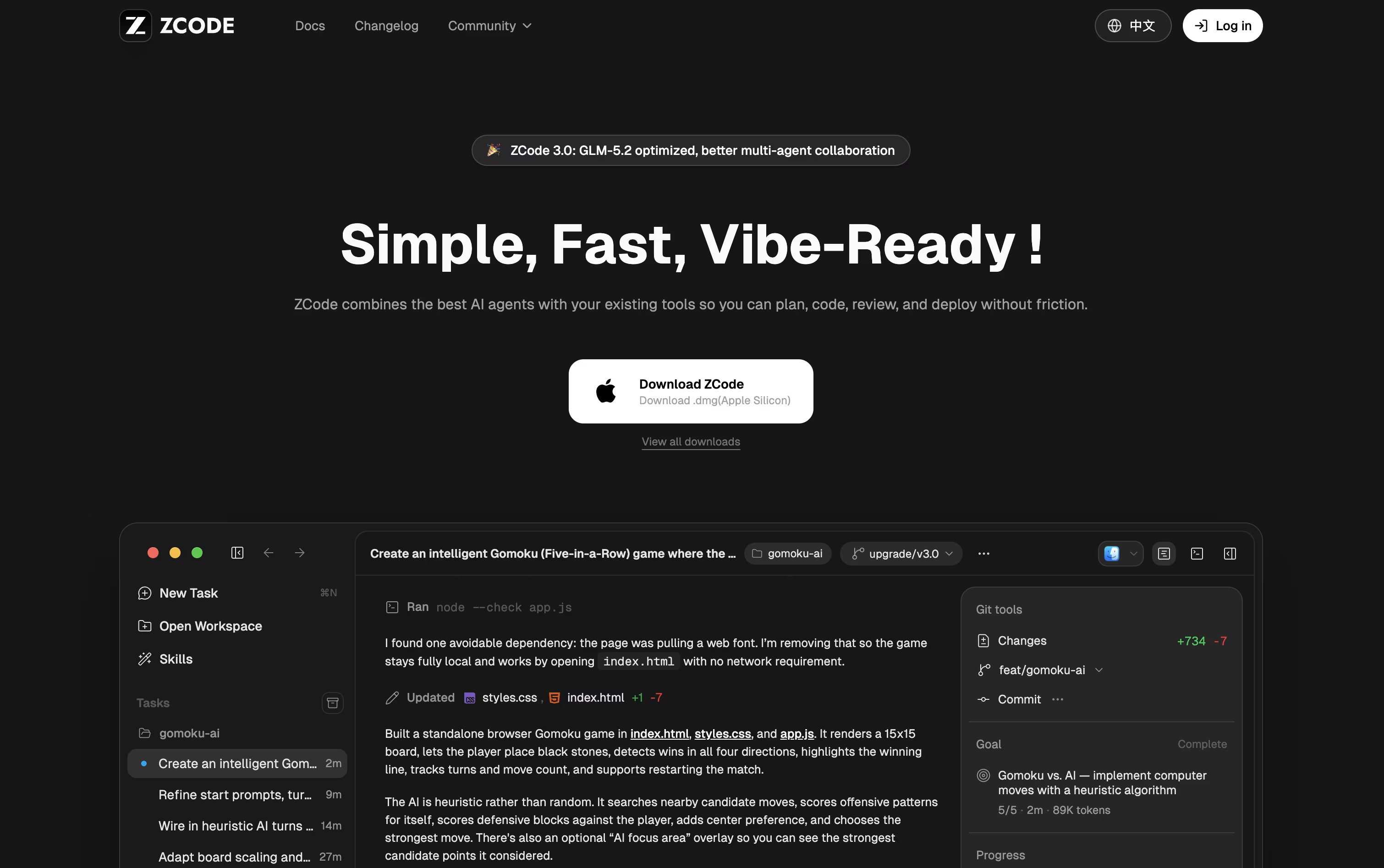
The app is built around the GLM-5.2 model, which can keep a very large amount of context in one task, so it stays on track even on bigger, messier codebases.
Downloading and installing ZCode costs nothing. To actually use an AI model, you need a plan, and pricing starts at $16.20 a month for Lite, rising to $64.80 a month for Pro and $144 a month for Max, each already discounted.
Pro adds five times the usage allowance of Lite along with priority access and a curated set of extra tools, while Max multiplies usage by twenty and adds first access to new models and dedicated resources during peak hours.
Paying yearly brings the cost down by 30% compared to the standard monthly price. On top of that, you can direct a running task from your phone while ZCode keeps working on your computer.

Kiro is an AWS-built tool that pairs AI agents with a more structured way of writing code. Rather than turning a single prompt into code right away, it writes out a plan first, called a spec, that covers what needs to be built, how it should be designed, and the tasks needed to get there.
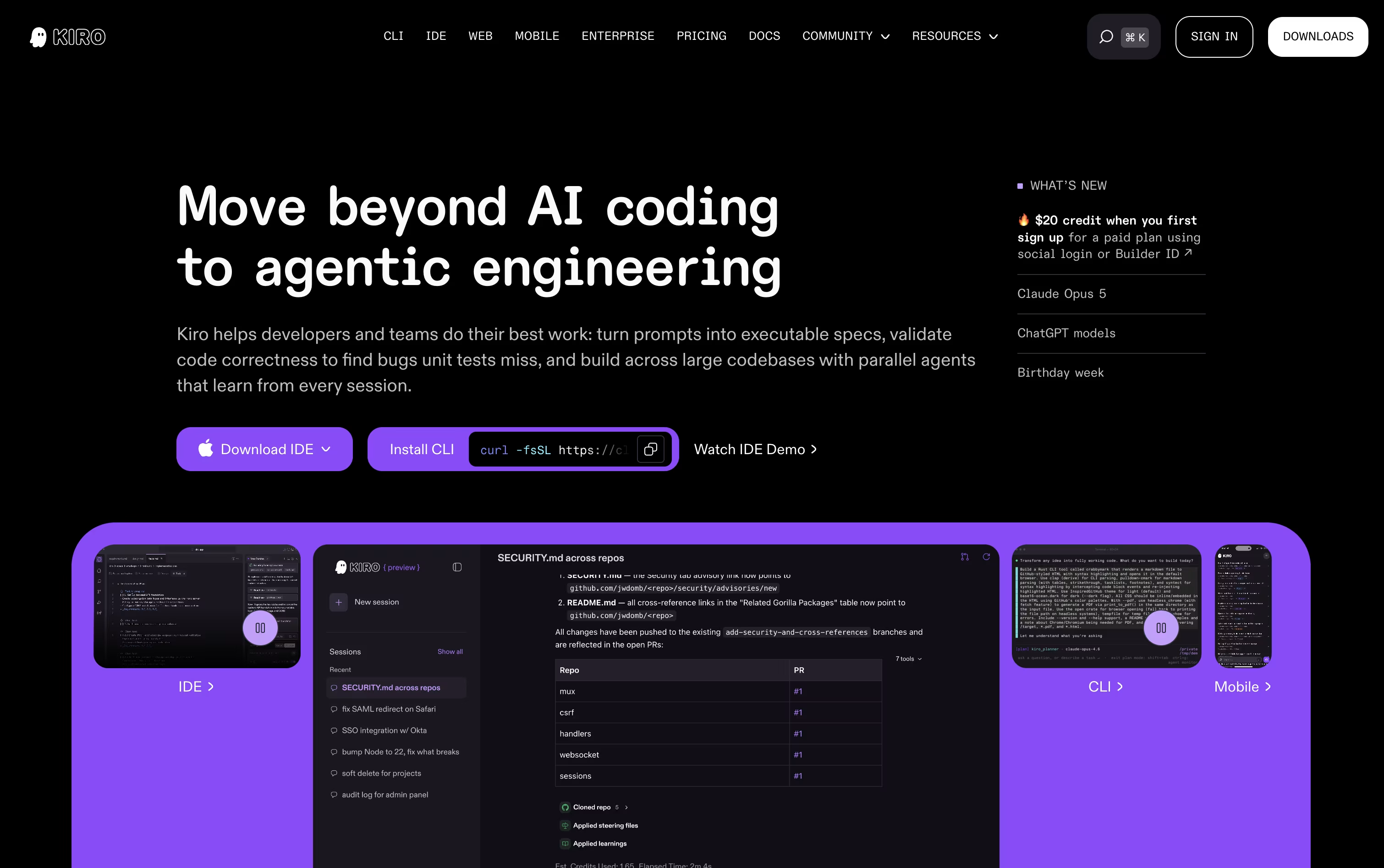
Once the plan is ready, AI agents pick up the tasks, write the code, and run checks that go beyond simple tests to confirm the work matches what was actually asked for.
There is also a lighter chat mode for quick questions, plus an Autopilot mode that can carry a task through from start to finish with little input from you.
Getting started costs nothing. The Free plan includes 50 credits along with open-weight models and Claude Sonnet 4.5. Paid plans move from $20 up to $200 per user a month, adding more credits and access to premium models.
Team plans bring in single sign-on, usage reports, and one combined bill, and an Enterprise option is available with custom pricing and added security and admin controls.
Kiro runs on Amazon Bedrock and follows AWS standards, making it a fit for solo coders, teams, and larger companies alike.