

Best 12+ Tools for Speech AI Integration in 2026
Last Updated: August 25, 2026
Typing out captions for every single post adds up fast, especially when you are juggling multiple accounts and platforms. With Speech AI Integration, you can simply speak your ideas out loud and have them converted into polished, ready-to-edit text for your next post, cutting down the time spent staring at a blank caption box.
This works especially well for creators and marketers who think better out loud than on a keyboard. Record a quick voice note about a product update, an event, or a thought you want to share, and the tool turns it into a draft caption you can refine and schedule in seconds.
Beyond captions, speech-to-text support also makes it easier to add voiceovers or spoken notes to video content without switching between separate apps. It keeps the entire content creation process inside one workflow, so nothing gets lost between recording an idea and actually publishing it.
 Fish Audio
 Fish AudioAI Voice Cloning & Text to Speech,
  Cartesia
 CartesiaFast, Natural Voice AI for Developers, and
  Smallest AI
 Smallest AIFast, Accurate Voice AI Platform are the best for Speech AI Integration. So, let’s take a closer look at all 12+ tools.

Fish Audio is an AI voice tool that generates lifelike speech from text and can copy a voice using only a short sample. It also converts speech to text, swaps voices, and offers sound effects, audio separation, and translation features.
Getting started costs nothing on the Free tier, which gives 8,000 credits a month for around 7 minutes of audio and access to 3 public voices.
The Plus plan runs $7.50 a month, or $5.50 a month on annual billing, and unlocks 250,000 credits, private voice slots, and the right to use audio commercially.
Stepping up to Pro brings the price to $50 a month, or $37.50 a month annually, along with 2 million credits, 3 team seats, and 5 professional voices.
Max is priced for bigger teams at $999 a month, or $749 a month with annual billing, offering 25 million credits and 10 team seats, while Enterprise pricing is custom and built around compliance and on-premise needs.
For builders, an API charges only for what is used, covering speech generation, transcription, and voice design without any monthly commitment.
Cartesia is a voice AI platform focused on speed and natural sound, built by researchers behind State Space Models, an approach designed for quick responses and long context handling.
Three tools sit at its core. Sonic converts text into human sounding speech, Ink listens and turns speech into text while detecting when a speaker starts and stops, and Line combines both into full voice agents you control with your own code.
The Free plan costs nothing and includes 20K monthly credits along with basic Text to Speech and Speech to Text access.
Moving up, Pro at $5 a month unlocks commercial use and instant voice cloning, and Startup at $49 a month adds professional voice cloning plus organization support.
Scale, at $299 a month, brings priority support and higher concurrency, while Enterprise offers custom pricing with SSO and compliance features for larger teams.
Phone numbers and call minutes are billed on top of a plan, and any subscription can be paused or stopped whenever needed.
Smallest AI builds compact, fast AI models for voice conversations rather than relying on one large model for everything. This approach lets each model react quickly and handle speech in a natural way.
The platform's main models are Lightning for turning text into speech, Pulse for turning speech into text, Hydra for direct speech to speech conversation, and Electron, a small language model that handles reasoning during a call.
Teams that want to build voice agents can use Atoms, a no-code platform for creating, testing, and launching agents, along with knowledge bases and calling campaigns.
Billing works on a pay as you go basis. New users start with $10 in free credits, then usage is billed per minute for calls, per character for speech generation, and small fees for extras like knowledge base queries.
Bigger teams can choose the Enterprise plan for custom pricing, dedicated infrastructure, on-premise options, and compliance support, with per minute agent costs starting as low as $0.05.

Rime AI converts text into speech that sounds like a real person talking, which makes it a strong fit for voice agents, customer calls, and automated phone systems.
Pricing is usage based, so you only pay for what you generate. It starts at $0.03 per 1,000 characters, and new accounts get roughly 800 minutes free with no credit card needed.
Two models are offered. Mist v3 responds the fastest, while Coda focuses on natural, expressive sounding speech and covers more languages.
The Starter plan supports 20 concurrent voice generations along with streaming audio, word level timestamps, and precise control over how names and numbers are pronounced.
Bigger teams can move to Enterprise for custom pricing, unlimited concurrent generations, unlimited voice cloning, and cloud, on prem, or private network deployment.
Enterprise customers also get HIPAA compliance and SOC 2 Type II reporting for handling sensitive conversations safely.

AssemblyAI gives developers a way to turn audio and video into text and insights without building speech models from scratch.
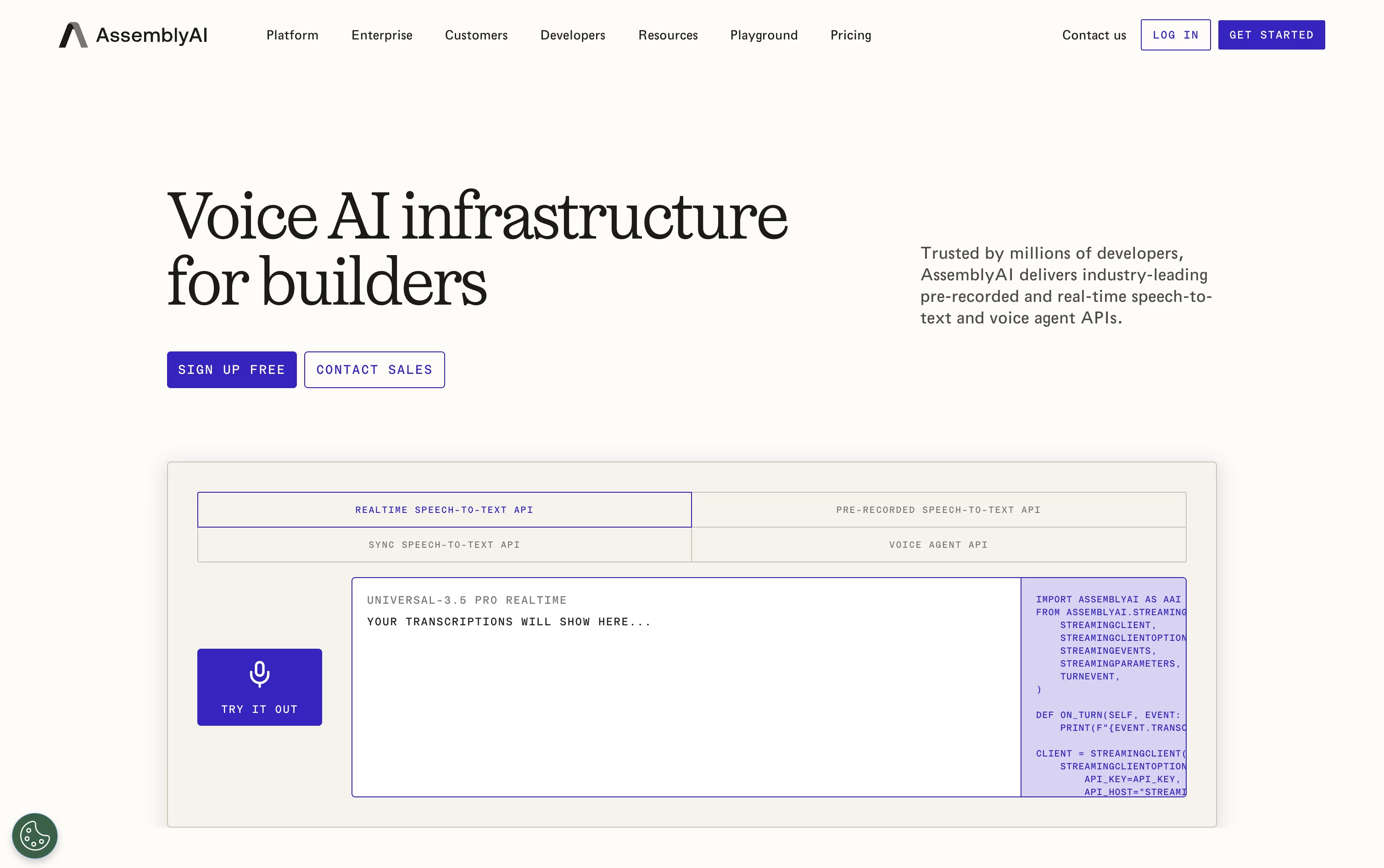
You can send in a finished recording for batch processing, stream live audio for realtime captions, or use the Sync API when you just need a quick transcript from a short clip in one call.
The Universal-3.5 Pro model is built for real conversations, working across 18 languages, labeling different speakers, and picking up medical and technical words accurately.
On top of the transcript, Speech Understanding can summarize the audio, detect sentiment and topics, translate it, and pull out names, dates, and other details.
Everything is billed per hour of audio processed, starting around $0.15 an hour, with extra features priced as small add-ons.
Teams building voice agents can instead use the Voice Agent API at $4.50 an hour, which already includes the speech model, a conversation focused language model, and text-to-speech together.

A lot of teams come to Inworld AI looking for a way to add natural sounding voices to games, apps, or AI agents without piecing together several different tools. Inworld combines text-to-speech, speech-to-text, and a full speech-to-speech Realtime API in one platform.
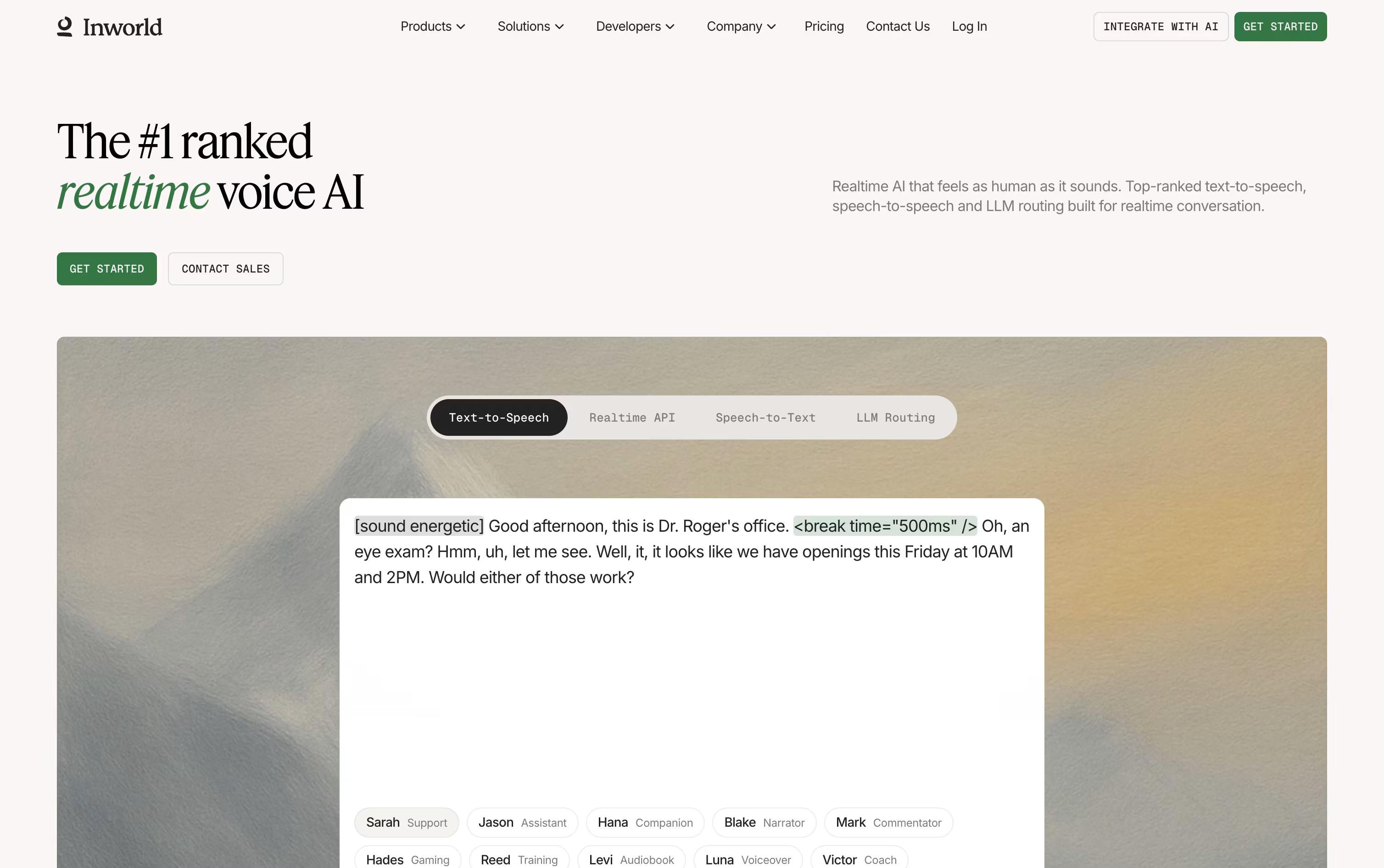
The free On-Demand plan is a good place to start, offering around 70 minutes of speech generation, 100 custom voices, and access to the Realtime API and LLM Router with over 220 models.
Paid tiers scale from Creator at $25 a month up to Growth at $1,500 a month, each one lowering the per character and per hour usage rates while raising the number of custom voices and concurrent sessions allowed.
Character based TTS pricing runs from $25 per million characters on the free plan down to $12.50 on Growth, with Enterprise customers able to negotiate rates as low as $5. Speech to text starts at $0.15 an hour and falls to $0.10 on every paid plan.
For larger organizations, Enterprise adds custom limits, on-premises hosting, data residency options, and a dedicated account manager, on top of SOC 2 Type II, HIPAA, and GDPR compliance built into the platform.

Synthflow lets businesses build AI voice agents without writing code, handling phone calls as well as chat, SMS, and WhatsApp messages from one platform.
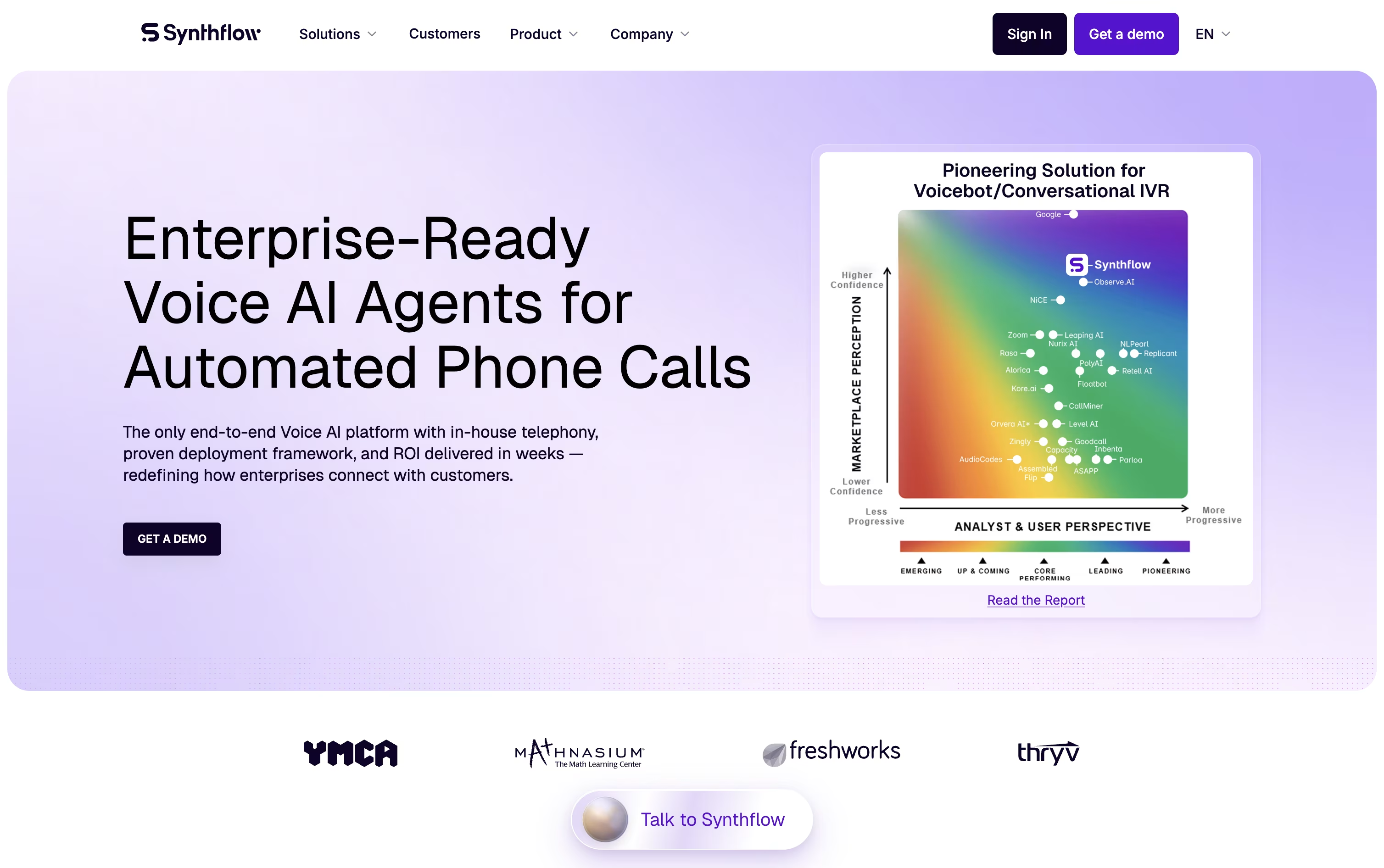
Instead of leaning only on outside phone providers, it operates its own telephony network, which helps keep response times low and calls reliable, with backup systems if anything fails.
Before an agent goes live, it can be run through many simulated calls to catch problems early, and once live, teams get real time monitoring, call logs, and analytics to track how it performs.
Agents can also plug into over 200 outside tools, such as CRMs, calendars, and contact center platforms, letting them schedule appointments, update customer records, and pass difficult calls to a person with the full conversation history attached.
On pricing, Synthflow publishes details only for its Enterprise tier, starting from $30,000 a year, roughly $2,500 monthly, though the real cost is shaped by things like call volume, telephony needs, integrations, and security requirements.
This Enterprise tier also bundles in SLA terms, dedicated support, setup help, staff training, and continued optimization, aimed at organizations wanting a fully supported rollout.

Building a voice AI agent from scratch usually means wiring together speech recognition, a language model, and speech synthesis yourself. Vapi handles that real-time plumbing so developers can spend their time on prompts, tools, and the actual conversation flow.
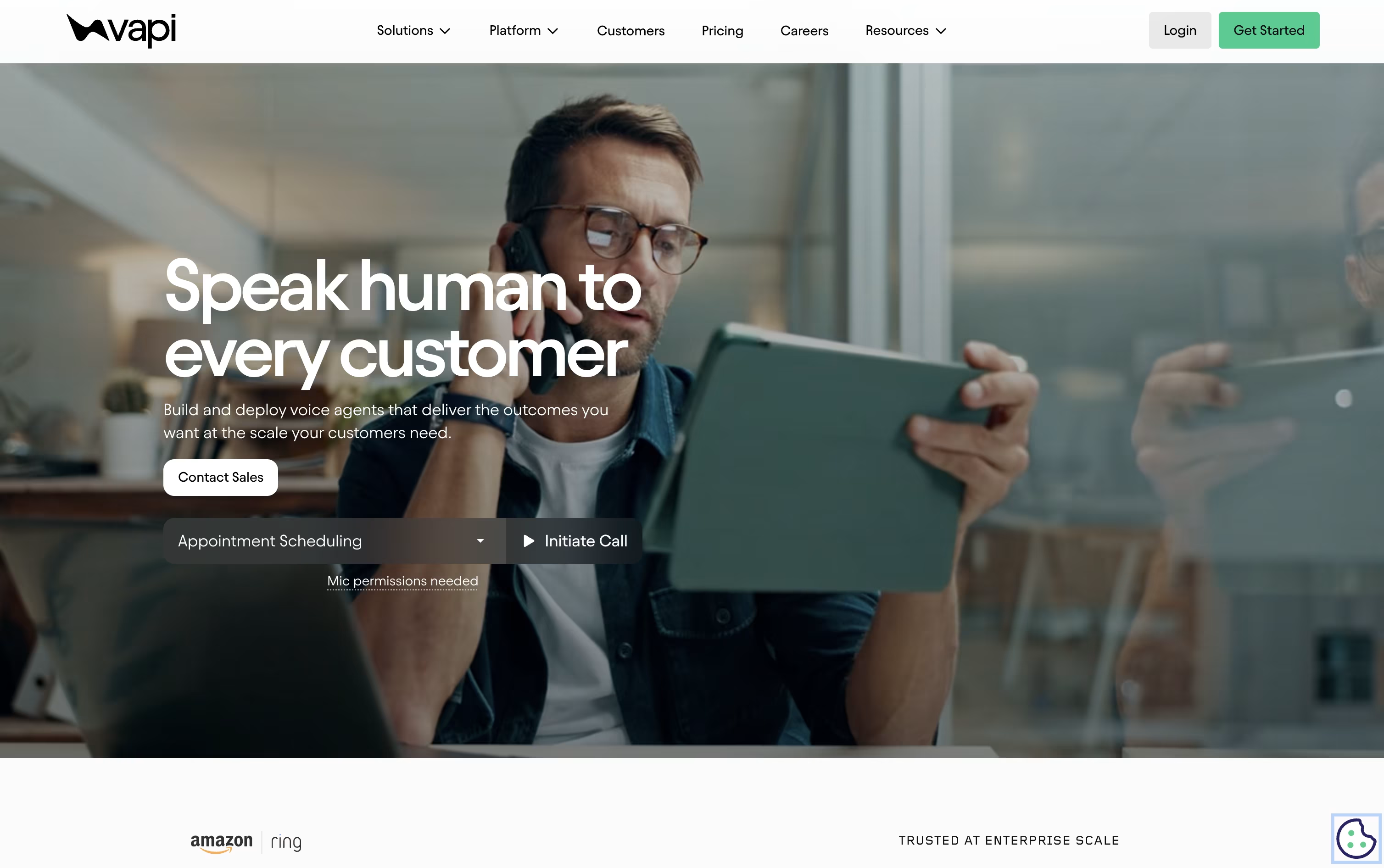
Each agent is made up of a speech to text step, a language model, and a text to speech step, all of which can be swapped or brought in with your own API keys. Agents can place or receive phone calls, trigger outside tools and APIs, and pass conversations between specialized assistants when a task gets more complex.
Well known teams such as Amazon Ring and Intuit rely on Vapi for support, sales, and scheduling calls, backed by built-in monitoring, recordings, and analytics for ongoing improvement.
The Build plan is usage based, starting at $0.05 per minute for voice calls and $0.0005 per message for chat, and it includes 60+ minutes and 10 concurrent calls. Model provider costs are charged at cost, and fall to $0 when you use your own API key.
Bigger organizations can choose Scale, an annual contract with a fixed platform fee, committed volume, and enterprise extras like SSO, SOC 2, and a dedicated support team, with pricing shared on request.

Instead of a flat, machine-like voice, Typecast turns your script into speech that sounds like a real person speaking with feeling. It is built on voice recordings from professional actors and a model called SSFM that Neosapience has developed over several years.
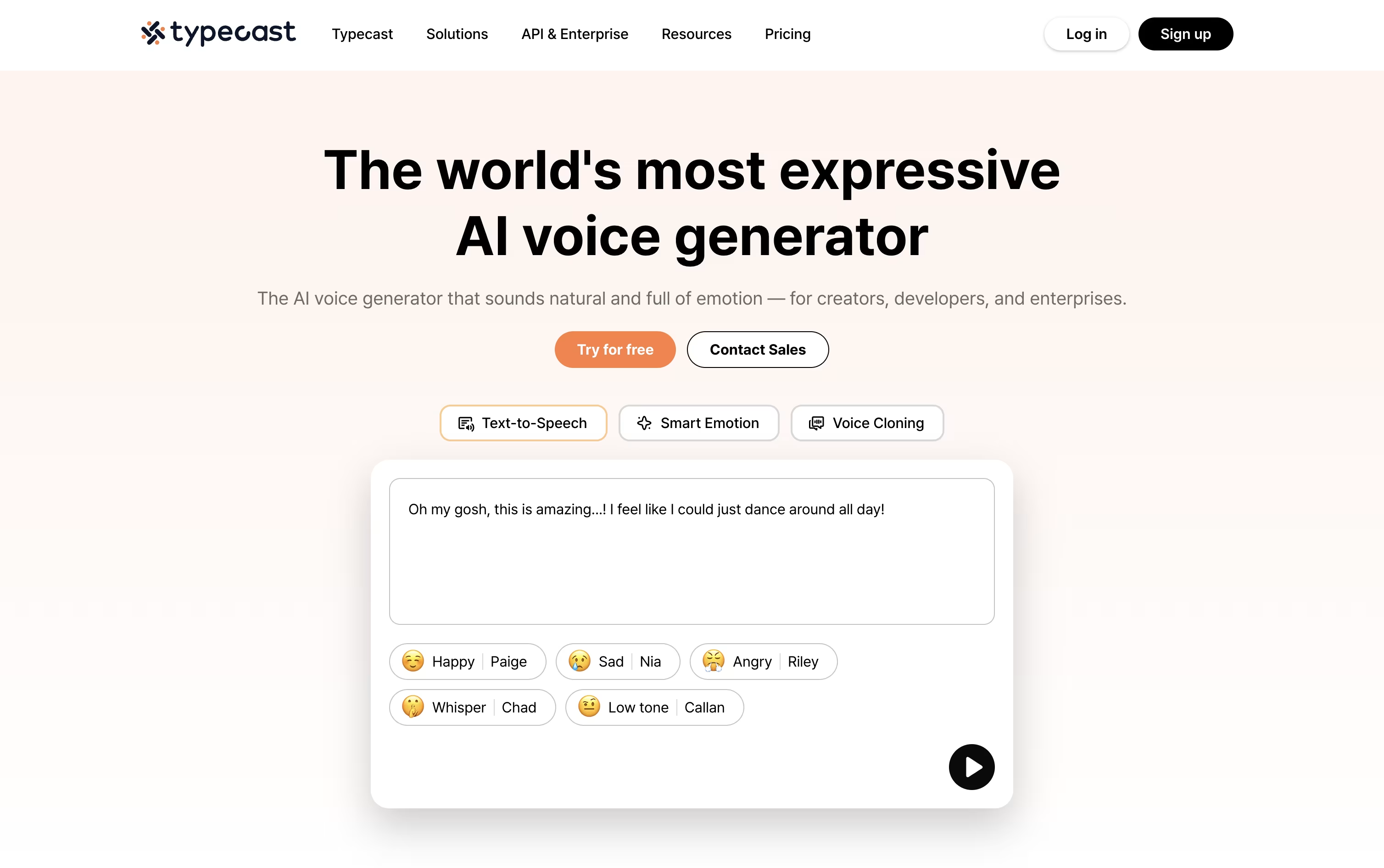
The stand-out feature is Smart Emotion, which reads through your text and applies the right emotional tone on its own. You can also step in manually, choosing an emotion, adjusting pitch, and changing speed for more control.
A built-in video editor lets you go further than audio alone, adding images, backgrounds, music, and an AI avatar with lip-sync, so a script becomes a finished video for YouTube, marketing, or e-learning.
Developers get a full API and SDKs in many programming languages, with streaming and timestamped audio for building voice features into apps or real-time assistants.
On price, Studio plans start free and go up to $69 a month for the Business tier, while a separate API track starts free and grows with usage, with custom pricing for large Enterprise needs.

Speechify is built around one idea: let people take in information by ear instead of by eye. Drop in a PDF, paste some text, share a link, or point your phone's camera at a printed page, and Speechify reads it aloud in a natural voice.
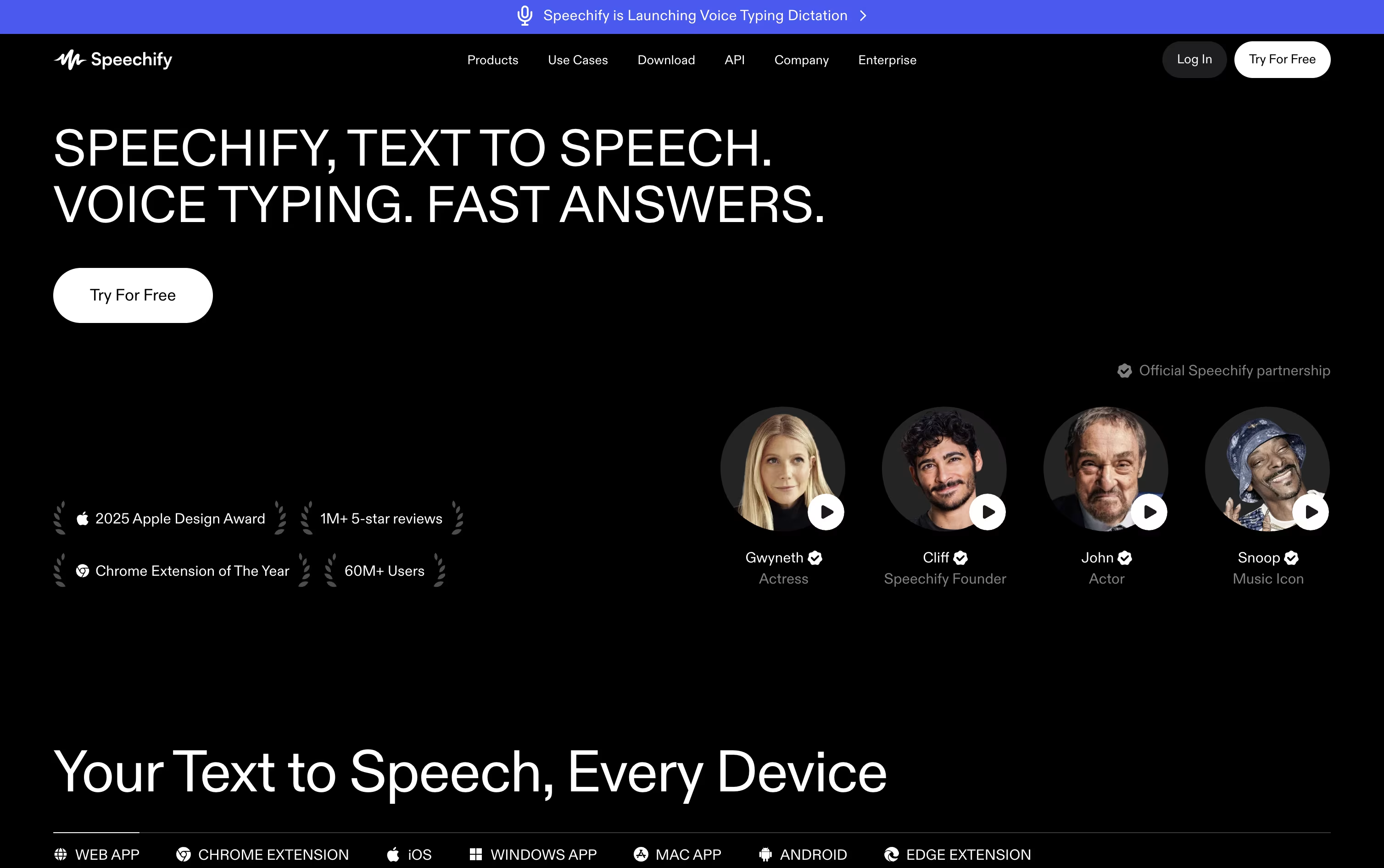
It goes further than plain narration too. You can ask its Voice AI Assistant questions about the material, request a quick summary, or generate a quiz to test what stuck.
Getting started costs nothing, with a free plan offering basic robotic voices and standard reading. Stepping up to Premium at $29 a month, or $139 a year for roughly 60% savings, unlocks over a thousand natural voices, speeds up to 4.5 times normal, voice typing, and instant AI podcasts.
If your focus is creating rather than consuming, Speechify Studio is a separate tool for voiceovers, video dubbing, and voice cloning, priced from $100 to $300 a year.
There is also a developer focused SpeechifyAI API, free to start and scaling up to $499 a month, or custom pricing for enterprise voice agents.

Retell AI helps you build AI voice agents that actually hold a conversation, instead of forcing callers through a rigid phone menu.
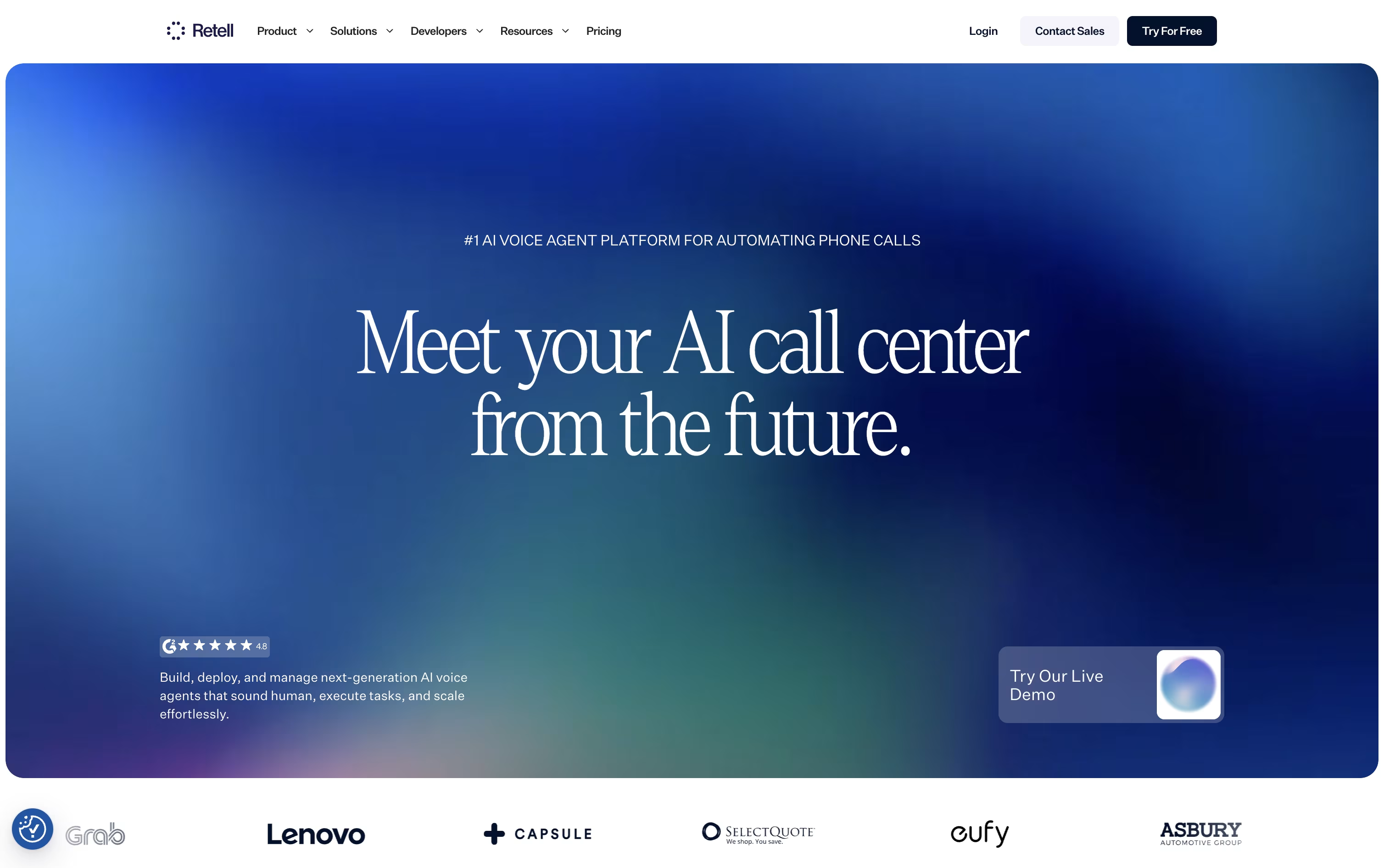
Agents can be built with a node based flow builder for structured calls, or with prompts for more flexible conversations, and they can pull from a knowledge base or your CRM while talking.
Mid call, an agent can book an appointment, send an SMS, detect voicemail, or hand the caller to a human with full context passed along.
On the pricing side, everything runs pay as you go. Voice agents typically cost between $0.07 and $0.31 per minute based on the LLM, voice, and telephony chosen, and chat agents start around $0.002 per message. Signing up is free and comes with $10 in credits plus 20 free concurrent calls.
Bigger organizations can choose the Enterprise plan instead, which is custom priced and includes a dedicated server, custom contracts, single sign on, and full time dedicated support.
Security wise, it is HIPAA and GDPR ready with SOC 2 certification, and it includes simulation testing and live monitoring so you can see exactly how calls are going.

NLPearl helps you build AI agents that actually talk with customers on the phone or over text, rather than reading from a script or bouncing calls around a menu.
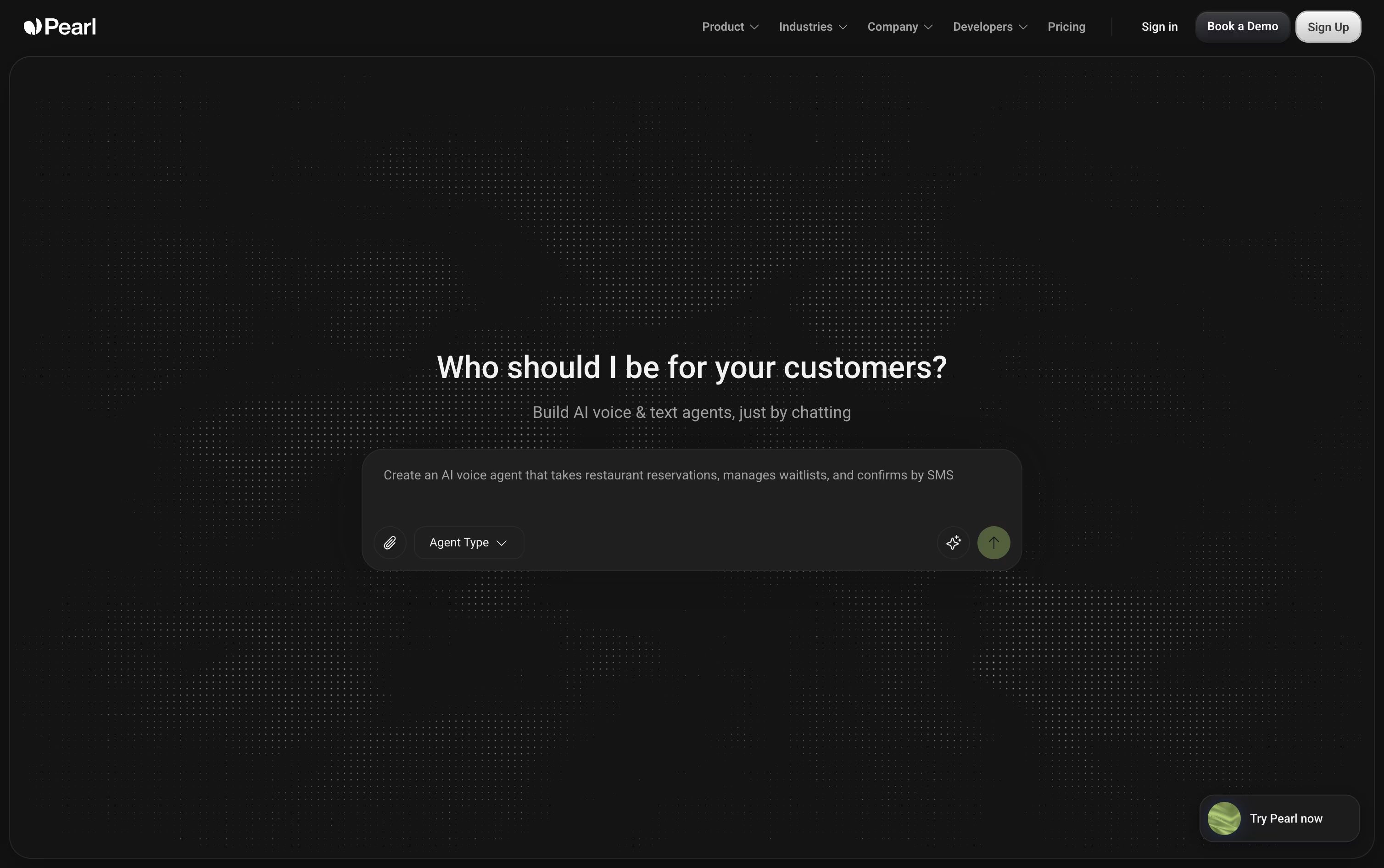
Using PearlVibe, you type out what the agent should do and it puts together the conversation rules, knowledge, and actions like booking a slot or sending a follow up message.
The Starter plan costs $50 a month for 2,500 credits and 1 agent, while Companion at $195 a month steps up to 15,000 credits and 5 agents, and Manager at $779 a month gives 65,000 credits and 10 agents.
Per minute voice pricing and per message text pricing both drop as you move up the tiers, and Enterprise plans are custom priced with dedicated servers and unlimited extra users.
It also connects with Twilio, your own VoIP setup, and more than 100 other business tools, all backed by GDPR and SOC 2 security.

Deepgram gives developers one platform for speech-to-text, text-to-speech, and real-time voice agents, instead of stitching together separate tools.
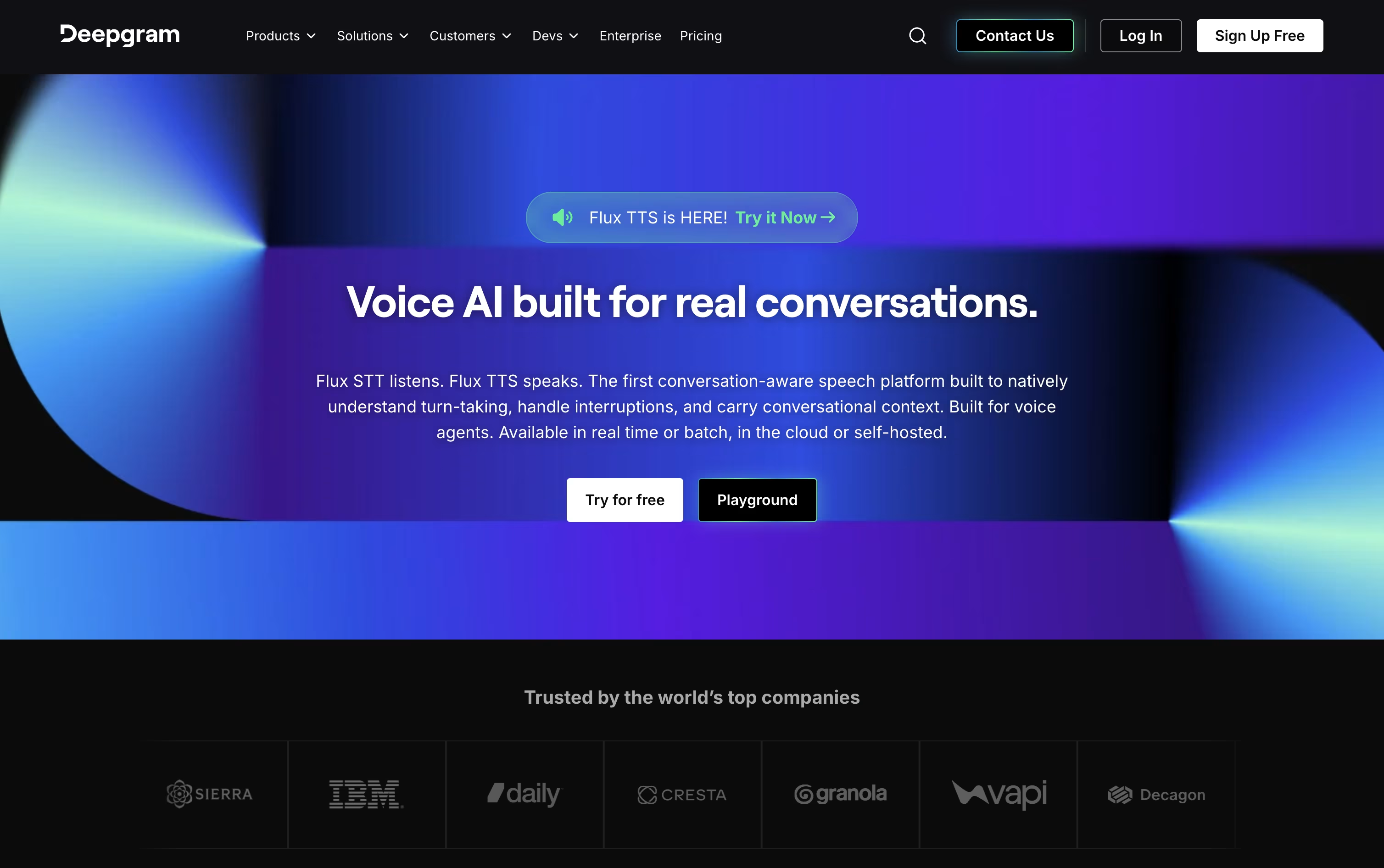
Its Nova-3 and Flux models transcribe audio quickly and accurately in more than 45 languages, with built-in speaker labels, formatting, and redaction of private information.
On the speech side, Aura voice models generate natural sounding replies fast, and the Voice Agent API ties listening, reasoning, and speaking together into one smooth, low-latency conversation.
New users start on Pay As You Go, which comes with a $200 free credit and charges only for actual usage after that.
Growth suits busier teams for $4,000 or more a year in prepaid credits, bringing lower rates on most services and higher concurrency limits.
Larger organizations can move to Enterprise, a custom priced plan through sales that adds dedicated support, custom models, and options to self-host for stricter data control.

Bland AI lets teams create phone agents that carry on real, back and forth conversations rather than reading from a fixed script. It works for both calls coming in and calls going out.
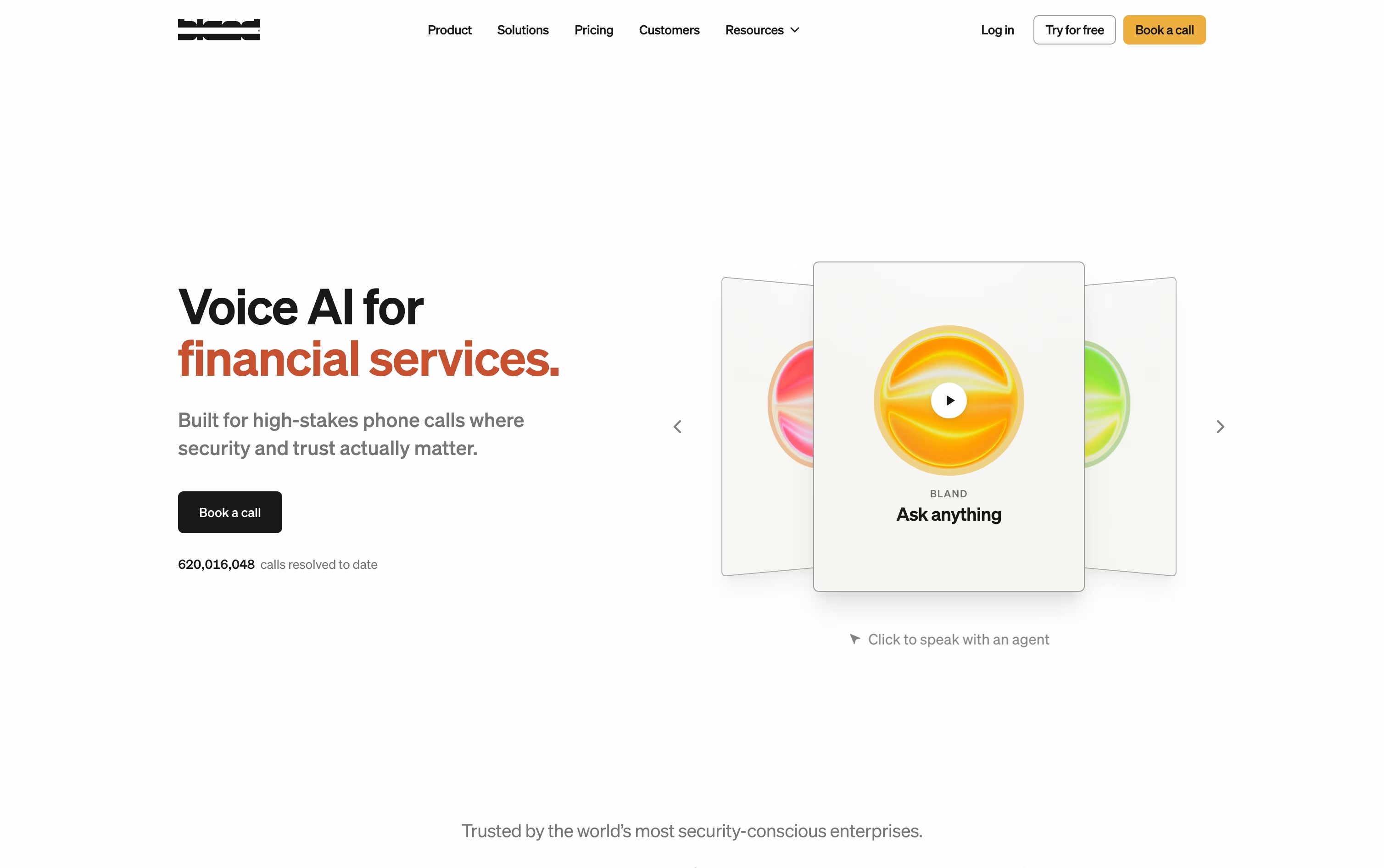
It is mostly used by businesses that need to follow rules closely, like healthcare, insurance, and financial services, where a call still needs to sound natural even while following compliance steps.
Building an agent can be done visually, through plain English instructions, or directly through the API, and agents can pull in company documents, trigger outside tools, and pass a call to a human when needed.
On pricing, the Start tier is $0.14 per minute with no monthly charge. Build moves to $0.12 per minute with a $299 monthly fee, and Scale lowers this further to $0.11 per minute with a $499 monthly fee, each unlocking higher call volumes.
Enterprise pricing is custom and brings dedicated infrastructure, on prem options, custom voices, and added security like single sign on and signed agreements for regulated data.
Because the voice and language models are built in house, calls tend to hold up well even during long or unpredictable conversations.

Most voice assistants read text out loud without any real feel for the moment. Hume AI takes a different approach, building an Empathic Voice Interface that listens for tone and emotion, then responds in a voice that actually matches how the conversation feels.
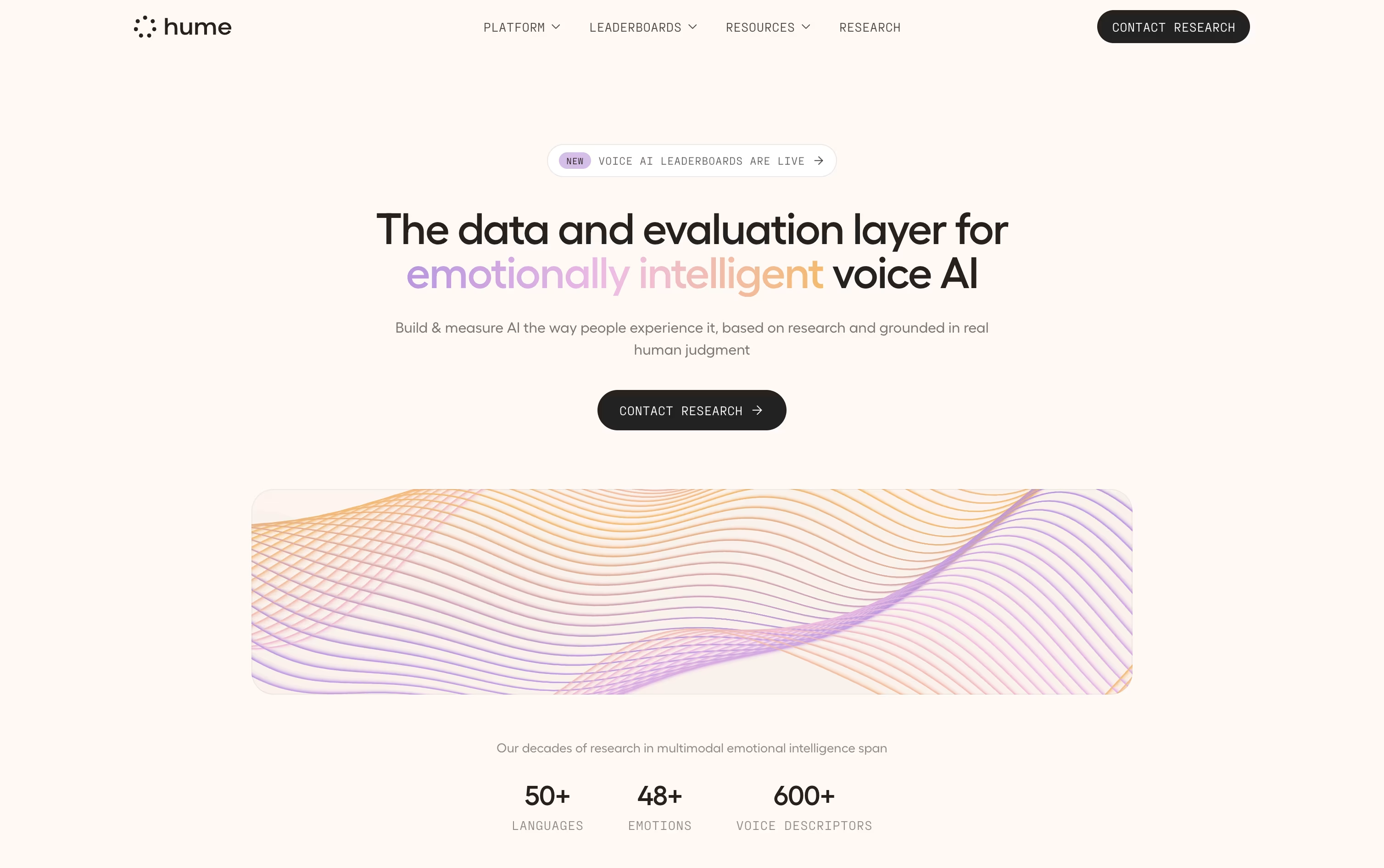
Its Octave text-to-speech model works the same way, using context to control pitch, pace, and emphasis rather than reading in a flat, mechanical voice.
A free plan is available with 10,000 characters of speech and 5 minutes of voice conversation each month, enough to try things out.
From there, Starter starts at $3 a month, with Creator, Pro, Scale, and Business each stepping up in usage, request speed, and lower overage pricing along the way.
Businesses that need more can move to a custom Enterprise plan, which includes unlimited team seats, Slack based support, and compliance with SOC 2 Type II, GDPR, and HIPAA.
Since Hume's voice layer works with outside models such as Claude, GPT, and Gemini, teams can change the brain behind the assistant without changing how it sounds.

Murf AI is built around turning written text into speech that sounds genuinely human, drawing from over 200 voices in more than 35 languages and accents. The same platform also covers voice agents for calls and chat, video dubbing, and voice cloning.
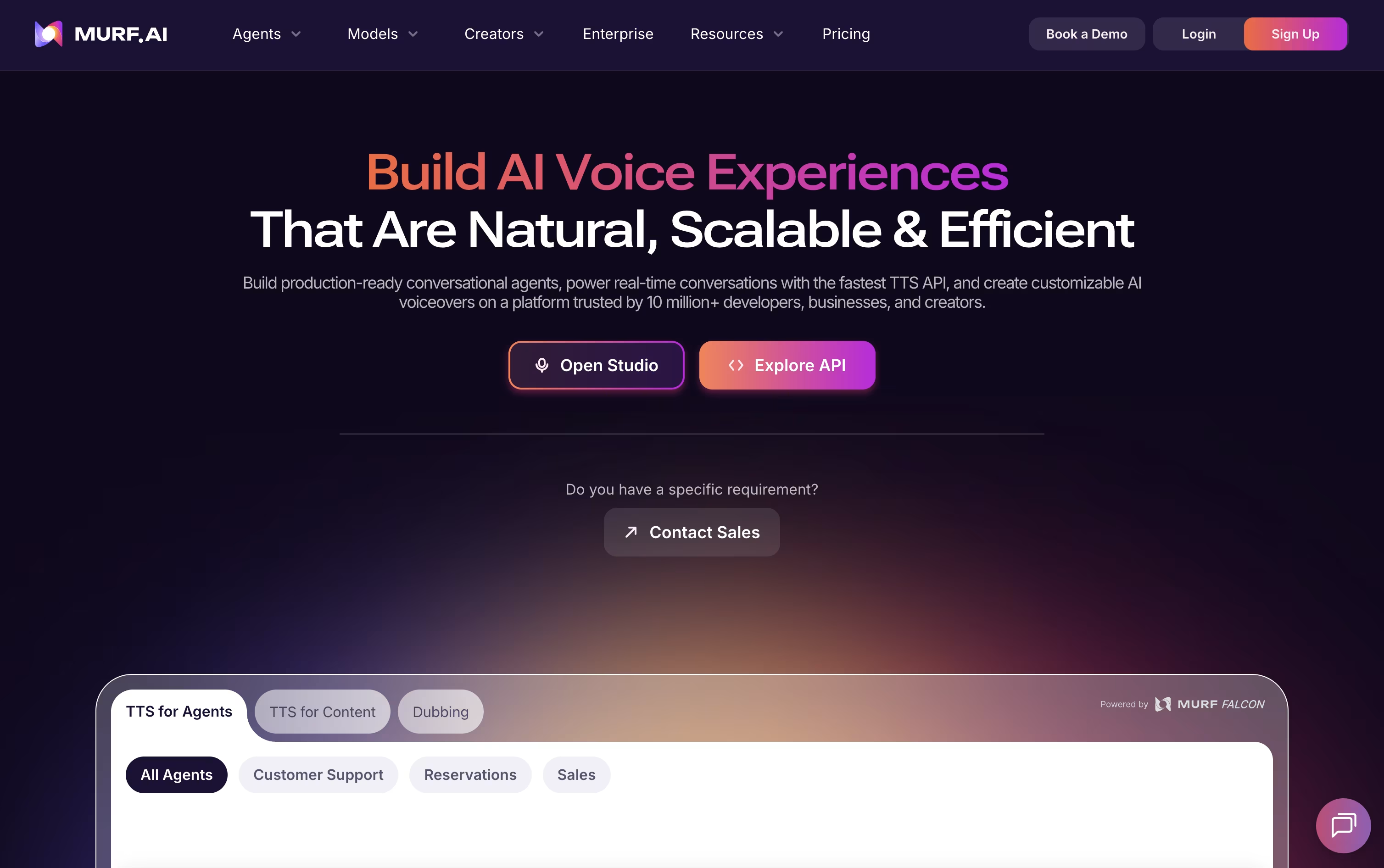
The Studio editor gives you control over pitch, speed, emphasis, pauses, and pronunciation, letting you mix multiple voices in one project before exporting audio you can use commercially.
Getting started costs nothing, since the Free plan includes 10 projects and 10 minutes of voice generation.
Creator picks up from there at $19 a month on the yearly plan, or $29 month to month, unlocking 100 projects, 2 hours of monthly voice generation, unlimited downloads, and commercial rights.
Business steps up to $66 a month yearly, or $99 monthly, and adds 8 hours of generation along with emphasis, variability, and PowerPoint support.
Bigger organizations can request a custom Enterprise plan with unlimited generation and dedicated account support, while Dub and API pricing are billed separately by usage.

ElevenLabs is best known for making AI speech that actually sounds human, with natural pauses, tone, and emotion instead of a flat robotic voice. On top of speech, it can clone a voice from a short sample, dub videos into dozens of languages, generate music and sound effects, and run voice agents that talk to customers over the phone or in chat.
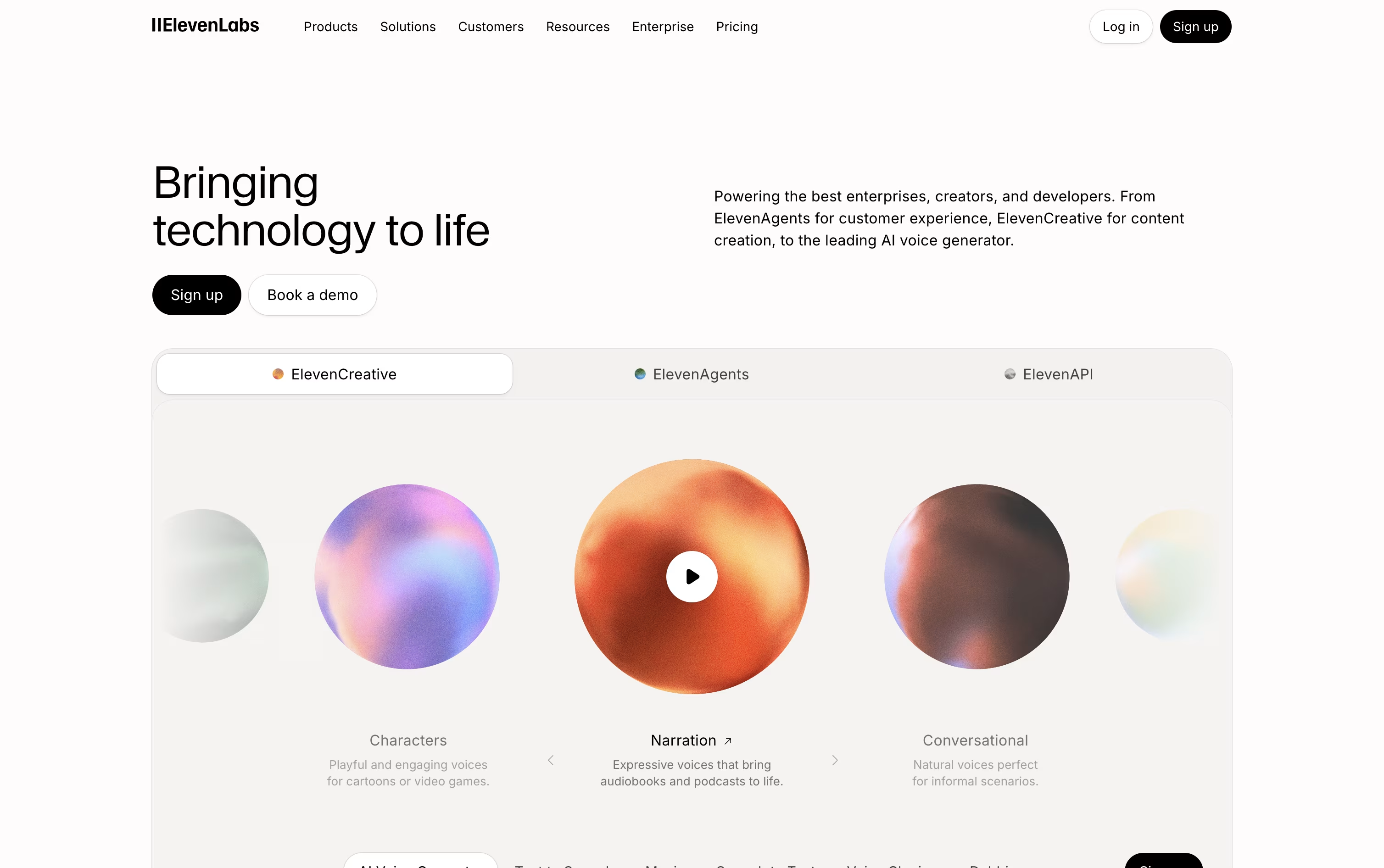
There are three main ways to use it. ElevenCreative is a web based studio built for content creators making podcasts, ads, and short videos. ElevenAgents lets you design and launch conversational voice and chat bots without needing to write code. ElevenAPI opens up the same technology to developers through a REST API with ready made Python and JavaScript SDKs.
The Free plan gives 10,000 credits a month so anyone can try the basics at no cost. Starter is $6 a month and adds commercial licensing plus instant voice cloning. Creator, the most popular tier, is normally $22 a month, sometimes offered at $11 for the first month, and includes professional grade voice cloning with a much larger credit allowance.
Bigger needs are covered by Pro at $99 a month, Scale at $299 a month with shared workspace seats, and Business at $990 a month with ten seats and lower cost, low latency speech. Enterprise pricing is discussed directly with the ElevenLabs team and includes custom security and priority support.
Since every plan draws from the same underlying voice and audio models, the quality does not drop as you scale up, whether you are producing a single video or running thousands of live customer calls.