

Best 12+ Tools for Video Production in 2026
Last Updated: August 28, 2026
Not every team has a full production crew behind them, but most still need regular video content. Video Production tools cover the full process, from combining clips and adding transitions to layering in text, music, and effects, ranging from simple drag-and-drop editors to more advanced timeline-based software.
This matters for marketers, educators, and content creators who need to produce quality video in-house on a schedule that keeps up with regular content demands.
 Synthesia
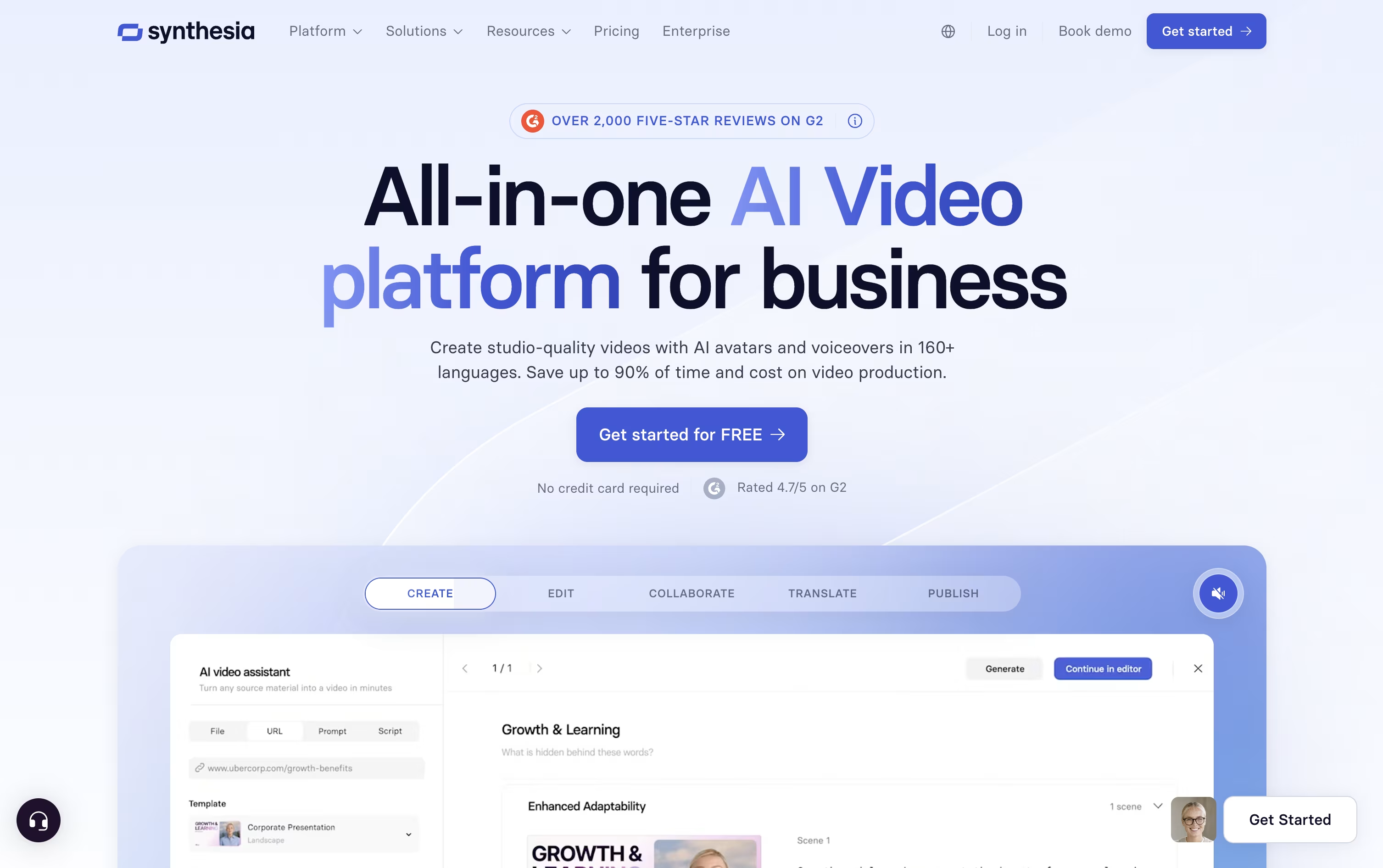 SynthesiaAI Avatar Video Creation Platform,
  HeyGen
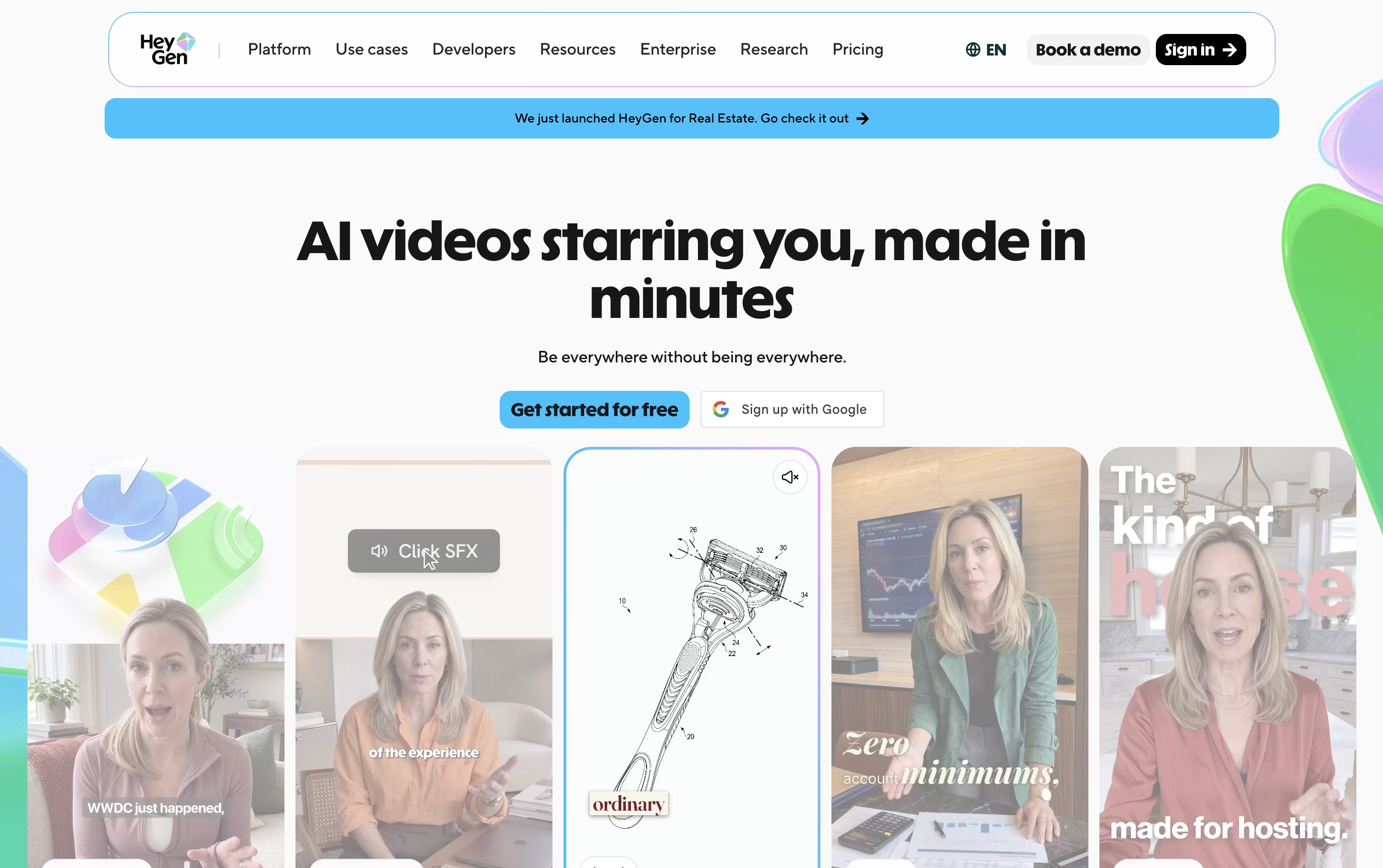 HeyGenCreate Realistic AI Avatar Videos Fast, and
  Tavus
Tavus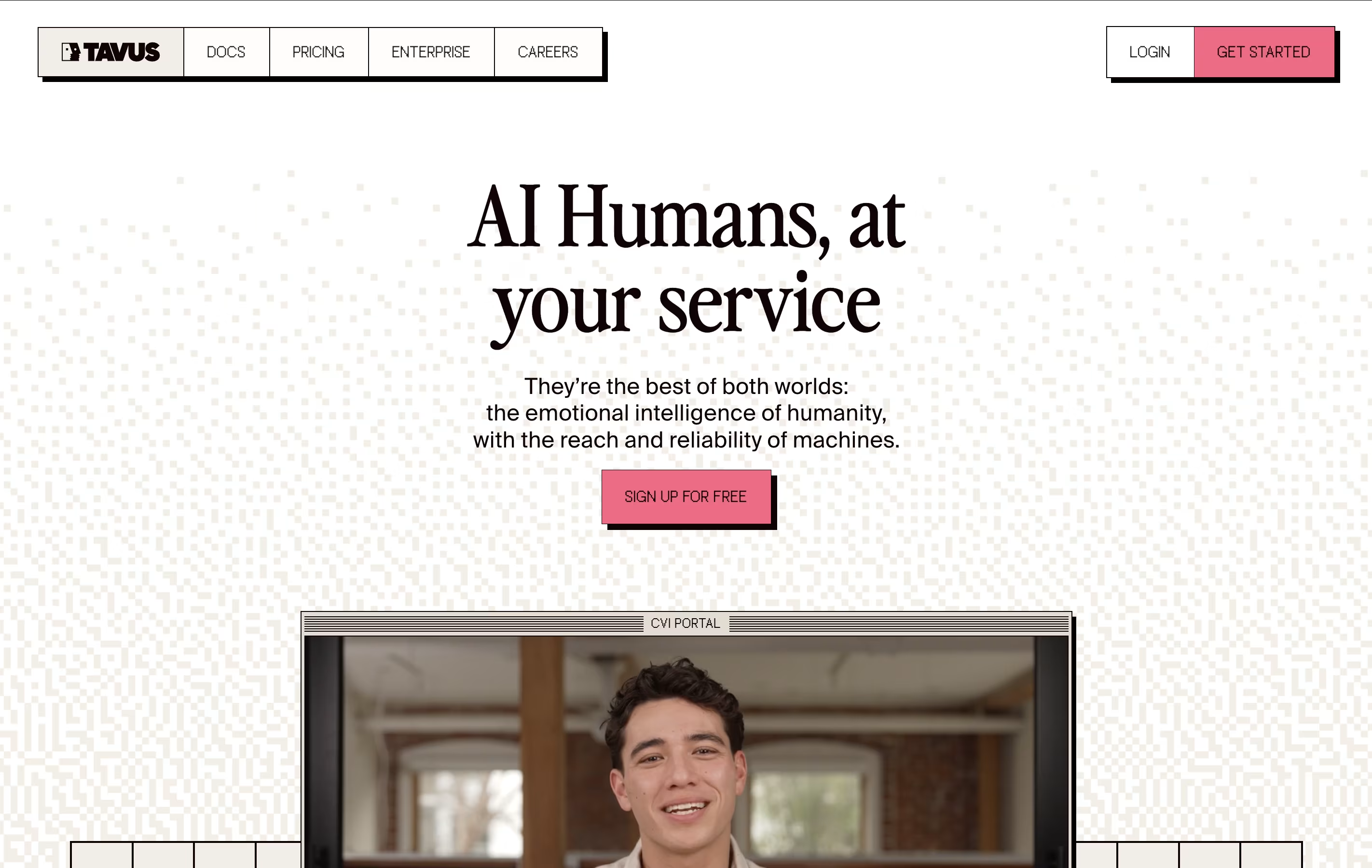 TavusAI Digital Twins for Personalized Video Generation are the best for Video Production. So, let’s take a closer look at all 12+ tools.

Instead of hiring actors or booking a studio, Synthesia turns written text into a video with an AI avatar reading it aloud.
The avatar library has grown past 240 options, and you can also create a personal avatar plus a cloned voice so the video sounds and looks like you.
Getting started costs nothing on the Basic plan, which includes 10 minutes of video each month and 9 avatars.
Moving up, Starter is $18 a month on the yearly plan and adds downloads plus dubbing, while Creator at $64 a month brings API access, interactive elements, and branded pages, and is the most popular tier.
Enterprise drops the limits entirely with custom pricing, unlimited minutes, unlimited personal avatars, SSO, and hands-on onboarding support.
Since updates just mean changing the script rather than filming again, it fits well for training material and internal videos that change often.
Instead of hiring actors and booking a studio, HeyGen builds your video from a script, a photo, a document, or a simple text prompt using AI avatars.
You can create a digital twin from a short recording of yourself, turn a single photo into a talking presenter, or choose from hundreds of stock avatars, all with realistic lip-sync and body movement.
Getting started costs nothing: the free plan allows 3 short videos a month without asking for a card.
Once you need more, Creator at $29 a month adds 30-minute videos, 1080p exports, voice cloning, and over 175 languages.
Pro, from $49 a month, adds 4K export and more advanced models, and Business at $149 a month brings in team workspaces, single sign-on, and app integrations.
Larger organizations can move to Enterprise, which is priced individually with dedicated support.
Tavus is an AI video platform that creates digital twins capable of both generating scripted videos and having real-time conversations. Think of it as your personal video clone that can speak any language, discuss any topic, and appear in unlimited videos without you ever recording again.
The platform uses advanced AI models including their Phoenix technology to generate realistic facial movements, expressions, and voice synchronization. What sets Tavus apart is its dual capability: you can either create traditional video content from text scripts or build interactive conversational experiences where your digital twin responds to live questions and conversations.
The technology works by analyzing your facial features, voice patterns, and speaking style from just two minutes of training footage. Within 6-9 hours, you have a digital replica that looks, sounds, and behaves like you, ready to create unlimited content or engage in real-time conversations with anyone.

Type a prompt, upload a photo, or add a reference clip, and PixVerse turns it into a short video with camera movement, sound, and even multiple shots stitched into one scene.
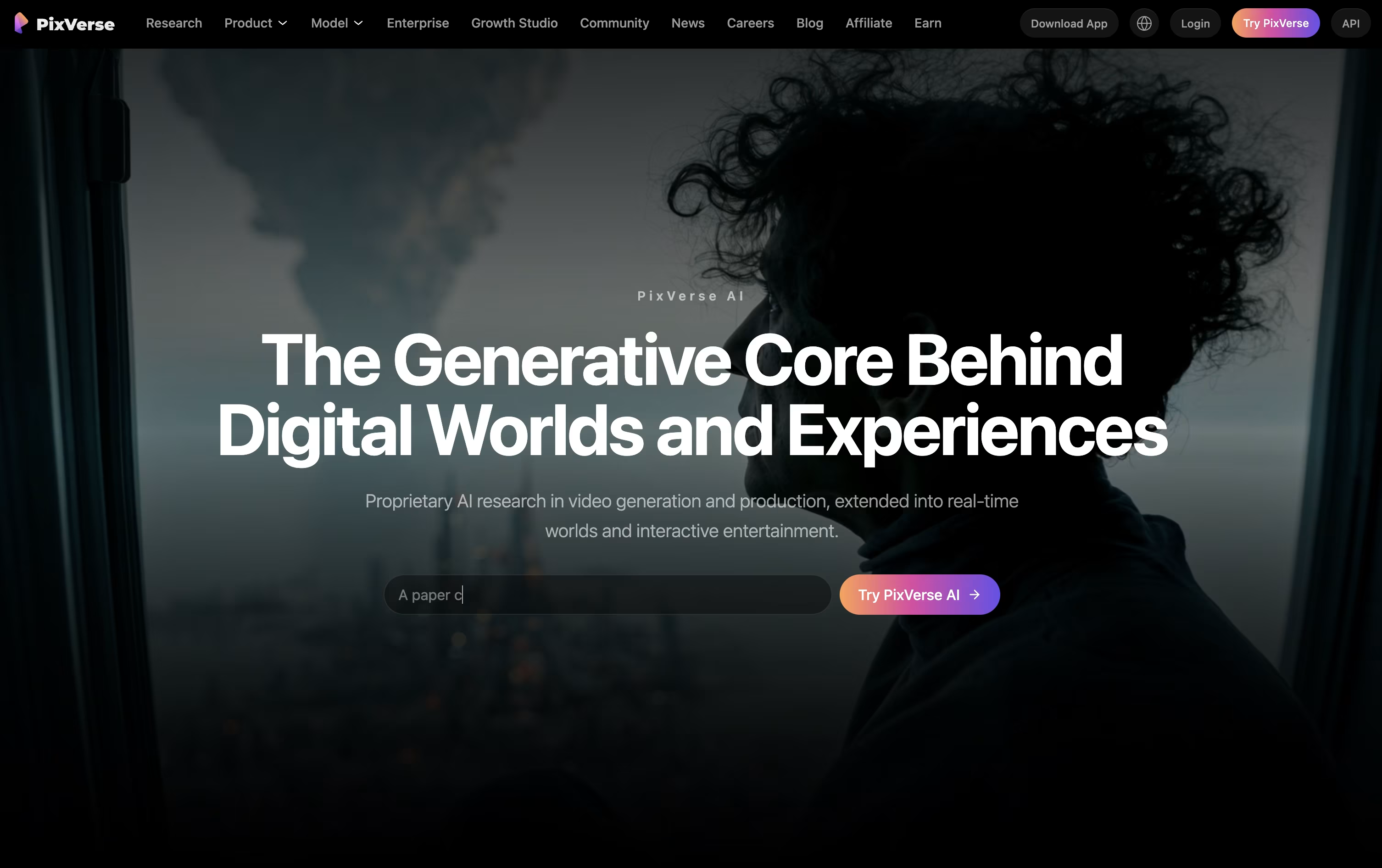
Editing tools such as Modify, Restyle, and Extend mean you are not stuck with the first result, you can swap out objects, change the style, or continue a clip with new action.
Anyone can start for free on the Basic plan, which includes 30 credits a day and video up to 540P resolution.
Stepping up to Standard at $10 a month unlocks 720P and 1,200 monthly credits, while Pro at $30 and Premium at $60 raise the credit pool further and open up full 4K output with more generations running side by side.
At the top sits Ultra for $199 a month, cut down from $249, offering the broadest set of unlocked image models, the deepest video model discounts, and free generations whenever Off-Peak Mode applies.
Groups working together can pick Team Ultra at $199 per seat for shared credits and a joint workspace, and larger organizations can reach out for Enterprise pricing that begins at $100 and includes full API access.

VEED helps you make a video by typing a prompt, recording your screen, or uploading a clip, then lets AI handle the heavy editing work.
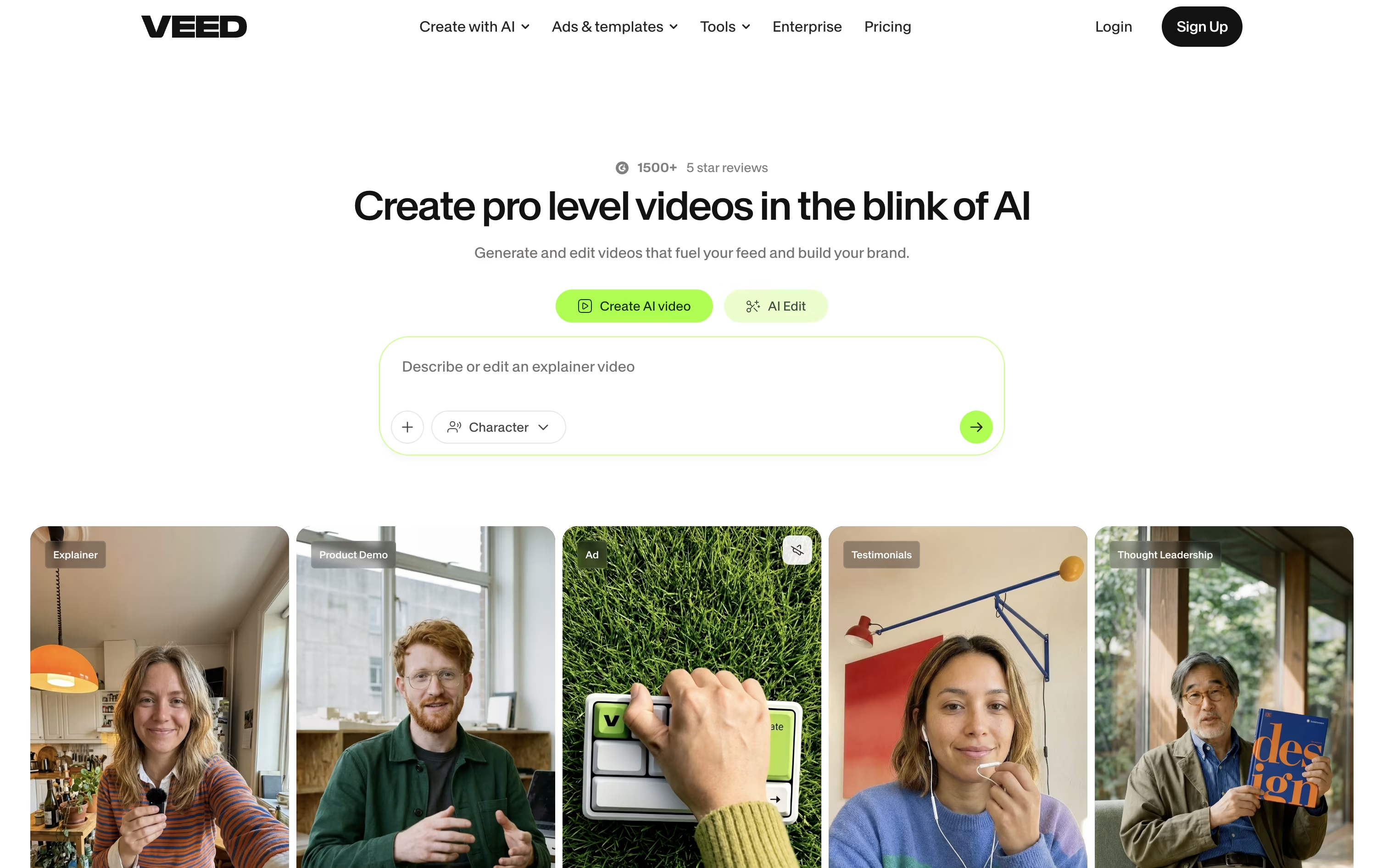
The AI Agent understands natural language, so requests like generate B-roll or make this fit TikTok get carried out automatically, while Edit with Script turns editing into simply deleting words from a transcript.
Every account, including the free one, gets auto subtitles and access to the full stock media catalog through Gen-AI Studio.
Creator starts the paid tiers at $20 a month, or $10 a month if billed yearly, and removes the watermark from exports.
Stepping up to Pro at $44 a month brings multiple Brand Kits, translation into more than 50 languages, and up to 12 hours of AI voice a month, and Studio at $70 a month multiplies the credits and adds Custom Templates.
Larger teams can move to Enterprise for custom pricing, centralized team management, and privacy controls.

Pika, built by Pika Labs, is an AI platform that changes text prompts, photos, or clips into short AI made videos.
Its standout part is a toolkit of playful effects: Pikaffects for surreal one tap transformations, Pikaframes to interpolate motion between two images, Pikascenes to compose scenes from reference pictures, and Pikadditions or Pikaswaps to add or replace elements in footage.
Pikaformance brings still photos to life with lip synced talking or singing, driven by an uploaded audio track.
Pricing starts free with the Basic plan, offering 80 credits a month at 480p resolution.
Standard runs $10 a month, Pro is $35 a month and is the most popular pick, and Fancy reaches $95 a month, each adding more credits, higher resolution, and quicker generation speeds.
Choosing yearly billing saves 20 percent, while no watermark downloads and commercial use are reserved for Pro and Fancy.

Built by Kuaishou, the company behind the Kuaishou short video app, Kling AI turns prompts, photos, and reference clips into cinematic video and sharp images.
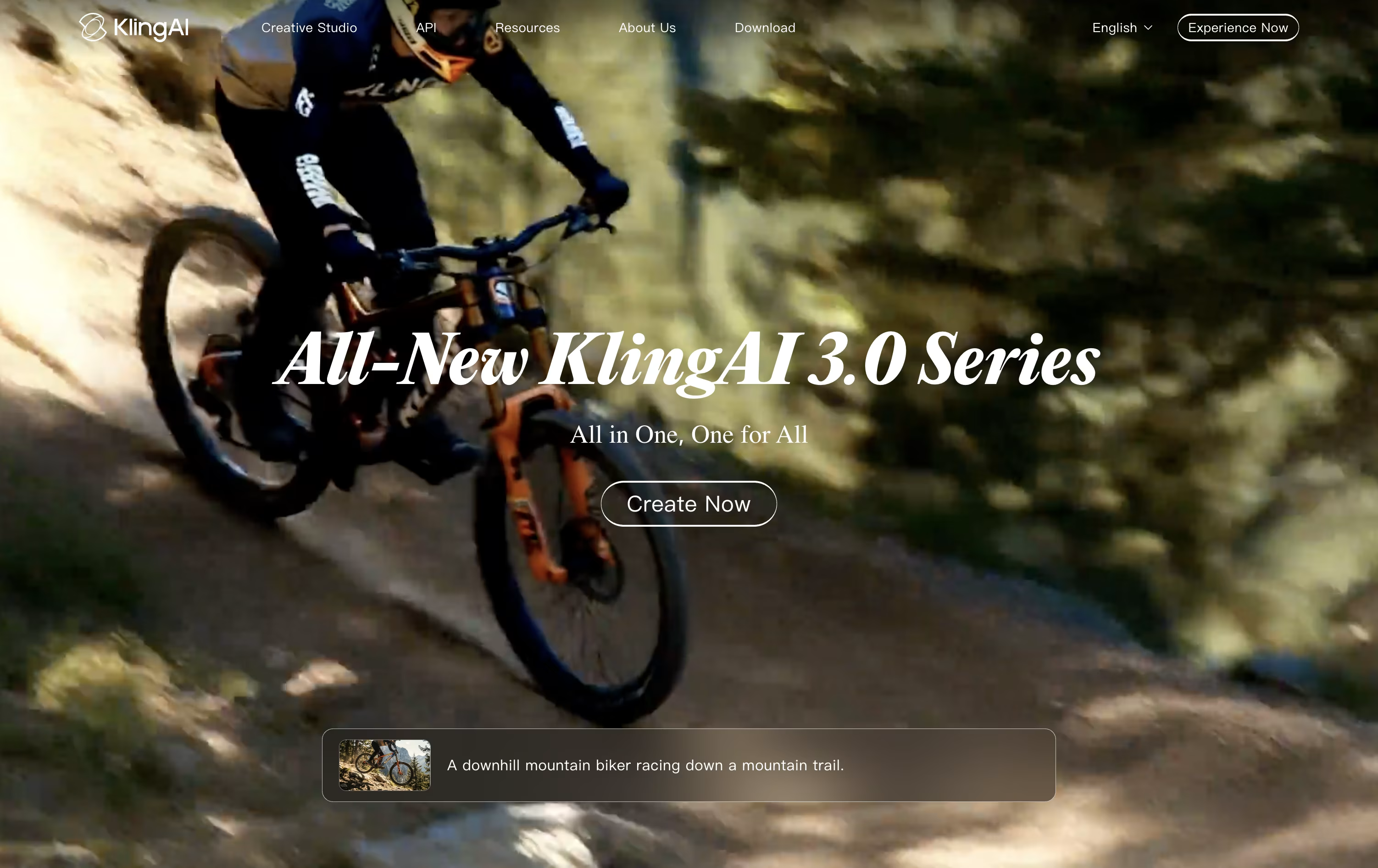
The Kling model series drives the platform, handling realistic movement and physics, and covering Text-to-Video, Image-to-Video, Motion Control, and native audio with lip sync support.
Start and end frame settings keep scene changes smooth, Video Extension stretches clips further, and Canvas Agent turns a script into a multi-shot storyboard automatically.
For images, you can generate from text or a reference photo, then restyle the look, outpaint the frame, or remove unwanted objects.
The API is priced by prepaid units across two separate systems. Video trial packages begin at $9.80 for 100 units, and standard packages range from $700 for 5,000 units to $7,560 for 60,000 units. Image packages cost less per unit, starting at $2.45 for 1,000 units and reaching $5,670 for 1,800,000 units.
Businesses needing more can contact sales for a custom volume plan.

Vidnoz AI lets you make talking avatar videos from a script, a document, or just an idea, without needing a camera or a studio.
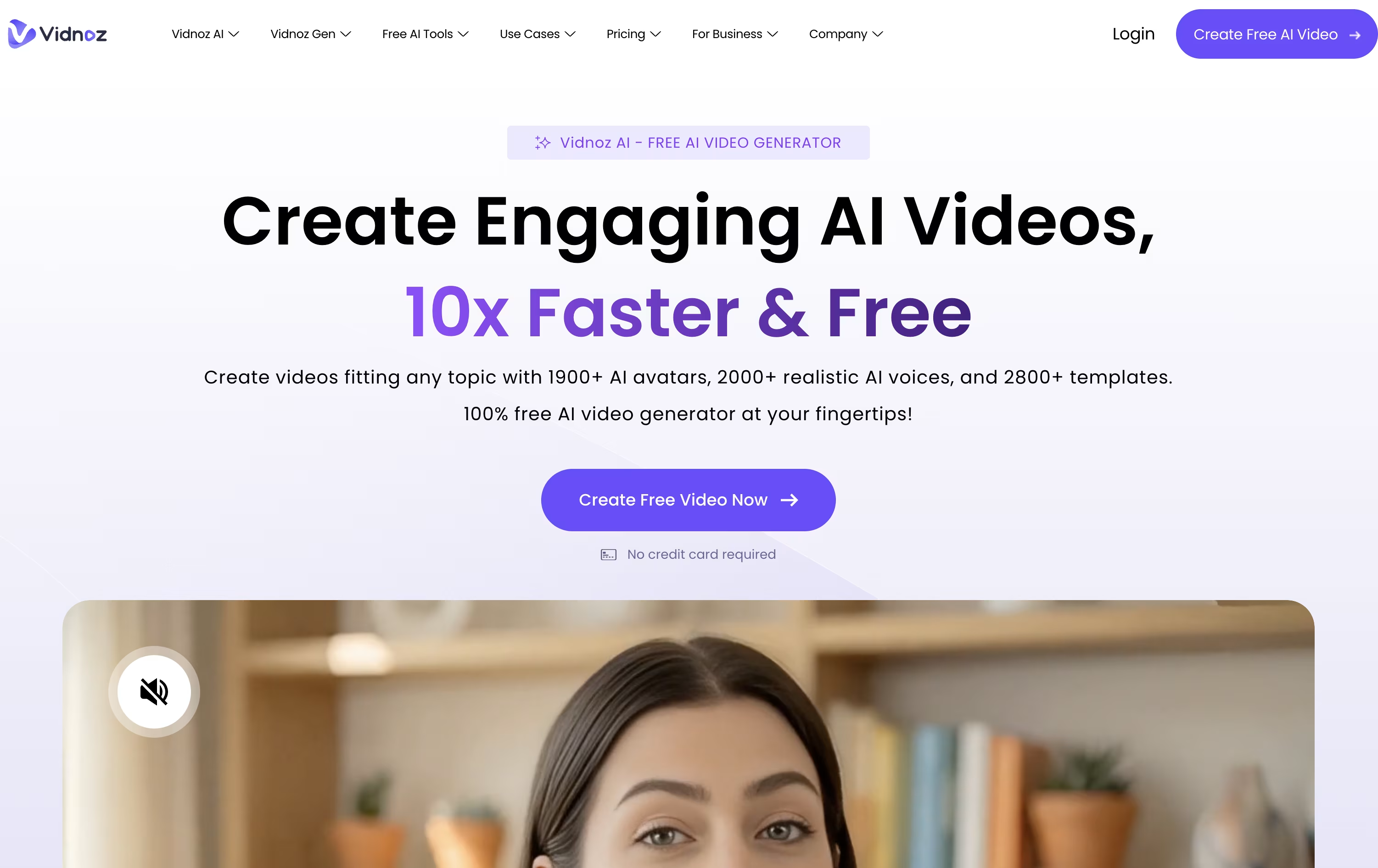
The library includes over 1,600 avatars and hundreds of voices, plus tools for face swap, photo editing, and background removal.
Starting out costs nothing, though the free plan is limited to short 3 minute clips at 720p with a watermark.
Moving to Starter for $26.99 a month, or $19.99 a month when billed yearly, removes the watermark and unlocks 1080p exports and 60 minute videos.
The Business plan at $74.99 a month, or $56.99 yearly, is built for teams, adding branding tools, video analytics, and up to 1,000 user seats.
For larger needs, Enterprise offers custom pricing with a dedicated account manager and priority support.

Rather than dragging clips along a timeline, Descript lets you edit video and audio the same way you would edit a document. It transcribes your recording automatically, and any change you make to the text carries over to the media itself.
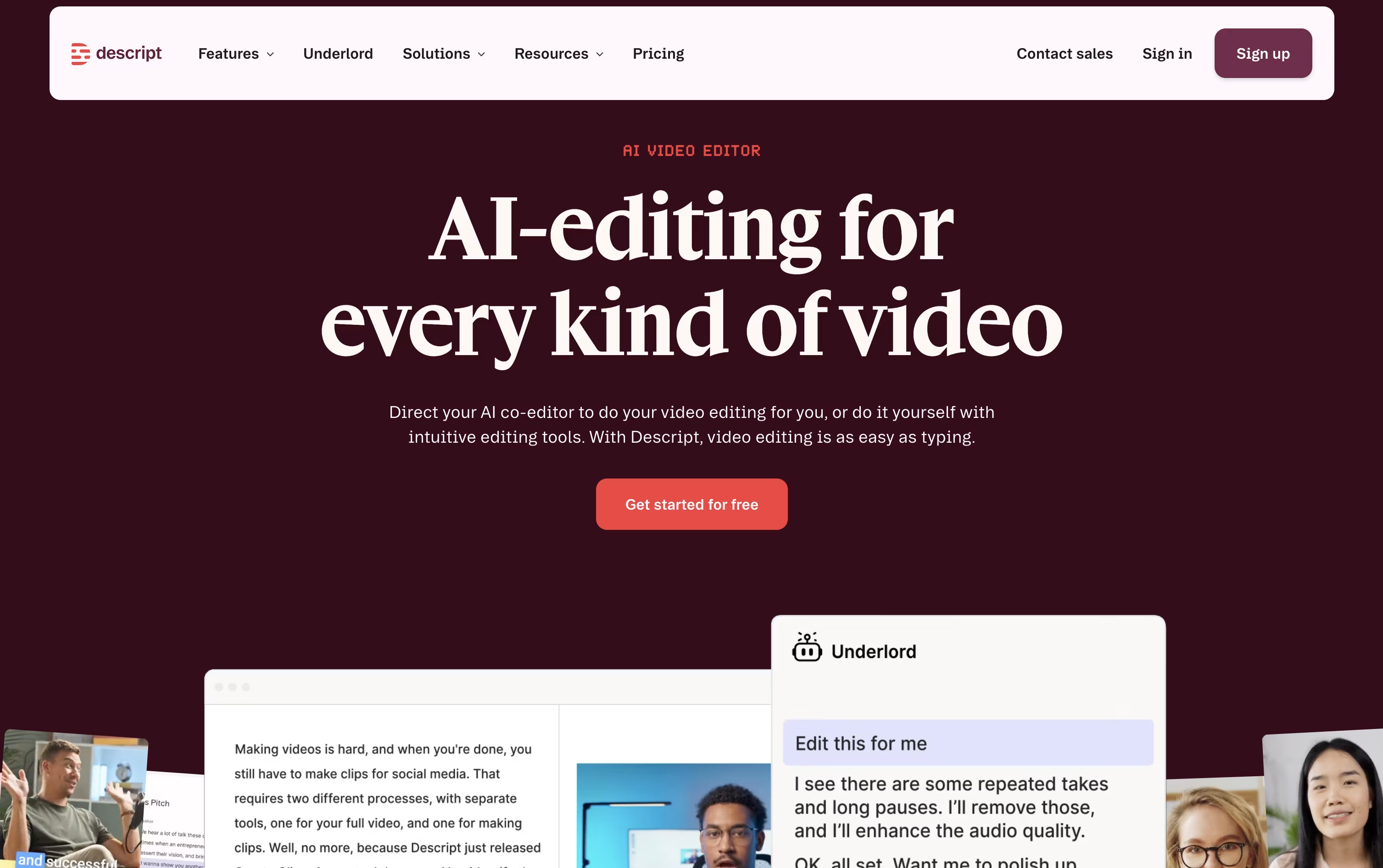
AI does a lot of the heavy lifting. Studio Sound smooths out rough audio, Remove Filler Words trims the ums and awkward pauses, and Eye Contact adjusts your gaze so you always appear to be looking at the camera. For bigger jobs, Underlord acts as an AI co-editor that can caption, clip, or restructure a project based on plain instructions.
Getting started costs nothing. The Free plan includes 1 hour of media monthly, 100 AI credits as a one-time allowance, and 720p exports.
From there, Hobbyist costs $24 per person each month and brings 10 media hours, 400 monthly AI credits, and watermark-free 1080p video. Creator, the plan most people pick, is $35 a month and opens up 4K output, full access to Underlord, and more than 20 AI tools. Business is built for teams at $65 a month, adding shared branding tools, dubbing with proofreading in over 30 languages, and priority support with a service guarantee.
Larger organizations can move to Enterprise, which uses custom pricing along with added security controls like single sign on and audit logs.

Rather than producing a single AI clip at a time, InVideo AI directs a crew of AI agents to build a full video from a prompt, script, or even a URL. It plans the scenes, generates visuals, writes and voices the script, and adds music and captions automatically.
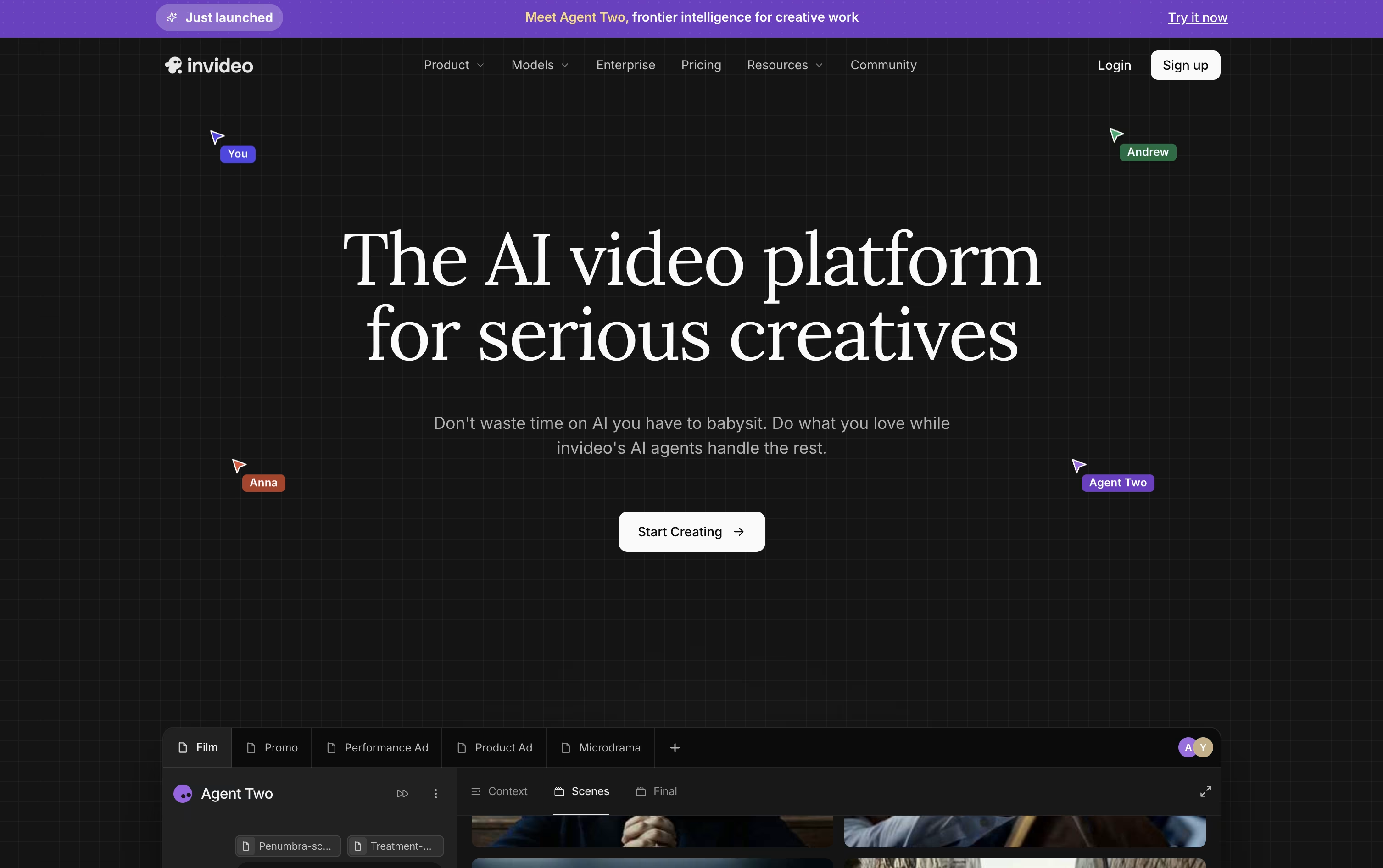
The Agent Two system keeps track of characters, settings, and style across an entire project, so you are not stuck re-explaining details for every new scene. Expert Agents can be assigned roles like storyboard artist or VFX lead, and Playbooks store custom rules the agents should always follow.
On the individual side, Plus starts at $20 a month with 75 credits, while Max, Generative, and Elite step up to $100, $200, and $1,000 a month with more credits, avatars, and storage at each level.
Small to mid-sized teams of 2 to 30 people can pick seat-based pricing at $50 or $500 per seat monthly, and larger companies can request custom Enterprise pricing that adds security features like SSO and SOC2 compliance.
Since every paid tier includes over 200 AI models and access to stock libraries such as iStock, the real difference between plans comes down to credits, storage, and how many people are working on the account.

Think of OpusClip as an editor that watches your long recordings for you. Feed it a podcast episode, webinar, or livestream, and it picks out the best moments to turn into short clips for social media.
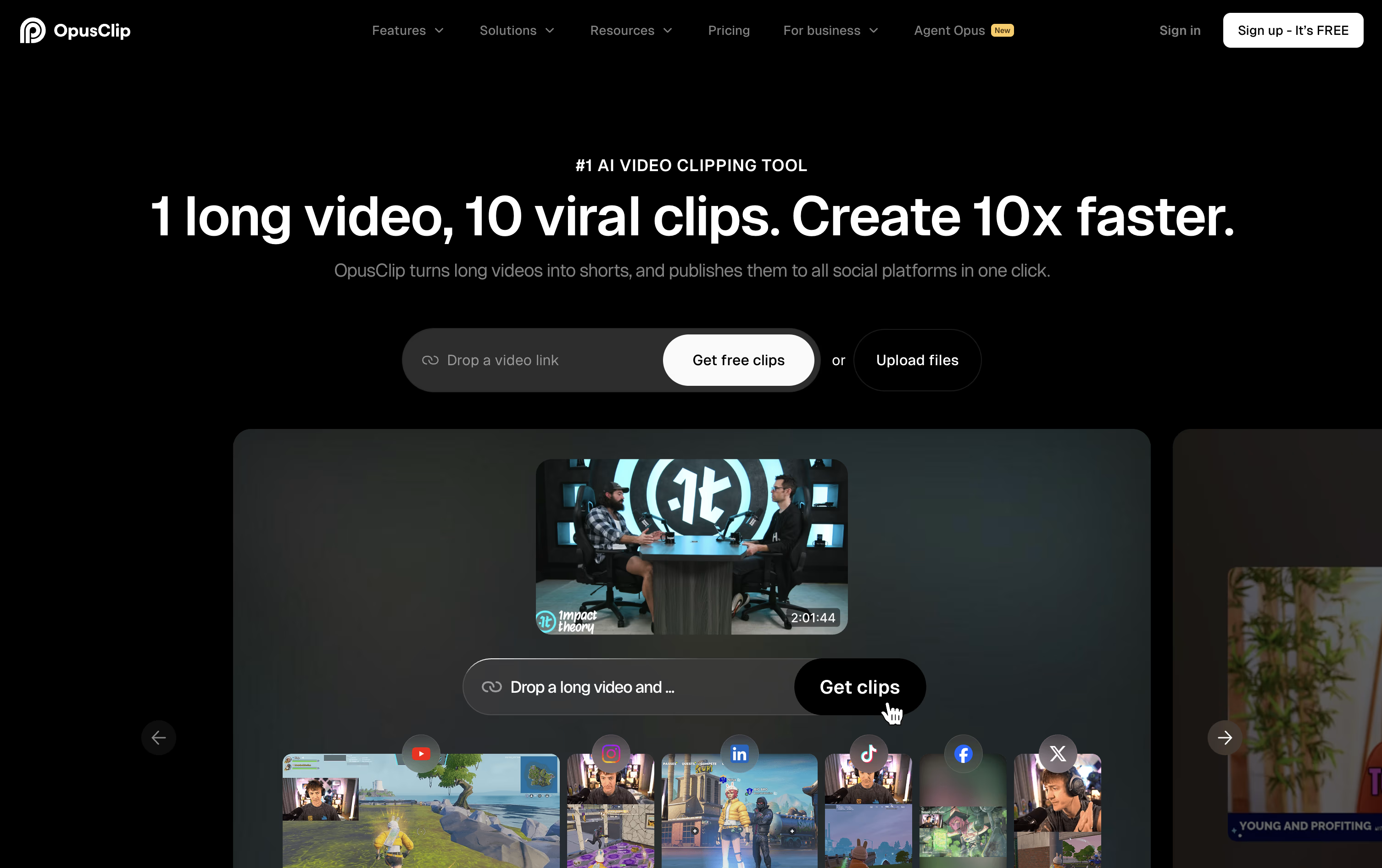
The AI looks at what's said, how it's said, and the visuals together, then trims and reframes those moments into vertical, square, or wide clips, complete with a Virality Score to help you decide what to post first.
On top of clipping, it can add multi-language captions, clean up filler words and dead air, drop in AI B-Roll or voice-overs, and even dub videos into other languages.
Pricing starts at $0 for the Free plan with 60 monthly credits, moves to $15 a month for Starter, and $29 a month for Pro (or roughly $17.40 a month if paid yearly), which adds team seats, more storage, and API access.
Businesses that need unlimited storage, custom branding, and dedicated support can reach out for custom Business pricing.

Creatify is built around one idea: give it a product link, and it hands back a finished video ad. It pulls the product photos and details itself, then writes the script, picks an AI avatar or voice, and adds music and captions.
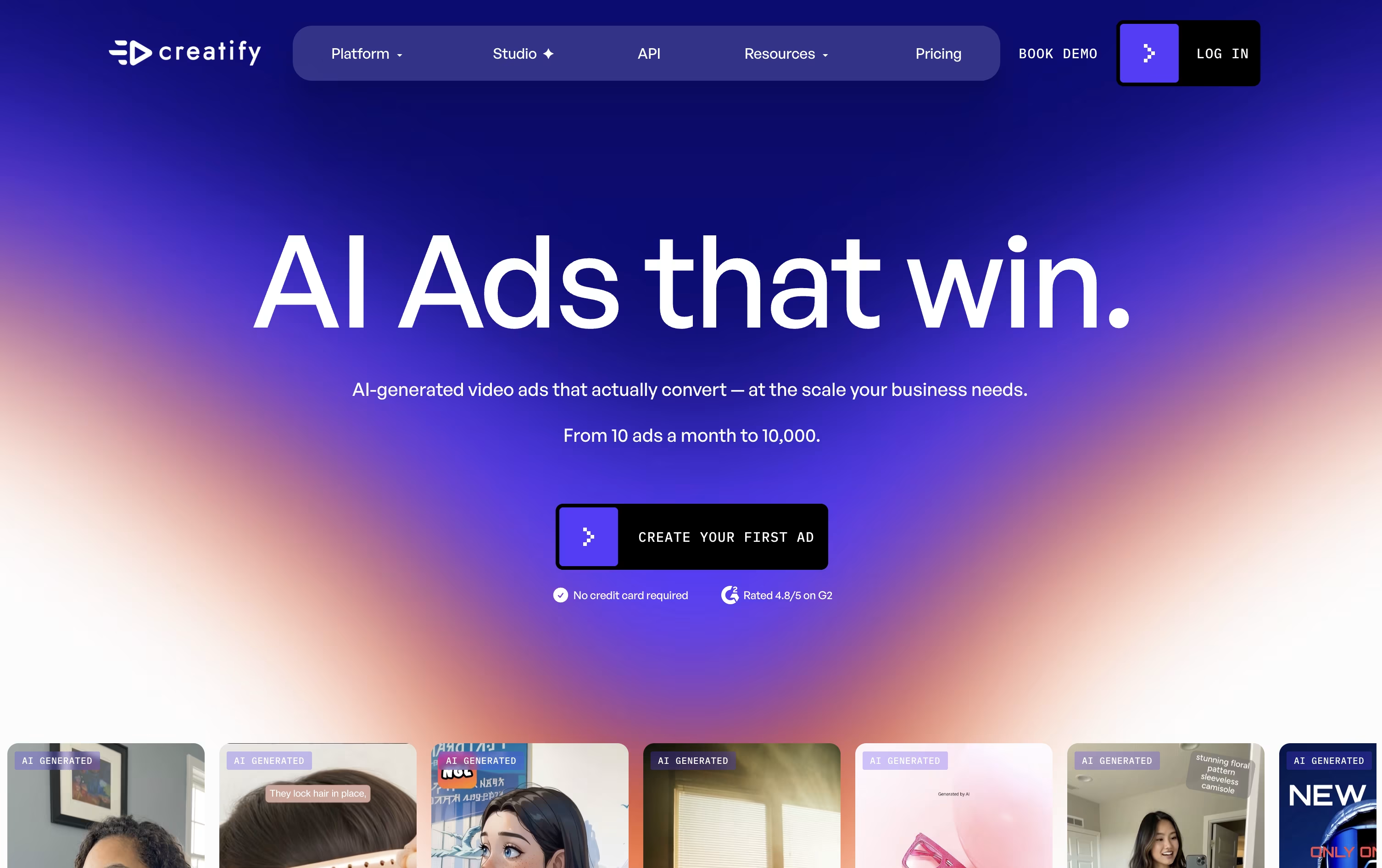
Every video is sized for platforms like TikTok, Instagram, and YouTube, and you can generate several versions in one go to test different hooks or avatars.
The free plan comes with 10 credits a month, though exports carry a watermark. Moving to the Starter plan at $39 a month removes the watermark and opens up more AI actors and templates.
The Pro plan at $99 a month is the most popular choice, adding a much larger avatar library, a competitor ad tracker, and team collaboration tools. Both paid plans drop to roughly half price on the yearly option.
For agencies or larger brands, an Enterprise plan offers custom pricing with a dedicated production team and account manager.
Developers can also tap into Creatify through its API, with plans starting at $99 a month for lower-volume use.

Making a polished video usually means learning animation software or hiring someone who already knows it. Powtoon skips that step by giving you templates, a drag and drop editor, and AI tools that build a video from a document or a short prompt.
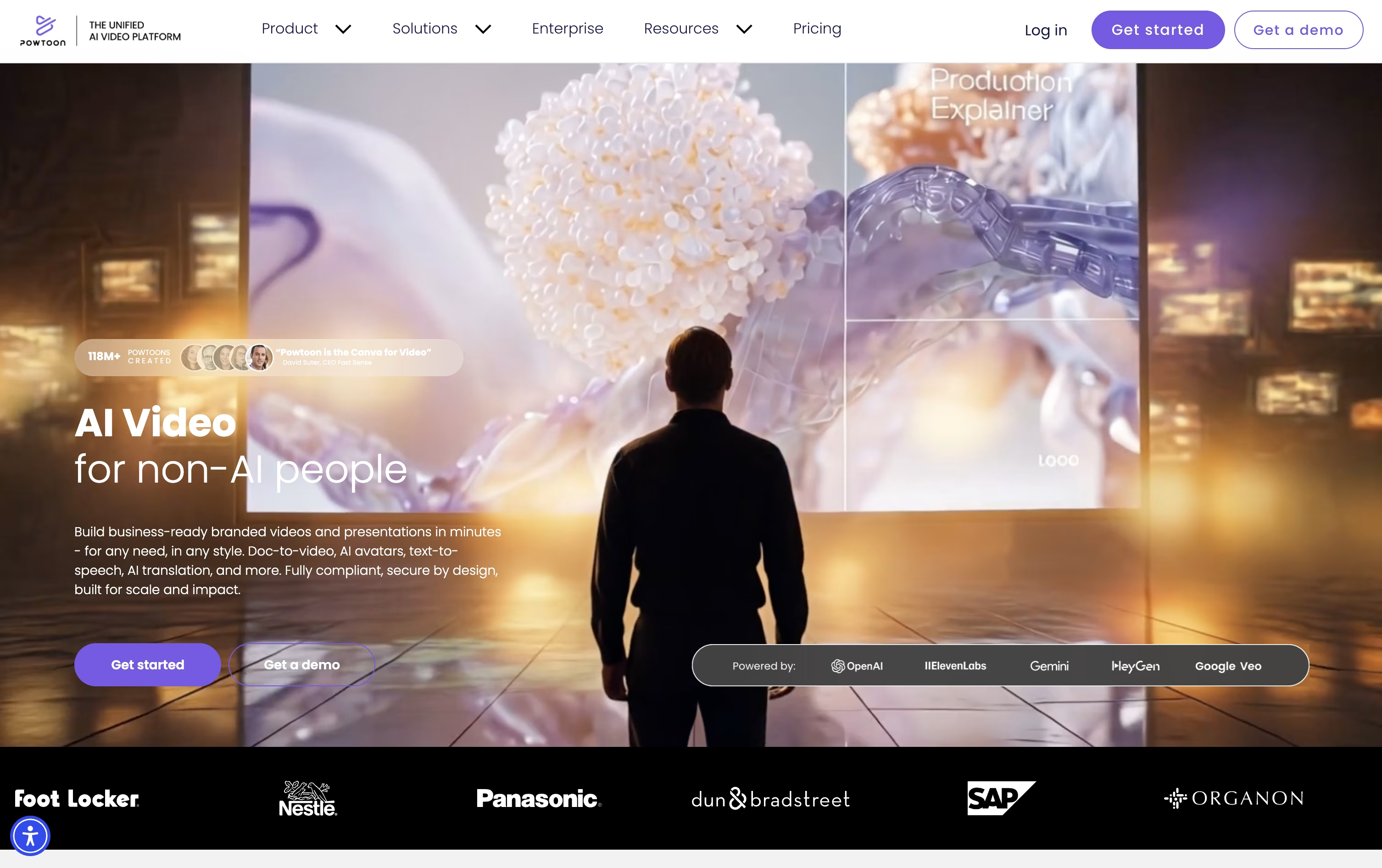
Its AI system writes a script, adds a voiceover, and puts together visuals automatically, and everything it creates can still be edited by hand afterward inside the Studio.
Alongside the AI tools, there are animated characters, whiteboard and live footage styles, and a large stock media library to pull from.
Pricing starts with a free plan limited to 3 minute videos with a watermark. The Lite plan runs $15 a month yearly, Professional $40 a month, and Advanced $125 a month, each unlocking longer videos, more AI credits, and features like custom characters and lip-sync.
Schools can get the Education plan for $8 a month, and larger organizations can reach out for custom Enterprise pricing with added security and admin controls.

If you need videos for training, HR, or marketing but do not have an animation team, Vyond is built to fill that gap. It runs fully in the browser, with no software to download.
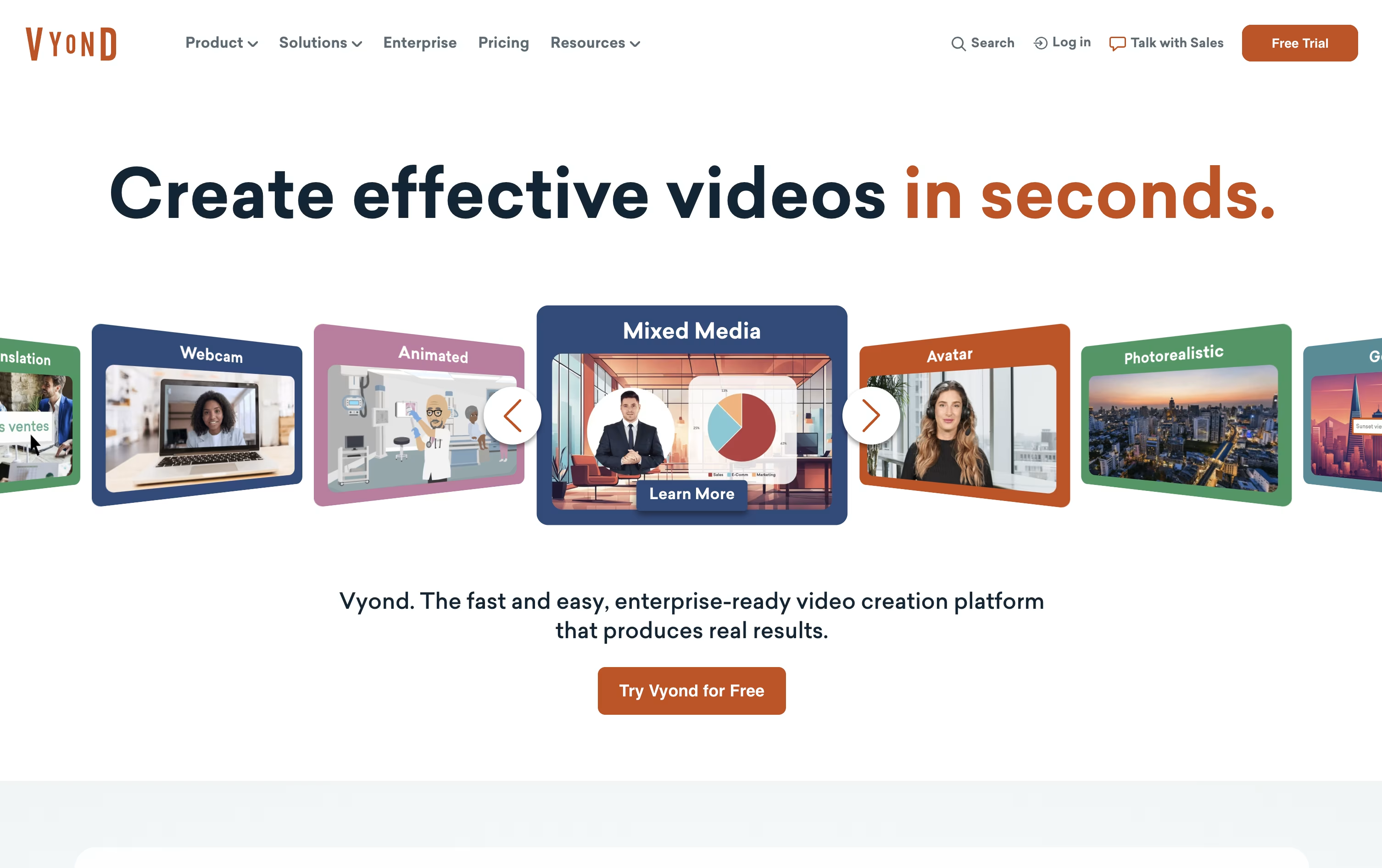
Start by typing a prompt, pasting a script, uploading a document, or dropping in a URL, and Vyond Go will generate a working draft with characters, scenes, and voice in under a minute. Then move into Studio to adjust the details, from character actions to timing.
The toolkit includes AI avatars, hundreds of animated characters, over 650 voices for text to speech, and built in screen and webcam recording, along with thousands of ready made templates.
The Starter plan is $99 a month or $699 billed yearly, meant for one person, with 10,000 credits and a 25 minute video cap.
Professional moves to $1,199 a year per user and brings in team features, Shutterstock's asset library, and translation into 95 languages.
For larger organizations, Enterprise and Agency plans run $1,649 and $1,999 a year per user, adding near unlimited usage, brand controls, and enterprise grade security like single sign on.

Think of Vidu as a video studio that starts with a prompt, a picture, or a handful of reference images, then produces a clip where the same character or object stays recognizable throughout.
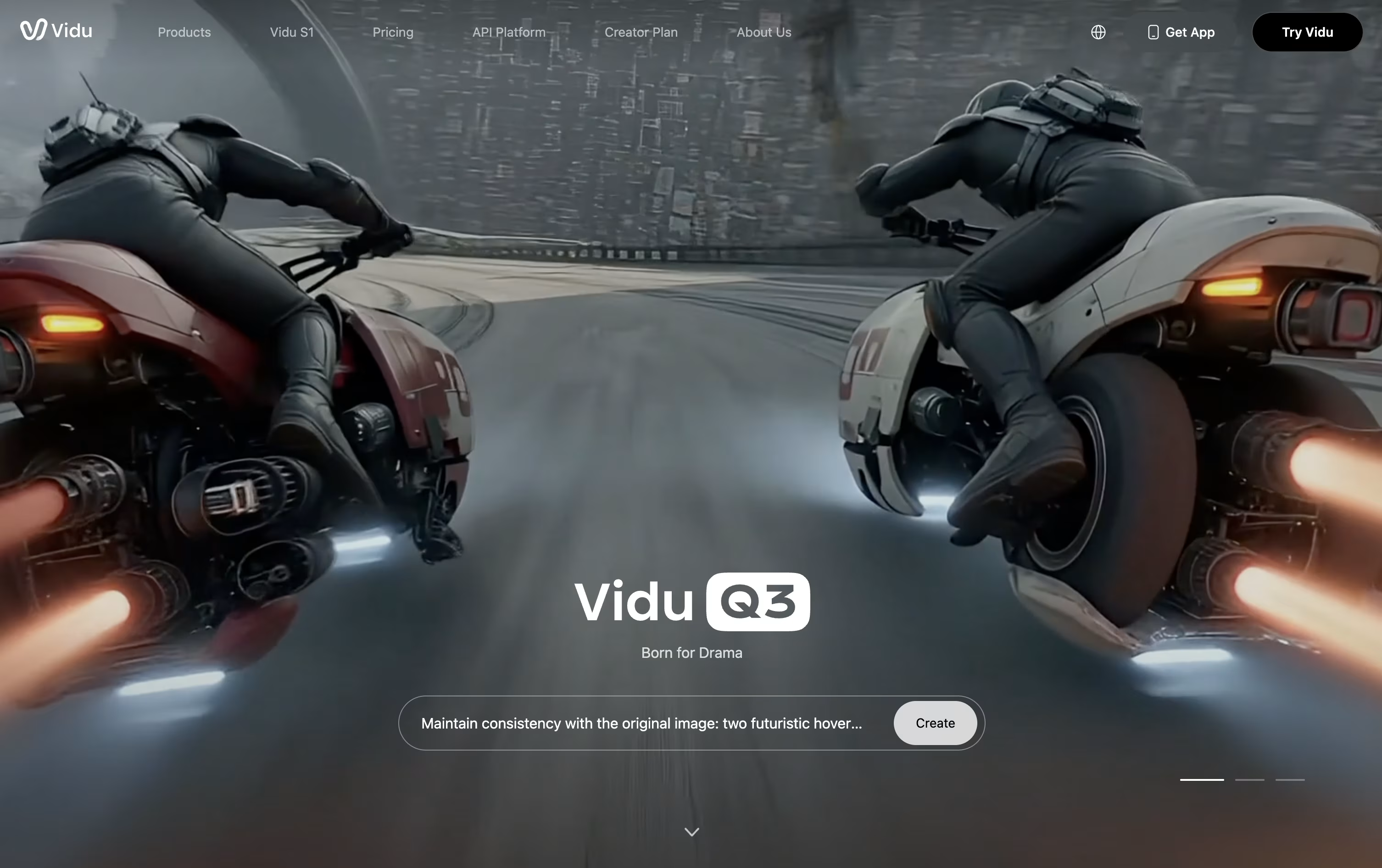
Its toolkit covers photo animation, first and last frame control, and Story Grid for multi shot storytelling. The Vidu Claw agent can build a script, storyboard, and video with minimal input from you, and Vidu S1 offers real time, voice driven control of a digital character.
Getting started costs nothing. The free plan allows 10 references a month, though it skips commercial rights, clean downloads, and higher resolutions.
Stepping up to Standard at $10 a month (or $8 with yearly billing) unlocks 800 credits, roughly 200 videos, and the right to use your videos commercially.
Premium, at $35 a month or $28 yearly, raises that to 4,000 credits and a quicker generation queue. Ultimate, at $99 a month or $79 yearly, tops out at 8,000 credits, unlimited image generation, and a free Off-Peak Mode built for heavy daily use.
Paid plans can also add extra credits at a discount, though Vidu does not issue refunds once you subscribe.

Hedra focuses on one thing especially well: turning a photo and a voice into a believable speaking video. Upload an image, add audio or a script, and it generates natural lip sync along with small facial movements like blinks and head tilts.
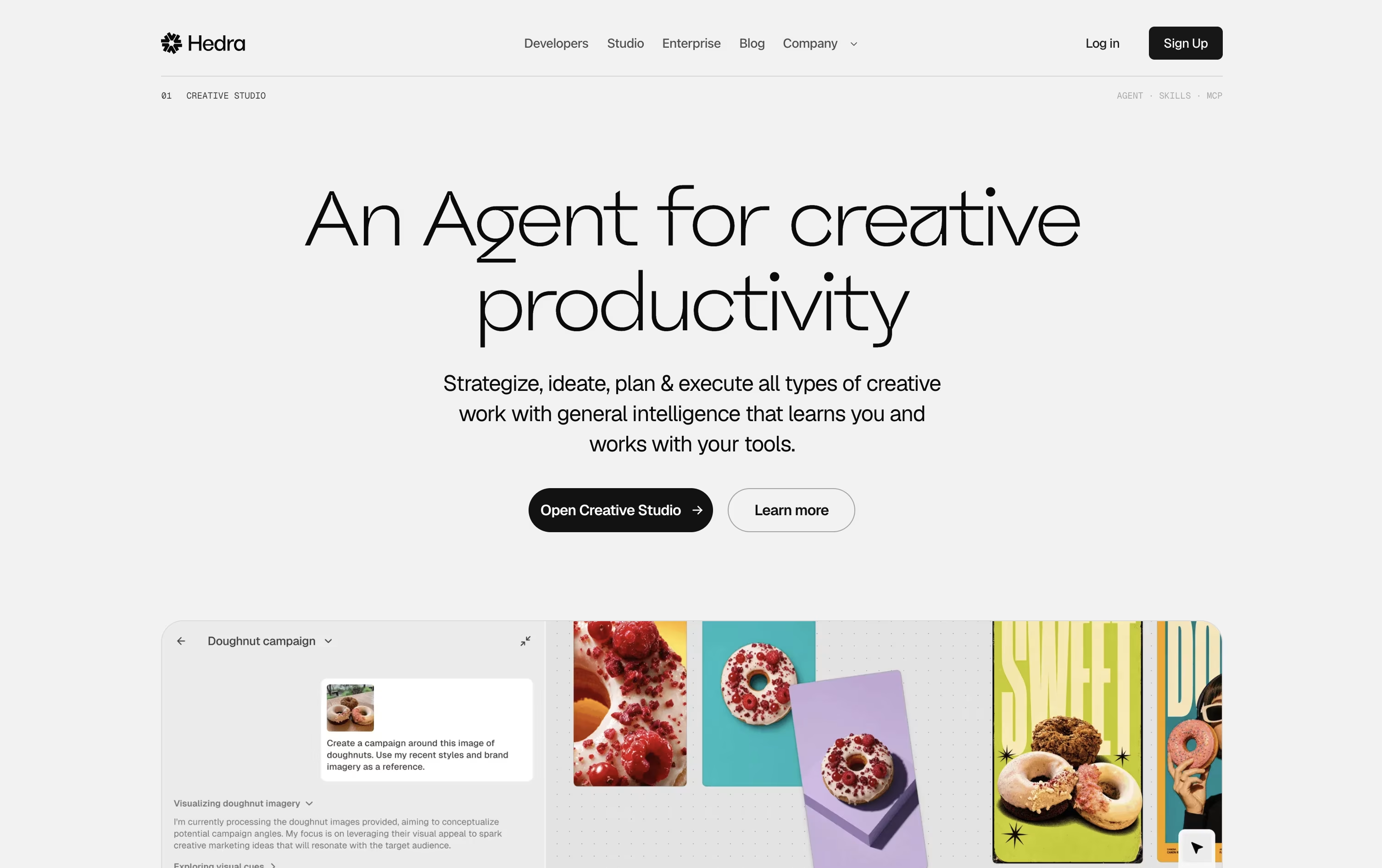
Its Omnia model expands this further by adding full body motion, camera movement, and scene direction, letting characters act out a short performance instead of just talking.
A built in creative agent lets you type out a goal in everyday language, and Hedra handles planning, model selection, and asset creation inside a saved workspace called a Space.
On pricing, Basic costs $15 a month for 1,500 credits, Creator is $30 for 5,400 credits, and both Professional and Teams sit at $75 a month for 14,400 credits with the fastest render speed.
Businesses with bigger needs can move to the Enterprise plan, which includes custom credit volumes, private deployment, and dedicated account support at custom pricing.
It works well for marketing videos, social clips, presenters, and character based storytelling.
Making a video usually means a camera, a script, and hours of editing. Steve AI skips most of that by turning text, a blog link, audio, or a short prompt into a ready video.
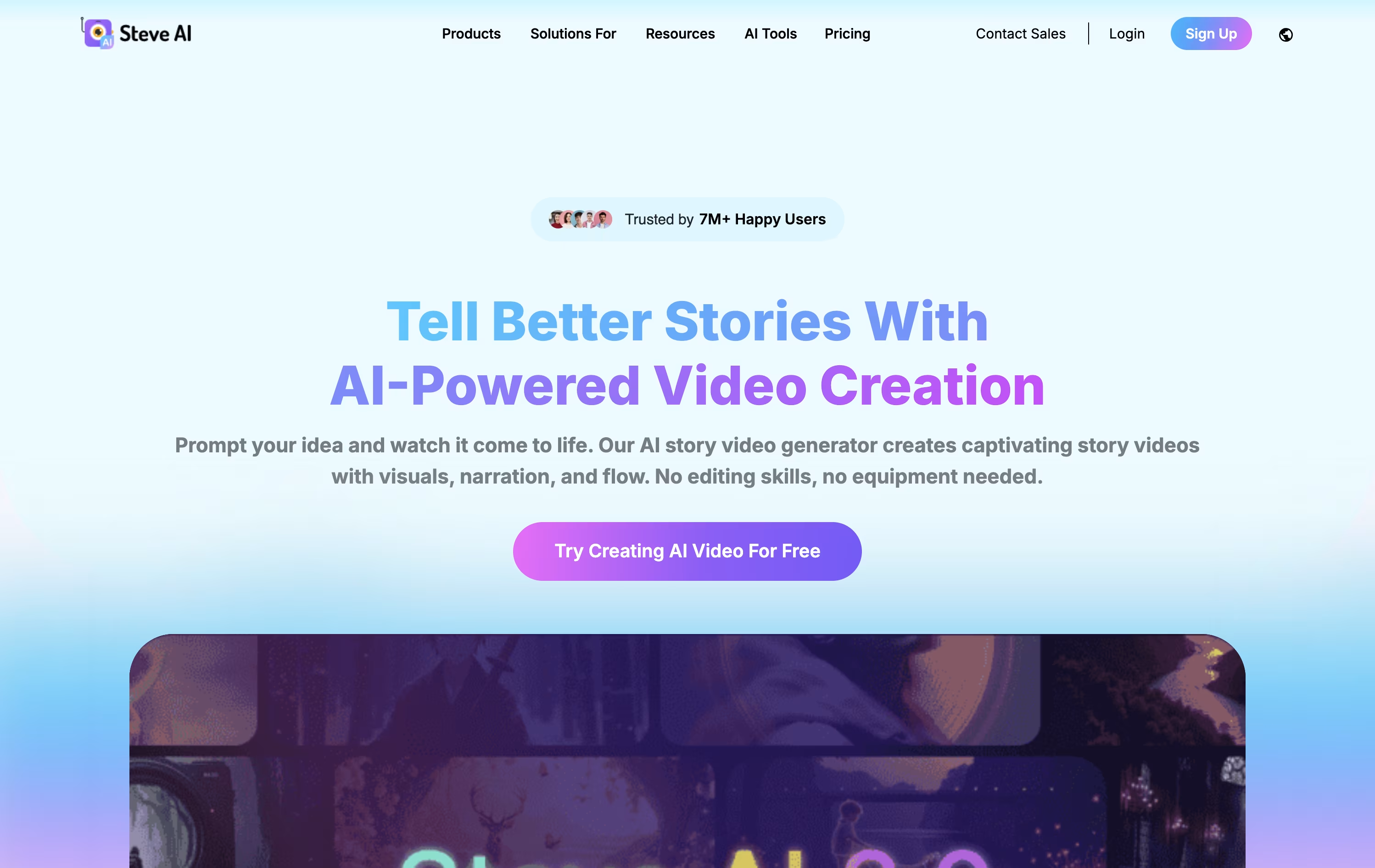
The AI handles the script, matches scenes with visuals, adds a voice track, music, and captions, so a video that would normally take a day can be ready in minutes.
There are more than seven visual styles to pick from, animated characters, generative AI scenes, and live-action stock clips, along with Google Veo 3 access for short realistic clips.
The Starter plan costs $29 a month, or $19 a month if billed yearly, and includes 100 minutes of AI video plus 1080p output with no watermark.
Stepping up to Pro at $59 a month or the Recommended Generative AI plan at $129 a month brings more render minutes, 2K video, and voices that sound close to human.
For bigger needs, Enterprise offers custom pricing with 4K video, team tools, dedicated infrastructure, and commercial reselling rights.

Turning a blog post or script into a finished video usually means learning editing software. Pictory skips that step by letting the AI handle scene building, visuals, captions, and voiceover from whatever text or file you give it.
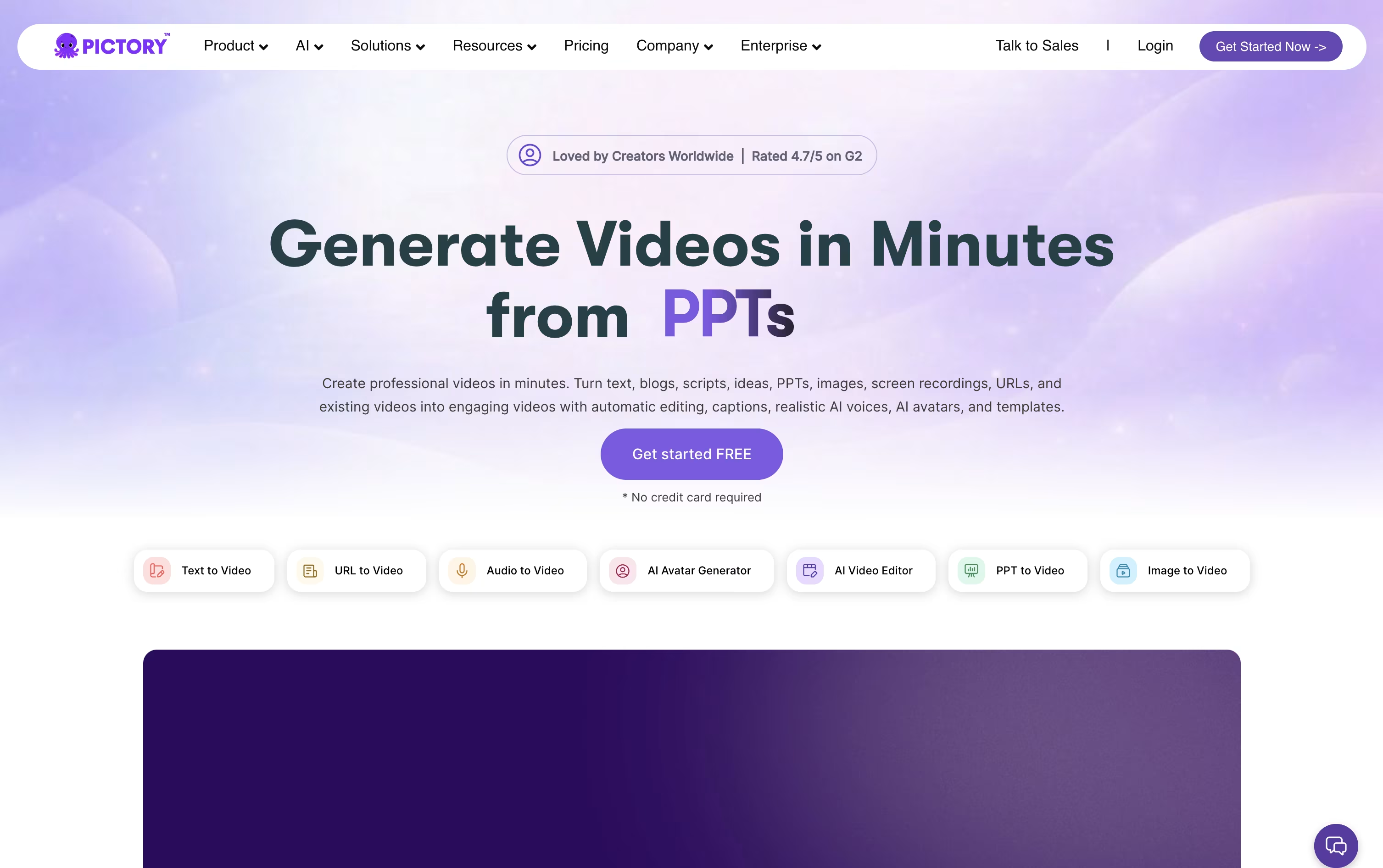
Once the draft video is ready, a scene-based editor lets you swap visuals, adjust timing, or apply your brand colors and logo without dragging clips on a timeline.
Features like AI avatars, voice cloning, and text-based editing, where deleting a word deletes that part of the video, make the platform useful for marketers, educators, and content teams alike.
Pricing starts with Starter at $29 a month, dropping to $25 a month on the annual plan, covering 200 video minutes and 5 GB of storage.
Professional runs $59 a month and adds custom avatars and voice cloning, while Team at $199 a month supports 3 or more users sharing one workspace.
Larger organizations get custom Enterprise pricing with SSO, dedicated support, and Pictory Central for interactive video hosting, and everyone can start with a 14 day free trial.

Rather than recording yourself on camera, Pitch Avatar lets you upload a deck, PDF, video, or screen recording and have a digital avatar present it for you, speaking in your cloned voice if you choose.
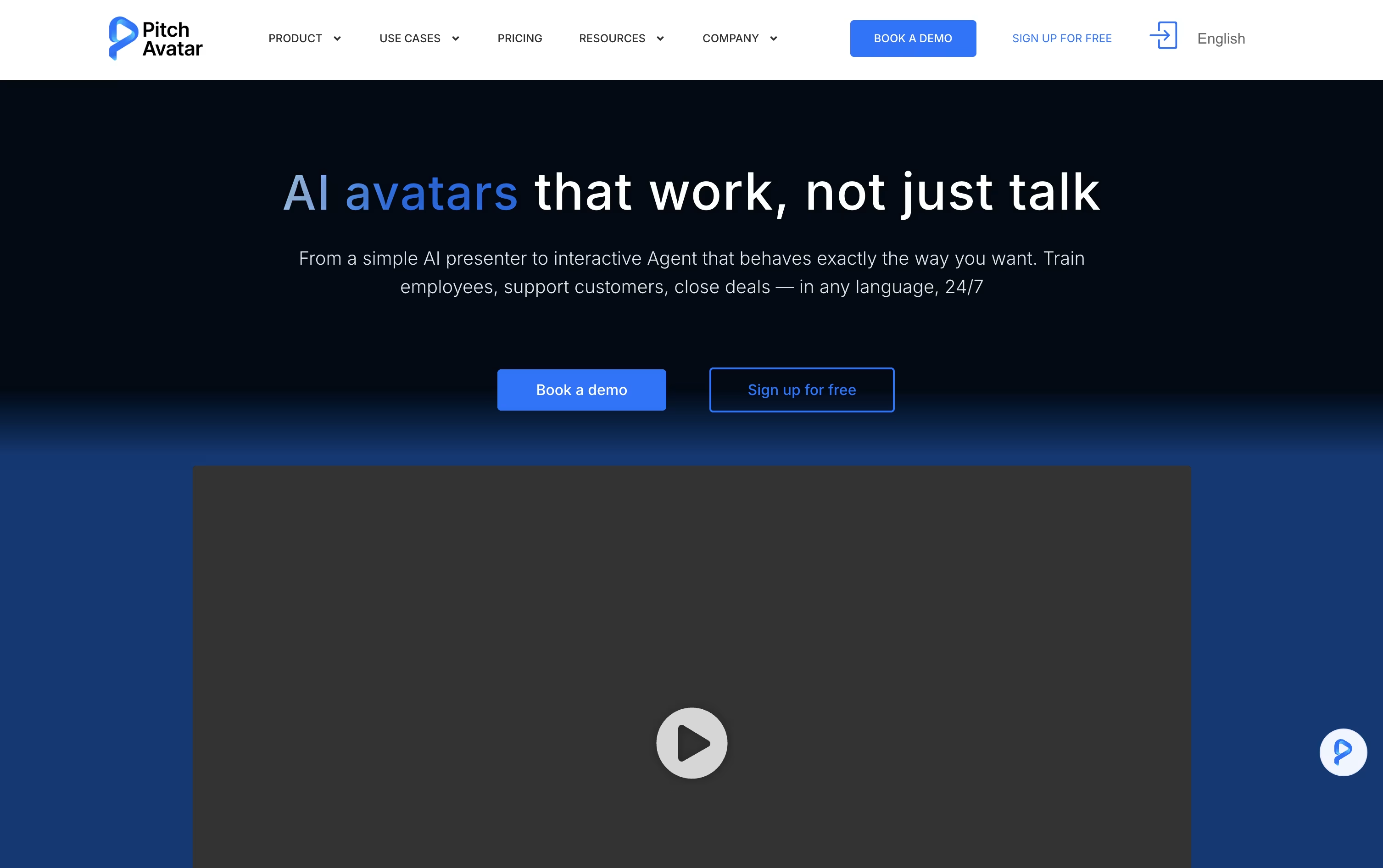
Its AI Chat-avatars go further, acting as interactive agents that answer viewer questions, qualify leads, schedule meetings, and handle support or training conversations at any time, in whatever language the viewer prefers.
Videos and presentations can also be dubbed and translated into over 76 languages, so one piece of content can reach viewers everywhere without redoing the recording.
Pricing starts with the Professional plan at $29 a month, giving 1 user, 10 presentations, 20 videos, and 5 Chat-avatars. Moving up to Business at $79 a month unlocks 5 users, 100 presentations, and 20 Chat-avatars.
Larger teams can choose Enterprise for custom limits, unlimited video length up to 60 minutes, and unlimited downloads, while extra Avatar minutes are available separately from $12 to $109.
Every paid plan comes with a 7-day free trial and a 14-day refund window, so testing the platform carries little risk.

Editing, recording, and translating video usually means jumping between several different apps. RecCloud tries to fix that by putting AI transcription, subtitles, translation, dubbing, and video generation next to basic screen recording and editing in one browser based platform.
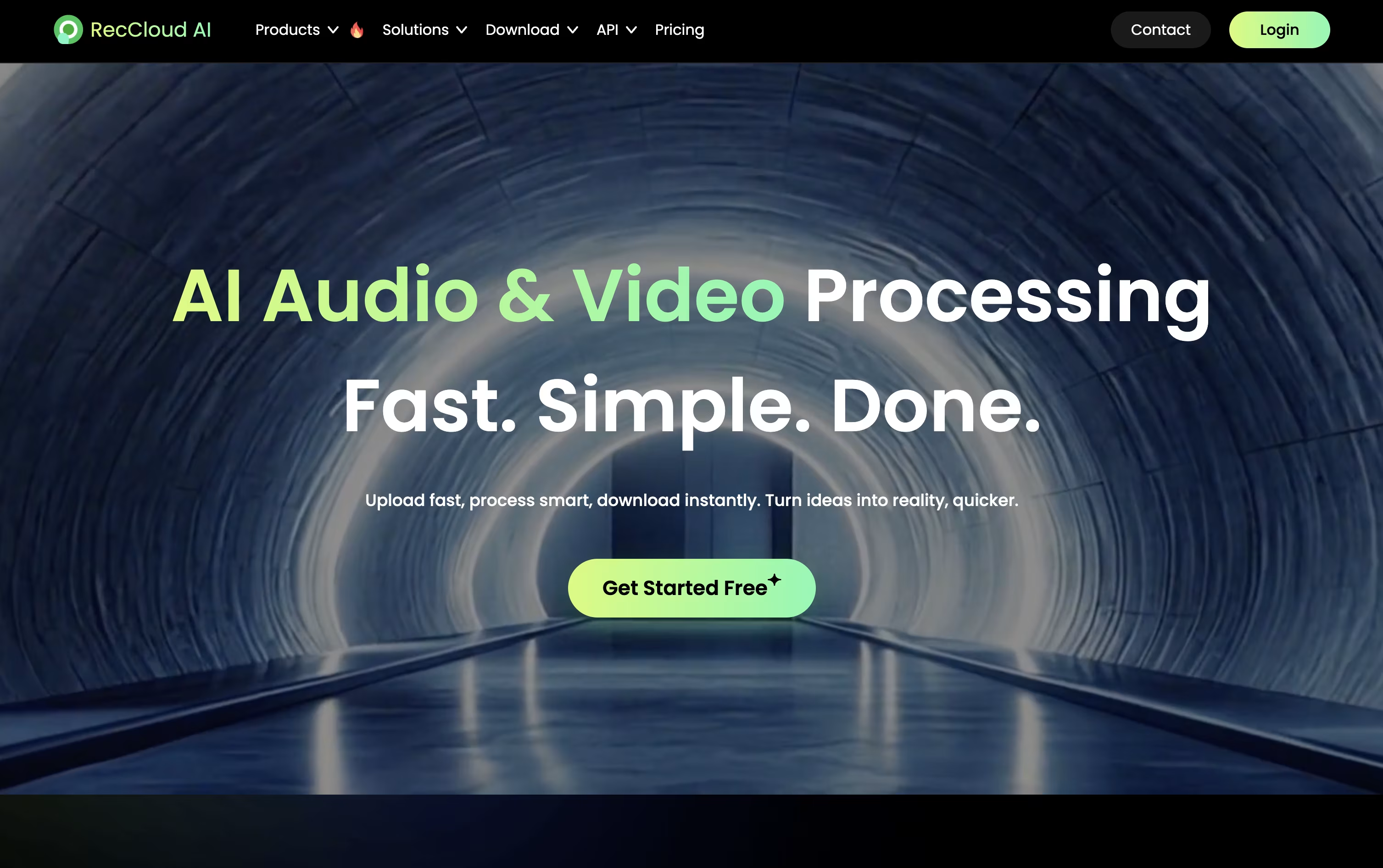
Speech is converted to text in over 99 languages, subtitles can be created and translated automatically, and full videos can be dubbed using cloned voices with lip sync. For creating new content, the AI Video Generation Agent can write a script, add voiceover, and build a video from just a short prompt.
Pricing is based on credits, which are spent as you use these AI tools. The Weekly plan is $15 for 300 credits, and Basic Annual works out to $4 a month, billed yearly at $48, for 3,000 credits.
Pro Annual costs $4.92 a month, billed at $59 a year, and includes a promotional bonus taking the yearly total to 6,000 plus 2,000 credits. Business Annual, at $188 a year, adds 24,000 credits, 100 GB storage, 10 concurrent tasks, batch processing, and commercial usage rights.
Additional credits and storage can be purchased separately, and a 7 day money back guarantee covers every plan.

Instead of juggling separate apps for video editing, logo design, and website building, Renderforest puts all of it in one AI driven workspace.
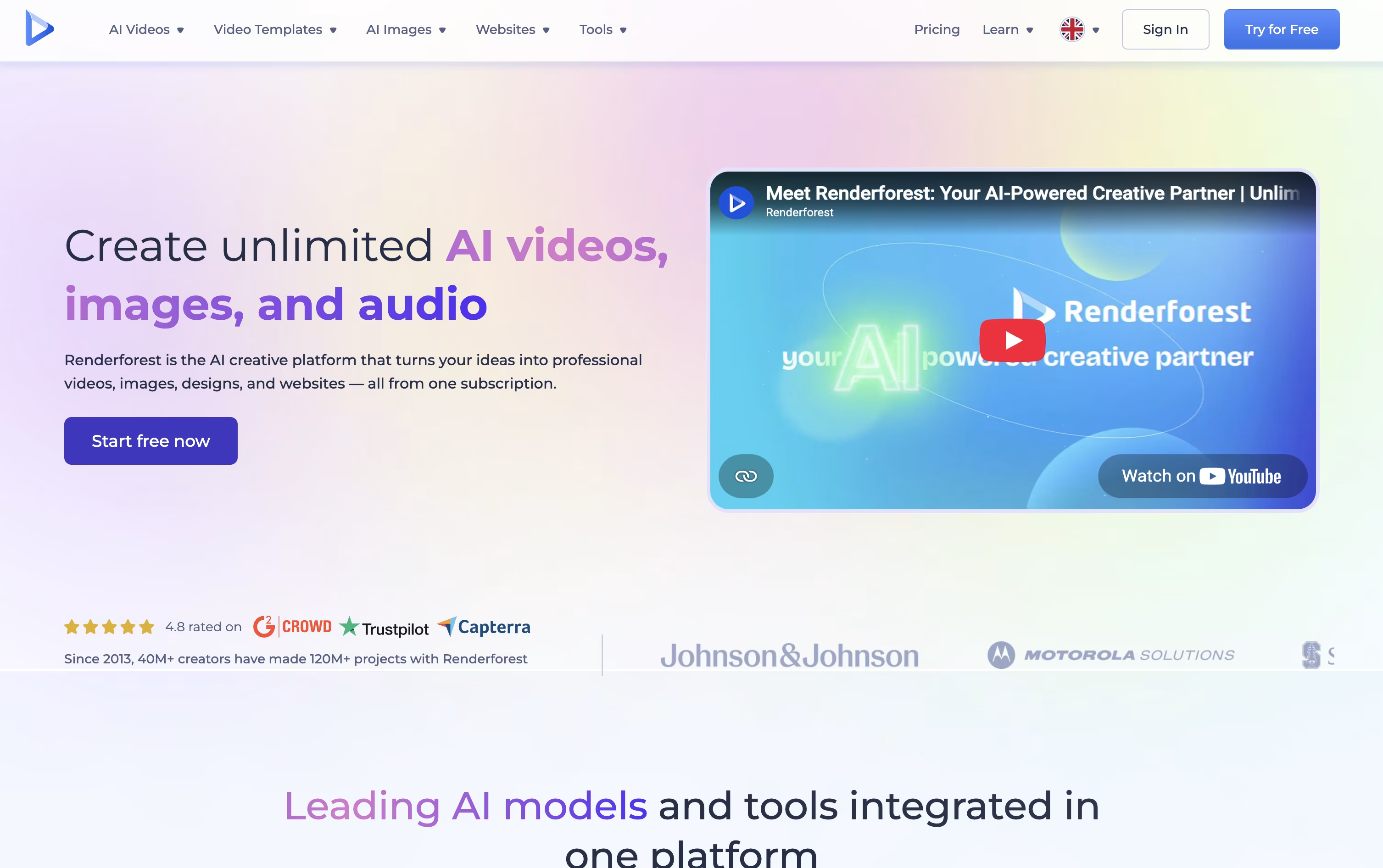
You can pick from over 1,200 templates or type a prompt and let the AI handle the scenes, visuals, voice, and music. Under the hood it taps into models like Nano Banana, Veo, Kling, and Seedance for up to date results.
Signing up is free and does not need a payment method, so you can try the editor first.
The Lite plan starts at $9 a month with 400 credits and HD720 exports, while Pro, the most popular tier, is $39 a month with 1,600 credits, HD1080 exports, and your own website domain.
Business runs $59 a month with 3,000 credits, 4K exports, unlimited image generation, and team tools plus a reseller license. Yearly billing brings the cost down to as low as $8 a month.
It suits people who want template speed and AI generation without switching between separate design tools.

Turning a document or slide deck into a finished training video usually means hiring a producer or spending hours in editing software. Colossyan Creator skips that step by generating an avatar narrated video straight from your script, PDF, or PowerPoint file.
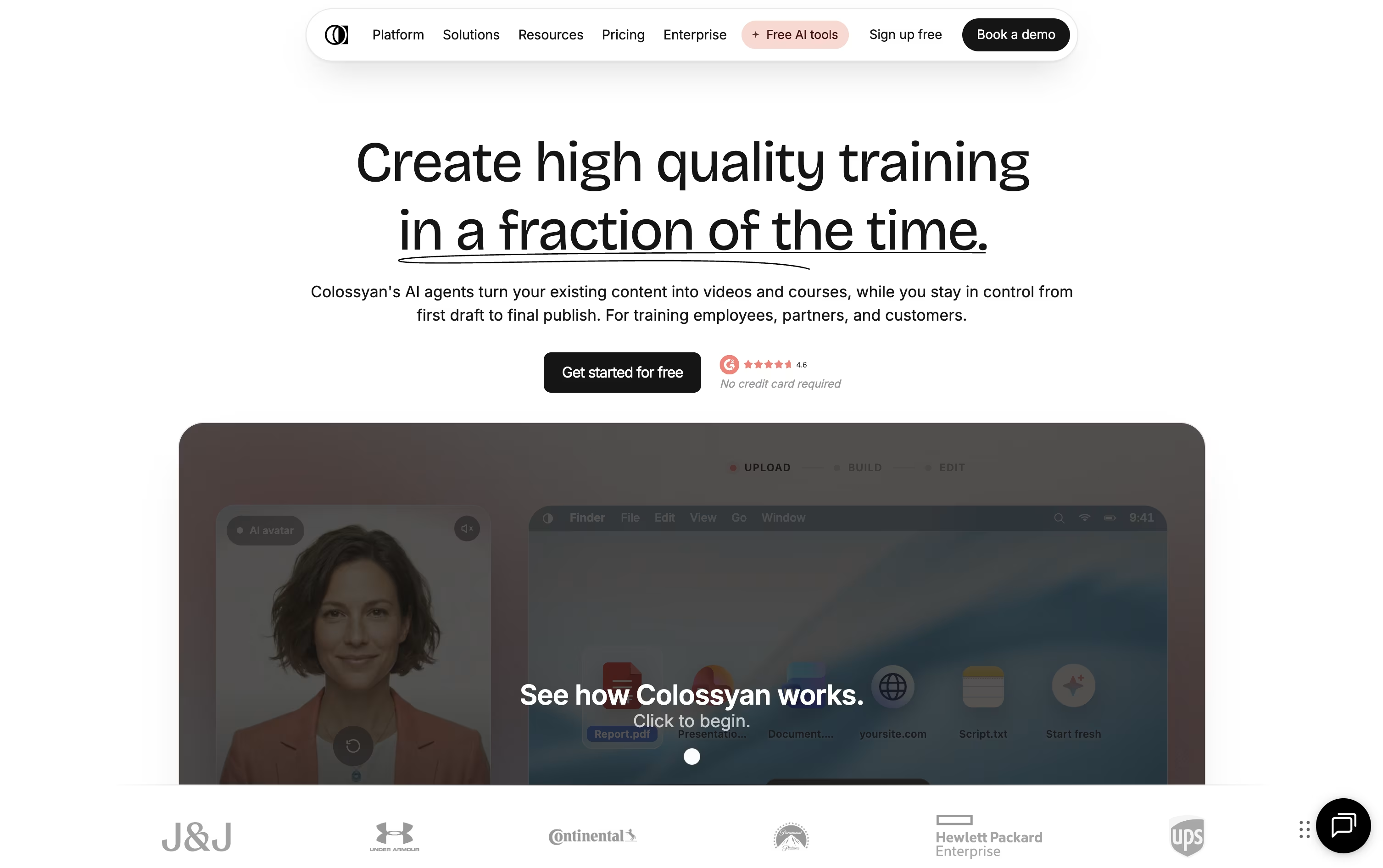
Once your content is in, you choose from hundreds of stock avatars and voices, or build a custom avatar from a short recording of yourself. The editor lays out scenes automatically, and you can drop in quizzes, branching scenarios, or clickable buttons so viewers actively engage instead of just watching.
A single video can also be auto translated into over 100 languages, with the lip sync and on screen text adjusted for each one, which saves a lot of manual localization work for global teams.
Pricing starts with a free Starter plan that includes 20 minutes of video a month and 15 custom avatars. Professional runs $89 a month, or $59 a month on the annual plan, a saving of about 34 percent, and unlocks more minutes, SCORM export, and watermark removal.
Enterprise teams get custom pricing with unlimited usage, 4K video, analytics, and dedicated account support.

Elai.io lets you turn text, a web article, or a PowerPoint file into a video with a realistic AI avatar speaking the content, without any filming.
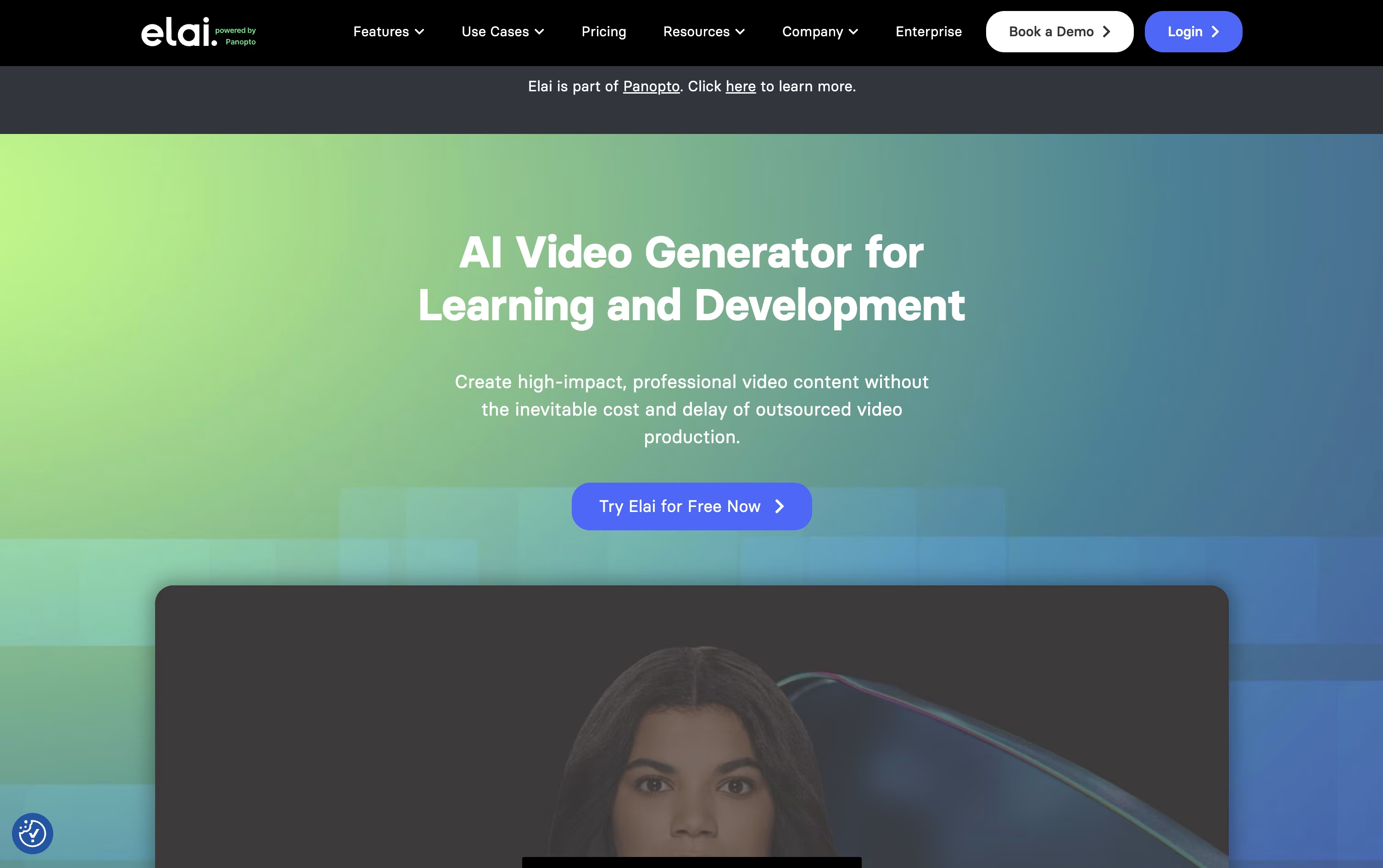
It leans heavily toward L&D and training use cases, with built in quizzes, branching paths, and SCORM export for learning platforms.
Anyone can start for free with 1 minute of video, 80+ avatars, and 75+ languages included from the start.
The Creator plan is $29 a month for 15 minutes, while Team is $125 a month for 50 minutes, 3 seats, and 4K video, and both drop 20% when billed yearly.
Enterprise pricing is custom and unlocks unlimited seats, SSO, and workspaces for bigger teams.
Being part of Panopto now also means Elai videos can be managed, shared, and tracked in one connected system.

Making a video with AI Studios starts with typing a script, pasting a link, uploading a document, or just describing an idea. The platform builds the rest, including a talking AI avatar, matching voice, scenes, and captions.
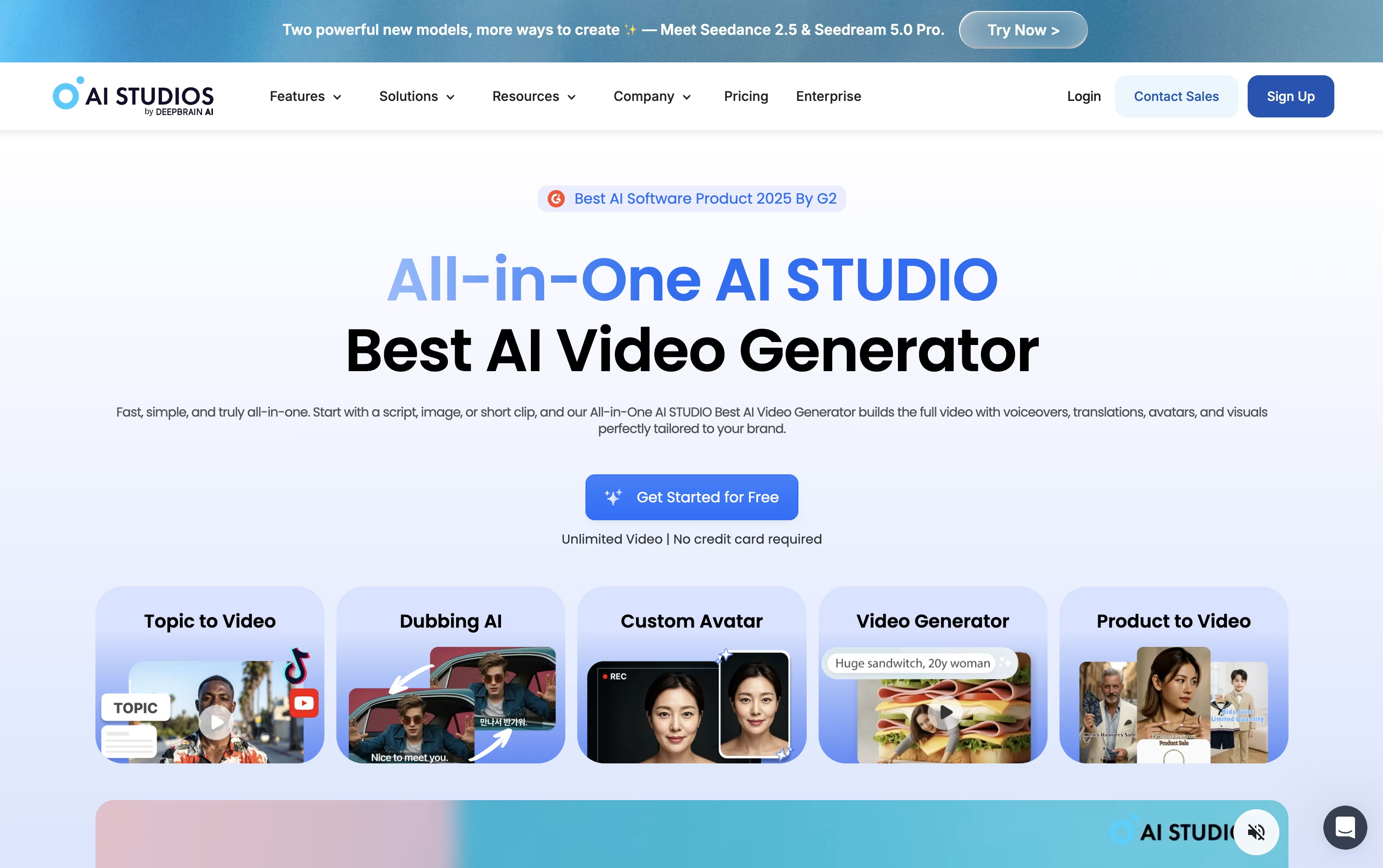
Avatars come from a library of over 2,000 options, or you can create your own from a short recording or a photo, complete with a cloned voice if you choose.
For existing videos, AI dubbing rewrites the spoken audio into another language while keeping the speaker's lips in sync, supporting more than 150 languages.
Pricing starts free, letting you try 3 short videos at 720p. Moving to Personal at $29 a month unlocks unlimited videos up to 30 minutes and 1080p export, with a lower $24 rate if billed yearly.
Teams pay $69 per seat monthly, or $55 annually, for 4K export, longer clips, and shared project spaces, while Enterprise moves to custom pricing with unlimited everything and priority support.
There's also a standalone Interactive Avatar plan for live, real-time avatar conversations, priced free to start and $99 a month for the Standard tier.

Instead of filming or recording anything, Fliki lets you type a script, paste a blog link, or upload a PowerPoint and get back a finished video.
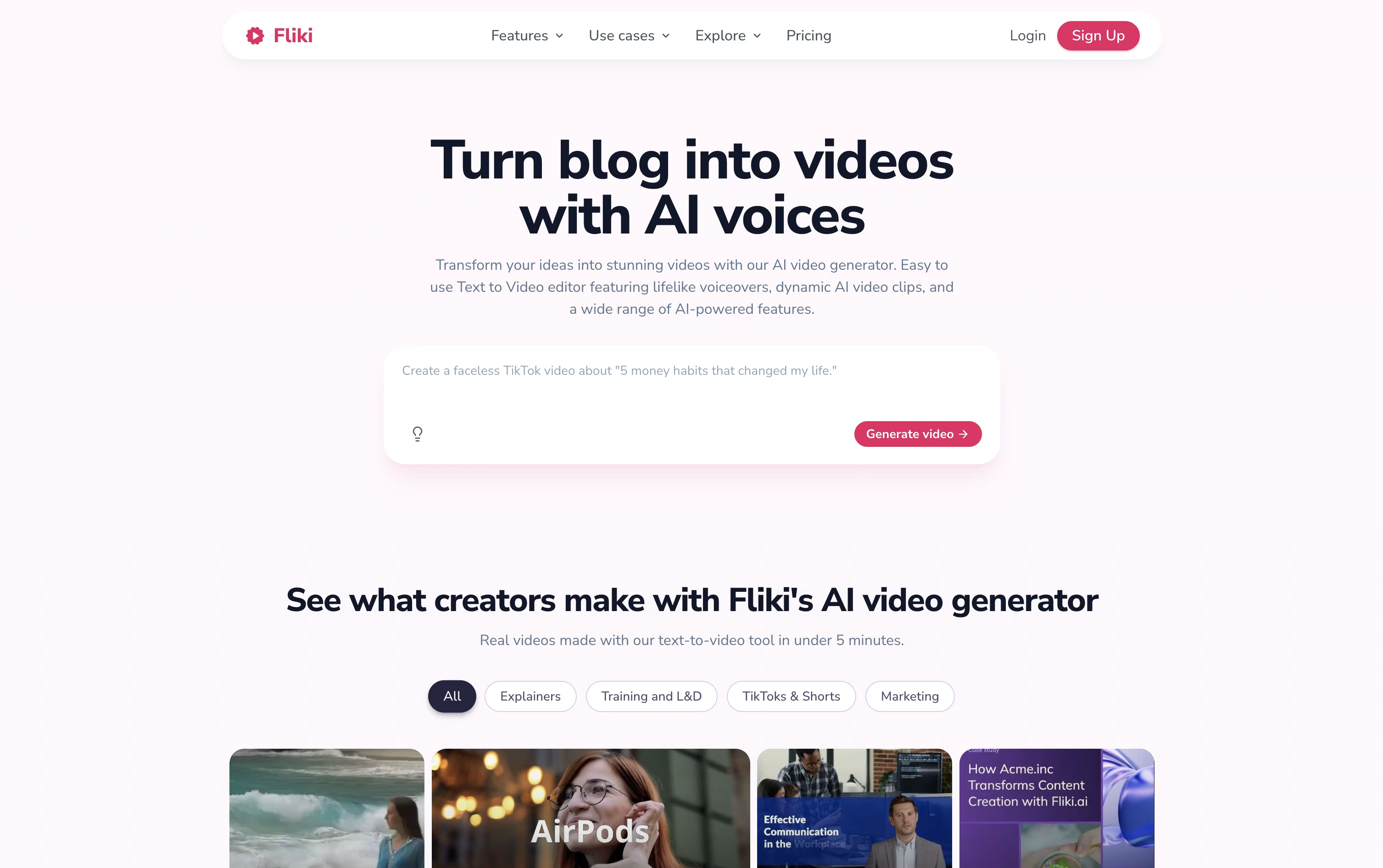
Behind the scenes it draws on thousands of realistic AI voices across 80+ languages, AI avatars, auto generated subtitles, and a library of stock and AI made visuals and music.
The editor itself is browser based, with a scene rail and full timeline, and Copilot, an AI assistant that follows plain language instructions to edit scenes, add music, or write a script.
Anyone can start on the Free plan, which includes a handful of monthly credits and 720p exports with a watermark.
Moving up to Standard at $28 a month unlocks 180 credits, 1080p video up to 15 minutes, 1,000 voices, and commercial rights, and Premium at $88 a month pushes this further to 600 credits, 40 minute videos, over 2,000 voices, avatars, and API access.
Larger organizations can request Enterprise pricing for custom credits, branded templates, and a dedicated account manager.

Chat Slide AI is an AI workspace for knowledge sharing that converts various types of content into structured presentations, videos, and audio content. Unlike traditional presentation tools that require manual slide creation, Chat Slide analyzes your input materials and automatically generates professional-looking slides with proper formatting, visuals, and layout.
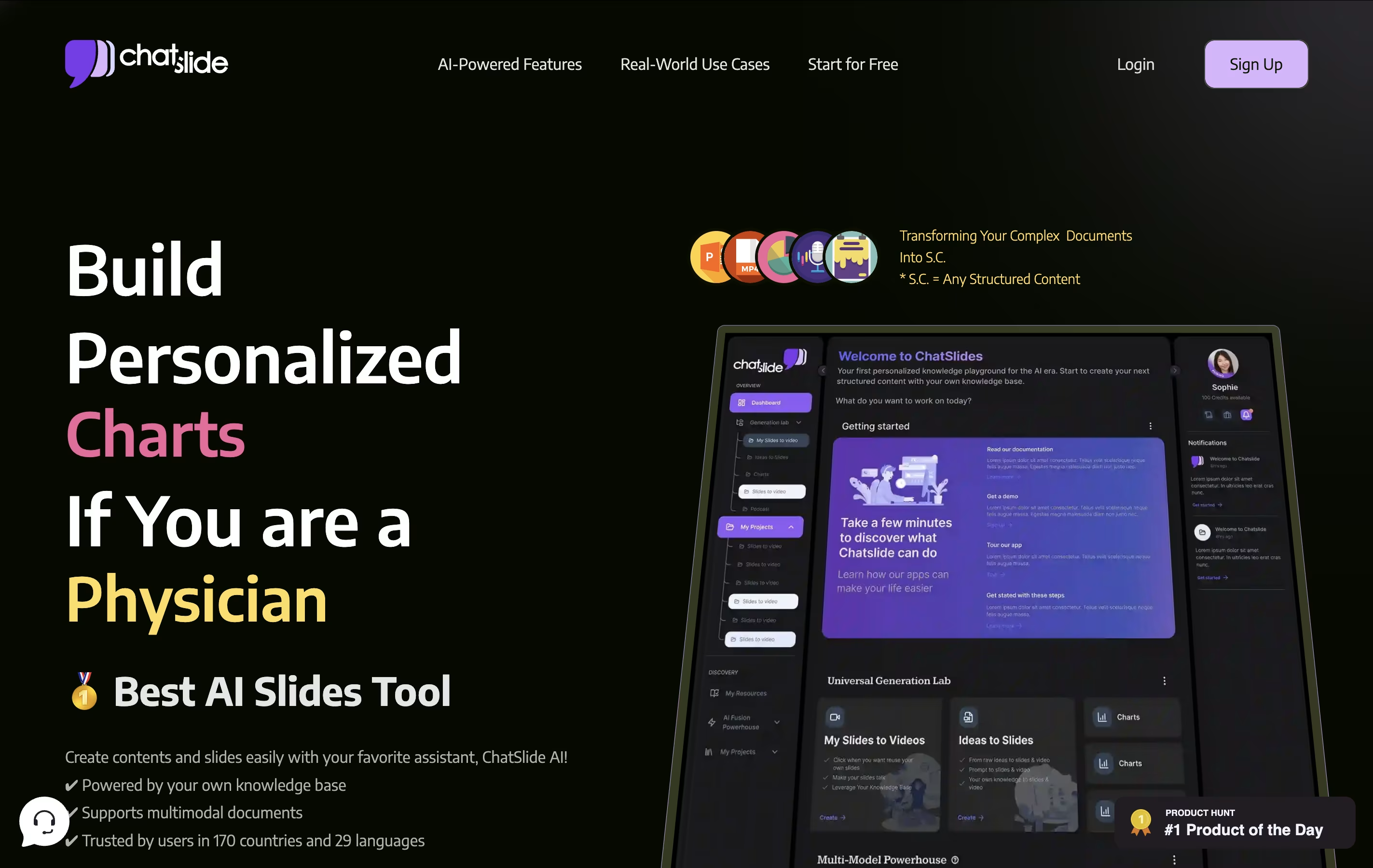
The platform offers multiple content transformation options. You can create slide presentations, generate videos with AI avatars that speak your content, convert presentations into podcasts, or produce social media posts. It supports file uploads including PDFs, Word documents, images, and web links.
Chat Slide uses advanced AI models to understand your content and create appropriate visuals, charts, and layouts. The tool includes over 100 AI avatars, voice cloning capabilities, and supports 100+ languages. It provides different pricing tiers from basic free usage to professional plans with advanced features like custom branding and longer video generation limits.

Wondershare is a software company that develops easy-to-use applications for creative professionals, businesses, and everyday users. Their main products solve common digital problems like editing videos, managing PDF documents, recovering lost data, and creating visual content.
The company operates as a Software-as-a-Service provider, offering both desktop applications and web-based tools. Their most popular products include Filmora for video editing, PDFelement for PDF tasks, Recoverit for data recovery, and Dr.Fone for mobile device management. Many tools now include AI features to make complex tasks simpler.
Wondershare focuses on user-friendly design, making professional-grade software accessible to people without technical backgrounds. They offer various pricing options including free versions, monthly subscriptions, annual plans, and lifetime licenses to fit different needs and budgets.

Fal AI is a serverless generative media platform designed specifically for developers who want to build next-generation creative applications. Think of it as the fastest way to add AI-powered image, video, and audio generation to your apps without dealing with complex infrastructure.
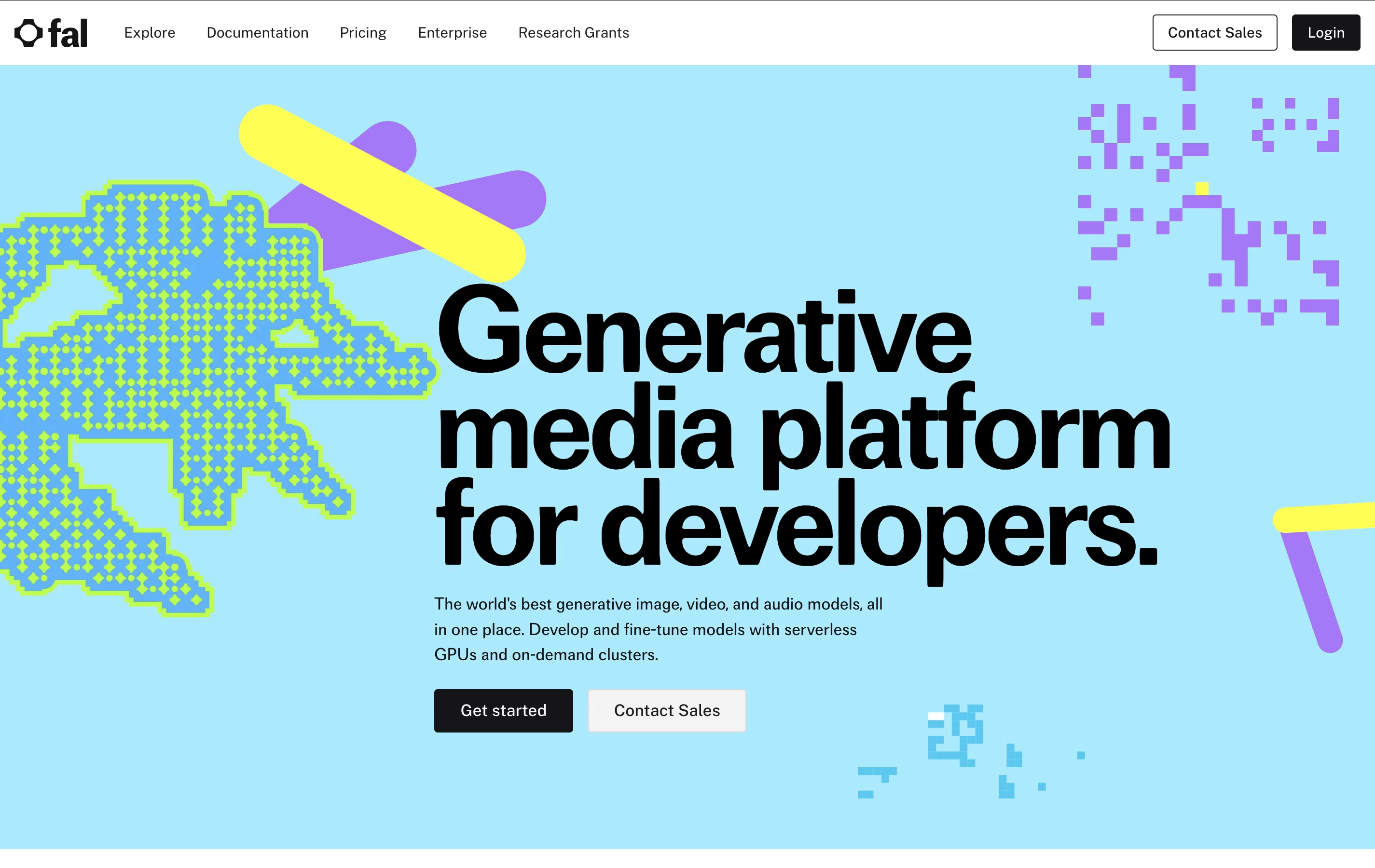
The platform uses a custom-built inference engine that runs diffusion models up to 4x faster than competitors, making real-time AI applications possible. It offers access to popular models like FLUX, Stable Diffusion, and many others through simple REST APIs. What sets Fal AI apart is its focus on speed and reliability - with 99.99% uptime and no cold starts, your users get instant results every time.
Founded by AI infrastructure experts, Fal AI has quickly become the go-to platform for major companies like Perplexity and Photoroom, processing over 50 million AI requests daily across various creative applications.

Clipchamp is a cloud-based video editing platform owned by Microsoft that enables users to create, edit, and share videos entirely within their web browser. Think of it as a simplified version of professional video editing software that runs online without requiring any downloads or installations.
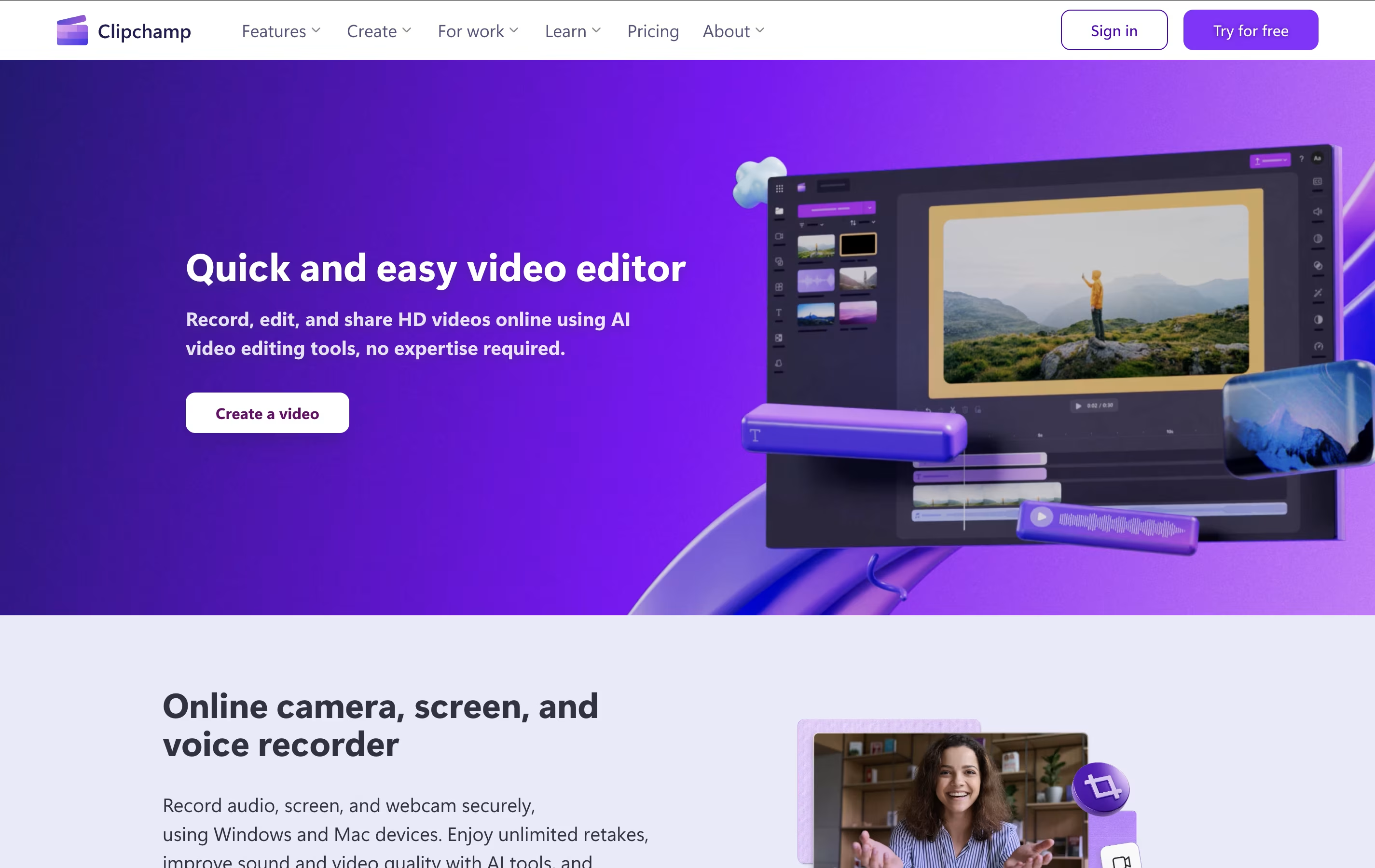
The platform offers both basic and advanced editing tools, including trimming, cropping, adding text, applying filters, and incorporating transitions. What sets Clipchamp apart is its AI-powered features like auto-compose video creation, background removal, and text-to-speech capabilities. Users can access thousands of royalty-free stock videos, images, and music tracks to enhance their projects.
Originally launched in 2014, Clipchamp was acquired by Microsoft in 2021 and is now integrated into Windows 11 and Microsoft 365. The platform serves millions of users worldwide, from content creators and small businesses to educators and enterprise teams looking for an accessible video creation solution.
Rather than being built around a single AI model, Higgsfield works as a layer on top of many models such as Seedance, Nano Banana, Kling, and Google Veo, adding its own camera and character tools for a more filmmaker friendly result.

Anyone can try it for free, though the free tier is limited to one job at a time and does not allow commercial use.
The first paid step is Basic at $9 a month, giving 120 credits, commercial rights, and quicker generation speeds.
Pro is the bigger upgrade at $29 a month, or $23 a month when billed yearly, since it opens up the complete Seedance lineup and removes the cap on marketplace apps.
Max sits at the top for individuals at $79 a month, or $59 annually, with 1,800 credits and the highest concurrency for video and image jobs.
Businesses can move to Team or Scale for shared seats and credits, or contact sales for a custom Enterprise plan with SSO, dedicated capacity, and compliance support.

Think of Mureka as a songwriting partner that builds a full track from almost nothing, just a mood, a genre, or a line of lyrics is enough to get started.
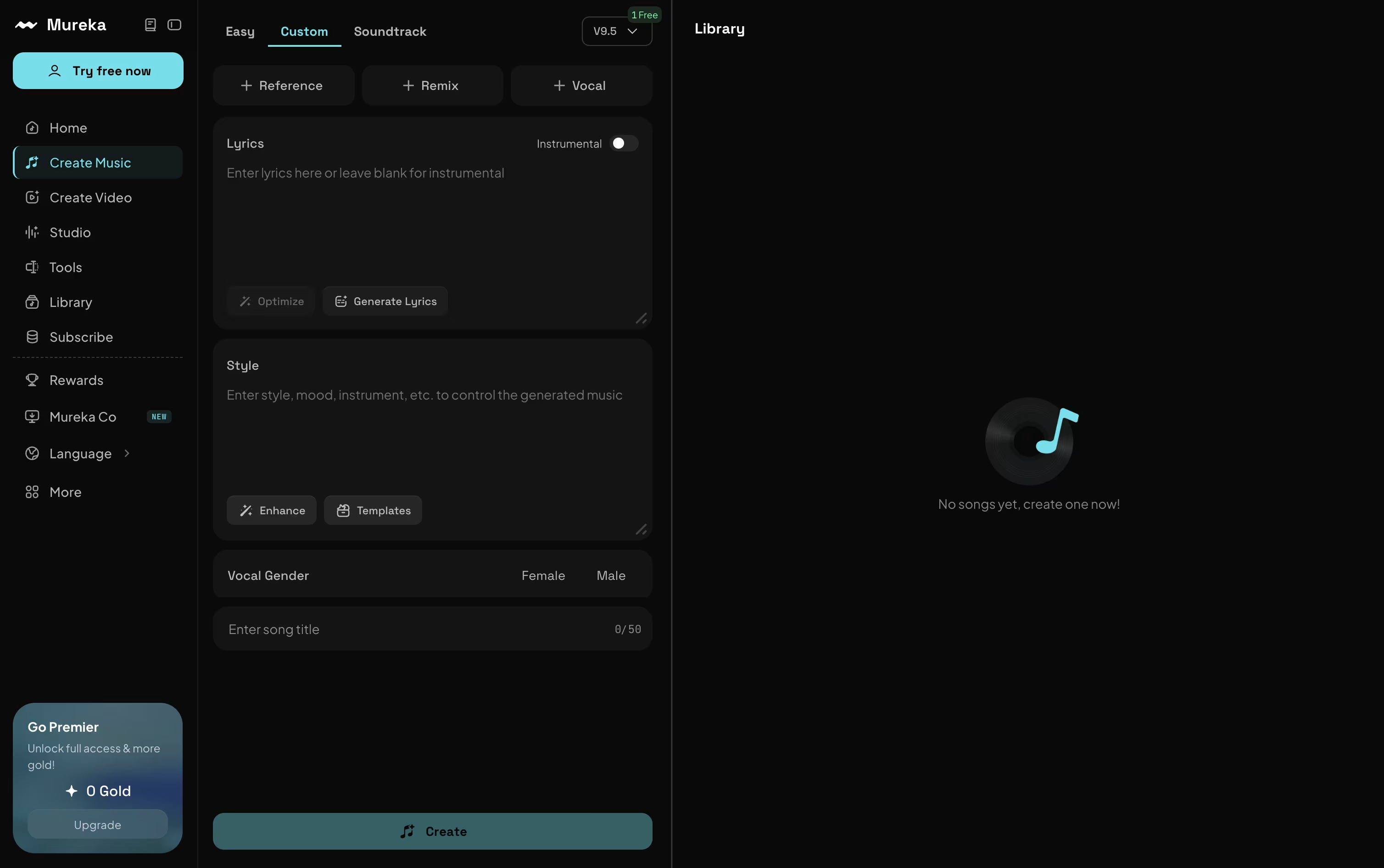
Behind the scenes, its MusiCoT technology maps out the song's structure first, deciding where the chorus and bridge should land, before filling in the melody, vocals, and instruments. That planning step is what gives the results a more finished, human feel.
Getting started costs nothing. The free plan allows four songs a day on the standard model, though features like remixing and downloads stay locked.
Upgrading to Pro at $10 a month unlocks 500 songs monthly, stronger models, commercial rights, and unlimited MP3 downloads, with a discounted annual price of $96 a year.
For deeper production work, Premier at $30 a month raises the cap to 2,000 songs and adds full Mureka Co control, Mureka Studio, up to twelve-way stem separation, and professional voice cloning, all for $288 if billed yearly.

Runway brings video, image, and audio generation together in one AI powered workspace, so creators are not stuck jumping between different apps for different tasks.
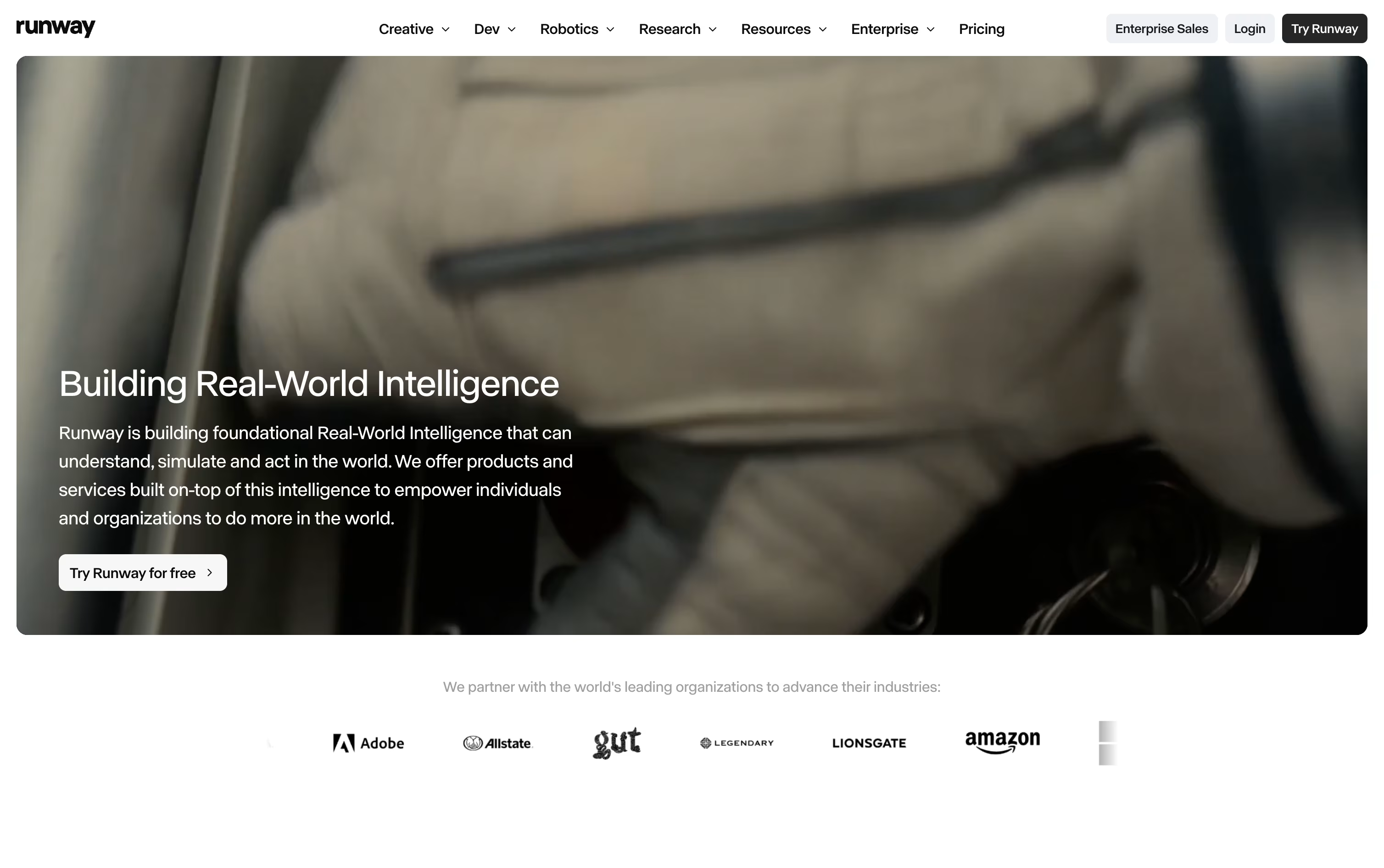
A simple text prompt or a single reference image can become a short video clip. If something needs changing, Aleph lets you edit one frame and carries that edit across the entire clip without disturbing the original motion or lighting.
For characters, Act-Two maps a performance video onto a character so their movement, expression, and lip sync all follow the reference footage. The Runway Agent can also build out full marketing campaigns from a short description.
On pricing, the Free plan hands out 125 credits one time that never expire. Standard is $15 a month for 625 credits, Pro is $35 a month for 2,250 credits with custom voices and 500GB of storage, and Max is $95 a month for 9,500 credits with one month of credit rollover and first access to new models.
Bigger teams can move to Enterprise for custom pricing with SSO, analytics, and priority support.
For building AI tools into other software, Runway Dev offers pay as you go pricing starting at $0.05 per second of video.

Rather than juggling separate apps for text, image, and video generation, FLORA puts more than 60 AI models inside one infinite canvas built for creative teams.
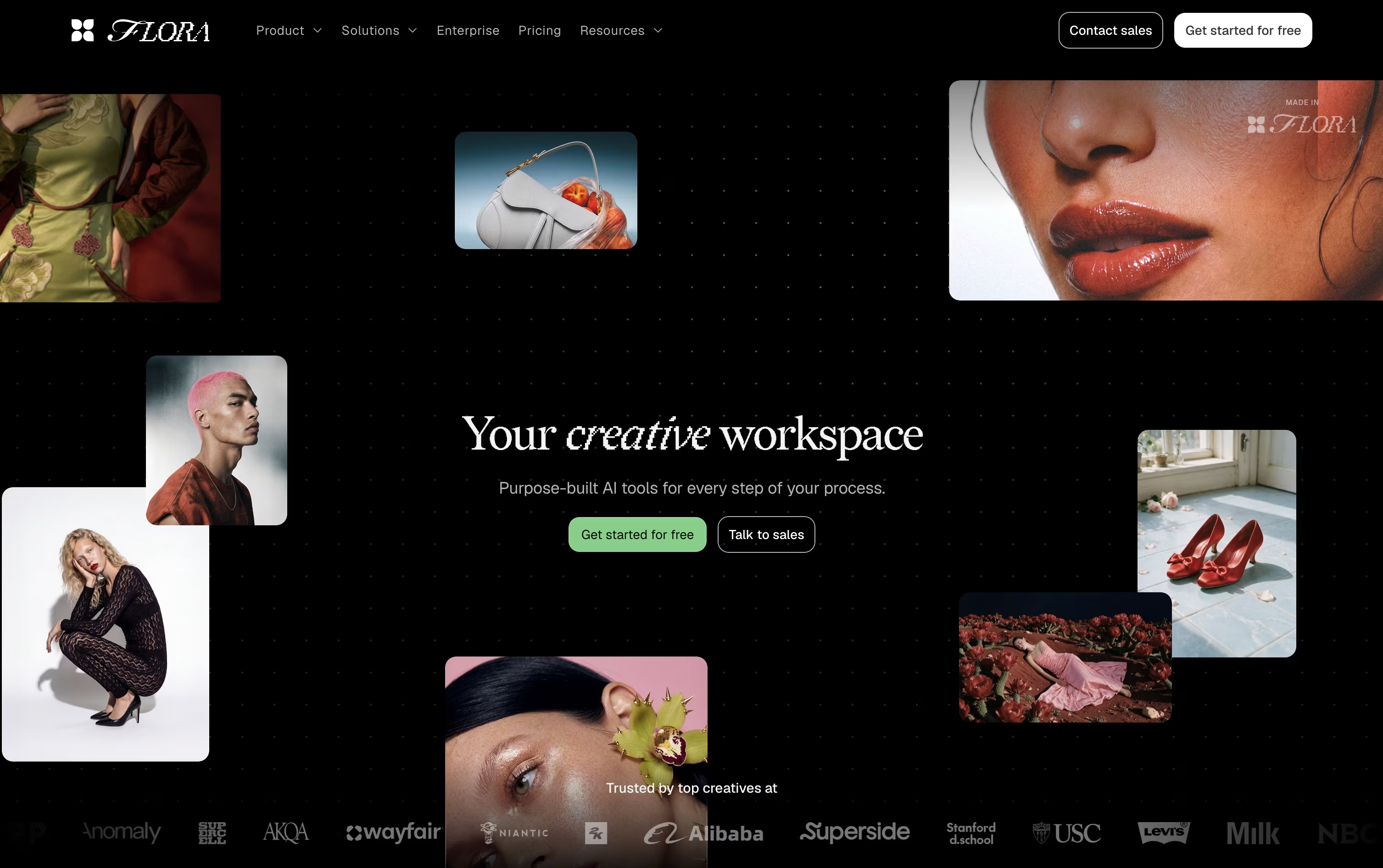
Work happens as connected nodes, so every idea, generation, and edit stays visible, branchable, and easy to trace back to where it started.
The built in FAUNA agent can plan and run entire sequences for you. Tell it what you're after, and it picks the right models, writes prompts, and organizes results on the canvas, all while keeping every action editable.
Reusable workflows called Techniques let teams turn a process into a repeatable system, useful for producing large batches of consistent, on-brand assets.
The Free plan gives one seat and a limited number of generations to try things out. Starter is $18 per seat a month, Pro (the most popular tier) is $50 per seat a month, and Max is $200 per seat a month, with 20% off on quarterly and annual billing. Enterprise plans are custom priced and include SSO, SAML, and dedicated onboarding support.
Think of Pollo AI as a hub for AI video and image creation, gathering many different models under one roof instead of building just one. You type a prompt, upload a photo, or drop in a product link, and the platform handles the rest.
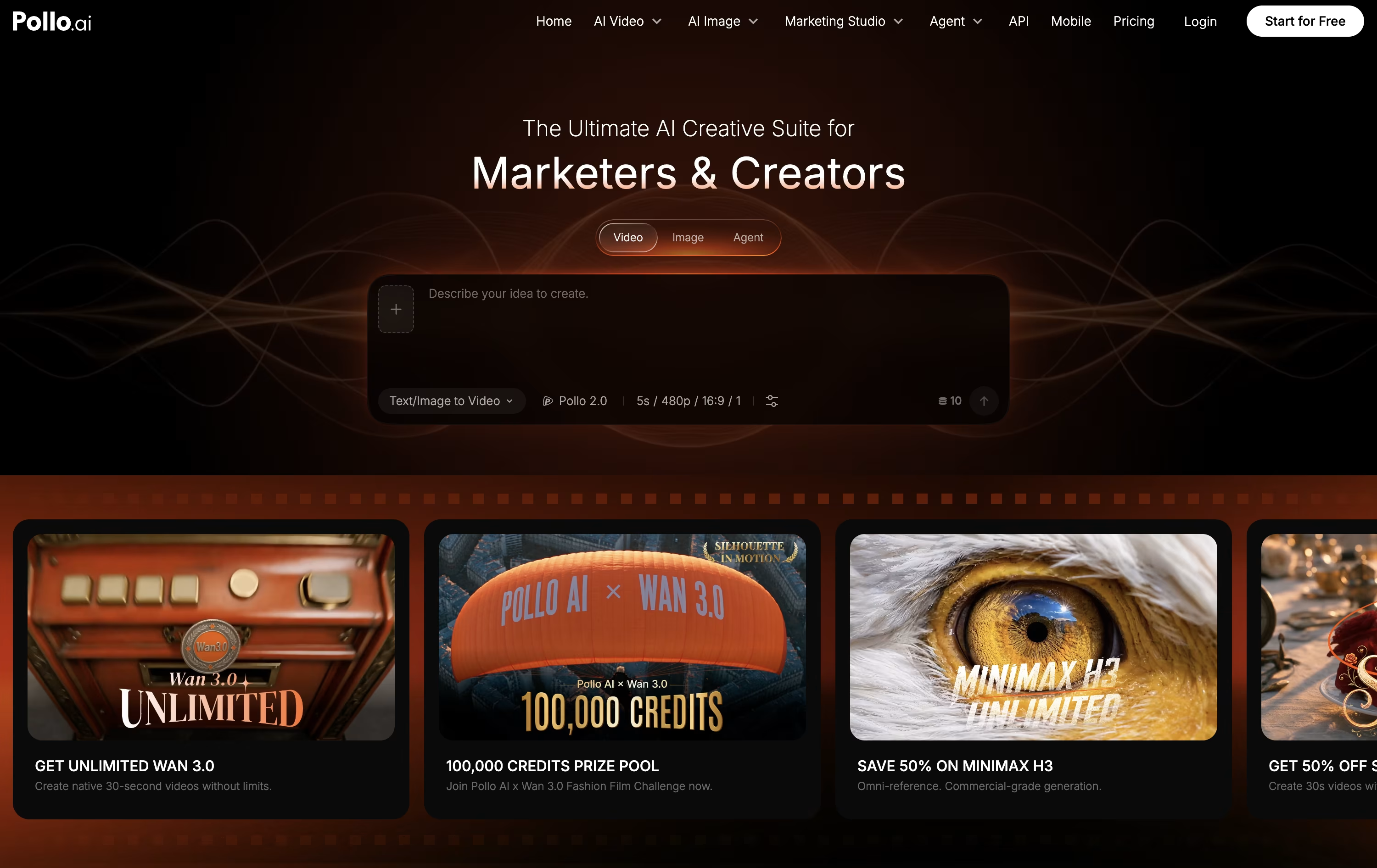
Choosing a Studio narrows things down, Creative Studio for general work, Marketing Studio for ads, and Commerce Studio for product visuals and listings. There is also an Agent mode that breaks a brief into scenes, writes the prompts, and puts together a more finished video automatically.
On the pricing side, a free plan gives 20 credits a month to test things out. The Lite plan costs $15 a month for 400 credits, Pro costs $59 a month for 2,000 credits plus faster speed and add-on credits, and Ultra costs $129 a month for 5,000 credits and the broadest unlimited model access.
Paying yearly lowers each of these monthly rates by roughly 50%, and any add-on credits you buy separately stick around even after your subscription ends.
With hundreds of supported models for video and image work, plus editing, avatar, and audio tools built in, Pollo AI aims to cover most short-form content needs in one place.

Hailuo AI is a video and image generator from MiniMax. Give it a written prompt or a photo, and it produces a short clip with lifelike motion, camera movement, and facial detail.
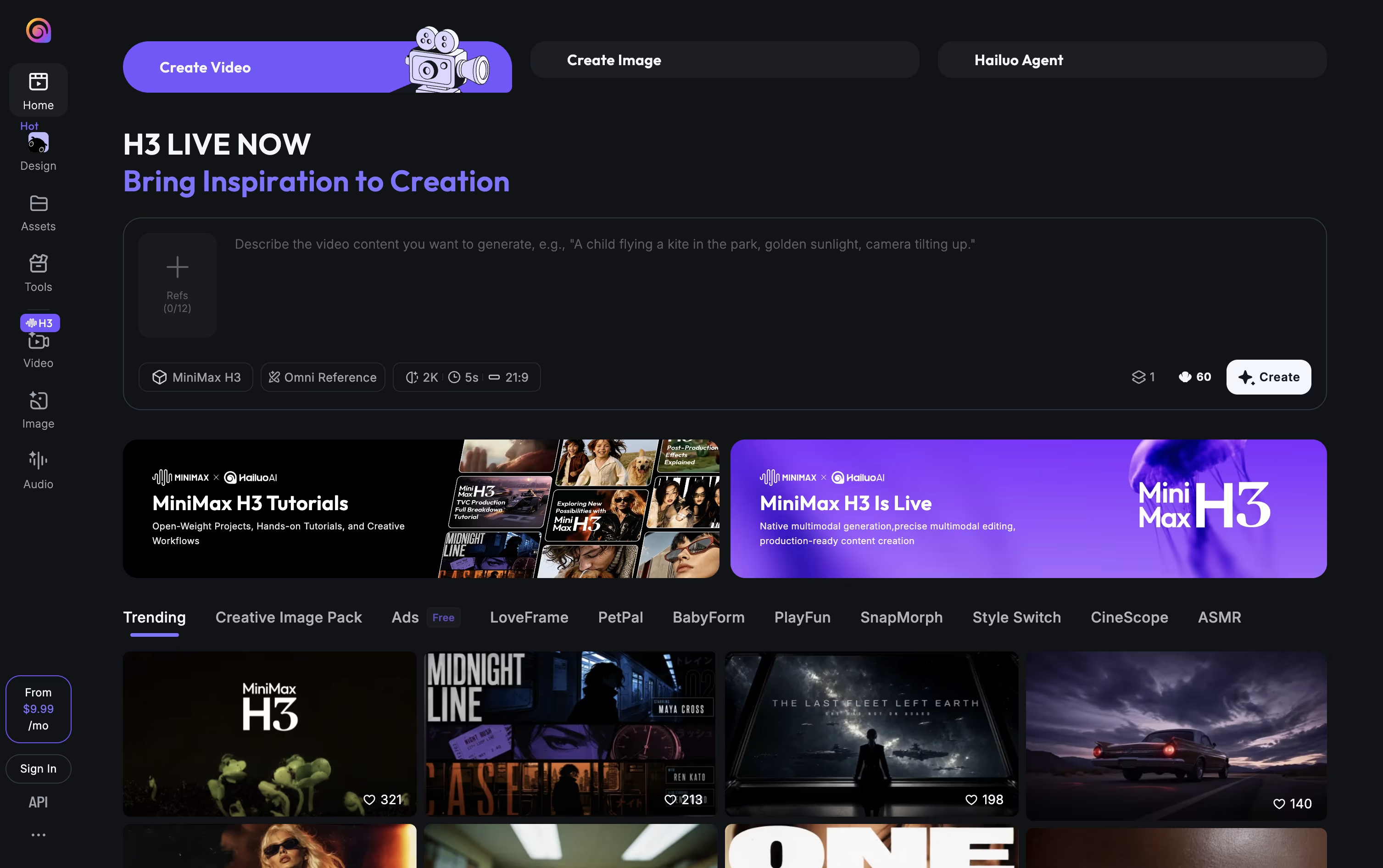
A start and end frame can be set to control how the video moves between two points, and camera actions such as zoom, pan, or tilt can be written directly into the prompt. A character reference tool keeps a person or object looking consistent across multiple clips.
The platform also makes still images, relights photos through its Light Studio tool, and offers music, lip sync, and video upscaling. Its Agent mode can put together a full video from a short brief, images, and music you provide.
You can reach it through the website, mobile apps for Android and iPhone, or its API for developers.
Pricing starts free with trial credits, then moves through paid tiers from roughly $10.50 to $216 a month. Higher tiers give more monthly credits, better video resolution, and access to more image models. Yearly billing brings the monthly price down on every paid tier.

Artlist works as a single home for both stock assets and AI generation, aimed at creators who don't want to jump between separate apps.
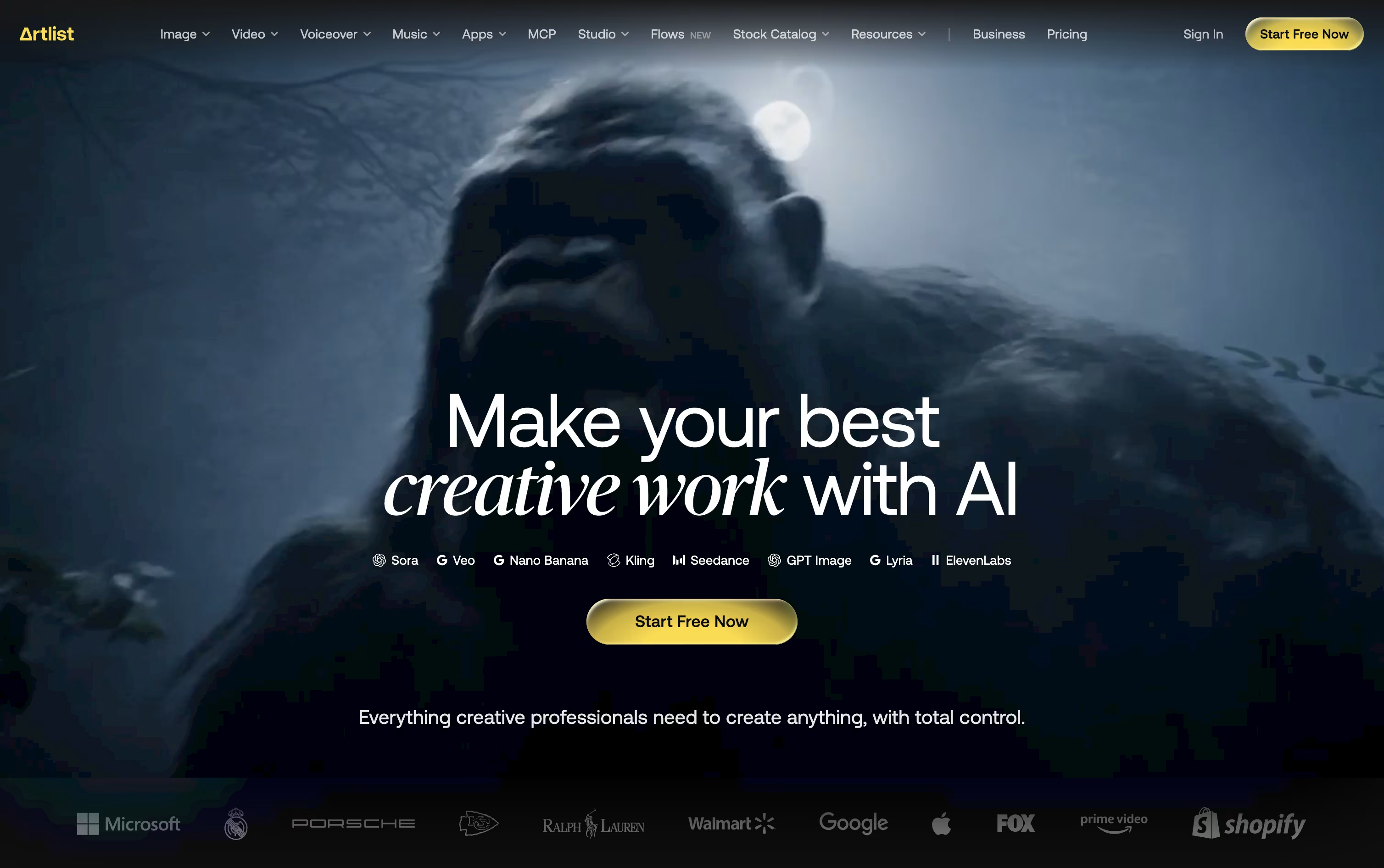
Its library covers royalty free music, sound effects, footage, templates, and LUTs, while the AI Toolkit handles text to image, text to video, voiceover, avatar, and dubbing generation across 100+ models.
The AI Suite has three main paid tiers. AI Starter runs $19.99 a month with 16,500 credits, AI Core is $39.99 a month with 40,000 credits and the Most Popular label, and AI Creator is $69.99 a month with 80,000 credits. Paying yearly drops these to $11.99, $23.99, and $41.67 a month.
Separately, the Stock Catalog starts at $9.99 a month for Music & SFX, moves up to $50.66 a month for Max, and $399 a month for Max Business teams, both on annual billing.
Custom Business options exist for both the AI Suite and Stock Catalog, offering unlimited generations, enterprise security, SSO, and a dedicated account manager at custom pricing.
Editors can also reach Artlist through Premiere Pro, After Effects, and DaVinci Resolve plugins, or generate assets directly inside Claude via the Artlist MCP integration.

Luma AI lets you describe a creative task and have its AI agents research, generate, and polish the result across video, image, and audio formats.
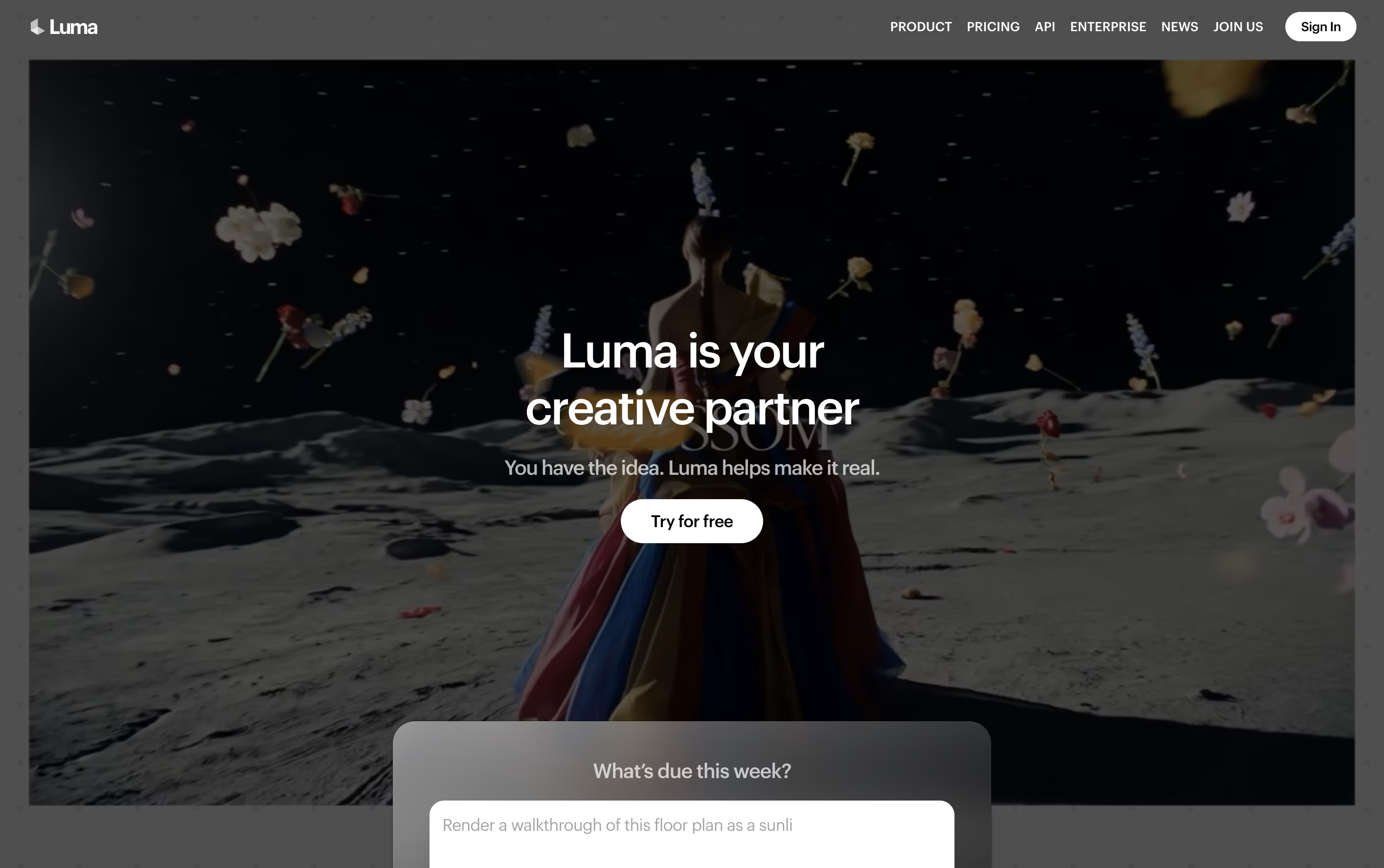
Luma Agents sits at the core of the platform, pulling together models such as Ray for video and Uni for images while keeping a consistent brand look. With Luma Skills, any workflow you build can be saved and reused on future work instead of starting from scratch.
The newest video model, Ray 3.2, allows up to sixteen keyframes in a single clip, lets you edit existing footage with Modify Video, reshape aspect ratios with Reframe, and export in native HDR for color grading.
On the pricing side, the Plus plan starts at $30 a month with 10,000 credits, while Pro at $90 a month and Ultra at $300 a month unlock more credits and greater agent usage. Choosing yearly billing cuts the cost by up to 20 percent.
Larger teams can move to the Team or Enterprise plan, both quoted individually, which bring in team management, shared credit pools, analytics, and single sign-on.
Every actual generation, whether video, image, or audio, is billed from your credit balance based on the model and quality chosen.

OpenArt brings image, video, audio, and character creation into a single workspace, so a project does not need to be pulled apart across separate apps.
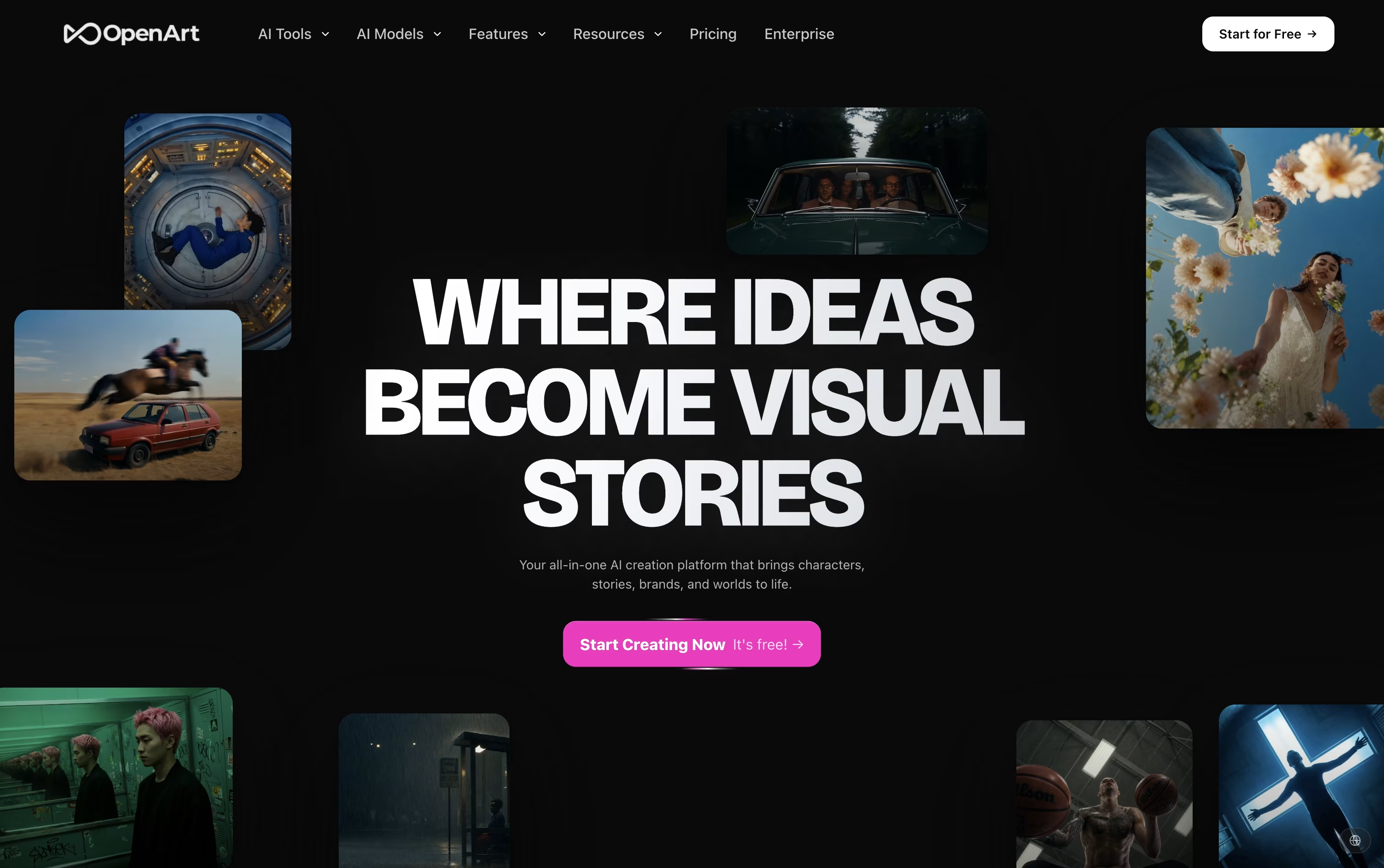
You describe what you want in a prompt, or upload a reference photo, and the platform sends the request to one of more than 100 connected AI models for images, video, and sound.
Its character tool is one of the main draws. Build a character once and it can appear again and again across new scenes and videos while staying recognizable.
On price, the Starter plan begins at $14 a month with 4,000 credits, while the top individual plan, Wonder, costs $240 a month for 106,000 credits and extra perks like unlimited creation.
Groups can pick the Business plan, priced from $680 a month for a shared credit pool across up to 50 people, and larger organizations can ask for custom Enterprise pricing with unlimited seats.
A free trial with starter credits is available for anyone who wants to try it first.

With Suno, you type what kind of song you want and it writes the lyrics, sings the vocals, and builds the music around it in less than a minute. Humming, recording your voice, or uploading audio also works as a starting point.
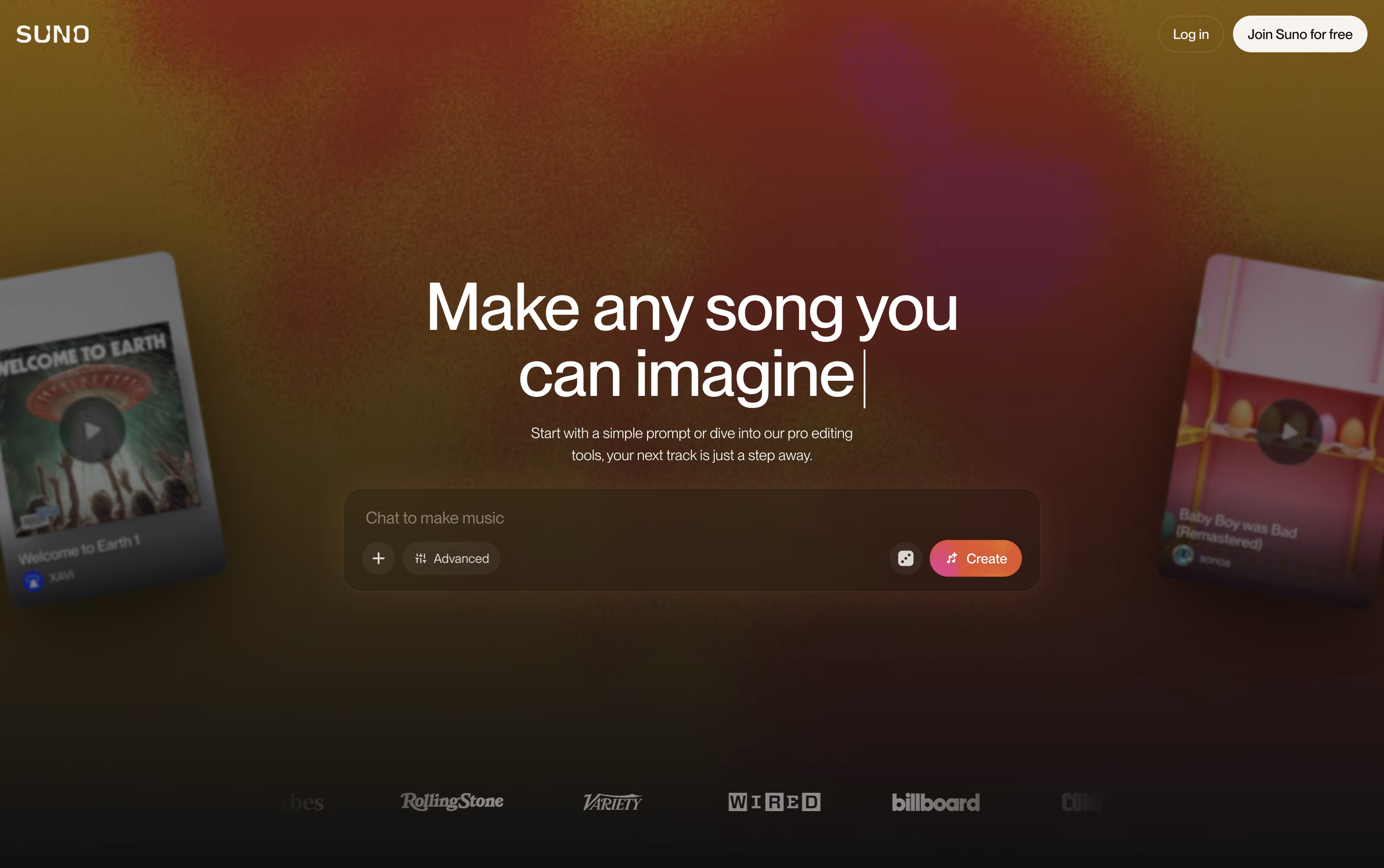
Anyone can start for free using Suno's standard model, though the free plan runs on a shared queue and doesn't include commercial rights.
Upgrading to Pro costs $10 a month, or $8 a month if billed yearly, and brings the newer v5.5 model, 2,500 credits a month for roughly 500 songs, 20 downloads, and rights to use what you make commercially.
The Premier plan is $30 a month, or $24 a month yearly, and layers on Suno Studio for deeper mixing and MIDI export, 10,000 credits for about 2,000 songs, 60 downloads, and a third, more advanced stem separation mode.
Paid users also get a faster priority queue and can work on several songs side by side.
Built by Vyro AI, ImagineArt combines image, video, voice, and music creation into a single AI platform, so you are not switching between separate apps for each format.
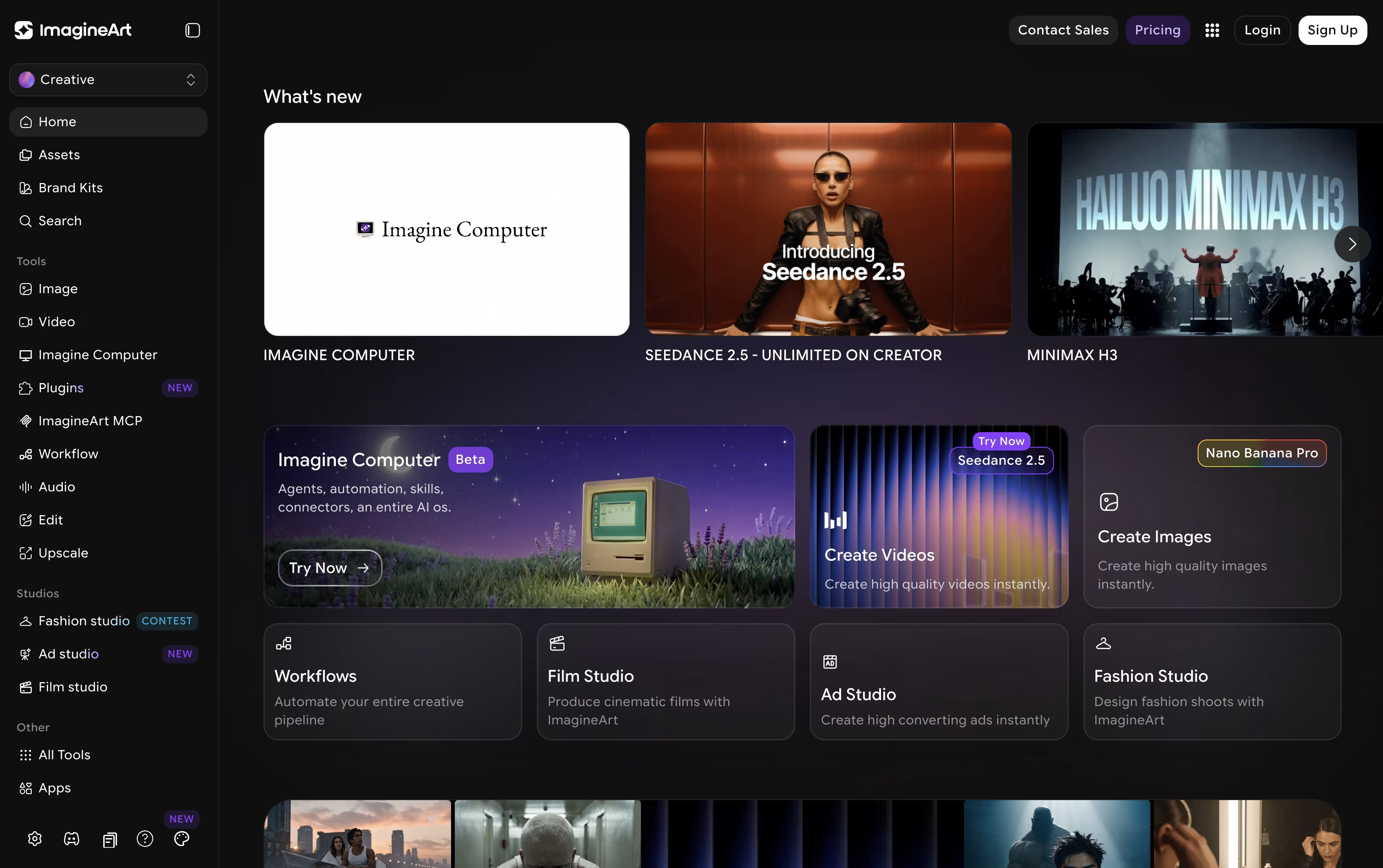
The platform pulls together many well-known AI models, such as GPT, Gemini, Claude, Seedance, and Nano Banana, and lets you access them all from one account.
For more guided output, dedicated studios cover film, advertising, and fashion projects, while Imagine Flow offers a node-based canvas for building repeatable creative pipelines.
Anyone can start free, receiving 100 credits each day with access to a small set of models.
From there, plans move from $13 a month at the Basic tier up to $250 a month for Creator, passing through Standard at $30 and the popular Ultimate plan at $50, each raising credits, concurrent generations, and model access.
Businesses can also choose Team plans or a custom-priced Enterprise plan that adds unlimited seats, single sign-on, and dedicated support.

Getimg.ai gathers image, video, and audio creation into a single browser based workspace, cutting out the need to juggle separate apps and accounts.
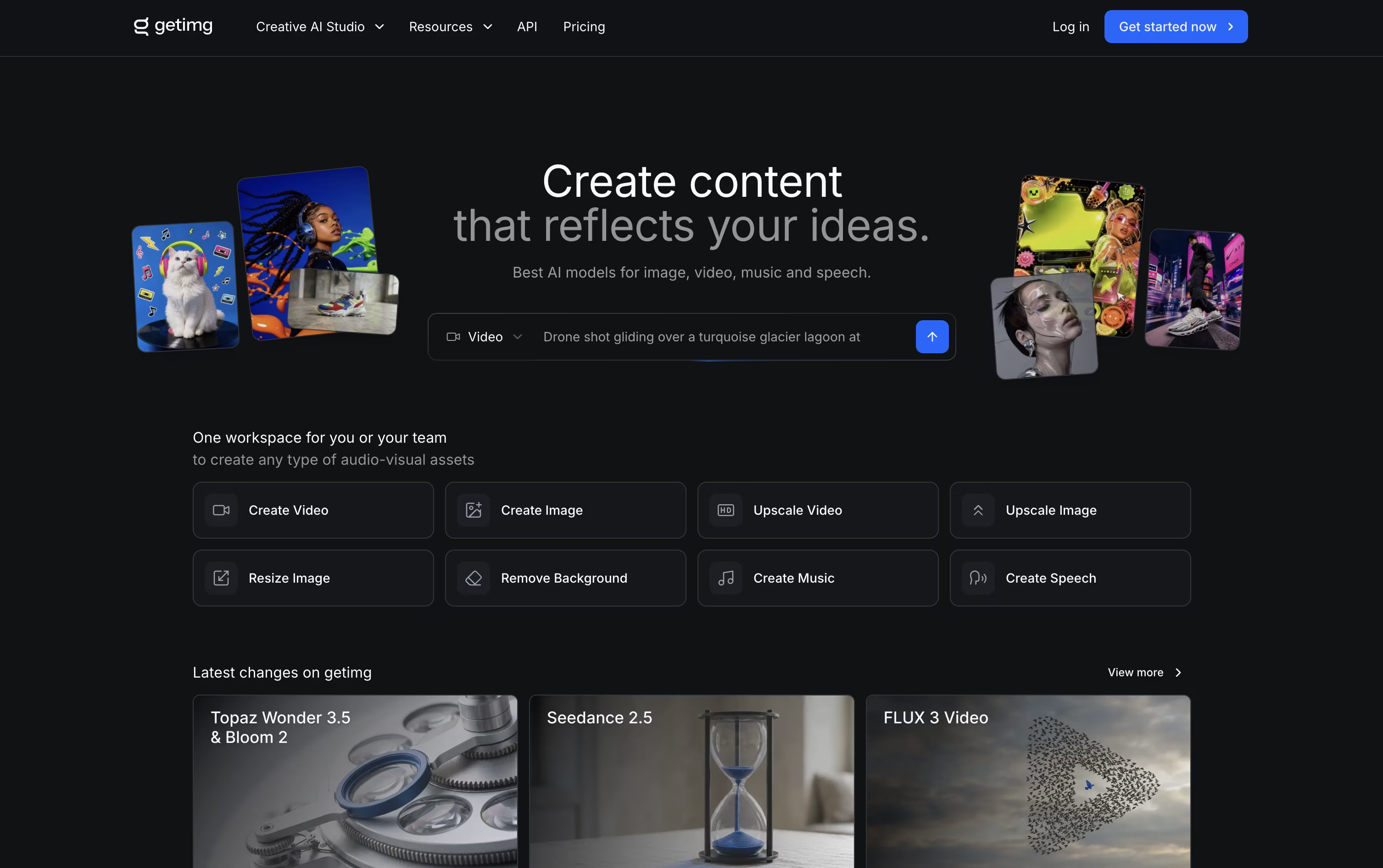
You simply describe what you need, and the platform automatically chooses a fitting AI model and refines your prompt in the background.
Editing is built in too, with one click background removal, image upscaling up to 16K, smart resizing, and video upscaling up to 4K.
Plans begin at $10 a month for the Entry tier with 3,000 credits, and move up to $30, $65, and $175 a month per seat for Core, Plus, and Ultra, each adding more credits, higher quality upscaling, and larger team access.
Choosing yearly billing lowers the price by roughly 20 percent across every plan.
Paid subscriptions also unlock full commercial rights, and a developer API with ready made SDKs is available for teams that want to build the tools into their own apps.

Krea packs image, video, and 3D generation into one browser based workspace, so creative teams don't need to jump between separate tools. It works well for designers, filmmakers, agencies, and beginners alike.
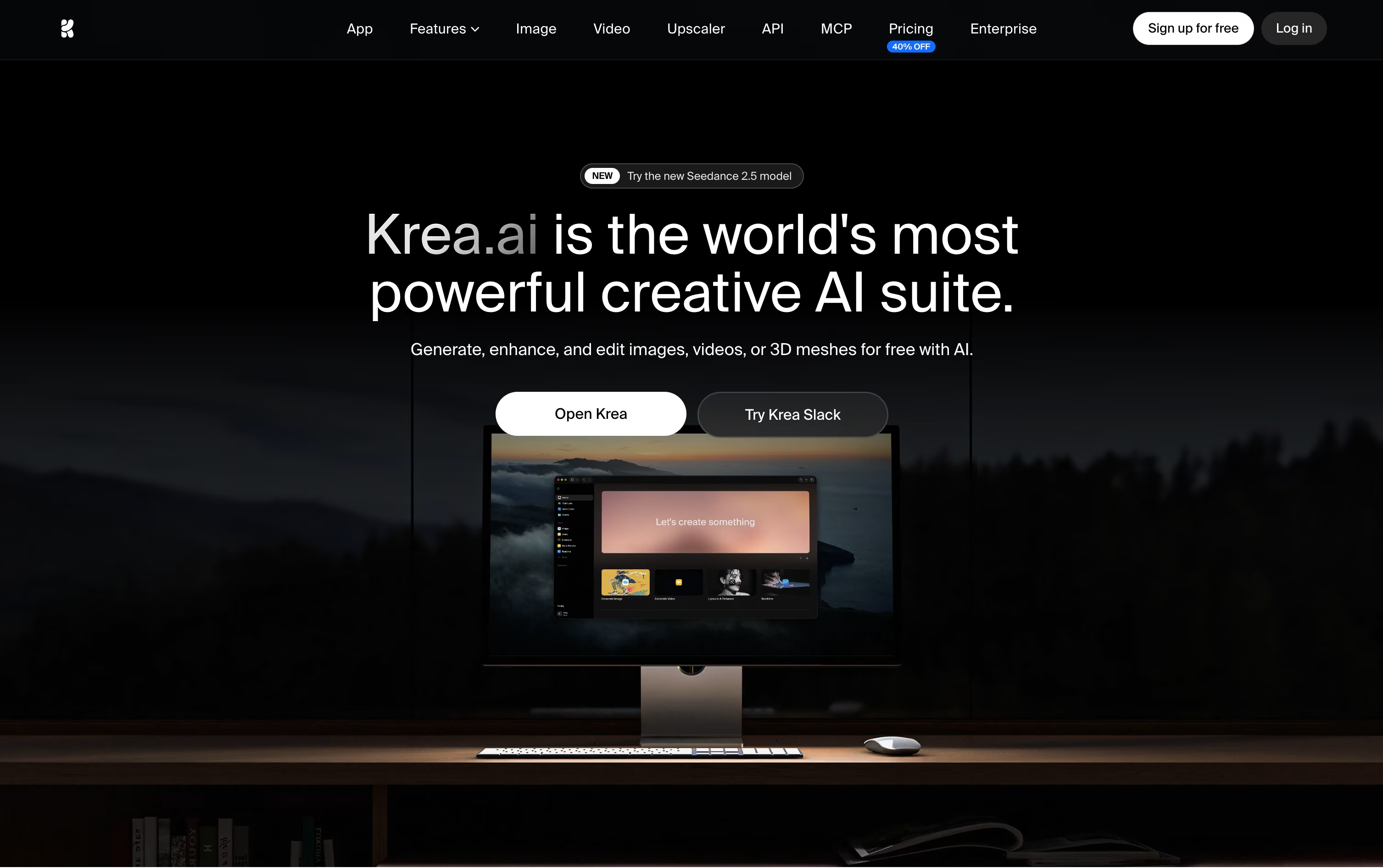
Behind the simple interface sits access to dozens of AI models, including Krea's own Krea 2, plus a realtime canvas that updates as you type, an editor for region based changes, 3D mesh generation, and a lipsync tool for talking videos.
You can also train private LoRA styles and set up automated Nodes workflows, or let Nodes Agent build a workflow from a text description.
Getting started is free, with 100 units a day and limited model access. Basic runs $9 a month, or $5 yearly, unlocking full image models and LoRA training.
Pro, the most popular tier, costs $35 a month, or $21 yearly, and adds all video models plus Nodes Agent and early feature access, while Max reaches $105 a month for unlimited concurrency and relaxed generations.
Larger teams can pick Business at $200 a month for 80,000 units and up to 50 seats, or move to Enterprise for custom pricing with SAML SSO and priority support.

Built by the team behind TikTok and CapCut, Dreamina is ByteDance's AI creative suite for turning words and pictures into finished images, videos, and talking avatars. It works right in the browser, so there is nothing to install.
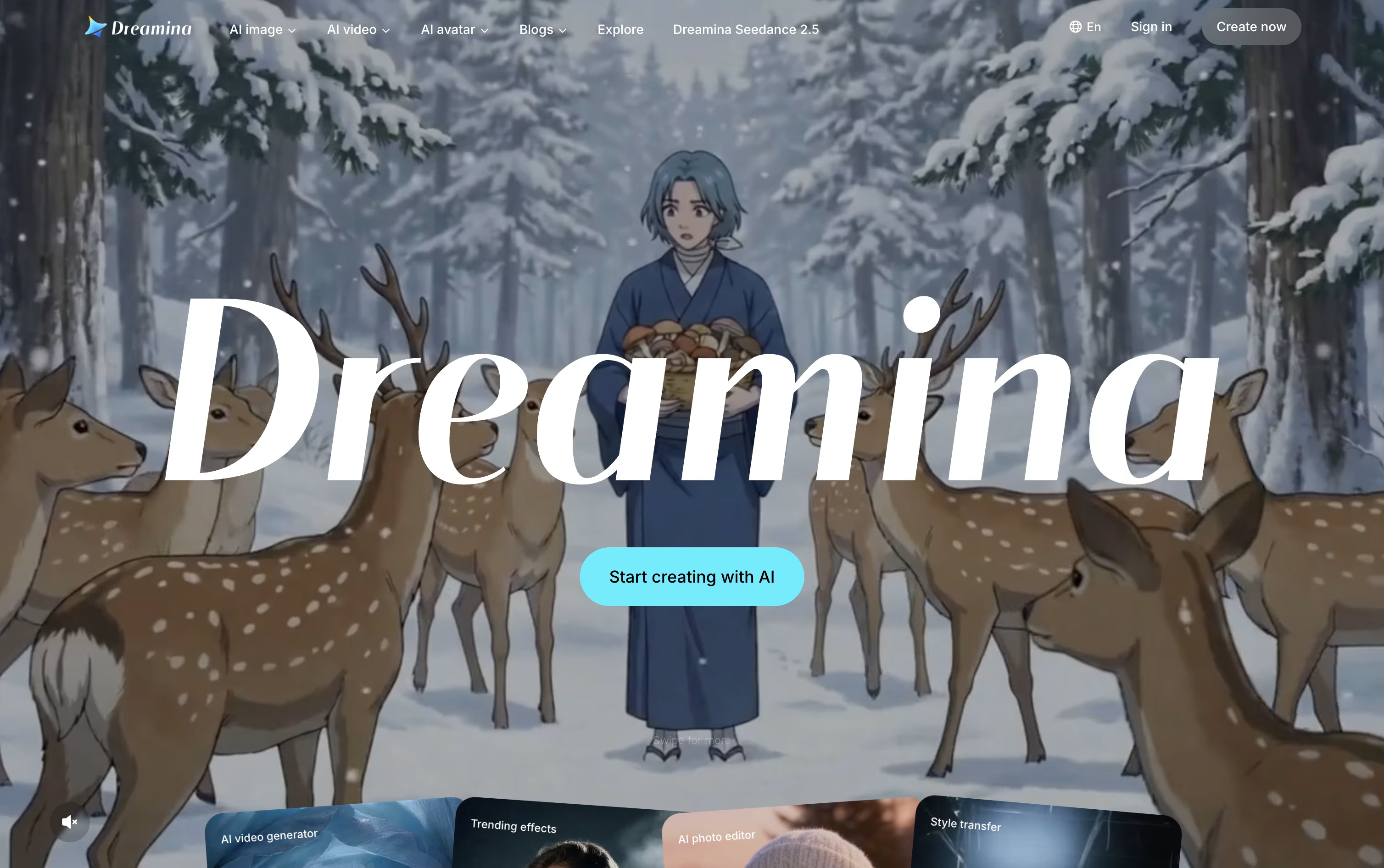
Image and video work is powered by ByteDance's Seedream and Seedance models, which keep characters consistent, handle camera motion well, and add natural audio with accurate lip sync straight out of the box.
Once something is generated, it can be sent directly into CapCut for editing, so creators skip the usual back and forth of downloading and re-uploading files between separate apps.
The Free plan costs nothing and hands out bonus credits every day. Basic runs $15 a month, or $144.99 a year, for 1,575 credits along with watermark removal and 60 FPS video.
Standard sits at $35 a month, or $334.99 a year, offering 3,885 credits with the same feature list as Basic. Advanced, at $70 a month or $669.99 a year, gives 8,645 credits, top-priority generation, and a limited-time unlimited 4K benefit.
Paying yearly instead of monthly cuts the overall cost by roughly 20% on every paid tier.

Visme is an all-in-one visual design platform that helps you create professional presentations, infographics, reports, social media graphics, and over 30 other types of content. Unlike traditional design software that requires technical skills, Visme makes design accessible to everyone through its intuitive interface and extensive template library.
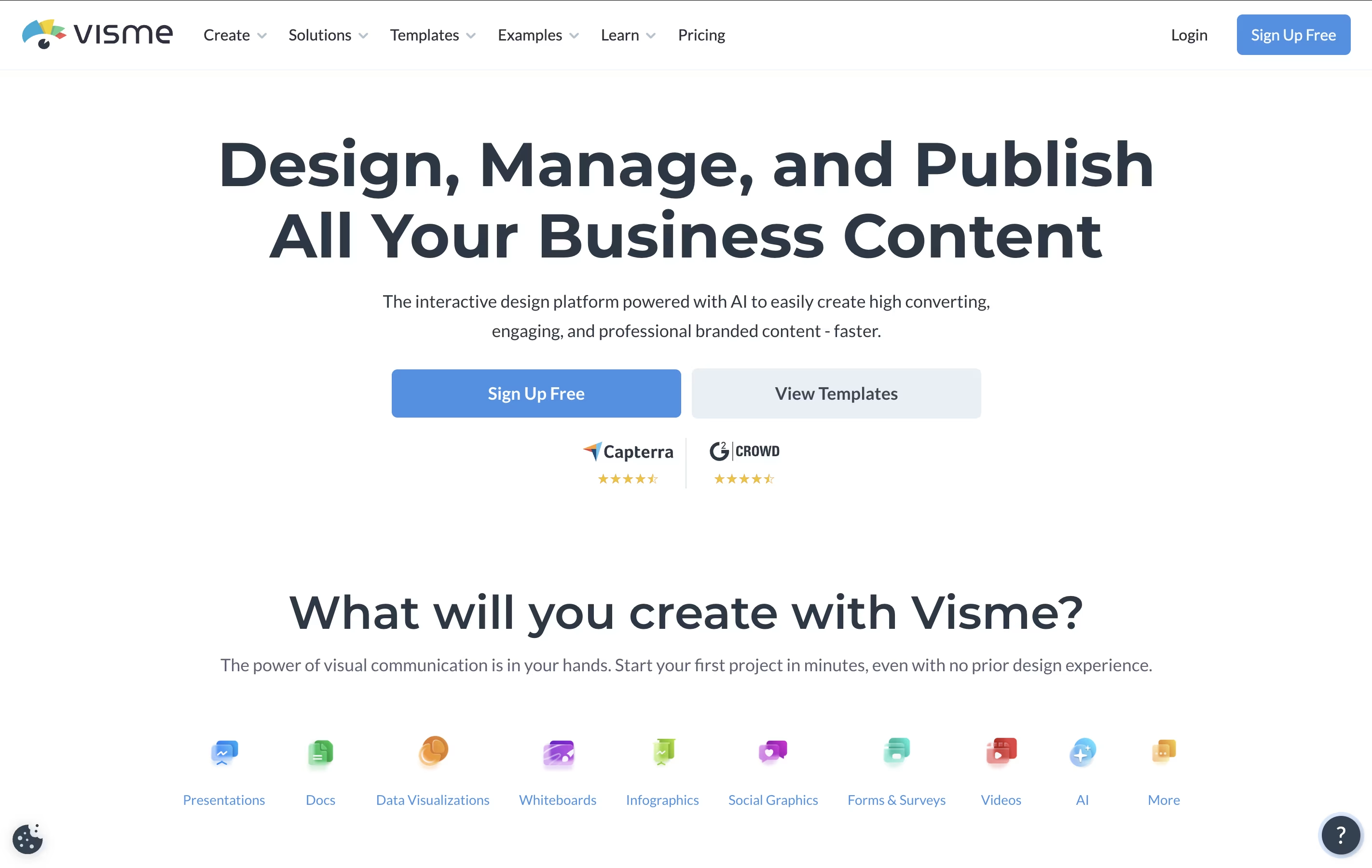
The platform offers thousands of customizable templates, drag-and-drop editing, interactive elements like animations and clickable links, and collaboration features for teams. It includes AI-powered tools that can generate designs from text prompts, making content creation even faster.
Visme works entirely online, so you don't need to download software. You can create content, share it with your team for feedback, and publish it directly from the platform. It's designed for businesses, educators, marketers, and anyone who needs to communicate ideas visually without hiring a designer.

Mubert lets you generate original instrumental music by typing a prompt or picking a mood, genre, or activity, rather than searching through stock music sites for something that fits.
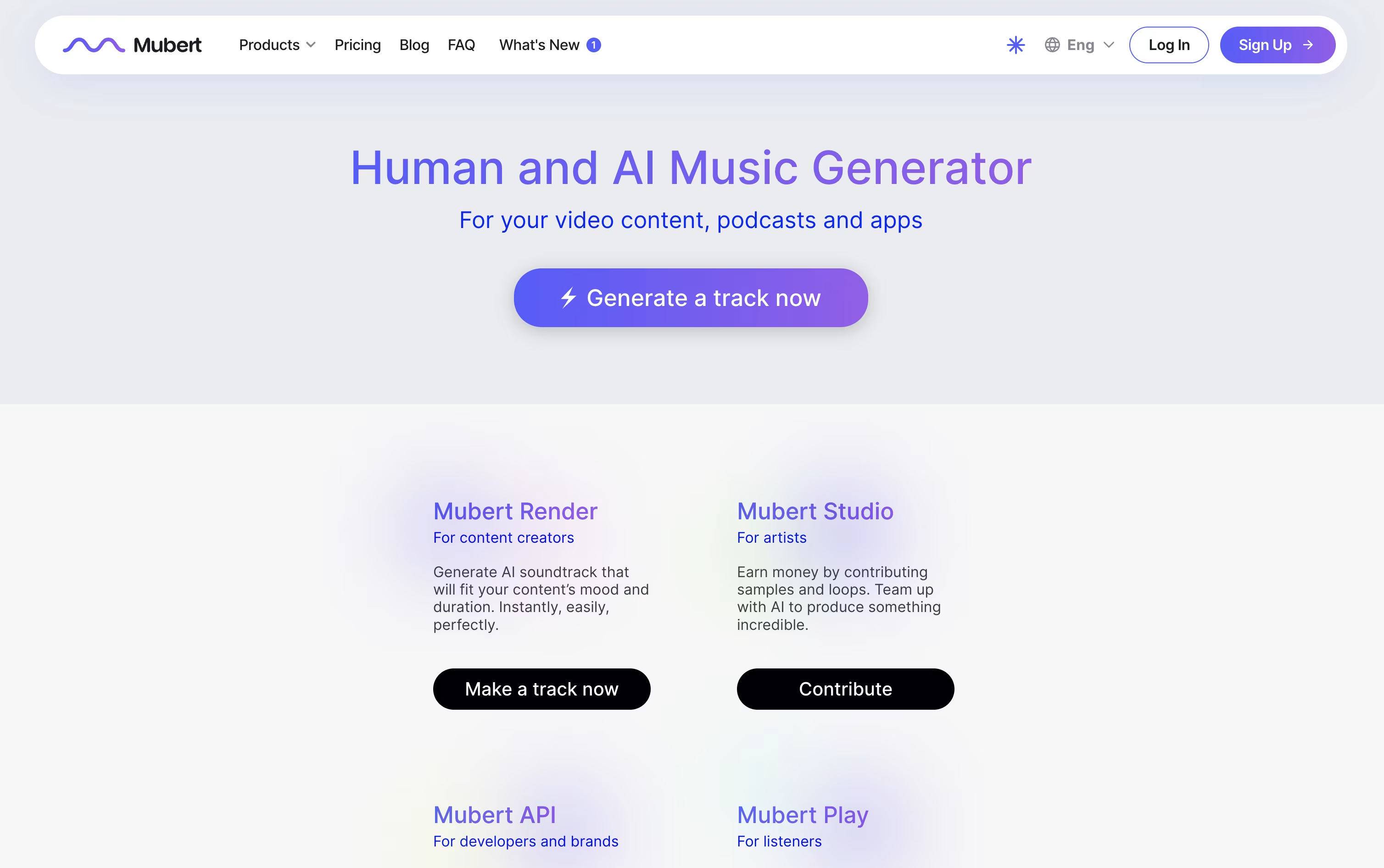
The tracks are built from real musician samples combined with AI, so the output sounds natural and is cleared for use on platforms like YouTube, TikTok, and podcasts.
On top of single tracks, there is Mubert Play for continuous, adaptive listening streams, Fuse for turning short videos into finished content with music and voice, and an API for adding music generation directly into apps or games.
The free Ambassador plan is a good way to test things out, while Creator ($14/month) and Pro ($39/month) unlock unlimited downloads and lossless files for personal and monetized content.
Businesses, agencies, and app makers can step up to the $199 a month Business plan, or buy a one-time license, priced from $19 to $499, when a subscription is not the right fit.

Piktochart is a cloud-based design platform that simplifies visual content creation for non-designers. It offers hundreds of professionally designed templates for infographics, presentations, reports, posters, social media graphics, and more. Users can customize these templates using a drag-and-drop interface without needing graphic design skills.
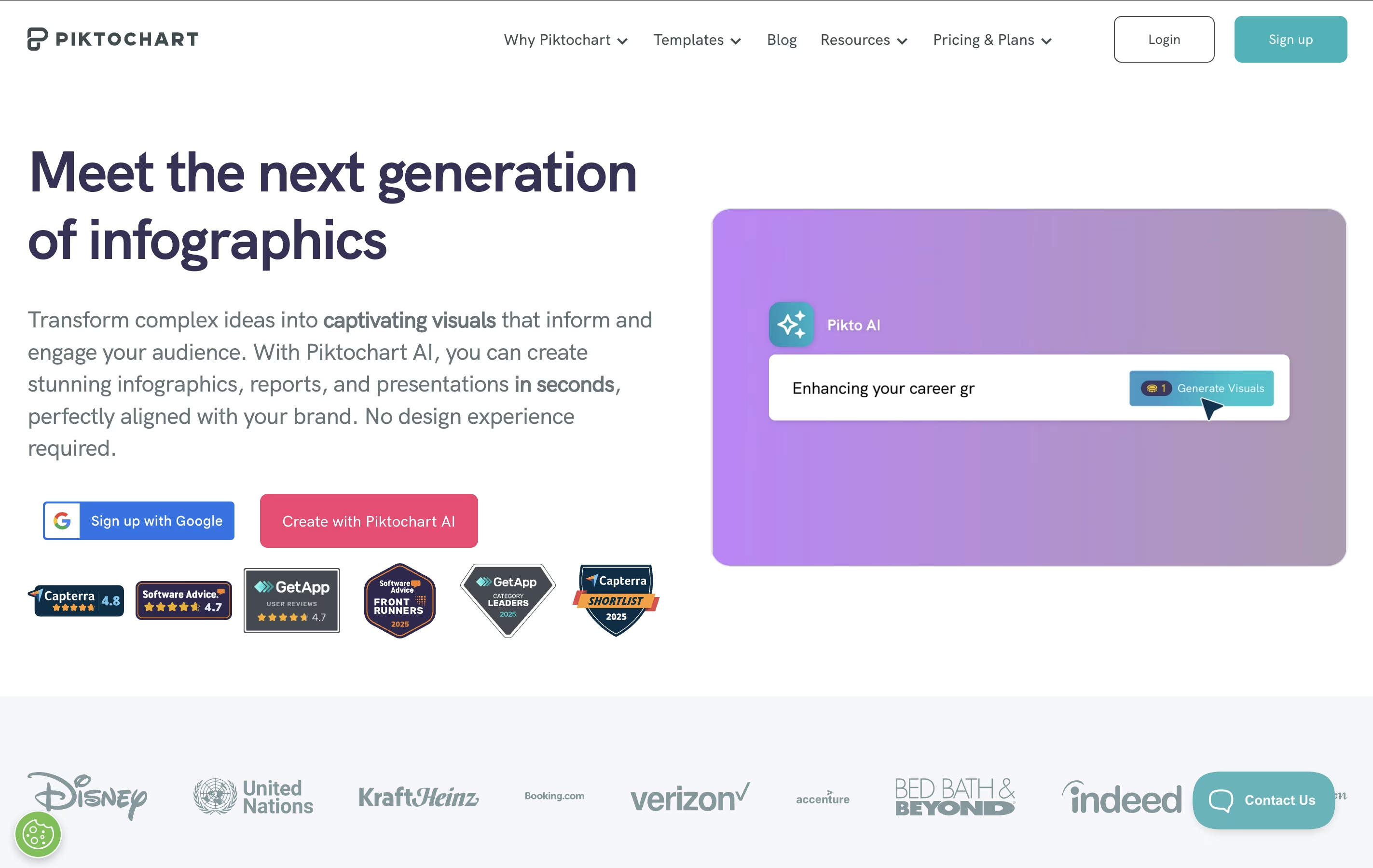
The platform includes powerful data visualization tools, allowing users to create charts, graphs, maps, and diagrams from their data. It supports importing information from Excel and Google Sheets to automatically generate visuals. Recently, Piktochart added AI features that can generate complete designs from simple text prompts in seconds.
The tool is web-based, meaning everything works through your browser without downloading software. It includes collaboration features for teams, brand customization tools, and various sharing options to publish or download finished designs.

Instead of needing instruments or studio time, Tad AI lets you type an idea, a mood, or a few lines of lyrics and get a finished song back in under a minute.
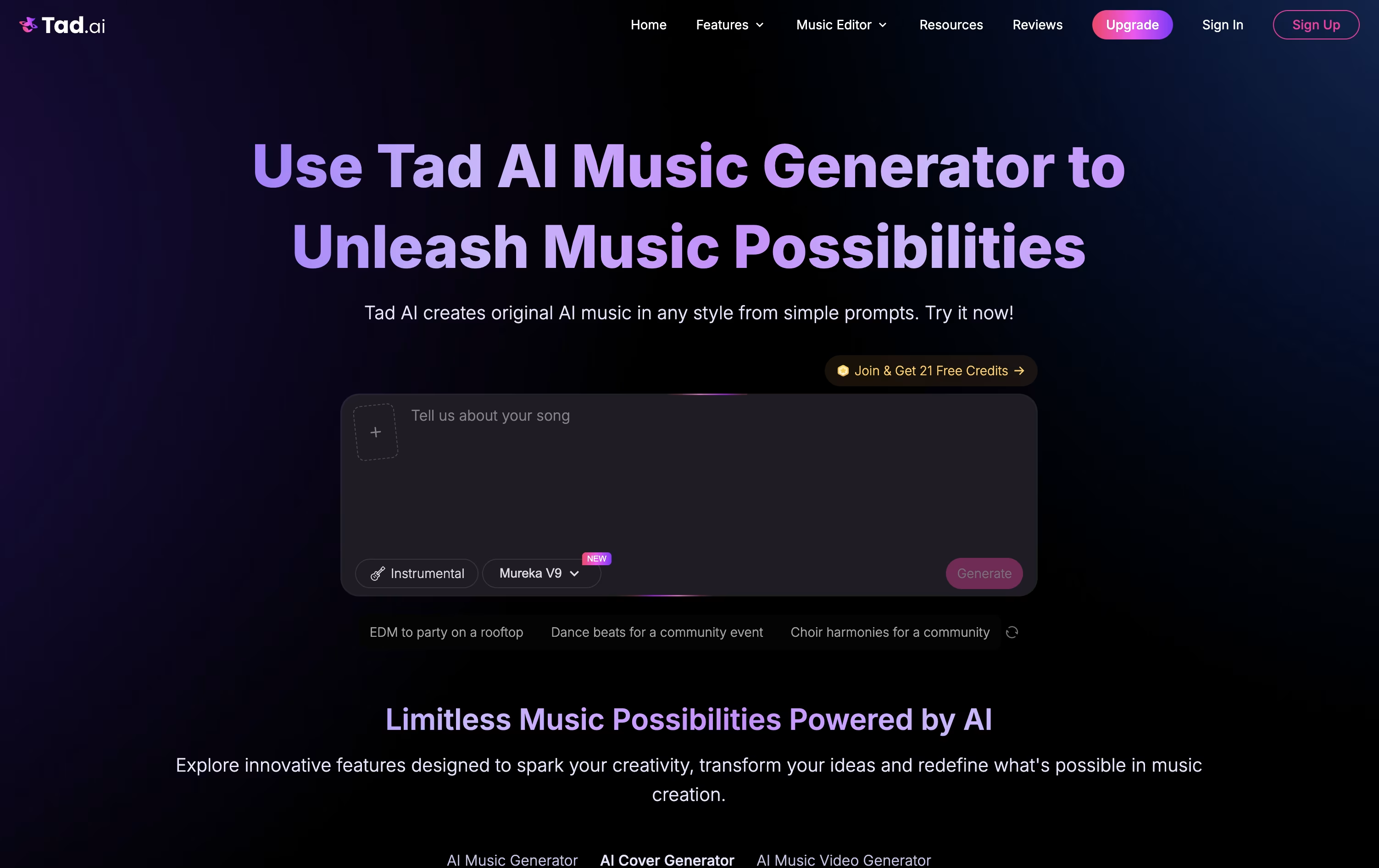
The platform goes beyond basic song making too. It can remake a track as a new cover, build a music video to match, pull a song apart into vocal and instrument stems, or read written text aloud in more than 50 languages.
There is also a dedicated rap generator that writes lyrics, adds beats, and creates vocals from a short prompt, plus lyrics tools that let AI draft or clean up your words first.
The Free plan gives 21 credits and 1 concurrent generation, but keeps things to personal, non-commercial use. Moving to Standard costs $9.99 a month, or $7.99 a month if billed yearly, and adds 500 credits, 3 concurrent generations, and full commercial rights.
Pro pricing depends on the credit tier chosen, from $29.99 a month for 2,000 credits up to $58.99 a month for 4,000, all with 6 concurrent generations. The yearly Pro rate for 2,000 credits comes down to $23.99 a month.
Every paid plan lets you use the finished tracks commercially, which makes it a fit for content creators, musicians, and small businesses alike.

Soundraw is built for people who need music fast but don't want to worry about copyright issues later. You select a genre, mood, and length, and the AI generates a ready-to-use instrumental track.
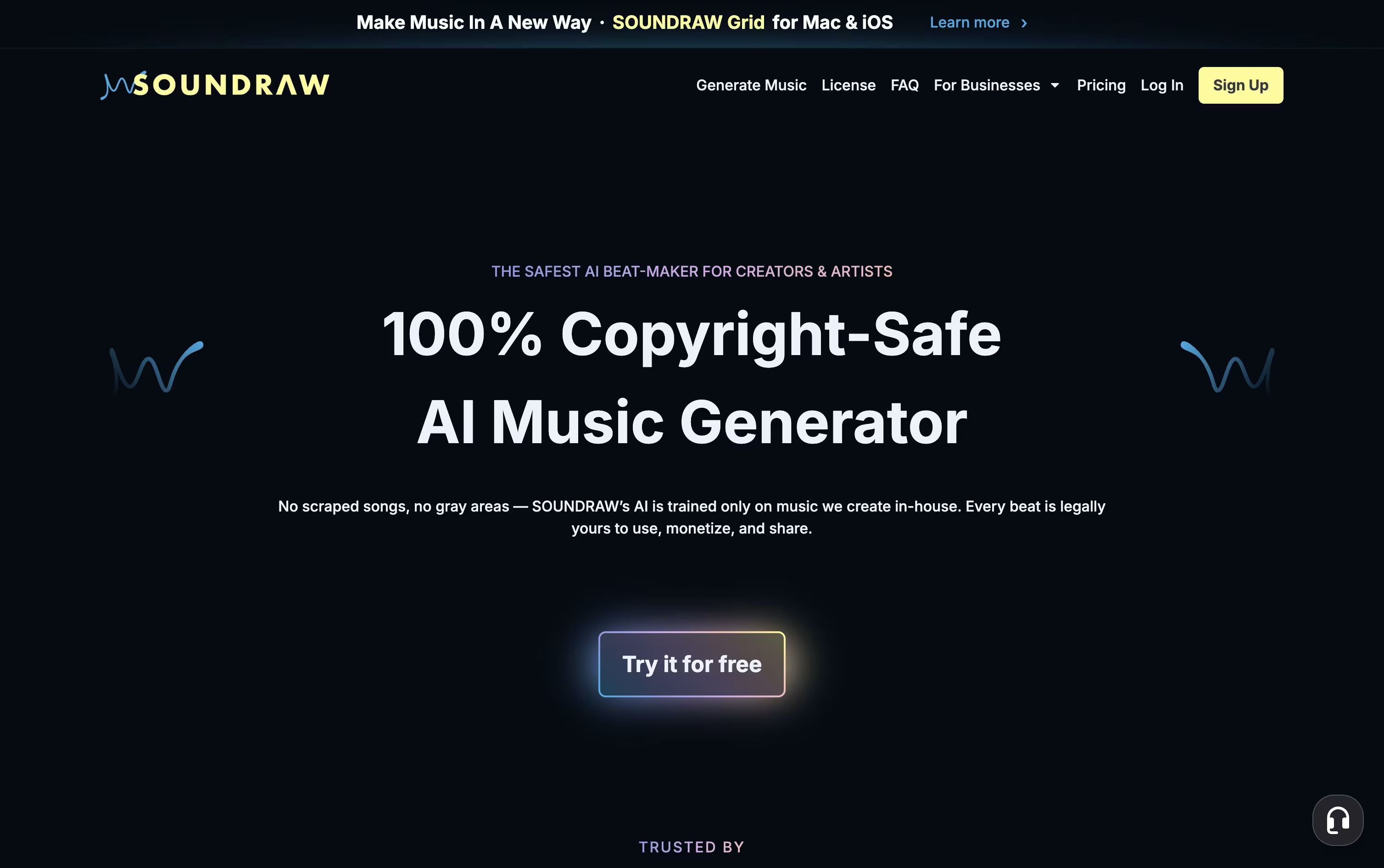
The AI behind Soundraw is trained only on original music created by its in-house musicians, so every track comes with a worldwide license that's safe for commercial use, including YouTube and social media.
A built-in browser editor lets you toggle instruments, adjust the intensity of each section, and rework the structure without any DAW experience.
The Creator plan starts at $9.99 a month with unlimited MP3 downloads for background use. Artist plans, from $19.99 to $49.99 a month, unlock WAV files, stems, and the ability to release and monetize songs on streaming platforms.
For teams needing programmatic access, an Enterprise plan with API support is available at custom pricing.

Monica AI is a comprehensive AI assistant that integrates multiple advanced AI models including GPT-4o, Claude 3.7, Gemini 2.0, and DeepSeek R1. Instead of using different AI tools separately, Monica brings them all together in one platform.
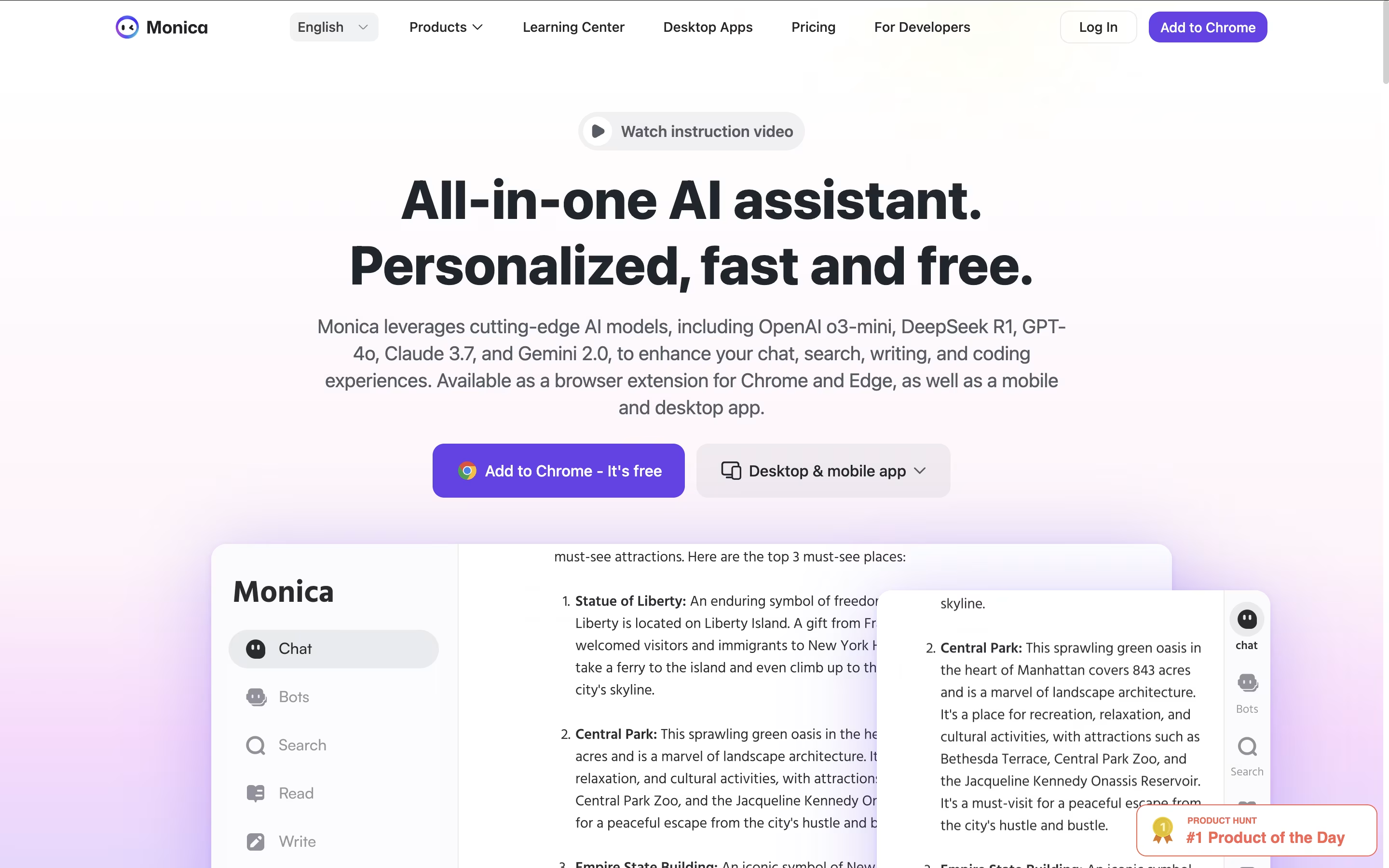
It works as a browser extension for Chrome and Edge, plus mobile and desktop apps for all your devices. Monica can help you chat with AI, write and improve content, create images and videos, translate text, summarize web pages and documents, and even help with coding.
The tool is designed for anyone who wants to boost their productivity with AI. Whether you're a student, professional, content creator, or developer, Monica provides the AI assistance you need without switching between different platforms. It's like having multiple AI assistants combined into one smart helper.