

Best 12+ Tools for User Interface Design in 2026
Last Updated: August 15, 2026
How an app or website looks and behaves has a direct impact on whether people can actually use it comfortably. User Interface Design tools help design screens, components, and interactions that are both visually clean and easy to navigate.
Product designers and developers use UI design tools to turn wireframes and ideas into interfaces that are ready to build and test.
 UX Pilot
 UX PilotAI Powered UI Design & Prototyping,
  Relume
 RelumeAI Website Builder & Component Library, and
  Banani
 BananiAI UI Design Tool for Fast Prototypes are the best for User Interface Design. So, let’s take a closer look at all 12+ tools.

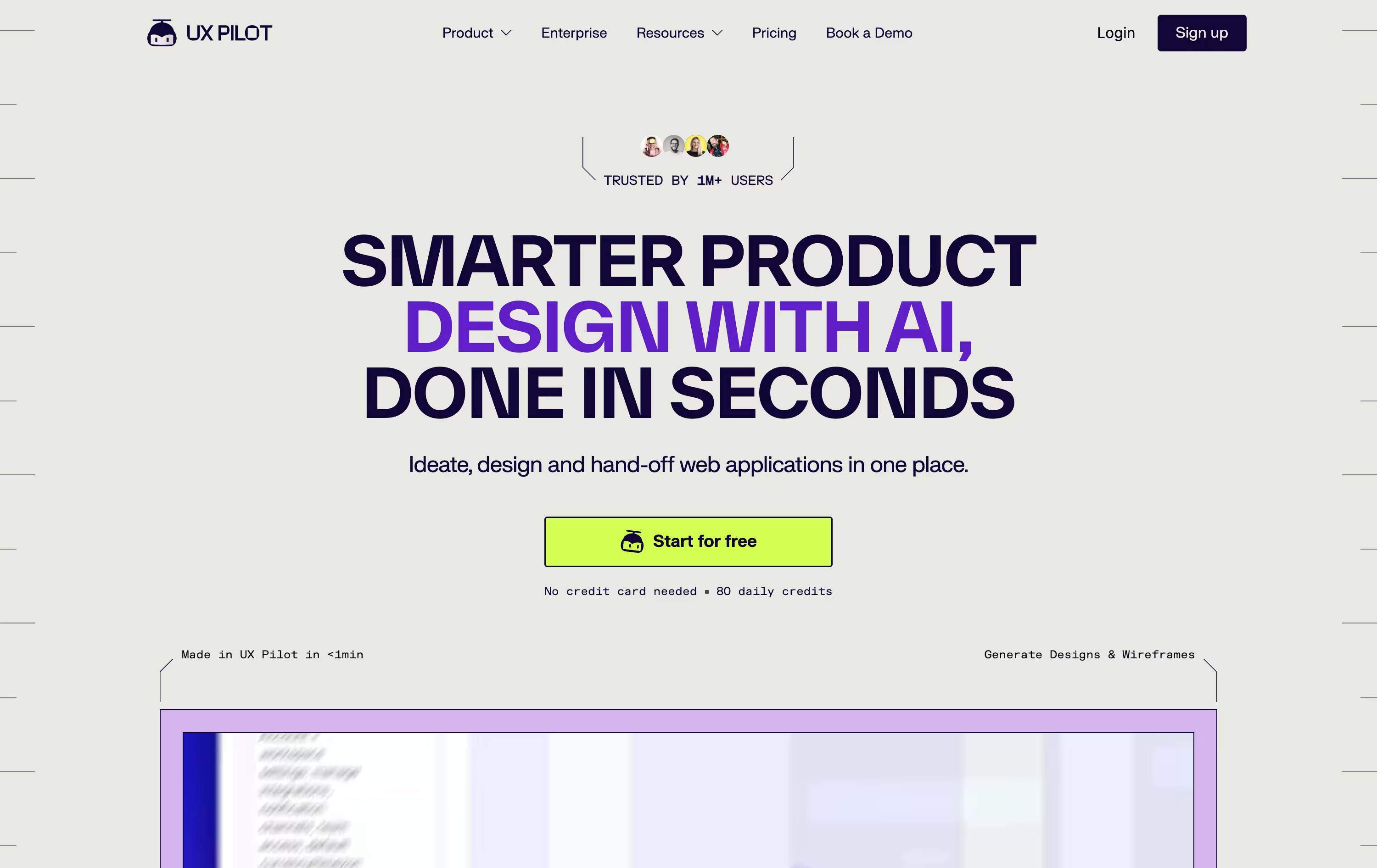
Think of UX Pilot as a design partner that takes your rough idea and turns it into real screens. Feed it a prompt, a sketch, a PRD, or a website link, and it gets to work.
First comes the wireframe, then a polished hi fi version, and if needed a full flow covering every screen in the journey. You can also spin up a working React prototype with a visual editor and live chat edits.
For Figma users, the Nodey agent builds native layers straight from your own component library, so the result already looks like your product instead of a generic template. Code export and GitHub sync round out the handoff.
Pricing starts free, with 80 credits a day and 1 project at no cost.
Pro is $29 monthly, or $19 monthly if billed yearly, unlocking 750 credits, 125 screens, and website cloning.
Teams costs $39 per user monthly, or $31 per user yearly, with shared credits and collaboration, while Enterprise offers custom pricing with brand tuned AI, SSO, and a dedicated team.
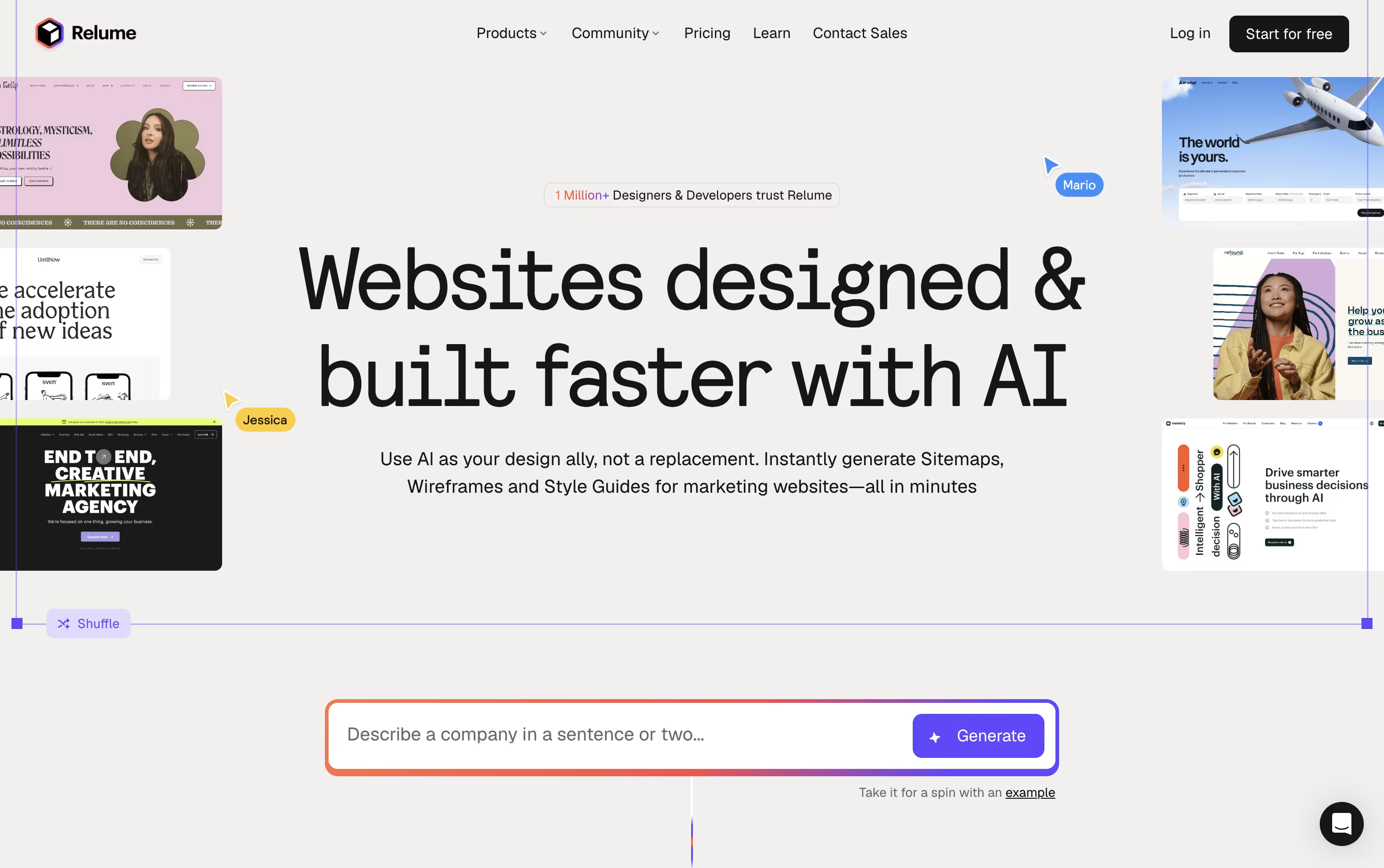
Most website projects start with a blank page and a lot of guesswork. Relume changes that by turning a short prompt into a full sitemap, then converting it into a wireframe built from real components rather than throwaway mockups.
Once the structure is set, the Style Guide Builder suggests colors, fonts, and UI styles that match your brand, and you can pull from more than 1,000 components across Figma, Webflow, and React.
You can try all of this for free with 1 project and 1 page, exporting only to Figma. Moving to Starter at $26 a month, or $18 a month if billed yearly, opens up 5 pages plus Webflow and React export.
Freelancers juggling several sites usually pick Pro, at $58 a month or $40 a month billed yearly, since it drops the project and page caps entirely.
Agencies and teams can go with Team at $52 a month per person, or $36 a month per person billed yearly, with a minimum of 3 people, which layers on a shared workspace and branded client sharing.
Developers also get Relume Library MCP, a way to bring the same component library straight into AI coding tools like Cursor and VS Code.
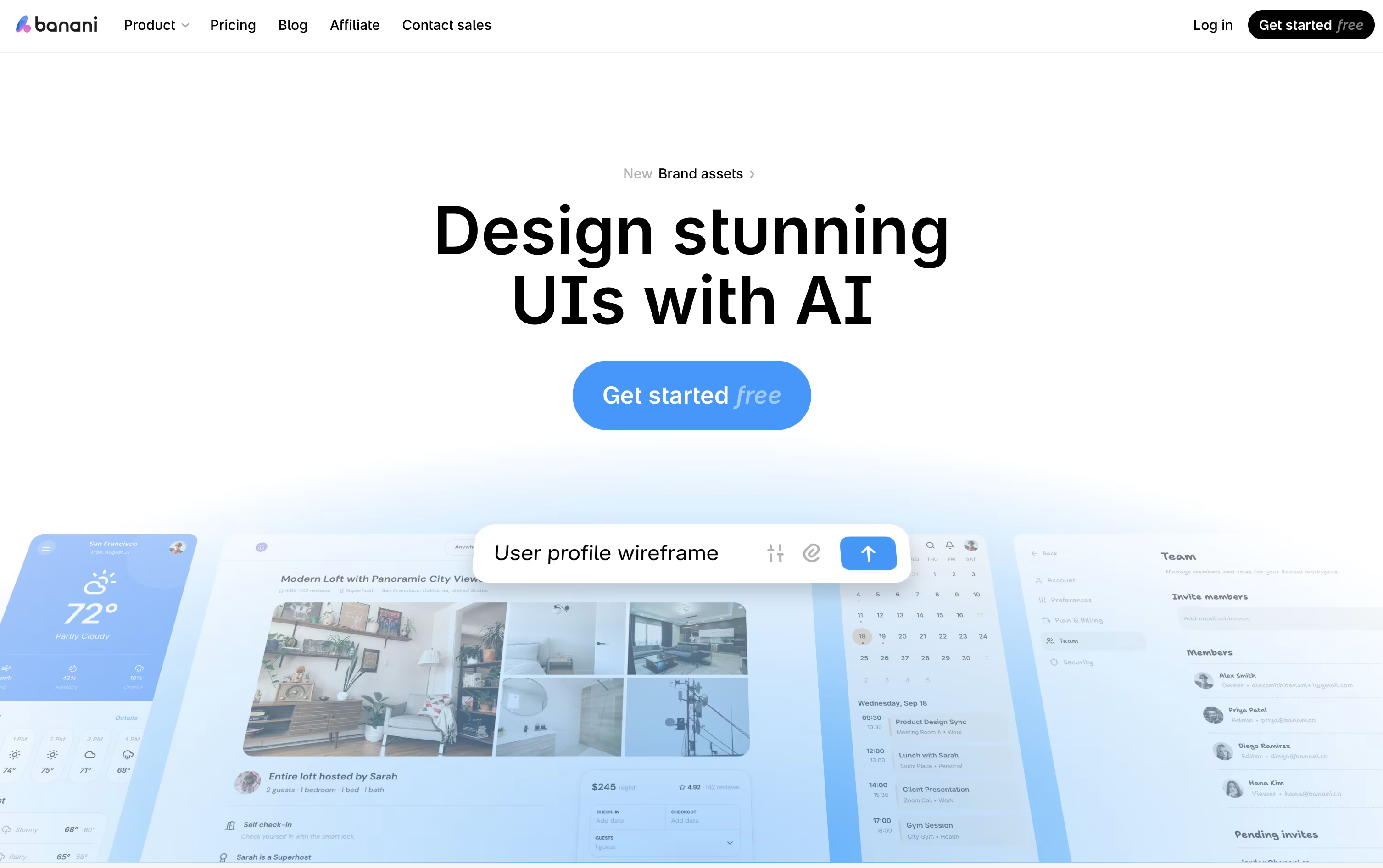
Banani acts as an AI design copilot, turning a simple prompt, screenshot, sketch, or PRD into a working set of UI screens in minutes rather than days.
It is aimed at founders, product managers, and non-designers who need clean, on-brand interfaces fast, without needing deep design skills.
Once generated, every screen can be refined through chat, letting you tweak colors, layout, or wording, or click through elements to build out a full interactive flow.
Getting started is free, with 12 credits a month and 3 a day. Moving to Plus costs $20 monthly, or $12 a month if billed yearly, unlocking agent mode and unlimited Figma export.
Heavier use is covered by Pro at $50 a month, or $30 yearly, with unlimited credits and priority support, while Enterprise brings custom pricing, SSO, and tailored integrations for larger teams.
Finished work can move straight into Figma or code, and MCP support means tools like Claude Code or Cursor can pull designs in directly.

With Claude Design you describe what you want to make, and Claude puts together a first version on a canvas you keep working from. There is no need to already know a design program.
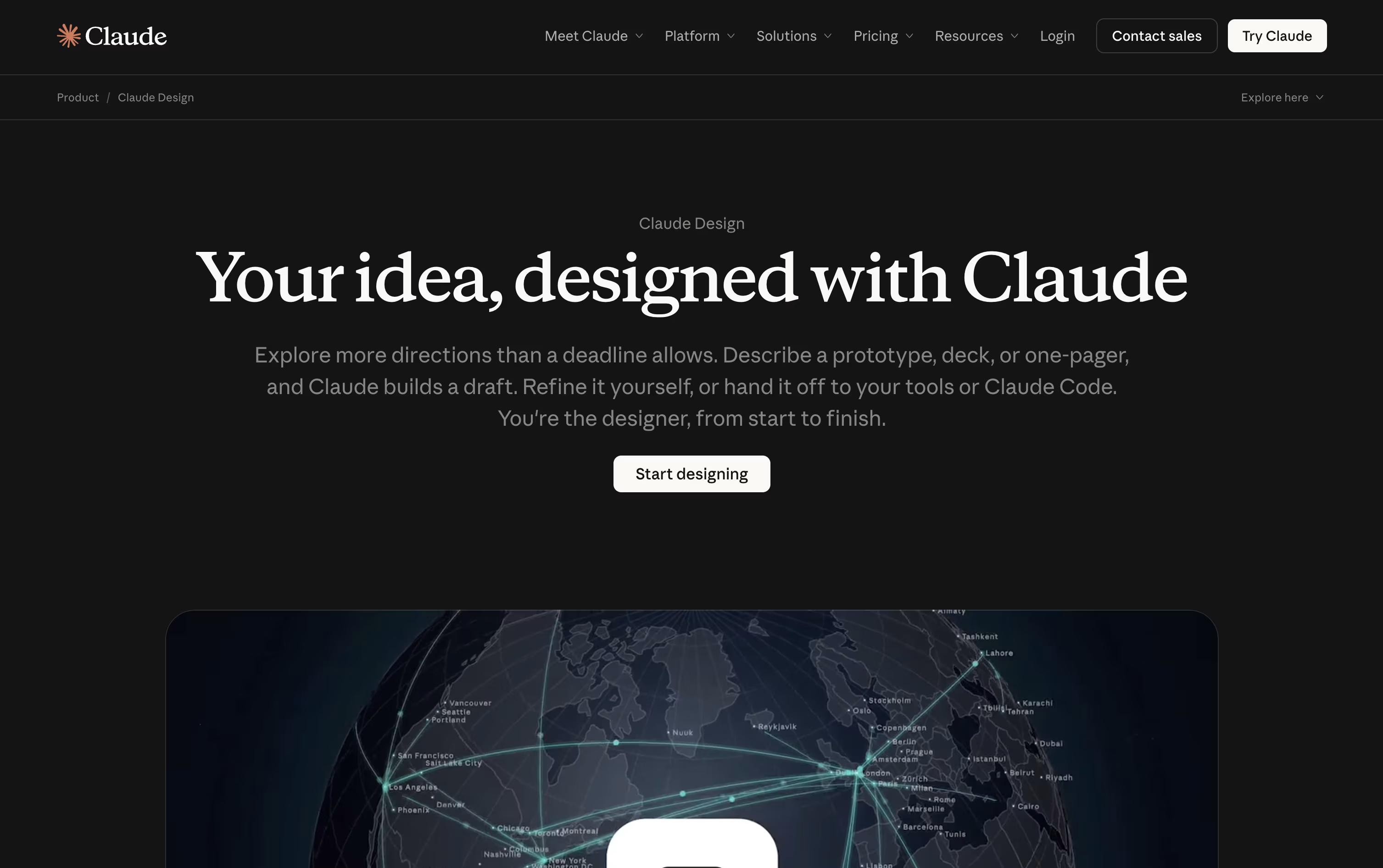
You can push it further with more chat, comments dropped on one piece of the layout, or by moving and resizing things by hand.
Because it checks against your imported colors, fonts, and components, output tends to match your brand instead of looking like a stock template.
It links tightly with Claude Code too, letting a design become real code, or letting existing code become a clickable prototype.
It rides along with your Claude subscription. Pro runs $17 a month with annual billing or $20 monthly, Max starts at $100 a month for 5x or 20x more usage, Team seats begin at $20 a month per person, and Enterprise uses a custom seat and usage rate.
You can export to PDF, PPTX, PNG, video, or a simple shareable link.
Magic Patterns helps product teams turn ideas into working screens without waiting on a full design-to-code cycle. Type out what you want in plain words, or drop in a screenshot or PRD, and it generates an interactive prototype that already looks like part of your product.
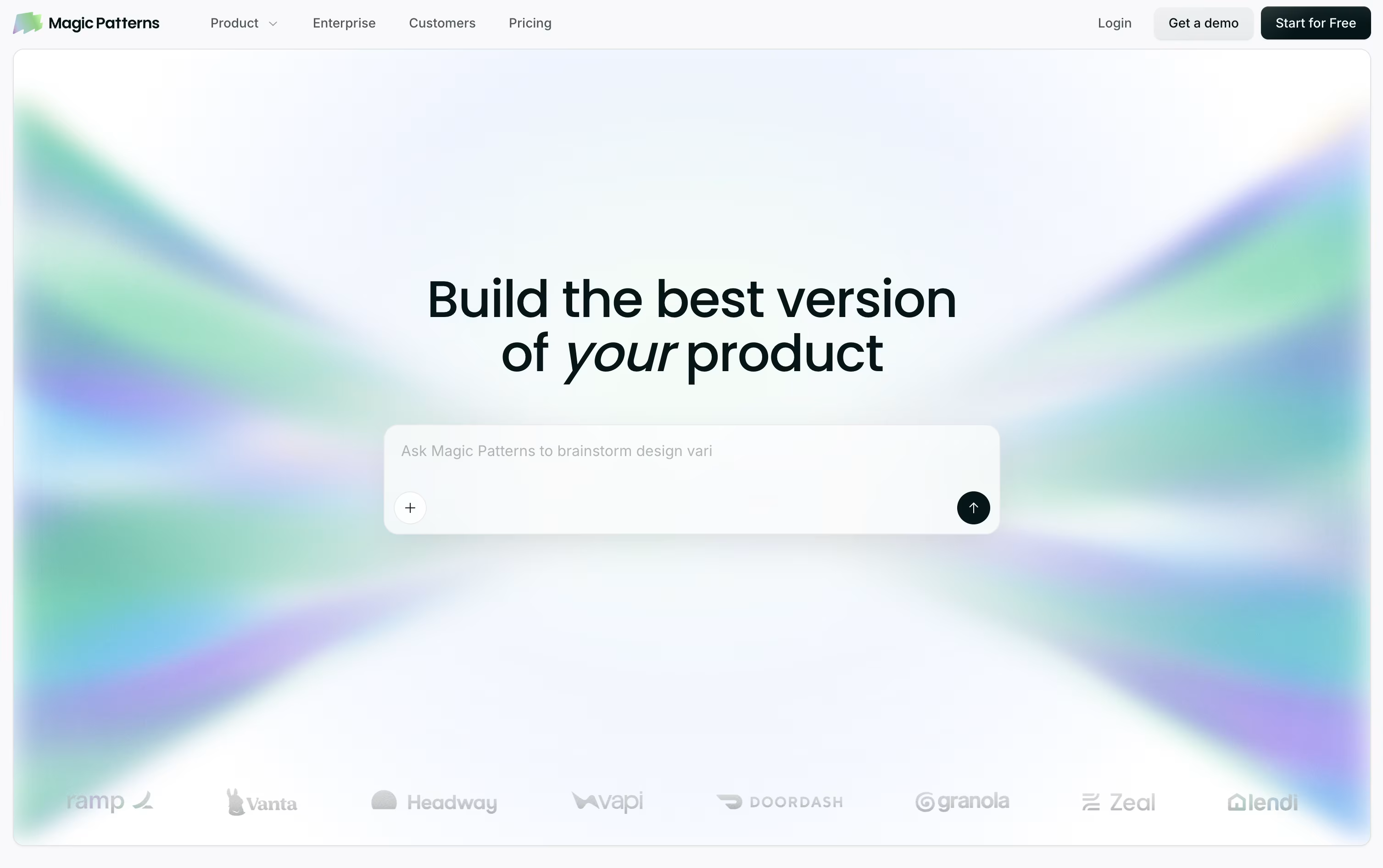
Instead of a flat picture of a screen, it builds real React, TypeScript, and Tailwind code underneath, so what you get is close to production-ready rather than a rough sketch.
It can also pull in your existing design system from Figma, Storybook, GitHub, or even a live website, then keep reusing those same components and colors on every new screen.
On the pricing side, a free plan gives you 100 monthly credits to explore the tool. Starter runs $20 per seat monthly, or $17 with annual billing, and unlocks GitHub sync, MCP support, and a 10-user workspace.
Business steps up to $100 per seat monthly, or $85 annually, adding the newest AI models, SSO, and usage reporting, while Enterprise is priced individually and layers on custom credit pools and dedicated support.
With code export, Figma export, and MCP handoff built in, teams can move from concept to engineering-ready work in one continuous flow.

Turning a rough idea into something you can actually show a client or teammate is what Visily is built for. Type out what you want, upload a screenshot, or sketch it out, and the AI builds an editable design around it.
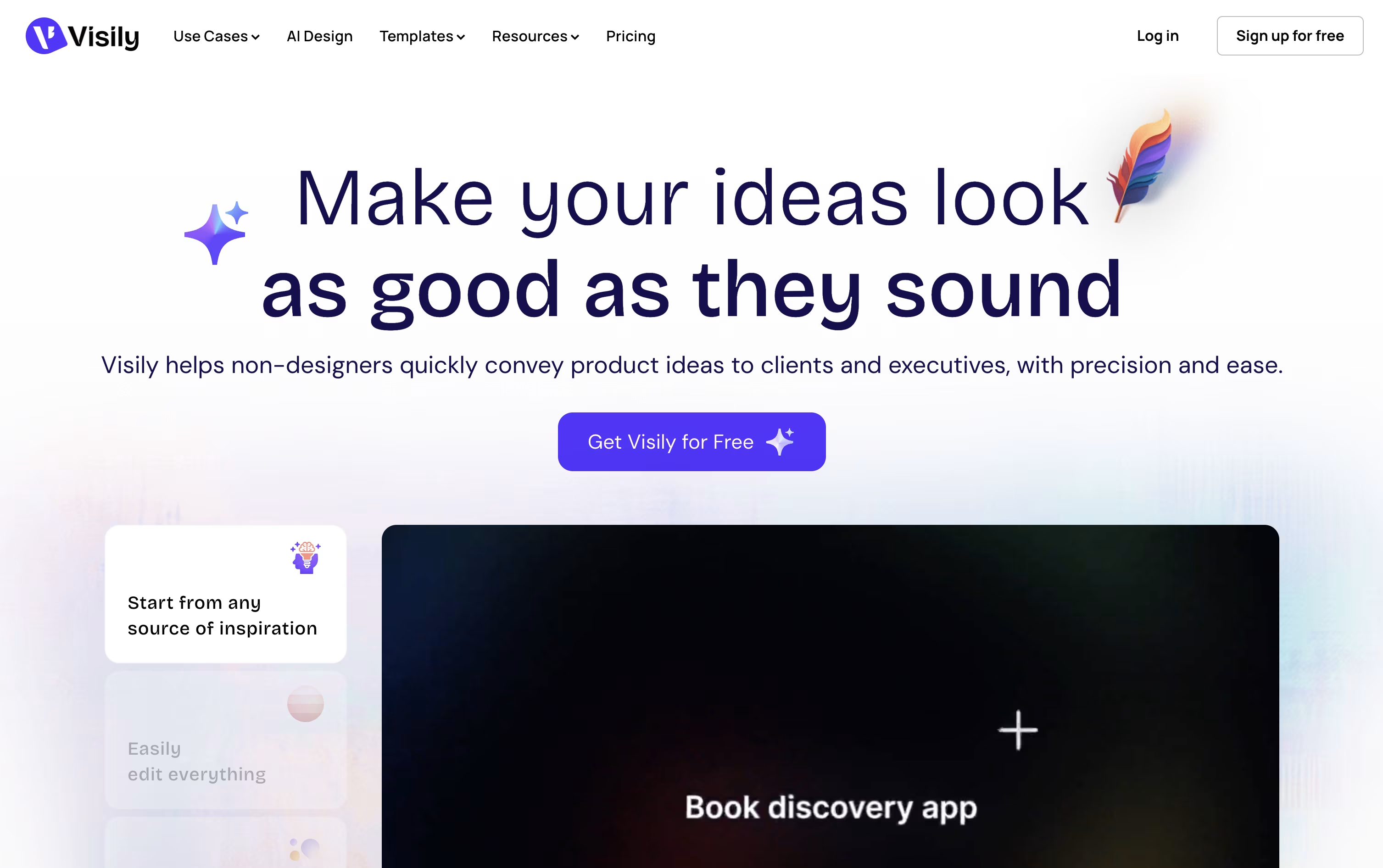
The same canvas handles diagrams and flowcharts too, and you can convert those straight into screen designs. Once a design is in place, you can wire up links, hover states, and screen transitions so it behaves like a working app.
Because everything lives on a shared board, your whole team can comment, chat, and edit at the same time, and updates can flow into Slack, Notion, or Jira automatically.
Pricing starts free with the Starter plan and its 300 monthly AI credits. Pro moves you to $14 per editor a month with unlimited boards and Figma export, while Business at $29 per editor a month adds custom teams and single sign-on. Enterprise pricing is custom.
Every design stays fully editable, so you can keep refining it, hand it to Figma for polish, or generate code straight from the layout.

Think of Uizard as a way to sketch an idea and have it turn into a real, clickable design almost instantly. You can type what you want, drop in a screenshot, or photograph a napkin sketch, and the AI called Autodesigner builds an editable prototype from it.
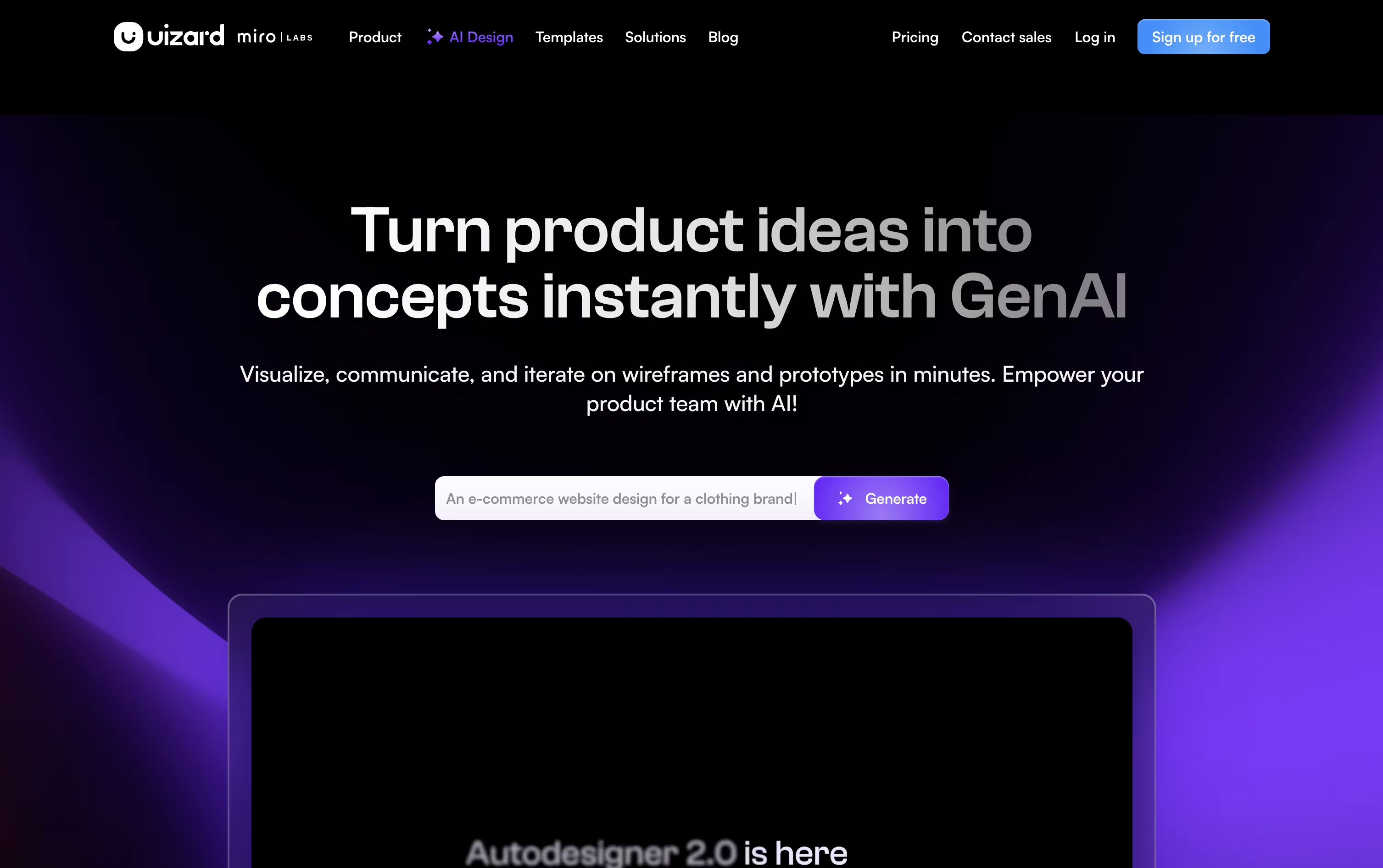
Once a design exists, you keep shaping it with simple text commands, switch between a rough wireframe view and a polished mockup, or restyle the whole project with a generated theme.
A Screenshot Scanner rebuilds any app or site you show it into editable layers, and a Focus Predictor guesses where a viewer's eyes will land on the screen, which is handy for placing buttons and headlines.
Pricing starts at $0 on the Free plan, covering 3 AI generations and 2 projects a month. Pro runs $19 a month, or $12 if billed yearly, and unlocks 500 AI generations, 100 projects, and code handoff in React and CSS.
Larger teams can move to Business at $39 a month for 5,000 AI generations and a custom brand kit, or contact sales for an Enterprise plan with unlimited use and dedicated support.
Now part of Miro after a 2024 acquisition, Uizard still runs as its own browser based app aimed at product teams, founders, and anyone who needs a prototype without deep design skills.

Building mobile app screens usually means learning design software or paying a designer. Sleek skips that step by turning a written description, photo, or sketch into finished iOS and Android screens in minutes.
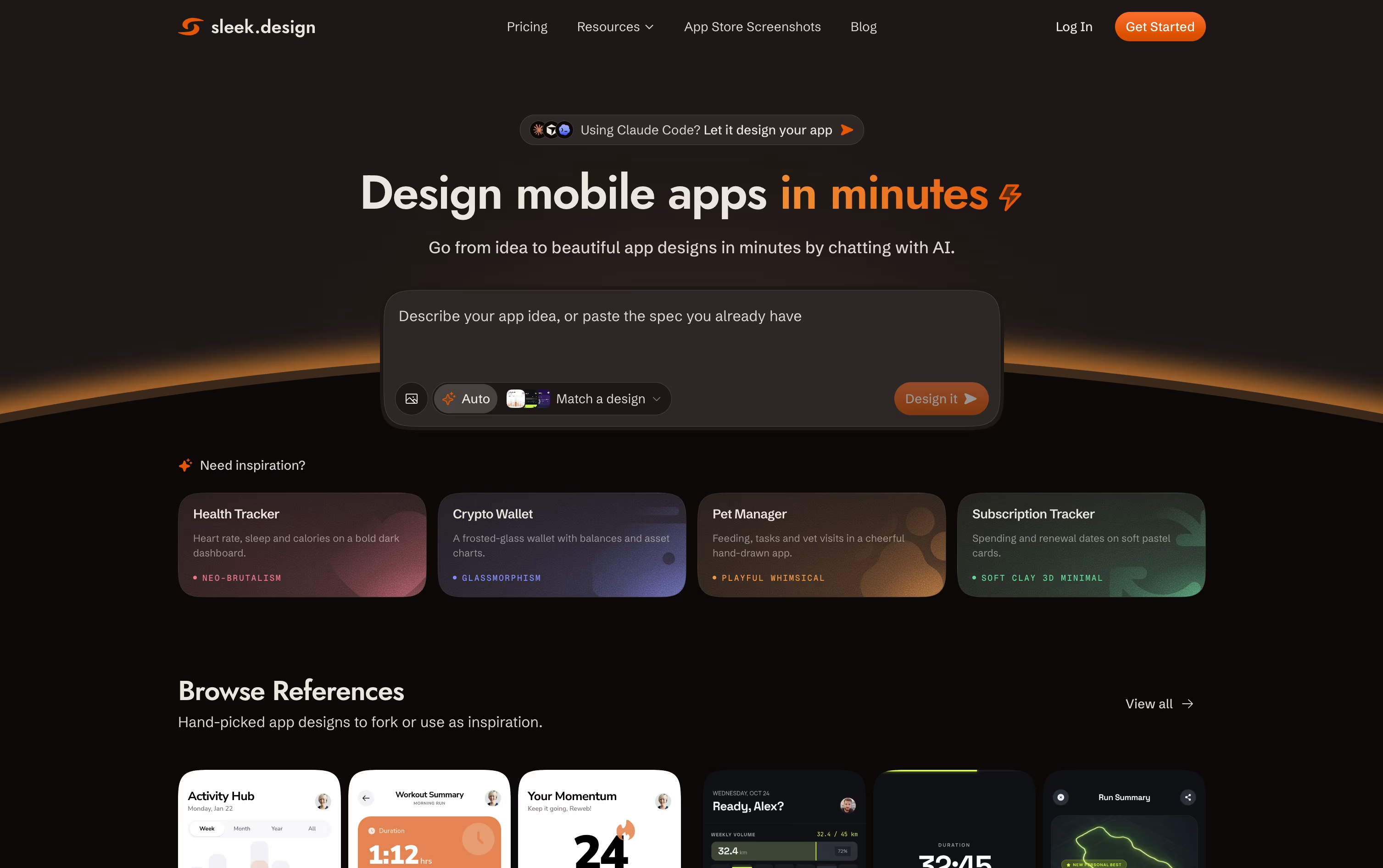
The tool is built only for mobile apps, so every screen follows real app conventions such as spacing, navigation bars, and cards rather than a generic template. You can choose a style before generating, then refine anything through simple chat messages.
Anyone can start for free with one project and a small number of trial credits. The Starter plan runs $39 a month, or $20 a month billed yearly, and raises the limit to 5 projects with unlimited Figma and code exports.
For heavier use, Pro costs $69 a month, or $30 a month yearly, and opens up unlimited projects plus a REST API and agent skill that lets tools such as Claude Code and Cursor design screens on their own.
Teams that need shared access can choose the Team plan at $99 per seat a month, which adds collaboration tools, priority support, and one combined bill for the whole group.
Instead of building a prototype by hand, Figma Make lets you type a prompt and get back a working, clickable app or interactive screen in moments. You can start from scratch or feed it an existing Figma design, image, or file for extra context.
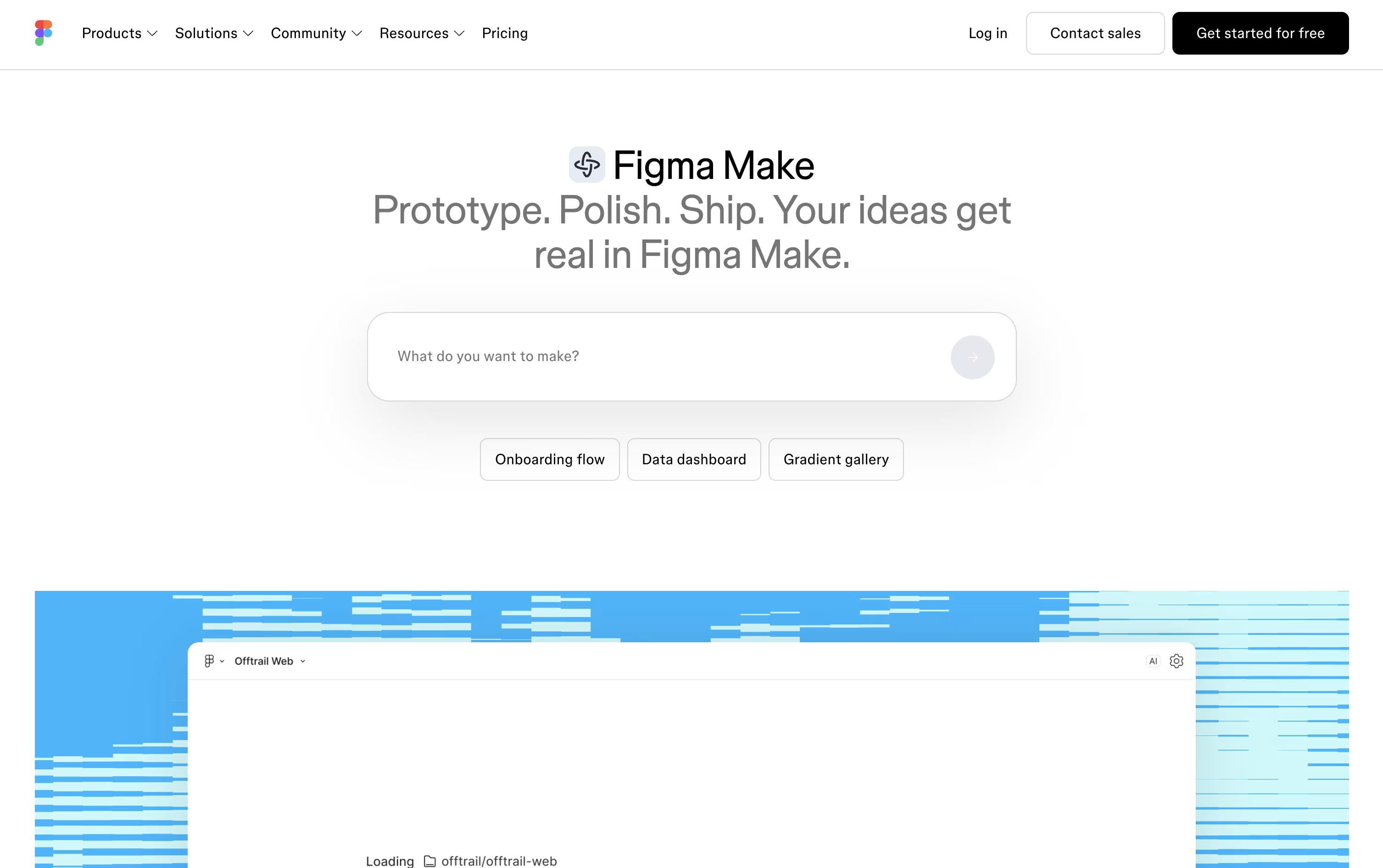
Once the first version appears, refining it is simple: keep the conversation going with follow up prompts, click on any part of the preview to tweak its style directly, or dive into the code editor for changes that need more precision. Complex projects can use plan mode, which lays out the build as a step by step plan first.
Teams stay consistent using Make kits, which package up brand styles and components, and can ground their prototypes in real data through MCP connectors to apps like Notion, GitHub, and Slack.
There is no separate price tag for Figma Make itself, it is bundled into the Full seat. Starter is free with limited daily credits, Professional Full costs $20 monthly or $16 annually with 3,000 AI credits, Organization is $55 monthly with 3,500 credits and unlimited teams, and Enterprise reaches $90 monthly with 4,250 credits and the strongest security controls.
Once you are happy with a build, share it with a public link, publish it to the Figma Community, or bring it back into Figma Design as editable layers.
Google Stitch is Google Labs' free AI powered design tool. Instead of building screens from scratch, you type a description, drop in a sketch or screenshot, or talk to the canvas, and Stitch generates a working UI design using Google's Gemini models.
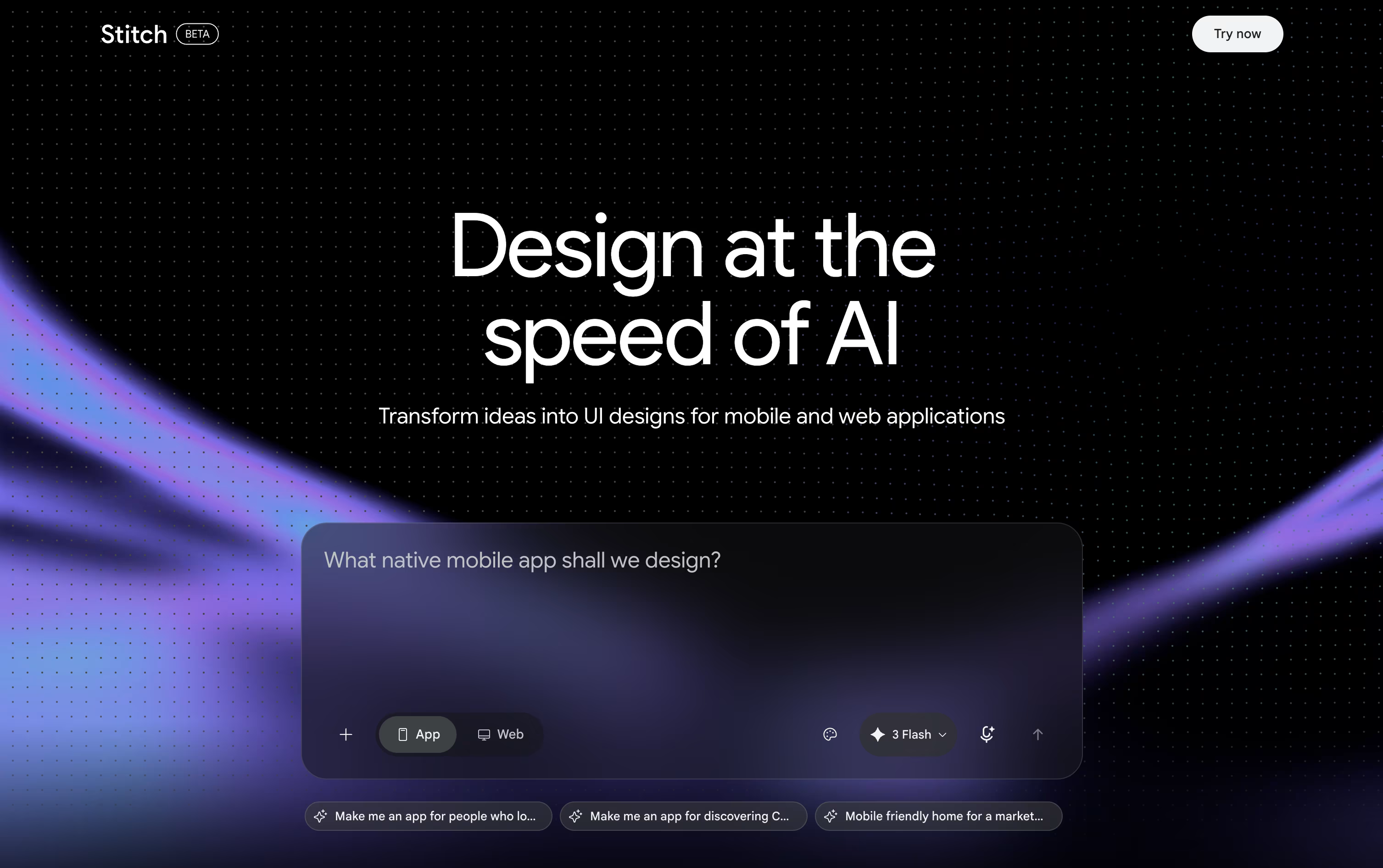
Its core idea is vibe design, letting you start from a rough goal or mood and explore several directions instead of locking into one plan too early.
Every project lives on an infinite canvas, where the Design Agent keeps track of your full history so edits stay consistent across screens. You can also link screens together to preview an interactive flow.
Finished work can move straight into Figma, export as ready to use code, or be saved as a portable DESIGN.md design system file.
Right now, Stitch has no paid tier at all. Anyone with a Google account can use it free, though a daily credit limit controls how many designs you can create before it resets.

Instead of building throwaway prototypes, Builder.io works directly inside your real codebase and design system, so visual changes and AI-generated work turn into code your team can actually merge.
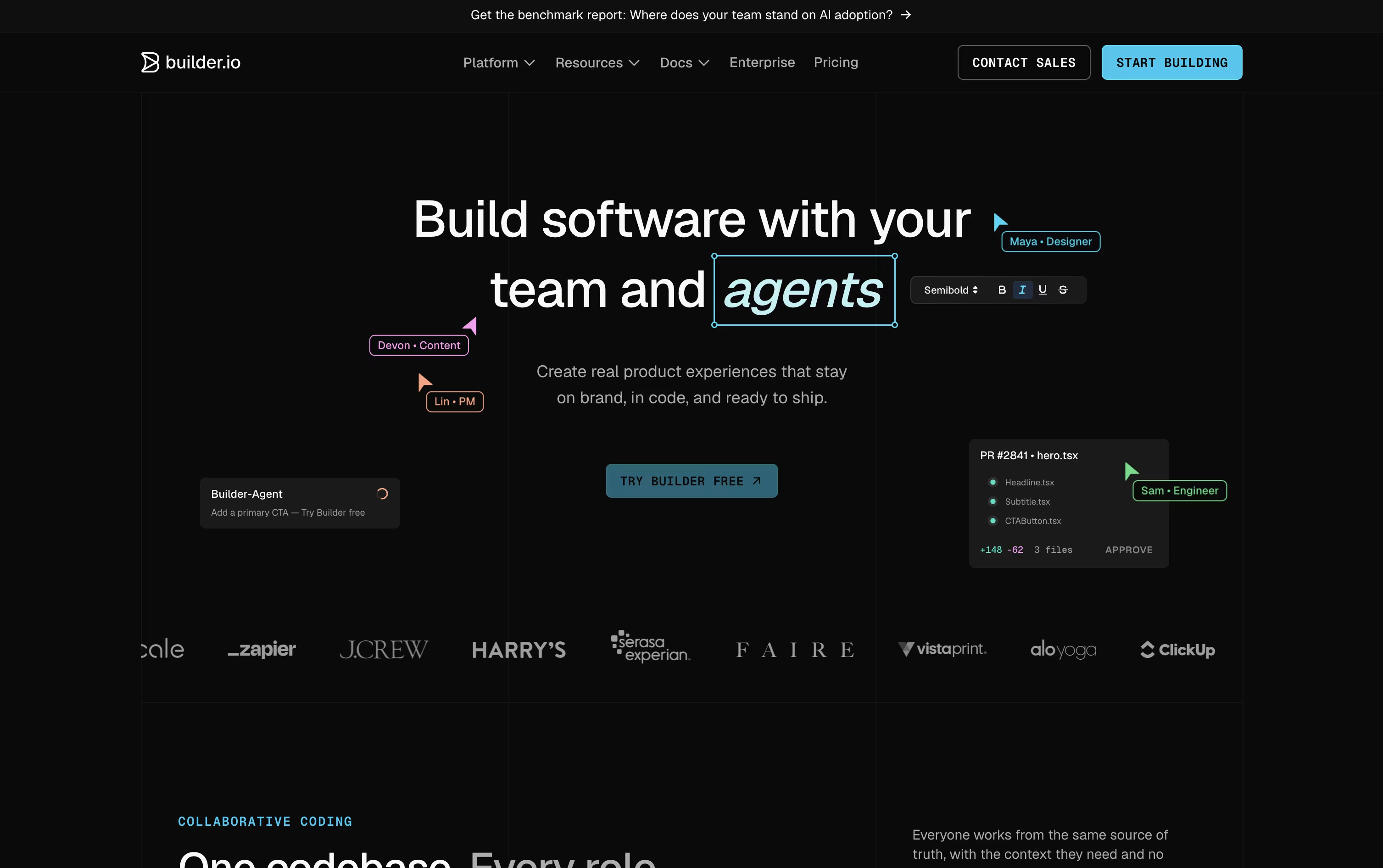
Fusion is built for apps, features, and UIs, starting from a prompt, a Figma design, or an existing branch. Publish is a separate visual headless CMS for content and marketing teams.
The Free plan gives one user 60 monthly Agent Credits to try things out. Pro costs $30 a user a month and adds more credits, rollover, and built-in MCP servers.
Team costs $50 a user a month and unlocks roles, commenting, peer reviews, and priority support for up to 20 users per space.
Paying yearly drops those prices to $24 and $40 a user a month.
Enterprise is custom priced and adds SSO, RBAC, private infrastructure, and dedicated onboarding support for large organizations.

Think of v0 as an AI teammate from Vercel that turns your ideas into working web apps. Type a prompt, drop in an image or Figma design, and it builds real code with Next.js, React, Tailwind CSS, and shadcn/ui.
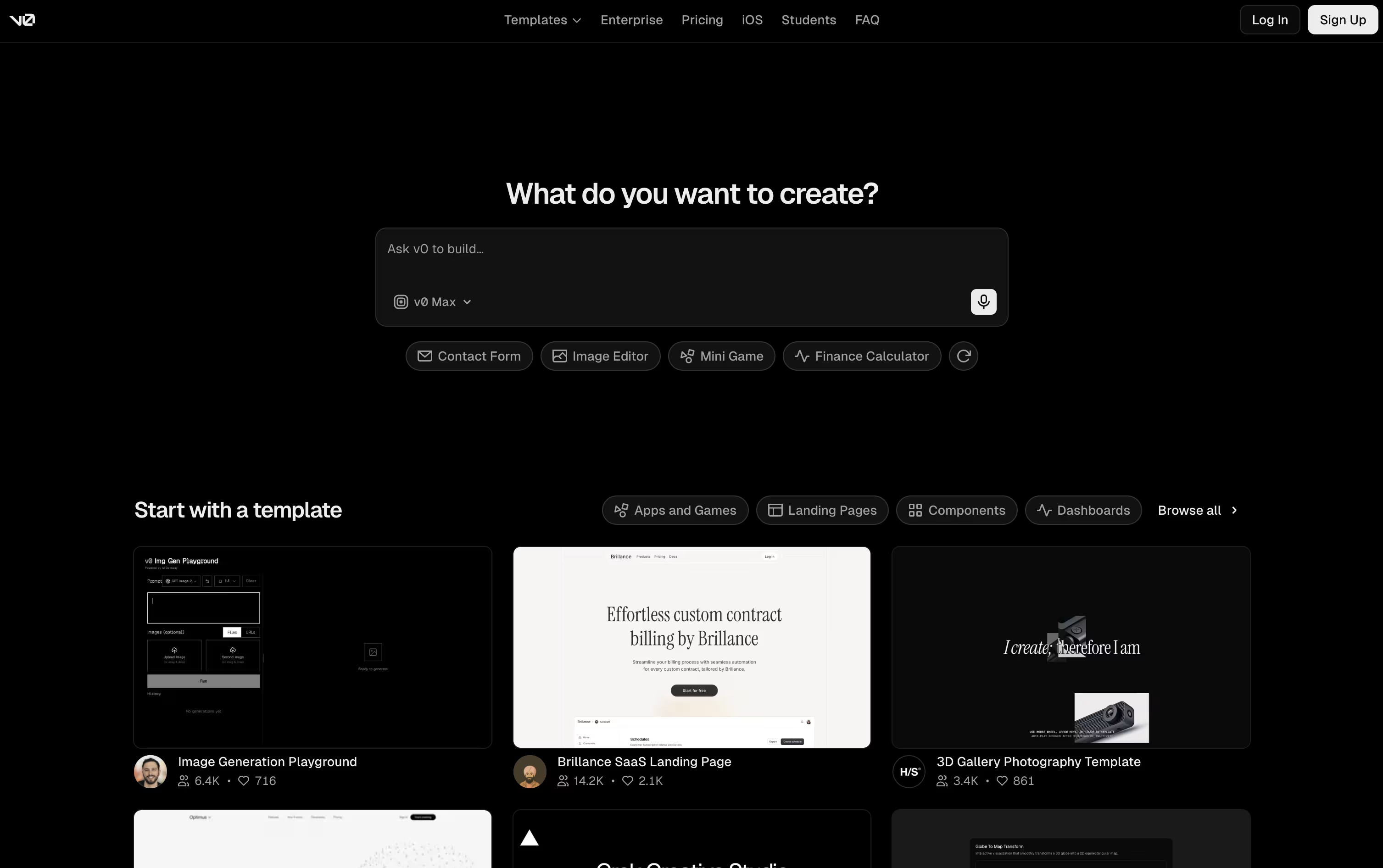
It goes beyond a simple layout. v0 plans out the task, builds the frontend and backend, links up databases and APIs, and shows you a live preview you can actually click through.
From there, you keep improving the app with more prompts, the Design Mode visual editor, or the built-in code editor. It syncs with GitHub too, handling branches, commits, and pull requests along the way.
Starting out is free, with the Free plan giving you $5 in credits, GitHub sync, Design Mode, and Vercel deployment, capped at 7 messages a day.
For more usage, Plus runs $30 per user a month with access to every model and team sharing tools, while Business is $100 per user a month and turns off training by default.
Companies that need single sign-on, role controls, and support guarantees can move to the Enterprise plan, priced individually.

Instead of turning a Figma or Penpot design into code by hand, Locofy generates it for you, ready to hand off to a developer or an AI coding agent.
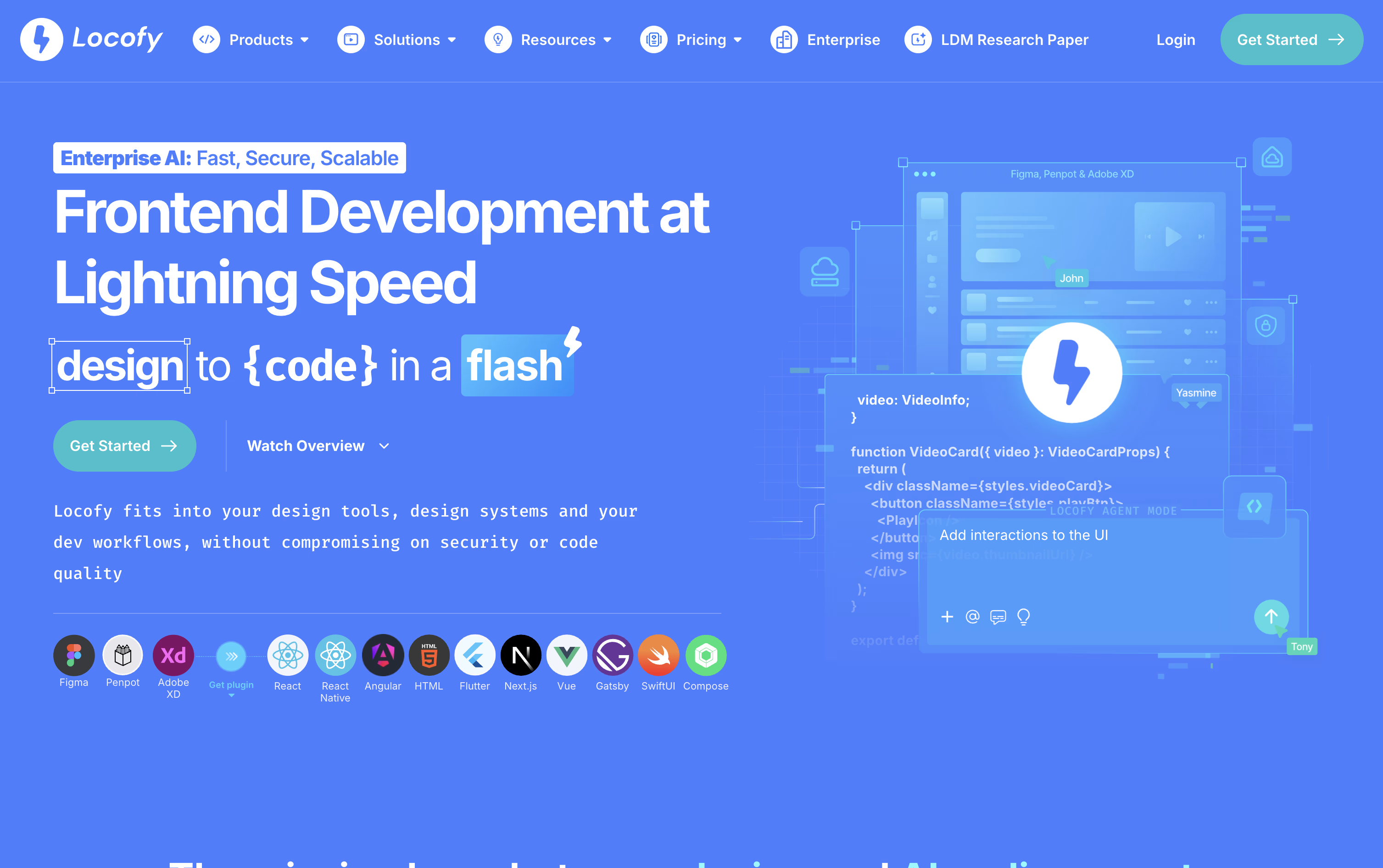
Behind the scenes, it runs on Large Design Models built specifically for reading designs, trained on a huge number of real projects so the output stays clean, responsive, and structured the way a developer would expect.
You can start from the Figma or Penpot plugin, a pasted design link, the command line, or directly inside tools like Cursor and Claude Code through MCP. From there, Agent Mode allows you to keep improving the code with plain language prompts, and teams can store their own standards as Skills to reuse later.
On pricing, the Free plan gives new users 7 days of Hobby features before rolling into the paid Hobby plan at $40 a month. Stepping up to Pro at $80 a month brings more tokens, a higher frame limit per project, and a guarantee that content is never used for training.
Enterprises get custom pricing along with private or self hosted deployment, GitHub syncing, and a dedicated support team.

Kombai works as an AI design engineer for frontend teams, joining design and code into a single flow instead of separate handoffs.
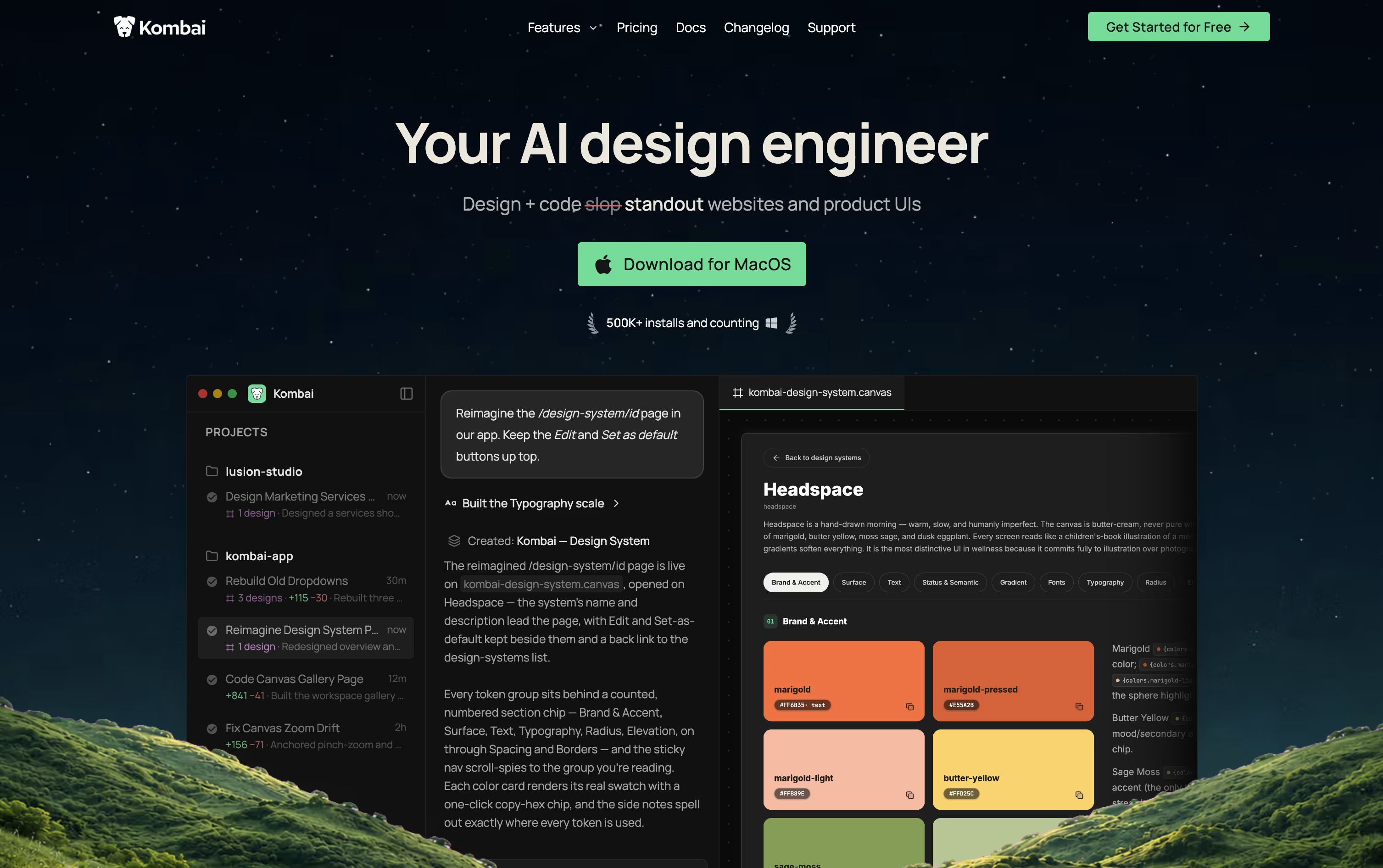
You can begin with a simple prompt, an existing Figma file, or a live website link. Kombai generates multiple design variants on an infinite canvas that you can refine visually or with plain text instructions.
From there, Kombai writes real, production ready code, using Context Graphs to read your codebase and reuse your existing components, tokens, and patterns instead of generic output.
A built in browser lets you preview the working app, make small visual edits directly, and let the agent run tests on the interface for you.
On pricing, the Free plan gives 300 credits a month at no cost. Pro is $20 monthly or $16 monthly on the yearly plan, with more credits and priority support. Team costs $40 per user monthly or $32 per user yearly, adding shared credits and team management for up to 20 seats. Enterprise pricing is custom and adds security and support features for larger companies.
The goal is fewer tools and less back and forth between design and development.

Overflow is a specialized user flow diagramming tool designed to help product designers and teams create interactive presentations from their existing designs. Think of it as a bridge between your design tools and your presentation needs.
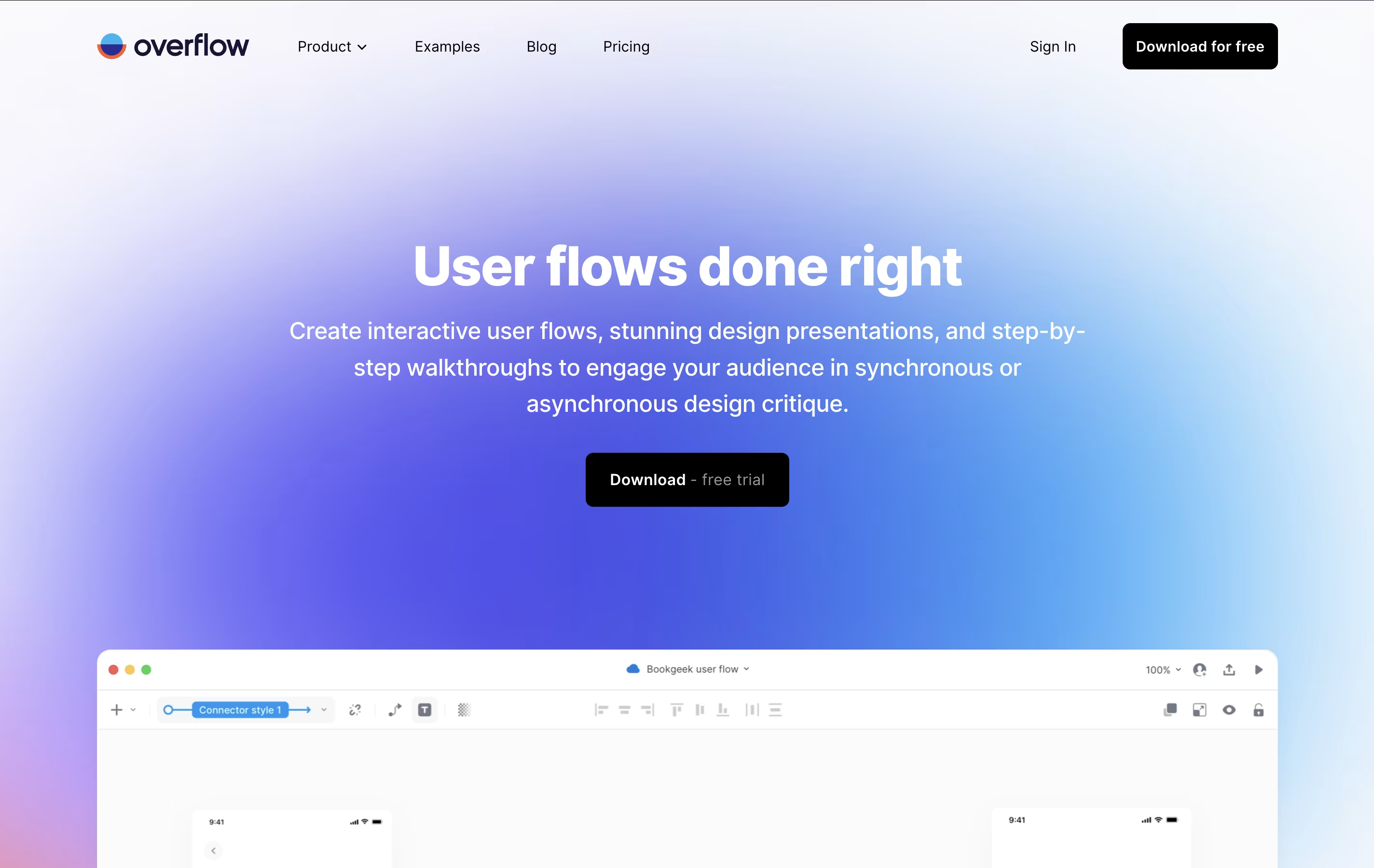
The main difference from other diagramming tools is simple: instead of building flows from basic shapes, Overflow uses your actual design screens and connects them with smart connectors. It integrates seamlessly with popular design tools, allowing you to sync artboards and automatically transfer layers without recreating anything.
Each user flow includes interactive elements, device skins, annotations, and smooth navigation features. Founded by the team behind Proto.io, this tool has gained popularity among 500,000+ designers worldwide because it saves time and creates more engaging presentations. You can present your designs like a story, switching between bird's eye view and detailed screen-by-screen walkthroughs.