Cronitor vs Status.io: Features, Pricing and User Reviews 2026

Status.io
Hosted Status Pages for Incident and Maintenance Communication
Status.io
Hosted Status Pages for Incident and Maintenance Communication
What are Cronitor and Status.io?

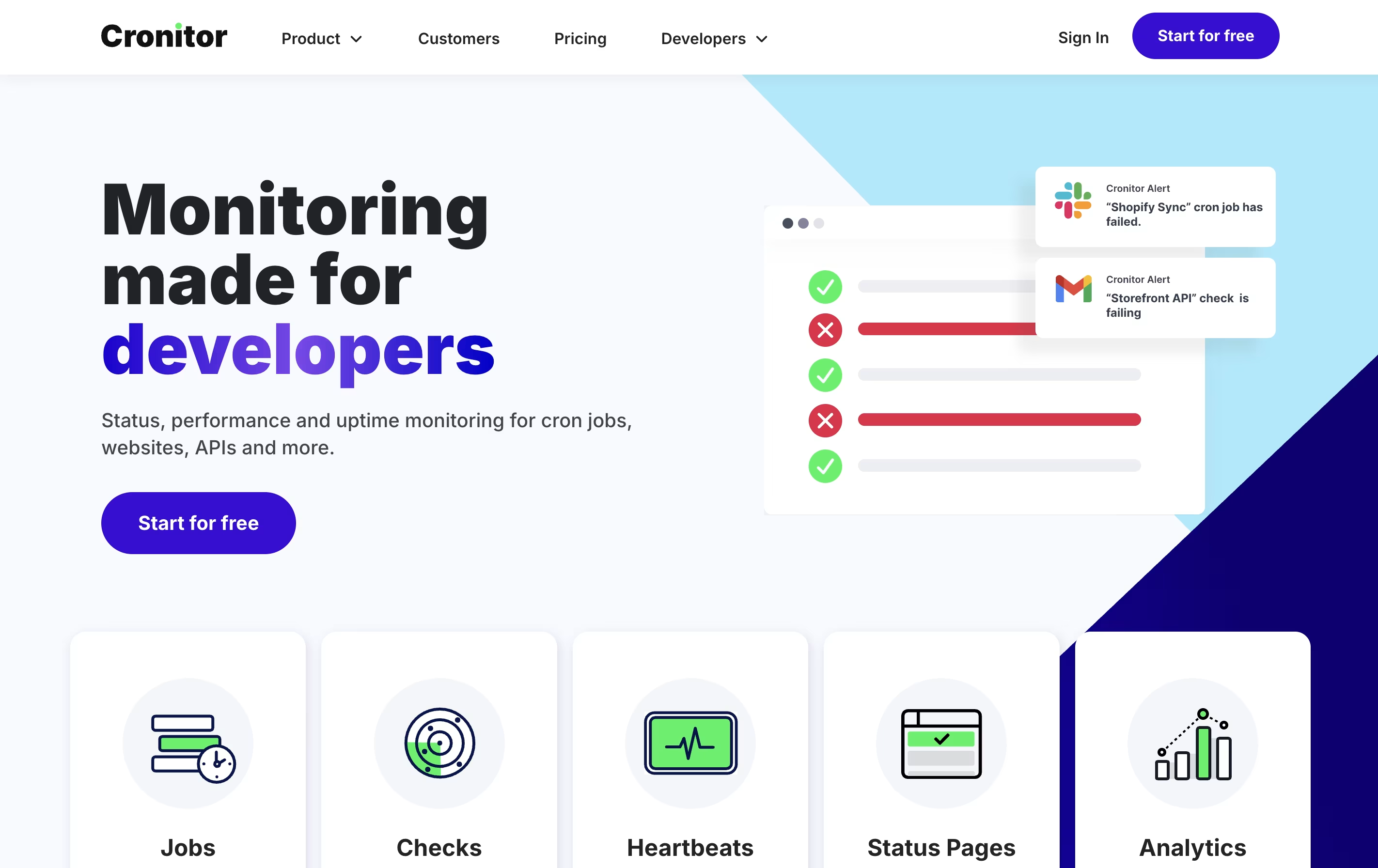
Cronitor is a web-based monitoring service that watches your scheduled tasks and services. It works like a safety system for your computer processes. You tell Cronitor what should happen and when, and it watches to make sure things run correctly.
The platform monitors several types of services. It tracks cron jobs and scheduled tasks to ensure they run on time. It watches websites and APIs to check they stay online and respond quickly. It also monitors background processes and heartbeat signals from your systems.
When Cronitor detects a problem, like a job that did not run or a website that went down, it sends alerts through email, Slack, SMS, or other channels you choose. This helps teams fix issues fast before they become bigger problems.
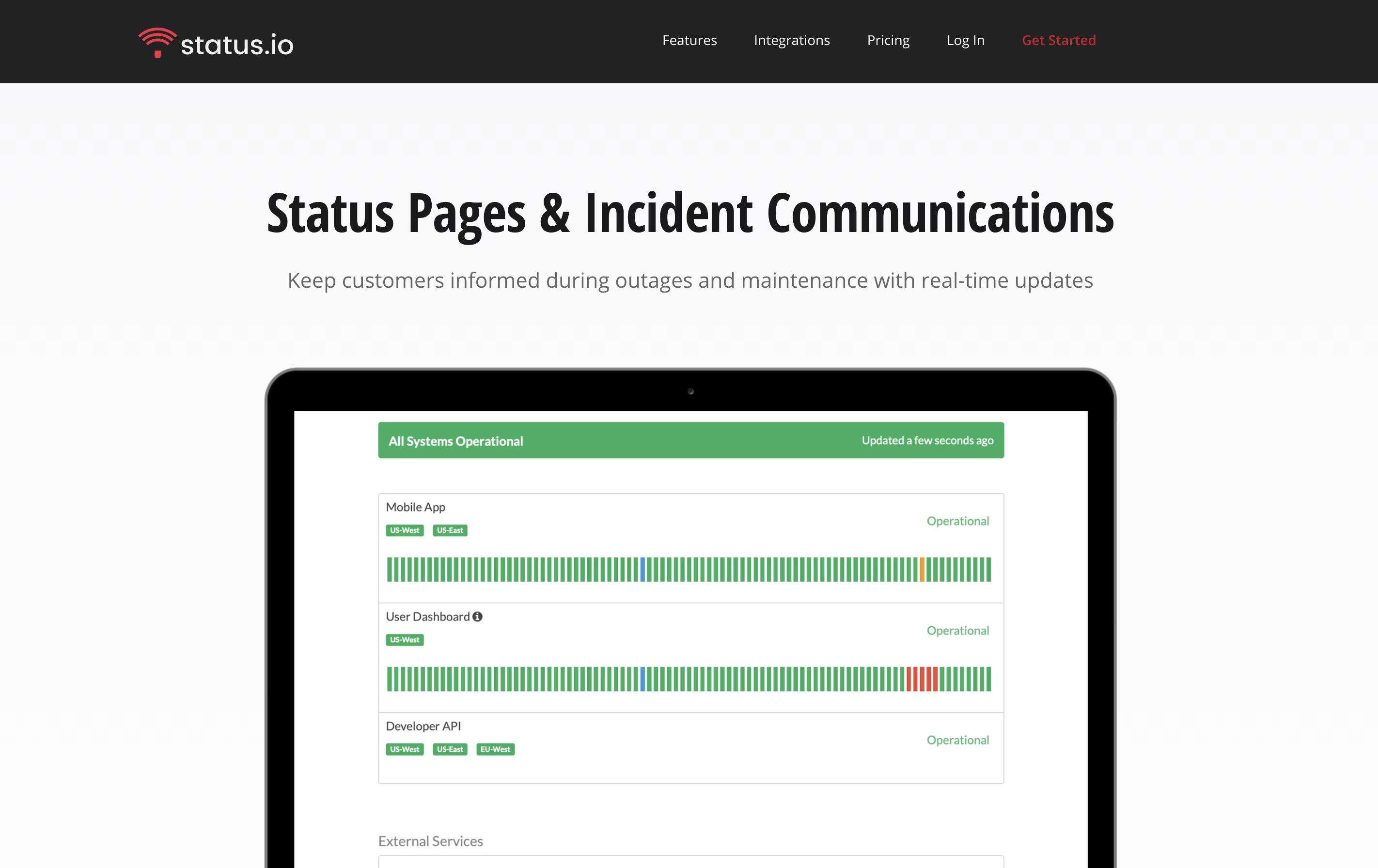
Status.io is a cloud-based tool that creates and manages status pages for your online services. When you have a website, app, or service that people depend on, you need a way to tell them when something is not working properly or when you plan to do maintenance work.
The platform lets you create a status page that shows which parts of your system are running normally and which ones have issues. You can track different components separately, such as your website, mobile app, payment system, or database. When problems occur, you can post updates and send notifications to people who subscribed to your status page through email, text messages, or other tools like Slack and Microsoft Teams.
Features of Cronitor and Status.io
Monitor cron jobs and scheduled tasks automatically
Website and API uptime checks every 30 seconds
Heartbeat monitoring for background processes
Instant alerts via email, Slack, SMS, and more
Public and private status pages
Real-time performance dashboards
12-month data retention
Auto-discovery of existing jobs
Multiple alert integrations
Command line tools available
Incident tracking and management system
Planned maintenance scheduling with reminders
Email and SMS subscriber notifications
Custom domain and branded design
Real-time performance metrics display
ChatOps integration with Slack and Teams
Status badges for embedding on websites
Developer API for automation
Multi-region hosted infrastructure
SSO and private page options
Use Cases of Cronitor and Status.io
Pricing of Cronitor and Status.io
Cronitor offers three pricing levels to fit different needs.
The Hacker Plan is completely free and good for small projects and home labs. You get 5 monitors, email and Slack alerts, and a basic status page. However, SMS alerts and premium integrations are not included.
The Business Plan uses simple pay-as-you-go pricing based on what you actually use. It costs $2 per month for each monitor and $5 per month for each user. This plan includes unlimited API requests, 10 alert integrations, 12-month data storage, automatic email reports, and volume discounts. You can add SAML SSO for an extra $5 per month per user. Email and chat support are included.
The Enterprise Plan starts at $6,000 per year and provides enterprise-grade service. It includes custom features, custom integrations, a dedicated engineer, priority support, and flexible invoice billing for larger teams.
Status.io offers three main pricing tiers to fit different organization sizes and needs:
Basic Plan ($79/month): Supports 500 subscribers and 5 team members with 10 metrics. Includes incident management, status badges, and basic notifications. Does not include custom branding or ChatOps features.
Standard Plan ($149/month): Accommodates 2,000 subscribers and 20 team members with 20 metrics. Adds ChatOps integration with Slack and Teams, SMS notifications, custom email domain, and white-label branding with custom CSS.
Plus Plan ($349/month): Designed for larger teams with 5,000 subscribers and 50 team members. Includes all Standard features plus custom SSL certificates, SSO authentication, private mode with IP restrictions, audit trail, and compliance tools.
Annual billing provides a 5% discount on all plans. All plans include one public status page, custom domain support, incident templates, and the developer API.
FAQs: Cronitor vs Status.io
Reviews: Cronitor vs Status.io
Based on 0 reviews
Based on 0 reviews
Compare Cronitor With Other Tools

UptimeRobot
Website Monitoring with Instant Downtime Alerts

Better Stack
Complete Monitoring and Incident Management Platform

Incident.io
AI-Powered Incident Management Platform

StatusCake
Website Monitoring for Uptime, Speed & Security

Hyperping
Simple Uptime Monitoring & Status Pages

PagerDuty
Real-Time Incident Management for DevOps and IT Teams

Instatus
Fast Status Pages for Modern Teams

Checkly
Monitoring Platform for Developers

FireHydrant
Incident Management Platform for Teams
Compare Status.io With Other Tools
Incident.io
AI-Powered Incident Management Platform
Better Stack
Complete Monitoring and Incident Management Platform
PagerDuty
Real-Time Incident Management for DevOps and IT Teams
UptimeRobot
Website Monitoring with Instant Downtime Alerts
FireHydrant
Incident Management Platform for Teams

Rootly
AI-Powered Incident Management Platform

Statuspage
Status & Incident Communication Tool
StatusCake
Website Monitoring for Uptime, Speed & Security
StatusPal
Hosted Status Pages & Service Monitoring