
FeatureOS vs Readme: Features, Pricing and User Reviews 2026

FeatureOS
Complete Product Management Platform

Readme
Interactive API Documentation & Developer Hubs
FeatureOS
Complete Product Management Platform
Readme
Interactive API Documentation & Developer Hubs
What are FeatureOS and Readme?
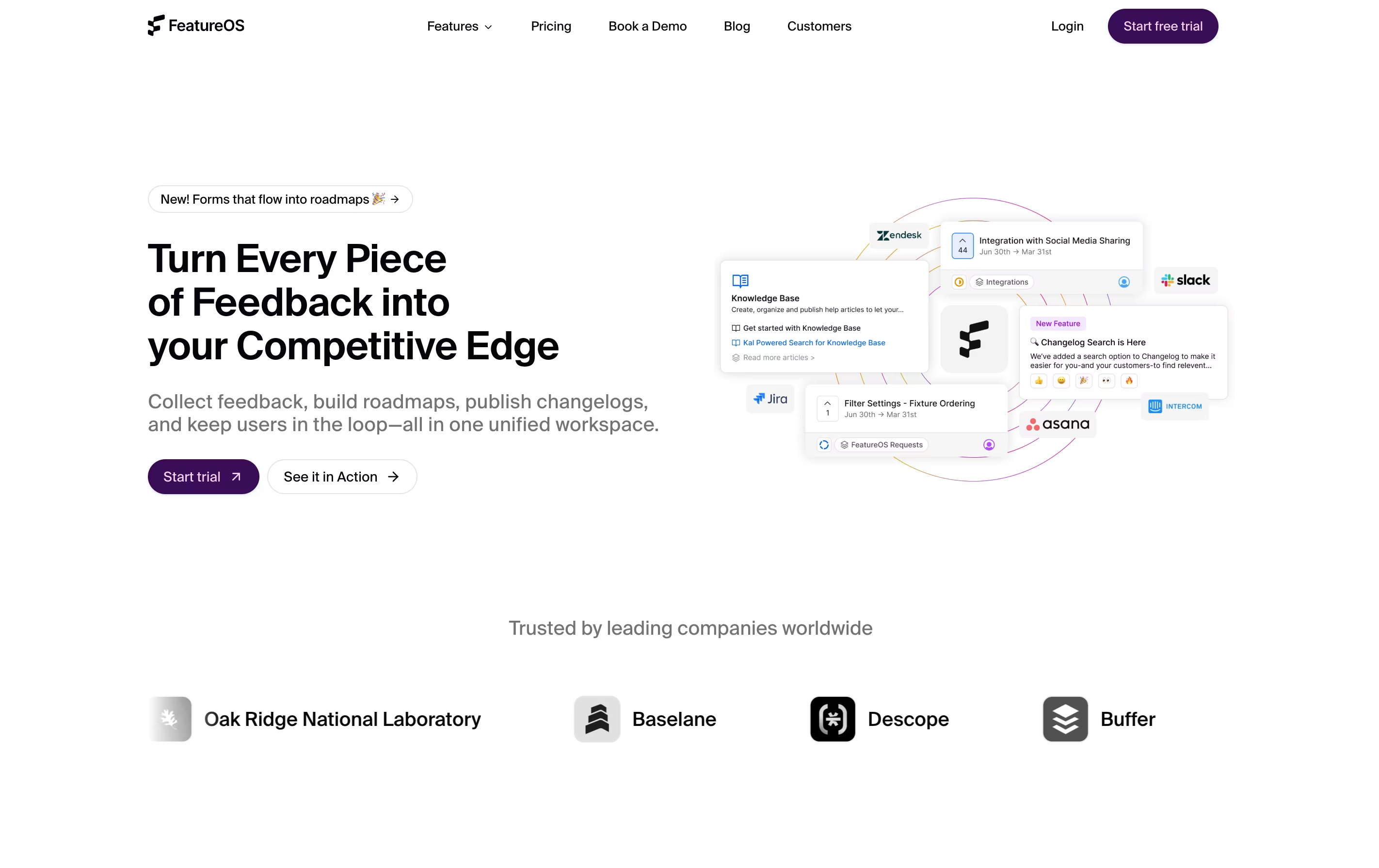
FeatureOS is an all-in-one workspace for product teams that combines five main modules. The Feedback Boards let you collect and organize customer requests through public or private boards. The Roadmap module helps you plan what features to build and when. The Changelog keeps users updated about new releases. Forms and Surveys gather specific input from customers. The Knowledge Base provides self-service help documentation.
What makes it different is how everything connects. When you collect feedback, you can link it to roadmap items. When you finish a feature, the changelog update goes out automatically. The platform also uses AI called KAL to help analyze feedback, spot patterns, and suggest priorities. This saves time and helps teams make better decisions based on real customer needs.
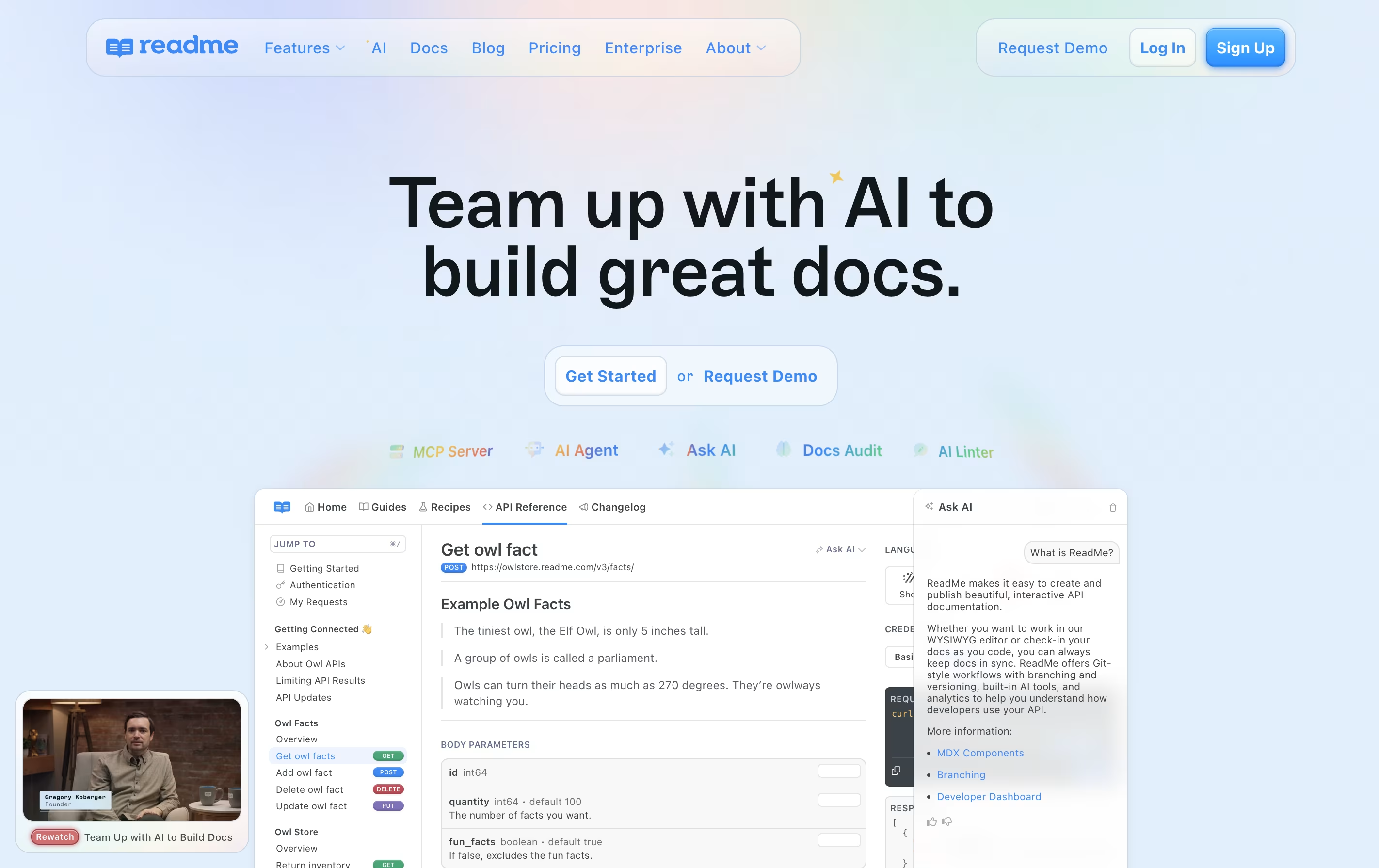
Readme is a platform that lets you create and publish interactive developer documentation for your APIs. Unlike traditional documentation tools, Readme automatically generates API references from your OpenAPI or Swagger files and keeps everything in sync with your code.
The platform includes a built-in editor where you can write guides, add code examples, and explain how your API works. Developers using your API can test endpoints directly from the documentation with the Try It feature, making it easier to understand how everything works.
Readme also provides analytics so you can see which parts of your documentation get the most views and where developers might be getting stuck, helping you improve your API experience over time.
Features of FeatureOS and Readme
Public and private feedback boards with voting
AI-powered duplicate detection and sentiment analysis
Multiple roadmaps with visual planning
Automated changelog publishing
Custom forms and surveys with analytics
Knowledge base for help articles
Integrations with Jira, Slack, Intercom, Linear
White-label branding options
API and webhook access
Team collaboration with roles and permissions
Interactive API reference with Try It functionality
OpenAPI and Swagger file sync
Markdown editor for guides and tutorials
Multiple API version management
Custom domains and white-label branding
Real-time analytics and usage tracking
Team collaboration with reviews and branching
Changelog and discussion forums
SSO and advanced security
AI-powered documentation tools
Mobile responsive design
Use Cases of FeatureOS and Readme
Pricing of FeatureOS and Readme
FeatureOS offers three main pricing tiers designed for different team sizes and needs.
The Starter plan costs $60 per month and includes all modules, 5 feedback boards, 5 team seats, 3 integrations, and all AI features. Additional seats cost $15 per month each. This plan works well for indie developers and small startups.
The Growth plan at $120 per month includes 10 feedback boards, 10 seats, 5 integrations, API access, and white-labeling options. It's the most popular choice for growing teams.
The Business plan costs $250 per month and offers unlimited feedback boards, 15 seats, unlimited integrations, Salesforce connection, API and webhook access, priority support via live chat, and access to development hours. Additional seats cost $15 monthly across all plans. Annual billing options provide savings compared to monthly payments.
Readme offers flexible pricing to match different team sizes and needs. The platform provides four main plans plus an optional AI booster.
The Free plan costs nothing and includes unlimited API versions, interactive API reference, markdown editor, and basic AI features like AI Dropdown and LLMs.txt support.
The Startup plan at $99 per month adds important features like custom domains, changelogs, discussion forums, MDX components, and the Agent Owlbert AI assistant with AI Doc Linting.
The Business plan at $399 per month removes Readme branding and adds advanced features including CSS/HTML customization, reusable content, metrics export, and branching for team workflows.
The Enterprise plan offers custom pricing with everything in Business plus dedicated design help, shared component libraries, custom JavaScript, audit logs, SSO, and full Docs Audit capabilities with Ask AI API access.
FAQs: FeatureOS vs Readme
Reviews: FeatureOS vs Readme
Based on 0 reviews
Based on 0 reviews
Compare FeatureOS With Other Tools

Featurebase
Feedback & Support Platform for Teams

Mintlify
AI-Powered Documentation Platform for Developers

Apidog

GitBook
Create Beautiful Documentation with AI-Powered Features

Confluence
Team Workspace for Documentation

Redocly
Beautiful API Documentation and Developer Portals

Docusaurus
Build Beautiful Documentation Sites Free

Fern
Auto-Generate SDKs and API Documentation

Hashnode
Free Developer Blogging Platform
Compare Readme With Other Tools
Mintlify
AI-Powered Documentation Platform for Developers
Redocly
Beautiful API Documentation and Developer Portals
Apidog

Stoplight
Visual API Design and Documentation
Fern
Auto-Generate SDKs and API Documentation

Theneo
AI-Powered API Documentation Generator for Beautiful Developer Docs
GitBook
Create Beautiful Documentation with AI-Powered Features

Document360
AI-Powered Knowledge Base for Teams
Confluence
Team Workspace for Documentation