Best 9 Tools for Autonomous Multi-Step Coding in 2026
Last Updated: August 19, 2026
Autonomous Multi-Step Coding lets an AI model take a high-level task and break it into the individual steps needed to complete it, from writing code to running tests to fixing errors along the way. Instead of handling one prompt at a time, the model plans ahead and works through the entire task with minimal input from you.
This is especially useful for larger changes like adding a new feature, refactoring a module, or fixing a bug that spans multiple files. The model can read the surrounding code, make the necessary edits across files, and verify its own work before handing the result back to you.
 Devin Desktop
 Devin DesktopAI Coding Agent Command Center IDE,
  ZCode
ZCode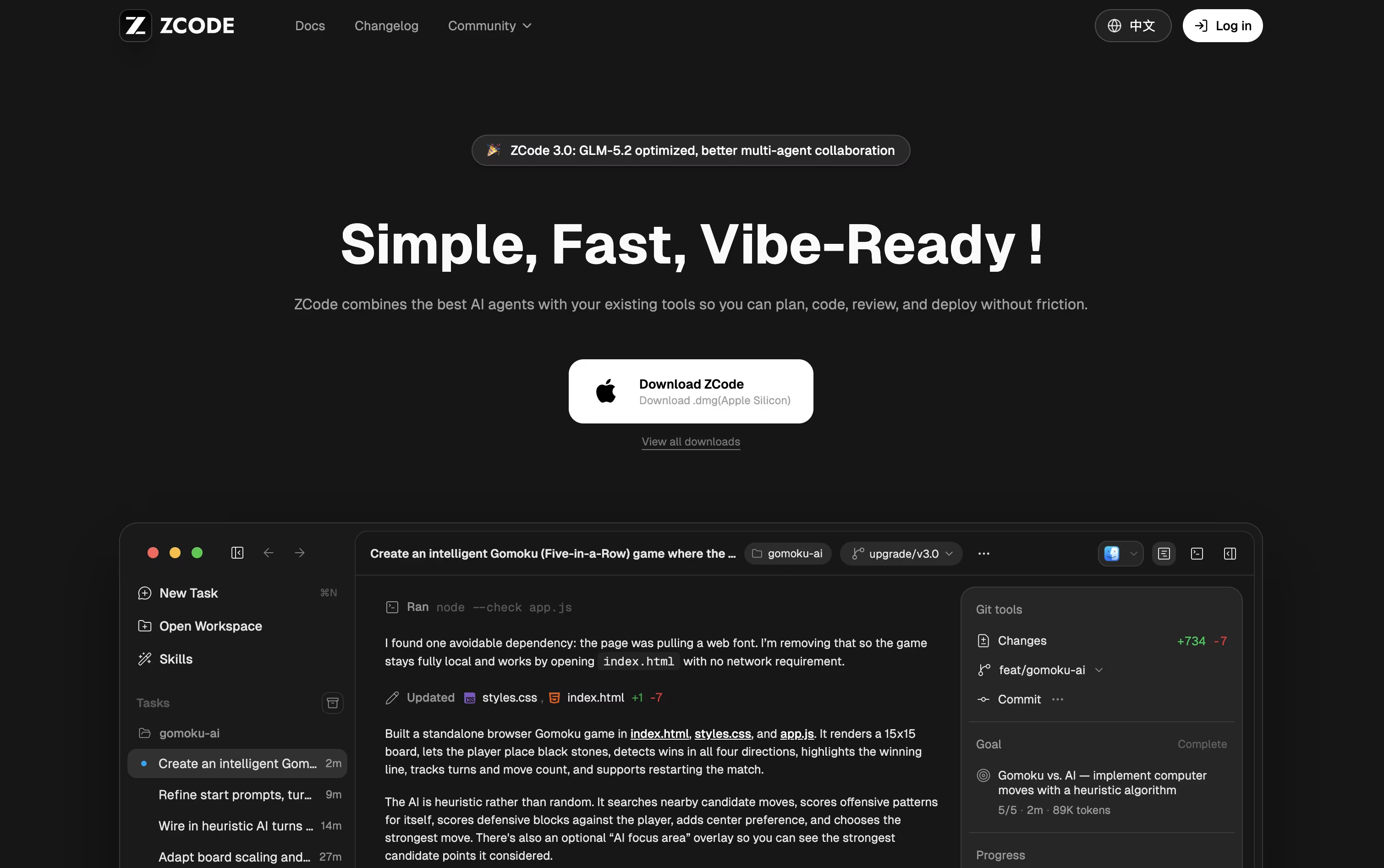 ZCodeAgentic AI Coding Tool for Developers, and
  Kiro
Kiro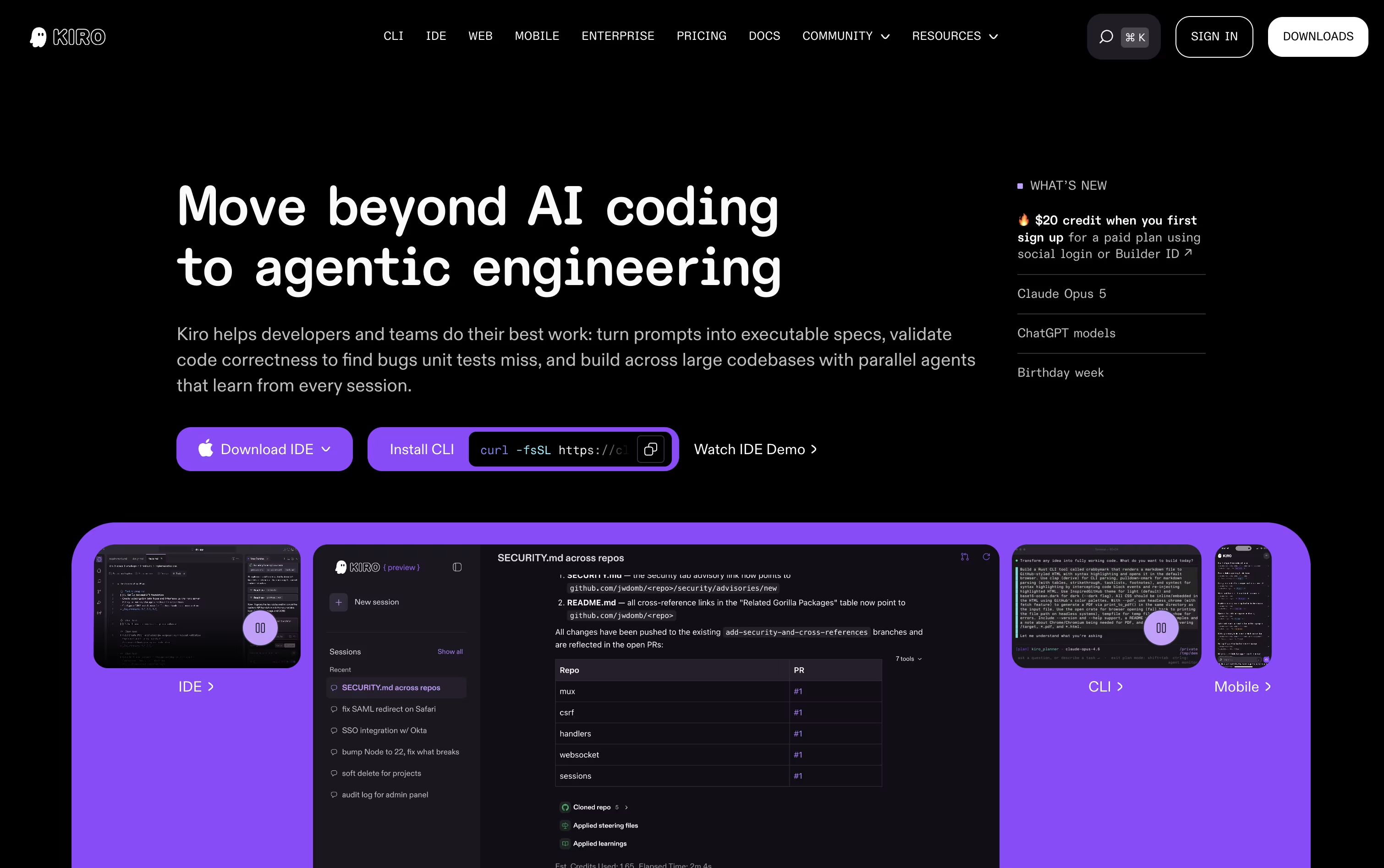 KiroAWS Agentic IDE for Spec-Driven Coding are the best for Autonomous Multi-Step Coding. So, let’s take a closer look at all 9 tools.

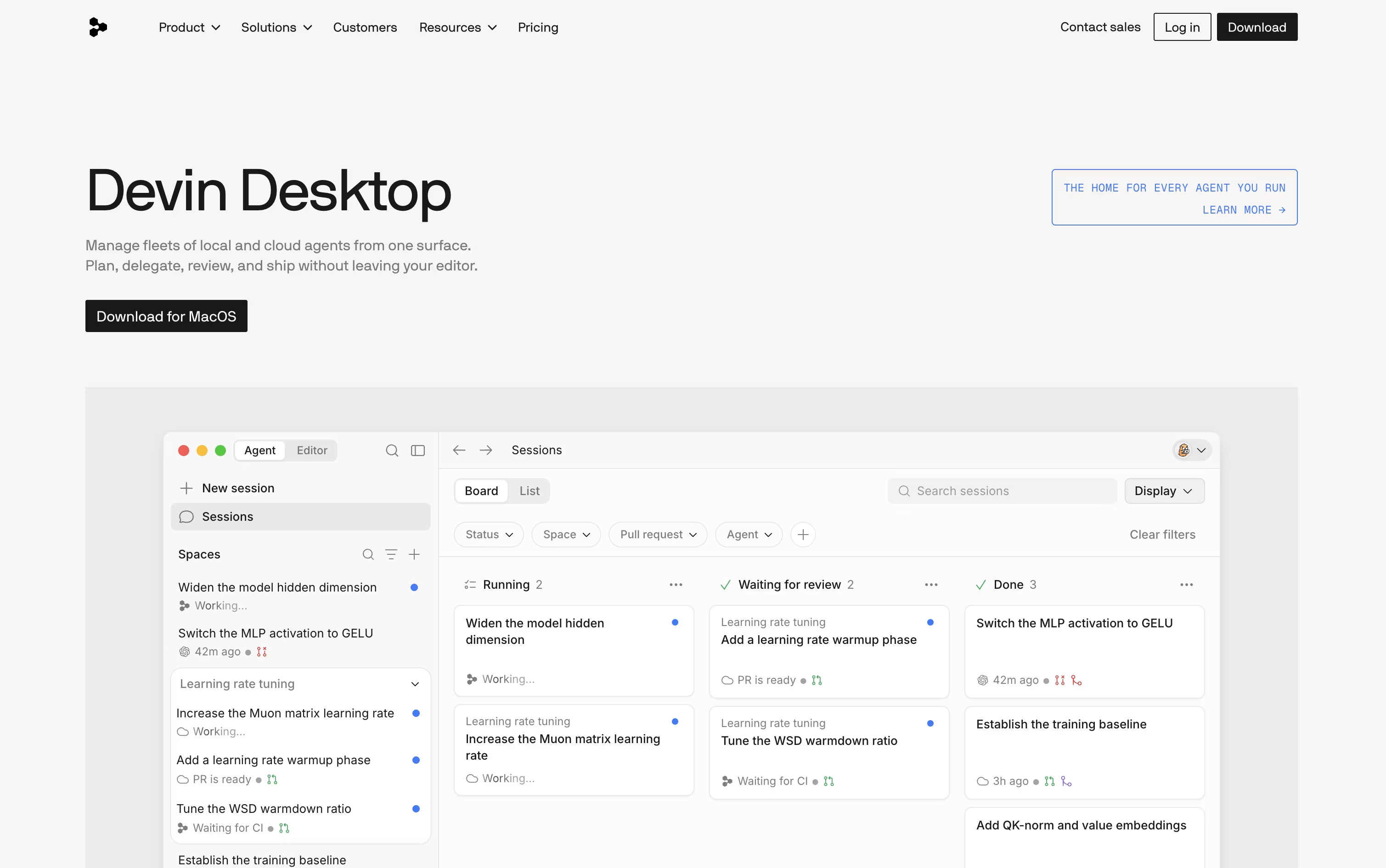
If you're used to switching between an editor, a terminal, and separate AI tools, Devin Desktop puts all of that in one place. Made by Cognition AI and previously called Windsurf, it centers around an Agent Command Center that shows every agent you're running, whether local or in the cloud.
It still functions as a full IDE, so debugging, Git, extensions, and an integrated terminal are all available whenever you want to work by hand.
Because it supports the open Agent Client Protocol, other agents such as Codex and Claude Agent can run right alongside Devin's own agents, all sharing project context through Spaces so nothing needs to be re-explained.
The Free plan gives you a light quota to try things out, along with unlimited inline edits and Tab completions at no cost.
Moving up, Pro costs $20 a month for higher quotas and frontier models, and Max costs $200 a month for teams that need significantly more capacity.
Teams start at $80 a month plus $40 per seat, and Enterprise adds custom pricing, SSO, and private cloud deployment for larger organizations.
ZCode is a free desktop app that puts an AI agent in charge of the coding work rather than just offering suggestions in a sidebar. You describe the outcome you want, and it plans, edits files, runs terminal commands, and reviews its own results until the job is done.
The app is built around the GLM-5.2 model, which can keep a very large amount of context in one task, so it stays on track even on bigger, messier codebases.
Downloading and installing ZCode costs nothing. To actually use an AI model, you need a plan, and pricing starts at $16.20 a month for Lite, rising to $64.80 a month for Pro and $144 a month for Max, each already discounted.
Pro adds five times the usage allowance of Lite along with priority access and a curated set of extra tools, while Max multiplies usage by twenty and adds first access to new models and dedicated resources during peak hours.
Paying yearly brings the cost down by 30% compared to the standard monthly price. On top of that, you can direct a running task from your phone while ZCode keeps working on your computer.
Kiro is an AWS-built tool that pairs AI agents with a more structured way of writing code. Rather than turning a single prompt into code right away, it writes out a plan first, called a spec, that covers what needs to be built, how it should be designed, and the tasks needed to get there.
Once the plan is ready, AI agents pick up the tasks, write the code, and run checks that go beyond simple tests to confirm the work matches what was actually asked for.
There is also a lighter chat mode for quick questions, plus an Autopilot mode that can carry a task through from start to finish with little input from you.
Getting started costs nothing. The Free plan includes 50 credits along with open-weight models and Claude Sonnet 4.5. Paid plans move from $20 up to $200 per user a month, adding more credits and access to premium models.
Team plans bring in single sign-on, usage reports, and one combined bill, and an Enterprise option is available with custom pricing and added security and admin controls.
Kiro runs on Amazon Bedrock and follows AWS standards, making it a fit for solo coders, teams, and larger companies alike.

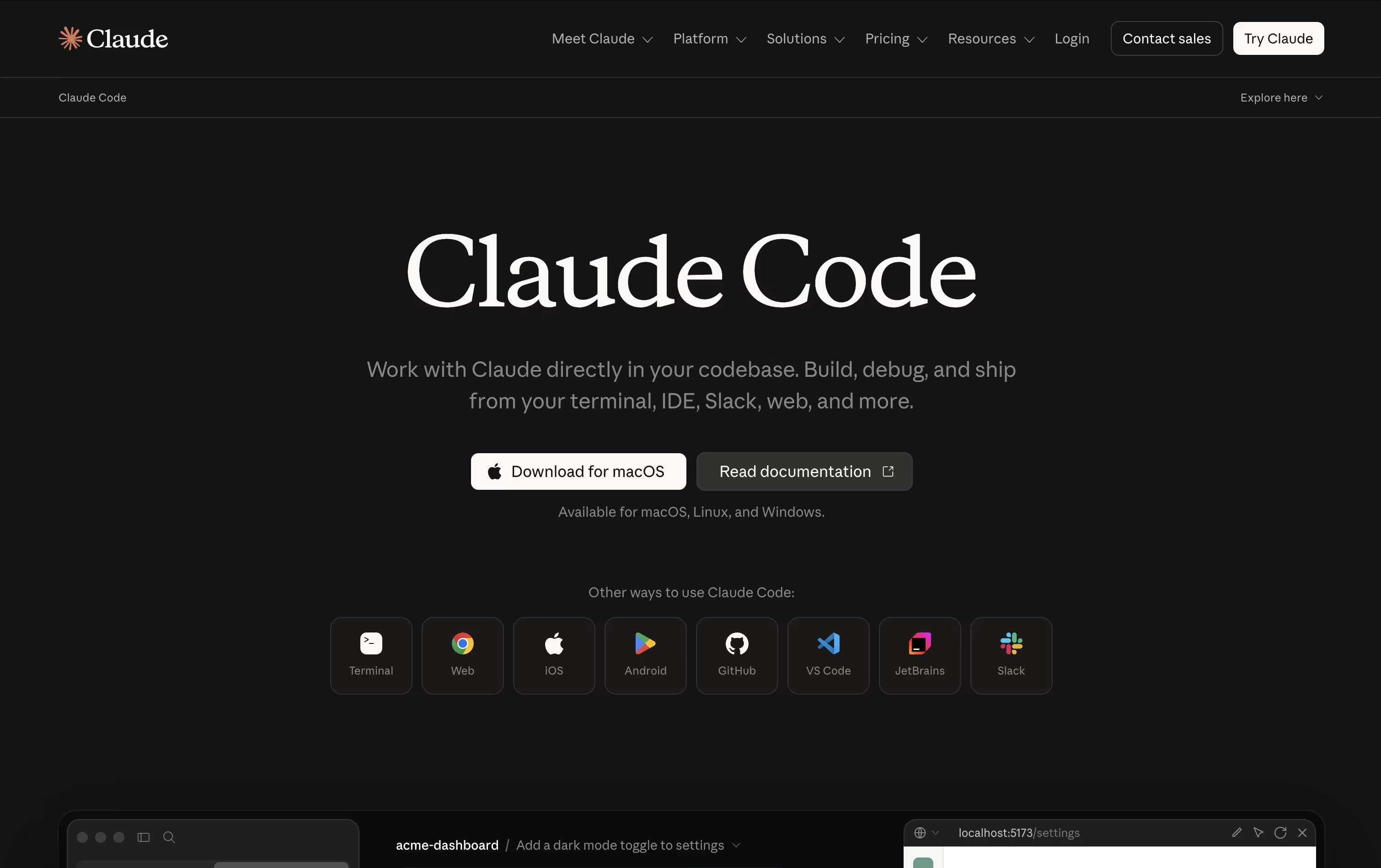
Anthropic built Claude Code as an AI agent that works directly inside your codebase instead of just chatting about it. Give it a goal and it explores the project, plans its steps, then edits files, runs commands, and verifies the outcome itself.
It can map out large repositories in seconds, change multiple files at once while respecting how the project is structured, and take care of Git work like branching, committing, and opening pull requests.
Safety stays in your hands through manual approval, plan review, or automatic modes, plus checkpoints that let you rewind code or conversation if something goes wrong. Skills and background subagents handle repeatable jobs, and MCP connections add outside tools when needed.
On pricing, the Free plan does not include Claude Code, but Pro unlocks it starting at $17 a month with more usage and model access. Max plans begin at $100 a month for 5x or 20x higher usage and priority support.
Teams pay $20 to $125 per seat monthly depending on the seat type, while Enterprise pricing is custom and adds admin controls, audit logs, and compliance features.
You can reach it through the terminal, popular code editors, a desktop app, the web, or mobile, keeping your work connected across devices.

Think of OpenCode as an AI teammate that lives in your terminal, desktop, code editor, or browser. Instead of just autocompleting lines, it reads your codebase, plans out a fix or feature, and then does the work itself using file editing, search, and shell tools.
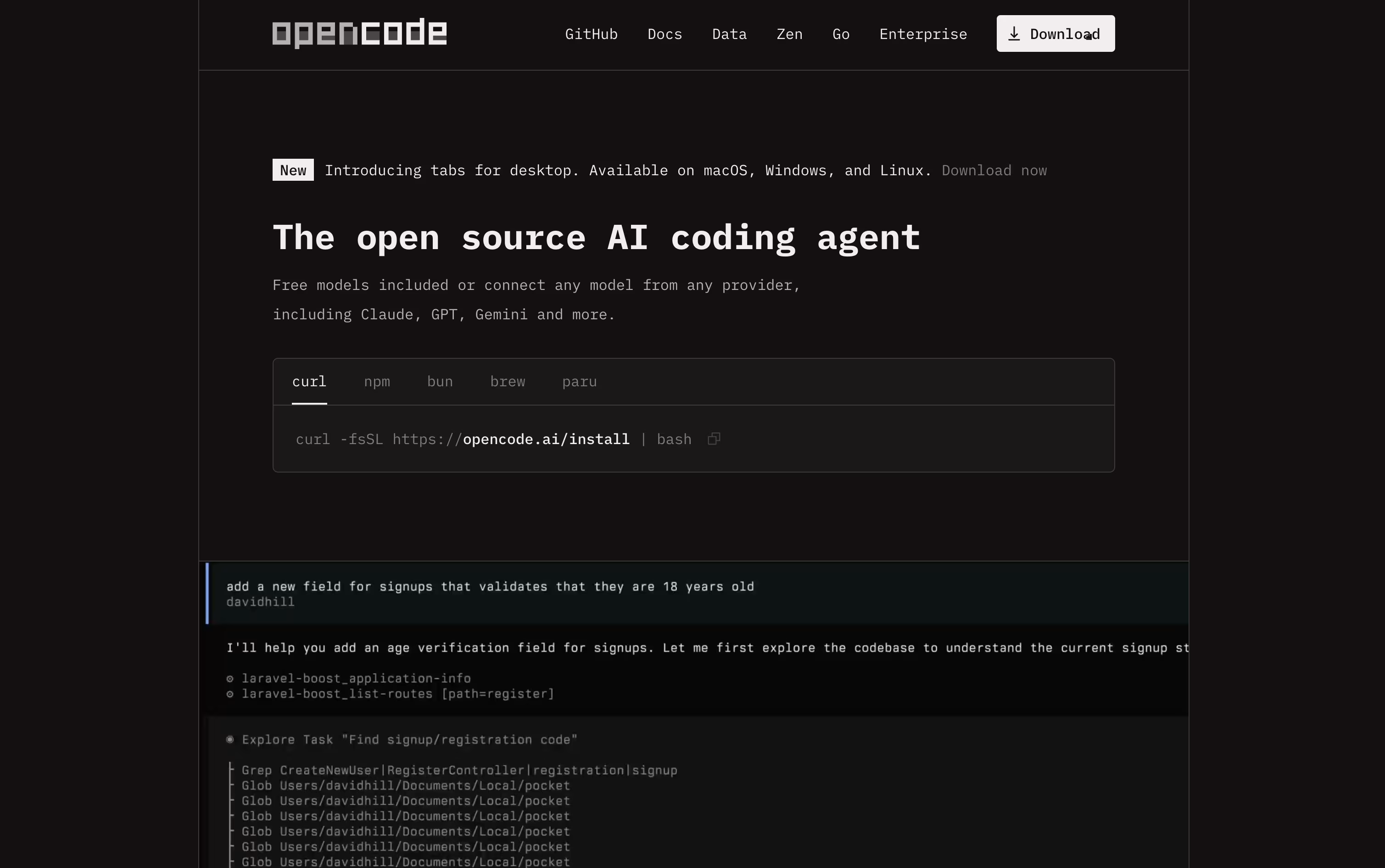
It is completely free and open source under the MIT license, and it never stores your code or project data, which makes it a good fit for developers and teams that care about privacy.
You can connect it to over seventy five AI providers, from paid services like OpenAI and Anthropic to free local models such as Ollama, so there is a setup for every budget.
If you want reliable access to strong open source coding models without managing your own API keys, the OpenCode Go plan is available for $5 in the first month, then $10 a month afterward, with no contract and easy cancellation.
Go includes generous request limits across models like Kimi K3, GLM-5.2, Qwen3.7 Max, and DeepSeek V4 Pro, refreshed on a rolling five hour basis, with extra credit available if you ever need more.
Codex is an AI agent from OpenAI made to take on actual coding tasks, from planning a feature to writing, testing, and fixing the code itself. You describe what you need, and it works through your project on its own.
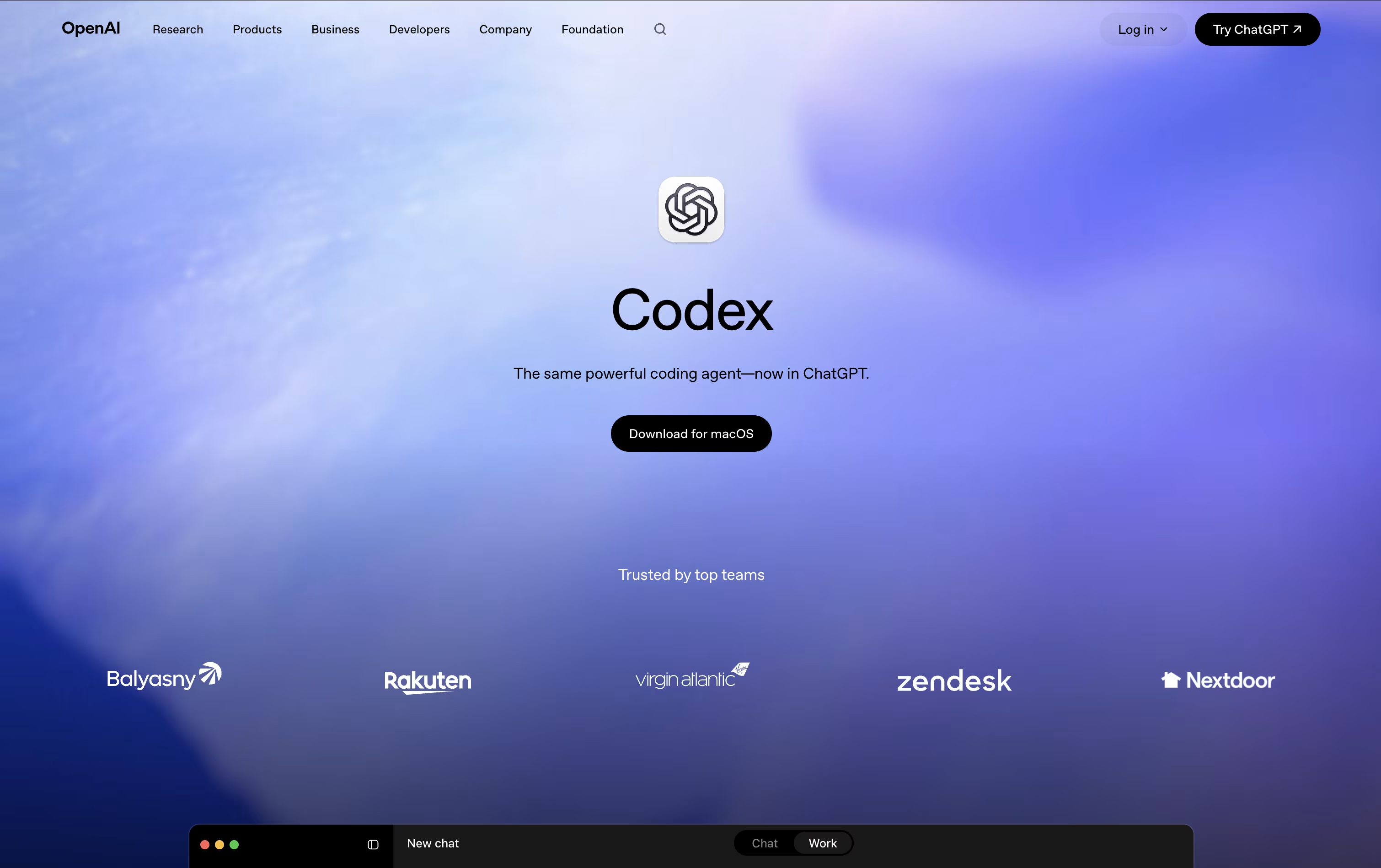
All the work happens in a separate, isolated copy of your project, so your main files stay untouched until you review and approve the changes.
Getting started costs nothing, with limited Codex access included in the Free ChatGPT plan. The Go plan is $8 a month, Plus is $20 a month and unlocks expanded Codex usage, and Pro starts at $100 a month for the most Codex tasks and strongest models.
For companies, Business runs $20 per user a month when billed yearly, or $25 monthly, and adds shared tool connections and admin controls. Enterprise is custom priced with extra security and support.
Codex has also expanded past pure coding, with skills and plugins that let marketers, analysts, and designers use it for everyday work too.
Amp is built around the idea of threads, which are ongoing conversations between you and the agent. Inside a thread, Amp can read your codebase, make edits, run tests, and carry out full tasks with little hand holding.
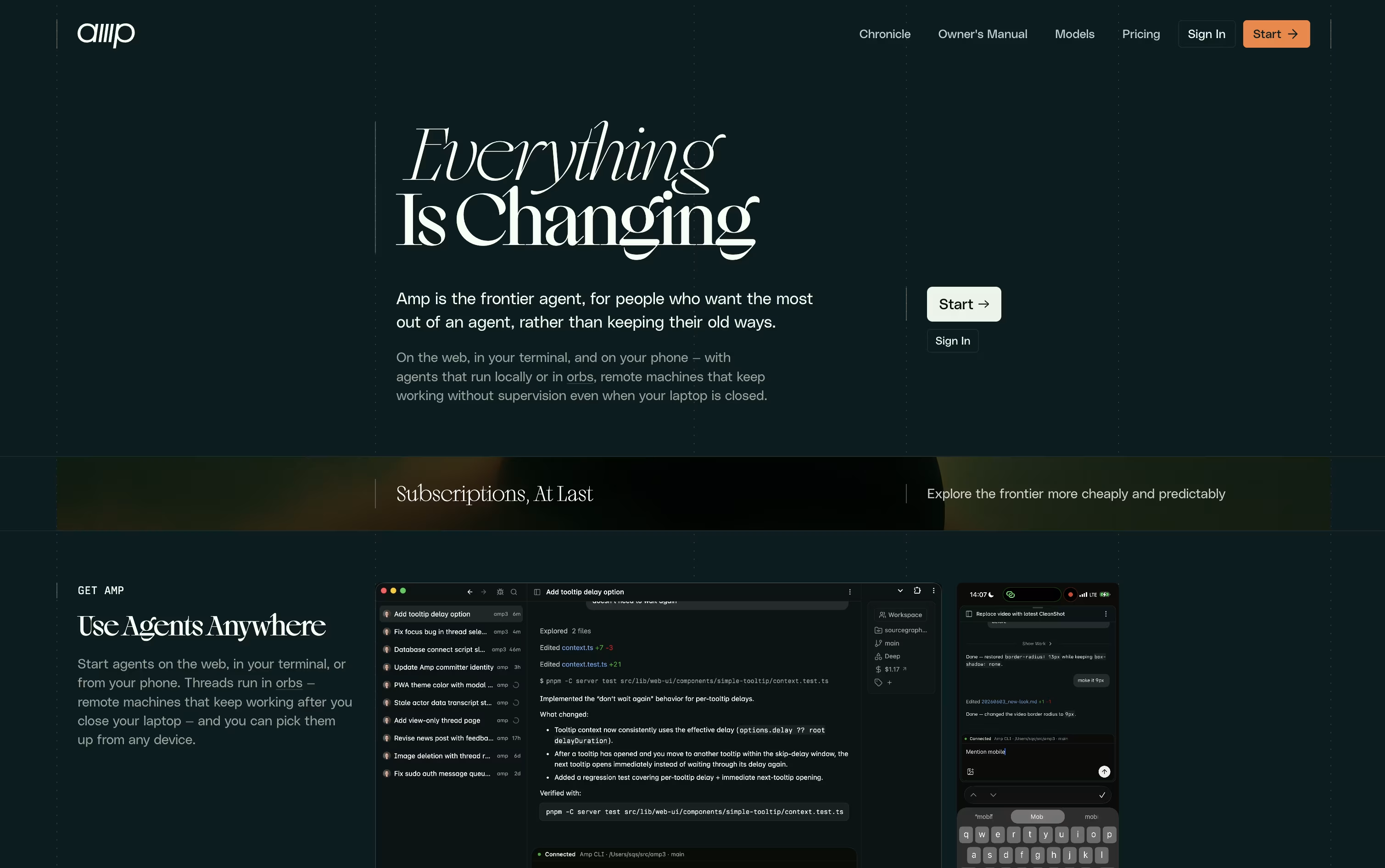
What sets Amp apart is orbs, remote machines that let tasks keep running even when your own computer is turned off. These come pre loaded with common developer tools so work can start right away.
You can choose from several modes depending on how much thinking power a task needs, ranging from quick fixes to deep, complex problem solving. Skills and plugins let you extend what Amp can do even further.
On pricing, the Megawatt plan is $20 a month and covers lighter workloads with orb hours and usage credit. Gigawatt costs $200 a month and adds bigger orbs along with access to every mode. A pay as you go option and a custom priced Enterprise plan round out the choices for larger teams.
Overall, Amp is designed for developers who want an assistant that can work independently and scale with the pace of newer AI models.
Kilo Code is an AI coding agent built to feel the same wherever you use it, whether that is your code editor, a terminal window, the cloud, or your phone, with sessions that carry over between them.
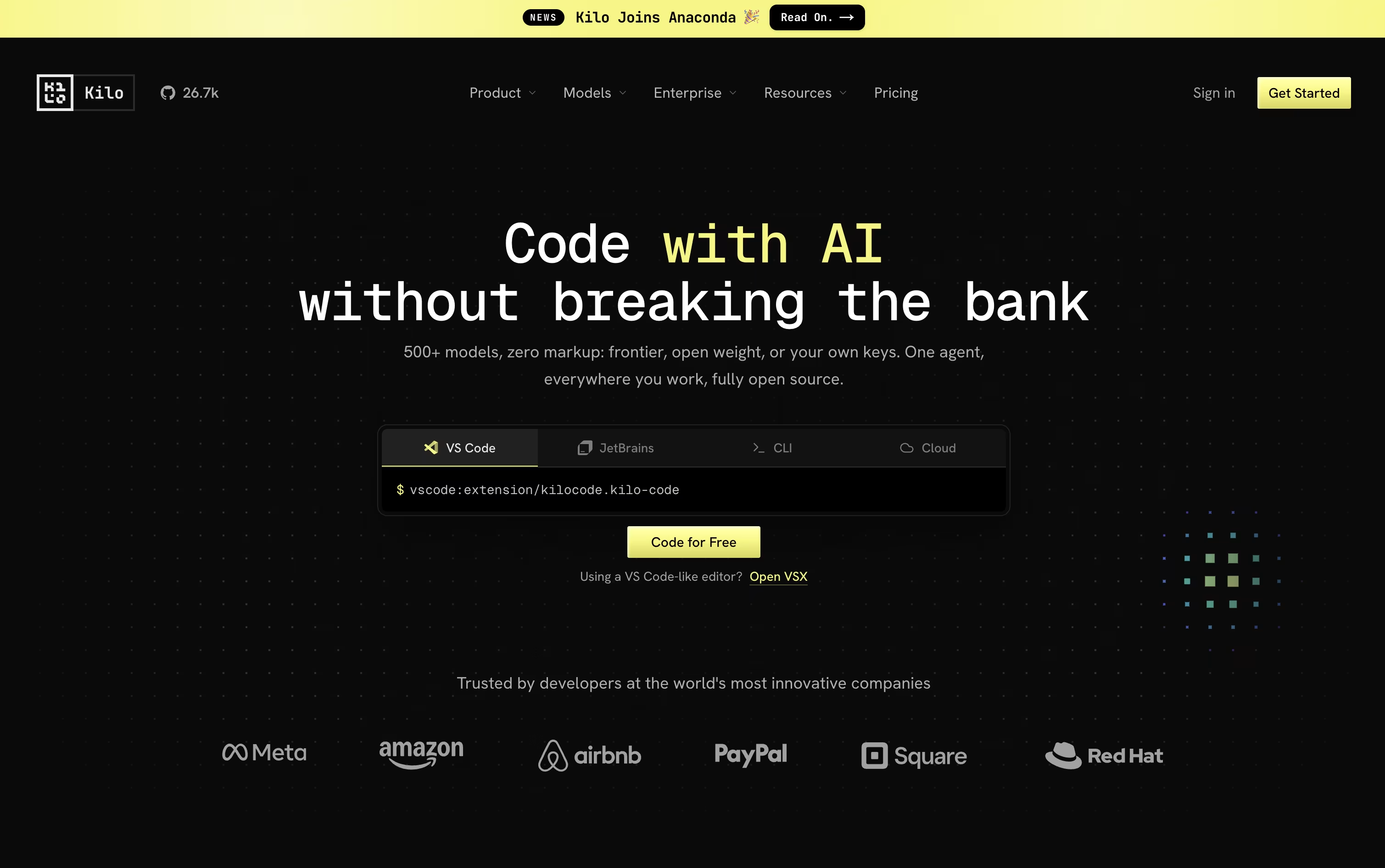
Give it a task in plain language and it breaks the work down, changes code across many files, runs commands, and checks its own results, switching between coding, planning, debugging, and review modes as needed.
Model choice is wide open too, with access to over 500 AI models from more than 60 providers. You can bring your own provider keys or run local models, and Kilo never adds a markup on top of what the provider charges.
Using Kilo Code as an individual is free, and that includes the open source VS Code extension, the JetBrains plugin, and the CLI. You only pay separately for the AI models and cloud compute you actually use.
For groups that want shared billing and usage reporting, the Teams plan is $15 per user each month, and larger companies can request Enterprise pricing that adds SSO, audit logs, and dedicated support.

Think of Cline as a coding partner that lives right inside your editor. It looks through your codebase, works out how the files connect, and takes on tasks you describe in plain English, whether that means fixing a bug or building out a new feature.
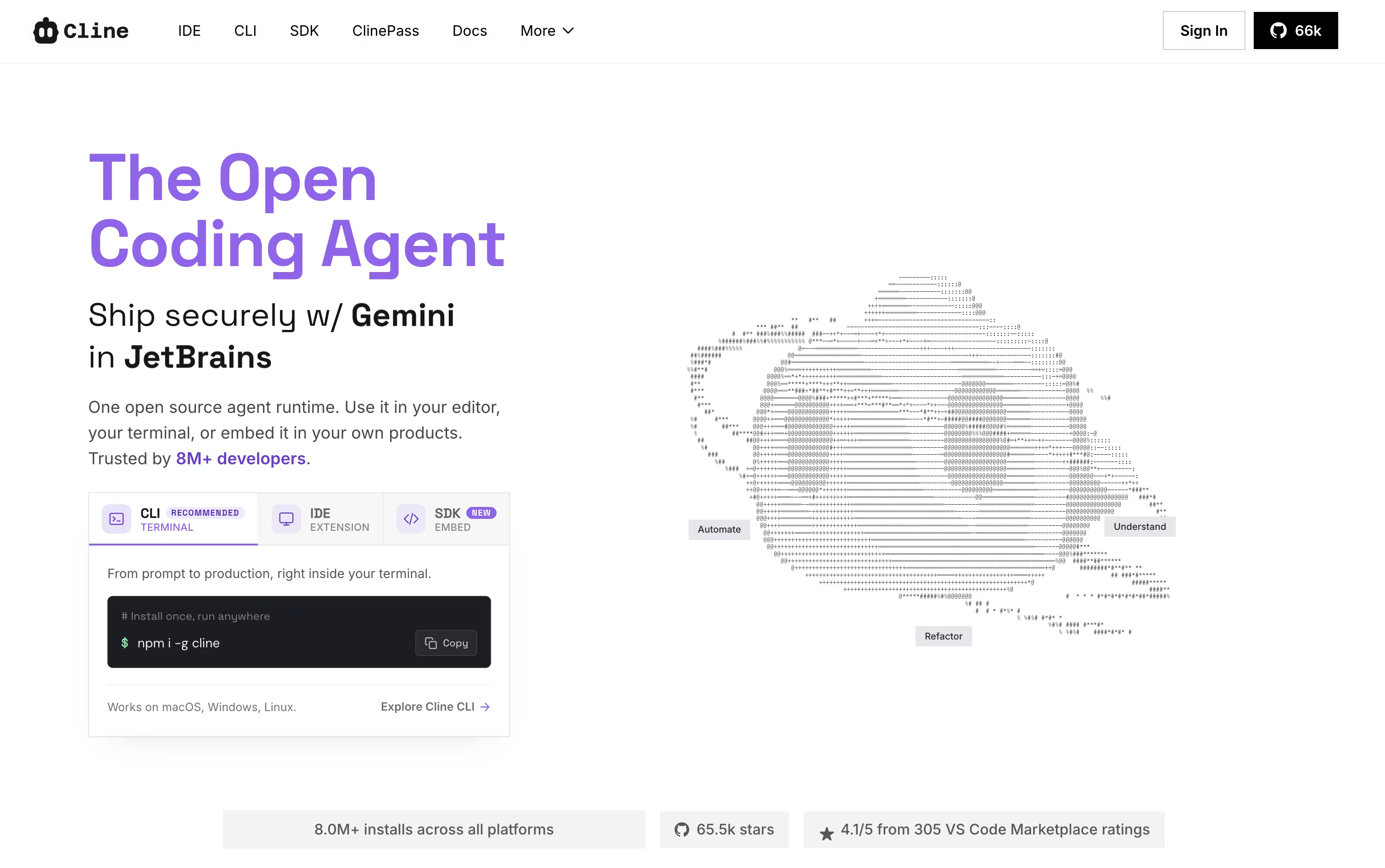
Two modes shape how it works. Plan mode looks around the project and lays out an approach first, while Act mode does the actual work, one step at a time, with your approval built in unless you switch on auto-approve.
It is not limited to editing files either. Cline can run terminal commands, open a browser to check how a web page behaves, and link up with outside tools and services through MCP. Every change comes with a checkpoint, so undoing something is simple.
Using the open-source edition costs nothing beyond what you spend on your own AI provider, whether that is OpenAI, Anthropic, Google, or others. If you would rather skip managing API keys, ClinePass is available for $4.99 in the first month and $9.99 a month after that, bundling in a set of open-weight models.
Larger teams can move to the Enterprise plan instead, which brings single sign-on, centralized billing, access controls, audit logs, and dedicated support, all priced individually by contacting sales.