
LiveKit vs Synthflow: Features, Pricing and User Reviews 2026

LiveKit
Open-Source Real-Time Video, Audio & AI Platform
LiveKit
Open-Source Real-Time Video, Audio & AI Platform
What are LiveKit and Synthflow?
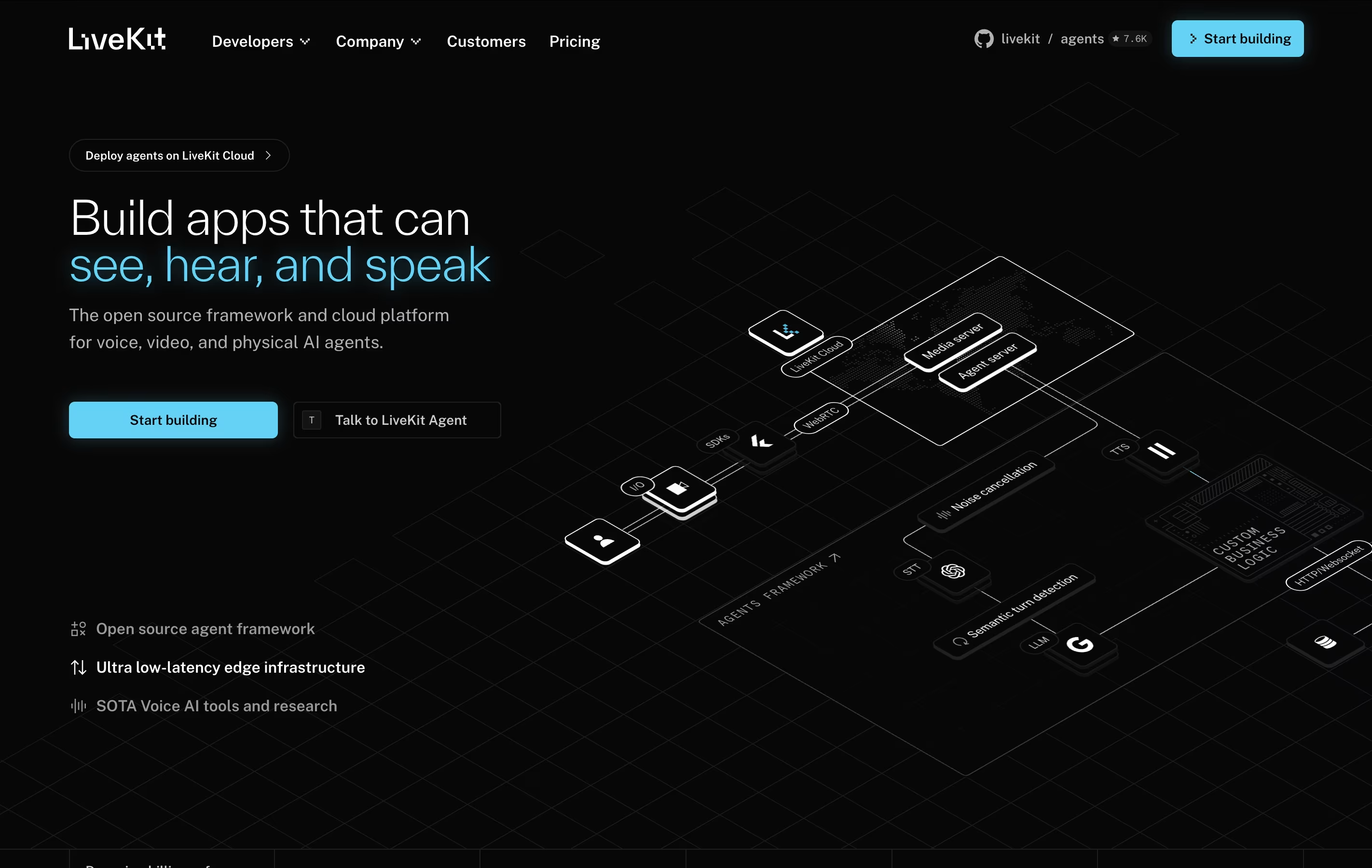
LiveKit is a complete real-time communication platform that uses WebRTC technology to enable low-latency audio, video, and data exchange between users and AI agents. Unlike traditional communication tools, LiveKit is built specifically for developers who want to create custom real-time experiences.
The platform consists of several parts: the open-source LiveKit server that handles media routing, client SDKs for all major platforms, and LiveKit Cloud for managed hosting. It uses a Selective Forwarding Unit (SFU) architecture, which means it can efficiently handle many participants without heavy server processing.
LiveKit is especially strong for AI applications. It can connect voice agents to phone systems, enable real-time transcription, and support multimodal AI that can see and hear simultaneously. Whether you want to build a simple video chat or a complex AI assistant, LiveKit provides the foundation you need.

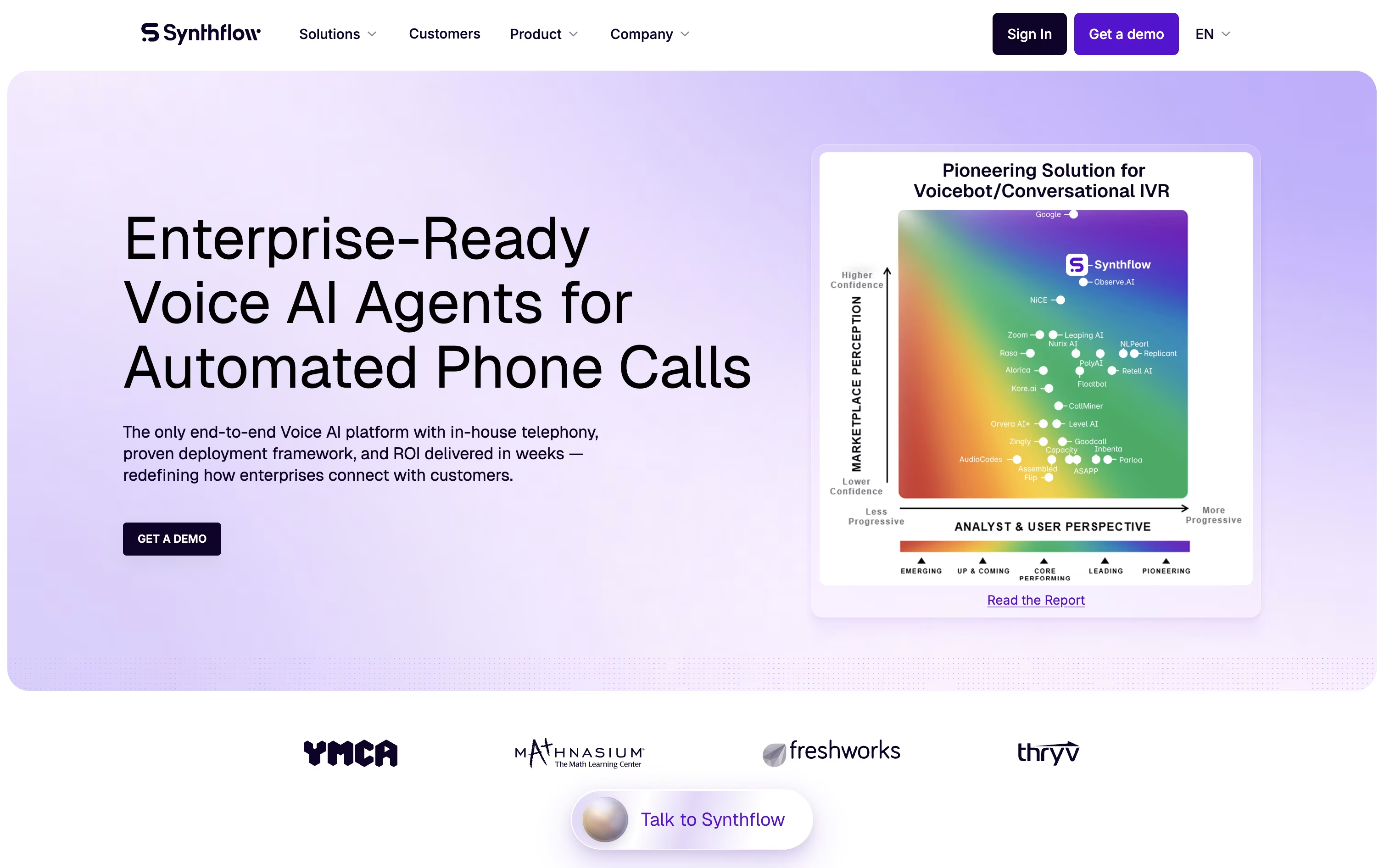
Synthflow is a no-code platform for building AI voice agents that handle phone calls for businesses. It also supports chat, SMS, and WhatsApp conversations, so one agent can work across many channels.
The platform uses its own telephone network instead of only relying on outside providers, which keeps calls fast and reliable. Teams can test agents with hundreds of simulated calls before going live, then track results with detailed logs and live monitoring.
Synthflow connects with common tools like calendars, CRMs, and contact center software, so agents can book appointments, update records, and hand off tricky calls to a real person. It fits businesses that want to automate support, sales calls, and lead follow up without writing code.
Features of LiveKit and Synthflow
Real-time video and audio streaming with WebRTC
AI voice agent framework with popular integrations
SDKs for all major platforms and languages
Self-hosted or managed cloud deployment options
End-to-end encryption and security features
Telephony and phone system integration
Global edge network for low latency
HIPAA compliant for healthcare applications
Enterprise SSO and access controls
No-code voice, chat, SMS, and WhatsApp agent builder
Proprietary telephony network with high uptime
Realistic voices in 30+ languages
Built-in testing with hundreds of simulated calls
200+ integrations including CRMs and calendars
Live monitoring and detailed call analytics
Warm handoff to human agents with context
SOC 2, HIPAA, GDPR, and PCI DSS compliant
Use Cases of LiveKit and Synthflow
Pricing of LiveKit and Synthflow
LiveKit offers flexible pricing plans designed to scale with your project's growth:
Build Plan (Free): Perfect for getting started with 100 concurrent participants, 5,000 connection minutes monthly, 50GB bandwidth, and 1,000 telephony minutes. Includes community support and basic analytics.
Ship Plan ($50/month): For production applications with 1,000 concurrent participants, 150,000 connection minutes (then $0.50 per thousand minutes), 500GB bandwidth (then $0.12 per GB), and enhanced features like noise cancellation and email support.
Scale Plan ($500/month): Advanced plan with higher limits, priority support, and additional enterprise features like SSO and shared Slack channels.
Enterprise Plan (Custom pricing): Tailored for large organizations with dedicated support engineers, HIPAA compliance, on-premise deployment options, and custom SLAs.
All plans include the core platform features, with higher tiers adding operational support, compliance certifications, and dedicated assistance for scaling applications.
Synthflow's published pricing covers its Enterprise plan, which starts at $30,000 per year, working out to about $2,500 a month. This is a starting price only, not a fixed final cost. The exact contract amount depends on factors such as call volume, number of concurrent calls, telephony setup, integrations needed, security requirements, and launch support.
The Enterprise plan includes an SLA and support terms, choice of native telephony or SIP trunking, custom call routing and escalation paths, and integrations with CRMs, calendars, contact center systems, webhooks, and APIs. It also covers security and data handling support such as MSA and DPA review, plus full implementation, onboarding, testing, training, and ongoing optimization.
Businesses need to contact Synthflow's sales team for a custom quote based on their specific needs.
FAQs: LiveKit vs Synthflow
Reviews: LiveKit vs Synthflow
Based on 0 reviews
Based on 0 reviews
Compare LiveKit With Other Tools

VideoSDK
Real-Time Video & Voice API Platform for Developers

VoxImplant
Cloud Communication APIs for Voice, Video & AI Contact Centers

Retell AI
Humanlike Voice Agents for Phone Calls

Bland AI
Enterprise AI Voice Agents for Calls

Vapi
Build and Deploy Voice AI Agents Today

NLPearl
AI Voice & Text Agents for Business
Compare Synthflow With Other Tools
VideoSDK
Real-Time Video & Voice API Platform for Developers
Retell AI
Humanlike Voice Agents for Phone Calls
VoxImplant
Cloud Communication APIs for Voice, Video & AI Contact Centers
Bland AI
Enterprise AI Voice Agents for Calls
Vapi
Build and Deploy Voice AI Agents Today
NLPearl
AI Voice & Text Agents for Business