
Best 14+ No-Code Platforms Tools in 2026
Last Updated: September 12, 2026
Building software applications traditionally required a team of developers and months of work. No-Code Platforms let you build functional apps and workflows using visual, drag and drop interfaces instead of writing code.
These platforms have opened up app building to founders, operations teams, and business users who understand the problem but do not code. Visual logic builders and pre built integrations make it possible to launch a working app remarkably quickly.
 Emergent
 EmergentBuild Full-Stack Apps with AI Agents,
  Make
Make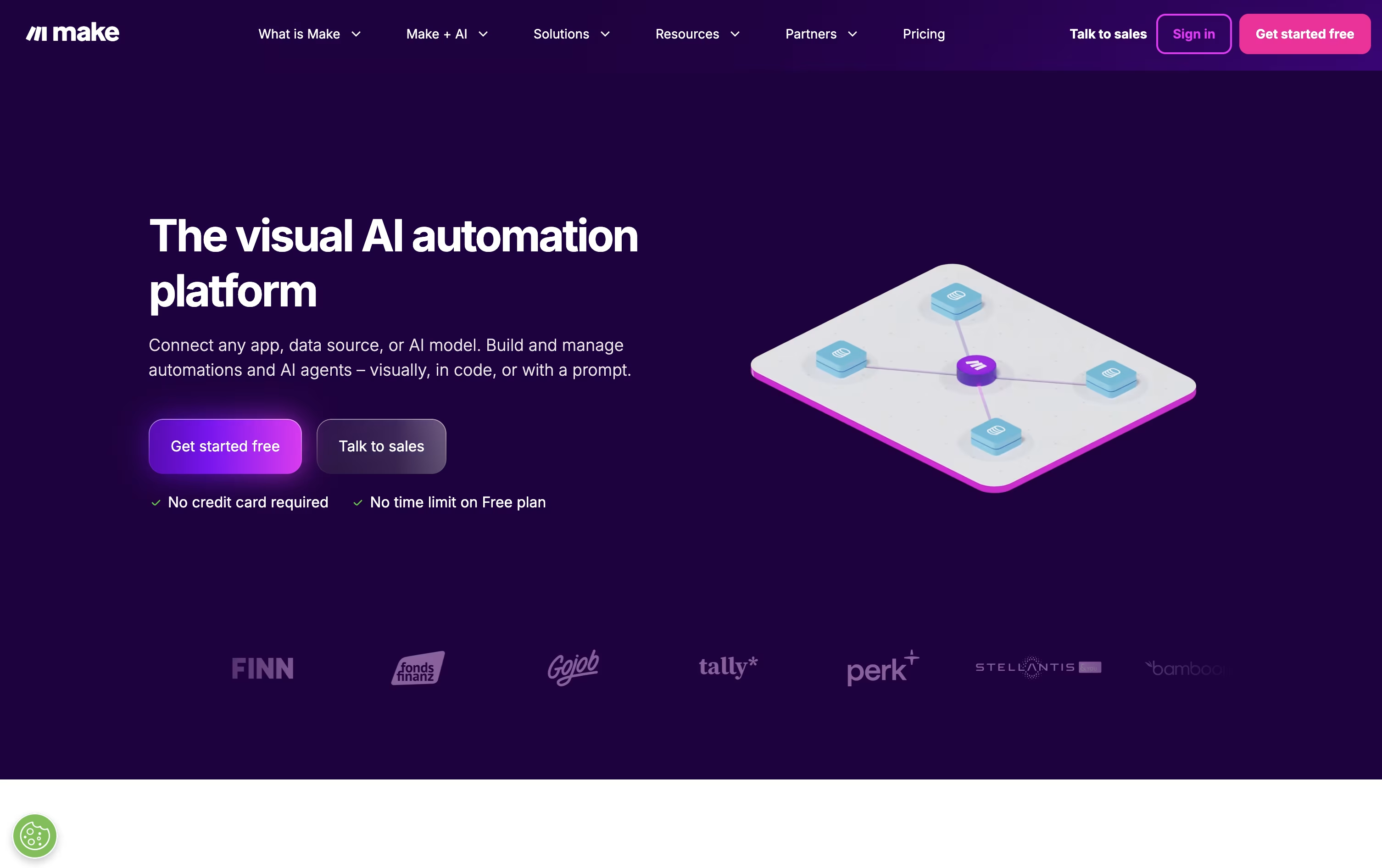 MakeVisual Automation and AI Agent Platform, and
  Zapier
 ZapierAI Automation for Apps and Workflows are the best for No-Code Platforms. So, let’s take a closer look at all 14+ tools.

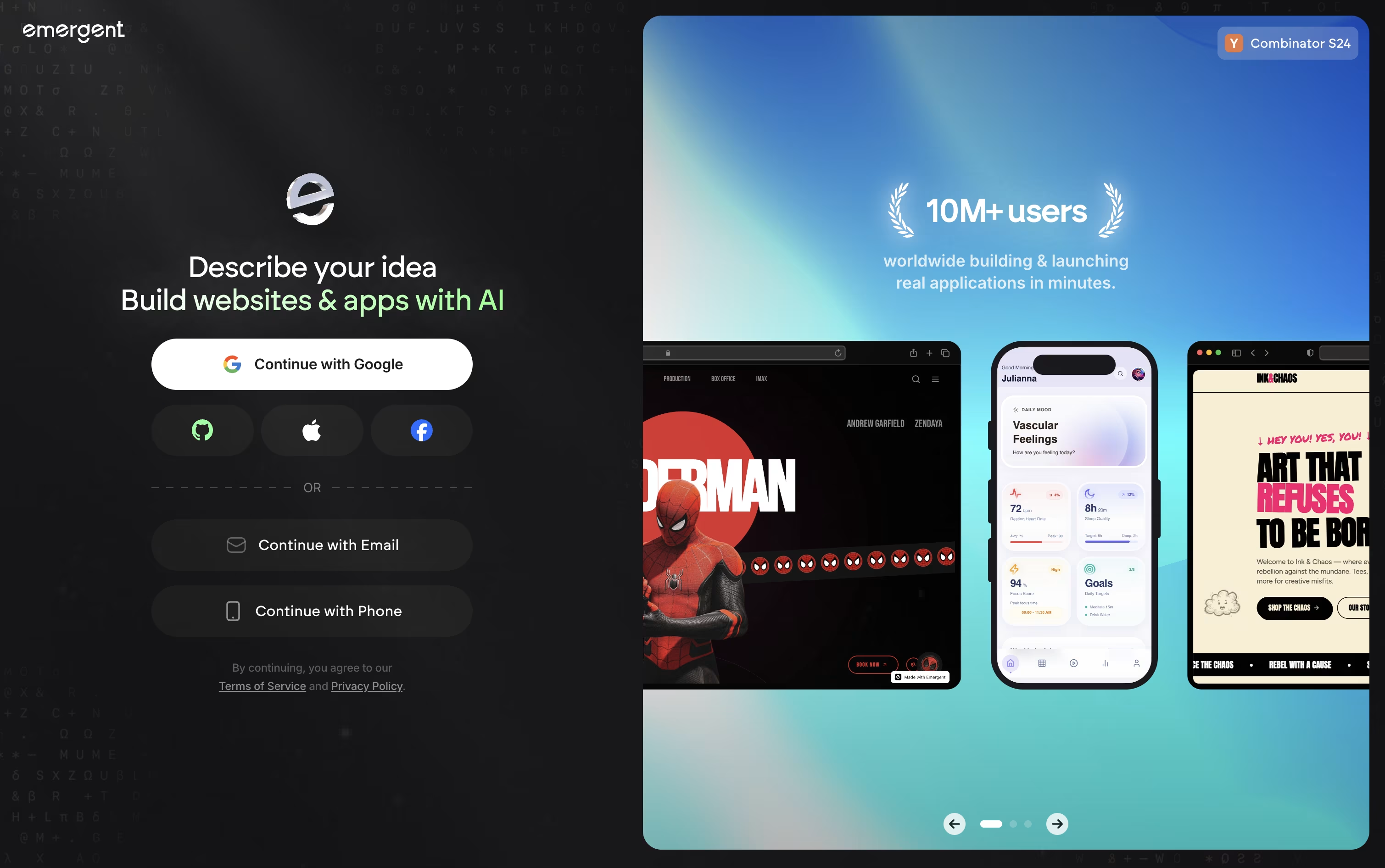
Emergent turns a written idea into a real, working application. You explain what you need in everyday English, and a group of AI agents handles the planning, design, coding, testing, and deployment on your behalf.
The system builds the entire application, covering the visual design, backend rules, database structure, and account logins, so you are not left with just a frontend mockup.
Getting started is free, with 10 credits included each month and access to the core tools. Moving up to Standard costs $20 monthly, or $17 monthly when paid yearly, and adds private hosting plus GitHub syncing.
The Pro tier runs $200 a month, or $167 a month annually, and gives you a much larger 1 million token memory window, the ability to build your own custom agents, and 750 credits a month.
Companies needing tighter control can move to Business or Enterprise, both priced on request, which bring in single sign on, access controls, audit trails, and private cloud deployment.
With built in connections to GitHub, Stripe, and Supabase and support for both web and mobile builds, Emergent suits solo founders, agencies, and teams that want working software without a long build cycle.
Make gives you a visual way to automate work across apps, using a canvas where you drag modules and connect them into full workflows called scenarios.
Built-in AI tools set it apart. Maia writes and adjusts scenarios based on simple instructions, and Make AI Agents can be given a goal and left to use tools and make their own calls to reach it.
There are five pricing tiers. Free covers 1,000 credits monthly at $0, and at 10,000 credits, Core runs $10.59, Pro runs $18.82, and Teams runs $34.12 each month.
Pro, the most popular choice, adds priority runs and full log search, while Teams brings in team roles and reusable templates. Enterprise is priced individually and covers SSO, custom functions, and round the clock support.
Choosing annual billing cuts around 15% off the monthly rate for Core, Pro, and Teams, with costs climbing as your monthly credit needs grow.
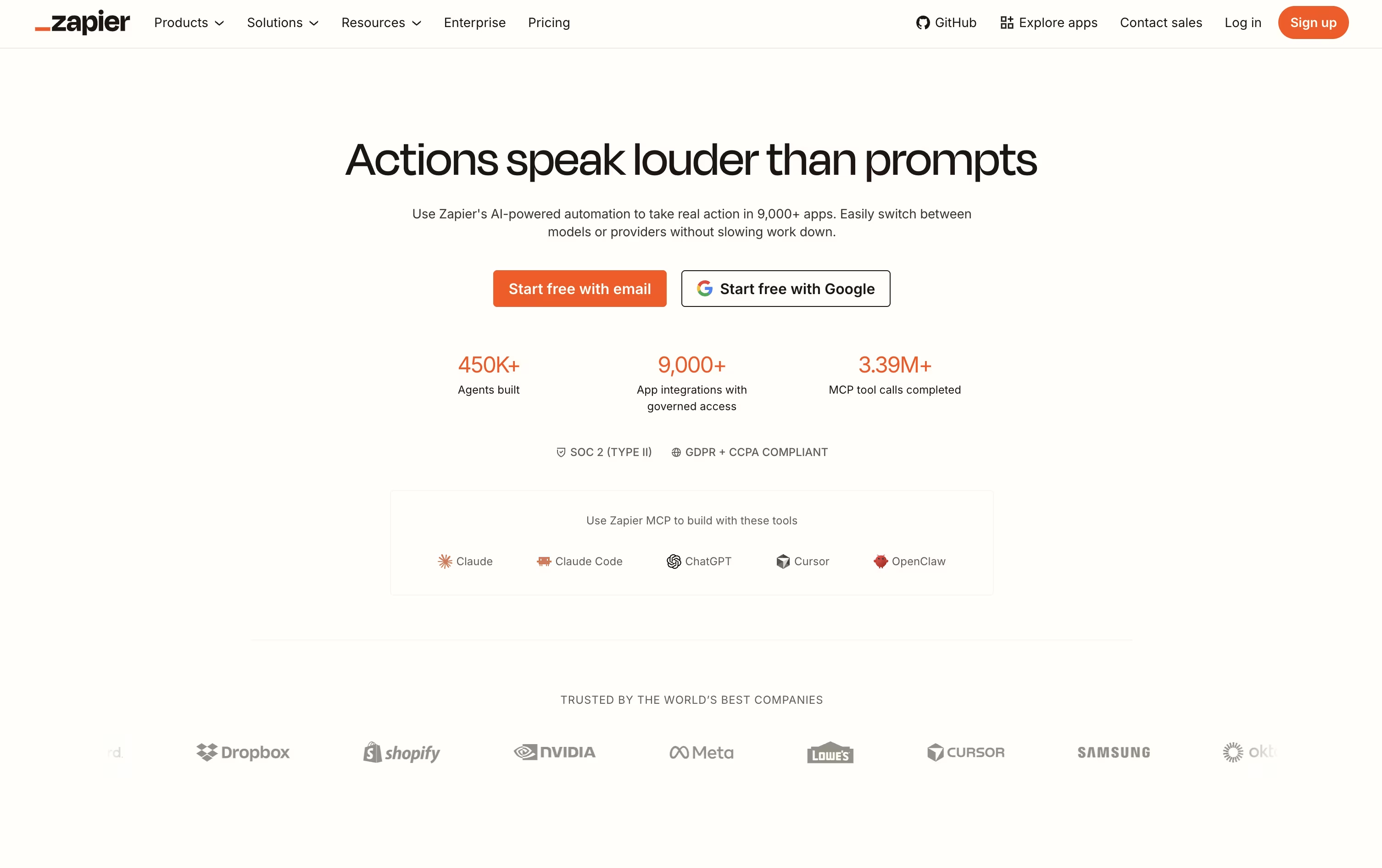
Most people open Zapier to stop doing the same task by hand every day. You pick a trigger, such as a new form entry or a new email, and Zapier moves the information into your other apps for you.
AI steps can be added along the way to summarize text, sort information, or make a decision, and the AI can even be given tools so it works through a task on its own.
Zapier MCP takes this further, letting AI tools like Claude or ChatGPT reach into your connected apps and complete actions right from a chat.
Getting started costs nothing, since the Free plan covers 100 tasks a month with unlimited Zaps, Tables, and Forms. Professional moves that up to $29.99 a month, or $19.99 a month paid yearly, adding multi step Zaps and premium apps.
Bigger teams can take the Team plan at $103.50 a month for 25 users, or contact sales for a custom Enterprise setup. Zapier also runs separate Agents and Chatbots plans, each with a free tier and paid options between $20 and $100 a month.

Building a business app usually means hiring developers or wrestling with complicated tools. Zite skips that by letting you describe the app you want in plain English and having AI build it for you.
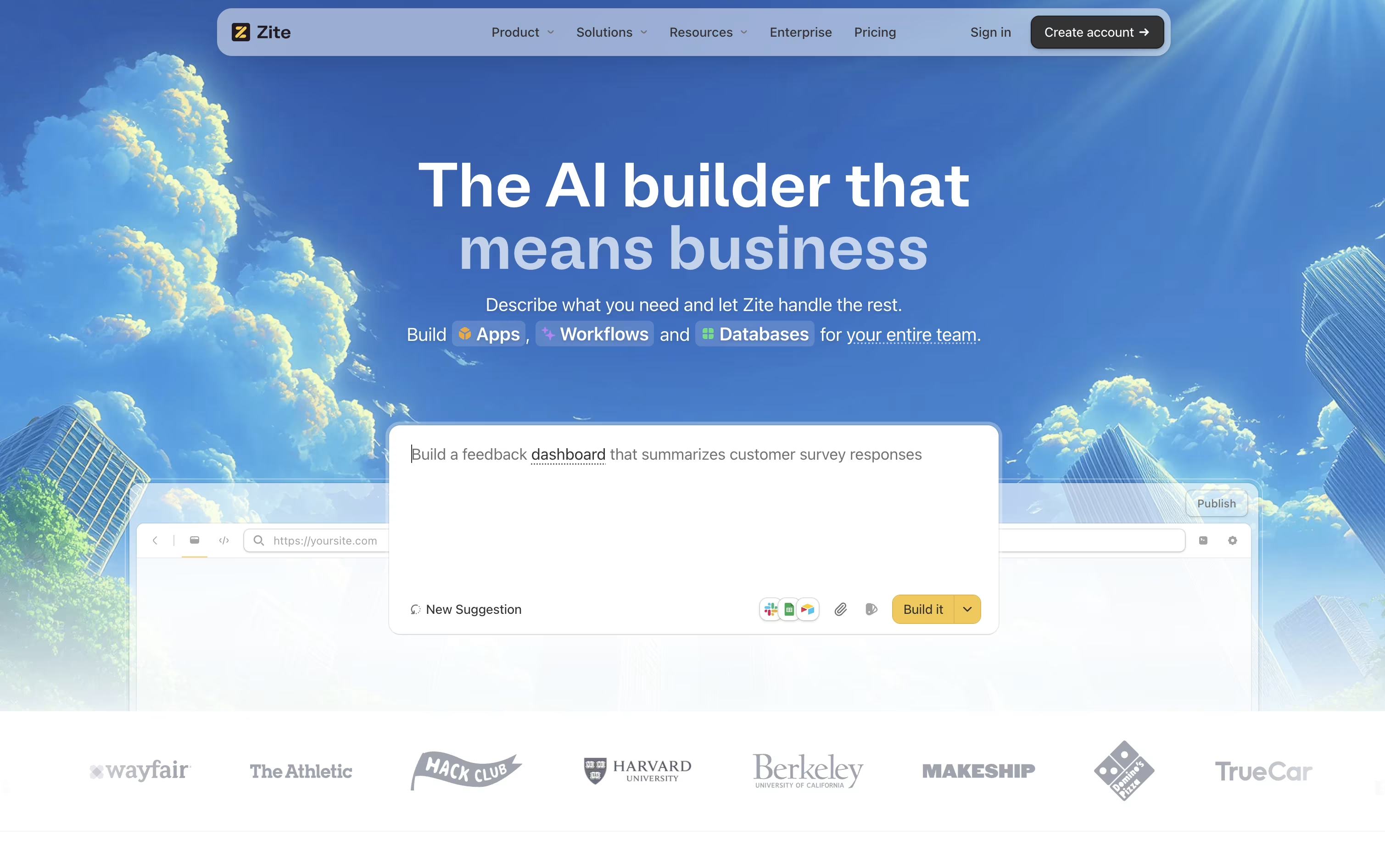
The platform started life as part of Fillout, a forms company, before the team renamed it Zite in 2026 and folded in ideas around planning, visual editing, and databases from two acquired teams.
Once your app is generated, you can adjust it through chat, a visual editor, or a flowchart view of the workflow logic, and everything sits on top of a built in database with no per-user fees.
Getting started costs nothing on the Free plan, which includes 5,000 database records and 1,000 workflow runs a month.
Growing teams can move up to Pro at $19 a month, Business at $69 a month, or the Team Bundle at $300 a month, each unlocking more credits, records, and features such as custom domains and unlimited brand kits.
Larger organizations can reach out for Enterprise pricing, which adds single sign-on, audit logs, and dedicated support.

A lot of people jump straight into building without stepping back to ask what they should actually build and who will use it. Rocket tries to fix that by combining research, app building, and competitor tracking in one connected workspace.
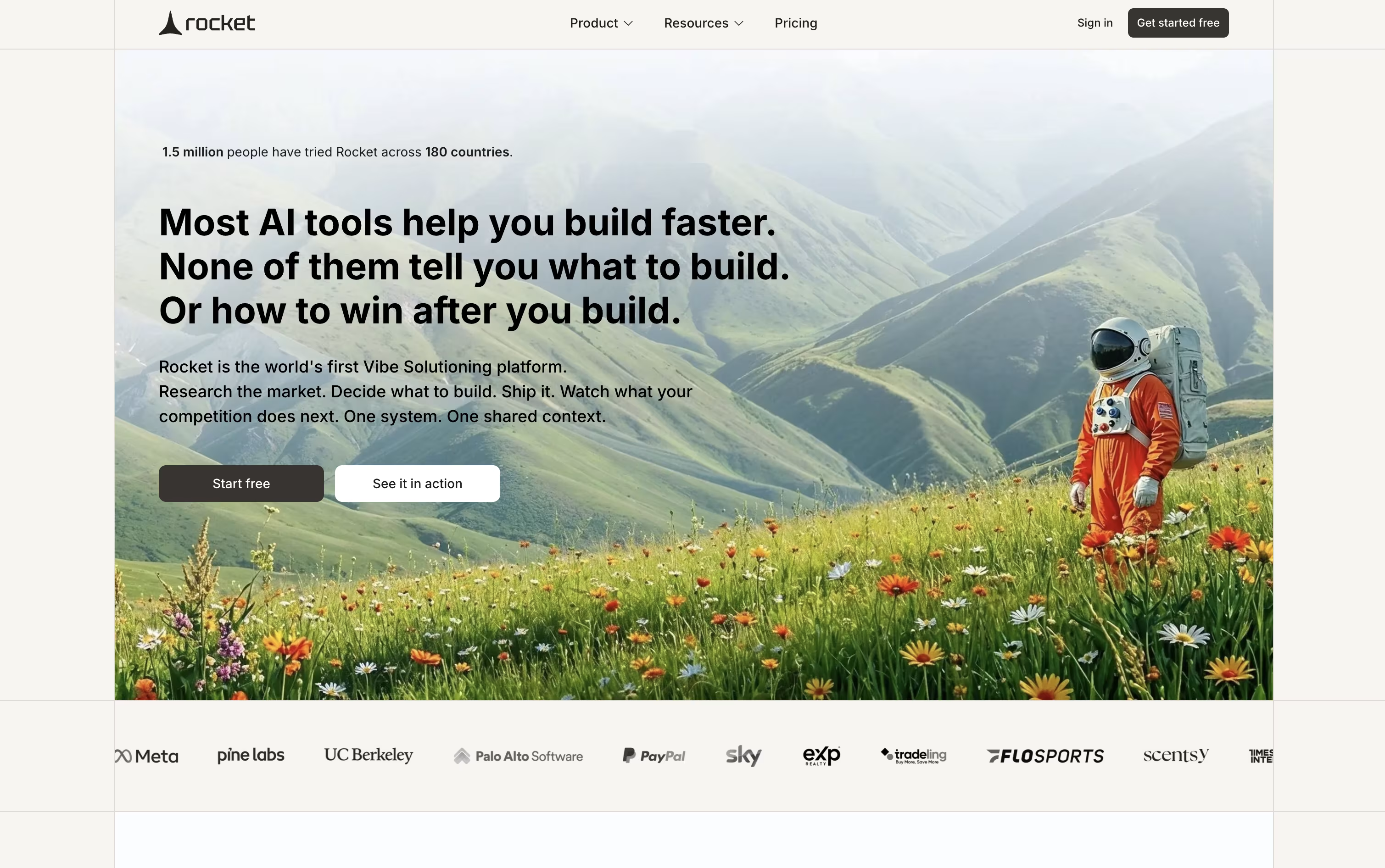
The research side, called Solve, takes any market question and turns it into a clear, evidence backed brief covering strategy, growth ideas, and product direction, which can be exported and shared right away.
The building side, called Build, turns everyday language, a Figma file, or a GitHub repo into a real website, web app, mobile app, or online store, built on solid frameworks like Next.js and Flutter instead of a quick mockup.
The Intelligence side keeps watch on competitors in the background, sending daily updates about pricing changes, new features, and marketing moves.
The Free plan gives newcomers 20 credits to try things out, while Pro, Rocket, and Booster plans add more monthly credits, deeper research, and enterprise features such as single sign on and premium support as needs grow.
Because everything shares the same project context, a finding from research can shape what gets built, and a competitor signal can point straight to the next update.

Think of Manus as an assistant that actually does the work instead of just talking about it. You describe a goal, and it breaks the job into steps, then uses a browser, code, and files to carry it out.
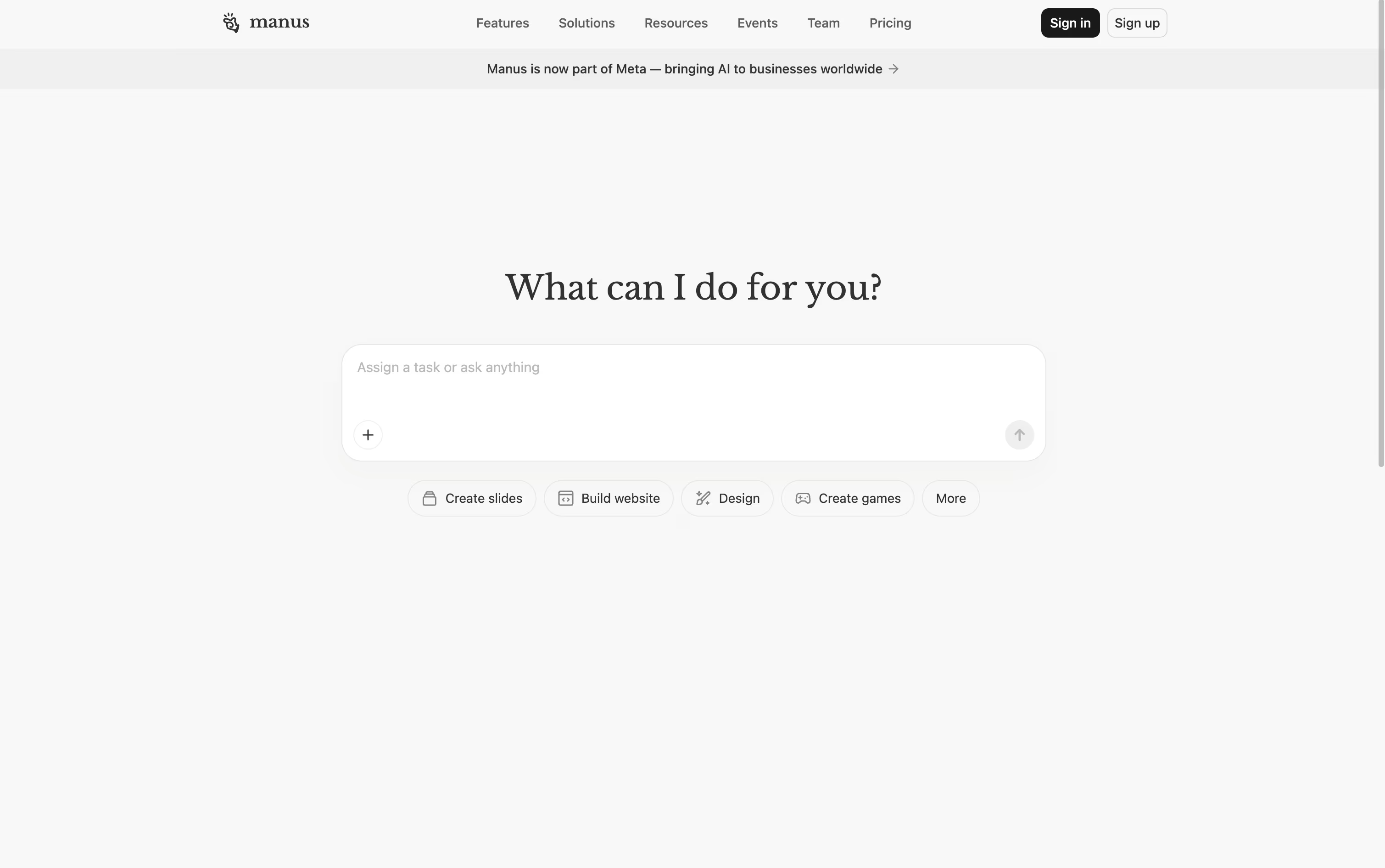
It handles research at scale, builds working websites and apps from a plain description, writes and designs full slide decks, and creates images, video, or music when needed. Since tasks run in the cloud, you can walk away and get notified when it finishes, or stay and guide it along the way.
It fits into tools you already use too, connecting with Slack, email, and Google Drive, plus a Browser Operator that works inside your own browser using your saved logins.
On pricing, the Standard plan is $20 a month with 4,000 credits, the Customizable plan is $40 a month with 8,000 credits, and the Productivity plan is $200 a month with 40,000 credits and a free cloud computer included. Paying yearly saves 17 percent.
Larger teams can move to custom business plans, which come with stronger security and compliance certifications built in.

FlutterFlow lets you build mobile, web, and desktop apps by dragging and dropping widgets on a screen instead of typing every line of code. Under the hood, it runs on Google's Flutter framework, so what you build is real, working software from day one.
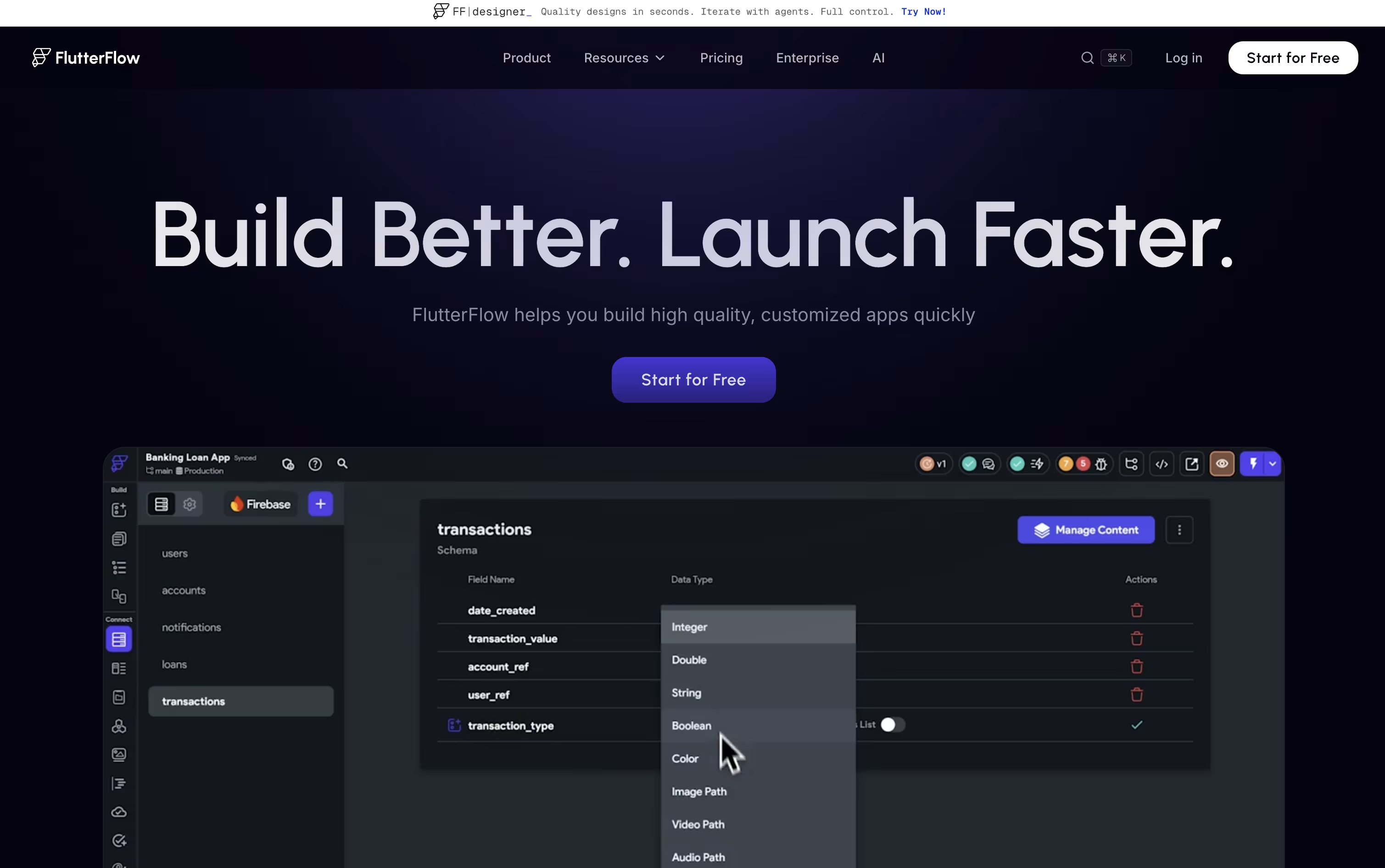
A visual logic editor handles the behind-the-scenes work, like what happens when someone taps a button or submits a form, without needing deep coding knowledge.
Your app can connect to Firebase, Supabase, or your own custom backend, and you can export the full code whenever you like, so you are never locked into the platform.
Pricing starts free for 2 small projects, then moves to $23.40 a month for unlimited projects and code downloads. Growth plans begin at $48 a month for small teams, Business starts at $90 a month for bigger teams, and Enterprise is priced on request.
Built-in AI features can generate app pages and even test your app automatically, which helps both new users and experienced developers work faster.
Building an app usually means hiring developers or learning to code. Bubble skips that step by letting you design, connect, and launch a real app visually.
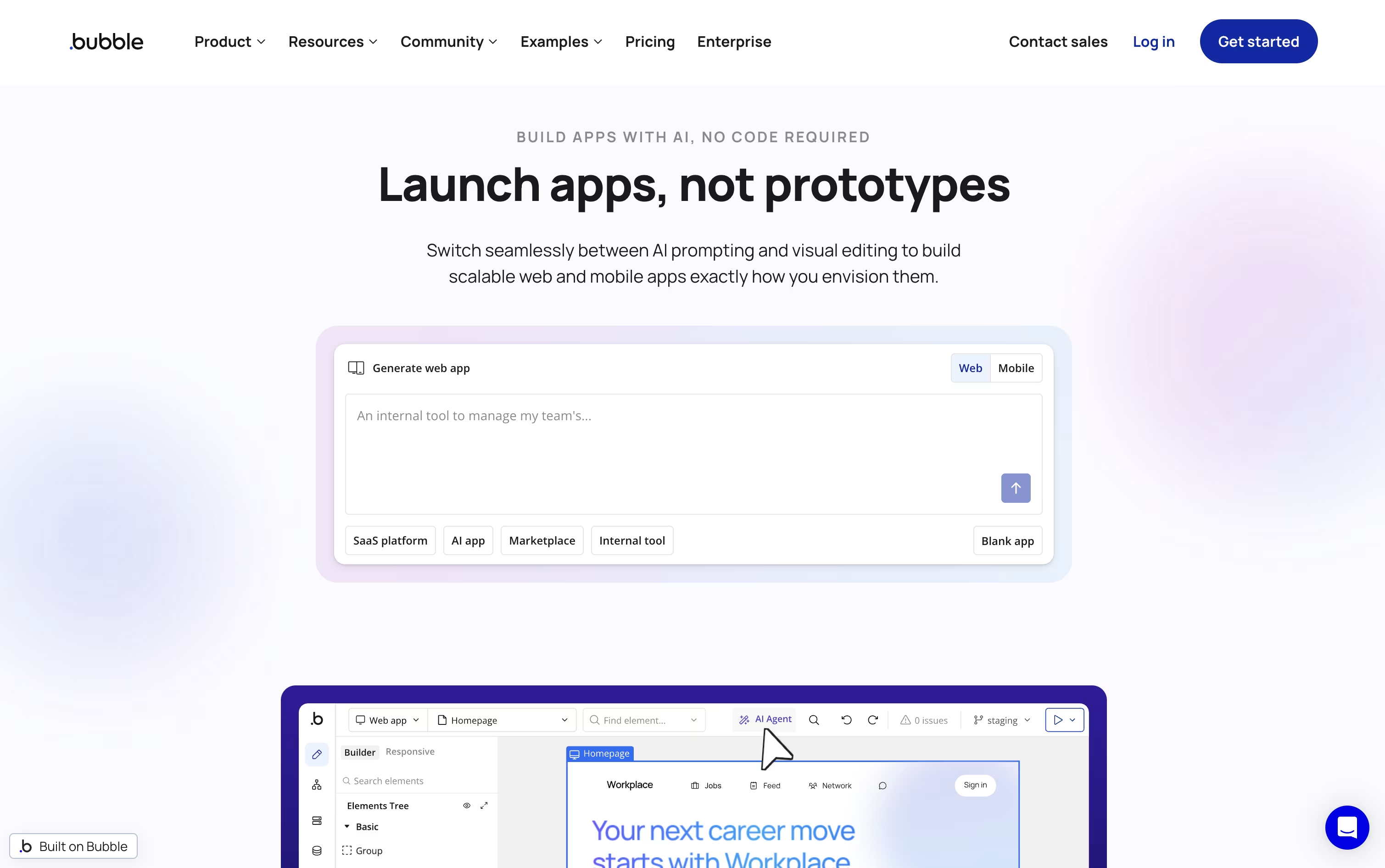
Its editor includes a built-in database, a drag-and-drop interface, and a workflow system for defining what happens when users interact with your app.
You can describe your app to the AI App Generator and get a working starting point in minutes, then keep editing visually or with help from the in-editor AI Agent.
Because Bubble also builds native iOS and Android apps from the same project, your web and mobile apps share one database and one set of workflows.
The Free plan costs nothing and is meant for early development. Starter begins at $69 a month, Growth at $249 a month, and Team at $649 a month, each with a lower annual rate. Larger teams can talk to sales for custom Enterprise pricing.
Backed by AWS hosting, SOC 2 Type II compliance, and a large plugin marketplace, Bubble is built for apps meant to grow.

With Anything, you describe the app you want in plain words, and the AI handles the coding, the database, the login screen, and the payments behind the scenes.
One project can produce a website, a web app, and native iPhone and Android apps at the same time, all sharing the same backend.
Getting started costs nothing, since the free plan lets you build public projects with community support.
Moving up, the Pro 20K plan is $24 a month, or $19 a month if billed yearly, and unlocks 20,000 AI credits, private projects, custom domains, and no Anything branding.
Teams with bigger needs can pick the MAX plan, starting at $239 a month for 220,000 credits, or $199 a month yearly, which adds parallel AI agents, automated testing, and faster support.
The standout feature is Anything Max, which tests the app itself like a real visitor, catches errors, and fixes them without you asking.

Instead of hiring a developer or learning to code, Rork lets you build a real app just by chatting with an AI agent. You explain what the app should do, and the agent designs the screens, writes the code, and fixes bugs as you go.
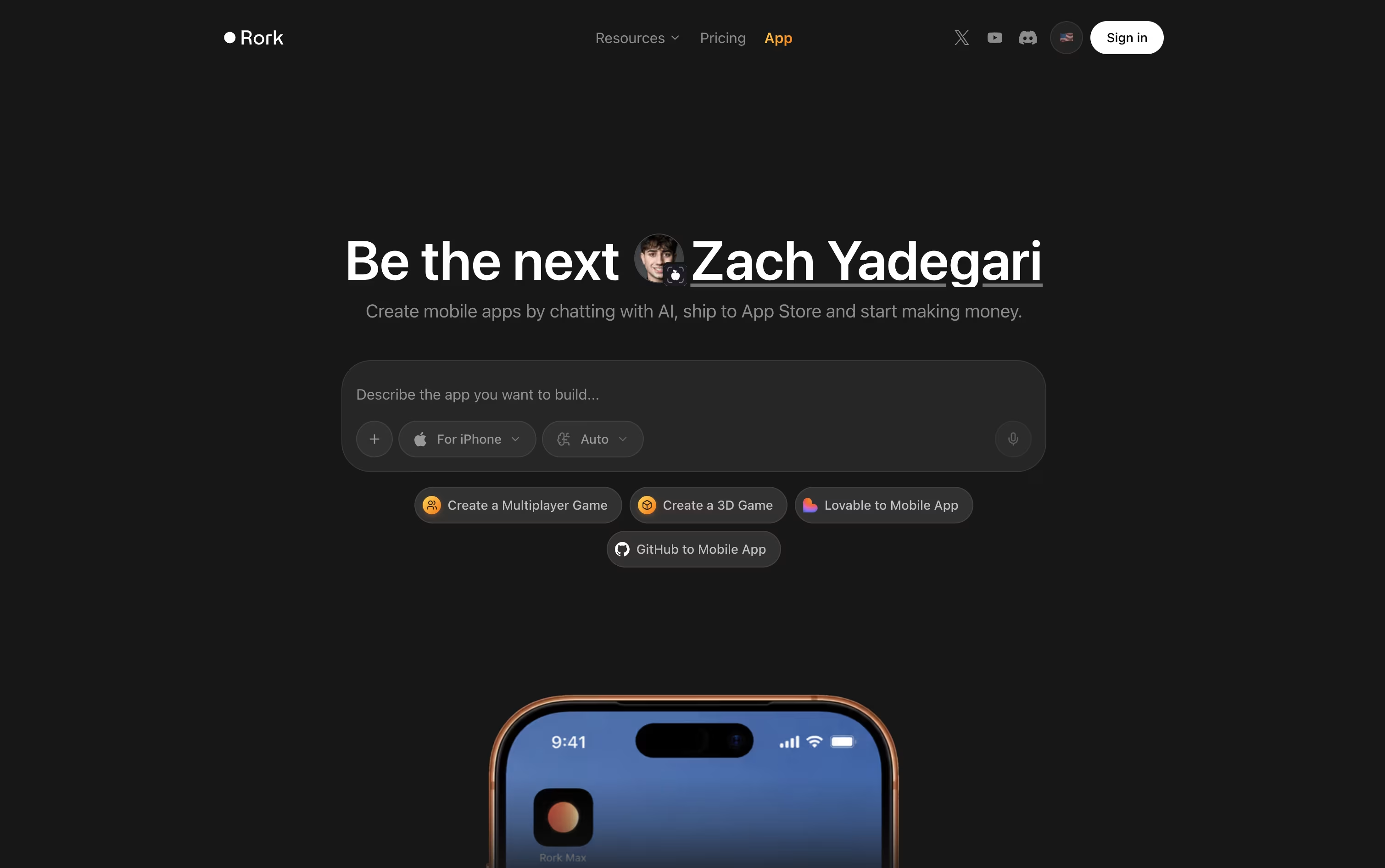
Two modes are available. Rork Pro creates apps using React Native and Expo that work across iOS, Android, and web. Rork Max compiles fully native SwiftUI apps built specifically for Apple devices, unlocking features like widgets, Live Activities, and support for Apple Watch and Vision Pro.
Getting started is free, with 5 AI credits a month and a short trial of Rork Max included, ideal for small experiments.
The Pro plan is $20 a month with 100 credits and adds private projects along with native Android builds. Rork Max begins at $200 a month for 1,000 credits, and larger credit tiers are available for heavier use.
Every paid plan adds tools for connecting your own database, adding logins and payments, and exporting your full project through GitHub. Once finished, Rork also helps you submit the app to the App Store and Google Play.

Softr helps teams build working business software, such as portals, CRMs, and internal tools, without needing a development team.
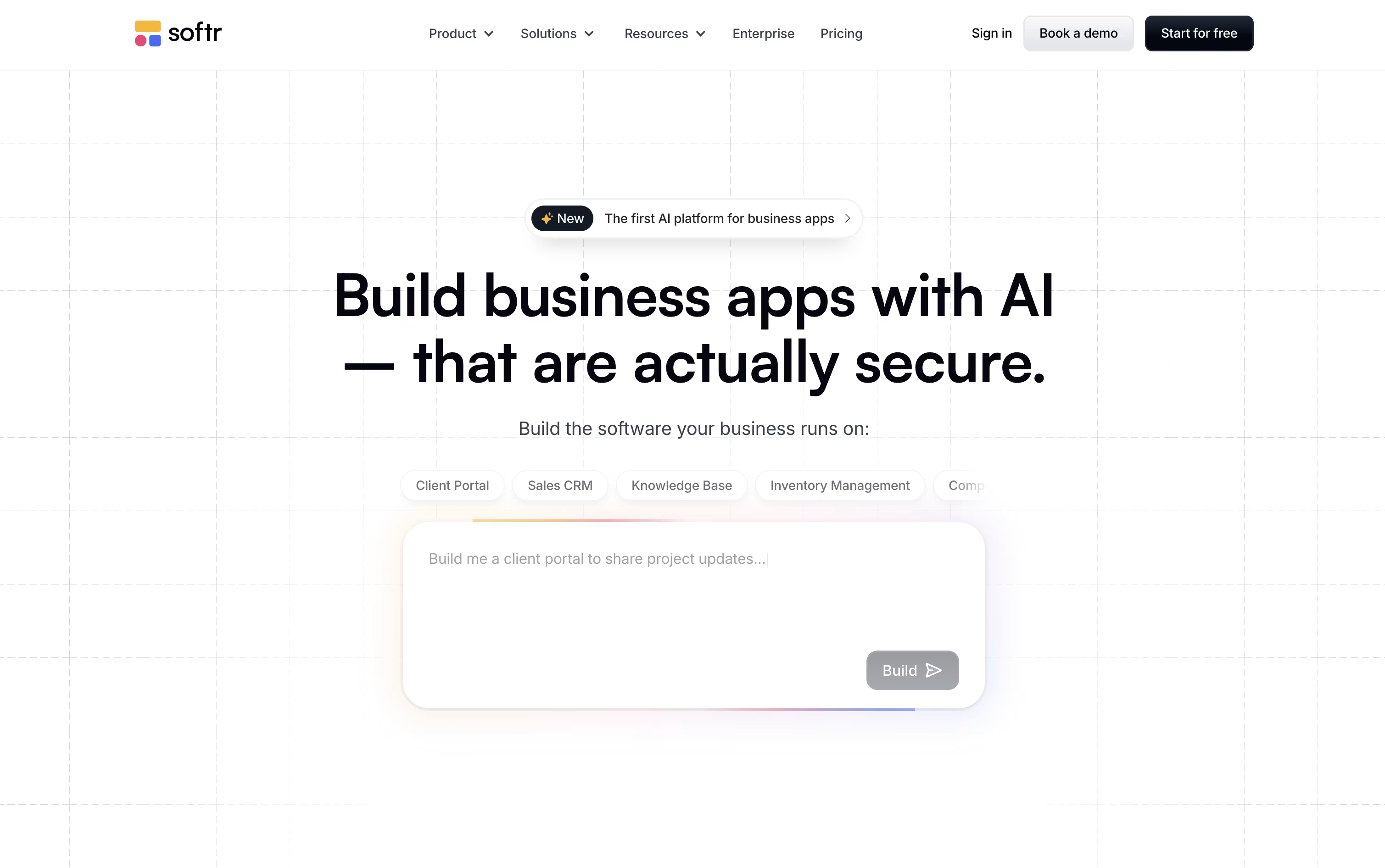
Instead of coding everything by hand, you can chat with the AI Co-Builder about the app you want, or build it yourself with drag and drop blocks for lists, forms, charts, and more.
Under the hood, Softr includes a fast native database, AI agents that can fill in or clean up your records, and automation workflows that connect actions across your app and other tools like Salesforce or Google Sheets.
On pricing, the Free plan costs nothing, Basic runs $59 a month, Professional is $167 a month, and Business is $323 a month, each cheaper when paid yearly. Larger organizations can reach out for custom Enterprise pricing.
Because it is SOC 2 certified and GDPR ready, Softr fits teams that need dependable, secure software rather than a throwaway prototype.

Instead of hiring a developer or piecing together separate tools, Base44 lets you describe an app in plain English and get a working version back right away.
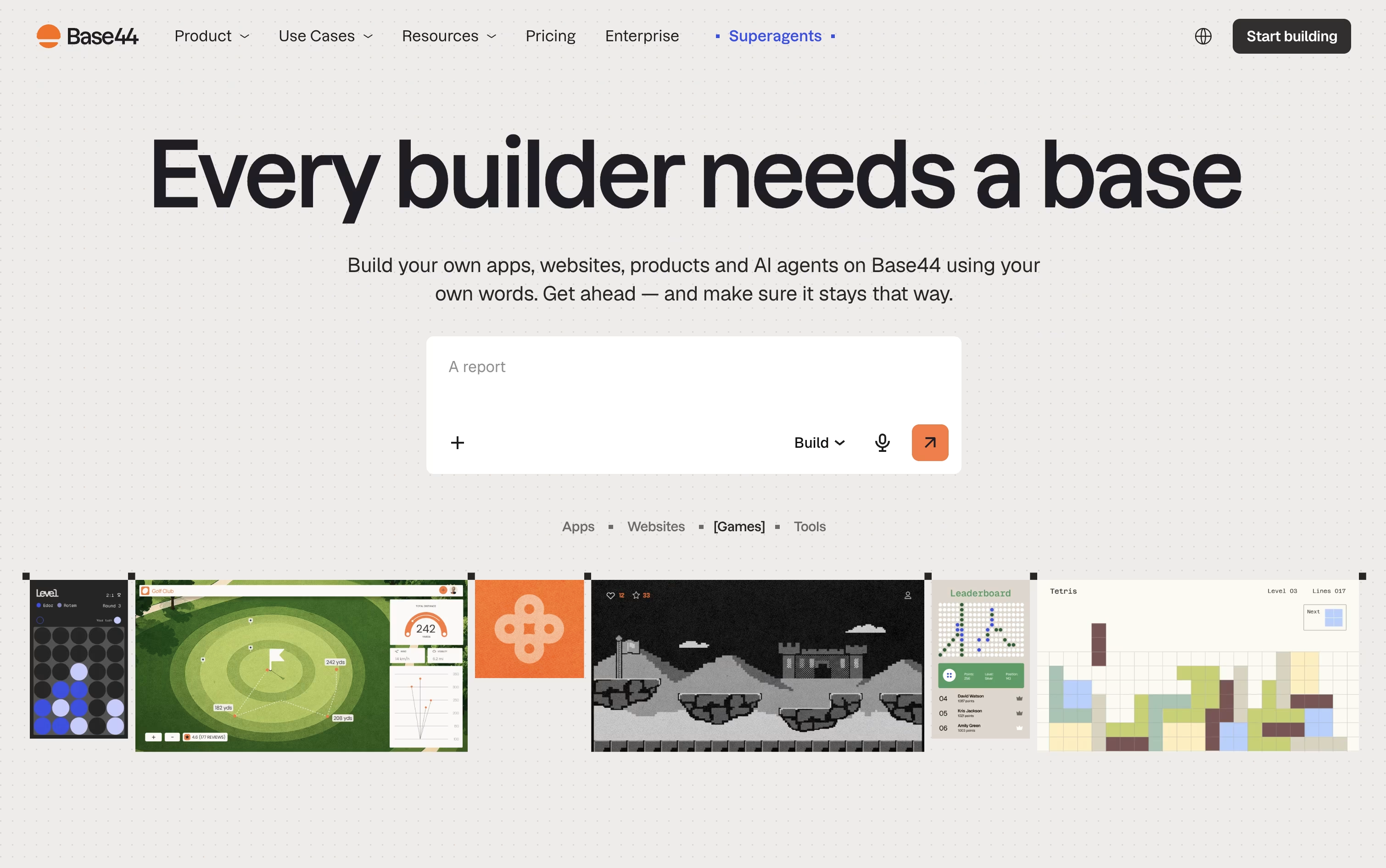
It handles the pages, the database, the login system, and the backend logic in one go, and you refine it further just by chatting with the AI.
Trying it out costs nothing, the free plan gives you 25 message credits a month and room for up to 5 apps.
Once you need more, the Starter plan at $20 a month removes the app limit and opens up code editing, while the Builder plan at $50 a month adds backend functions, AI model choice, and custom domains.
Pro and Elite raise the credit caps for heavier use, and Base44 also builds Superagents, AI helpers that handle tasks like follow-ups and scheduling on their own.
Larger organizations can move to a custom-priced Enterprise plan with single sign-on and dedicated support.

UI Bakery is a low-code development platform that lets you build web applications using a visual drag-and-drop interface combined with custom code when needed. Unlike pure no-code tools, UI Bakery gives developers full control through JavaScript and SQL customization while speeding up the building process significantly.
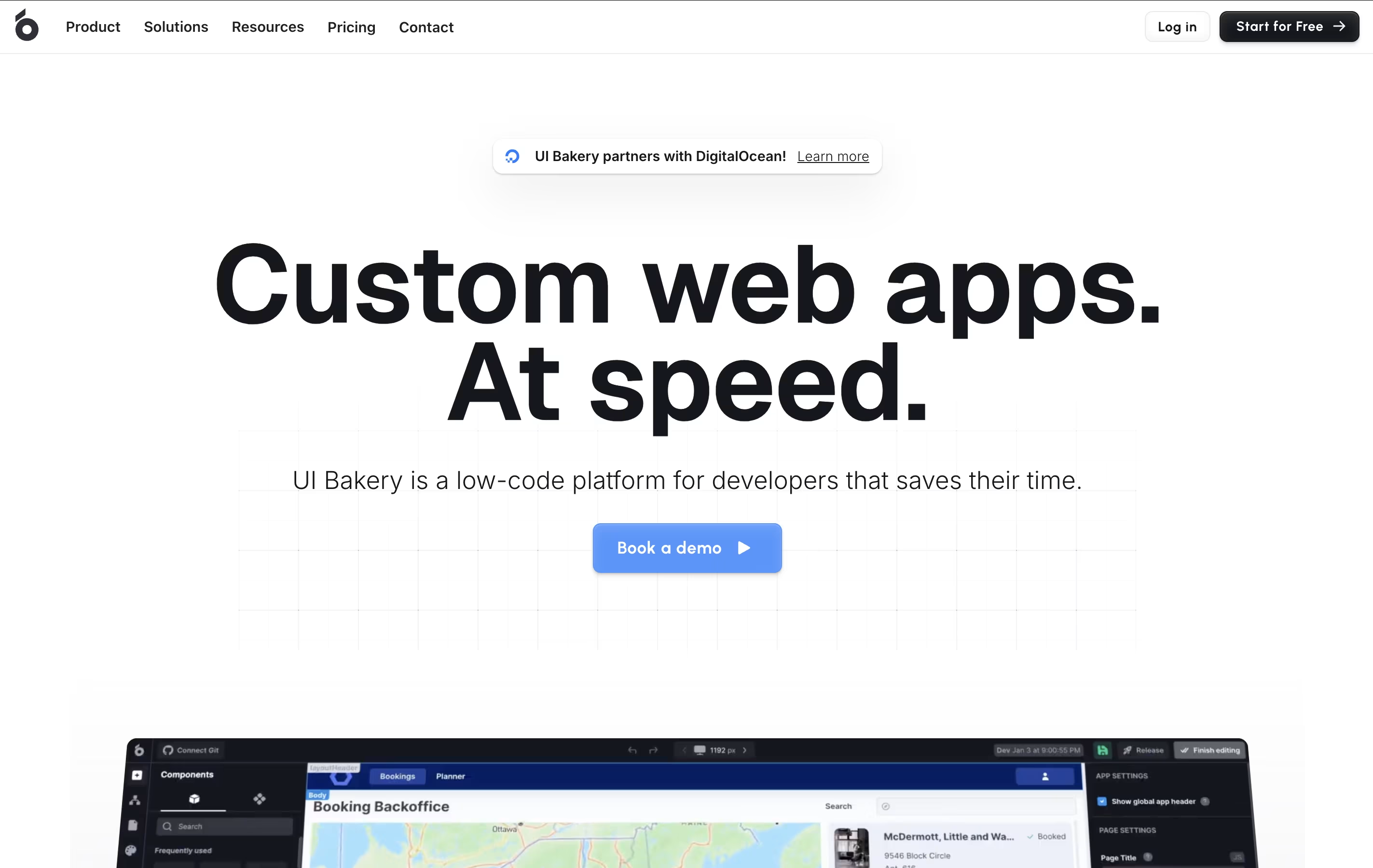
The platform includes 75+ ready-made components, templates, and connectors to popular databases and services. You can create internal tools, customer portals, admin dashboards, and vendor apps without worrying about frontend frameworks or CSS styling. UI Bakery handles deployment, version control, and user access management automatically.
Available as both cloud-hosted and self-hosted options, UI Bakery works great for teams that need compliance with data security requirements while maintaining development speed and flexibility.

Strapi is an open-source headless CMS built with Node.js that delivers content through APIs instead of traditional web pages. Think of it as a smart backend system that stores and manages your content, then sends it anywhere you need through REST or GraphQL APIs.
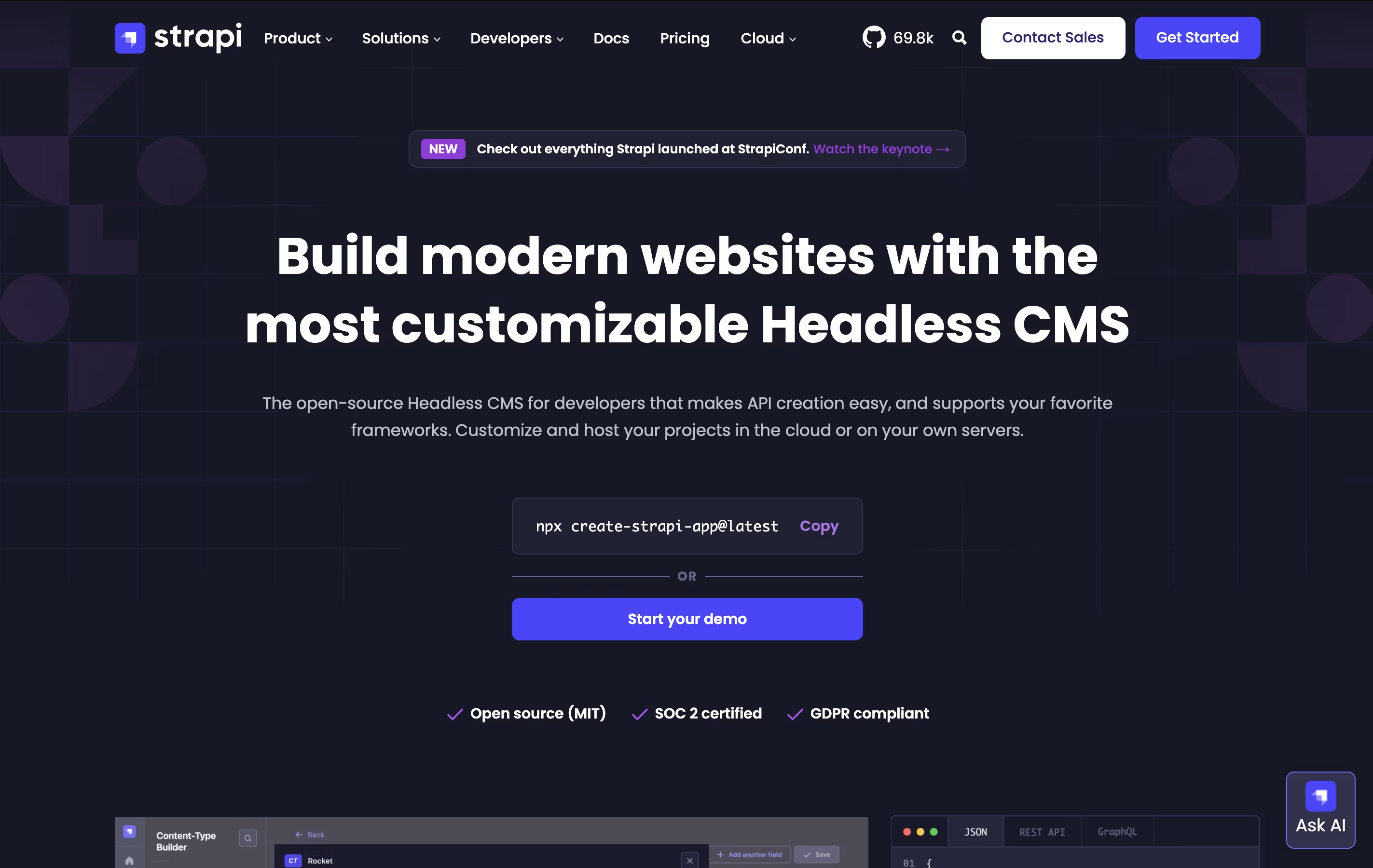
The main difference from traditional systems like WordPress is flexibility. Instead of forcing you to use specific templates, Strapi lets you build exactly what you need. You control everything: the database, the content structure, and how it all works together. Each project starts with built-in features like user management, permissions, and content organization.
Founded in 2015, Strapi has become popular with over 60,000 stars on GitHub and millions of downloads. You can host it yourself on your own servers or use Strapi Cloud for managed hosting, making it perfect for any project size.

Sanity is a content platform that stores your content as structured data and makes it available through powerful tools. Unlike traditional systems where content and design are locked together, Sanity keeps them separate. This means you create content once and use it anywhere - websites, apps, smart devices, or anywhere else you need it.
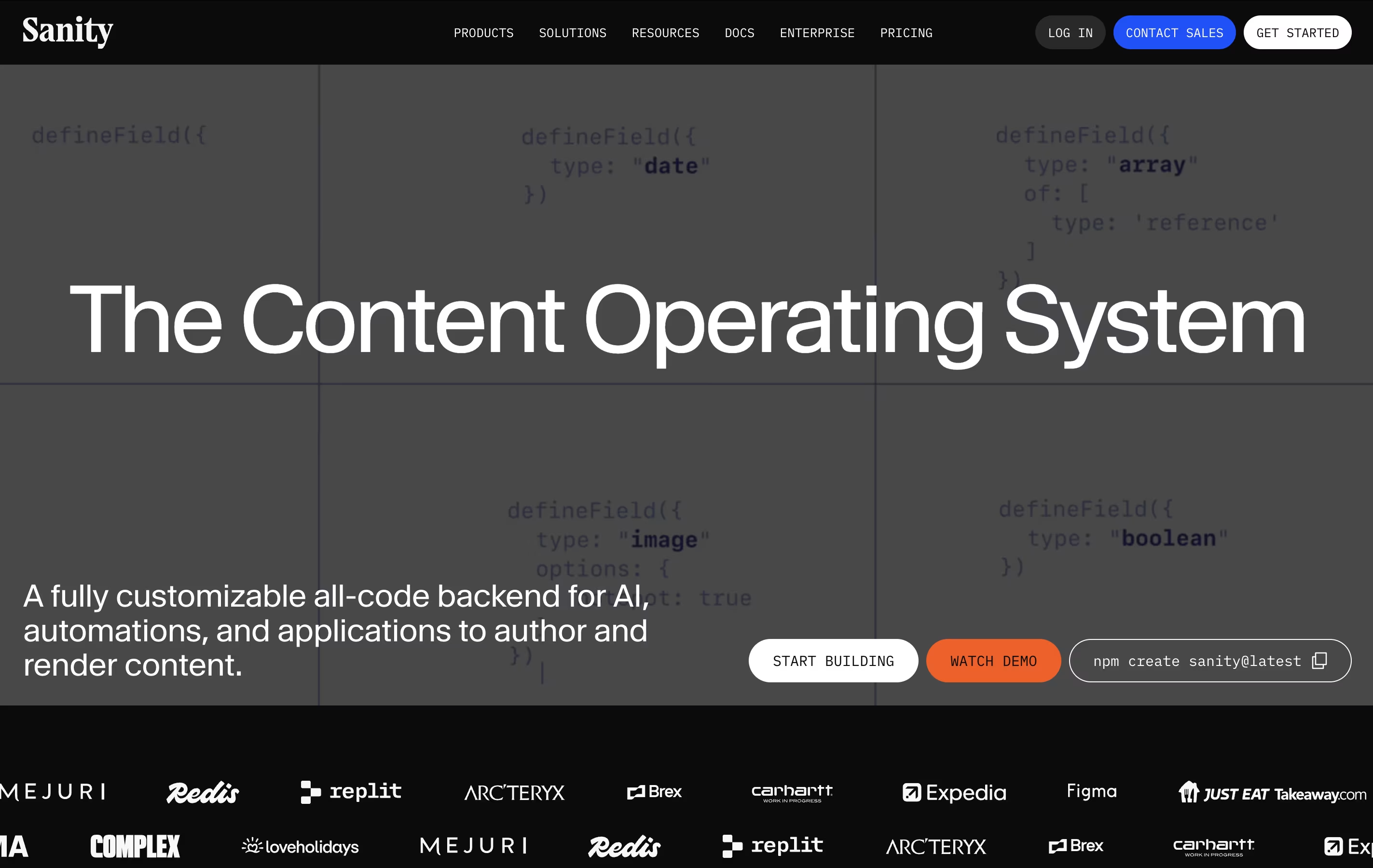
The platform has three main parts: Content Lake for storing your content as data, Sanity Studio for editing and managing content, and powerful tools for getting your content where it needs to go. It uses a special query language called GROQ that makes finding and organizing content simple and fast. Everything updates in real-time, so teams can work together without conflicts or delays.
Webiny is a serverless content management system that you install and run inside your own AWS cloud account. It's completely open-source, which means you can see how it works and change it to fit your needs.
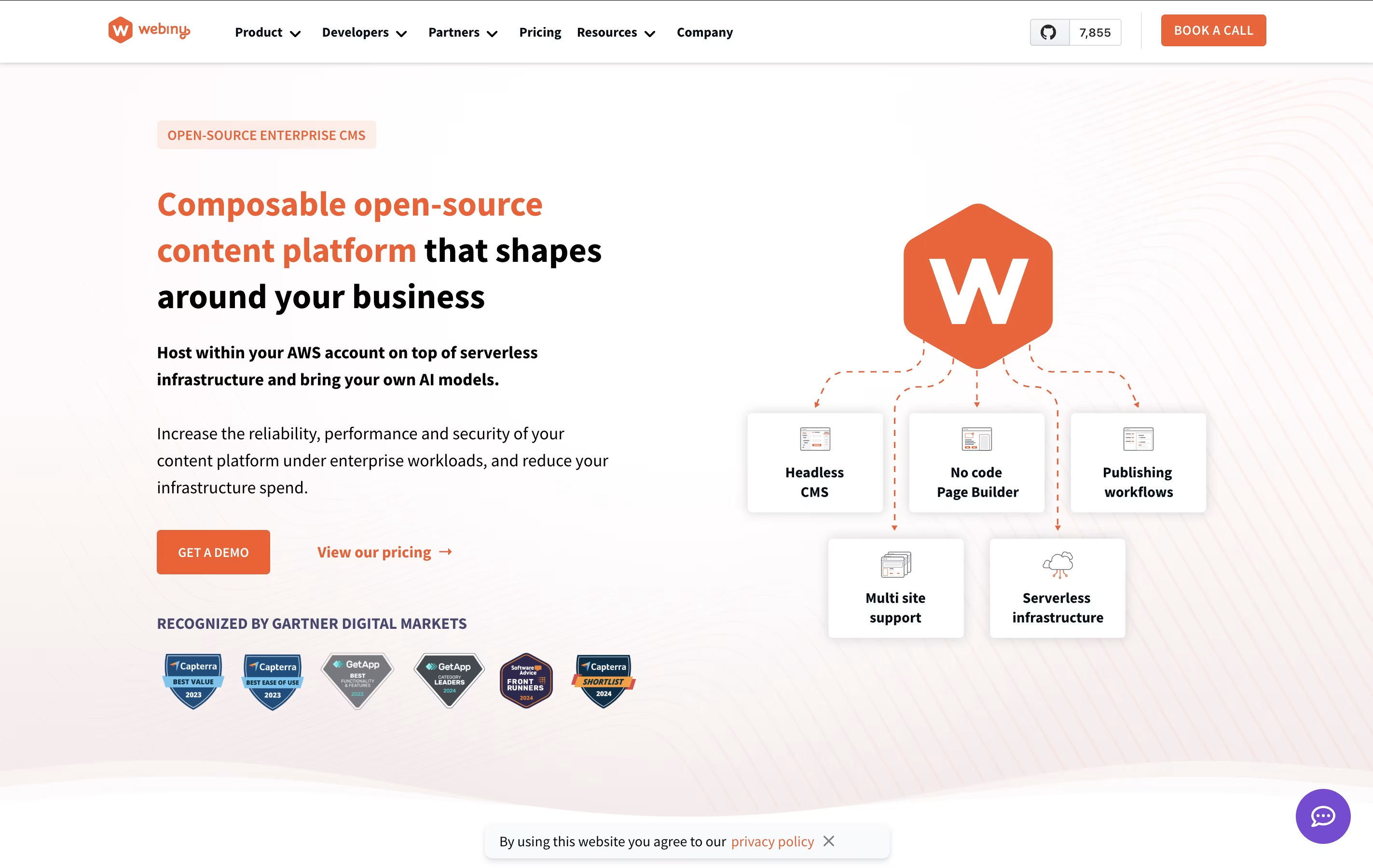
The platform includes four main tools. First, a headless CMS lets you create and store your content. Second, a page builder helps you design website pages by dragging and dropping elements without writing code. Third, a form builder makes it easy to create contact forms and surveys. Fourth, a file manager organizes all your images, videos, and documents.
Because it's serverless, you only pay for what you actually use. Your website can handle both small traffic and millions of visitors without any extra setup. The system automatically scales up or down based on your needs.

Cube.js is a universal semantic layer that sits between your data sources and applications. Think of it as a smart middleware that connects to data warehouses like Snowflake, BigQuery, or Postgres and transforms raw data into business-ready metrics and dimensions.
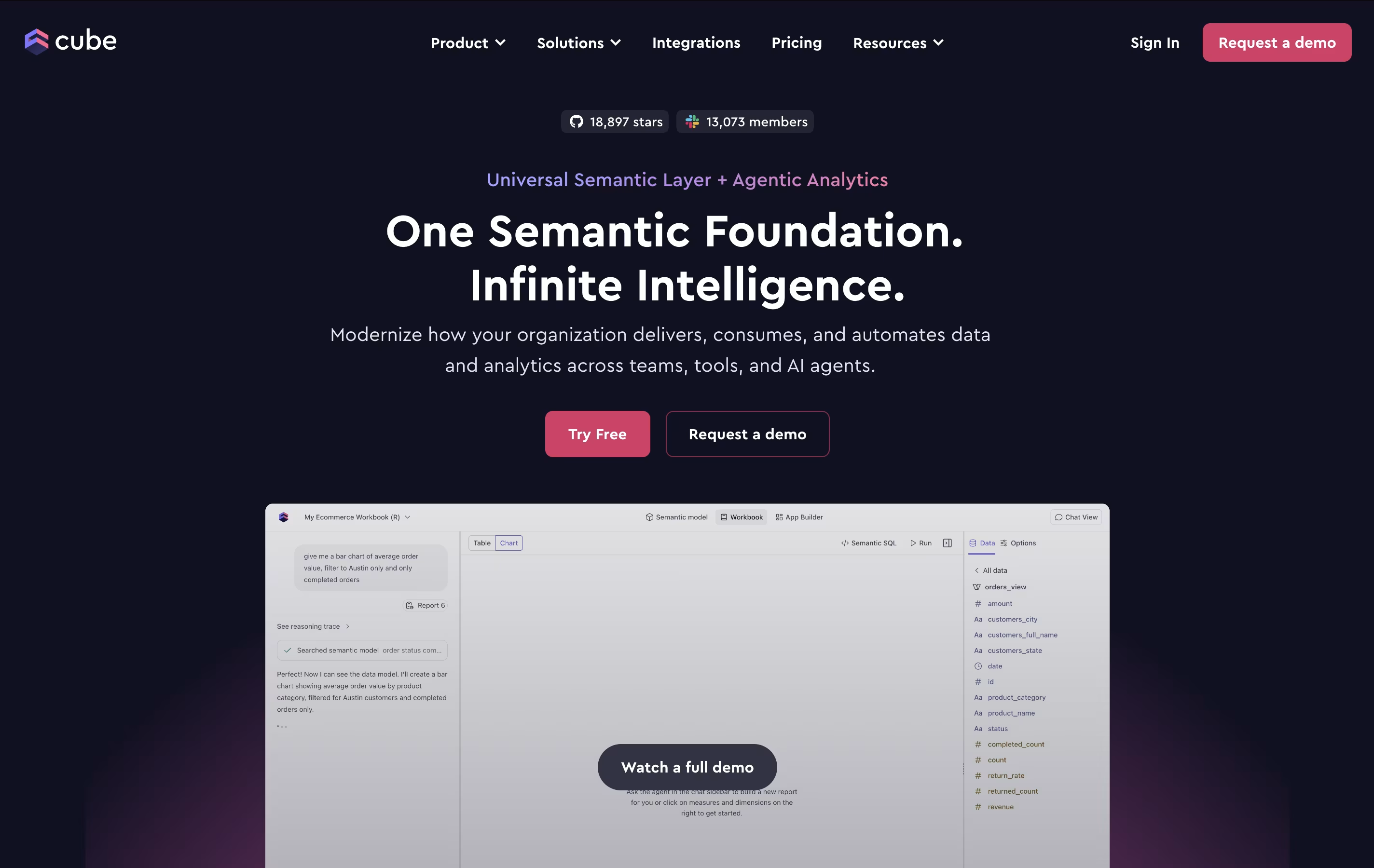
Unlike traditional BI tools that lock you into specific interfaces, Cube.js provides flexible APIs that work with any application or tool. You define your data model once using code, and Cube.js automatically generates optimized SQL queries, handles caching for faster performance, and provides consistent results across all your applications.
The platform consists of two main offerings: Cube Core (open-source) for self-hosting and Cube Cloud (managed service) with additional enterprise features. Both versions support the same core functionality but Cube Cloud includes hosting, security features, and integrations with popular BI tools like Tableau and Power BI.

Lindy is an AI-powered automation platform that lets anyone create intelligent assistants called "Lindies" without any coding knowledge. Think of it as a smart combination of ChatGPT's intelligence and Zapier's connectivity, but much more powerful.
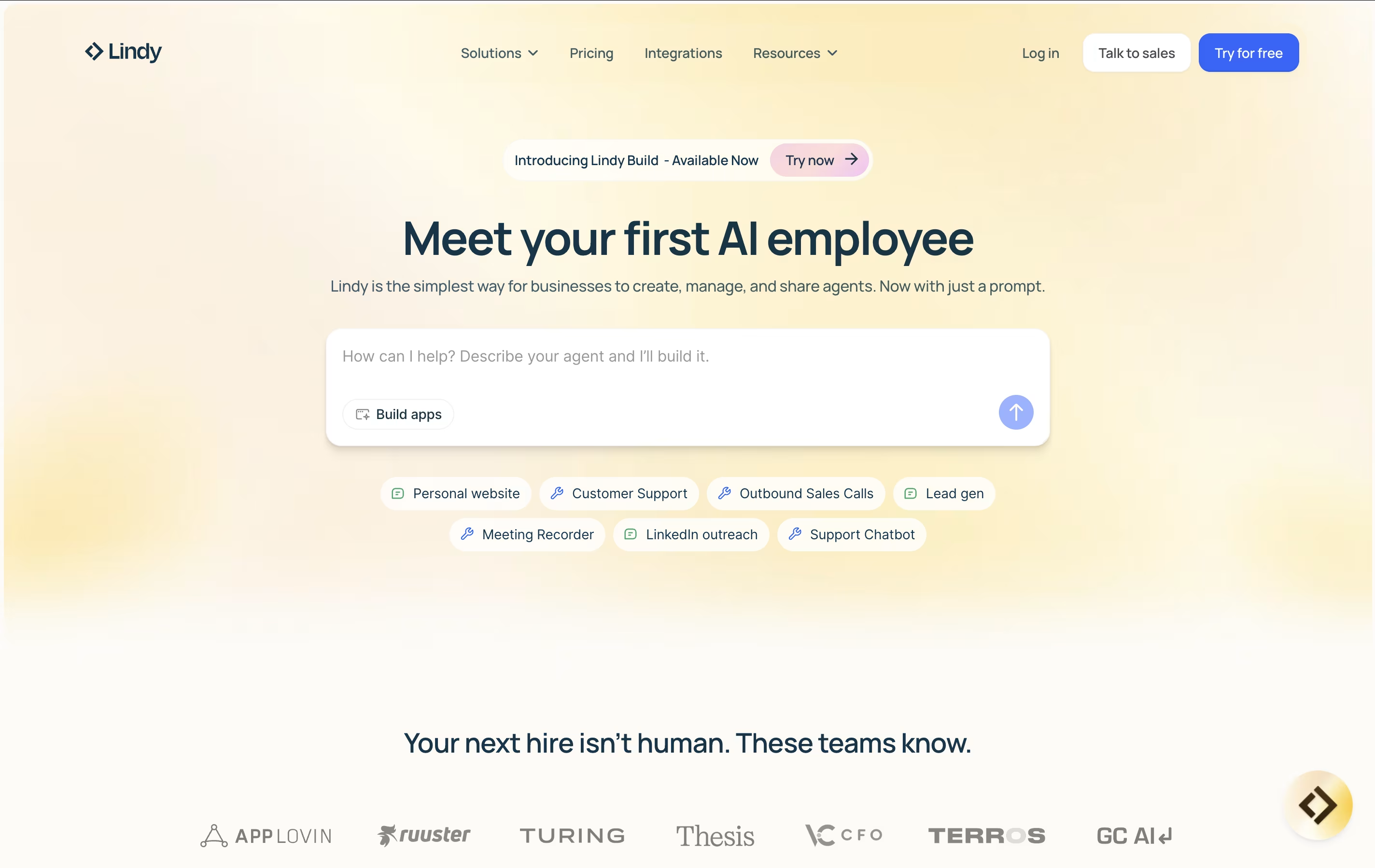
Each Lindy you create can understand context, make decisions, and take actions across your entire tech stack. Unlike basic automation tools that just move data around, Lindy's AI agents can read emails and understand what they mean, research leads and write personalized outreach, join meetings and take detailed notes, or handle customer support with human-like responses.
The platform uses simple "if this, then that" logic combined with natural language commands, making it accessible to everyone from small business owners to large enterprise teams. You can start with pre-built templates or create completely custom agents tailored to your specific business needs.

Integry is an enterprise-grade integration platform that serves as the bridge between SaaS applications and hundreds of third-party tools. Unlike traditional integration solutions, Integry focuses on embedded, user-facing integrations that work directly within your product interface.
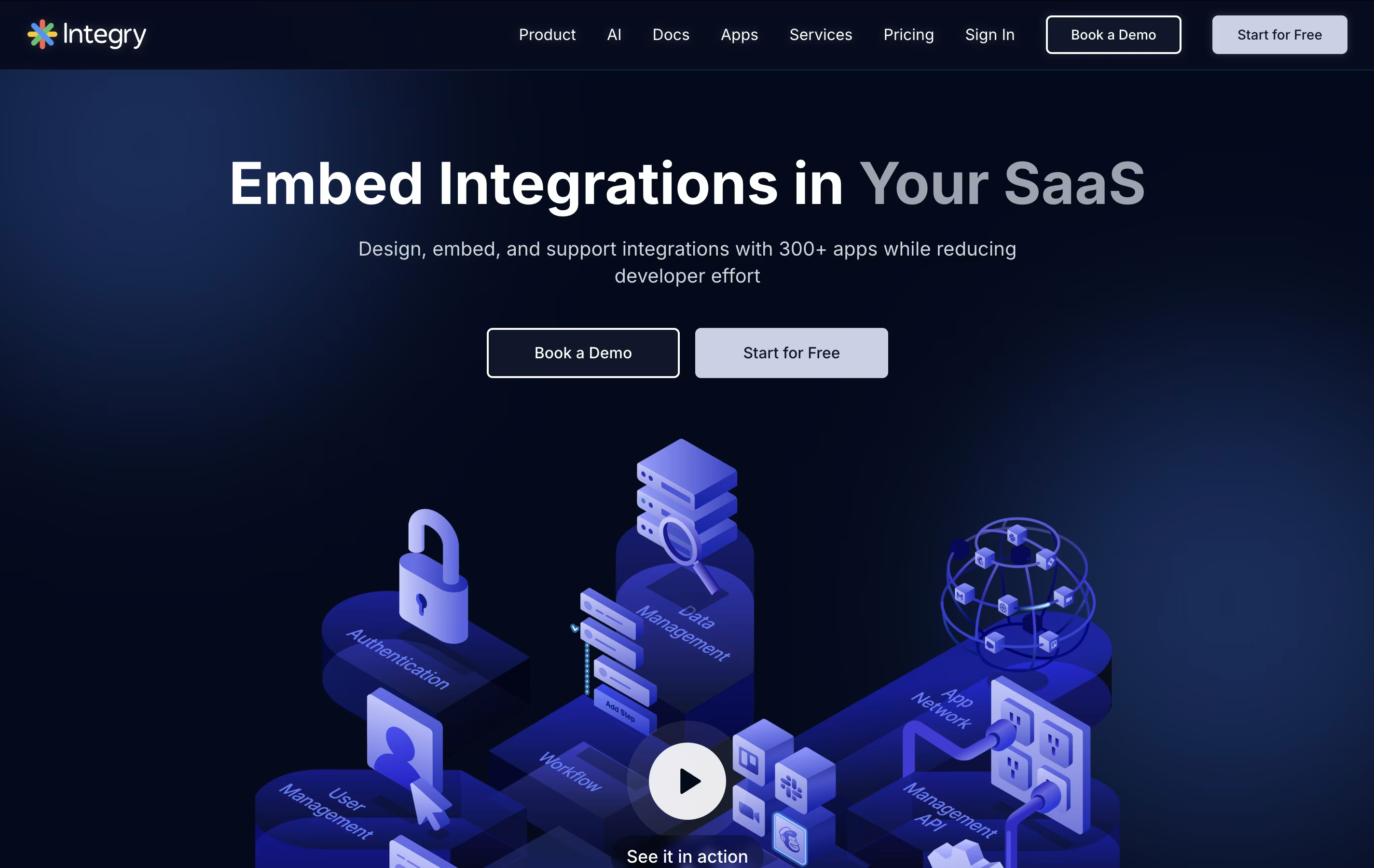
The platform offers AI-powered function calling capabilities, allowing artificial intelligence systems to predict and execute actions across different applications automatically. This makes it particularly valuable for AI agents and chatbots that need to interact with external tools.
Integry handles the complex technical aspects of integrations including OAuth authentication, data mapping, error handling, and API management. The visual programming environment lets product teams build sophisticated workflows without writing code, while the white-label components ensure the integration experience matches your brand perfectly.

Moveo.AI is a conversational AI platform that helps businesses build intelligent chatbots and virtual agents without coding. The platform stands out because it uses its own private language models instead of relying on external AI services like ChatGPT or Claude.
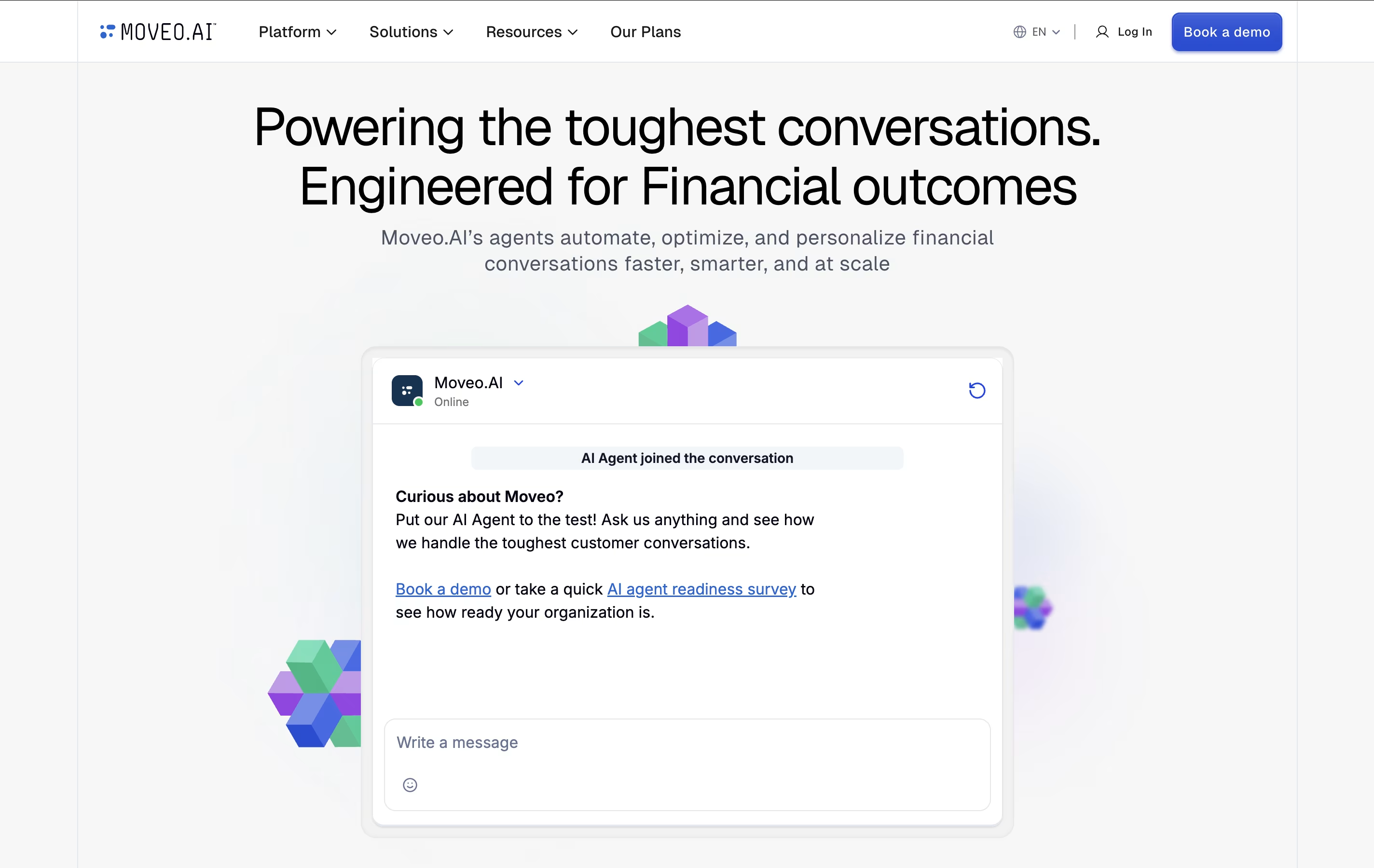
The main difference from regular chatbot builders is sophistication. Moveo's AI agents can understand complex customer requests, handle spelling mistakes and slang, extract important information from conversations, and even learn from past interactions to get better over time. The platform offers a simple drag-and-drop interface that anyone can use to create smart chatbots.
Founded in 2020, Moveo.AI has raised $2.6 million in funding and serves over 2 million monthly users across 21+ languages. The company has offices in New York, Athens, and São Paulo, working with global brands like Allianz, Viva, and Kaizen Gaming. Their focus is making AI accessible to businesses of all sizes.

Relevance AI is a no-code platform where anyone can build AI agents and complete AI teams to handle business tasks automatically. These AI agents work like digital employees that can be trained to follow your exact processes and procedures.
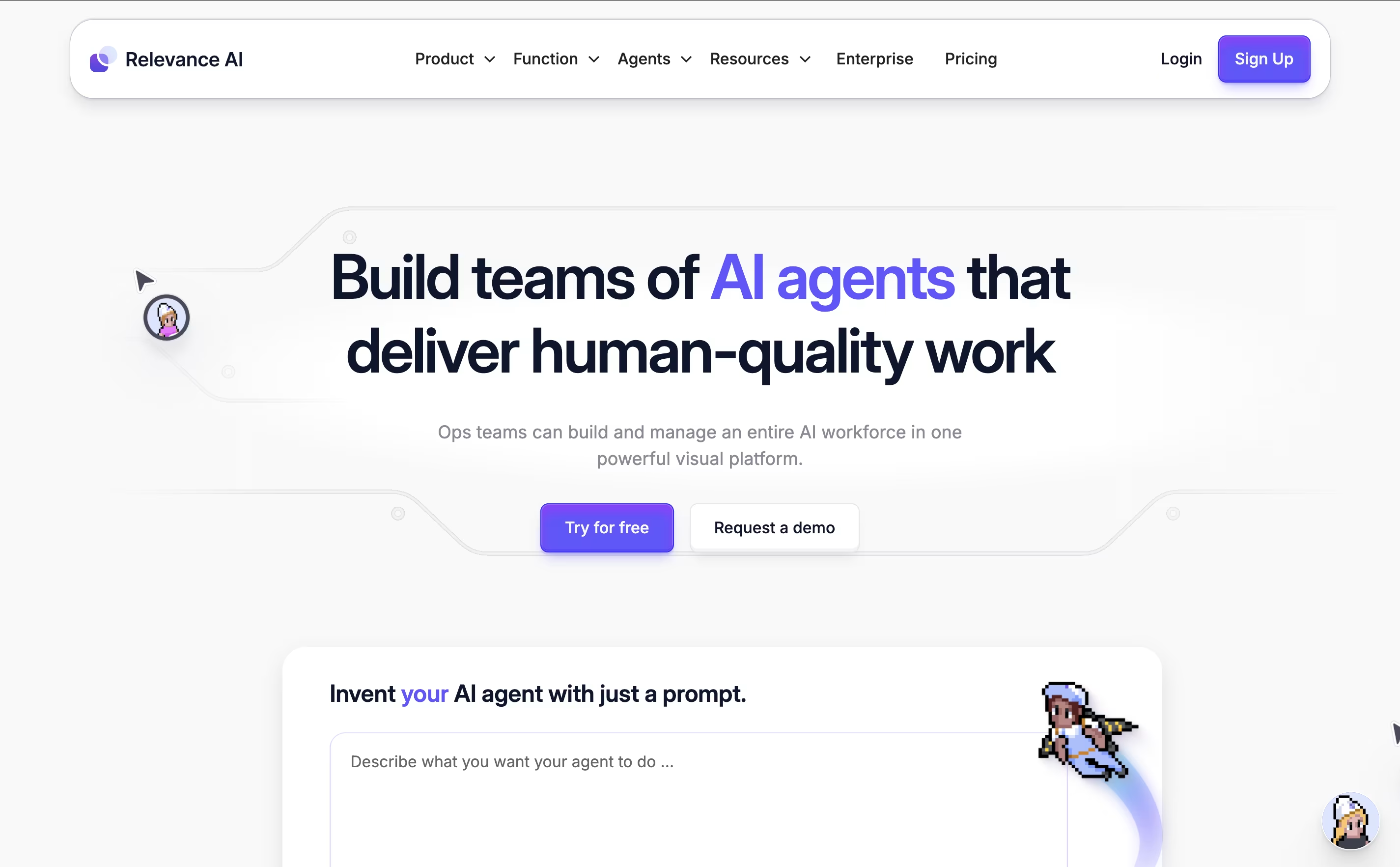
The platform supports multiple AI models including GPT-4, Claude, and Gemini, so you get access to the most advanced AI technology. You can create custom tools and workflows, then give these tools to your AI agents so they can complete complex tasks on their own.
What makes it special is that everything happens without coding. You simply drag and drop to build workflows, connect your existing apps, and train your agents using plain English. The platform is SOC 2 compliant and offers data centers in the US, EU, and Australia for security and privacy.

Airtable is a no-code platform that works like a supercharged spreadsheet with database capabilities. You can store, organize, and connect different types of information while creating custom views like grids, calendars, forms, and boards to see your data in different ways.
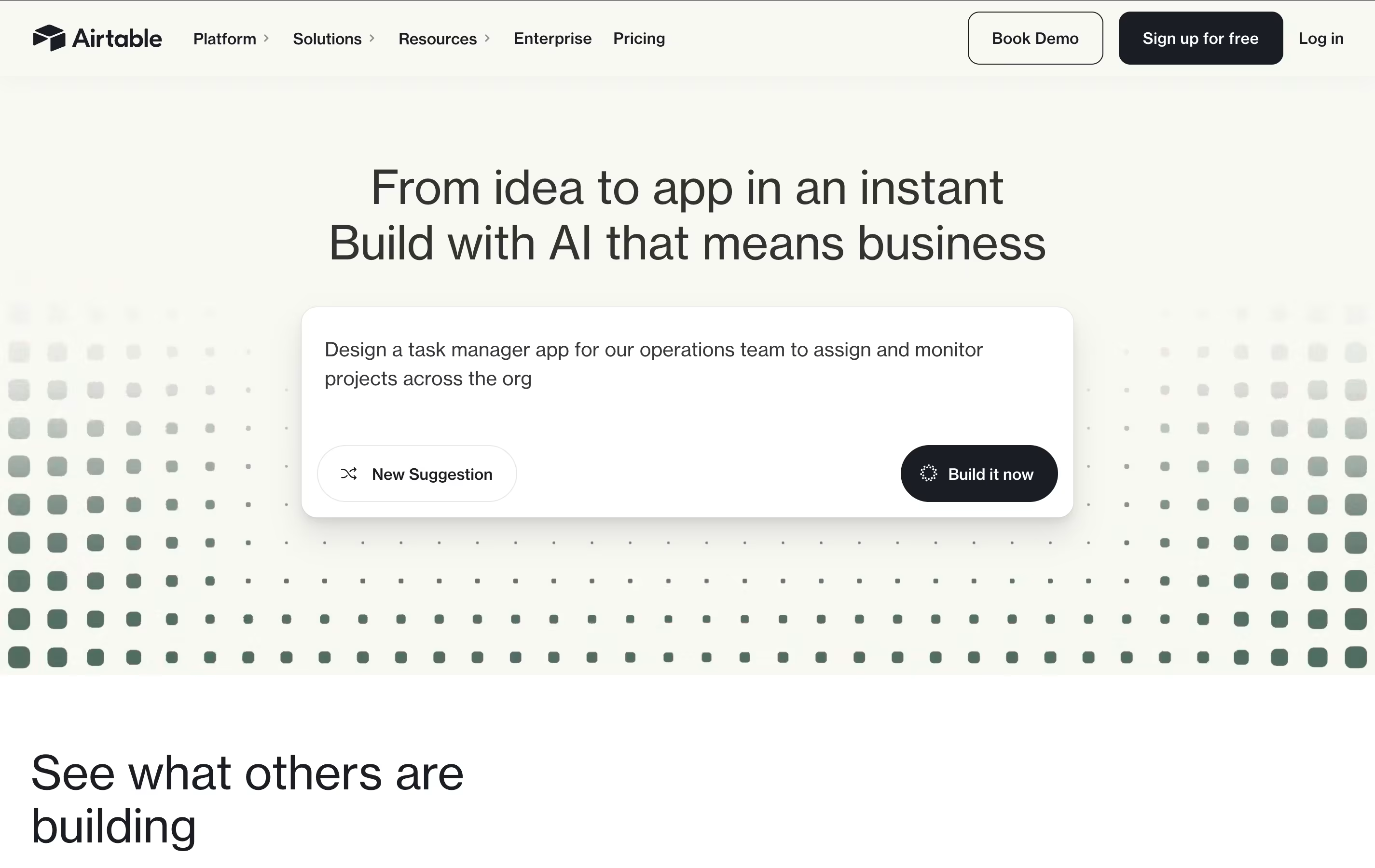
What makes Airtable special is its ability to link related information across different tables. For example, you can connect customer records to their orders, or link project tasks to team members. This creates a web of connected data that gives you a complete picture of your business operations.
The platform includes built-in automation, AI features, and hundreds of integrations with other business tools. Teams use Airtable for project management, customer tracking, content planning, inventory management, and many other business processes. It requires no technical skills to get started, making it accessible to everyone on your team.

HeyForm is a powerful open-source form builder designed to make data collection simple and engaging for everyone. Think of it as the perfect mix between user-friendly design and powerful functionality, but completely free and open-source.
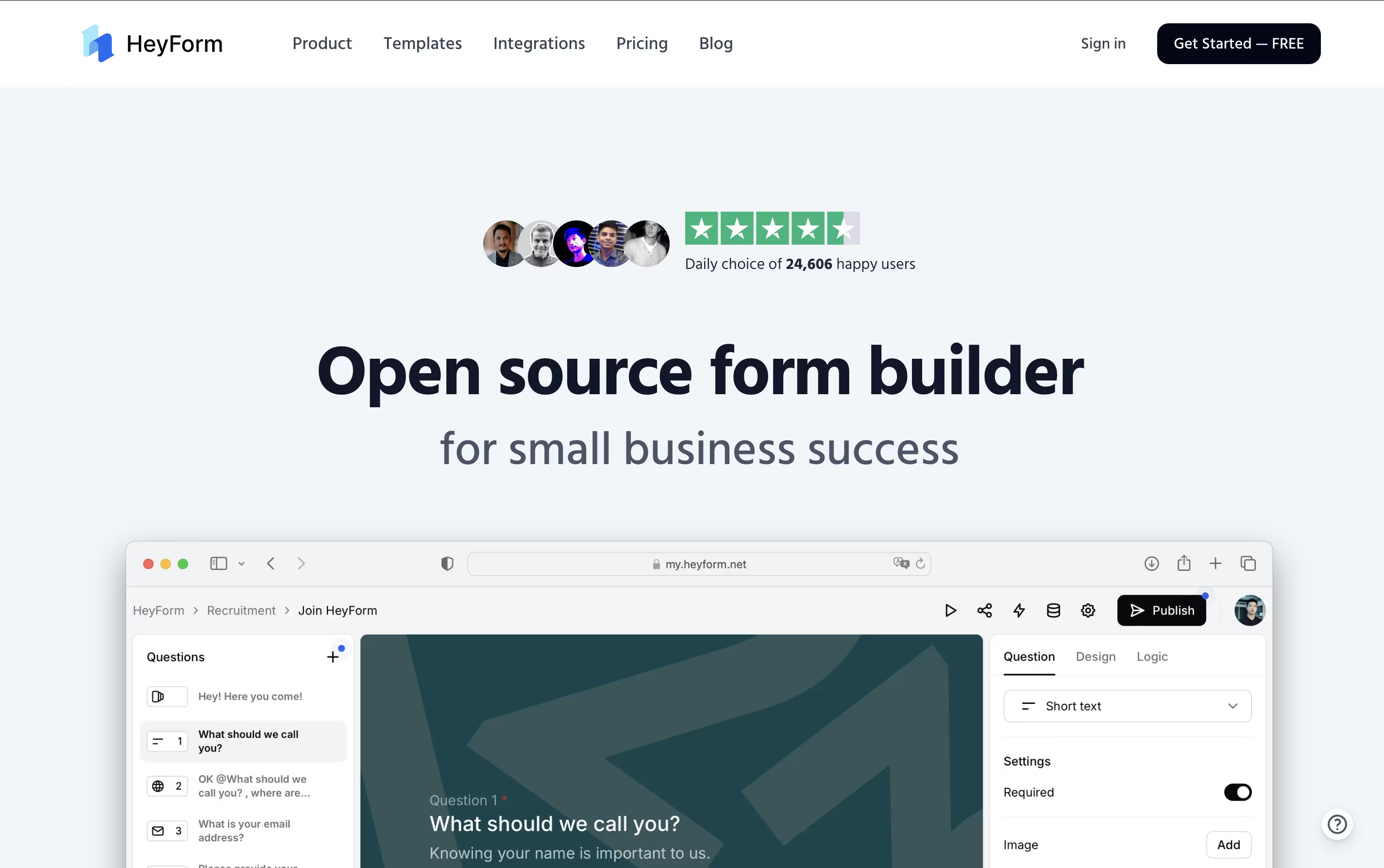
It uses modern technology to create conversational forms that feel natural and keep respondents engaged throughout the process. The main difference from regular form builders is simple: instead of creating boring, static forms, HeyForm creates interactive experiences that guide users through questions in a conversational way.
Each form includes smart features like conditional logic, custom branding, and real-time analytics, allowing you to gather better data while providing a pleasant experience for your respondents. Founded as an open-source project, HeyForm has become popular because it offers enterprise-level features for free, making professional form creation accessible to everyone from small startups to large organizations.

Voiceflow is a collaborative AI agent platform that allows teams to design, develop, and deploy conversational AI experiences without coding. Think of it as a visual builder for smart chatbots and voice assistants that can understand and respond to customer questions naturally.
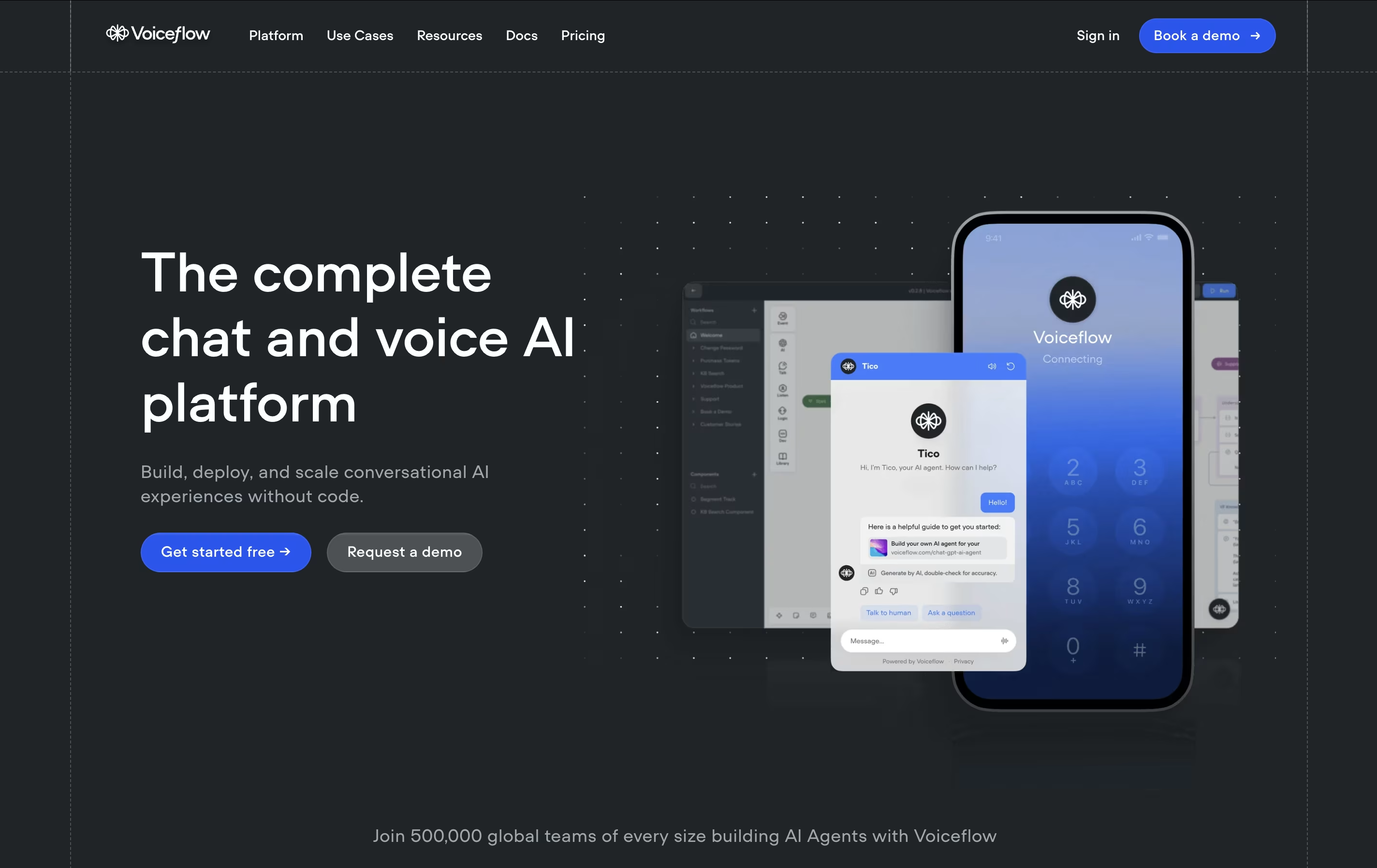
The platform uses a drag-and-drop canvas where you create conversation flows, add AI capabilities, and connect to your business systems. What makes Voiceflow special is its ability to work with multiple AI models like GPT-4, Claude, and Gemini, giving you flexibility in how your agents respond.
You can train these agents on your own content, documents, and data to provide accurate, company-specific answers. The platform supports both text-based chatbots for websites and voice agents for phone systems, making it versatile for different business needs.

Roboflow is a complete computer vision development platform that makes building AI models simple and fast. Think of it as the missing piece that connects your images to working AI applications. The platform handles every step of the computer vision pipeline, from organizing your data to deploying models that can recognize objects, detect defects, or analyze scenes in real-time.
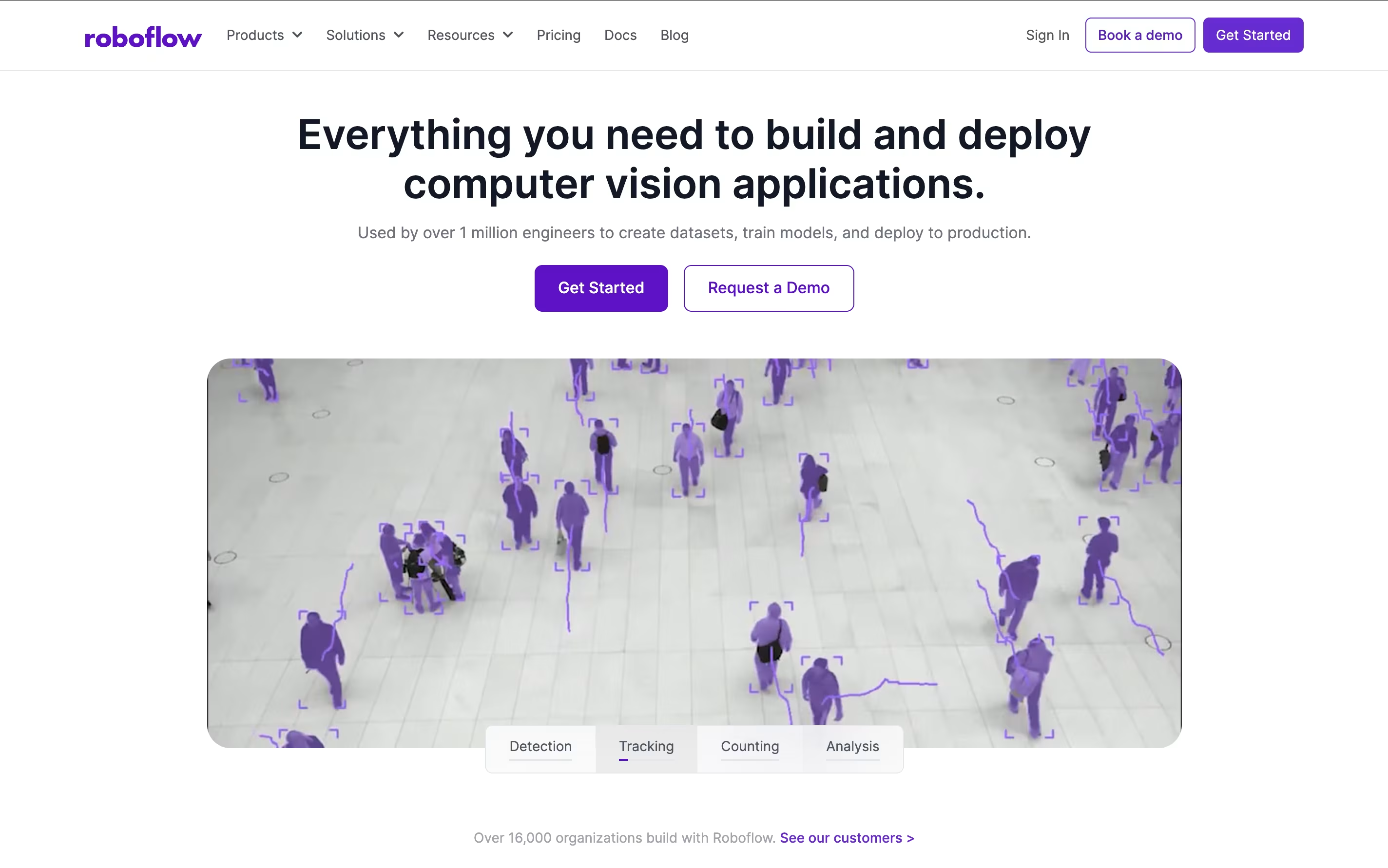
Unlike traditional approaches that require deep technical expertise, Roboflow provides user-friendly tools that work together seamlessly. You can upload images, label them with smart AI assistance, train state-of-the-art models with one click, and deploy them anywhere from cloud APIs to edge devices. The platform includes access to thousands of pre-trained models and datasets through Roboflow Universe, making it possible to start with existing solutions and customize them for your specific needs.
Apify is a comprehensive web scraping and browser automation platform designed to help businesses extract data from websites at scale. Think of it as a marketplace combined with a powerful infrastructure that handles all the complex technical parts of web scraping for you.
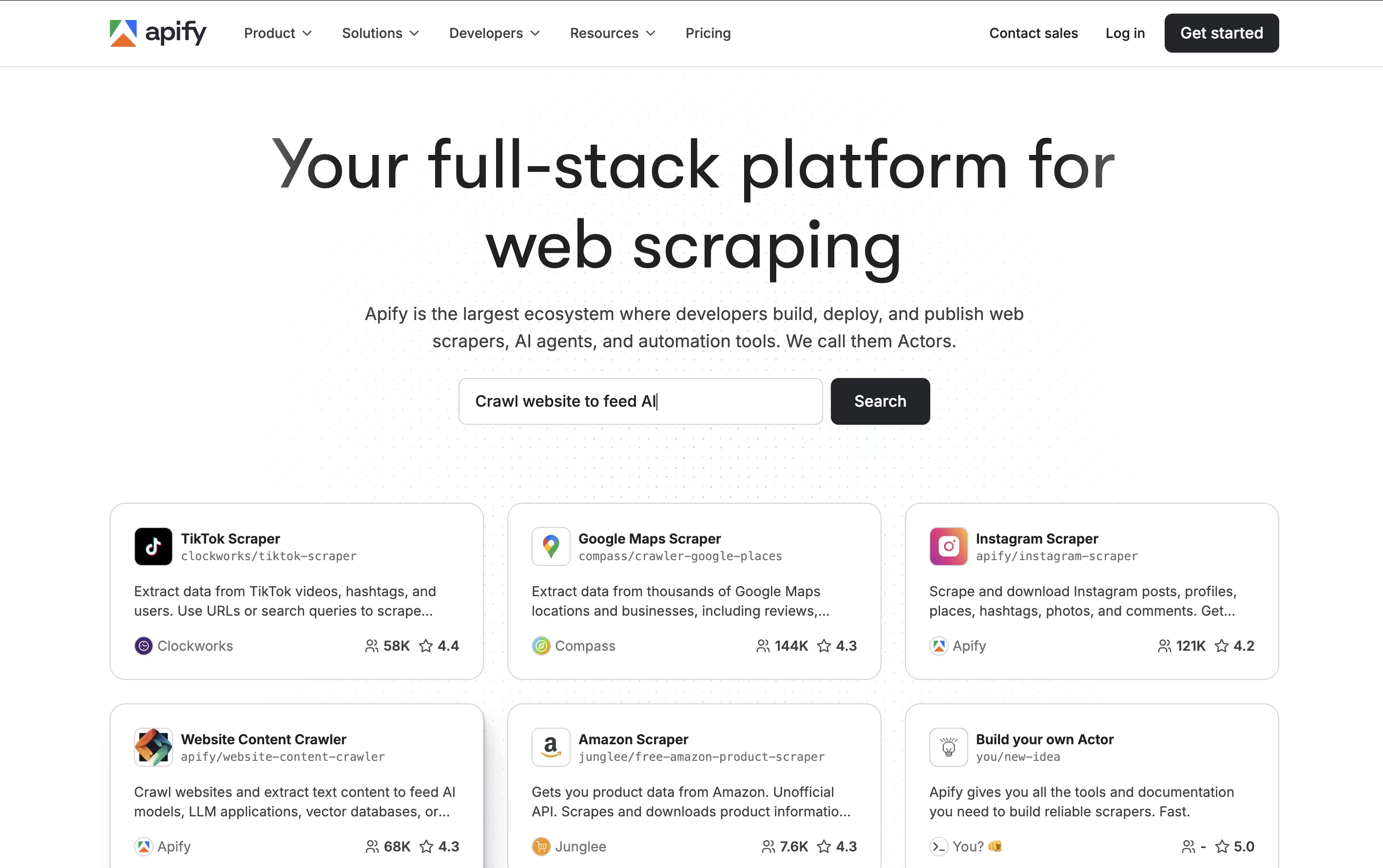
The platform hosts over 6,000 pre-built scrapers and automation tools called "Actors" that can extract data from popular websites like Google Maps, Instagram, Amazon, LinkedIn, and many others. Each Actor is like a specialized robot that knows exactly how to navigate and collect data from specific websites. The main difference from building your own scrapers is simplicity: instead of dealing with proxies, browser management, and anti-bot measures, you just choose an Actor, configure it, and let it run. Founded in 2015, Apify has become the largest ecosystem for web scraping tools, serving over 10,000 customers worldwide.

Appliku is a deployment automation platform designed to simplify server management and application deployment for developers and teams. Think of it as a bridge between complex server administration and easy-to-use hosting platforms.
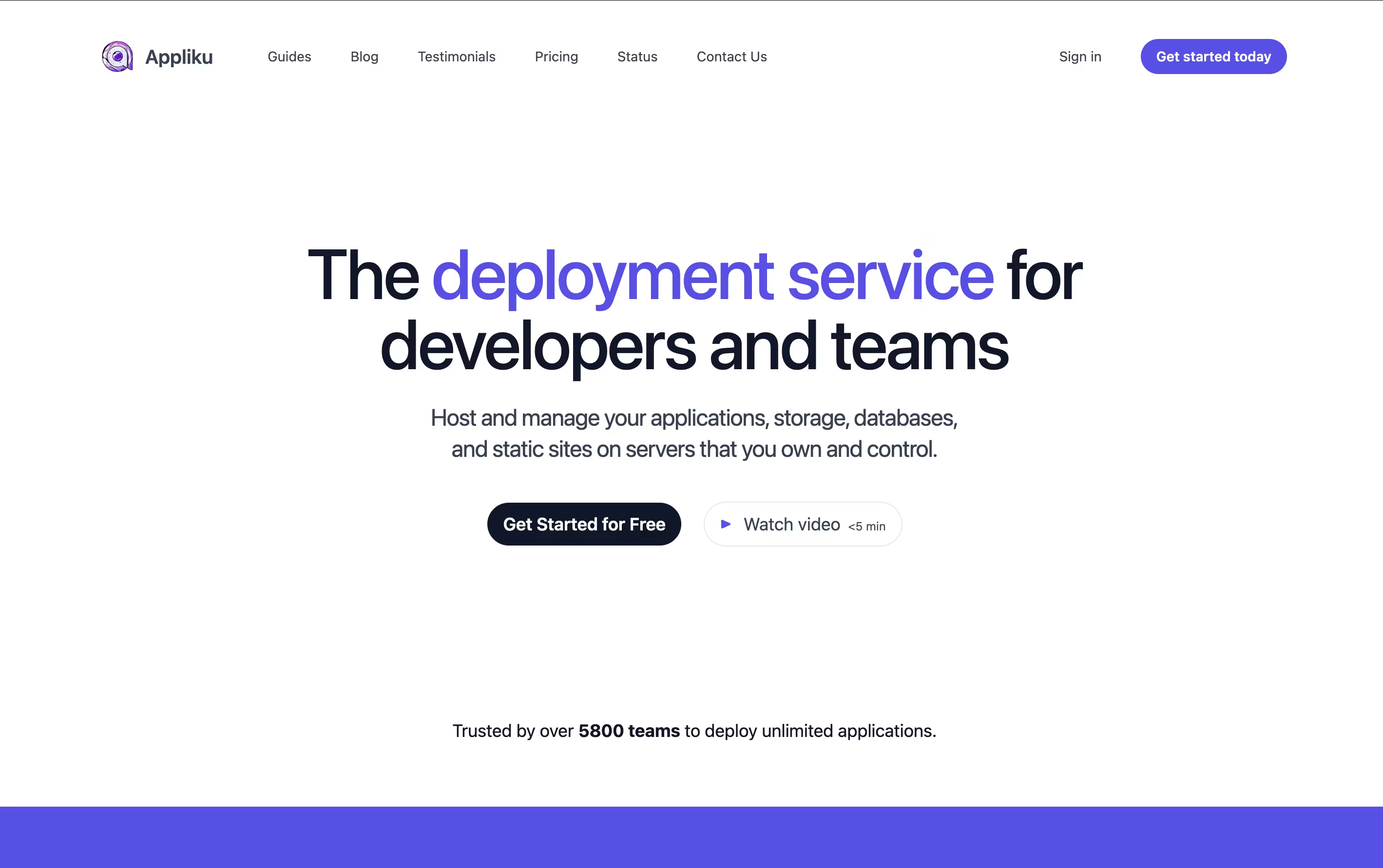
The service works by connecting to your existing cloud servers (like AWS, DigitalOcean, or any Ubuntu server) and automatically setting up everything needed to run your applications. It uses Docker and Nginx behind the scenes to create a reliable hosting environment without requiring you to learn server management.
What makes Appliku special is its BYOS (Bring-Your-Own-Server) approach. You keep full control over your hosting costs and server specifications while getting the same easy deployment experience as premium hosting platforms. Founded to help developers focus on building rather than server management, Appliku supports Python, Django, and other web applications with automatic Git-based deployments.

With Activepieces, you build automations called flows using a visual, no-code canvas. A trigger starts the flow, and a chain of actions carries out the work automatically.
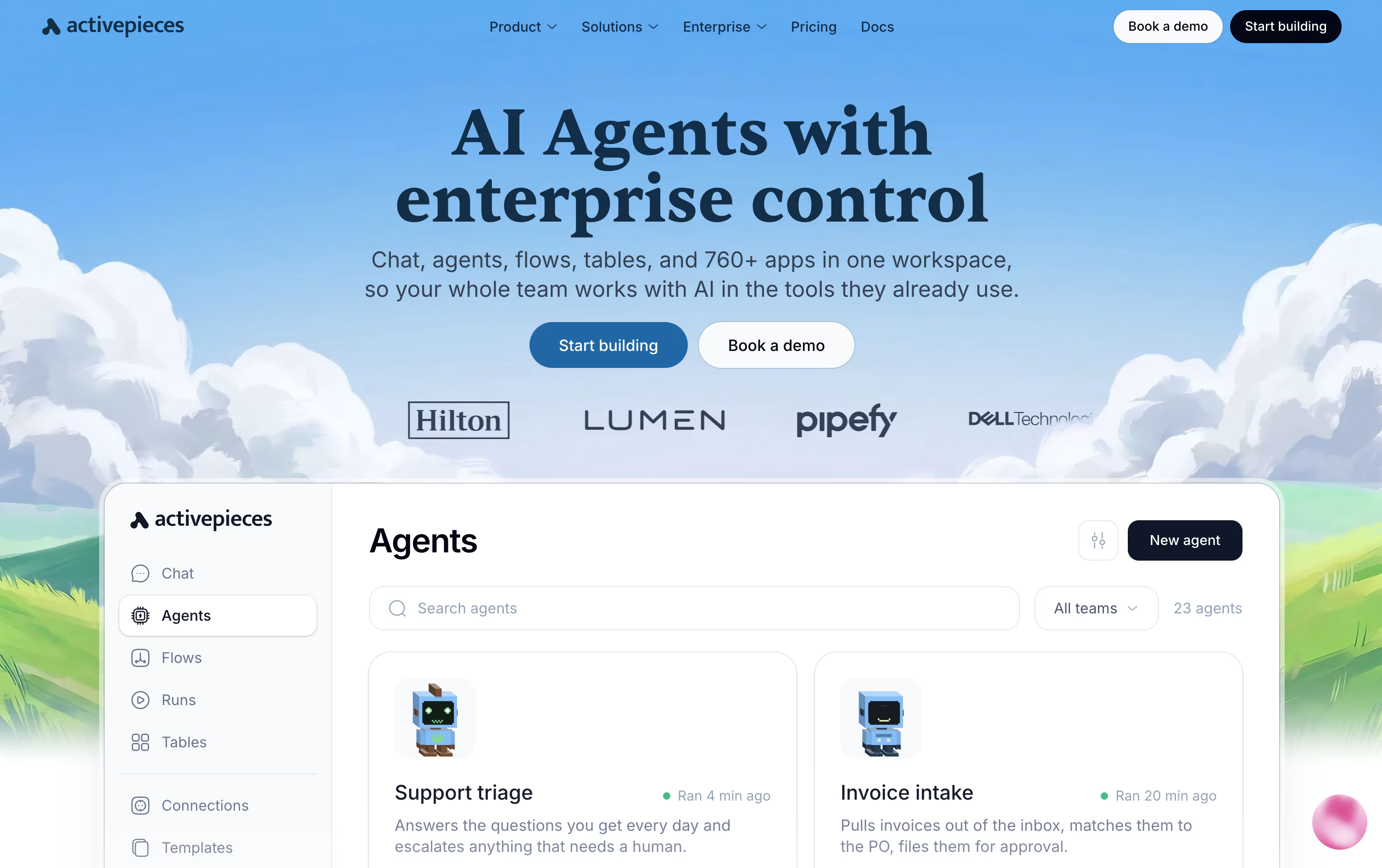
The platform also supports full AI agents that can think through a task and act on it across your connected apps, pausing for human approval when needed through tools like Slack or email.
Everything you connect doubles as a tool for outside AI assistants through the Model Context Protocol, and native Tables let you store and manage data right alongside your automations.
Costs are based on credits rather than a flat fee. The Free plan gives 100 credits a day at no cost, and Plus moves to 10,000 credits a month for $20, or $16 billed yearly.
The Team plan costs $200 a month with 25 users and single sign-on included, while Ultimate is priced individually for larger organizations that need deeper security controls.
Anyone wanting full control can also self-host the free, open-source Community Edition.

Instead of designing a site from scratch, Readdy builds it for you from a short description, a picture, or a link to a site you admire. It fills in the layout, wording, and images, and picking from 500 plus templates works just as well if you prefer a starting point.
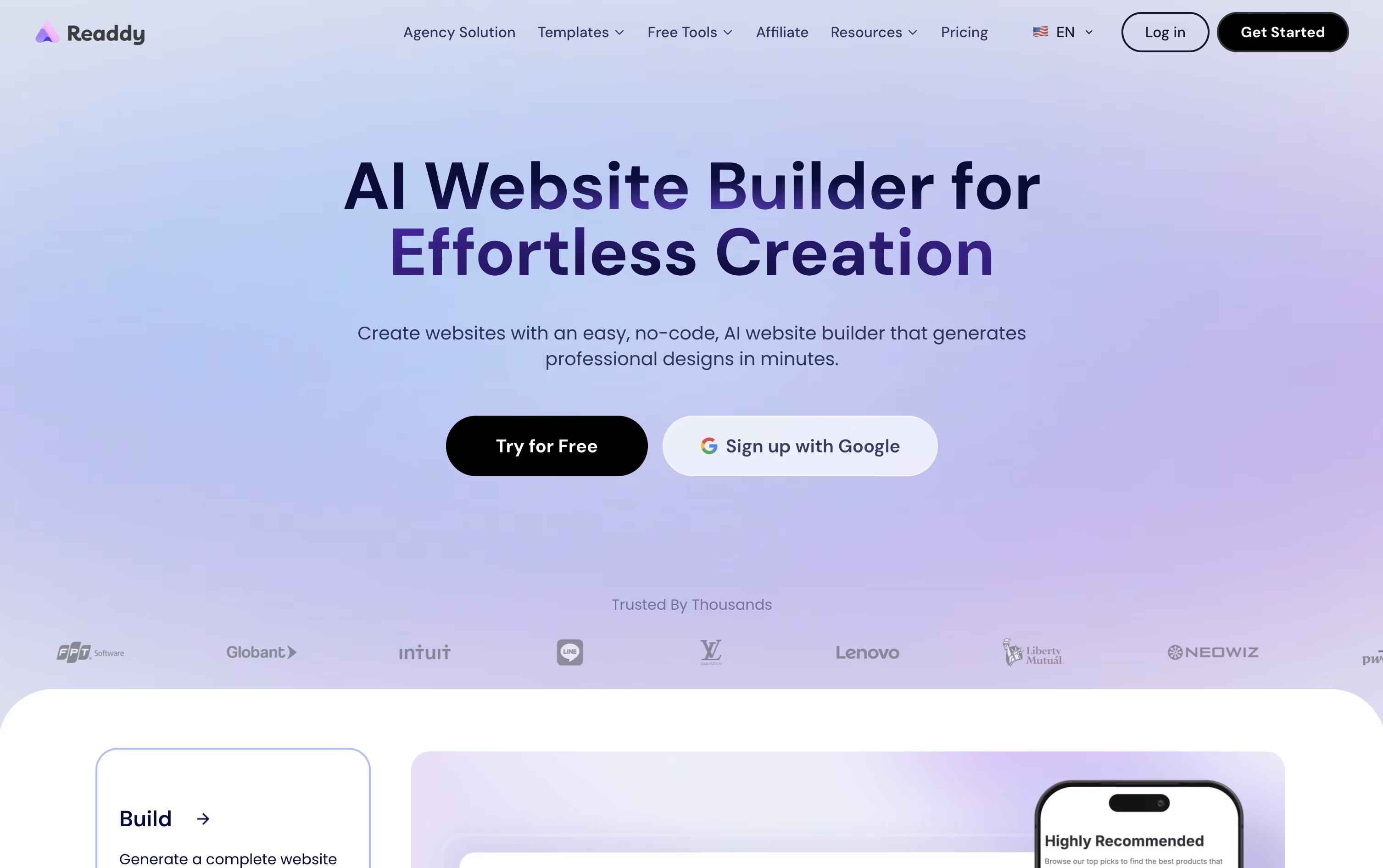
Making changes afterward is straightforward. Click on any piece of the page to edit it directly, or simply type out what you want changed and Readdy applies it. Forms, user logins, and databases come built in through the Readdy Backend, so there is no separate setup needed to collect leads or manage accounts.
A code editor is available for anyone who wants to look under the hood, showing the React, Tailwind, and TypeScript files that make up the site, and the whole project can be exported as a zip file whenever you like.
Pricing starts free with 250 credits a month, then moves to Starter at $25, Pro at $40, Agency at $120, and Agency Pro at $199 monthly, each adding more sites, storage, and features. Paying yearly can lower these prices by up to 60 percent, and an Ultimate plan covers teams that need unlimited everything.

Pipedream is a serverless workflow automation platform designed specifically for developers who need to connect different applications and APIs. Think of it as a bridge that lets your apps talk to each other automatically.
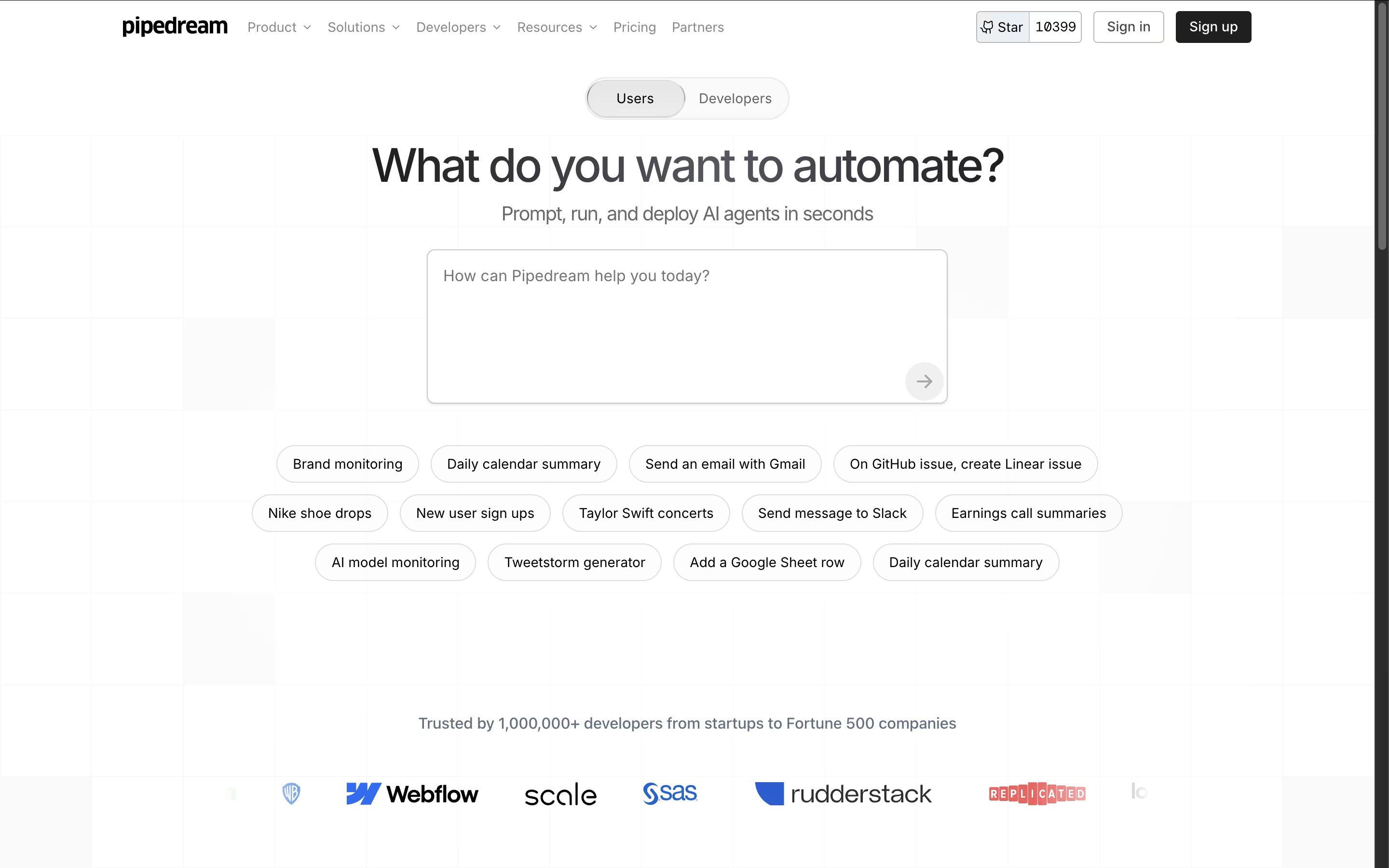
Unlike traditional automation tools, Pipedream gives you the power to write custom code when needed while providing thousands of pre-built components for common tasks. The platform handles all the infrastructure, authentication, and scaling automatically, so you can focus on building workflows instead of managing servers.
Each workflow is a series of steps that run when triggered by events like new emails, API calls, or scheduled times. With support for major programming languages and integration with popular services like Slack, Google Sheets, GitHub, and Stripe, Pipedream makes it easy to automate almost any business process or technical workflow.

If you want automation without leaving WordPress or sending your data to another company's servers, Bit Flows is built for exactly that. It is a drag and drop workflow builder that lives inside your WordPress dashboard.
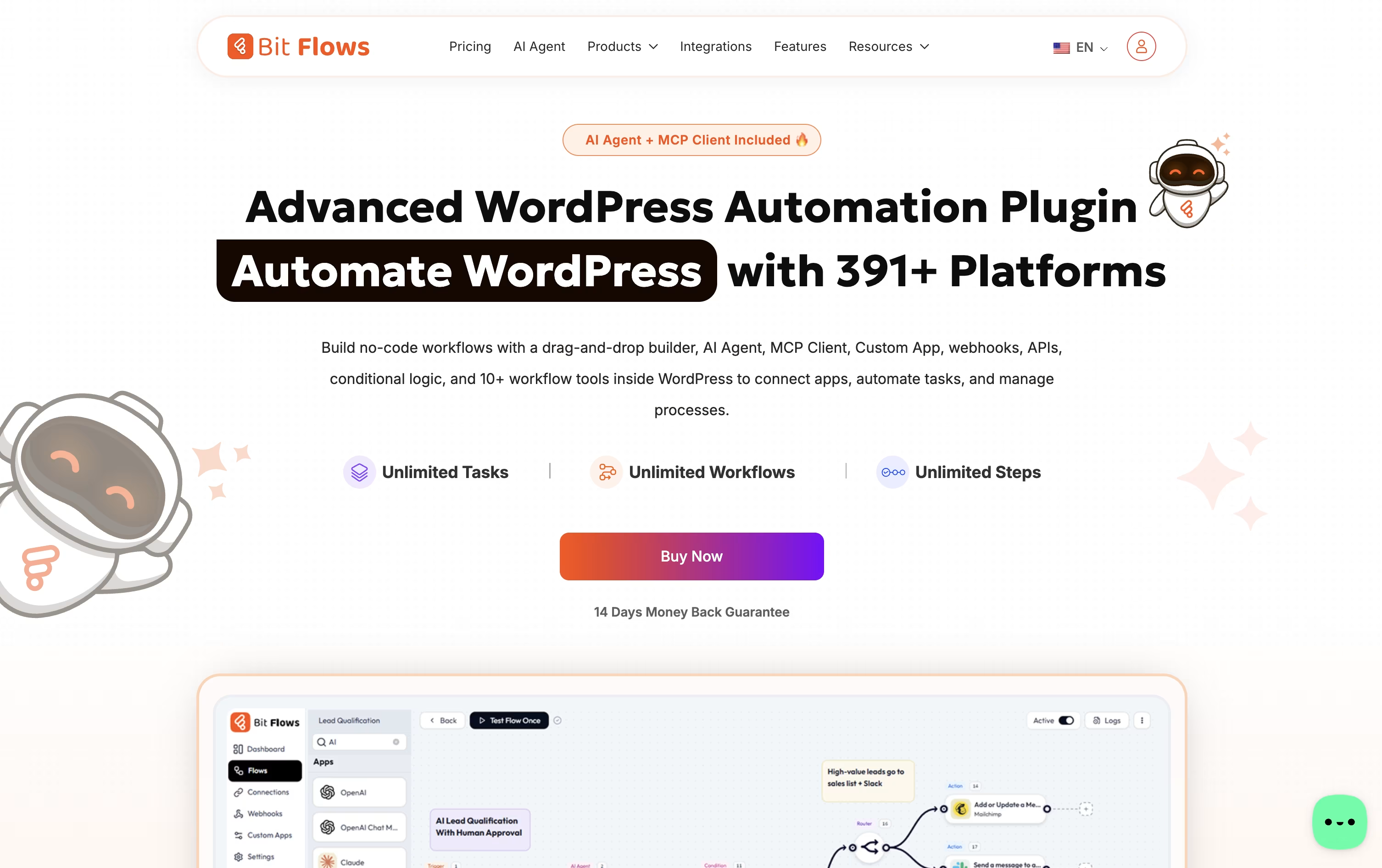
You can connect WordPress plugins, WooCommerce or Shopify orders, forms, CRMs, spreadsheets, chat apps, and AI models such as ChatGPT, Claude, or Gemini, all inside one visual flow.
Every plan includes unlimited workflows, steps, and task runs, and features like the AI Agent, MCP Client, and Human in the Loop approval steps help you build smarter, safer automations.
For pricing, yearly licenses run from $59 for one site up to $129 for unlimited sites, while one-time lifetime licenses run from $159 up to $499 for unlimited sites with premium lifetime support.
Bit Apps also sells a full bundle of its plugins, including Bit Flows, for a one-time $1,149, down from a combined value of $2,966.
A free version on WordPress.org covers the essential builder so you can try it before upgrading.

IFTTT gives you an easy way to connect apps, devices, and online services without writing any code. Automations, called Applets, follow a simple if this, then that setup.
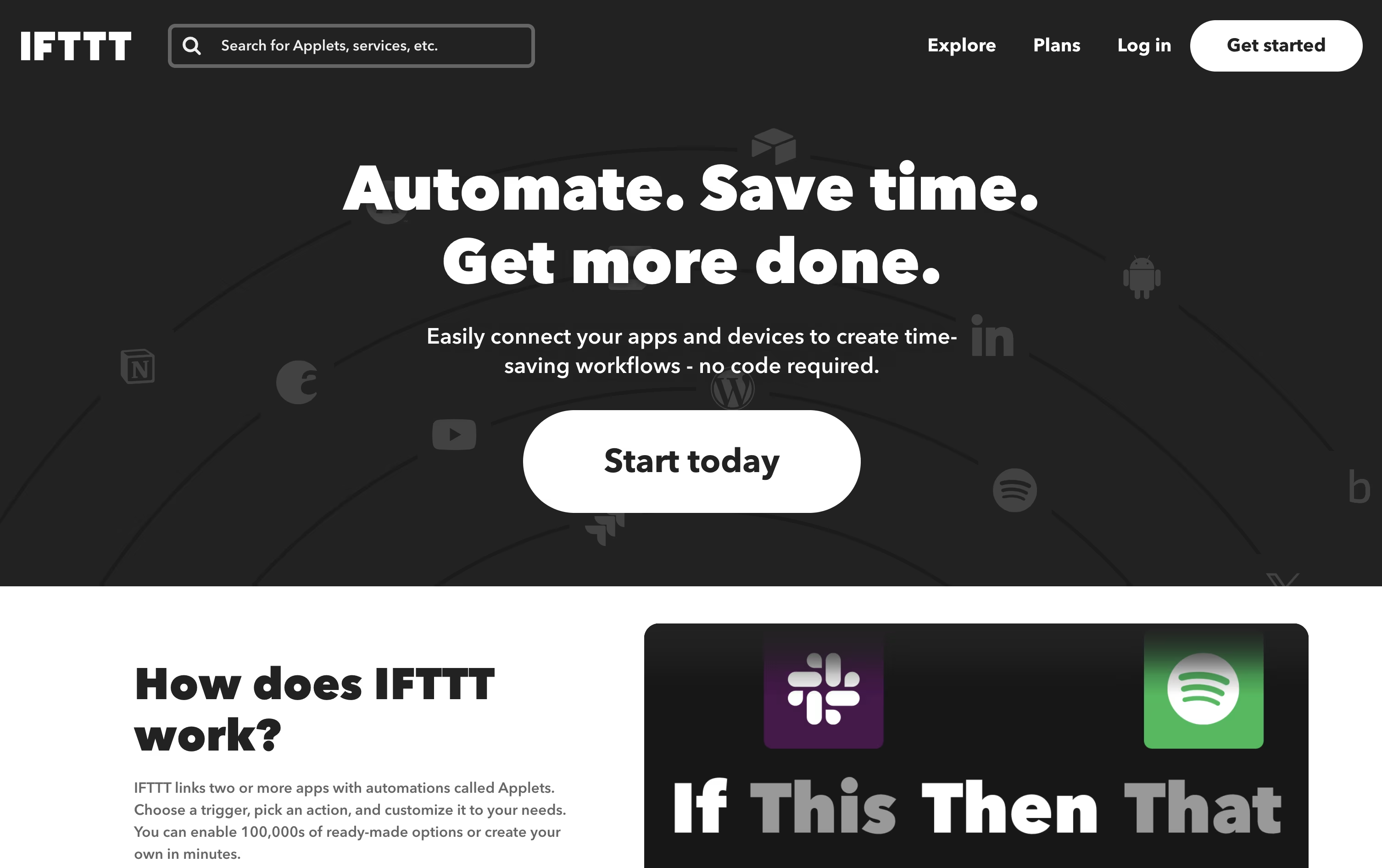
Anyone can start for free, since the Free plan costs $0 forever and comes with 2 Applets and unlimited runs.
Stepping up to Pro costs $4.99 a month, or $2.99 a month on the yearly plan at $35.88, opening up 20 Applets, faster performance, multi-action Applets, and webhooks for custom connections.
For heavier use, Pro+ costs $14.99 a month, or $8.99 a month yearly at $107.88, and adds unlimited Applets, AI services, several connected accounts, and filter code for custom logic.
With support for AI tools like Claude and Gemini, plus IFTTT MCP for natural language automation, it fits both personal routines and small business workflows.
Think of Zoho Flow as a bridge between all the apps and systems your business uses. It links a trigger, like a new deal being closed, to a set of actions that run automatically, such as creating an invoice or notifying your team.
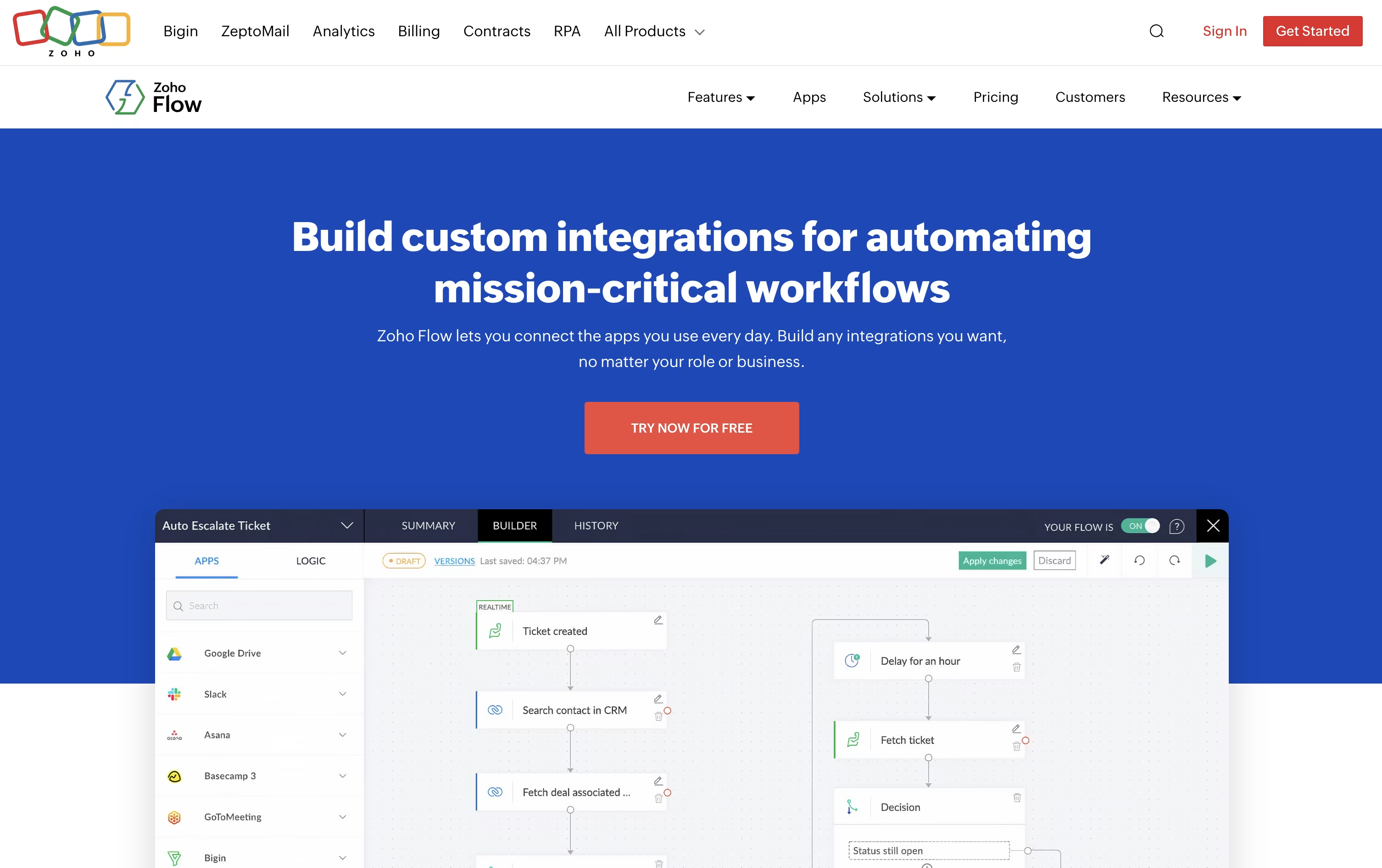
Over a thousand apps are supported out of the box, and a secure on premise agent lets it reach local databases, SAP systems, and other in house tools that normally stay behind a firewall.
Its AI assistant Zia can build a flow just from a plain English description, add smart writing and summarizing steps, and even make routing decisions inside a flow based on live data.
The Free plan costs $0 a month and covers 100 tasks with 5 flows. Standard runs $29 a month, or $25 a month if billed yearly, and unlocks 5,000 tasks, custom functions, and Zia AI tools.
Professional is $49 a month, or $41 a month yearly, the most popular tier, adding 10,000 tasks, premium apps, on premise connections, subflows, and automatic rerun of failed steps.
New users can try premium features free for 15 days without entering a credit card.

Pabbly Connect lets you connect apps and automate repetitive tasks without touching a line of code, using a straightforward trigger then action setup.
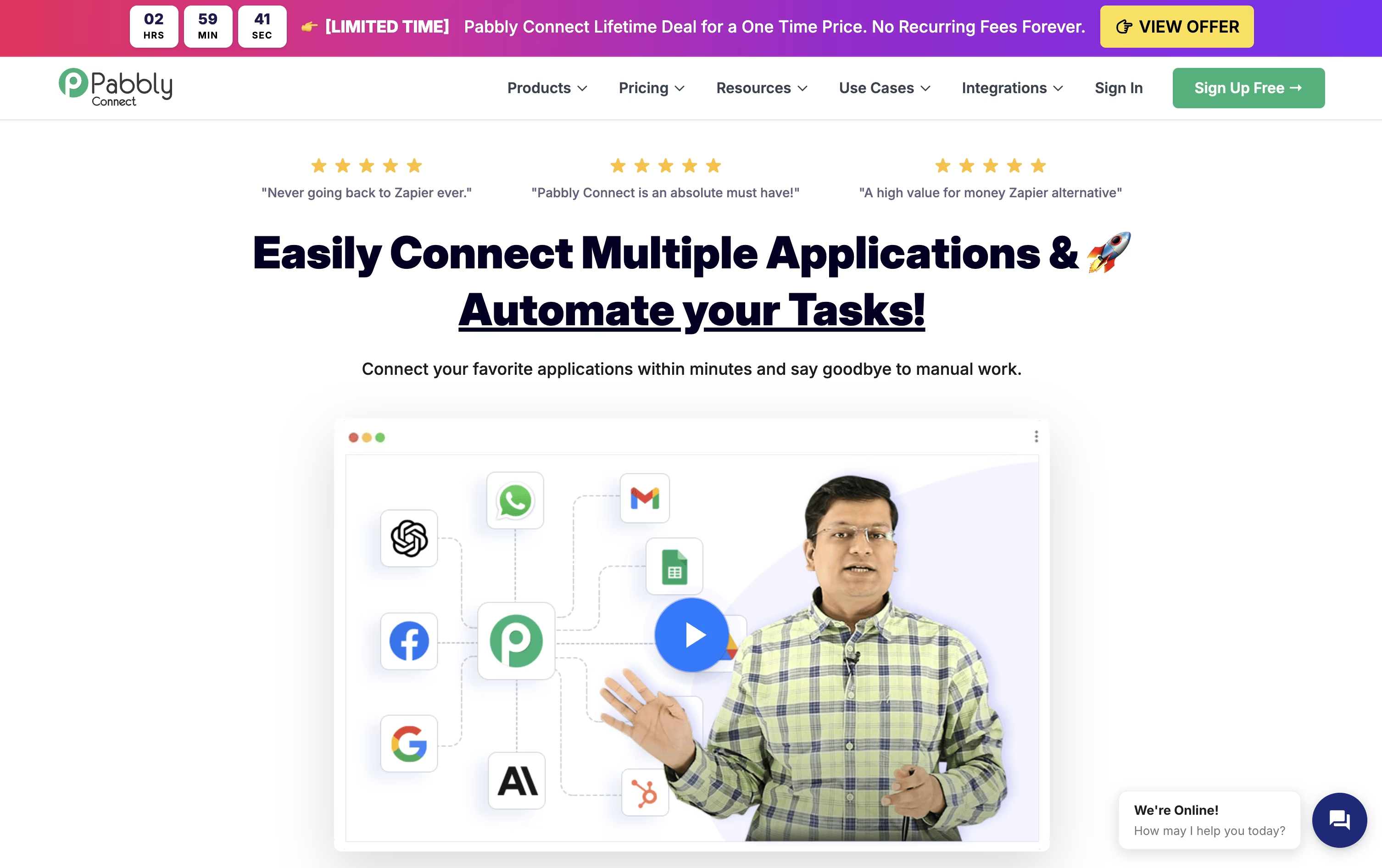
Internal steps such as filters, routers, formatters, and delays don't use up your task quota, so only the actions that actually send data to another app are counted and billed.
It also comes with modern AI tools, including an AI Assistant, an MCP Server that lets AI clients call your workflows directly, and AgenticAI, which builds automations from a plain English description.
Made by Magnet Brains, the platform holds SOC 2 and ISO 27001 certifications and serves more than 14,000 businesses worldwide.
On pricing, the Free plan gives 100 tasks a month at no cost, Standard runs $19 a month for 10,000 tasks, and Unlimited is $79 a month with no task cap, cheaper still with yearly billing.
Lifetime, one-time payment plans start at $349 for anyone who wants to skip recurring fees altogether.

Rather than making you build automations from scratch, Integrately hands you a library of millions of ready-made workflows that you can activate in one click after connecting your accounts.
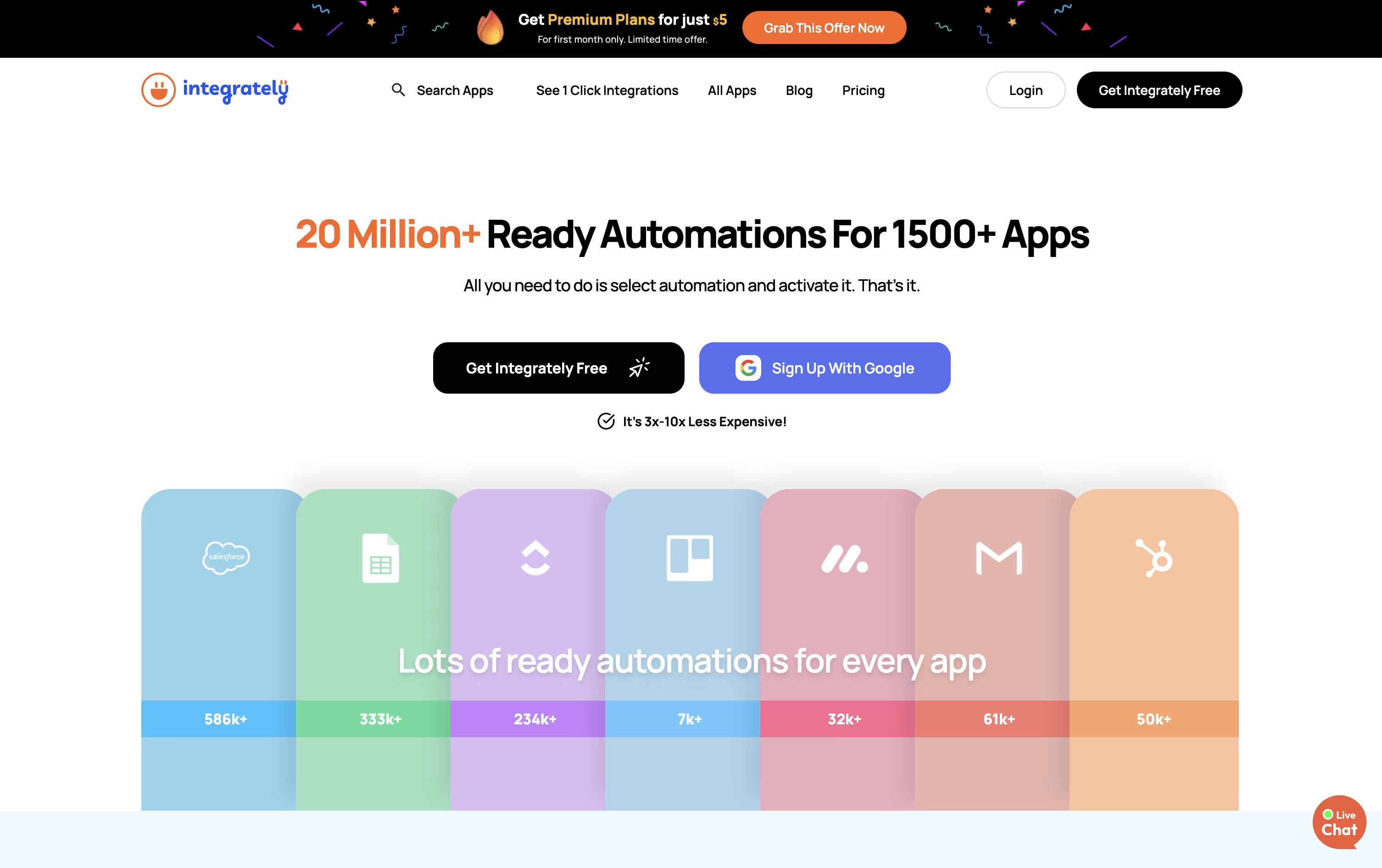
It connects with over 1,500 apps spanning CRM, email marketing, online stores, forms, and everyday work tools, and its AI Automation Builder can turn a plain language request into a working automation.
The Free plan gives you 100 tasks a month at no cost, plus a 14-day trial of paid features. Starter costs $29.99 a month, or $19.99 a month if billed yearly, and adds webhooks, filters, and 2,000 tasks.
Professional, priced at $49 a month or $39 annually, is described as covering most required features, with unlimited automations, branching, and 10,000 tasks. Growth and Business step up to 30,000 and 150,000 tasks with unlimited users and folder permissions.
Live chat support comes with every plan, and the top two tiers add a dedicated account manager. Since checks and triggers do not use up tasks, Integrately can be far more efficient than task-counting competitors like Make.

Think of Albato as a no-code bridge between your apps. You choose a starting trigger, line up actions across its library of 1,000+ connectors, and the workflow keeps running without you touching it again.
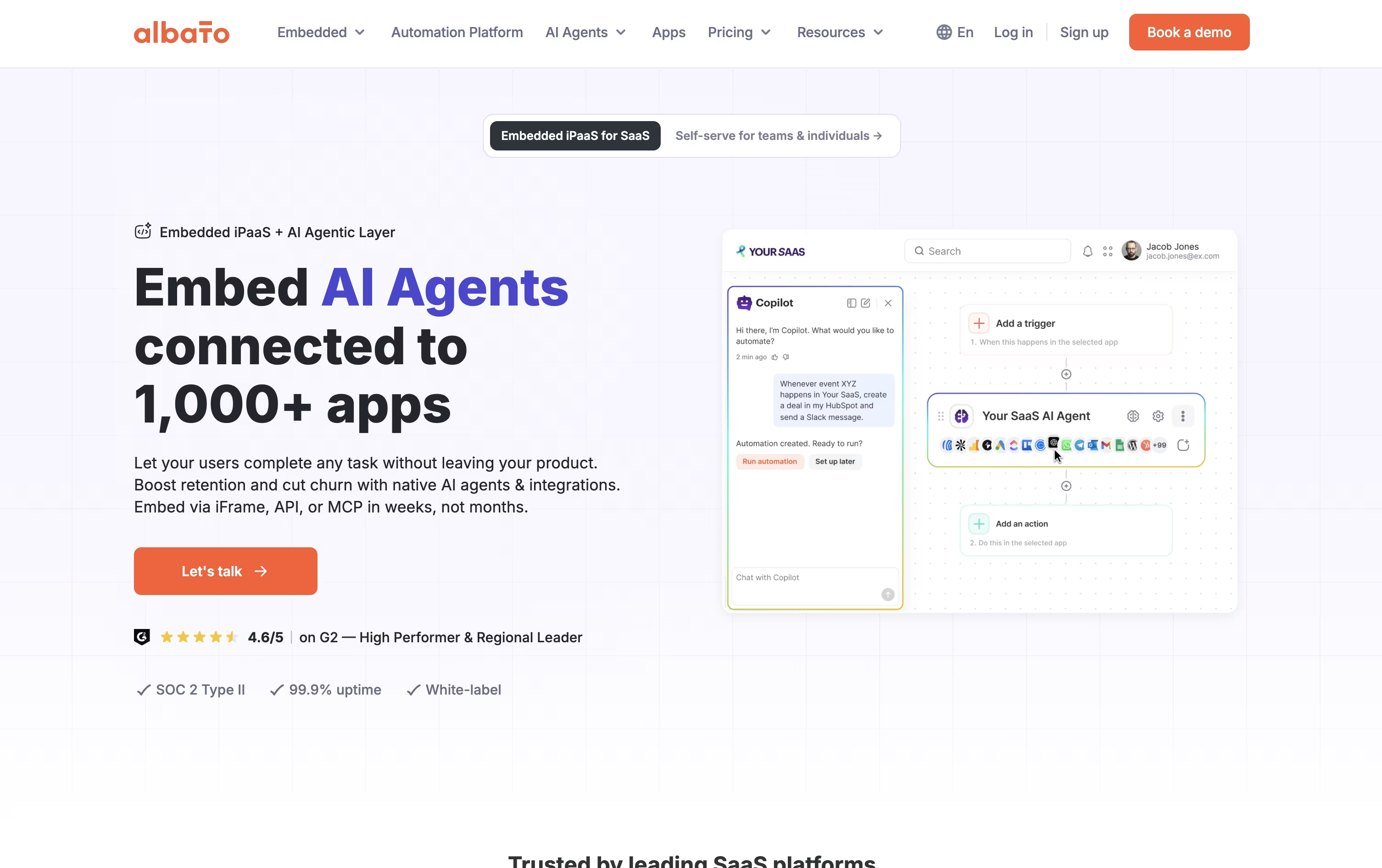
It is not just plain automation either. Albato AI handles text and data tasks inside a workflow, Copilot turns a written request into a working automation, and AI Agents can decide which action to take based on your instructions.
Missing an app? The App Integrator lets anyone add a new connection using a public API, so the library keeps growing with what you actually need.
On price, the Free plan gives 100 transactions with 5 automations of 2 steps each, enough to test the waters. Pro removes those caps for $22 a month, or $15 a month if billed yearly, and throws in AI Agents plus a 7-day trial.
Teams runs $93 a month, or $65 annually, with 5 seats and shared workspaces for agencies, and a Custom plan handles bigger volumes with a dedicated success manager.
For SaaS businesses, Albato Embedded offers the same integrations and AI agents white-labeled under your own product, starting from $5,000 a month.
Adalo lets you build and publish apps for phones and the web without writing code. You can describe your app to the AI assistant, Ada, and it will lay out the screens and database for you, or you can build everything by hand on the drag-and-drop canvas.
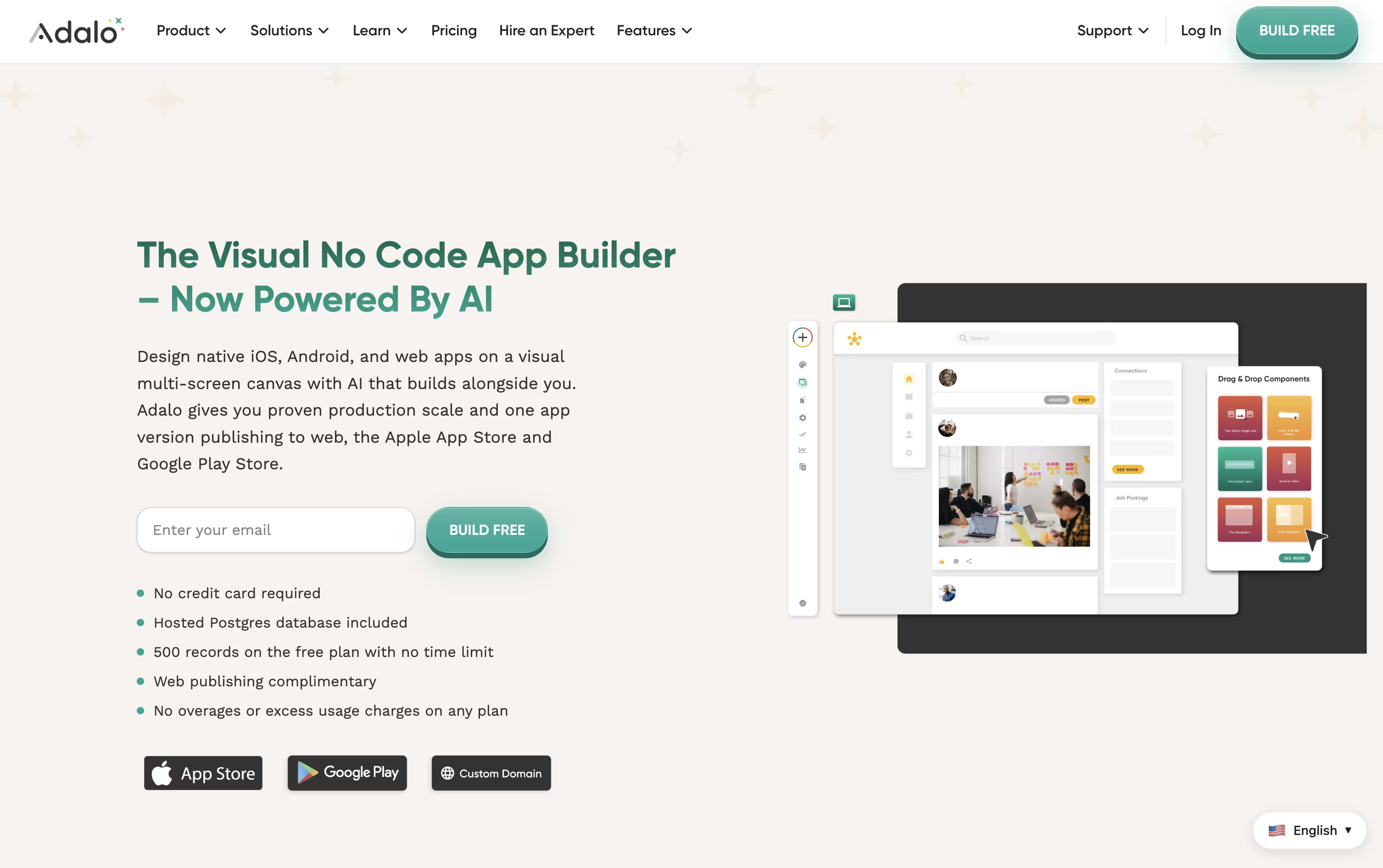
A hosted database comes built in, and you can link outside data sources such as Google Sheets, Airtable, or your own APIs when you need more.
Getting started costs nothing. The free plan gives you unlimited screens and test apps so you can learn the tool and try out ideas before paying anything.
Once you are ready to launch, plans starting at $45 a month unlock web publishing, custom domains, and app store publishing for iOS and Android.
Higher plans, Professional at $65 a month and Team at $200 a month, add custom actions, outside integrations, push notifications, and API access as your app grows.
For bigger needs, Adalo Blue offers a fully managed service with dedicated infrastructure and custom development.

Instead of chatting with one AI to write code, Atoms hands your idea to a small team of AI agents that each play a different role, like a real software company.
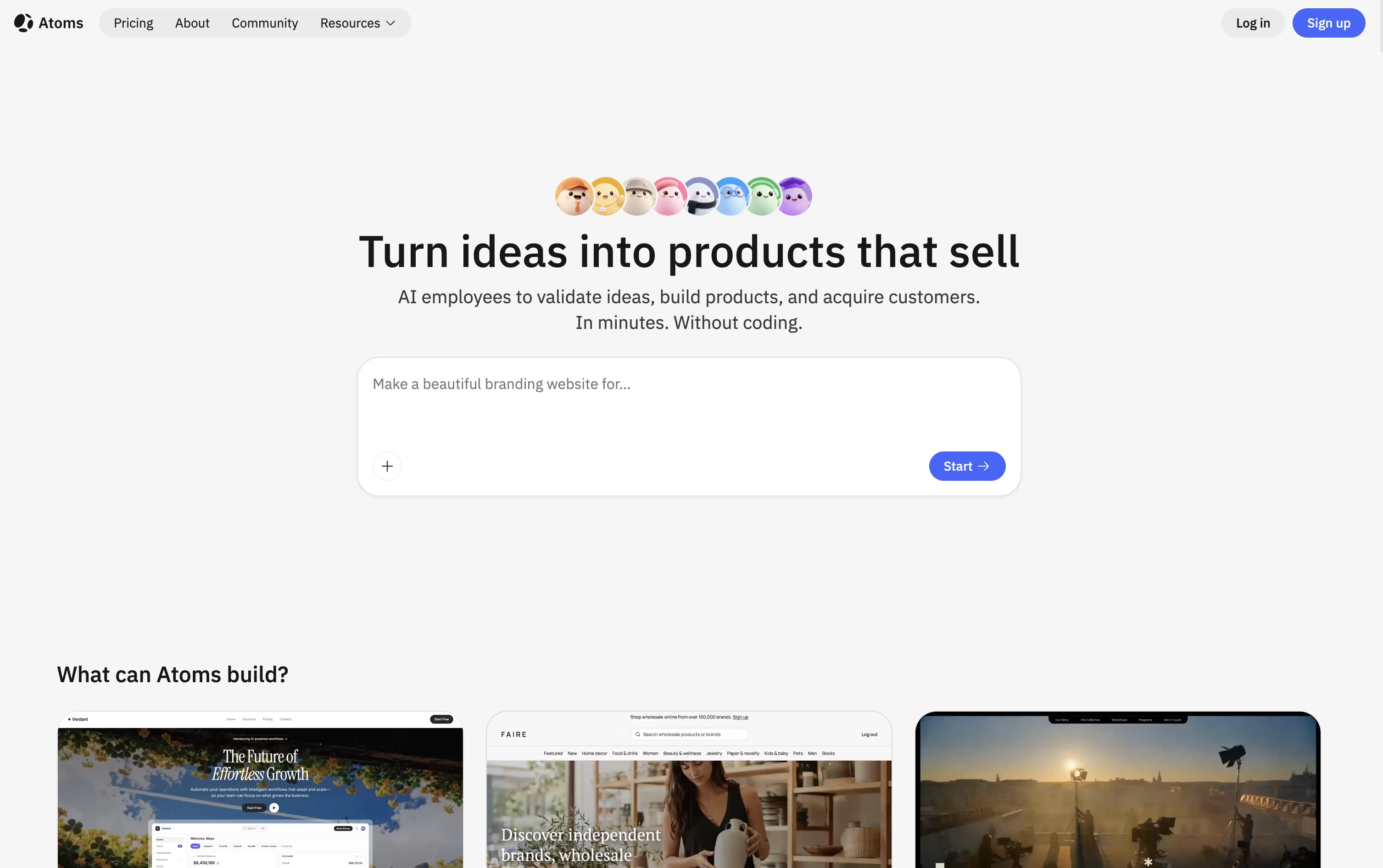
One agent researches your market, another turns your idea into a clear plan, and others handle the actual coding, covering both the frontend and backend along with login, a database, and Stripe payments.
After launch, an SEO agent optimizes your pages for search, an ads agent can run Google Ads for you, and a data agent tracks how your app is performing.
You can start for free, which gives 15 daily credits, 2 GB of storage, and 2 backend projects. The Pro plan starts at $20 a month for 100 credits and unlocks private projects, custom domains, and unlimited backend projects.
For heavier use, Max starts at $100 a month for 500 credits, offering 100 GB storage, double the compute resources, and Race Mode to compare results from multiple AI models. Choosing yearly billing saves up to 21%.
Whenever you want, you can export your project's code or sync it with GitHub, so your work is never locked inside the platform.

With Capacity, you describe your app idea the way you would explain it to a friend, and an AI Co-Founder takes it from there. It asks a few questions about what you are building and who it is for, then generates a full app with a frontend, backend, database, and login already wired together.
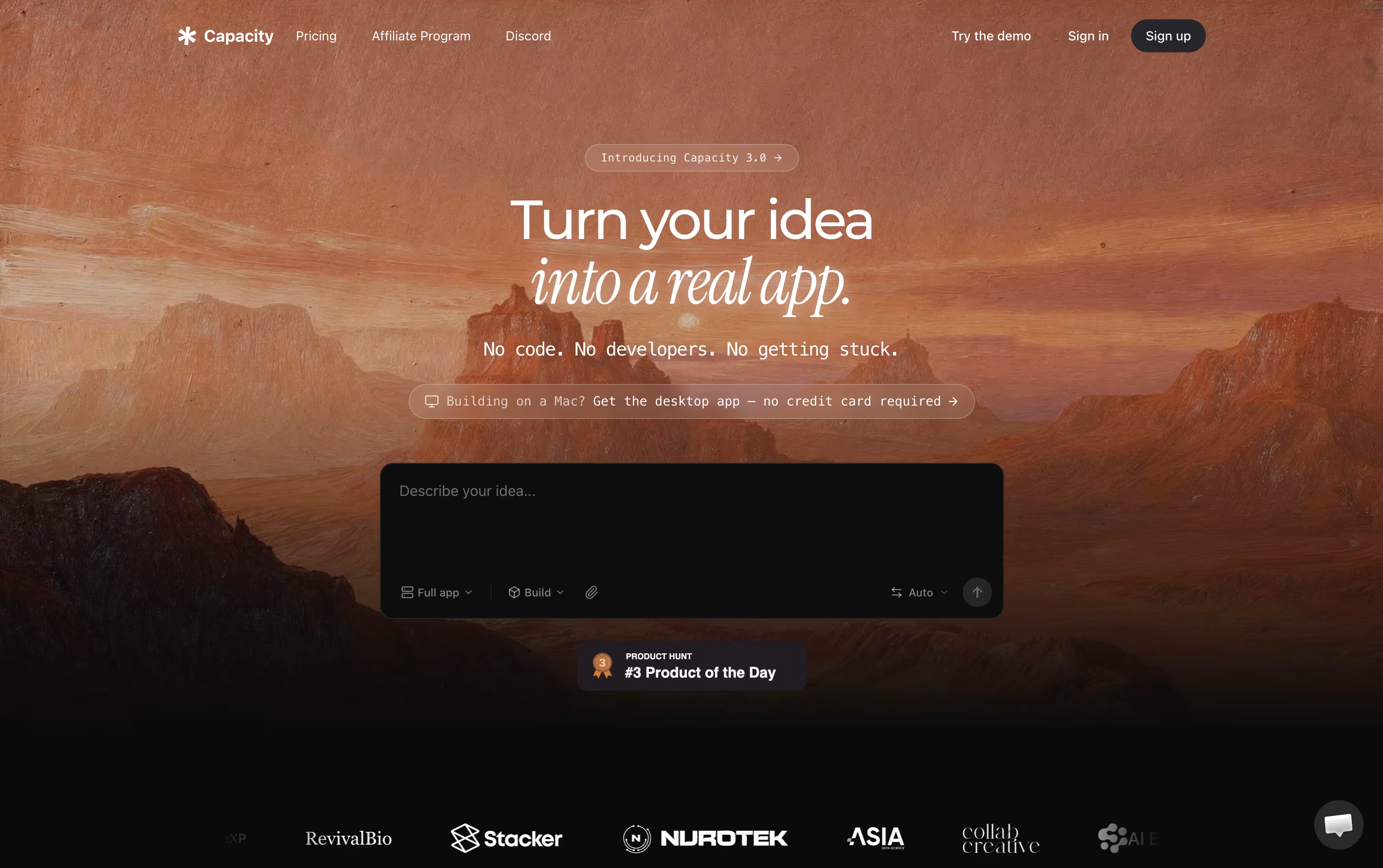
You can iterate quickly in Vibe Mode, or use Spec Mode to lay out a clear plan before anything gets built.
Once your app is live, you can preview it, chat to make changes, and publish with a single click. Matching iOS and Android apps can also be generated from the same project.
Plans start at $25 a month for the Starter tier with 100 credits, and scale up to $299 a month for the Business plan with 1,000 credits and a dedicated success manager.
One-time credit packs are also available from $9 if you prefer not to subscribe.
Your code always belongs to you, and full export is available at any time.

With Durable, you skip the usual back and forth of building a website by hand. You describe your business, and the AI builds a complete, ready-to-edit site in roughly thirty seconds, images and all.
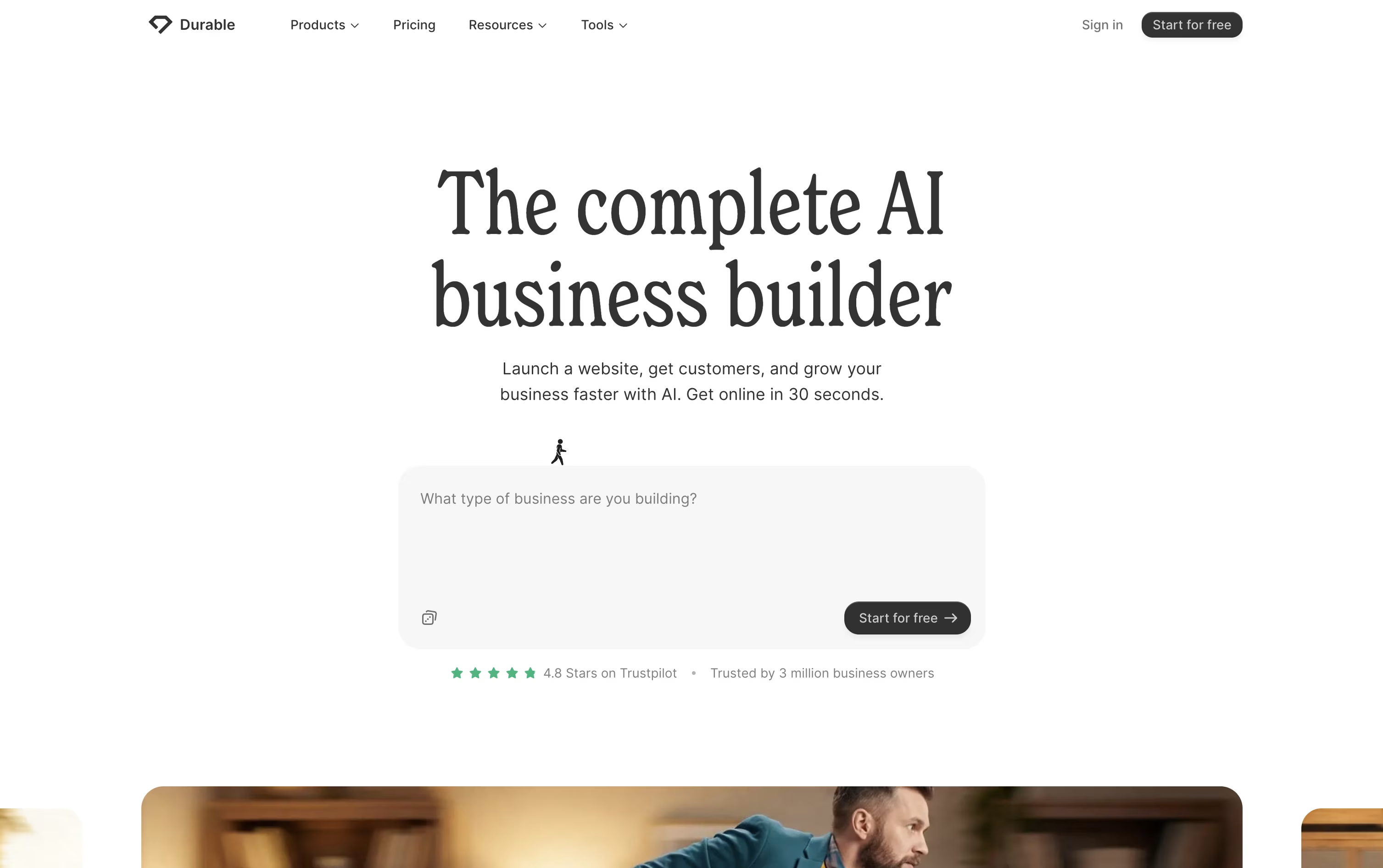
Once the site is live, Durable keeps working in the background. It comes with a CRM to track leads, an online booking tool that syncs with your calendar, and an AI assistant that can draft posts, reply to customers, and give business advice around the clock.
The free plan is a good way to try things out, offering a basic website, simple lead tracking, and a small monthly allowance of AI images and chat messages.
Stepping up to Launch, at $25 a month or $22 a month billed yearly, unlocks a more professional site, SEO and GEO tools to help you appear in Google and AI chat answers, unlimited bookings, and bigger AI limits.
The Grow plan, at $49 a month or $41 a month yearly, is built for busier teams, adding unlimited team seats, personal onboarding, and the highest AI usage limits.

Glide lets you build business apps without writing code. You start with a spreadsheet, a database, or even just a written description, and Glide turns it into a working app with screens, forms, and automations already set up.
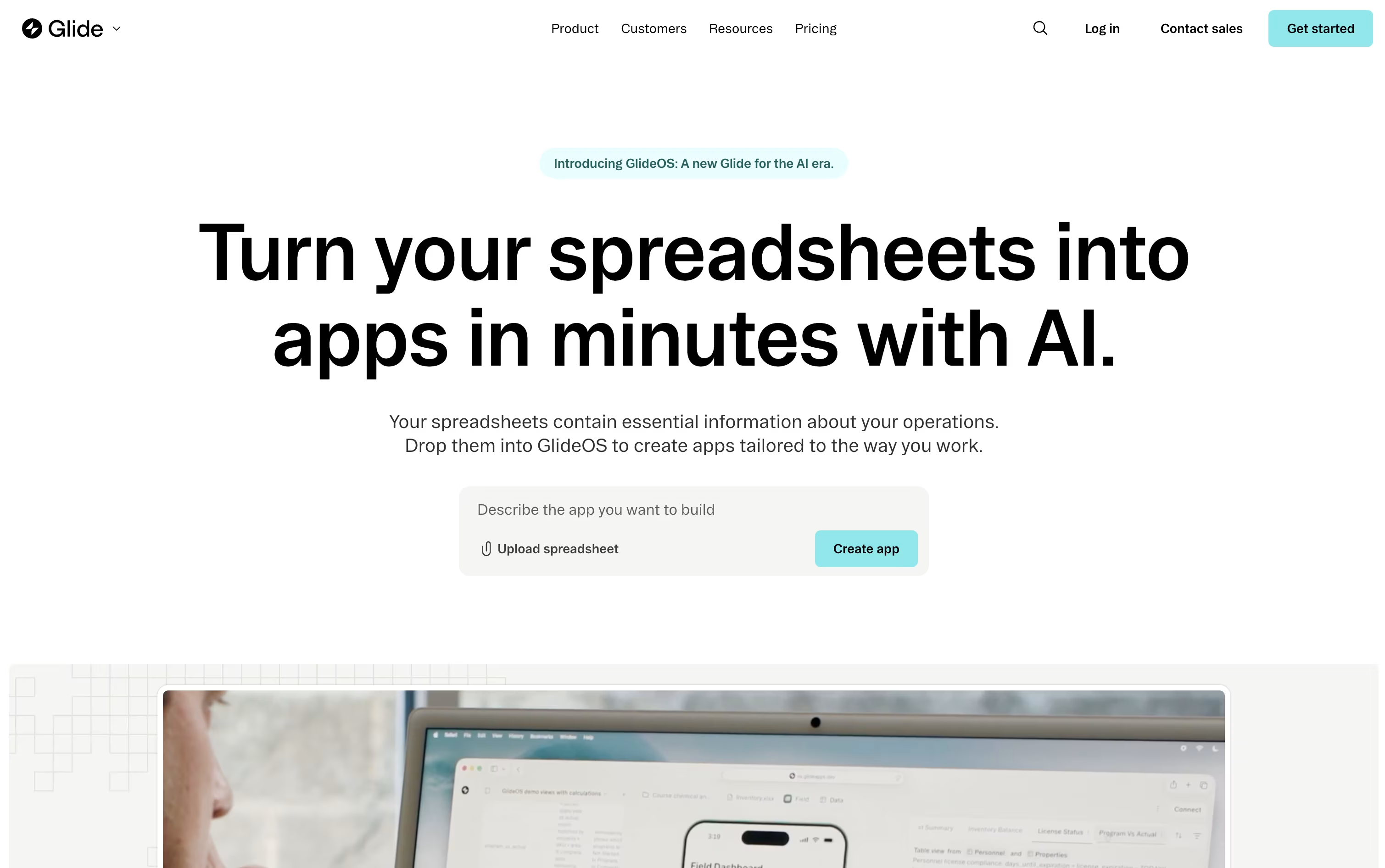
Its newer AI system, GlideOS, studies your uploaded spreadsheet, including formulas and formatting, asks a few questions about how you work, and puts together a usable app in about 5 minutes. From there, you simply chat with it to add pages or change features.
The Free plan costs nothing and supports unlimited draft apps with up to 25,000 rows. Solo builders can upgrade to Explorer at $19 a month or Maker at $49 a month on yearly billing, both unlocking published apps, custom branding, and more users.
Businesses that need a shared workspace can choose the Business plan at $199 a month, billed yearly, which comes with a 14 day free trial, unlimited apps, 30 users, workflows, and API access.
Enterprise pricing is custom and brings single sign-on, dedicated connectors, and a dedicated account manager for larger teams.
Because Glide links to Google Sheets, Airtable, and SQL databases, it suits inventory tools, sales apps, dashboards, and internal portals.

Retool is a low-code platform that simplifies building internal business applications. Instead of writing thousands of lines of code, you use pre-built components like tables, forms, buttons, and charts. You can arrange these visually and connect them to your databases, spreadsheets, or other systems.
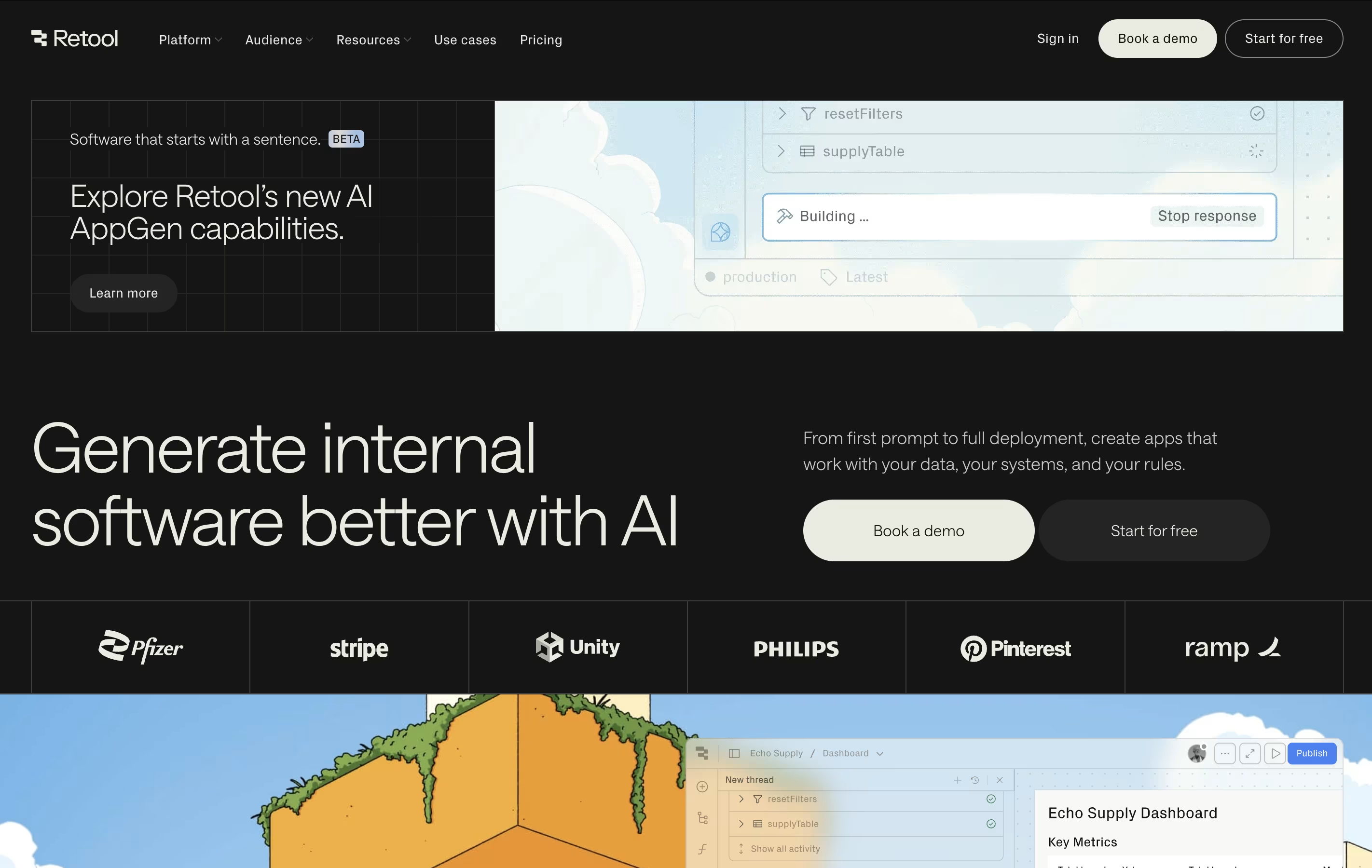
The platform works for creating many types of tools: admin panels for managing users, customer support dashboards, inventory systems, approval workflows, and data analysis tools. It bridges the gap between no-code simplicity and full coding power.
Retool supports both web and mobile applications. It includes features for workflows, automation, and even building tools powered by artificial intelligence. The platform handles security, permissions, and deployment automatically, so you can focus on solving business problems rather than managing servers.

Building a real app usually means hiring developers or learning to code yourself. Floot skips both by letting you describe your idea in plain language and building the app for you, backend and all.
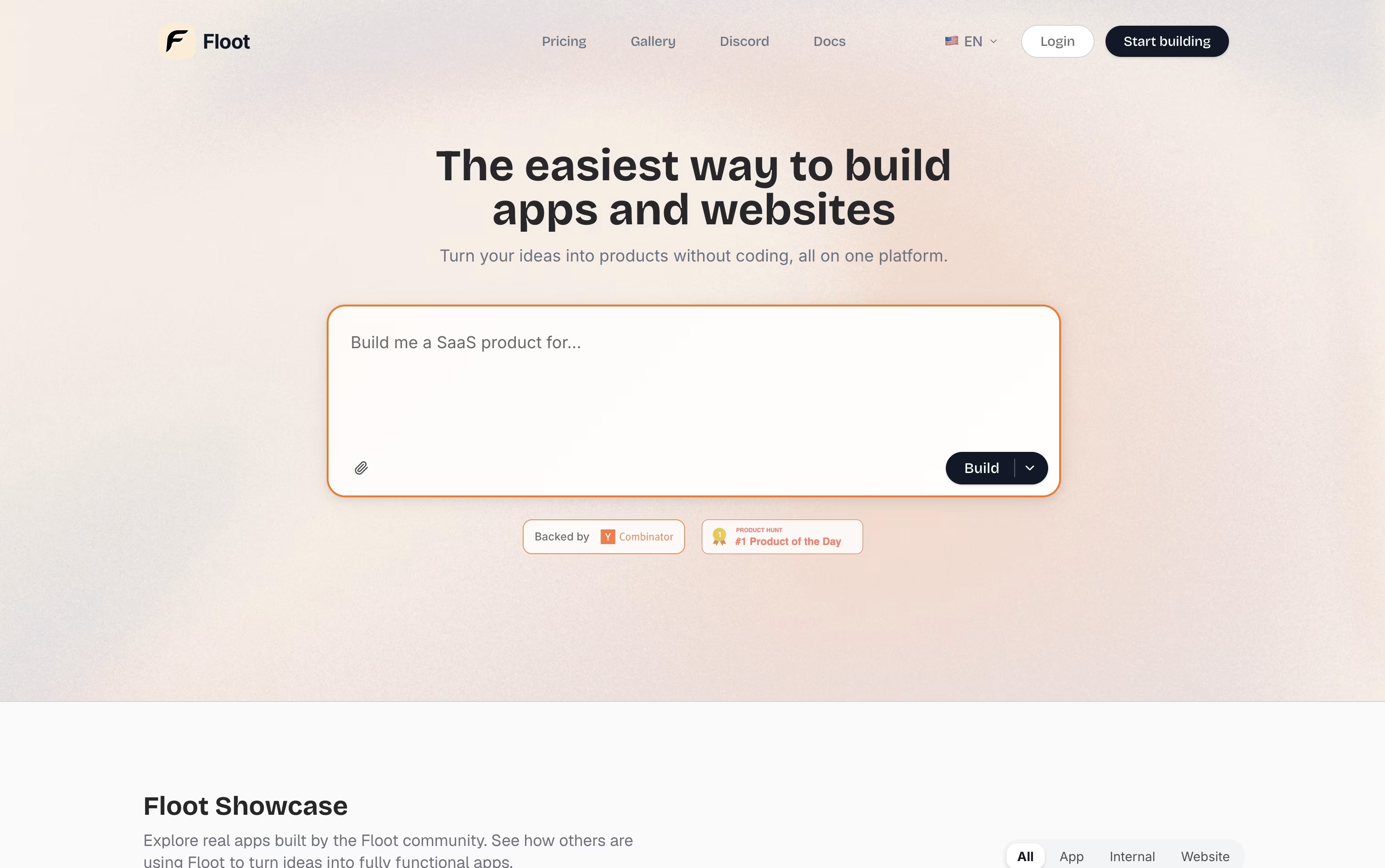
The platform was founded in 2025 by engineers who previously worked at Retool and AWS, and it was built specifically for AI-driven app creation rather than adapted from older coding tools.
Beyond the basic build, Floot adds hosting, a database editor, user logins, SEO tools, and realtime features like live chat and push notifications, so the finished app can serve real customers.
Getting started costs nothing. The Free plan gives you 3,000 AI credits and a small hosting allowance to test your first project.
When you are ready to grow, the Pro plan begins at $25 a month for 25,000 credits, with a $100 a month option for 100,000 credits. It unlocks custom domains, SEO tools, and mobile app export.
Businesses with bigger needs can choose the Enterprise plan, which starts at a $20,000 yearly commitment and includes custom features and dedicated support.

Xano is a complete backend-as-a-service platform that handles all the technical work behind your applications. You get a PostgreSQL database, API builder, authentication system, and hosting infrastructure without managing servers or writing backend code.
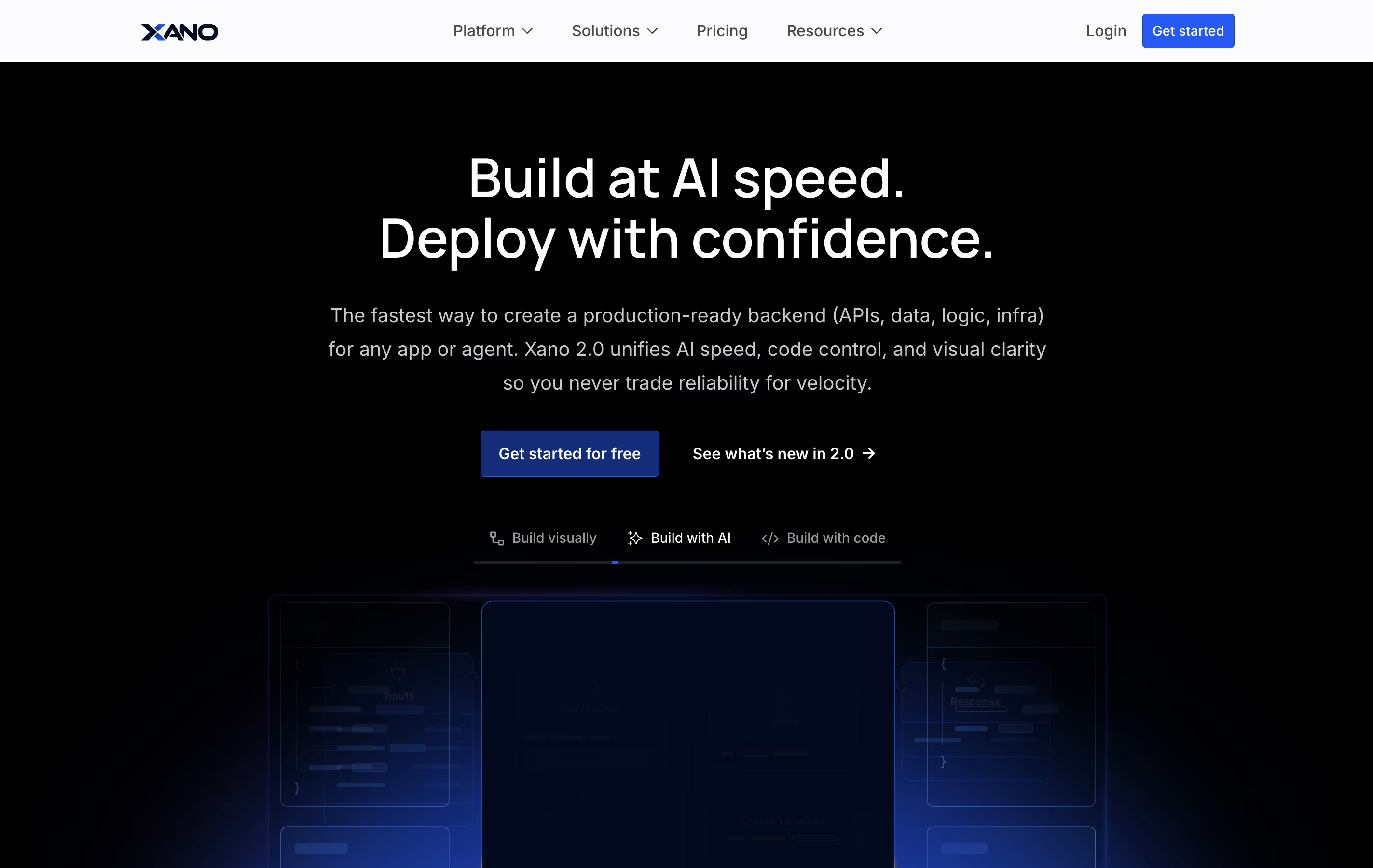
The platform uses a visual interface where you design data models, create API endpoints, and build business logic by connecting functions together. This approach makes backend development accessible to people without programming experience while still offering power for technical users.
Xano connects easily with popular frontend builders like Bubble, WeWeb, and FlutterFlow. It also provides enterprise-level security with GDPR, SOC 2, and HIPAA compliance options. The system scales automatically as your user base grows, handling everything from small projects to applications with millions of users.

Questflow is a decentralized AI automation platform that orchestrates multiple AI agents to complete tasks automatically across different platforms. Think of it as having a team of smart digital workers who never get tired and can handle repetitive tasks 24/7.
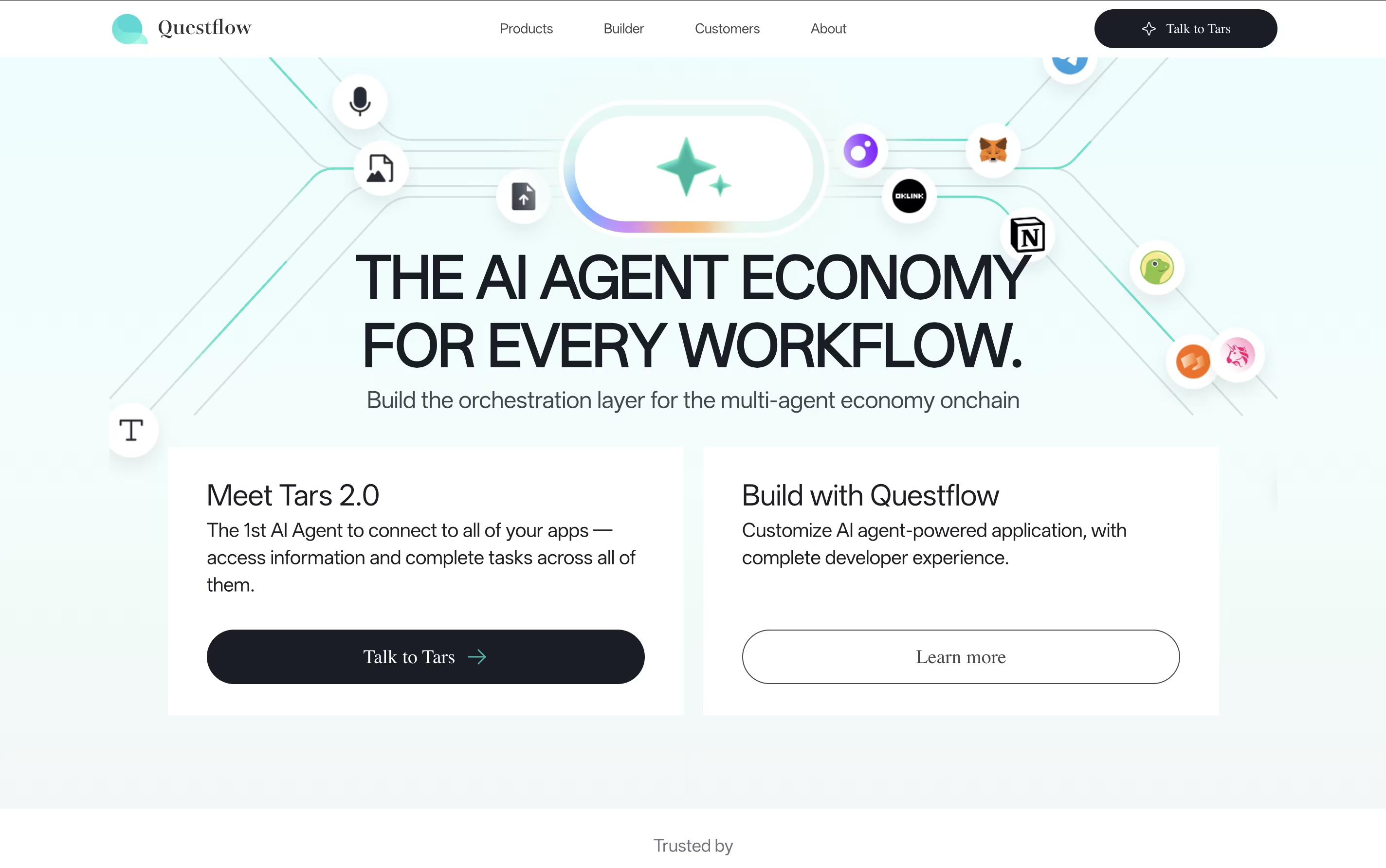
The platform uses a no-code approach, meaning you don't need programming skills to create powerful automation workflows. You simply describe what you want to accomplish, and Questflow's AI agents figure out how to do it. What makes it special is the multi-agent approach - instead of one AI doing everything, different specialized agents work together like a real team.
The platform also uses blockchain technology with QF Coin for secure transactions and rewards. Founded by experts in AI and automation, Questflow aims to make AI accessible to everyone, from small businesses to large enterprises.
Gadget is an AI-powered, full-stack development platform designed to accelerate web application development by eliminating repetitive boilerplate code and setup tasks. Think of it as a complete development environment that includes everything you need: a Node.js backend, React frontend, PostgreSQL database, and serverless hosting, all integrated and ready to use.
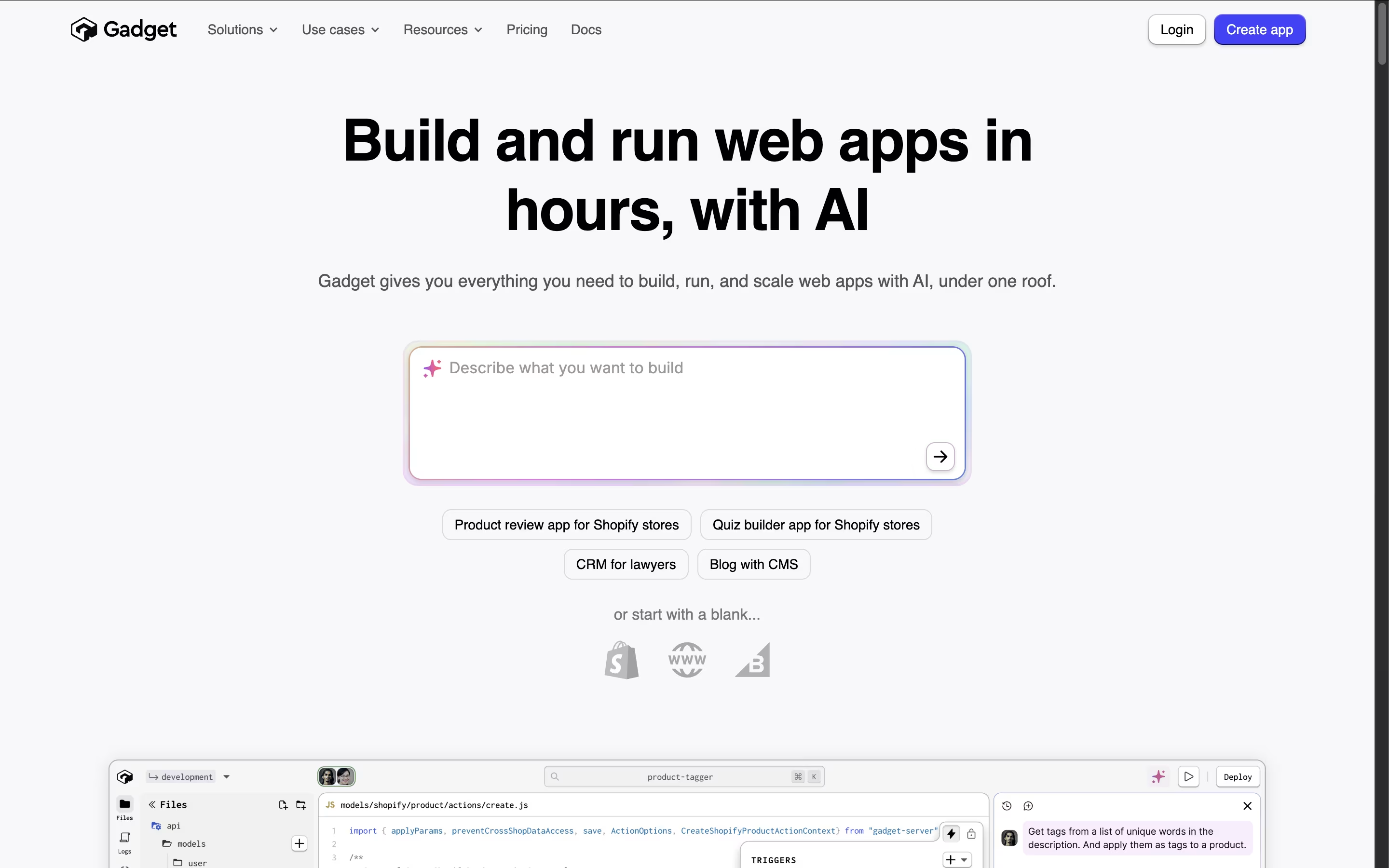
The platform automatically generates APIs, handles authentication, manages databases, and provides built-in connections to popular services like Shopify and BigCommerce. What makes Gadget special is its AI assistant that understands your specific app and helps write code, create database tables, and handle deployment tasks.
Unlike no-code tools that limit customization, Gadget gives you full control over your code while removing the tedious setup work. Founded by ex-Shopify executives, it combines best practices with smart automation to help developers build applications up to 10 times faster than traditional methods.

BuildShip is an AI-powered visual backend builder designed to help businesses and developers create scalable backend infrastructure without extensive coding knowledge. Think of it as a smart toolbox that combines no-code simplicity with low-code flexibility.
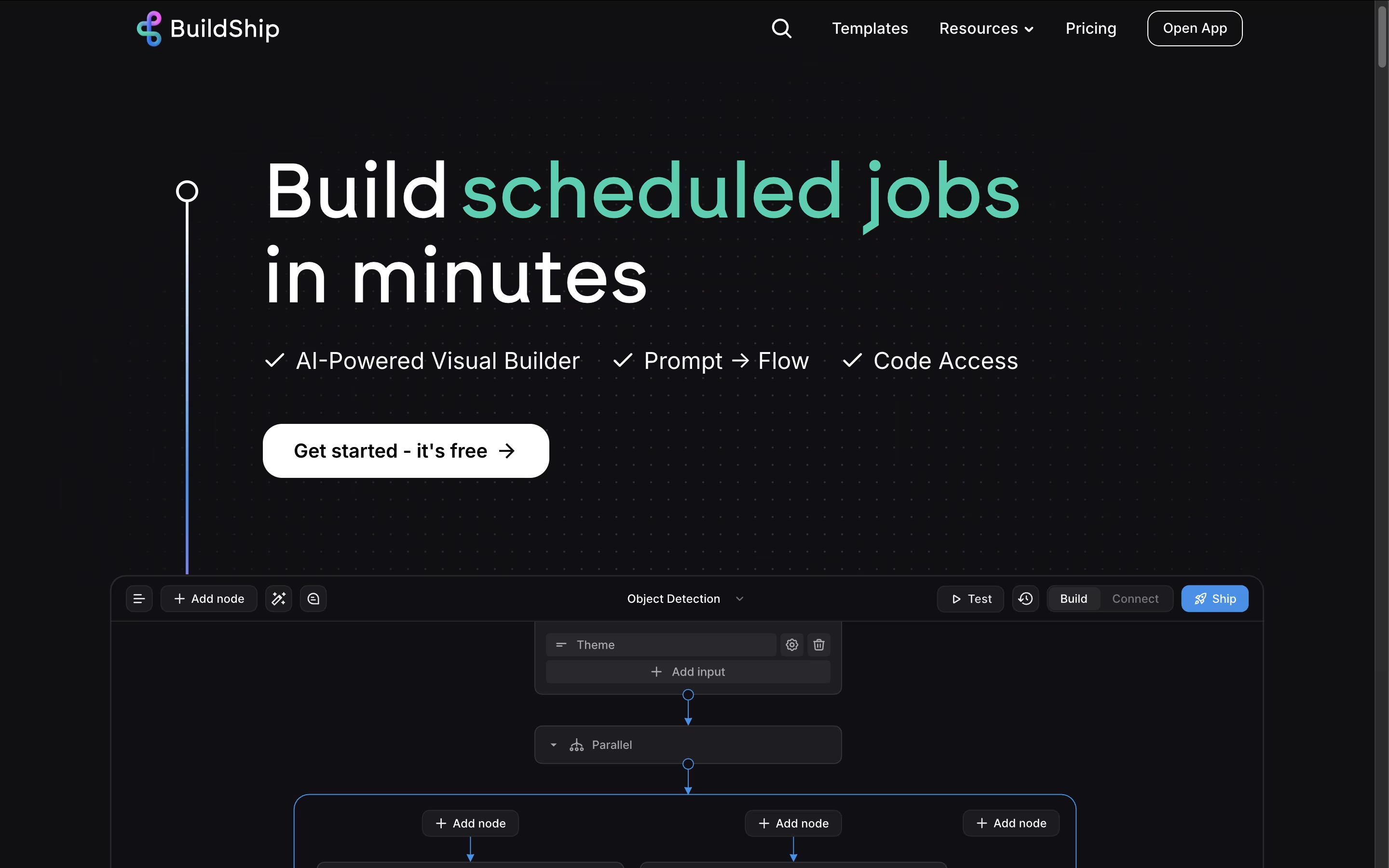
The platform uses a node-based system where you can drag and drop pre-built components or ask AI to generate custom nodes for your specific needs. It runs on Google Cloud Platform, ensuring enterprise-grade scalability and security. BuildShip connects seamlessly with popular AI models like ChatGPT, databases like Firebase and PostgreSQL, and hundreds of third-party services.
Founded in 2023 by the team behind Rowy, this platform has become popular because it eliminates the complexity of traditional backend development while giving you full control over your code when needed.

Building an app with Shipper.now starts with typing your idea in plain English, whether that is a website, a mobile app, a browser extension, or a chat bot. The AI reasons through the whole project, planning the database, designing the screens, writing the code, and catching its own mistakes.
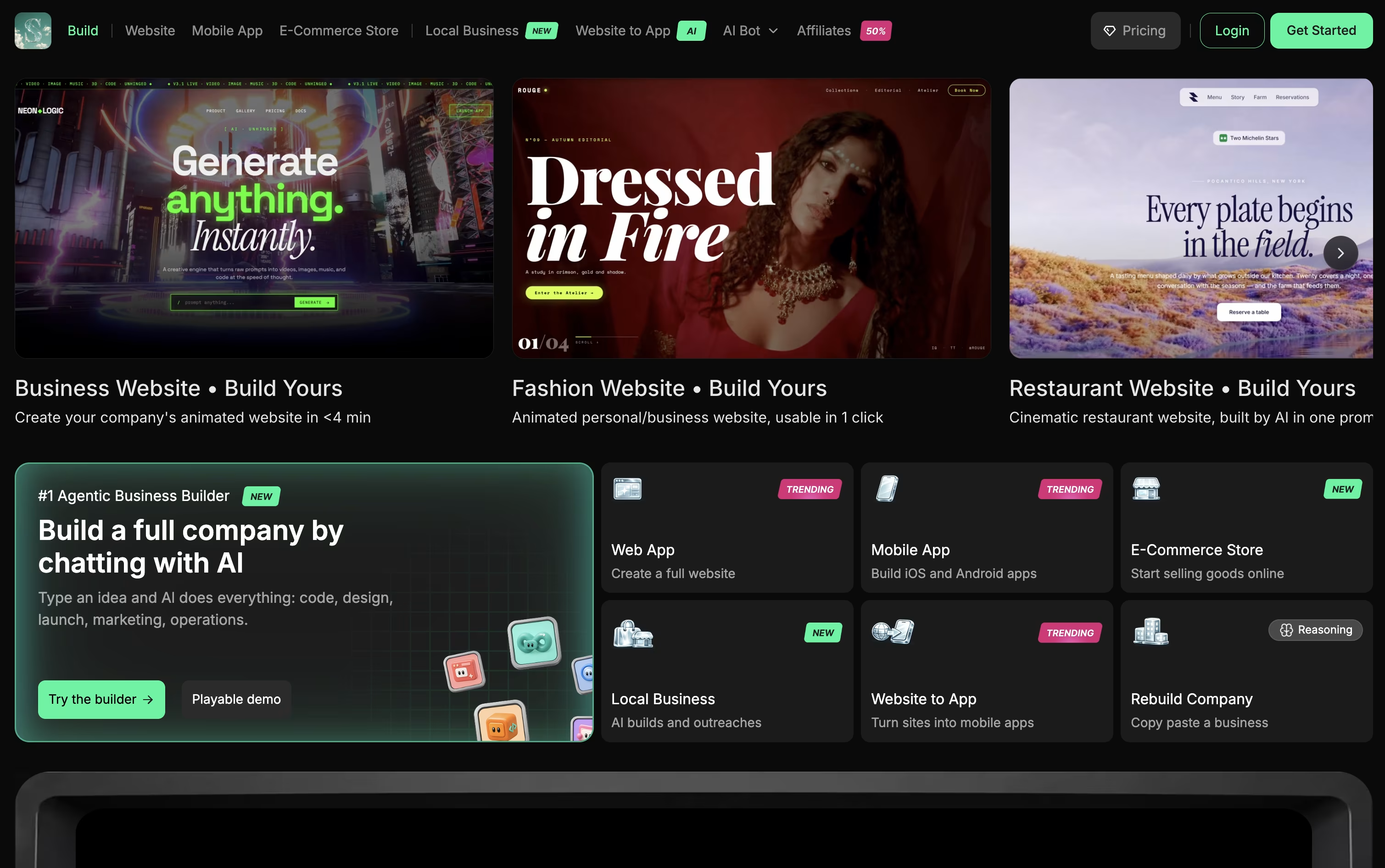
Rather than just generating code, Shipper.now leans into the idea of an AI co-founder. Its separate Shipper Advisor feature works like a consultant, reviewing your project and suggesting improvements to product, growth, and marketing.
You can try it for free before paying anything. The Pro plan starts at $25 a month with 100 credits, and higher tiers go up to 20,000 credits for $5,000 a month, adding connectors, advanced design options, unlimited teammates, and the AI Advisor.
Shipper Max is built for heavier use, starting at $200 a month for 500 credits and reaching $400 a month for 1,000 credits. It brings priority support, AI Employees, and access to models such as Claude Opus, Gemini, and DeepSeek.
When your app is ready, Shipper takes care of hosting, the database, and logins, and you can point a custom domain at your finished product.

Building a website usually means learning to code or hiring someone who can. Hostinger Horizons skips that step by letting you describe your idea in normal language, through text, voice, or even a picture, and turning it into a real project.
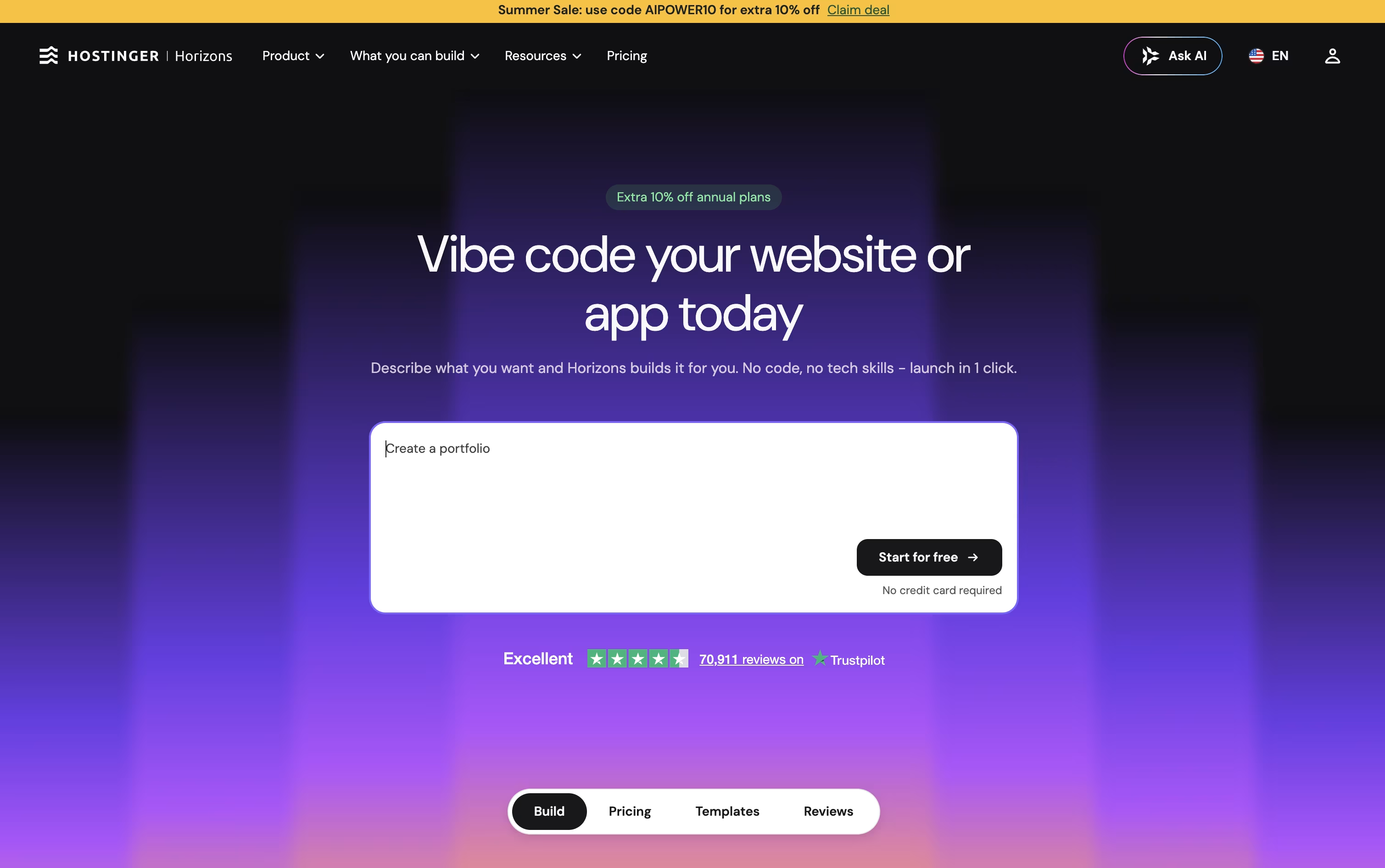
After the first version is ready, you simply keep talking to it to make changes, such as adding a login page, a store, or a chatbot. If you prefer, a full code editor is there too for hands-on edits.
Starting out is free, with 5 AI credits and no card needed. From there, the Explorer plan costs $6.99 a month for 30 credits, the Starter plan is $13.99 a month for 70 credits, and the Hobbyist plan runs $39.99 a month for 200 credits.
Paying plans throw in a free domain and hosting for the first year, quicker support, visitor analytics, and tools to sell products or subscriptions.
Every project is built with working code, so publishing takes one click and your site runs on Hostinger's own hosting, domains, and email setup.

Paragon is an embedded integration infrastructure platform designed specifically for B2B SaaS companies that need to offer native integrations to their customers. Think of it as the backbone that powers all your app's connections to other software tools your customers use daily.
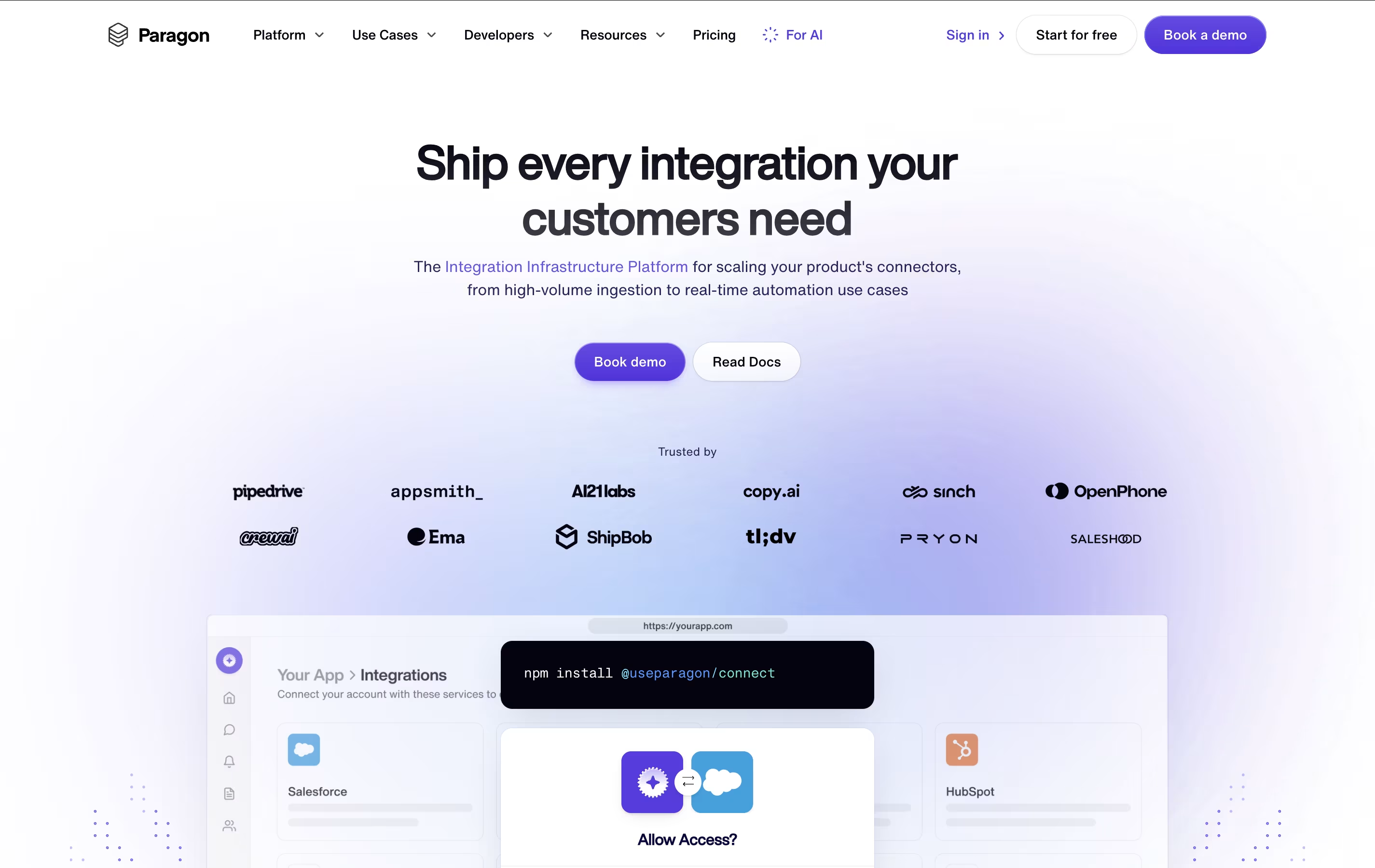
The platform provides over 130 pre-built connectors for popular business applications, along with the ability to create custom integrations for any third-party API. What makes Paragon special is that it handles all the technical complexity behind integrations - user authentication, data syncing, error monitoring, and maintenance - while providing your customers with a white-labeled, native experience that looks and feels like part of your product.
Founded in 2019 and backed by Y Combinator, Paragon processes over 100 million requests monthly for companies ranging from startups to enterprise organizations, making it a trusted solution for scaling integration needs.