

Make vs Pipedream: Features, Pricing and User Reviews 2026
What are Make and Pipedream?

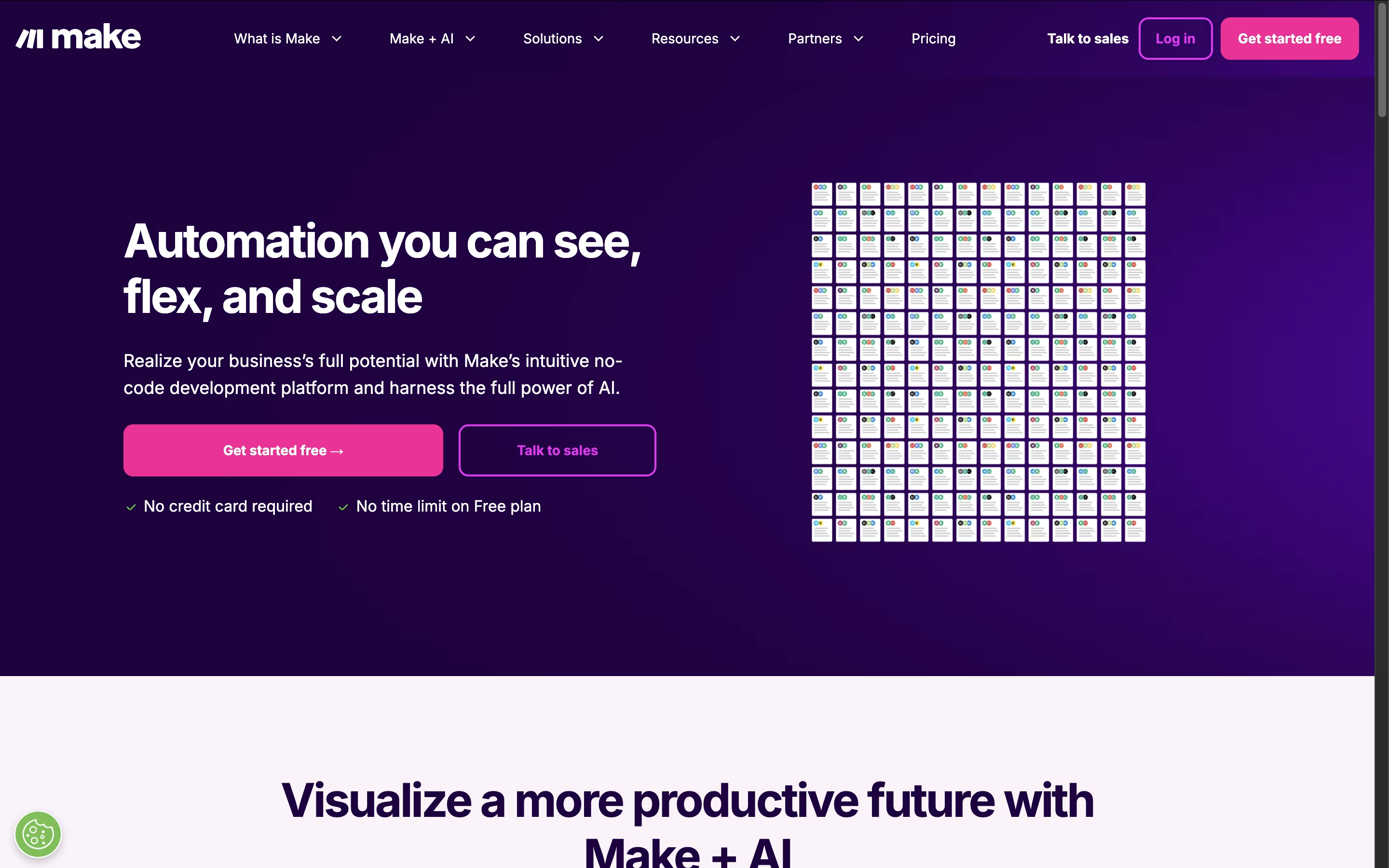
Make.com is a visual workflow automation platform that connects different apps and services to create powerful automated processes. Think of it as the bridge between all your favorite business tools, allowing them to work together seamlessly without manual intervention.
The platform uses a unique visual approach where you build automations using modules and connections that look like a flowchart. Each module represents an action in a specific app, and you connect them to create complete workflows called scenarios. Make supports over 2,000 integrations including Google Workspace, Slack, Salesforce, social media platforms, and countless other business tools.
What sets Make apart is its flexibility and power. You can create simple automations like forwarding emails to spreadsheets, or complex multi-step workflows that involve conditional logic, data transformation, and AI integration. The platform is designed for both beginners and advanced users who need sophisticated automation capabilities.

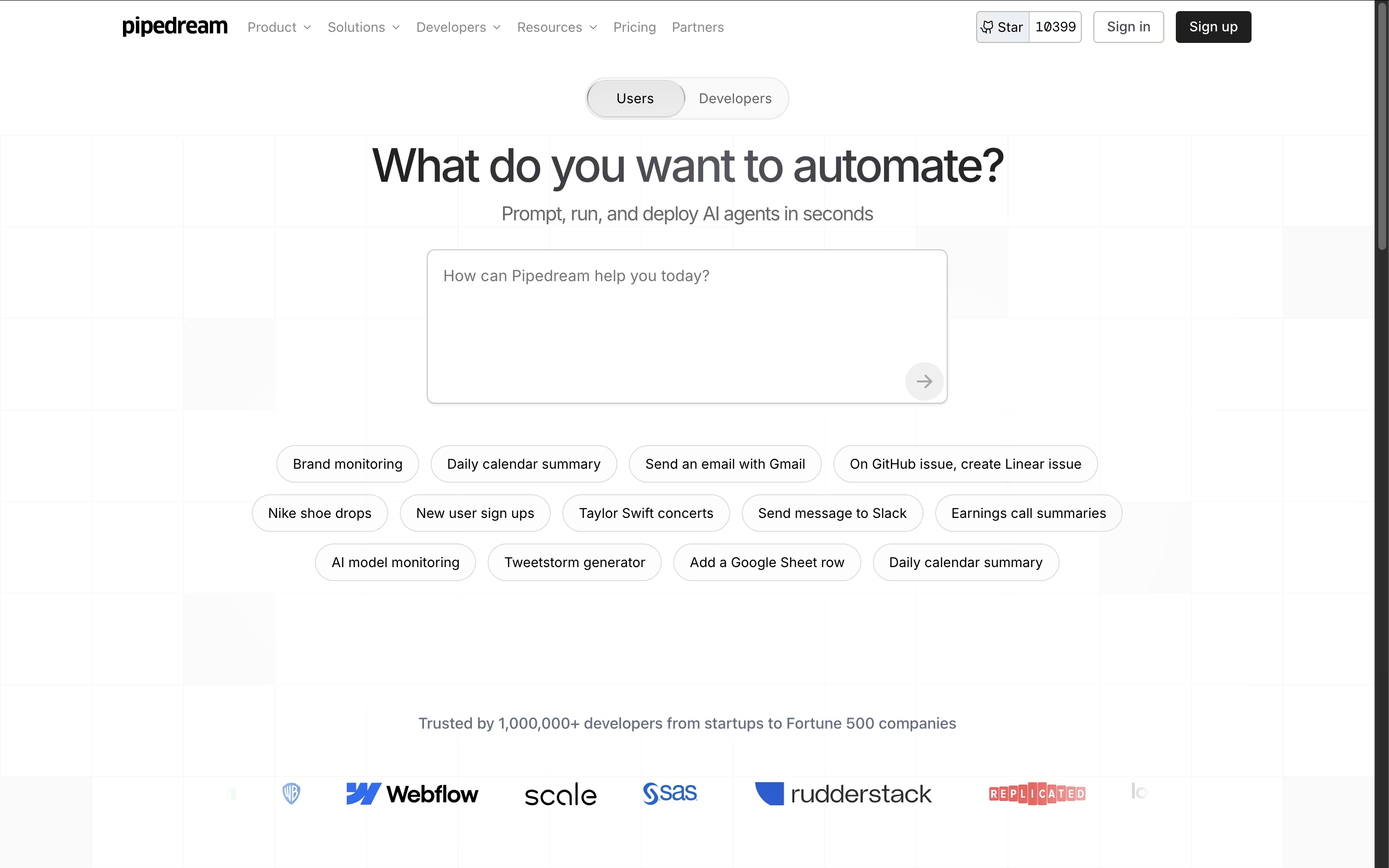
Pipedream is a serverless workflow automation platform designed specifically for developers who need to connect different applications and APIs. Think of it as a bridge that lets your apps talk to each other automatically.
Unlike traditional automation tools, Pipedream gives you the power to write custom code when needed while providing thousands of pre-built components for common tasks. The platform handles all the infrastructure, authentication, and scaling automatically, so you can focus on building workflows instead of managing servers.
Each workflow is a series of steps that run when triggered by events like new emails, API calls, or scheduled times. With support for major programming languages and integration with popular services like Slack, Google Sheets, GitHub, and Stripe, Pipedream makes it easy to automate almost any business process or technical workflow.
Features of Make and Pipedream
Visual drag-and-drop automation builder
2,000+ app integrations and connections
AI-powered workflows with intelligent agents
Real-time execution and minute-level scheduling
Advanced conditional logic and data transformation
Team collaboration with role-based permissions
Error handling and debugging tools
Template library with pre-built automations
Enterprise security and compliance features
API access for custom integrations
2,700+ app integrations with pre-built actions
Multi-language support (Node.js, Python, Go, Bash)
Managed OAuth authentication and token refresh
Real-time monitoring and detailed execution logs
GitHub version control integration
Serverless hosting with automatic scaling
Custom code support with npm/PyPI packages
Generous free tier with paid plans for scaling
Enterprise-grade security and compliance
Connect SDK for embedding integrations
Use Cases of Make and Pipedream
Pricing of Make and Pipedream
Make offers flexible pricing plans to accommodate different automation needs. The Free plan provides 1,000 operations monthly, perfect for testing and simple automations. Operations are individual actions your workflows perform, like adding a row to a spreadsheet or sending an email.
Paid plans include:
Core ($9/month): 10,000 operations with unlimited scenarios and API access
Pro ($16/month): 10,000 operations plus priority execution and advanced features
Teams ($29/month): 10,000 operations with team collaboration tools and shared templates
Enterprise (Custom pricing): Unlimited operations, dedicated support, and advanced security features
All plans include access to the visual builder and app integrations. You can purchase additional operations at $1 per 1,000 operations if you exceed your monthly limit. Make offers excellent value compared to competitors, especially for complex multi-step automations that would cost significantly more on other platforms.
Pipedream offers flexible pricing plans designed to grow with your needs. The Free plan provides generous limits with 100 monthly credits, 2M operations, and 3 connected accounts - perfect for personal projects and testing.
Paid plans offer enhanced capabilities:
Basic ($29/month) - 2,000 credits, 20M operations, 10 connected accounts for growing individuals
Advanced ($49/month) - 2,000 credits, 50M operations, 3 connected accounts for production teams
Connect ($99/month) - 10,000 credits, 50M operations, 5 connected accounts for developers building integrations
Enterprise (Custom pricing) - Unlimited everything with dedicated support and custom features
Key advantages:
Credits are charged per 30 seconds of compute time, not per step, making it cost-effective for complex workflows. All plans include unlimited workflow development and testing, with charges only applying to production executions. Annual billing provides additional savings on all paid plans.
FAQs: Make vs Pipedream
Reviews: Make vs Pipedream
Based on 0 reviews
Based on 0 reviews
Compare Make With Other Tools

Zapier
Connect Apps & Automate Workflows Without Code

n8n
Visual Workflow Automation with Code
Albato
AI-Powered No-Code Automation Platform

Integrately
One-Click App Automation Platform

Latenode
AI-Powered No-Code Automation Platform

Inngest
Reliable Workflows & Background Jobs Platform

BuildShip
AI-Powered Visual Backend Builder for APIs and Workflows

IFTTT
Connect Apps and Automate Your Workflow

Activepieces
Open-Source AI Automation for Teams
Compare Pipedream With Other Tools
n8n
Visual Workflow Automation with Code
Zapier
Connect Apps & Automate Workflows Without Code
Albato
AI-Powered No-Code Automation Platform
Integrately
One-Click App Automation Platform
Latenode
AI-Powered No-Code Automation Platform
Inngest
Reliable Workflows & Background Jobs Platform
Activepieces
Open-Source AI Automation for Teams

Pabbly Connect
Easy Workflow Automation for 2000+ Apps
BuildShip
AI-Powered Visual Backend Builder for APIs and Workflows