
StatusPal vs FireHydrant: Features, Pricing and User Reviews 2026
What are StatusPal and FireHydrant?

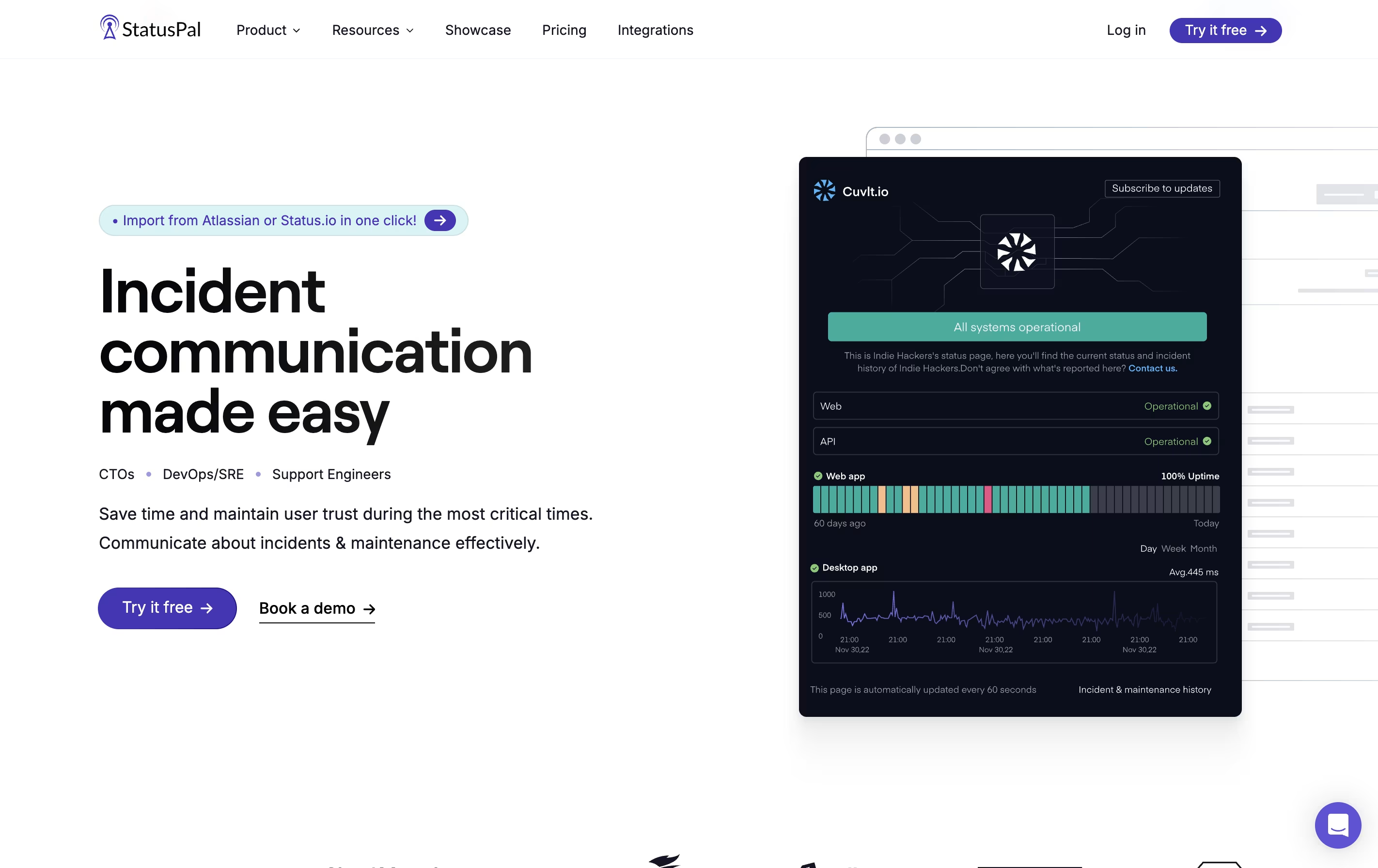
StatusPal is a tool that creates customized status pages for your online services. When you experience downtime or need to perform maintenance, you can quickly post updates that all your users can see. The platform shows which services are working normally and which ones have problems.
It connects with monitoring tools to detect issues automatically. When something goes wrong, StatusPal can create incident reports and send alerts without manual work. Users can subscribe to get notifications through email, SMS, or messaging apps like Slack.
There are different pricing plans available. All plans include unlimited status pages, which is helpful if you manage multiple products or services. The platform also supports multiple languages and offers private status pages for internal teams.

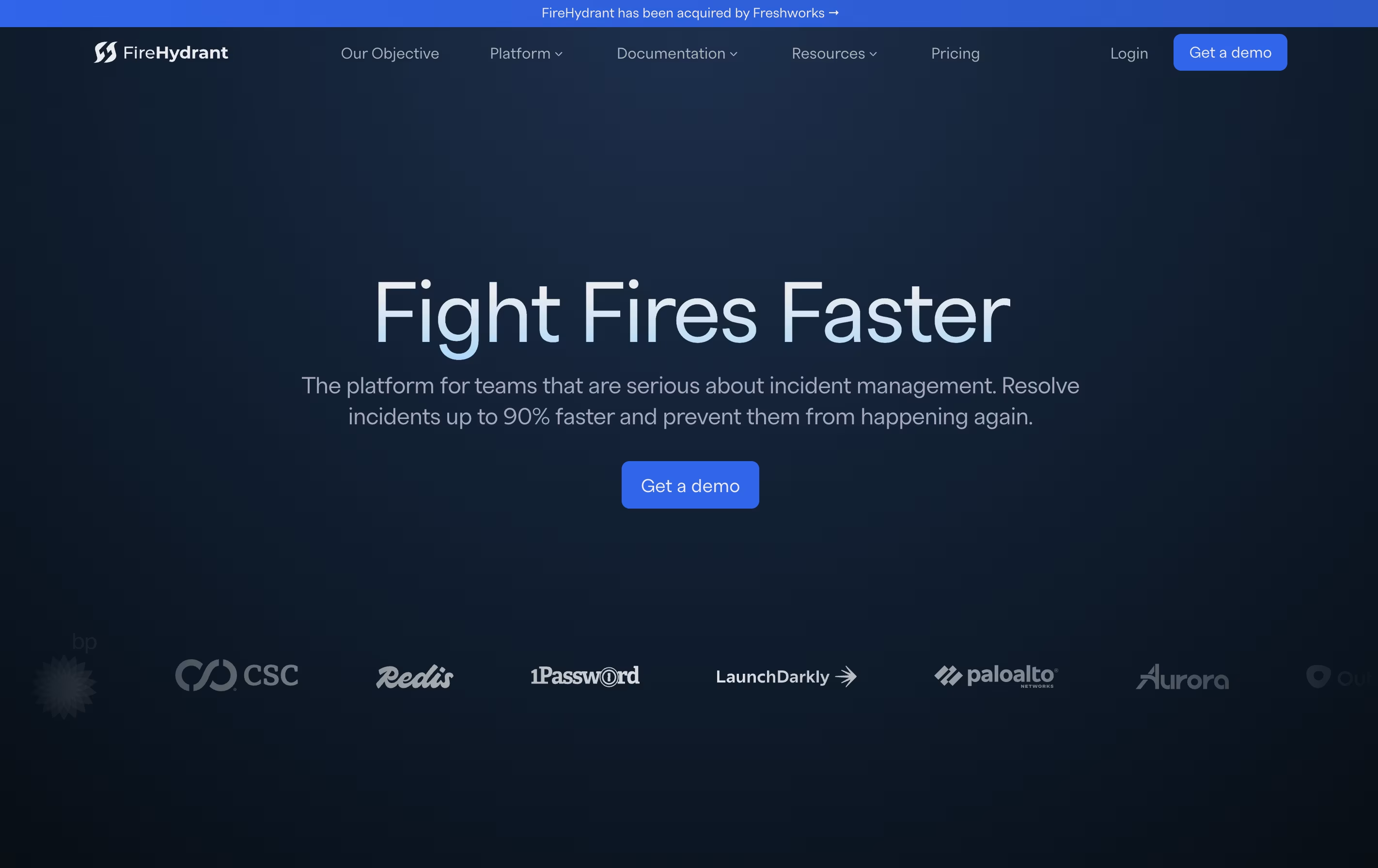
FireHydrant is a tool that manages the complete incident response process for software teams. When something breaks in your application, FireHydrant helps you respond quickly and consistently. It starts with alerting and on-call management, then guides you through response with automated workflows called Runbooks.
The platform works directly in Slack or Teams, so your team stays in one place during incidents. It automatically creates incident channels, pulls in the right people, sets up video calls, and keeps stakeholders updated. During an incident, FireHydrant tracks everything that happens, creating a timeline that makes post-incident reviews easier.
After incidents are resolved, the platform helps teams learn through guided retrospectives and shows metrics like response time and incident frequency.
Features of StatusPal and FireHydrant
Unlimited public and private status pages
Real-time notifications via email, SMS, and chat apps
Built-in service monitoring with automated alerts
Integration with 40+ tools including Slack, PagerDuty, and Zapier
Multi-language support for global teams
Single Sign-On with major providers
Custom domain and branding options
Recurring maintenance scheduling
API and webhook support
Terraform provider for infrastructure as code
Automated incident response with Runbooks
On-call scheduling and alert routing
AI-generated summaries and retrospectives
Slack and Teams integration for incident management
Service catalog with dependency tracking
Public and private status pages
Real-time incident timeline and documentation
Post-incident retrospectives and analytics
Integration with monitoring and ticketing tools
API-first platform with Terraform support
Use Cases of StatusPal and FireHydrant
Pricing of StatusPal and FireHydrant
StatusPal offers four pricing tiers to meet different needs. All plans include unlimited status pages.
The Hobby plan costs $46 per month and includes 5 team members, 500 subscribers, and 10 monitored services. This plan works well for individuals and small projects.
The Startup plan at $99 per month is the most popular choice. It supports 20 team members, 1,000 subscribers, 30 monitored services, and adds private status pages plus 2 languages.
The Business plan costs $299 per month with 50 team members, 4,000 subscribers, 100 monitored services, 3 languages, and includes SSO.
For larger organizations, the Enterprise plan offers custom pricing with unlimited team members, subscribers, and monitored services. It includes all features plus SSO role provisioning and audience-specific pages.
A 14-day free trial is available with no credit card required.
FireHydrant offers three pricing tiers to match different team needs. The free trial account includes up to 10 responders for two weeks with basic features like 2 runbooks, Slack and Teams integration, and 1 public status page.
Platform Pro costs $9,600 per year and supports up to 20 responders. It includes 5 runbooks, unlimited public status pages, service catalog, on-call scheduling, and Signals alerting with up to 50 SMS or phone alerts monthly. The plan also includes single sign-on and standard support.
Enterprise pricing is customized for large organizations. It adds unlimited runbooks, AI features for summaries and transcripts, private incidents, unlimited retrospective templates, private status pages, incident analytics, unlimited integrations, and premium support. Enterprise customers also get dedicated success managers and data export capabilities.
FAQs: StatusPal vs FireHydrant
Reviews: StatusPal vs FireHydrant
Based on 0 reviews
Based on 0 reviews
Compare StatusPal With Other Tools

Incident.io
AI-Powered Incident Management Platform

Better Stack
Complete Monitoring and Incident Management Platform

UptimeRobot
Website Monitoring with Instant Downtime Alerts

Status.io
Hosted Status Pages for Incident and Maintenance Communication

PagerDuty
Real-Time Incident Management for DevOps and IT Teams

Rootly
AI-Powered Incident Management Platform

Statuspage
Status & Incident Communication Tool

StatusCake
Website Monitoring for Uptime, Speed & Security

Instatus
Fast Status Pages for Modern Teams
Compare FireHydrant With Other Tools
Incident.io
AI-Powered Incident Management Platform
Better Stack
Complete Monitoring and Incident Management Platform
PagerDuty
Real-Time Incident Management for DevOps and IT Teams
Rootly
AI-Powered Incident Management Platform
Status.io
Hosted Status Pages for Incident and Maintenance Communication
UptimeRobot
Website Monitoring with Instant Downtime Alerts
Statuspage
Status & Incident Communication Tool
StatusCake
Website Monitoring for Uptime, Speed & Security

Sorry App
Status Page Platform for Incident Communication