

Best 14+ Text to Video Tools in 2026
Last Updated: August 28, 2026
Describing a scene in words and having it appear as a finished video clip is one of the more remarkable capabilities of modern AI. Text to Video tools generate video content directly from written prompts, handling visuals, motion, and pacing without any filming at all.
These tools are opening up video production for marketers, educators, and independent creators who previously lacked the resources for full video shoots. As the technology improves, text to video is quickly becoming a practical option for everyday content needs.
 OpenArt
 OpenArtAI Studio for Images, Video and Audio,
  Clipchamp
 ClipchampMicrosoft's Free Online Video Editor with AI Features, and
  InVideo
 InVideoAI Agents That Make Your Videos Fast are the best for Text to Video. So, let’s take a closer look at all 14+ tools.

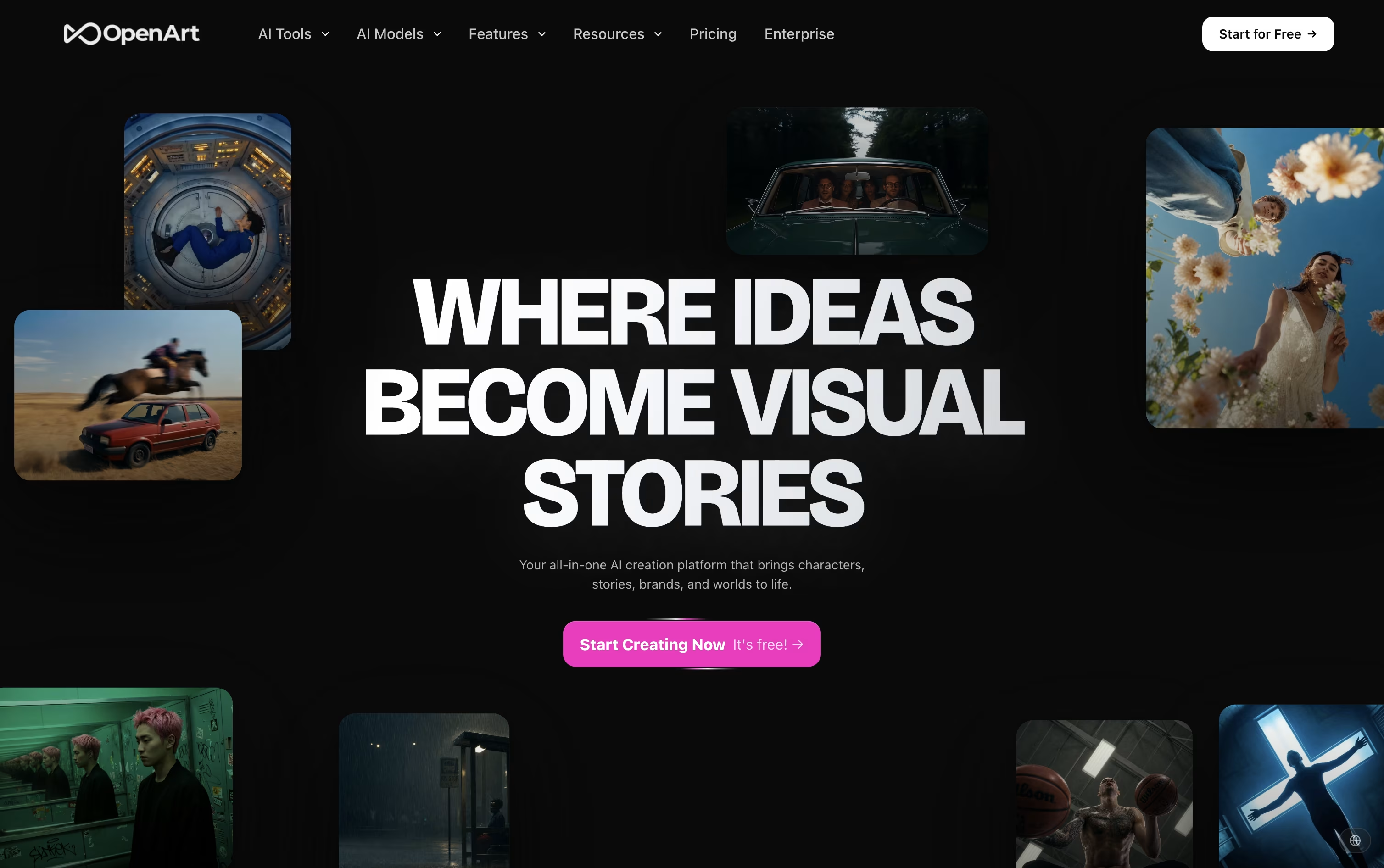
OpenArt brings image, video, audio, and character creation into a single workspace, so a project does not need to be pulled apart across separate apps.
You describe what you want in a prompt, or upload a reference photo, and the platform sends the request to one of more than 100 connected AI models for images, video, and sound.
Its character tool is one of the main draws. Build a character once and it can appear again and again across new scenes and videos while staying recognizable.
On price, the Starter plan begins at $14 a month with 4,000 credits, while the top individual plan, Wonder, costs $240 a month for 106,000 credits and extra perks like unlimited creation.
Groups can pick the Business plan, priced from $680 a month for a shared credit pool across up to 50 people, and larger organizations can ask for custom Enterprise pricing with unlimited seats.
A free trial with starter credits is available for anyone who wants to try it first.
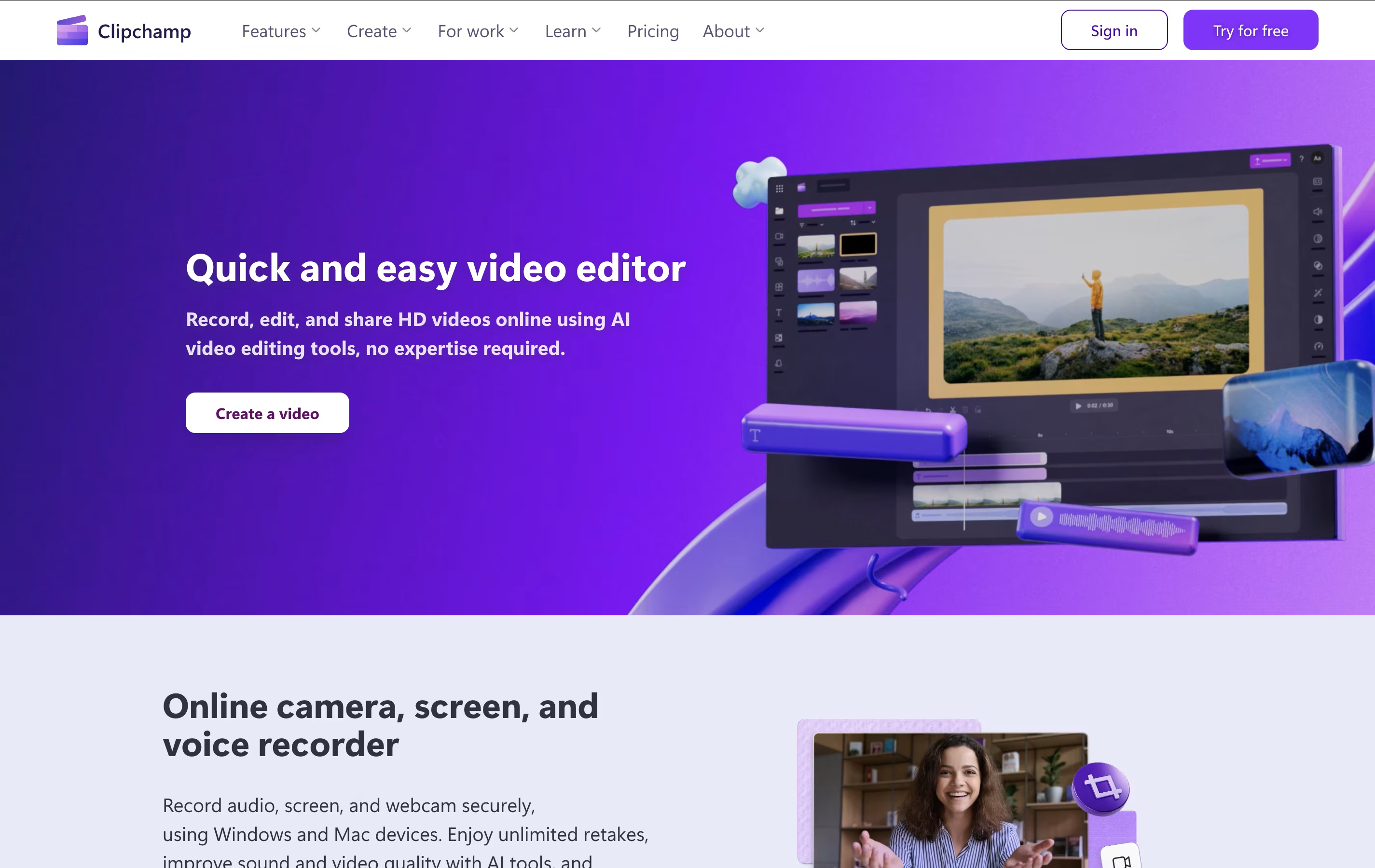
Clipchamp is a cloud-based video editing platform owned by Microsoft that enables users to create, edit, and share videos entirely within their web browser. Think of it as a simplified version of professional video editing software that runs online without requiring any downloads or installations.
The platform offers both basic and advanced editing tools, including trimming, cropping, adding text, applying filters, and incorporating transitions. What sets Clipchamp apart is its AI-powered features like auto-compose video creation, background removal, and text-to-speech capabilities. Users can access thousands of royalty-free stock videos, images, and music tracks to enhance their projects.
Originally launched in 2014, Clipchamp was acquired by Microsoft in 2021 and is now integrated into Windows 11 and Microsoft 365. The platform serves millions of users worldwide, from content creators and small businesses to educators and enterprise teams looking for an accessible video creation solution.
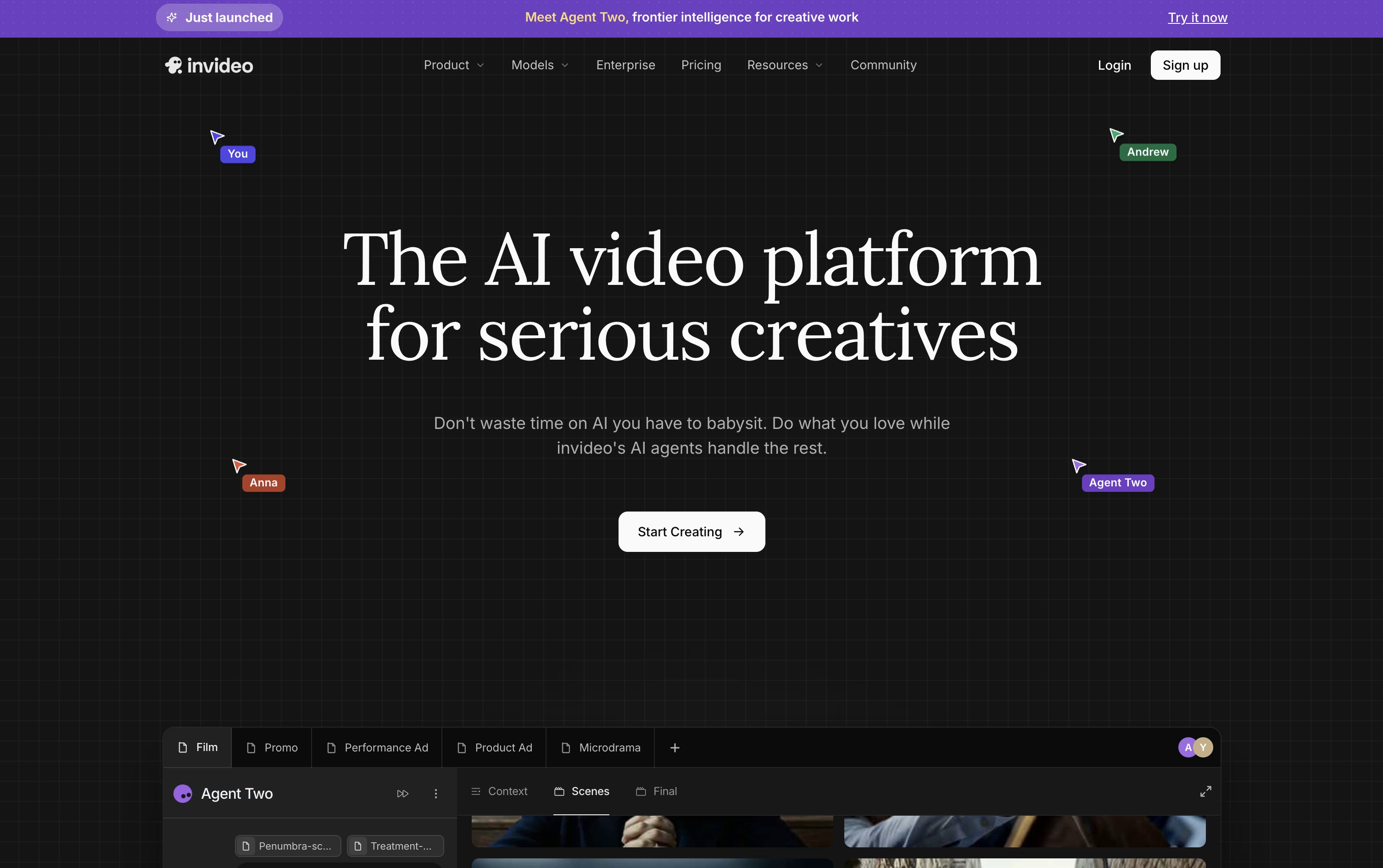
Rather than producing a single AI clip at a time, InVideo AI directs a crew of AI agents to build a full video from a prompt, script, or even a URL. It plans the scenes, generates visuals, writes and voices the script, and adds music and captions automatically.
The Agent Two system keeps track of characters, settings, and style across an entire project, so you are not stuck re-explaining details for every new scene. Expert Agents can be assigned roles like storyboard artist or VFX lead, and Playbooks store custom rules the agents should always follow.
On the individual side, Plus starts at $20 a month with 75 credits, while Max, Generative, and Elite step up to $100, $200, and $1,000 a month with more credits, avatars, and storage at each level.
Small to mid-sized teams of 2 to 30 people can pick seat-based pricing at $50 or $500 per seat monthly, and larger companies can request custom Enterprise pricing that adds security features like SSO and SOC2 compliance.
Since every paid tier includes over 200 AI models and access to stock libraries such as iStock, the real difference between plans comes down to credits, storage, and how many people are working on the account.

Built by Vyro AI, ImagineArt combines image, video, voice, and music creation into a single AI platform, so you are not switching between separate apps for each format.
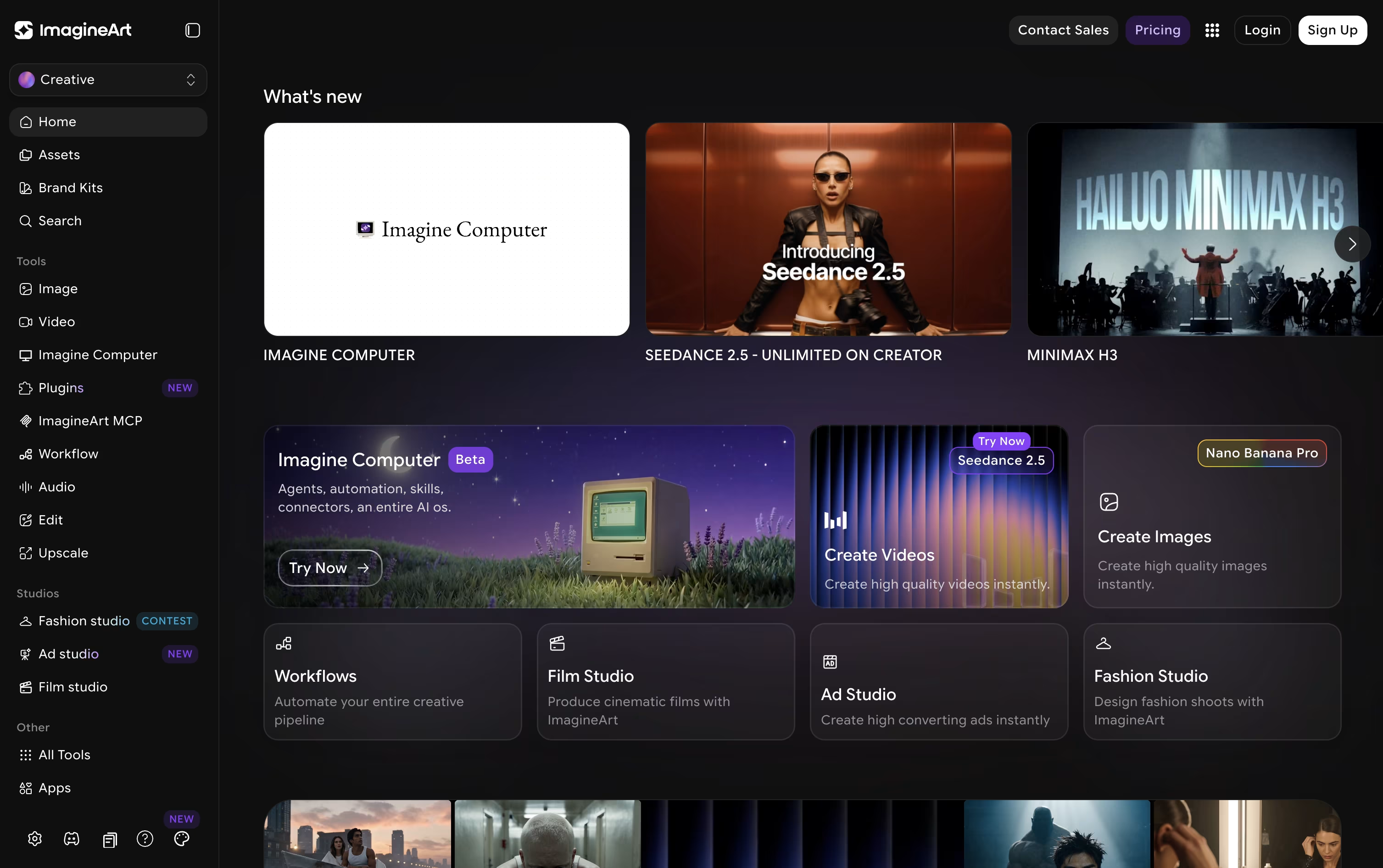
The platform pulls together many well-known AI models, such as GPT, Gemini, Claude, Seedance, and Nano Banana, and lets you access them all from one account.
For more guided output, dedicated studios cover film, advertising, and fashion projects, while Imagine Flow offers a node-based canvas for building repeatable creative pipelines.
Anyone can start free, receiving 100 credits each day with access to a small set of models.
From there, plans move from $13 a month at the Basic tier up to $250 a month for Creator, passing through Standard at $30 and the popular Ultimate plan at $50, each raising credits, concurrent generations, and model access.
Businesses can also choose Team plans or a custom-priced Enterprise plan that adds unlimited seats, single sign-on, and dedicated support.
Rather than being built around a single AI model, Higgsfield works as a layer on top of many models such as Seedance, Nano Banana, Kling, and Google Veo, adding its own camera and character tools for a more filmmaker friendly result.

Anyone can try it for free, though the free tier is limited to one job at a time and does not allow commercial use.
The first paid step is Basic at $9 a month, giving 120 credits, commercial rights, and quicker generation speeds.
Pro is the bigger upgrade at $29 a month, or $23 a month when billed yearly, since it opens up the complete Seedance lineup and removes the cap on marketplace apps.
Max sits at the top for individuals at $79 a month, or $59 annually, with 1,800 credits and the highest concurrency for video and image jobs.
Businesses can move to Team or Scale for shared seats and credits, or contact sales for a custom Enterprise plan with SSO, dedicated capacity, and compliance support.

Runway brings video, image, and audio generation together in one AI powered workspace, so creators are not stuck jumping between different apps for different tasks.
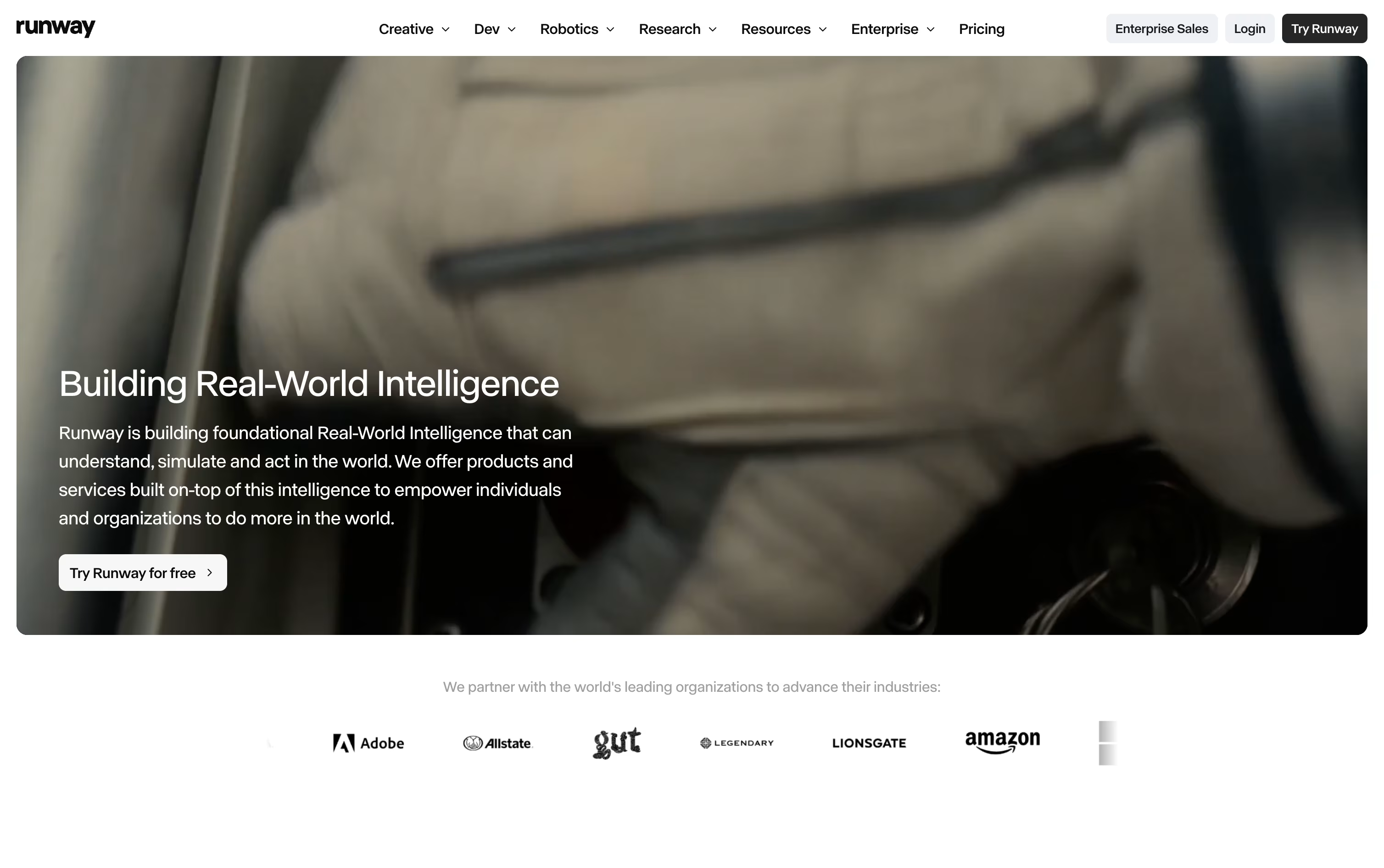
A simple text prompt or a single reference image can become a short video clip. If something needs changing, Aleph lets you edit one frame and carries that edit across the entire clip without disturbing the original motion or lighting.
For characters, Act-Two maps a performance video onto a character so their movement, expression, and lip sync all follow the reference footage. The Runway Agent can also build out full marketing campaigns from a short description.
On pricing, the Free plan hands out 125 credits one time that never expire. Standard is $15 a month for 625 credits, Pro is $35 a month for 2,250 credits with custom voices and 500GB of storage, and Max is $95 a month for 9,500 credits with one month of credit rollover and first access to new models.
Bigger teams can move to Enterprise for custom pricing with SSO, analytics, and priority support.
For building AI tools into other software, Runway Dev offers pay as you go pricing starting at $0.05 per second of video.
Making a video usually means a camera, a script, and hours of editing. Steve AI skips most of that by turning text, a blog link, audio, or a short prompt into a ready video.
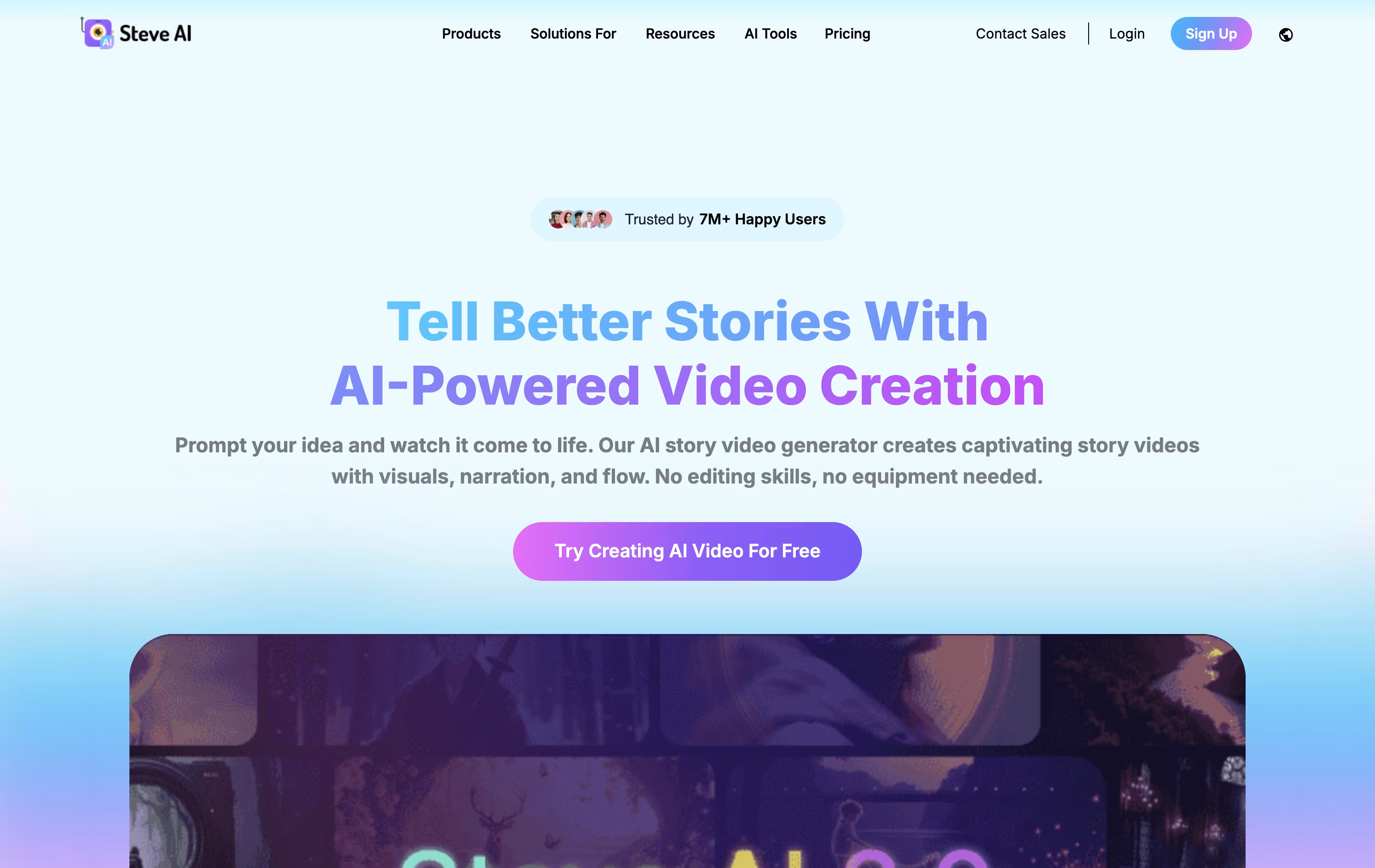
The AI handles the script, matches scenes with visuals, adds a voice track, music, and captions, so a video that would normally take a day can be ready in minutes.
There are more than seven visual styles to pick from, animated characters, generative AI scenes, and live-action stock clips, along with Google Veo 3 access for short realistic clips.
The Starter plan costs $29 a month, or $19 a month if billed yearly, and includes 100 minutes of AI video plus 1080p output with no watermark.
Stepping up to Pro at $59 a month or the Recommended Generative AI plan at $129 a month brings more render minutes, 2K video, and voices that sound close to human.
For bigger needs, Enterprise offers custom pricing with 4K video, team tools, dedicated infrastructure, and commercial reselling rights.

Turning a blog post or script into a finished video usually means learning editing software. Pictory skips that step by letting the AI handle scene building, visuals, captions, and voiceover from whatever text or file you give it.
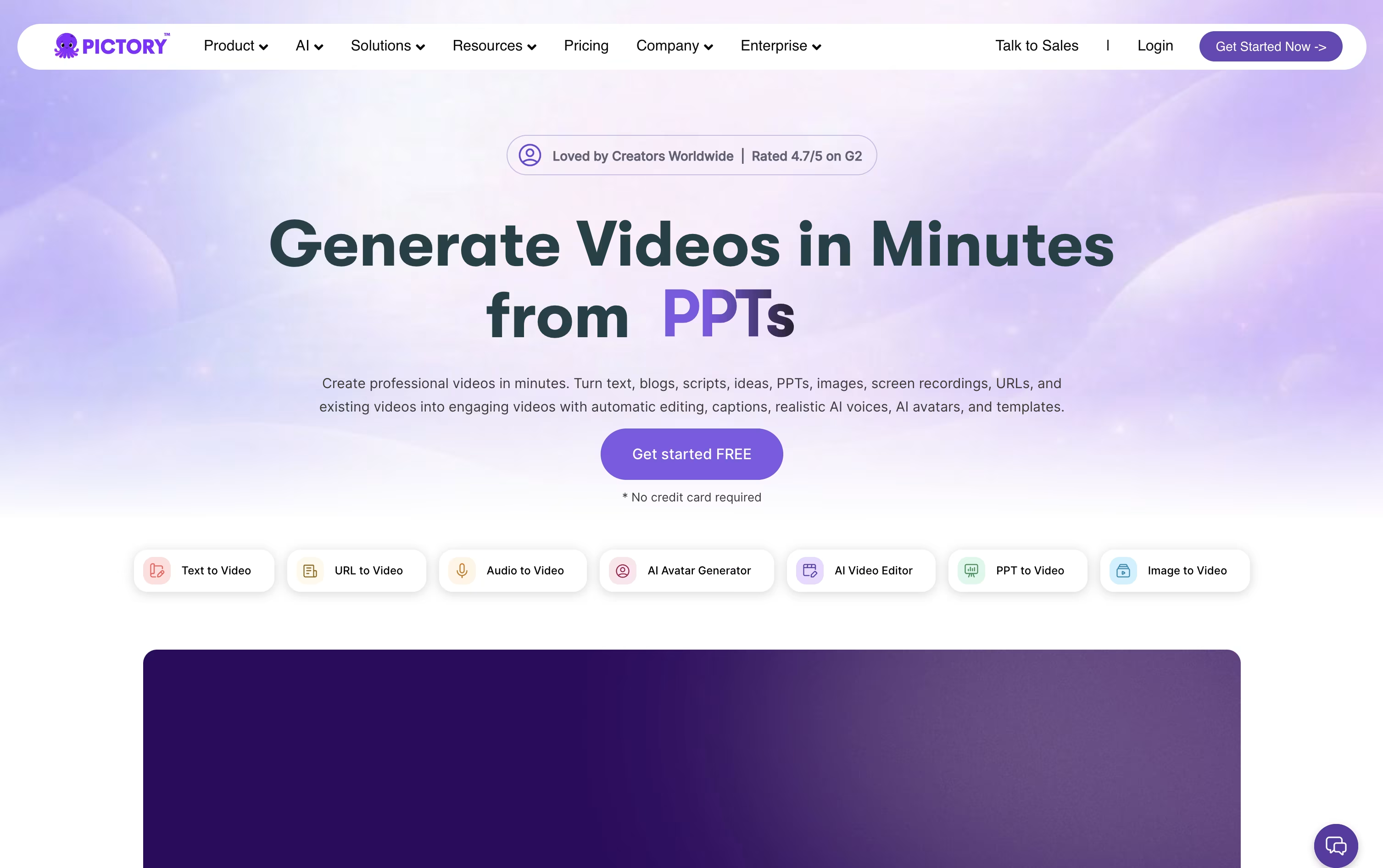
Once the draft video is ready, a scene-based editor lets you swap visuals, adjust timing, or apply your brand colors and logo without dragging clips on a timeline.
Features like AI avatars, voice cloning, and text-based editing, where deleting a word deletes that part of the video, make the platform useful for marketers, educators, and content teams alike.
Pricing starts with Starter at $29 a month, dropping to $25 a month on the annual plan, covering 200 video minutes and 5 GB of storage.
Professional runs $59 a month and adds custom avatars and voice cloning, while Team at $199 a month supports 3 or more users sharing one workspace.
Larger organizations get custom Enterprise pricing with SSO, dedicated support, and Pictory Central for interactive video hosting, and everyone can start with a 14 day free trial.

Instead of filming or recording anything, Fliki lets you type a script, paste a blog link, or upload a PowerPoint and get back a finished video.
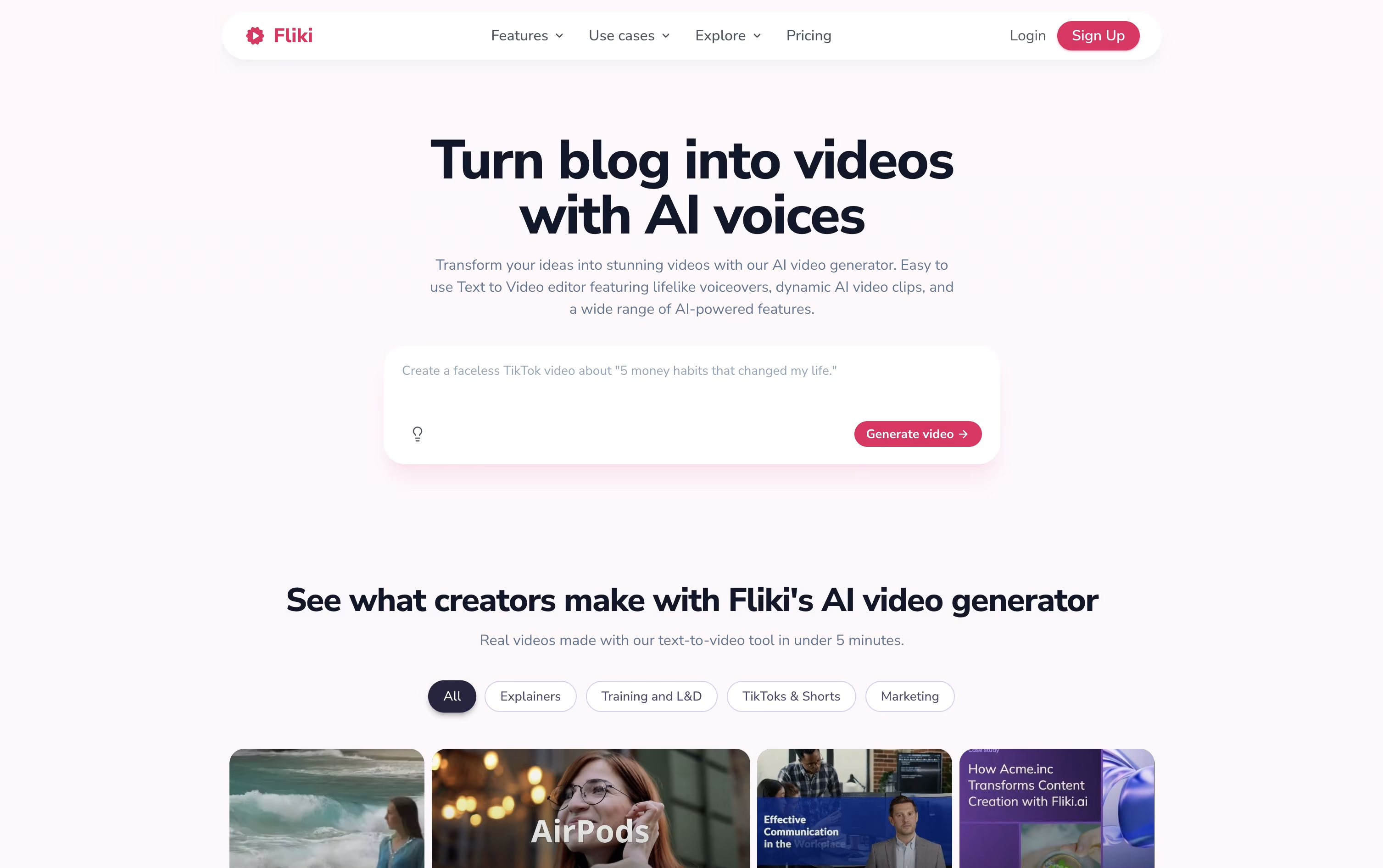
Behind the scenes it draws on thousands of realistic AI voices across 80+ languages, AI avatars, auto generated subtitles, and a library of stock and AI made visuals and music.
The editor itself is browser based, with a scene rail and full timeline, and Copilot, an AI assistant that follows plain language instructions to edit scenes, add music, or write a script.
Anyone can start on the Free plan, which includes a handful of monthly credits and 720p exports with a watermark.
Moving up to Standard at $28 a month unlocks 180 credits, 1080p video up to 15 minutes, 1,000 voices, and commercial rights, and Premium at $88 a month pushes this further to 600 credits, 40 minute videos, over 2,000 voices, avatars, and API access.
Larger organizations can request Enterprise pricing for custom credits, branded templates, and a dedicated account manager.

Rather than juggling separate apps for text, image, and video generation, FLORA puts more than 60 AI models inside one infinite canvas built for creative teams.
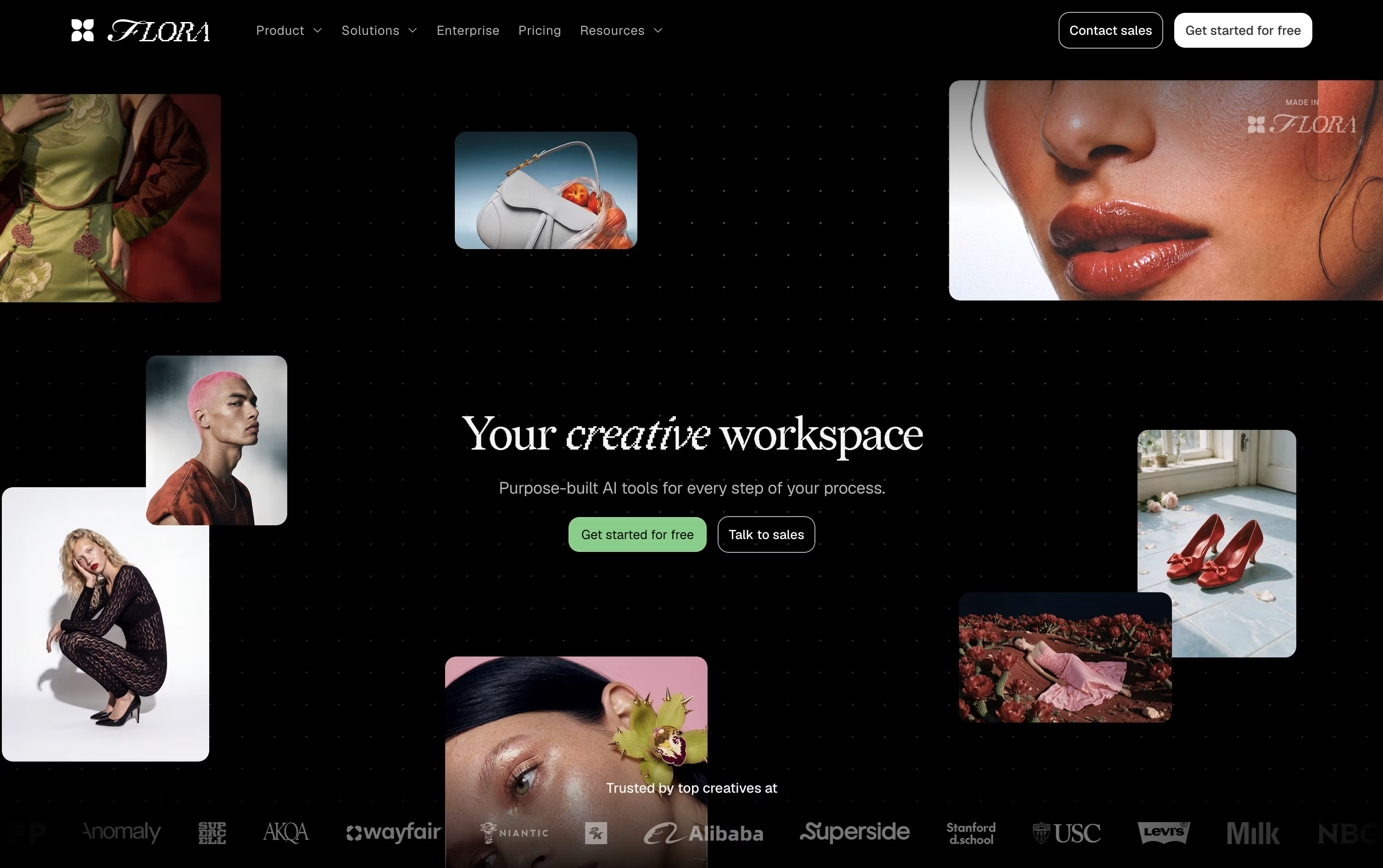
Work happens as connected nodes, so every idea, generation, and edit stays visible, branchable, and easy to trace back to where it started.
The built in FAUNA agent can plan and run entire sequences for you. Tell it what you're after, and it picks the right models, writes prompts, and organizes results on the canvas, all while keeping every action editable.
Reusable workflows called Techniques let teams turn a process into a repeatable system, useful for producing large batches of consistent, on-brand assets.
The Free plan gives one seat and a limited number of generations to try things out. Starter is $18 per seat a month, Pro (the most popular tier) is $50 per seat a month, and Max is $200 per seat a month, with 20% off on quarterly and annual billing. Enterprise plans are custom priced and include SSO, SAML, and dedicated onboarding support.
Think of Pollo AI as a hub for AI video and image creation, gathering many different models under one roof instead of building just one. You type a prompt, upload a photo, or drop in a product link, and the platform handles the rest.
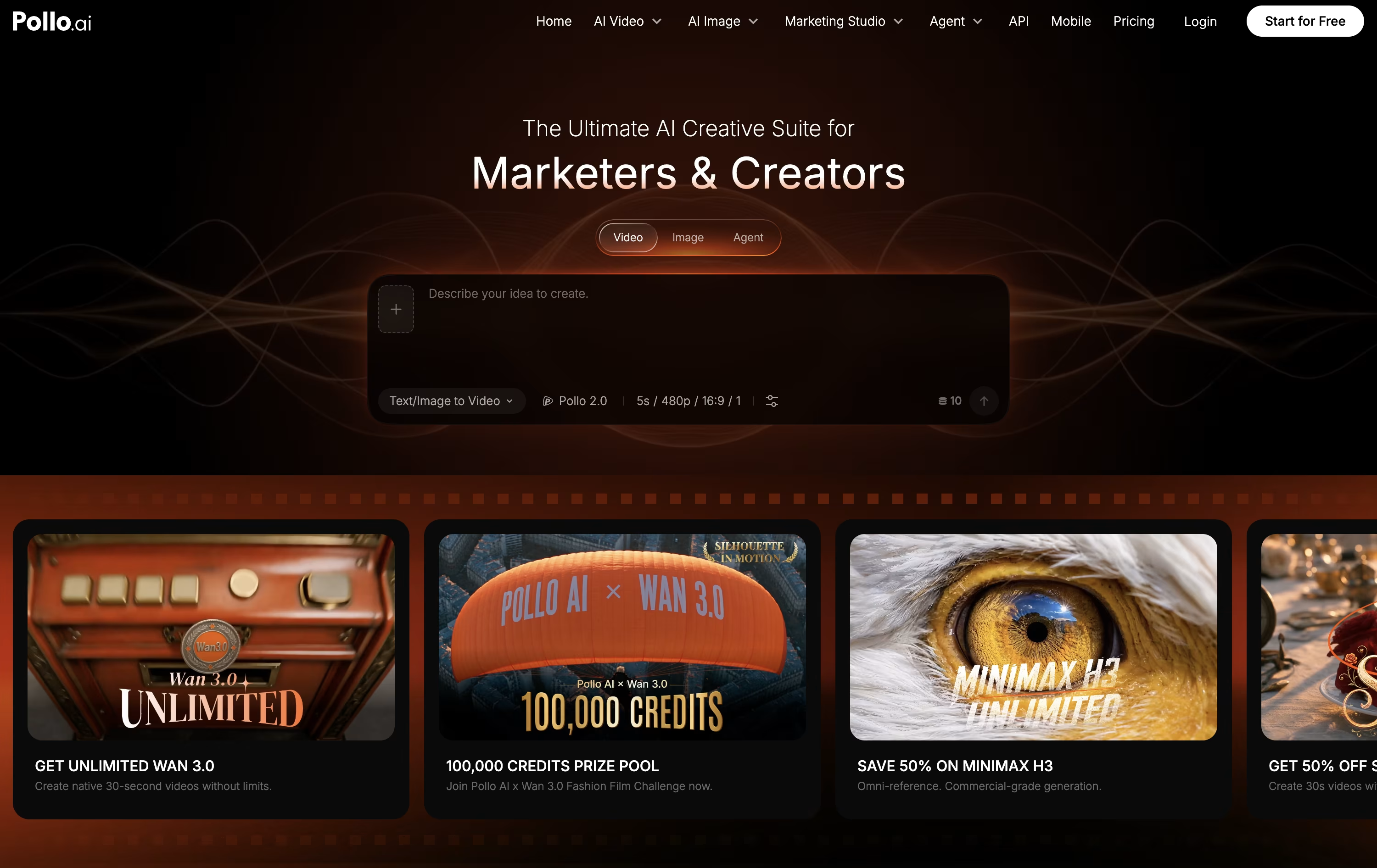
Choosing a Studio narrows things down, Creative Studio for general work, Marketing Studio for ads, and Commerce Studio for product visuals and listings. There is also an Agent mode that breaks a brief into scenes, writes the prompts, and puts together a more finished video automatically.
On the pricing side, a free plan gives 20 credits a month to test things out. The Lite plan costs $15 a month for 400 credits, Pro costs $59 a month for 2,000 credits plus faster speed and add-on credits, and Ultra costs $129 a month for 5,000 credits and the broadest unlimited model access.
Paying yearly lowers each of these monthly rates by roughly 50%, and any add-on credits you buy separately stick around even after your subscription ends.
With hundreds of supported models for video and image work, plus editing, avatar, and audio tools built in, Pollo AI aims to cover most short-form content needs in one place.

Hailuo AI is a video and image generator from MiniMax. Give it a written prompt or a photo, and it produces a short clip with lifelike motion, camera movement, and facial detail.
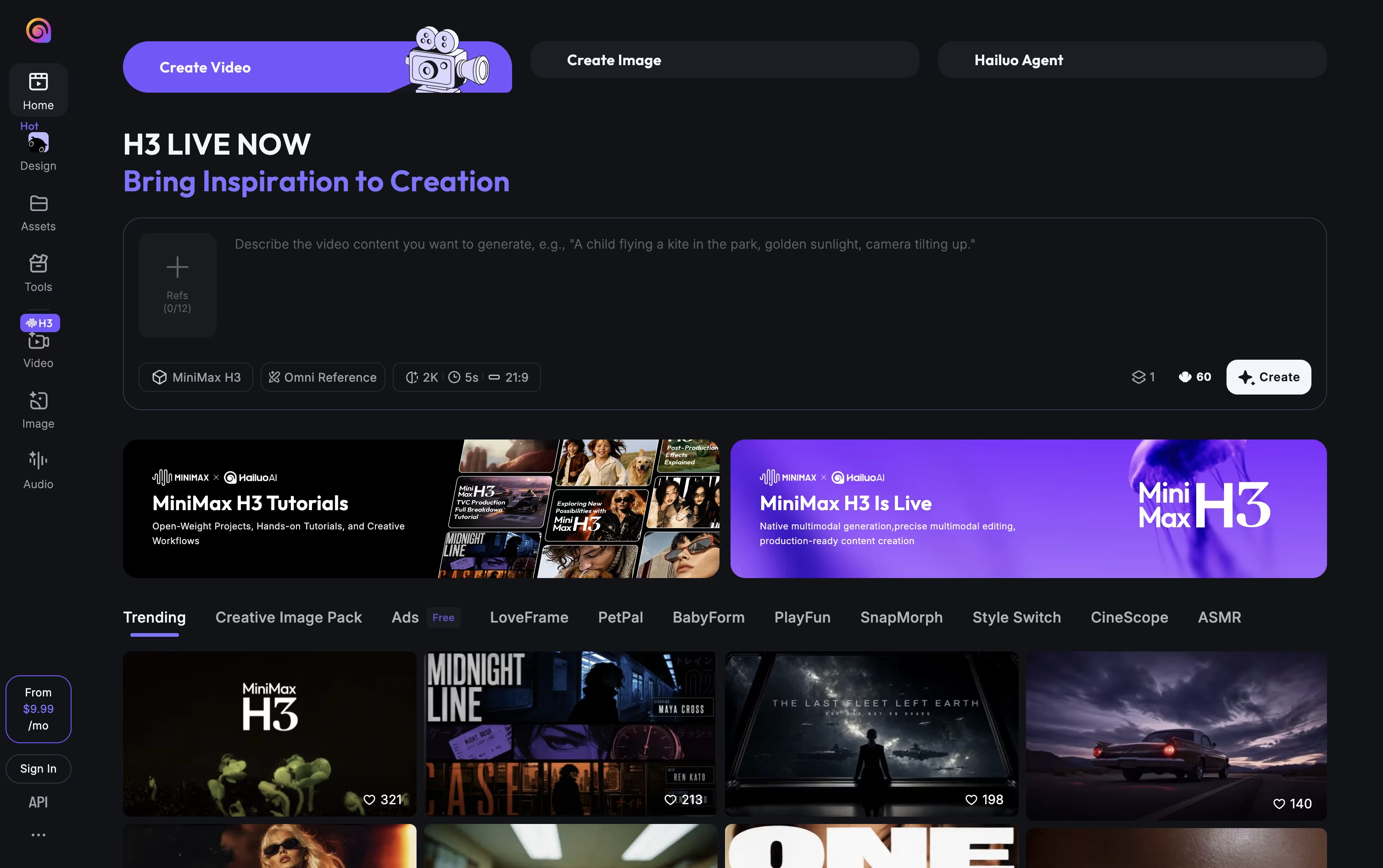
A start and end frame can be set to control how the video moves between two points, and camera actions such as zoom, pan, or tilt can be written directly into the prompt. A character reference tool keeps a person or object looking consistent across multiple clips.
The platform also makes still images, relights photos through its Light Studio tool, and offers music, lip sync, and video upscaling. Its Agent mode can put together a full video from a short brief, images, and music you provide.
You can reach it through the website, mobile apps for Android and iPhone, or its API for developers.
Pricing starts free with trial credits, then moves through paid tiers from roughly $10.50 to $216 a month. Higher tiers give more monthly credits, better video resolution, and access to more image models. Yearly billing brings the monthly price down on every paid tier.

Getimg.ai gathers image, video, and audio creation into a single browser based workspace, cutting out the need to juggle separate apps and accounts.
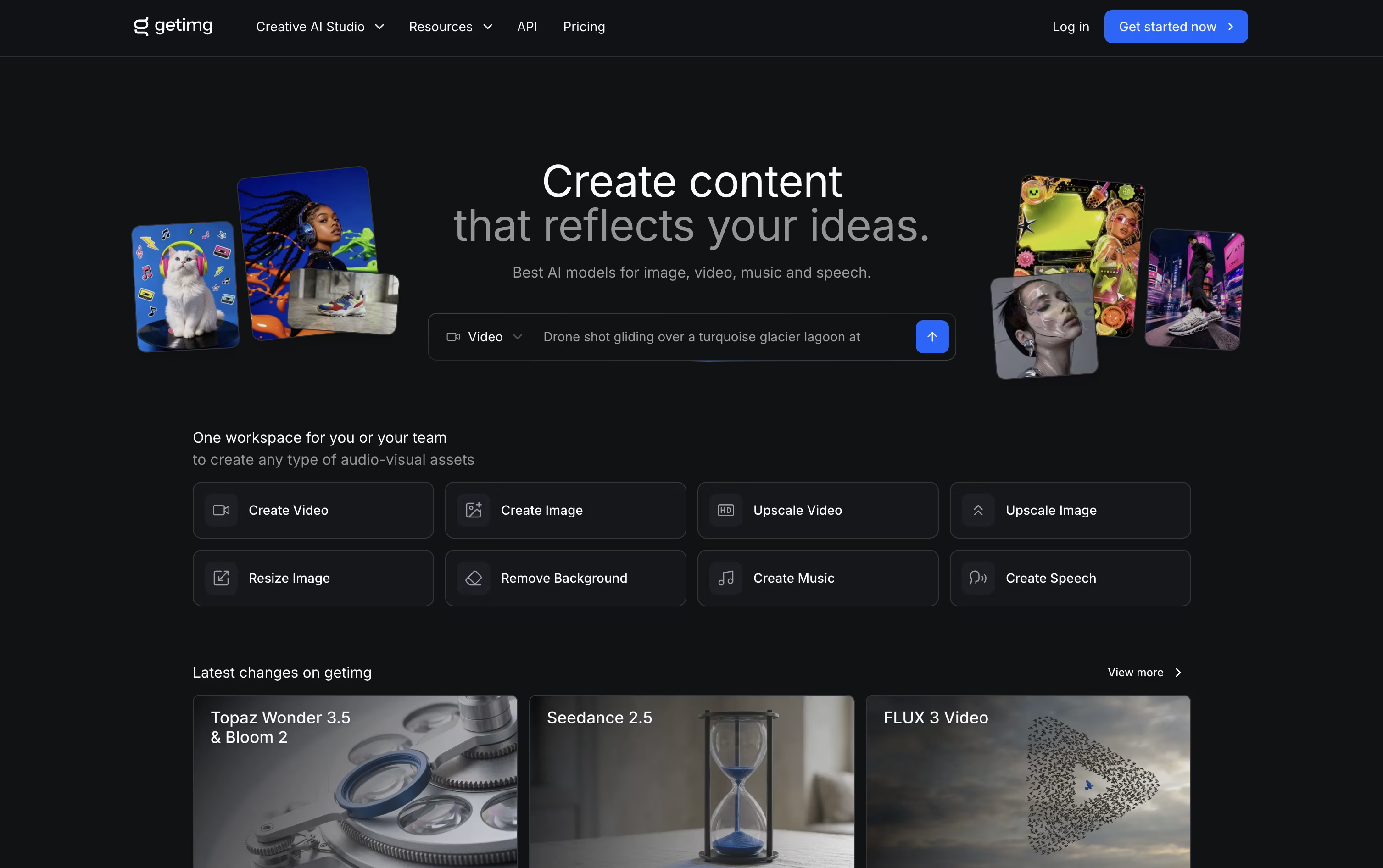
You simply describe what you need, and the platform automatically chooses a fitting AI model and refines your prompt in the background.
Editing is built in too, with one click background removal, image upscaling up to 16K, smart resizing, and video upscaling up to 4K.
Plans begin at $10 a month for the Entry tier with 3,000 credits, and move up to $30, $65, and $175 a month per seat for Core, Plus, and Ultra, each adding more credits, higher quality upscaling, and larger team access.
Choosing yearly billing lowers the price by roughly 20 percent across every plan.
Paid subscriptions also unlock full commercial rights, and a developer API with ready made SDKs is available for teams that want to build the tools into their own apps.

Krea packs image, video, and 3D generation into one browser based workspace, so creative teams don't need to jump between separate tools. It works well for designers, filmmakers, agencies, and beginners alike.
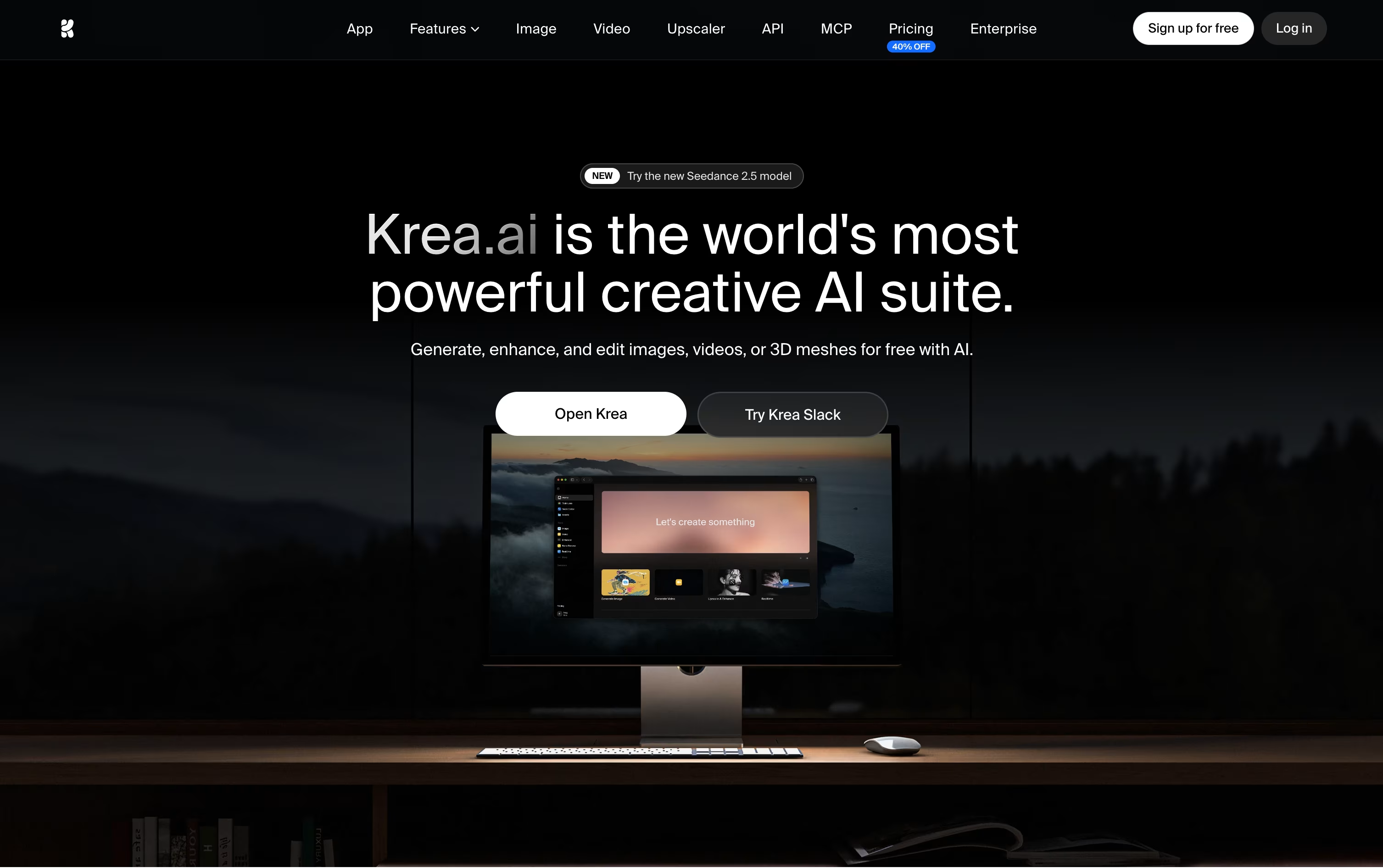
Behind the simple interface sits access to dozens of AI models, including Krea's own Krea 2, plus a realtime canvas that updates as you type, an editor for region based changes, 3D mesh generation, and a lipsync tool for talking videos.
You can also train private LoRA styles and set up automated Nodes workflows, or let Nodes Agent build a workflow from a text description.
Getting started is free, with 100 units a day and limited model access. Basic runs $9 a month, or $5 yearly, unlocking full image models and LoRA training.
Pro, the most popular tier, costs $35 a month, or $21 yearly, and adds all video models plus Nodes Agent and early feature access, while Max reaches $105 a month for unlimited concurrency and relaxed generations.
Larger teams can pick Business at $200 a month for 80,000 units and up to 50 seats, or move to Enterprise for custom pricing with SAML SSO and priority support.

Artlist works as a single home for both stock assets and AI generation, aimed at creators who don't want to jump between separate apps.
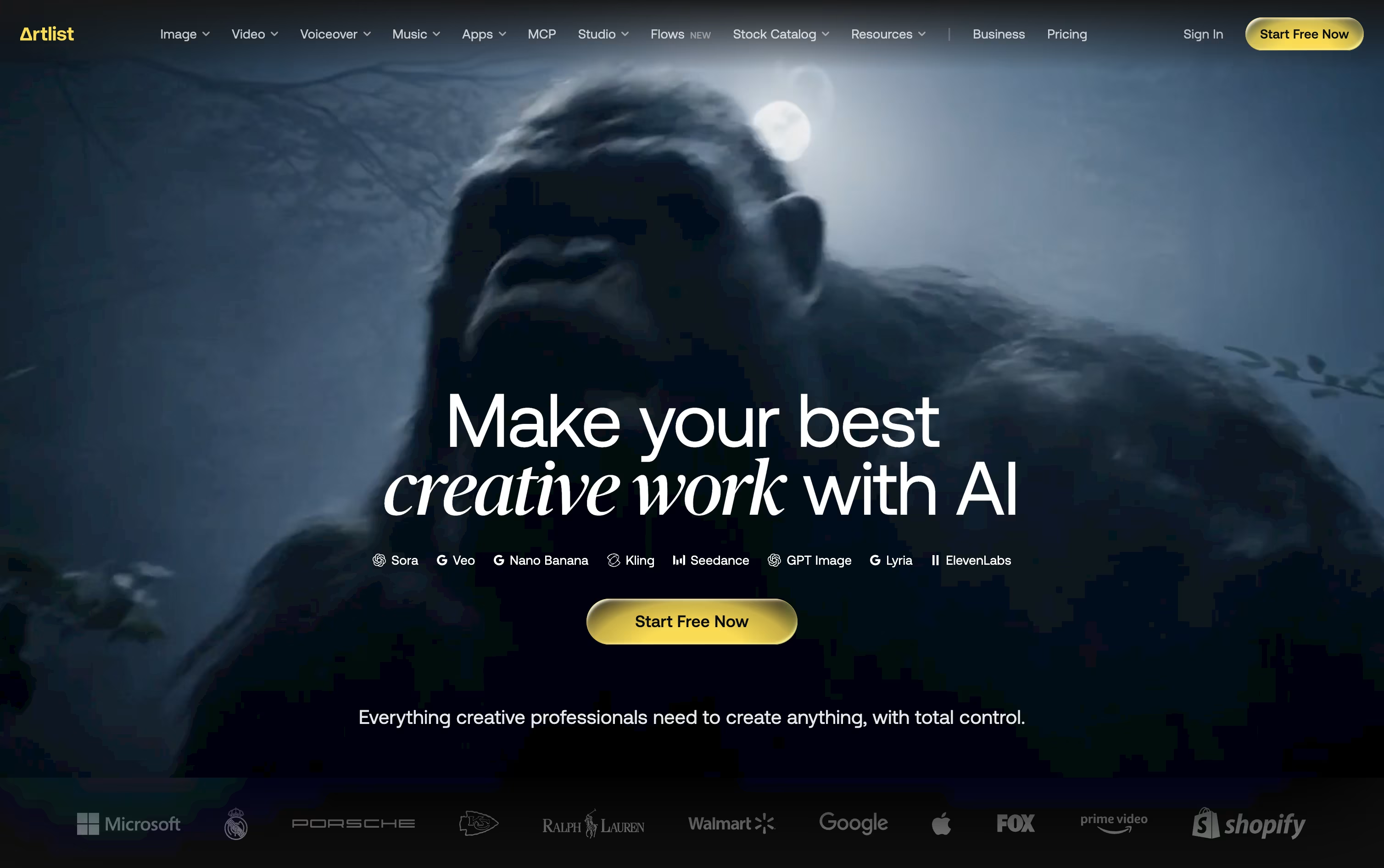
Its library covers royalty free music, sound effects, footage, templates, and LUTs, while the AI Toolkit handles text to image, text to video, voiceover, avatar, and dubbing generation across 100+ models.
The AI Suite has three main paid tiers. AI Starter runs $19.99 a month with 16,500 credits, AI Core is $39.99 a month with 40,000 credits and the Most Popular label, and AI Creator is $69.99 a month with 80,000 credits. Paying yearly drops these to $11.99, $23.99, and $41.67 a month.
Separately, the Stock Catalog starts at $9.99 a month for Music & SFX, moves up to $50.66 a month for Max, and $399 a month for Max Business teams, both on annual billing.
Custom Business options exist for both the AI Suite and Stock Catalog, offering unlimited generations, enterprise security, SSO, and a dedicated account manager at custom pricing.
Editors can also reach Artlist through Premiere Pro, After Effects, and DaVinci Resolve plugins, or generate assets directly inside Claude via the Artlist MCP integration.

Built by the team behind TikTok and CapCut, Dreamina is ByteDance's AI creative suite for turning words and pictures into finished images, videos, and talking avatars. It works right in the browser, so there is nothing to install.
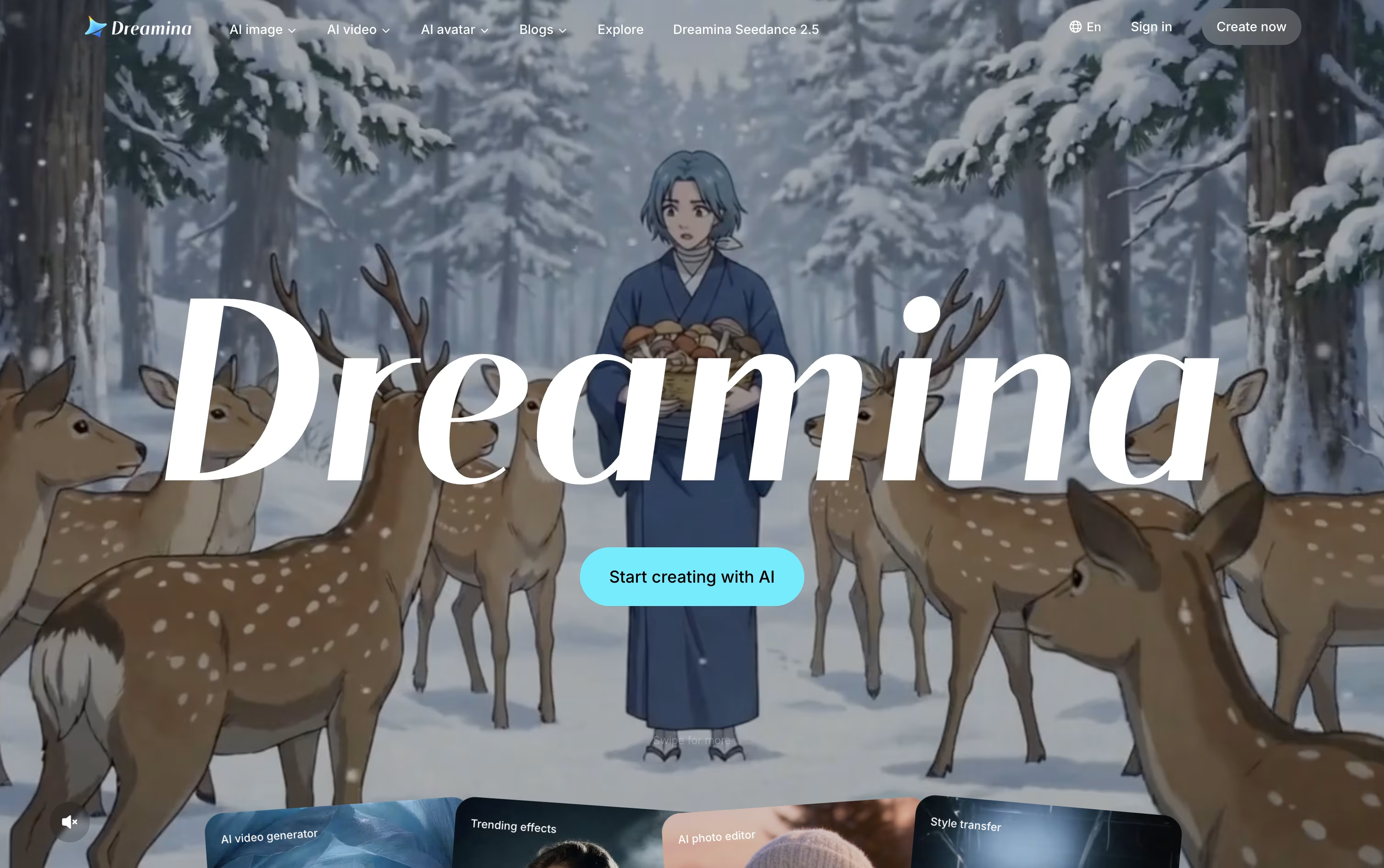
Image and video work is powered by ByteDance's Seedream and Seedance models, which keep characters consistent, handle camera motion well, and add natural audio with accurate lip sync straight out of the box.
Once something is generated, it can be sent directly into CapCut for editing, so creators skip the usual back and forth of downloading and re-uploading files between separate apps.
The Free plan costs nothing and hands out bonus credits every day. Basic runs $15 a month, or $144.99 a year, for 1,575 credits along with watermark removal and 60 FPS video.
Standard sits at $35 a month, or $334.99 a year, offering 3,885 credits with the same feature list as Basic. Advanced, at $70 a month or $669.99 a year, gives 8,645 credits, top-priority generation, and a limited-time unlimited 4K benefit.
Paying yearly instead of monthly cuts the overall cost by roughly 20% on every paid tier.

Luma AI lets you describe a creative task and have its AI agents research, generate, and polish the result across video, image, and audio formats.
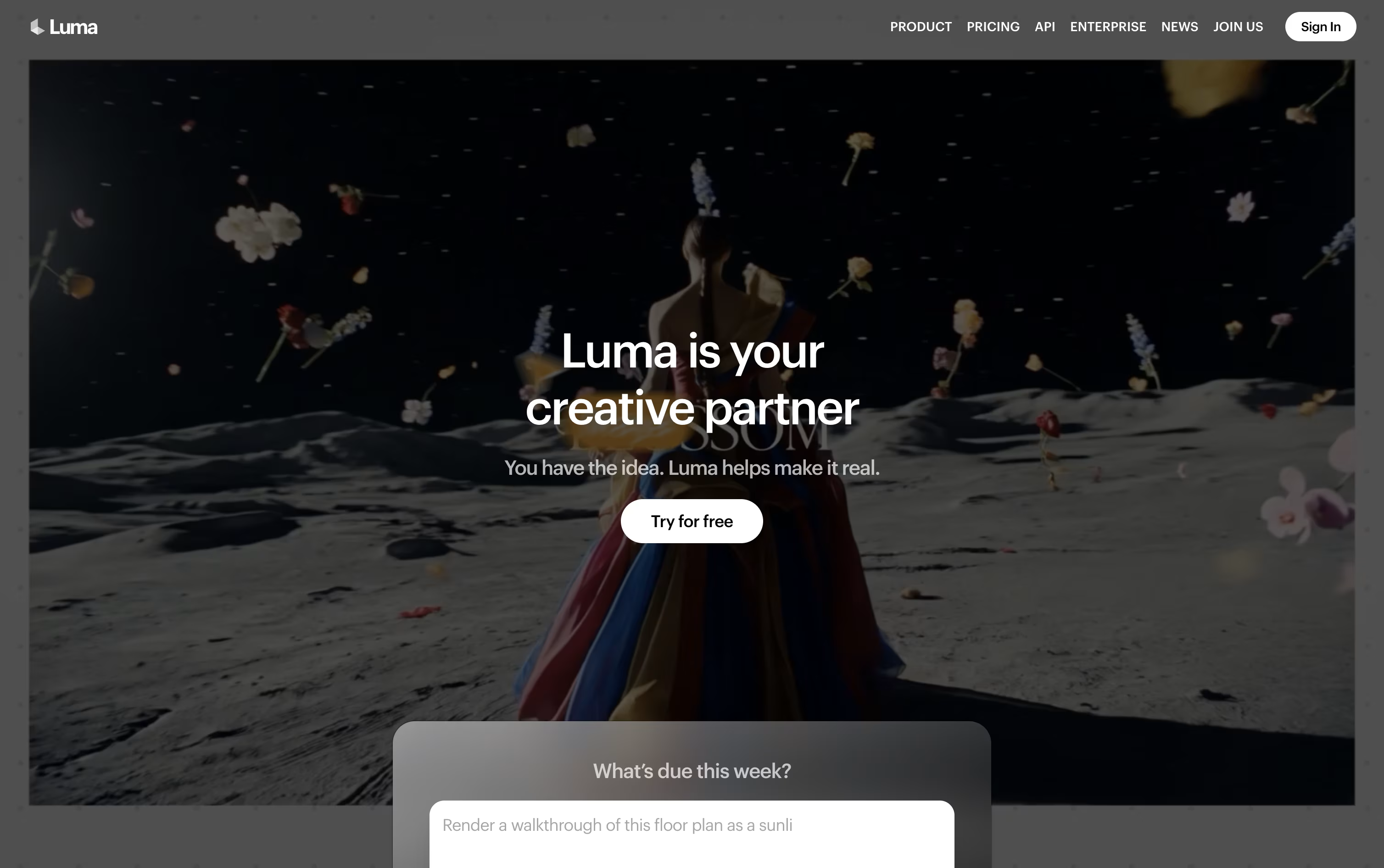
Luma Agents sits at the core of the platform, pulling together models such as Ray for video and Uni for images while keeping a consistent brand look. With Luma Skills, any workflow you build can be saved and reused on future work instead of starting from scratch.
The newest video model, Ray 3.2, allows up to sixteen keyframes in a single clip, lets you edit existing footage with Modify Video, reshape aspect ratios with Reframe, and export in native HDR for color grading.
On the pricing side, the Plus plan starts at $30 a month with 10,000 credits, while Pro at $90 a month and Ultra at $300 a month unlock more credits and greater agent usage. Choosing yearly billing cuts the cost by up to 20 percent.
Larger teams can move to the Team or Enterprise plan, both quoted individually, which bring in team management, shared credit pools, analytics, and single sign-on.
Every actual generation, whether video, image, or audio, is billed from your credit balance based on the model and quality chosen.
Related to
Text to Video