

Best 14+ AI Speech-to-Text Tools in 2026
Last Updated: September 28, 2026
Turning spoken audio into accurate written text is essential for meetings, interviews, and content production. AI Speech-to-Text tools transcribe audio in real time or from recordings, often with speaker detection and punctuation built in.
These tools are relied on by journalists, researchers, and business teams who need reliable transcripts without manual note taking. Fast, accurate transcription saves significant time compared to typing out recordings by hand.
 ElevenLabs
 ElevenLabsRealistic AI Voice & Audio Tools,
  AssemblyAI
 AssemblyAISpeech-to-Text and Voice AI APIs, and
  Wispr Flow
 Wispr FlowTurn Your Speech Into Clean Text are the best for AI Speech-to-Text. So, let’s take a closer look at all 14+ tools.

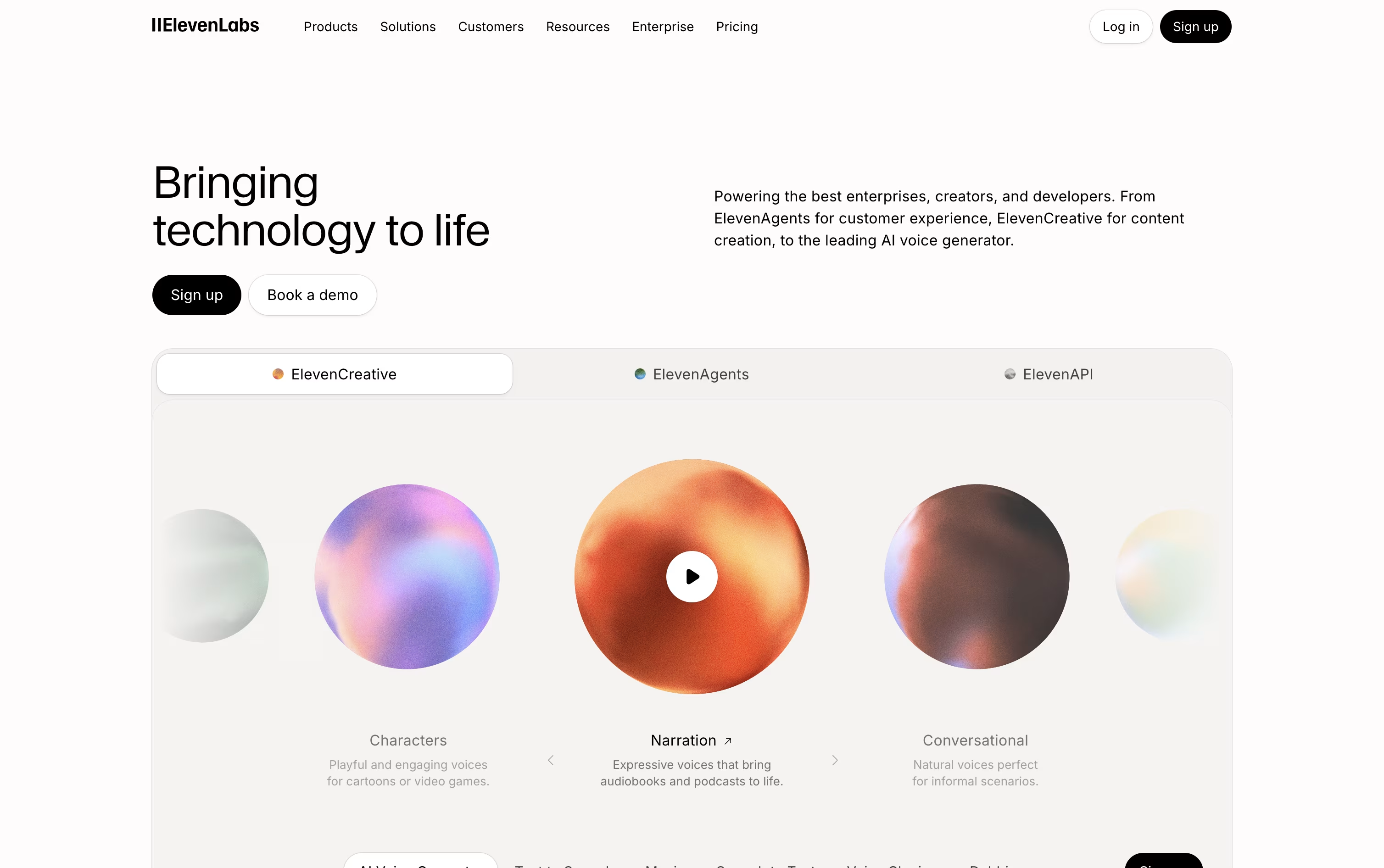
ElevenLabs is best known for making AI speech that actually sounds human, with natural pauses, tone, and emotion instead of a flat robotic voice. On top of speech, it can clone a voice from a short sample, dub videos into dozens of languages, generate music and sound effects, and run voice agents that talk to customers over the phone or in chat.
There are three main ways to use it. ElevenCreative is a web based studio built for content creators making podcasts, ads, and short videos. ElevenAgents lets you design and launch conversational voice and chat bots without needing to write code. ElevenAPI opens up the same technology to developers through a REST API with ready made Python and JavaScript SDKs.
The Free plan gives 10,000 credits a month so anyone can try the basics at no cost. Starter is $6 a month and adds commercial licensing plus instant voice cloning. Creator, the most popular tier, is normally $22 a month, sometimes offered at $11 for the first month, and includes professional grade voice cloning with a much larger credit allowance.
Bigger needs are covered by Pro at $99 a month, Scale at $299 a month with shared workspace seats, and Business at $990 a month with ten seats and lower cost, low latency speech. Enterprise pricing is discussed directly with the ElevenLabs team and includes custom security and priority support.
Since every plan draws from the same underlying voice and audio models, the quality does not drop as you scale up, whether you are producing a single video or running thousands of live customer calls.
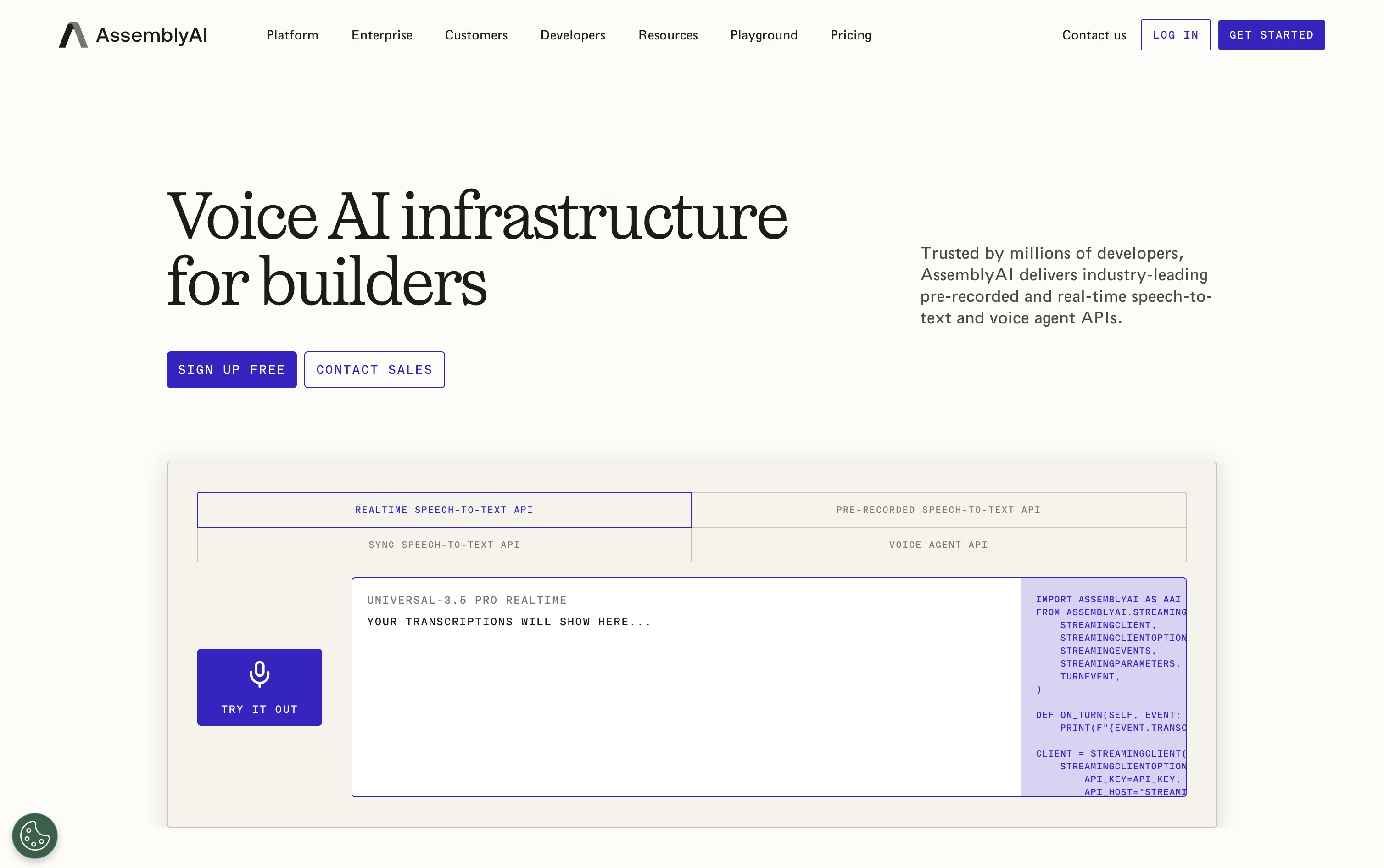
AssemblyAI gives developers a way to turn audio and video into text and insights without building speech models from scratch.
You can send in a finished recording for batch processing, stream live audio for realtime captions, or use the Sync API when you just need a quick transcript from a short clip in one call.
The Universal-3.5 Pro model is built for real conversations, working across 18 languages, labeling different speakers, and picking up medical and technical words accurately.
On top of the transcript, Speech Understanding can summarize the audio, detect sentiment and topics, translate it, and pull out names, dates, and other details.
Everything is billed per hour of audio processed, starting around $0.15 an hour, with extra features priced as small add-ons.
Teams building voice agents can instead use the Voice Agent API at $4.50 an hour, which already includes the speech model, a conversation focused language model, and text-to-speech together.
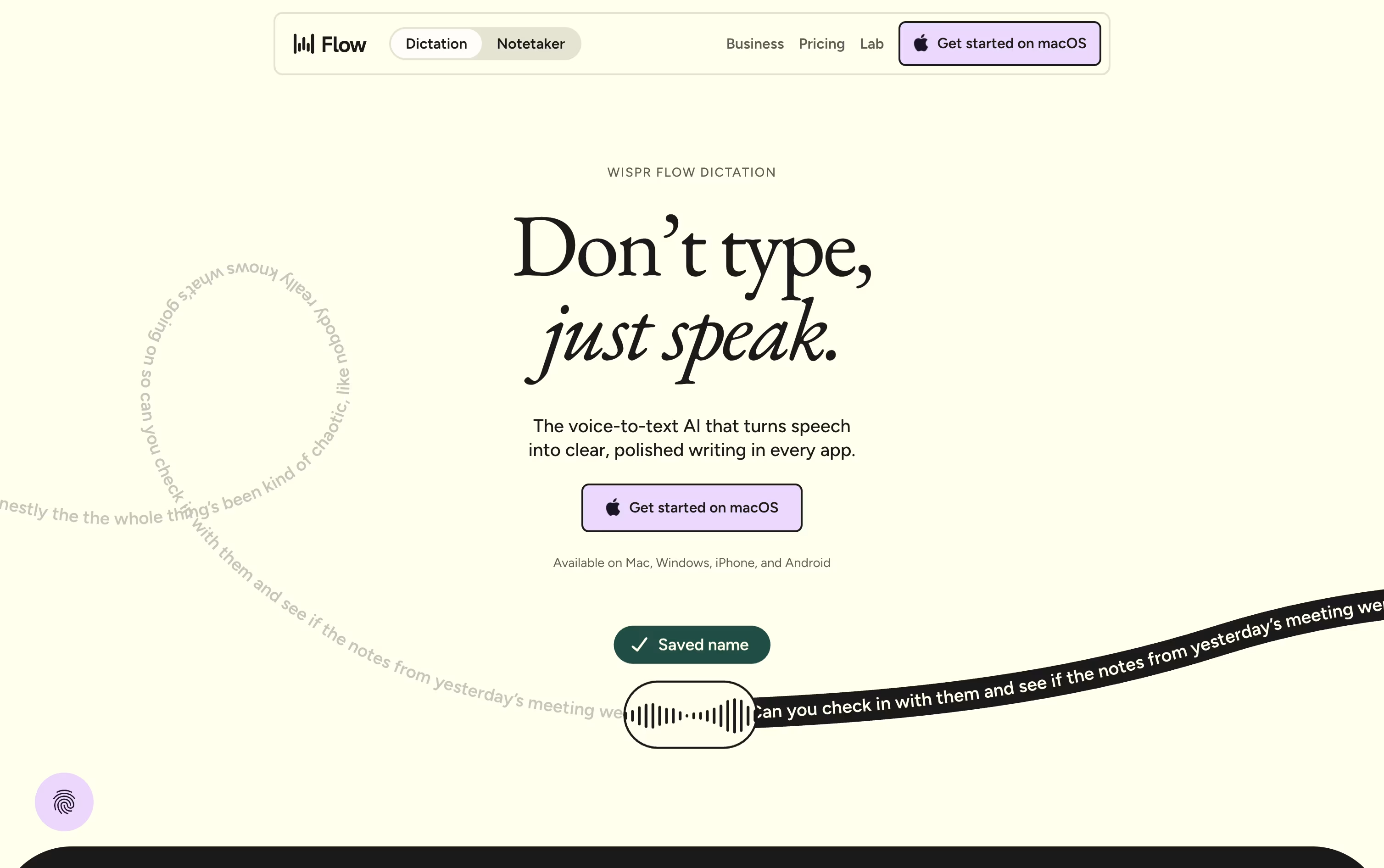
Instead of typing, Wispr Flow lets you simply speak, and it turns even rambling or corrected speech into clean, polished text dropped straight into whatever app you have open.
It runs system wide on Mac, Windows, iOS, and Android, so emails, chat messages, notes, and even code comments can all be dictated without any copy and pasting.
On top of dictation, it offers a meeting notetaker that identifies speakers, a personal dictionary for names and jargon, and snippets that expand a short phrase into a full pre-written message.
Free costs $0 a month and covers the basics with some weekly limits on words and meetings.
Pro is $15 per user monthly, dropping to $12 a month on the annual plan, and removes those limits while adding stronger AI models.
Enterprise is priced on request and brings in security features like SSO and SOC 2 for bigger organizations.

Alter is a native macOS AI assistant designed specifically for Mac power users who want seamless AI integration across their entire workflow. It works as a system-wide productivity tool that understands context from any app you're using.
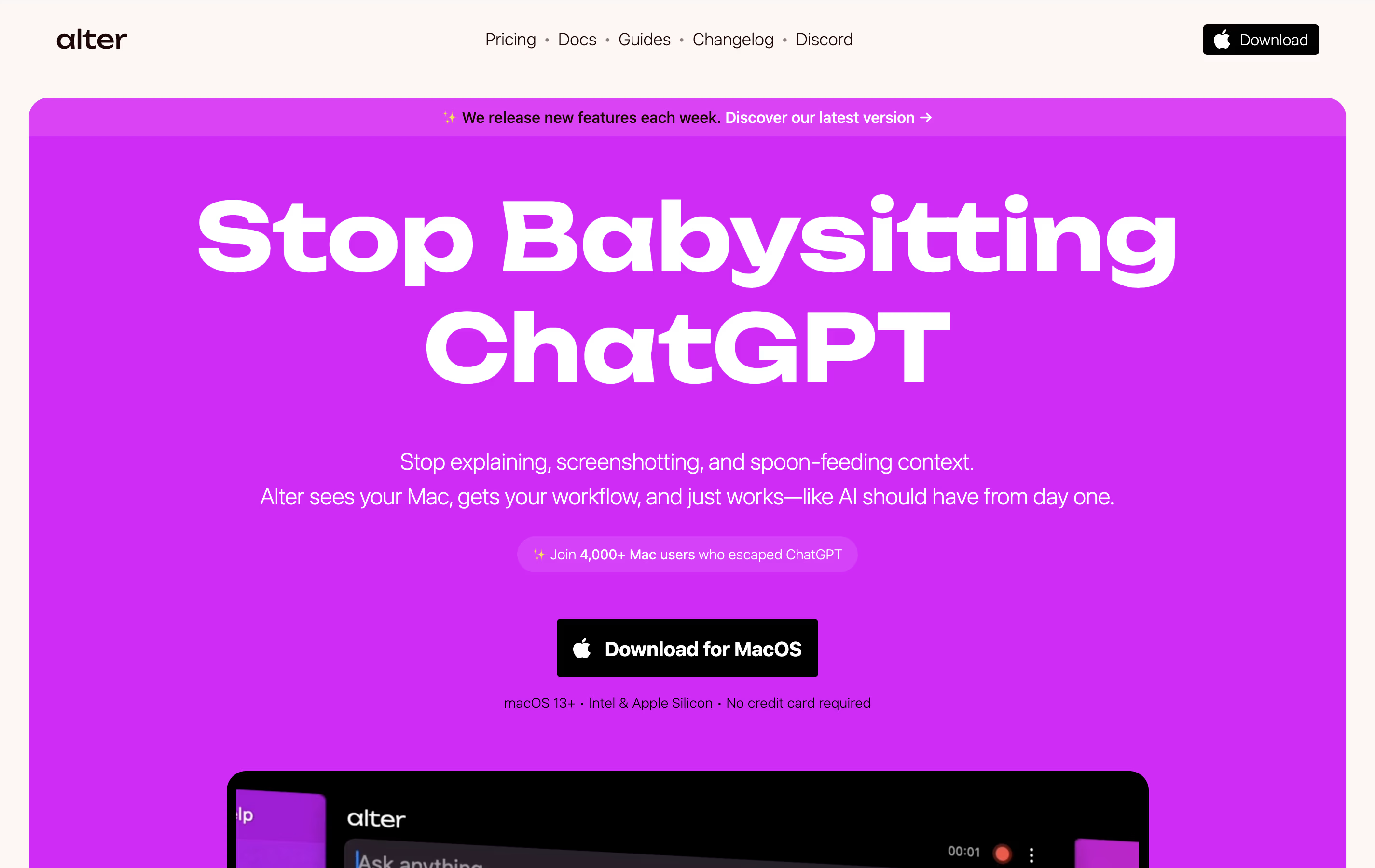
The tool operates through voice commands and contextual menus, allowing you to perform AI-powered actions without switching between applications. It can record meetings, transcribe audio, summarize content, write emails, create presentations, and handle complex tasks across apps like Finder, Keynote, and Apple Mail.
What sets Alter apart is its privacy-first approach. Your data stays encrypted locally, and you can run AI models completely offline using Ollama or LM Studio, ensuring sensitive information never leaves your device.
Wispr Notetaker takes a different approach to meeting notes: no bot joins your call. It runs quietly inside the Wispr Flow app on Mac, capturing system audio and your microphone so it works across Zoom, Google Meet, Teams, Slack Huddles, and in person conversations too.
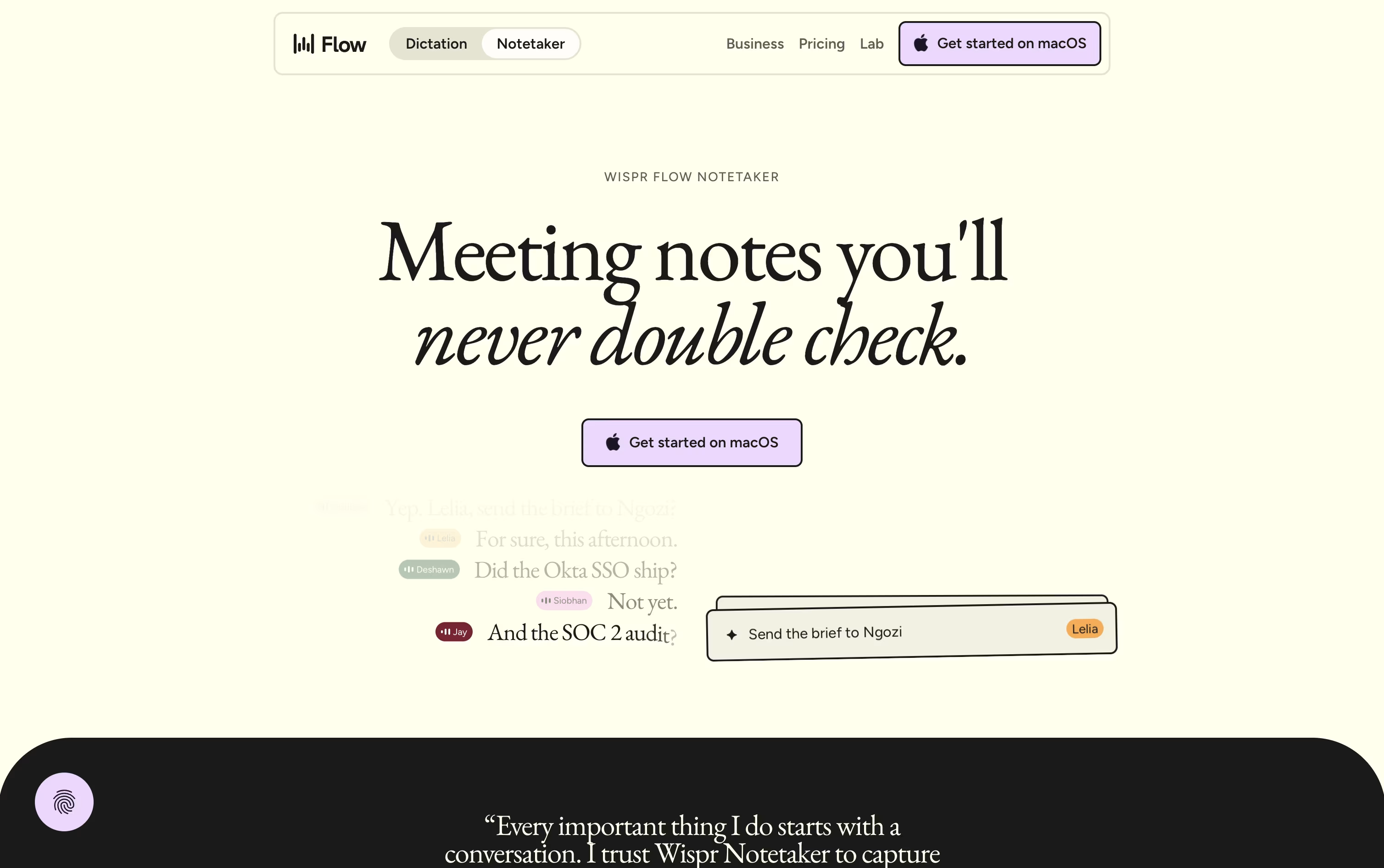
Because it already knows your calendar, personal dictionary, and connected apps like Gmail and Slack, it can label speakers by their real names instead of generic tags, and it catches jargon that other tools tend to miss.
After each call, you get a topic organized summary with decisions, dates, and next steps, plus the ability to ask questions across your entire meeting history.
Pricing starts at $0 a month on the Free plan, which includes weekly meeting limits. Pro runs $15 per user a month, dropping to $12 per user a month on the annual plan, and unlocks unlimited meetings, longer retention, and stronger AI models.
Larger teams needing SSO, audit logs, or SOC 2 and ISO 27001 compliance can reach out for custom Enterprise pricing, though a few Notetaker features are still rolling out there.
If you dread writing meeting notes, Otter.ai does that job for you. It joins your Zoom, Google Meet, or Microsoft Teams calls on its own, or records conversations through its apps when there is no meeting link at all.
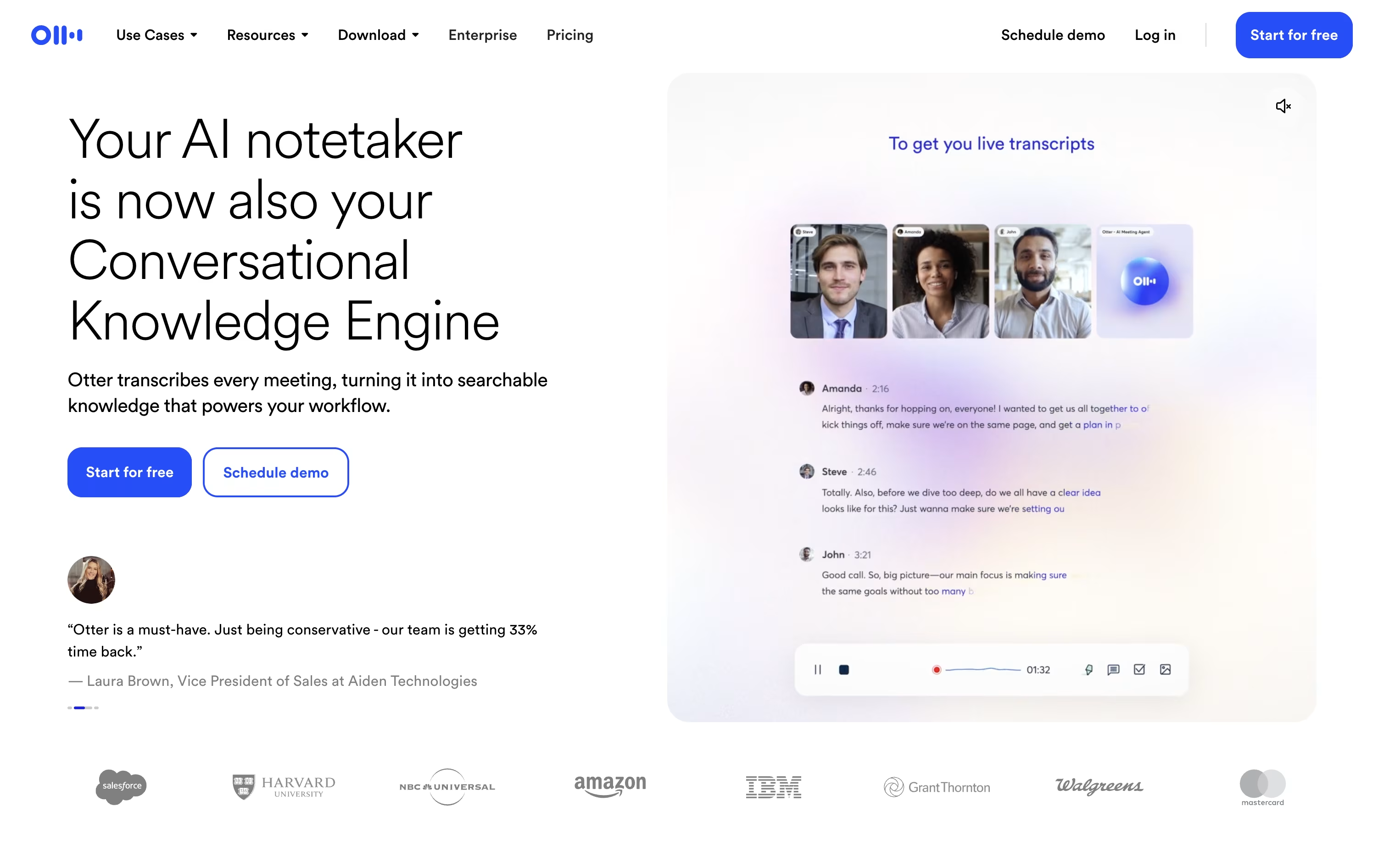
During the call, Otter builds a live transcript and labels each speaker by name. Once it ends, an AI summary appears with the topics covered, the decisions made, and any action items, so nothing gets lost.
You can chat with Otter AI Chat about what was said in one meeting or across your entire history, and send that information straight into Salesforce, HubSpot, Slack, or other connected tools.
Getting started costs nothing on the Basic plan, which covers 300 transcription minutes monthly for a small team of 5. Moving to Pro at $16.99 a month, or $8.33 a month paid yearly, opens up 1,200 minutes and full meeting history.
Business, at $24 a month or $19.99 a month yearly, removes the transcription cap entirely and adds analytics, activity logs, and faster support for teams up to 25 people.
Larger organizations can move to Enterprise, which is custom priced and includes SSO, SCIM, and additional security controls.

Meetings often produce information that gets lost the moment the call ends, and Grain was built to fix that.
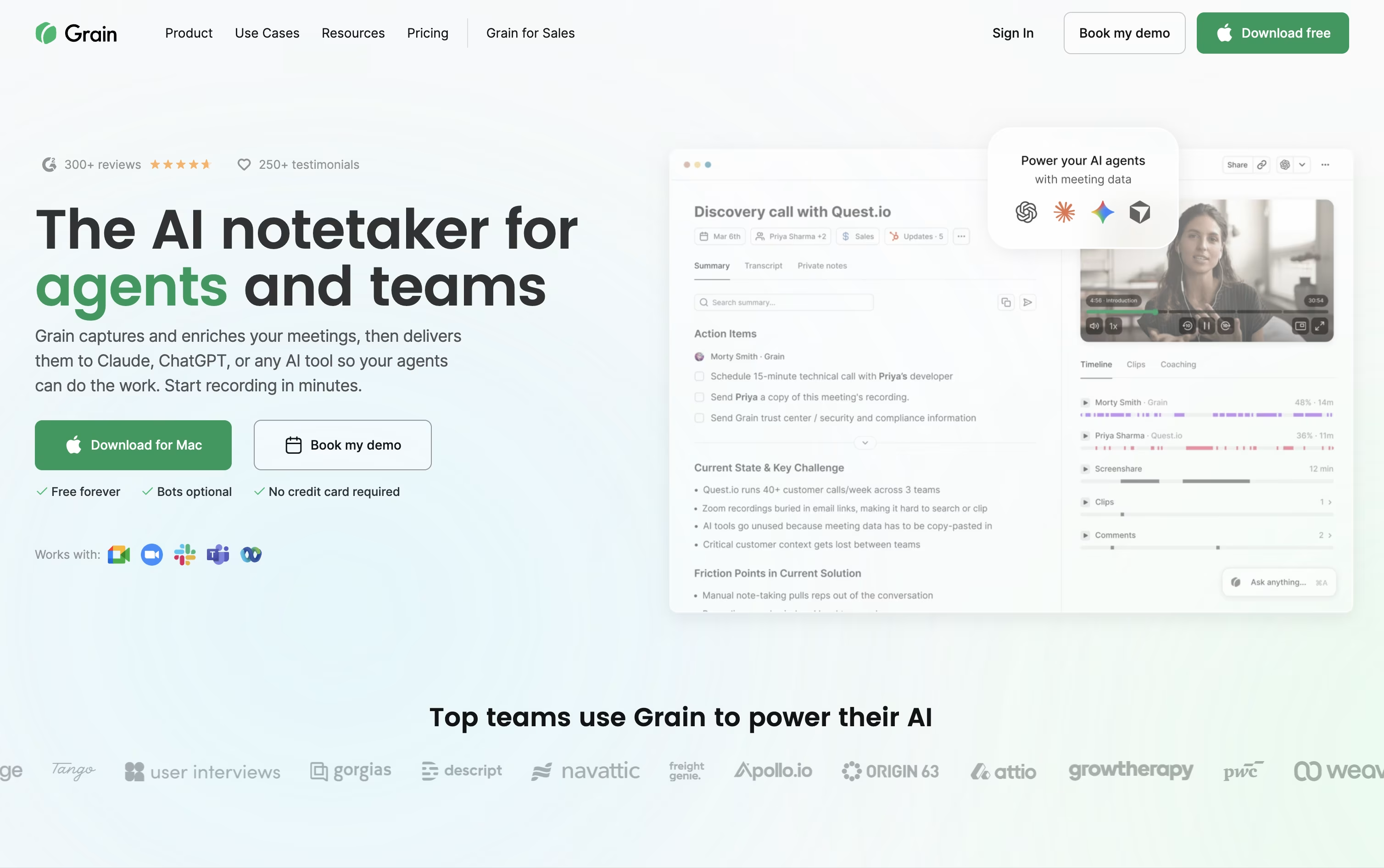
The tool records or quietly captures your calls through a desktop app, then writes clear notes, action items, and searchable transcripts without you lifting a finger.
Beyond notes, you can turn any moment into a short video clip, share it with clients or teammates, and keep a private or team library of past conversations.
Sales and customer success teams get extra value from built in coaching scorecards, trackers, and syncing straight into HubSpot or Salesforce.
Getting started costs nothing on the Free plan, which covers unlimited meetings up to 45 minutes with basic AI notes and a 30 day history.
Starter runs $15 a seat monthly when billed yearly, Business is $29 a seat monthly billed yearly with unlimited teams and AI coaching, and Enterprise adds custom pricing with SAML based SSO, audit logs, and a dedicated customer success manager.

Think of HappyScribe as a way to skip typing out audio and video by hand. Upload a recording, or link it to Zoom, Google Meet, or Microsoft Teams, and it hands back a transcript with speakers marked and timestamps included, across more than 150 languages.
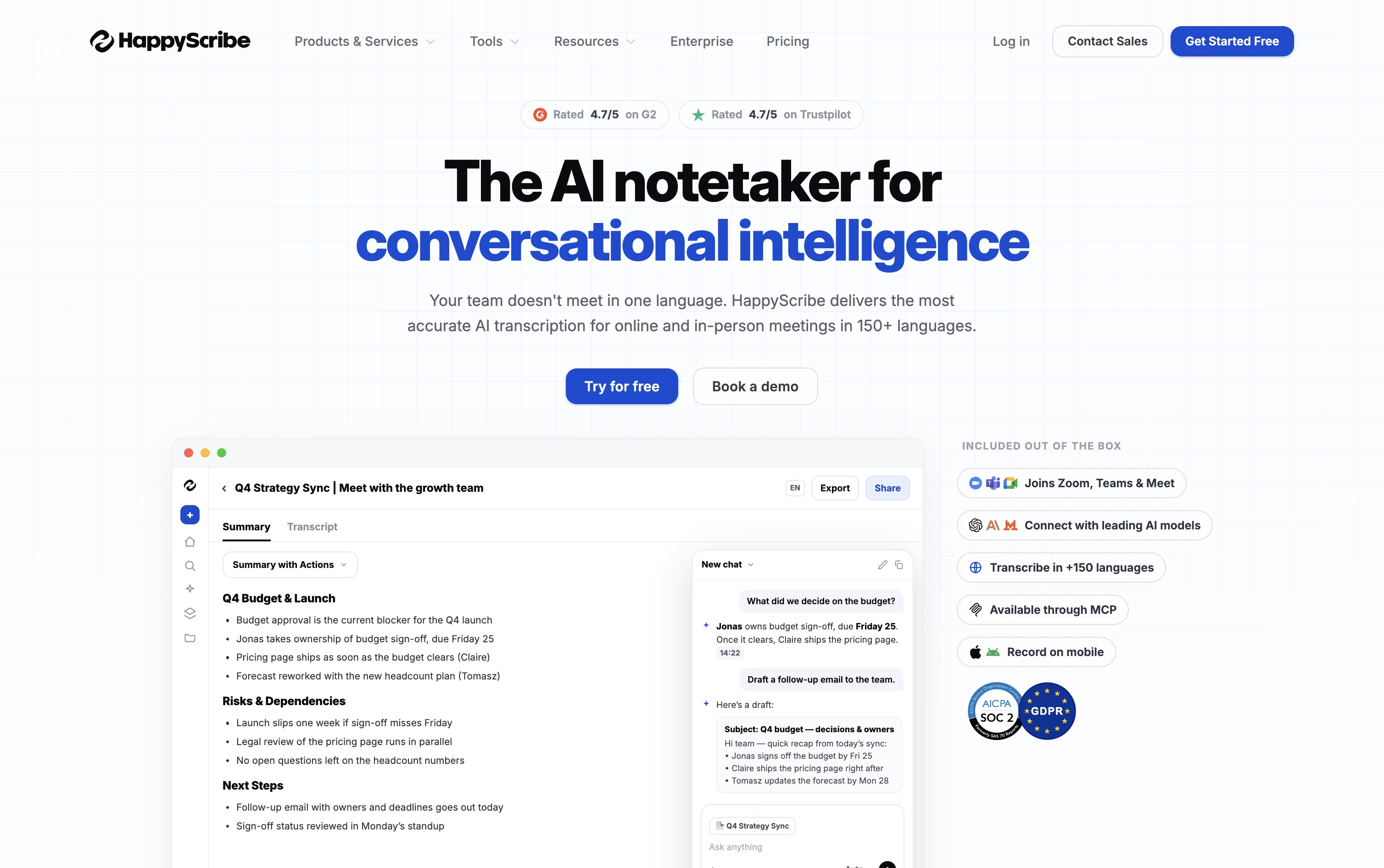
It also acts like a meeting assistant. The AI Notetaker can join calls on its own, put together a summary with action items, and email notes out to everyone afterward.
From there, you can clean up the text in an online editor, translate it, turn it into subtitles, and download it as DOCX, SRT, PDF, or several other formats. There is also an AI Chat tool for asking questions about a single recording or everything in your workspace at once.
Starting out is free, with a 10 minute AI trial and 45 minute recordings. Basic runs $17 a month for one person, Pro is $29 a month and adds unlimited AI Chat for small teams, and Business is $89 a month with unlimited style guides and glossaries for bigger groups.
Every paid plan gets cheaper when billed yearly, and an Enterprise option is available through sales for extra support and single sign on. Professional human proofreading can also be added starting around $1.90 to $2.00 a minute.
Deepgram gives developers one platform for speech-to-text, text-to-speech, and real-time voice agents, instead of stitching together separate tools.
Its Nova-3 and Flux models transcribe audio quickly and accurately in more than 45 languages, with built-in speaker labels, formatting, and redaction of private information.
On the speech side, Aura voice models generate natural sounding replies fast, and the Voice Agent API ties listening, reasoning, and speaking together into one smooth, low-latency conversation.
New users start on Pay As You Go, which comes with a $200 free credit and charges only for actual usage after that.
Growth suits busier teams for $4,000 or more a year in prepaid credits, bringing lower rates on most services and higher concurrency limits.
Larger organizations can move to Enterprise, a custom priced plan through sales that adds dedicated support, custom models, and options to self-host for stricter data control.

Most voice assistants read text out loud without any real feel for the moment. Hume AI takes a different approach, building an Empathic Voice Interface that listens for tone and emotion, then responds in a voice that actually matches how the conversation feels.
Its Octave text-to-speech model works the same way, using context to control pitch, pace, and emphasis rather than reading in a flat, mechanical voice.
A free plan is available with 10,000 characters of speech and 5 minutes of voice conversation each month, enough to try things out.
From there, Starter starts at $3 a month, with Creator, Pro, Scale, and Business each stepping up in usage, request speed, and lower overage pricing along the way.
Businesses that need more can move to a custom Enterprise plan, which includes unlimited team seats, Slack based support, and compliance with SOC 2 Type II, GDPR, and HIPAA.
Since Hume's voice layer works with outside models such as Claude, GPT, and Gemini, teams can change the brain behind the assistant without changing how it sounds.

Instead of typing out notes or emails, Letterly lets you just talk and hands back text that is already cleaned up and organized. Filler words disappear, grammar gets fixed, and your rambling thoughts turn into structured paragraphs or bullet points.
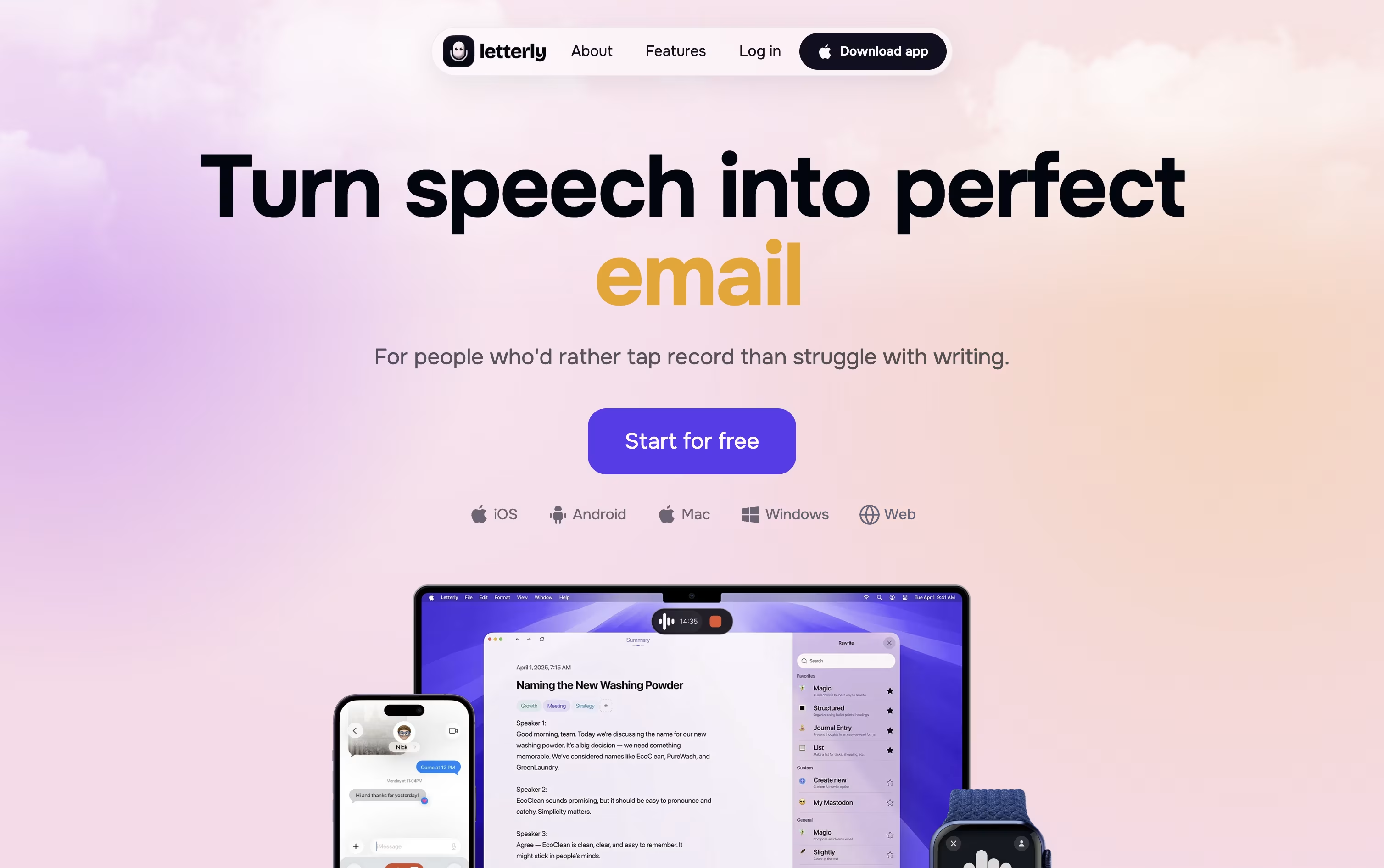
It covers everyday note taking, multi speaker meeting transcripts, and direct dictation into tools like Gmail, Slack, and Notion, all in over 90 languages.
The app runs on web, iOS, Android, macOS, and Windows, with notes syncing live across every device you use.
Three pricing options are available: Monthly at $19.99, Annual at $79.99 with a 7 day free trial, and a Lifetime option at $199.99 paid once.
All three come with unlimited recordings, unlimited AI rewrites, and access on unlimited devices, so it is really about how long you want to commit.

Voibe swaps your keyboard for your voice on Mac and Windows. Hold a hotkey, speak normally, and the app inserts clear, properly punctuated text directly into whatever app you are using, from code editors to email.
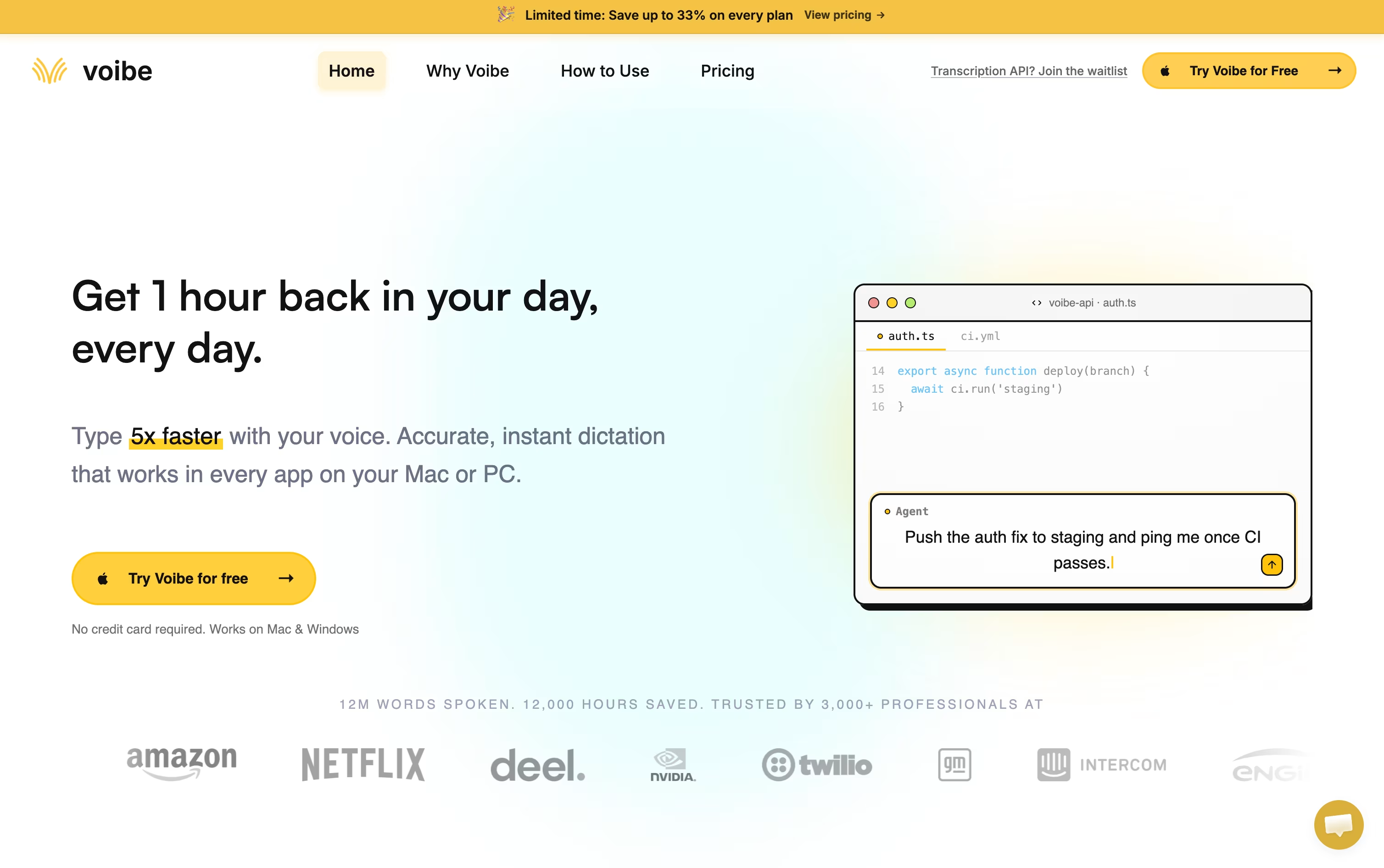
Behind the scenes it uses open source Whisper based models, not proprietary big tech AI, and never stores or trains on your audio. Apple Silicon Macs can run the whole thing offline, while Windows relies on a zero retention cloud path.
Developers get a Developer Mode that scans the local workspace so spoken file names and variables resolve correctly inside Cursor, VS Code, and Windsurf, which is a big help for AI coding workflows.
On price, professionals can pick monthly at $7.50, annual at $59 with four months free, or a one time lifetime purchase at $149. Teams of three or more save around 20 percent, larger teams of ten or more can request custom terms, and every plan starts with a free trial and a 30 day refund guarantee.
Typing often slows people down more than thinking does, and VoiceTypr is built around that idea. It is an open-source voice dictation app for macOS and Windows that turns speech into text inside any app you already use.
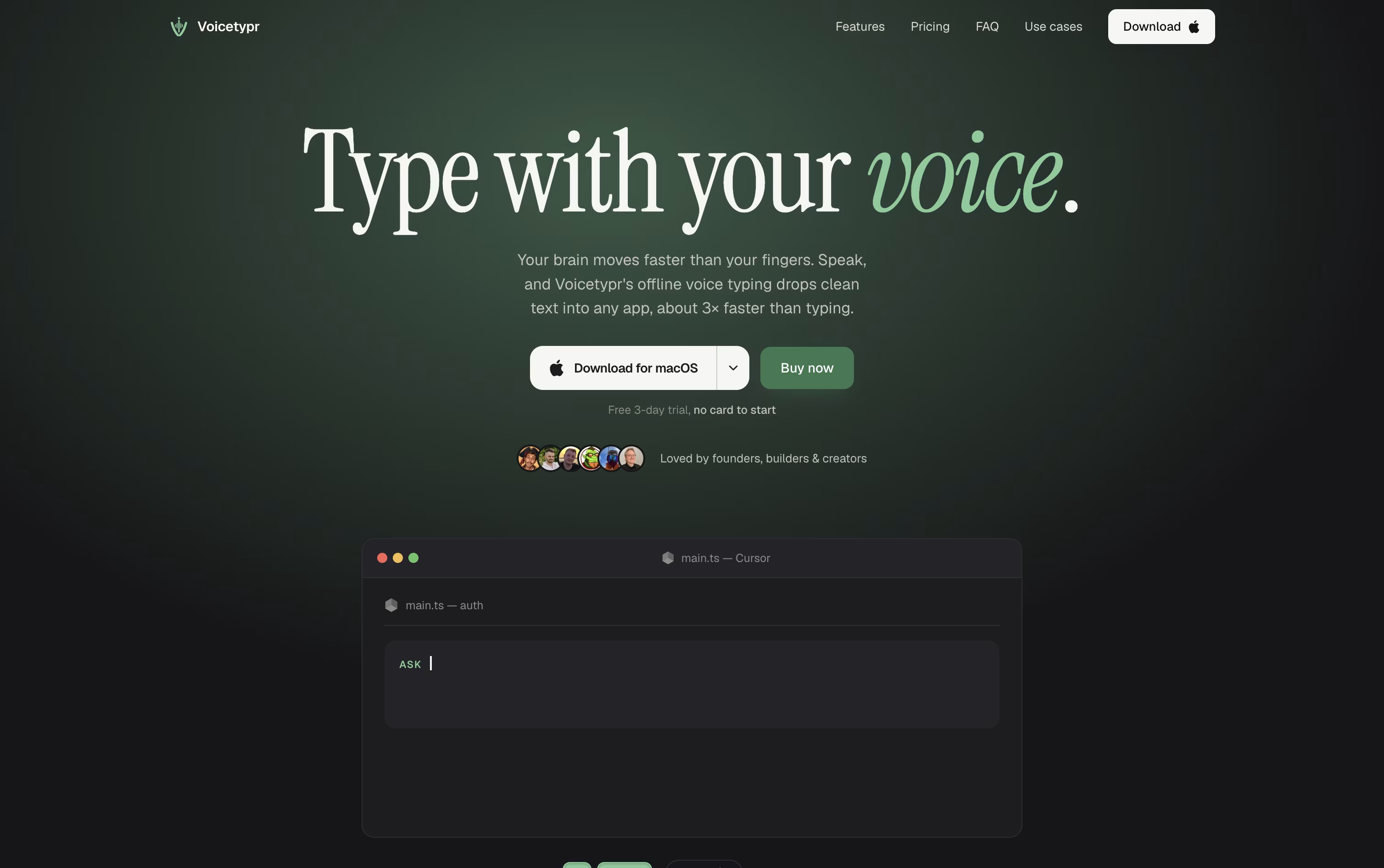
Hold a global hotkey, talk naturally, and let go. The words appear instantly at your cursor, whether that is a code editor, an email client, or a chat app.
Transcription happens on your own device by default, using open-source Whisper models, so nothing needs to reach the internet just to get your words down.
When you want more, an optional AI enhancement pass can reshape rough speech into a polished prompt, email, note, or commit message, powered by cloud models like Groq or OpenAI.
There is also a CLI and Agent API, so developers can wire voice input straight into scripts or AI agents rather than typing everything by hand.
Pricing is a one-time lifetime purchase rather than a subscription, starting at $39 for one device and going up to $99 for four, with a 3-day free trial and 7-day refund window to try it first.

Monologue turns your spoken words into clean, formatted text rather than a rough transcript. It cuts filler words, tidies up phrasing, and shapes the output to fit whatever app you are typing into.
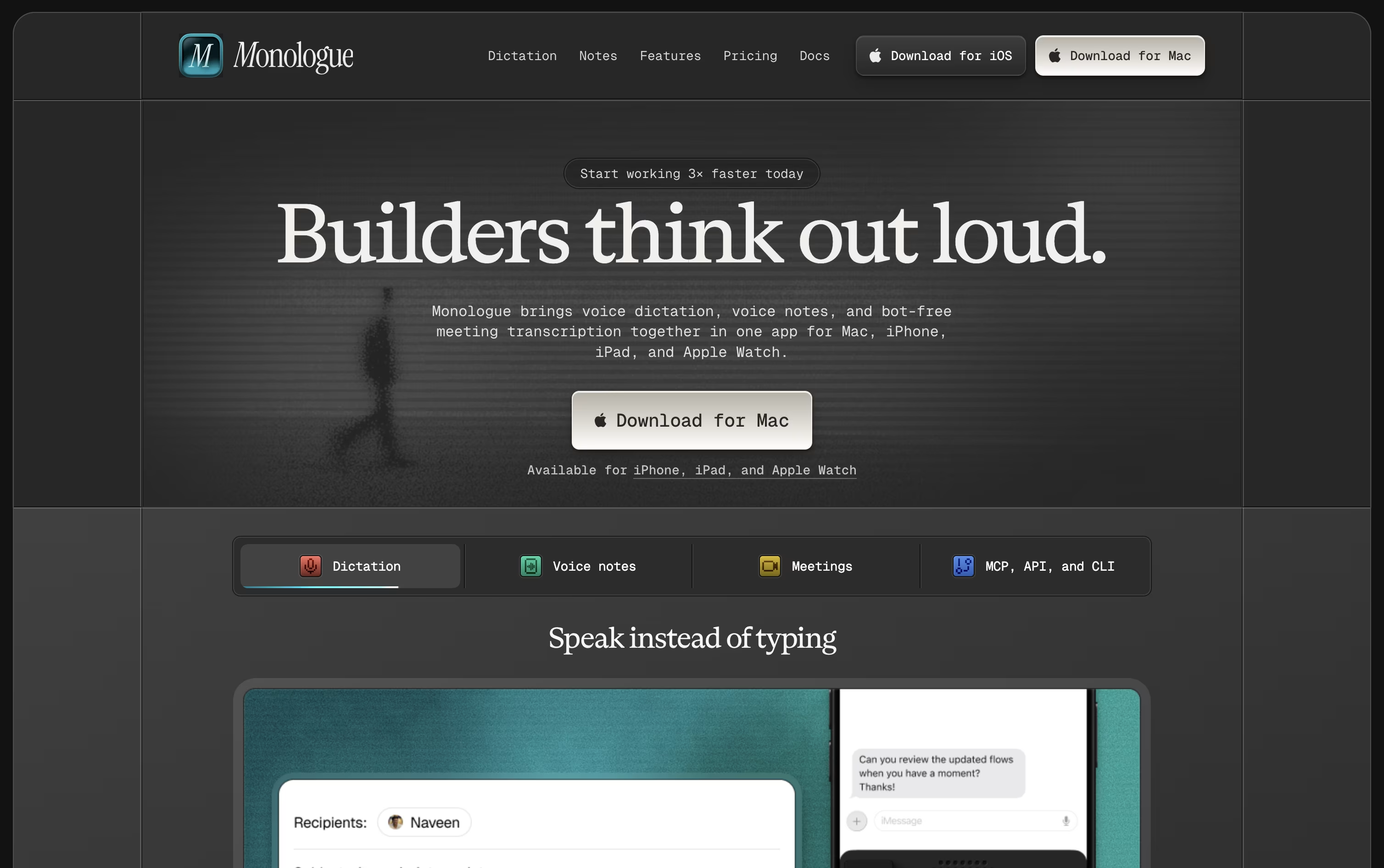
The app is available on Mac, iPhone, iPad, and Apple Watch, with your dictionary, modes, and notes kept in sync everywhere.
A free trial covers 1,000 dictation words and 10 recorded notes so you can test it before paying anything.
Beyond that, Pro costs $15 monthly or $144 a year, which works out to about $12 a month and removes all the usage limits.
Pro also adds bot-free meeting notes and full support across every Apple device.
Monologue is included in the wider Every subscription bundle, and it offers an API, CLI, and MCP support for developers who want notes inside their coding agents.

Instead of typing, Aqua Voice lets you talk. Hold a key in any app, speak naturally, and your words appear as neat, formatted text within moments, ready for code editors, emails, or chat apps.
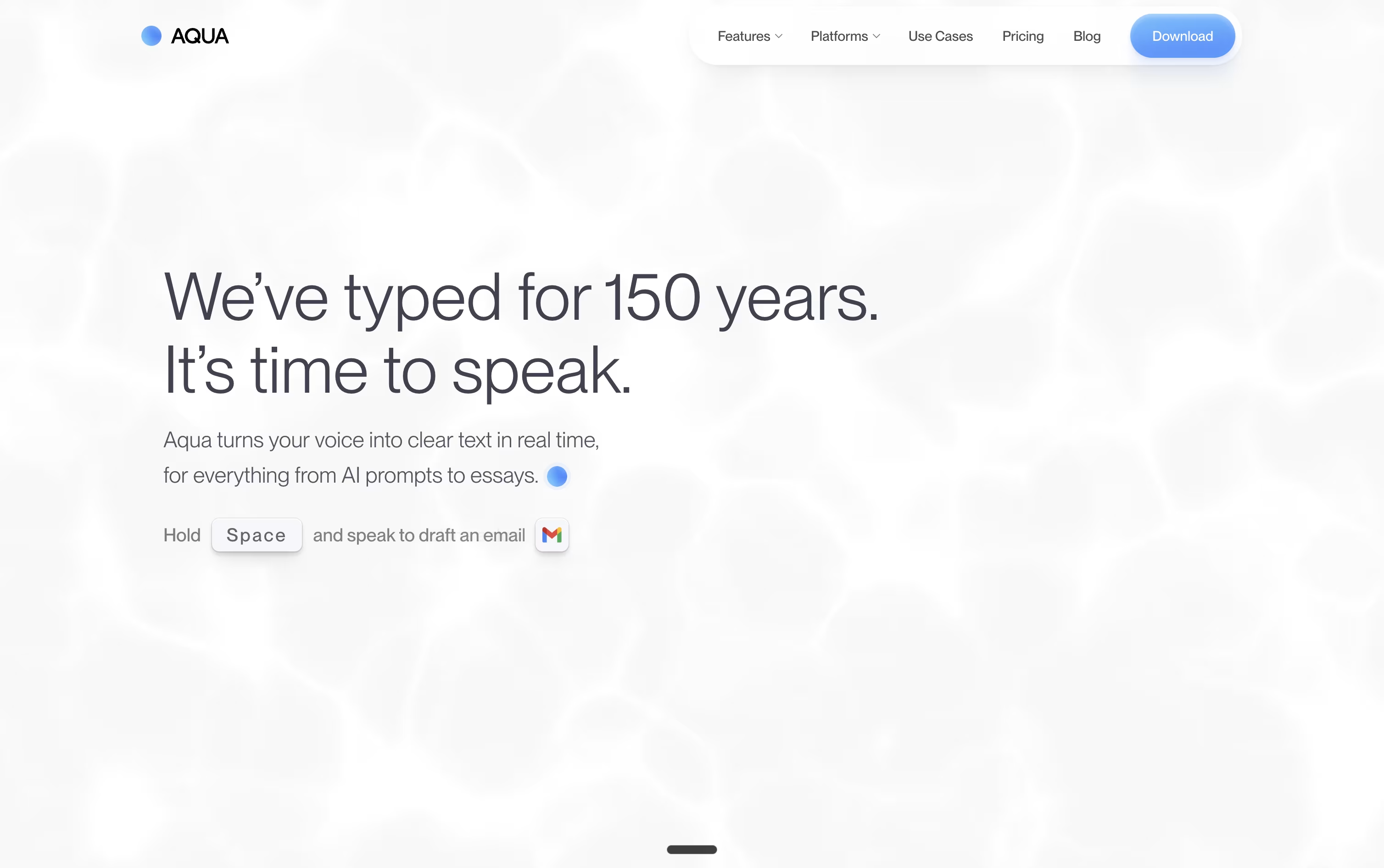
The tool is powered by Avalon, a speech model trained specifically on how people talk to computers and AI assistants, so it recognizes coding terms and technical names more reliably than typical dictation software.
Anyone can start for free with the Starter plan and 1,000 words. Moving to Pro costs $10 a month, or $8 a month if billed yearly, and removes the word limit while adding custom instructions.
The Max plan is $30 a month, or $24 a month yearly, and brings realtime streaming plus spoken commands like sending a message. Teams pay $15 per user monthly, or $12 yearly, with one shared bill.
Enterprise customers get custom pricing along with single sign-on, zero data retention, and detailed reporting for larger organizations.
A 70% student discount applies to Pro and Max, and all plans allow cancelling at any time.
Instead of typing, VoiceInk lets you simply talk on your Mac or iPhone. Hit a shortcut, say what you need, and clean, ready to use text appears wherever your cursor is.
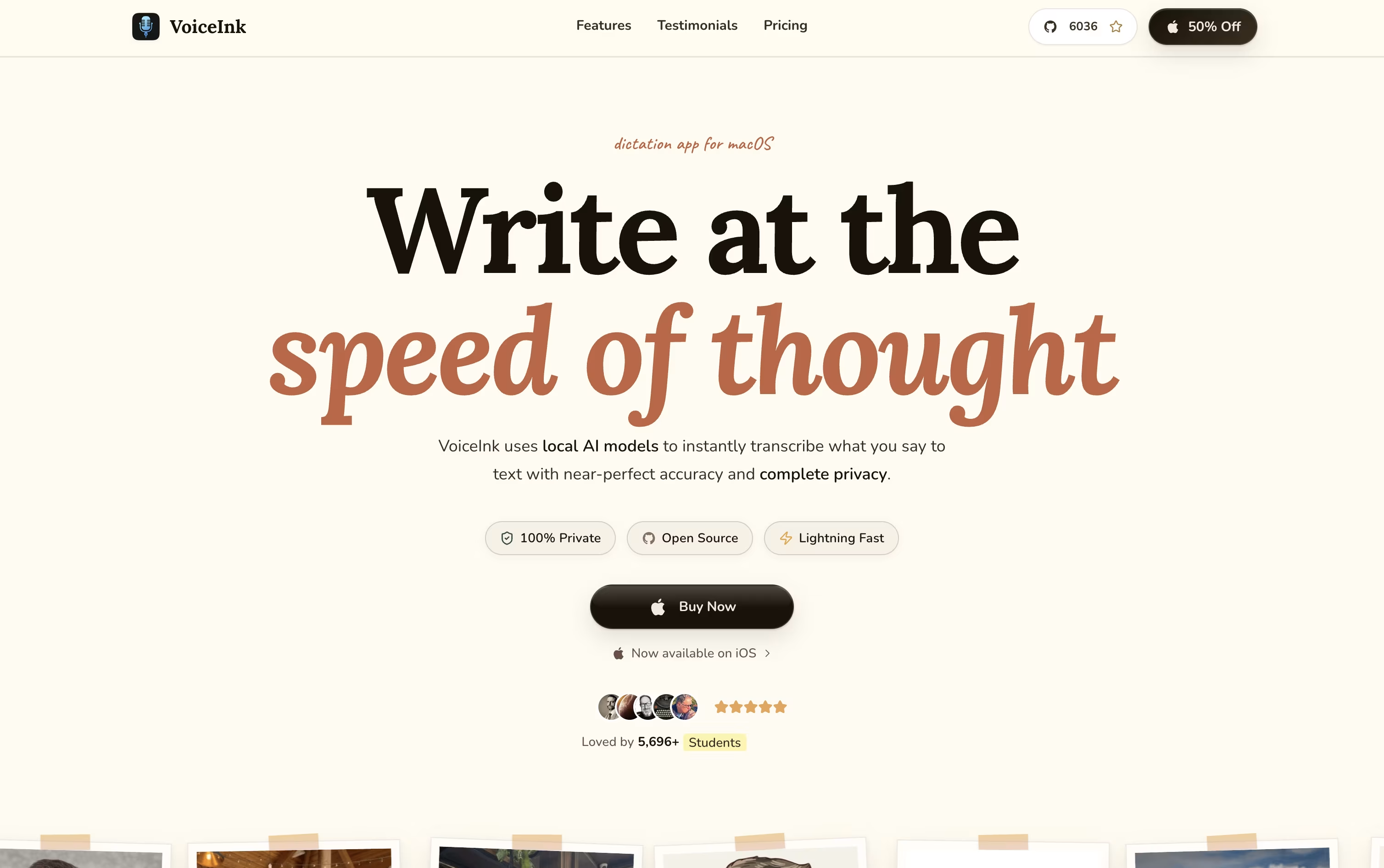
Voice processing happens locally on your device by default, keeping your audio private, though optional cloud models are available if you supply your own API key.
Its Modes feature recognizes which app you are using, like Slack or Gmail, and adjusts the transcription model and writing style to fit that context automatically.
There is no subscription here. Solo is $29 for one Mac, Personal is $49 for two Macs, Extended is $69 for three Macs, and teams can grab a 10 seat Startup license for $199.
Every option comes with lifetime updates and a 14 day refund window, one payment covers it for good.
Being open source, it is also actively shaped by an engaged community of users.
Instead of typing, Superwhisper lets you talk and have your words appear as clean, formatted text in whatever app you are using, on Mac, Windows, or iPhone.
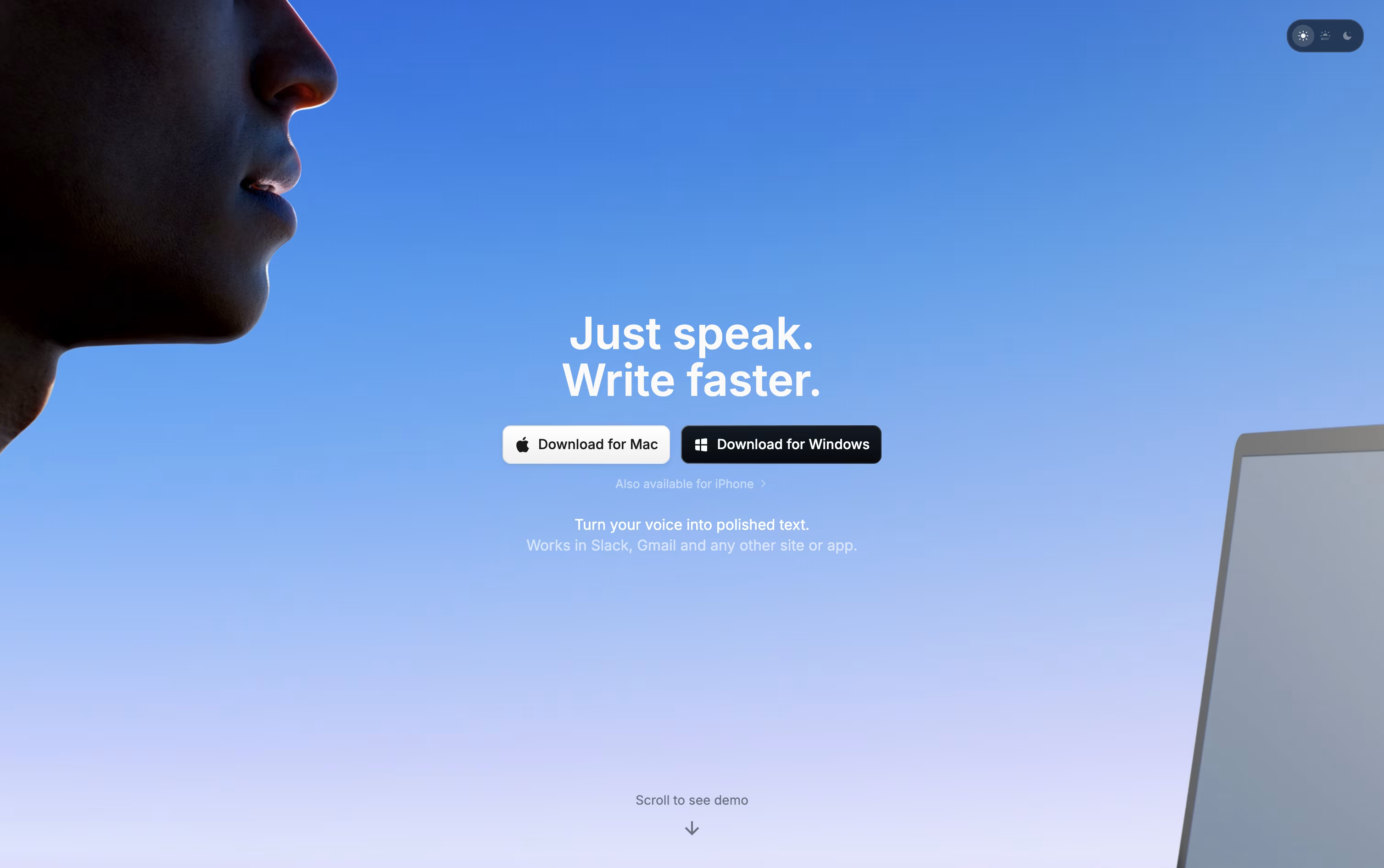
Behind the scenes it records your voice, converts it to text, then runs it through an AI model that follows the mode you have selected, whether that is a quick note, a formal email, or a meeting summary.
You decide how much stays private. Local models keep everything on your device, while cloud models and your own API keys open up stronger results when you want them.
Getting started costs nothing. The free plan includes core dictation, meeting recording, and support for over 100 languages.
Stepping up to Pro runs $8.49 a month, or $84.99 a year with close to two months free, adding translation, file transcription, and unlimited model access. A lifetime option is also available for a single $249.99 payment.
Teams with bigger needs can move to Enterprise, a custom priced plan built around security certifications, centralized billing, and volume pricing.

Rather than typing out every message, Typeless lets you speak and hands back writing that already reads clearly. Hold the hotkey on desktop, or the voice button on mobile, and the app fills in the text for you.
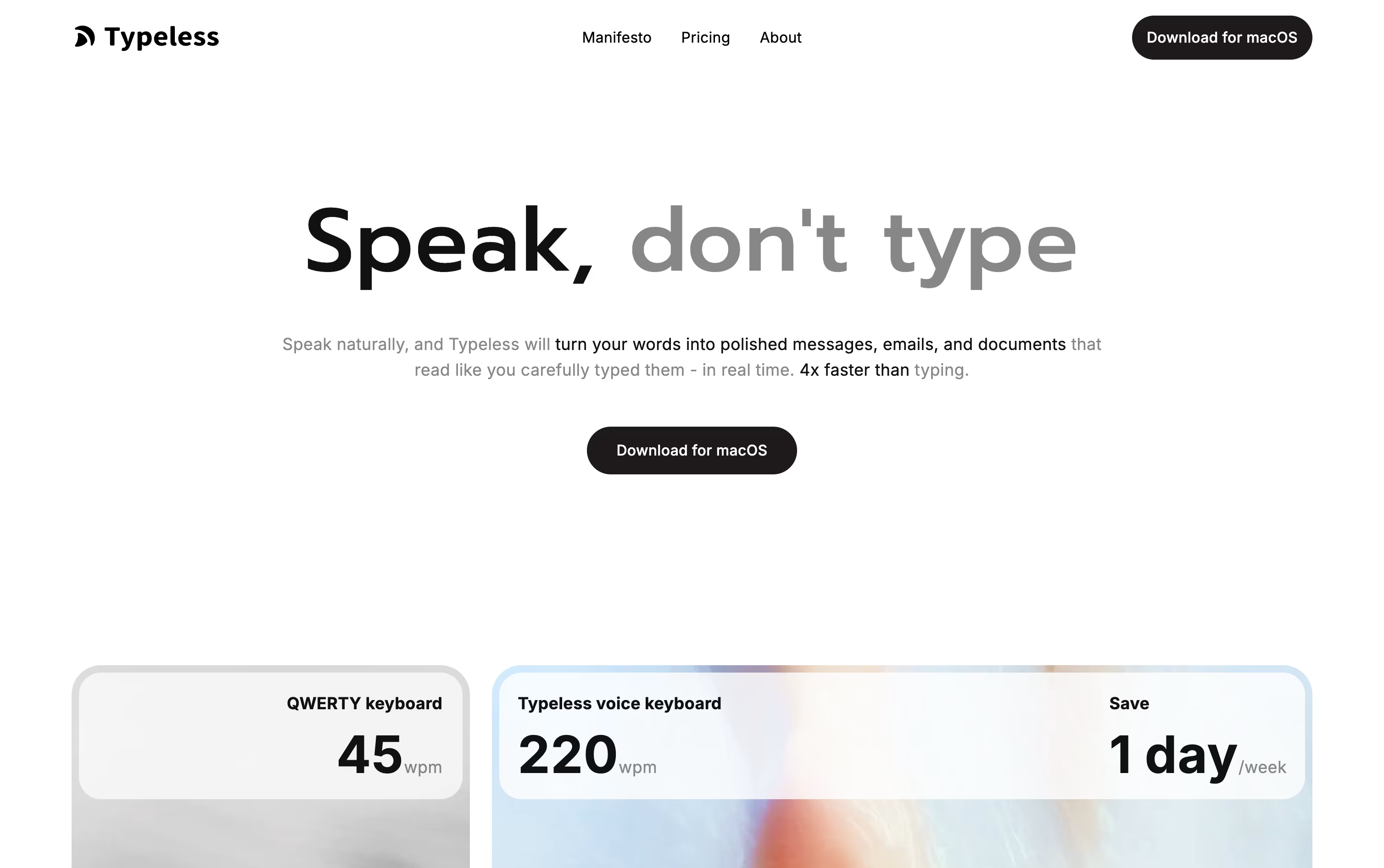
It quietly strips out ums, repeated words, and false starts, then arranges the result into sentences, steps, or paragraphs that match what you were trying to say.
You can use it almost anywhere on your device, whether that is a work email, a group chat, or a long document, and the experience stays consistent across macOS, Windows, iOS, and Android.
Getting started is free, with 8,000 words covered each week at standard accuracy. Moving to Pro costs $12 per member monthly on the yearly plan, or $30 if you pay month to month, and lifts the word cap while speeding things up for teams.
Bigger companies can ask about Enterprise pricing, which adds single sign-on, audit trails, and priority support.
With support for more than 100 languages and a habit of learning how you write, it fits both short daily notes and longer pieces of writing.
Instead of handing you a plain transcript, Circleback turns your meetings into organized notes with topics, decisions, and numbers pulled out clearly, across Zoom, Teams, Google Meet, and other platforms.
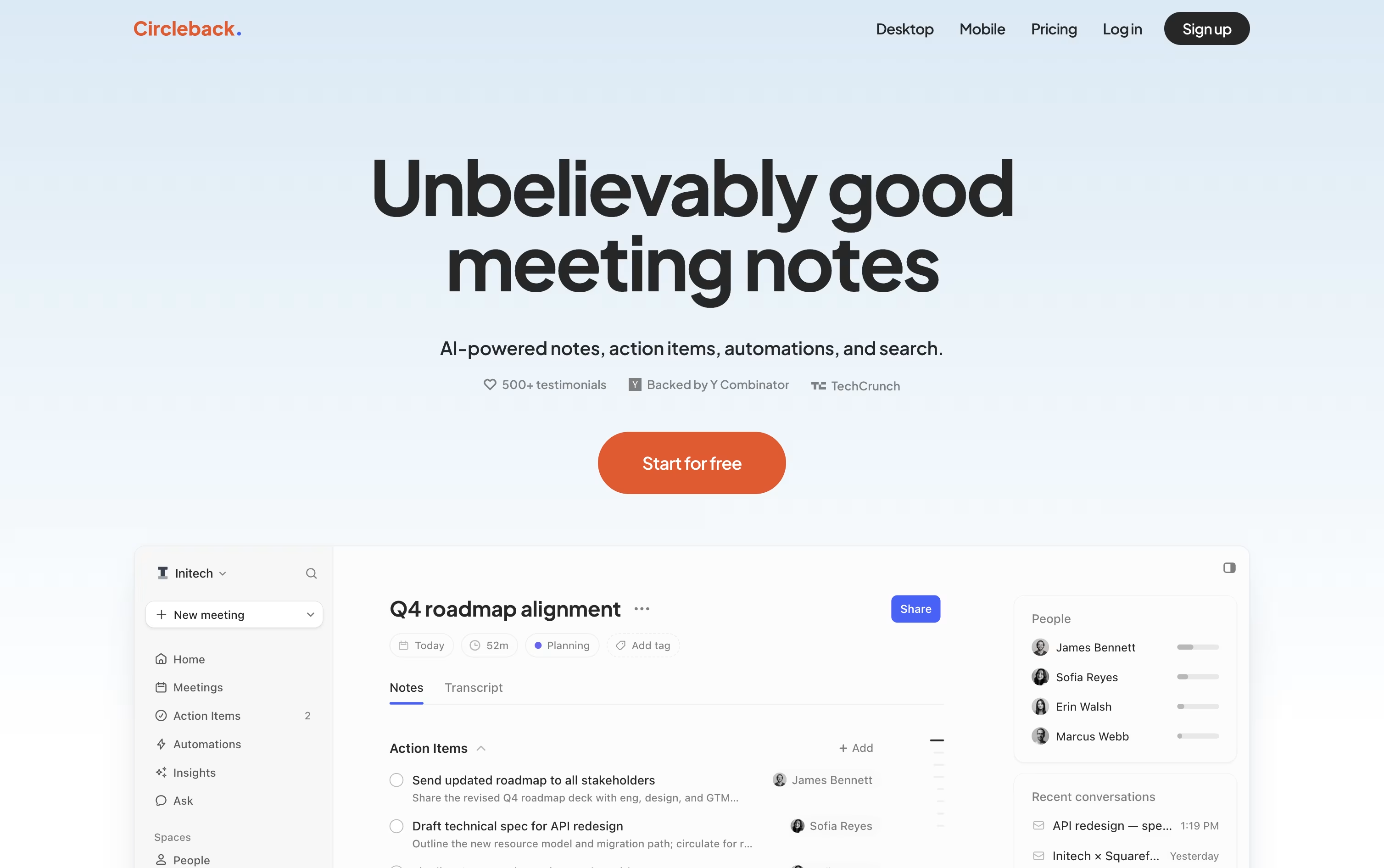
It picks out action items as people speak, assigns them to the right person, and keeps everything in one list you can check off later.
A built-in search lets you ask a question about one meeting or all of them at once, and every answer points back to the exact moment it came from.
Automations connect meetings to your other tools, so a demo call can automatically create a Linear ticket or update a deal in your CRM without extra typing.
The Individual plan starts at $25 a user per month, dropping to about $20.83 a month when billed yearly, while Team runs $30 a month, or $25 a month yearly, adding shared meetings, team search, and admin settings. Enterprise is priced by request and adds priority support and stronger security controls.
All paid plans can be tried for free before you commit to a subscription.

Most meeting recorders add a visible bot to your call, but Bluedot skips that entirely and records straight from your own device instead, whether through Chrome, a desktop app, or your phone.
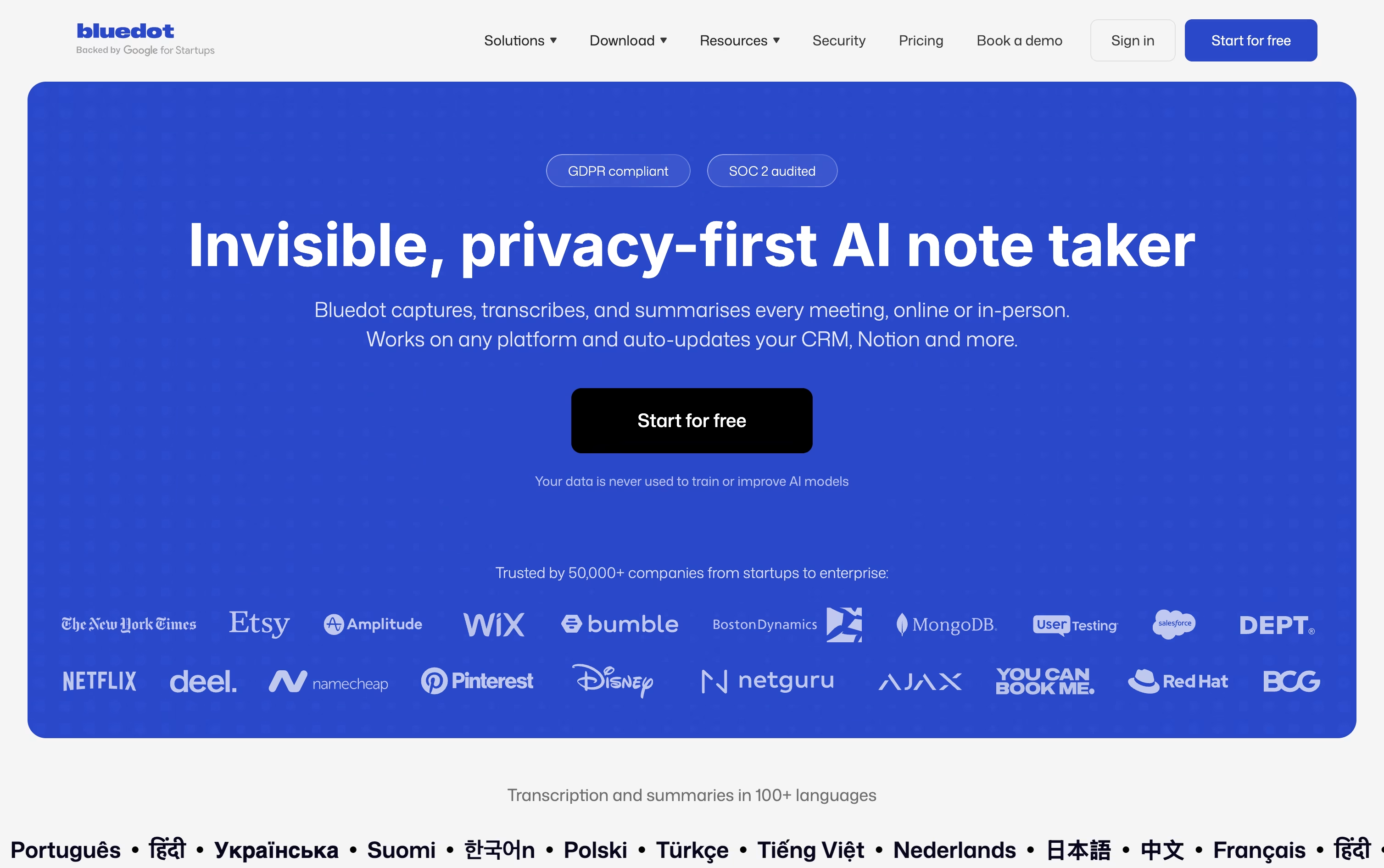
Once a meeting ends, it hands you a transcript, a plain-language summary, and a list of action items, and you can ask its AI chat questions about any single meeting or everything in your workspace at once.
The Free plan lets you try it with 5 lifetime meetings at no cost. From there, Basic runs $18 per user monthly for unlimited audio meetings, and Pro moves to $25 for unlimited video and recording length.
Business, at $39 per user a month, layers on CRM and ATS syncing, admin controls, and SSO for larger teams, and every paid plan gets noticeably cheaper if you pay yearly instead of monthly.
Companies that would rather pay one flat amount regardless of headcount can request custom pricing too.
Add in support for 100+ languages and solid privacy practices, and Bluedot works well for sales, recruiting, and support teams alike.

Instead of typing, Willow Voice lets you simply talk, and it turns your speech into polished, formatted text inside whatever app you are using, from email to chat to notes.
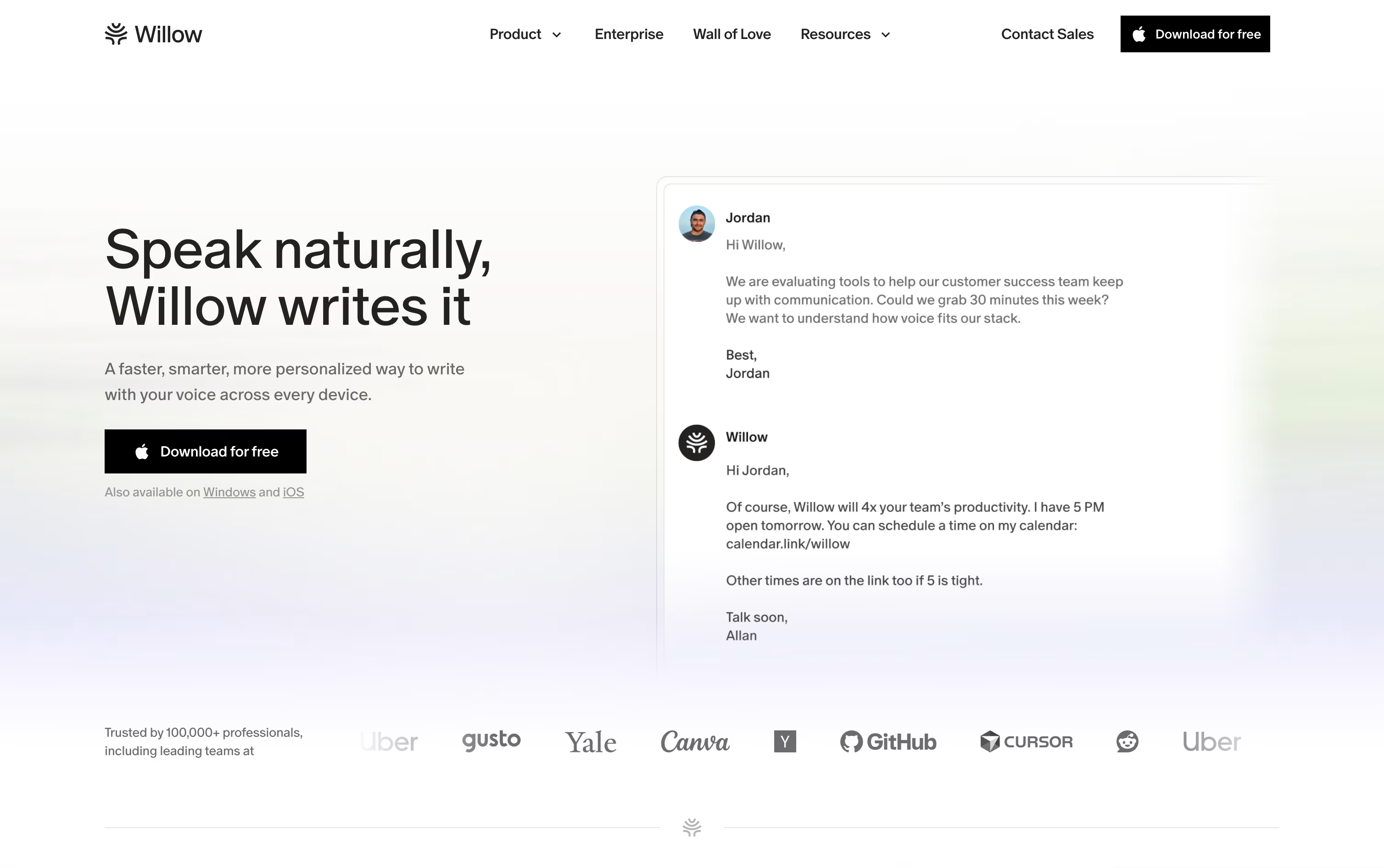
It is available on Mac, Windows, and iPhone, and it learns your writing style over time so replies sound like you wrote them yourself.
Starting out costs nothing. The free plan includes unlimited dictation with the Frontier Mini model, basic personalization, and 20 uses of the Scribe writing assistant each week.
Stepping up to Pro brings the more accurate Frontier Pro model, unlimited Scribe, quicker transcription, and access on iPhone, priced at $15 per user monthly or $12 with annual billing.
Business plans add team features like shared dictionaries, centralized billing, and stronger security such as SOC 2 and zero data retention, for $35 a month or $28 billed yearly.
Larger organizations can move to Enterprise, which adds single sign-on, dedicated support, and advanced controls at custom pricing.
Instead of giving you a raw transcript full of ums and half-finished sentences, AudioPen rewrites your speech into text you could send or publish right away.
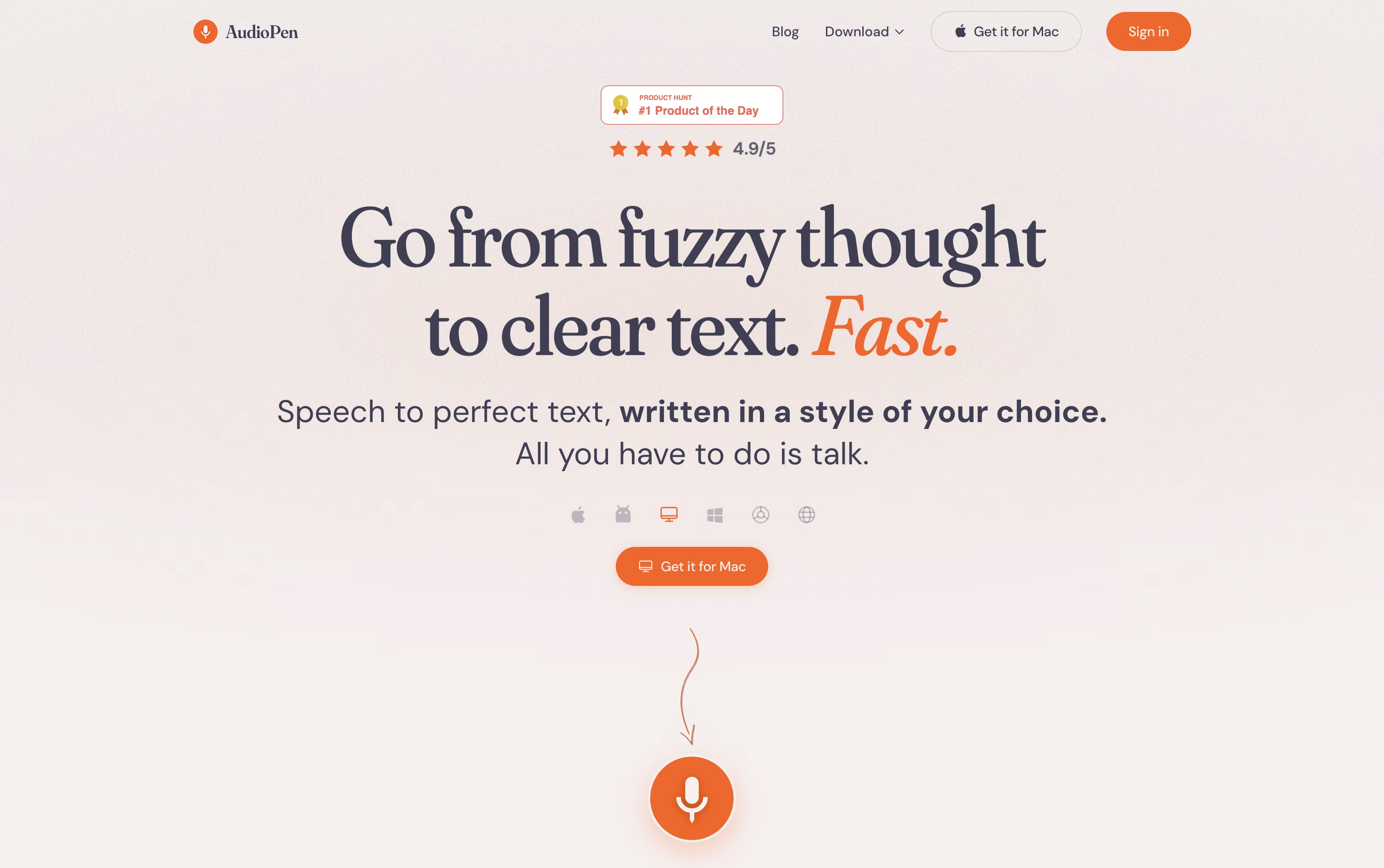
You choose from preset writing styles like business, email, or casual notes, or teach it your own tone by feeding it samples of your writing.
It works across devices, including a Mac app with hotkey typing, an iOS keyboard, an Android app, and a Chrome extension for browser use.
Rather than a subscription, AudioPen sells access as one-time passes. Three months costs $33, a full year is $99, and two years runs $159, each charged only once.
Every plan includes the same tools, unlimited AI rewrites, audio file uploads, SuperSummaries, organized folders and tags, and integrations through Zapier and webhooks.
Audio recordings are deleted from servers quickly and your notes are never used to train AI models, which keeps the whole process quick and private.

Sembly sits in on your meetings across Zoom, Google Meet, Teams, or Webex, records the conversation, and produces a clean transcript with each speaker labeled.
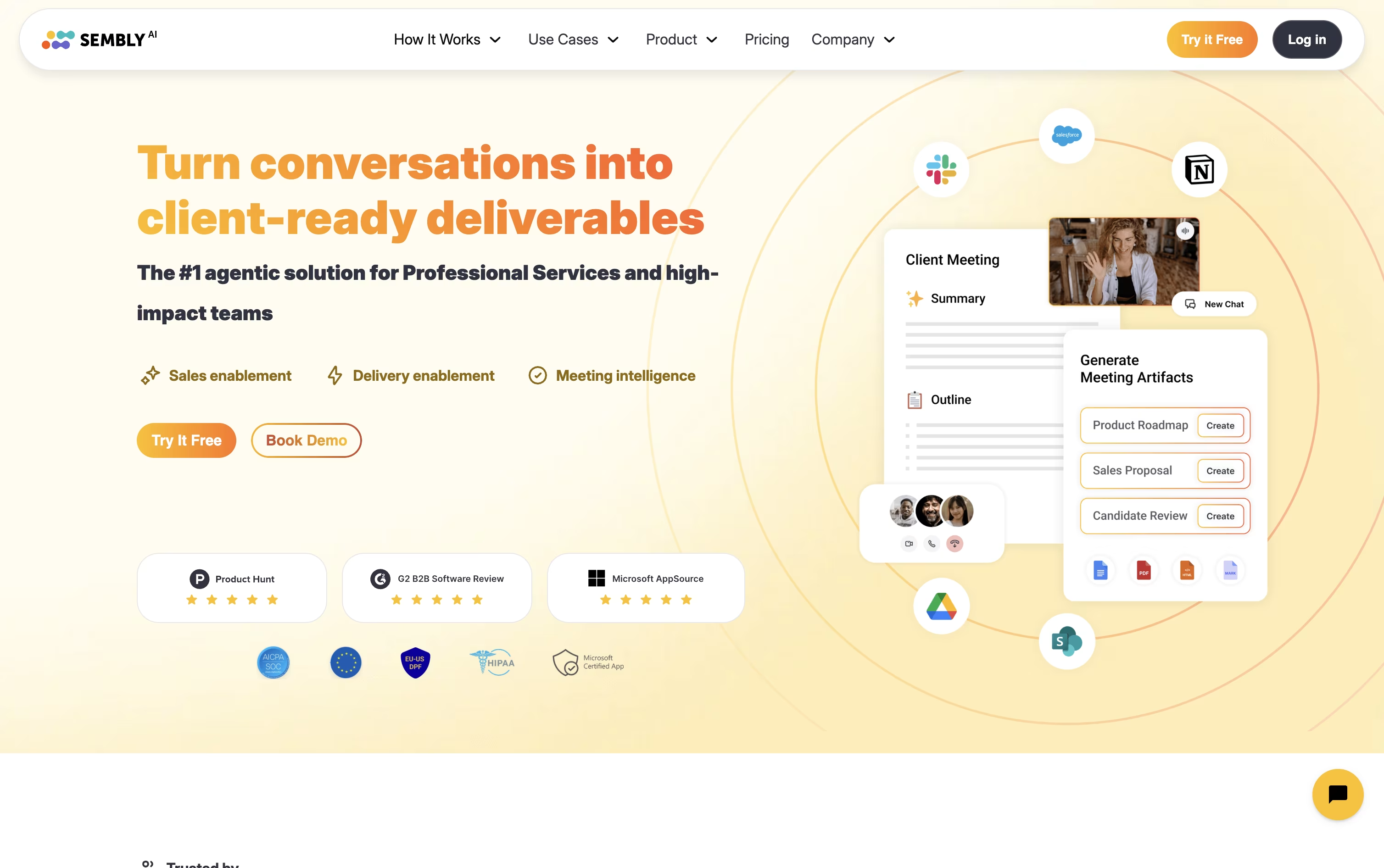
From that transcript it writes summaries, structured meeting notes, and a list of action items with owners and deadlines attached automatically.
Its assistant, Semblian, can be asked questions across a single meeting or your entire meeting history, and can draft documents such as proposals, status reports, or risk registers using real details pulled from what was actually said.
The Basic plan starts at $17 a month for one user, Pro runs $29 per user a month for teams up to 40 people, and MAX costs $39 per user a month for larger groups needing audit logs, HIPAA compliance, and single sign on. Paying yearly brings each price down, and bigger organizations can reach out for a custom Enterprise deal.
Sitting through a call and typing notes at the same time is hard, and Avoma was built to take that off your plate. It records meetings, writes a live transcript, and hands you AI notes with action items right after the call ends.
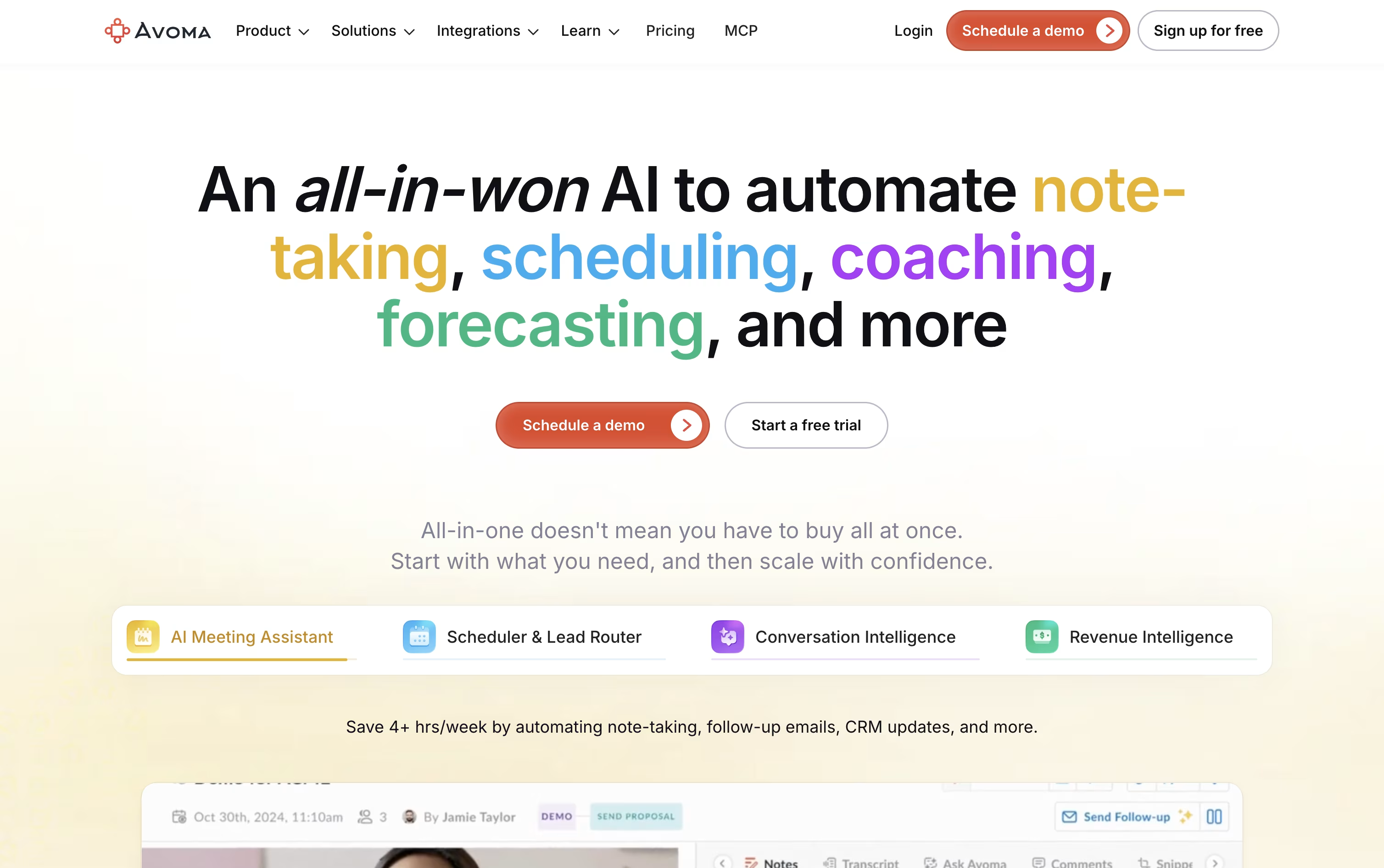
It goes further than note taking too. A built in scheduler handles 1:1, group, and round robin bookings, a lead router sends new leads to the right person automatically, and Ask Avoma lets you ask questions about any past meeting or deal.
Sales and success teams can add Conversation Intelligence for call scoring and coaching, or Revenue Intelligence for deal risk alerts, forecasting, and win loss analysis.
On price, Startup starts at $29 a seat a month, Organization is $39 a month and carries a most popular label, and Enterprise runs $39 a seat on annual billing with extras like SSO and HIPAA support.
Viewers who never record a call stay free, and a 14 day trial opens up every feature, add-ons included, without asking for a card.
Instead of typing notes during a call, Notta records the conversation and hands you a clean transcript afterward, complete with speaker labels and timestamps.
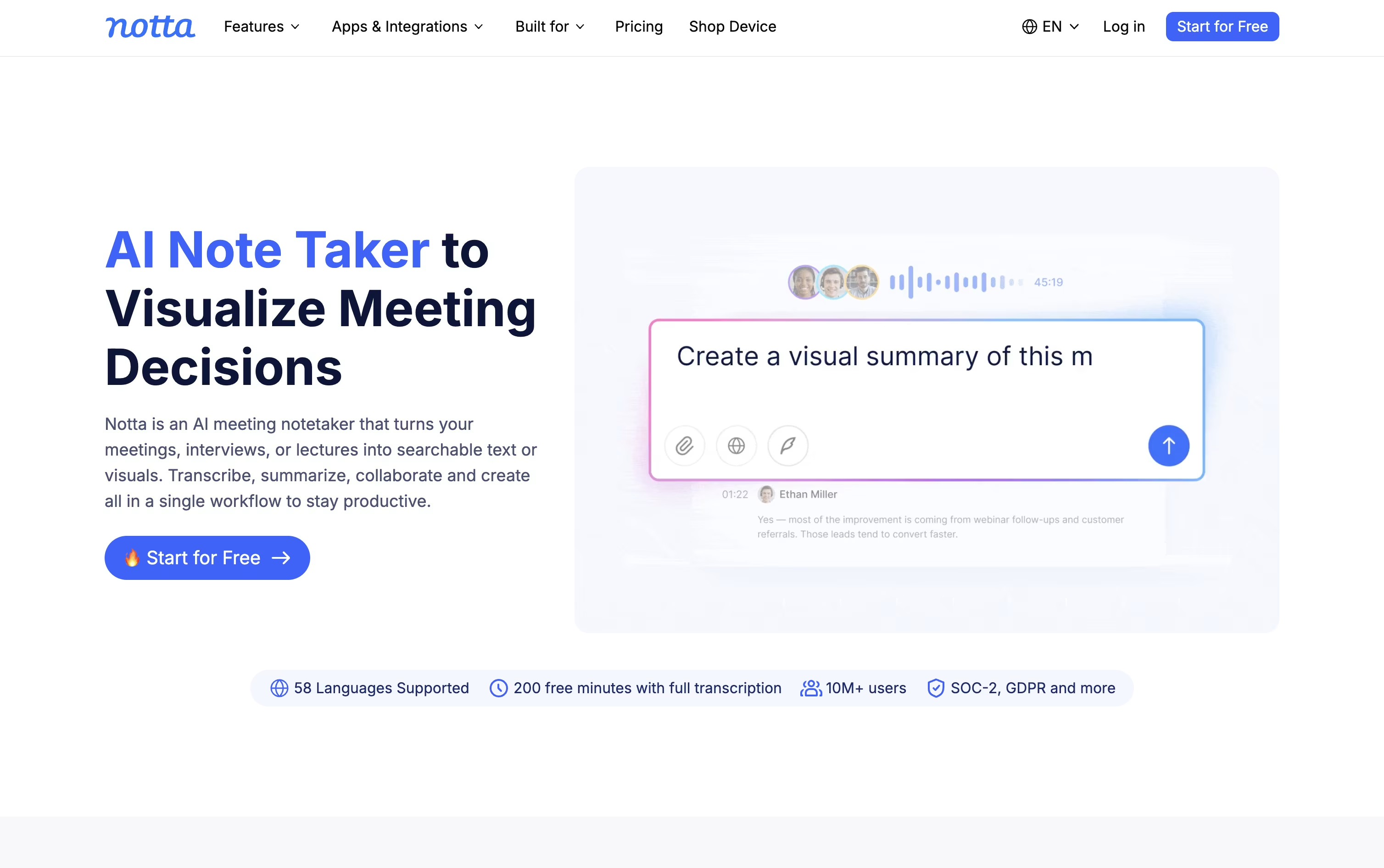
It joins Zoom, Google Meet, Microsoft Teams, and Webex meetings on its own, or you can let the desktop app capture audio in the background without anyone noticing a bot in the room.
Every recording comes with an AI summary and a list of action items, so catching up on a meeting takes minutes rather than a full replay.
Notta Brain builds on this by looking across many meetings and files at once, answering questions and turning them into slides, reports, or a follow-up email.
Pricing starts free with 120 minutes a month, moves to Pro at $13.49 a month for 1,800 minutes and translation tools, then Business at $27.99 a month per seat for unlimited transcription and team features.
Larger organizations can move to Enterprise for custom pricing with extra security, while the Notta Memo recorder and mobile apps extend capture beyond the desktop.
Fireflies.ai automatically joins your video calls, records them, and produces a transcript and summary without any manual effort. It works across Zoom, Google Meet, Microsoft Teams, and other tools, and it understands over 100 languages.
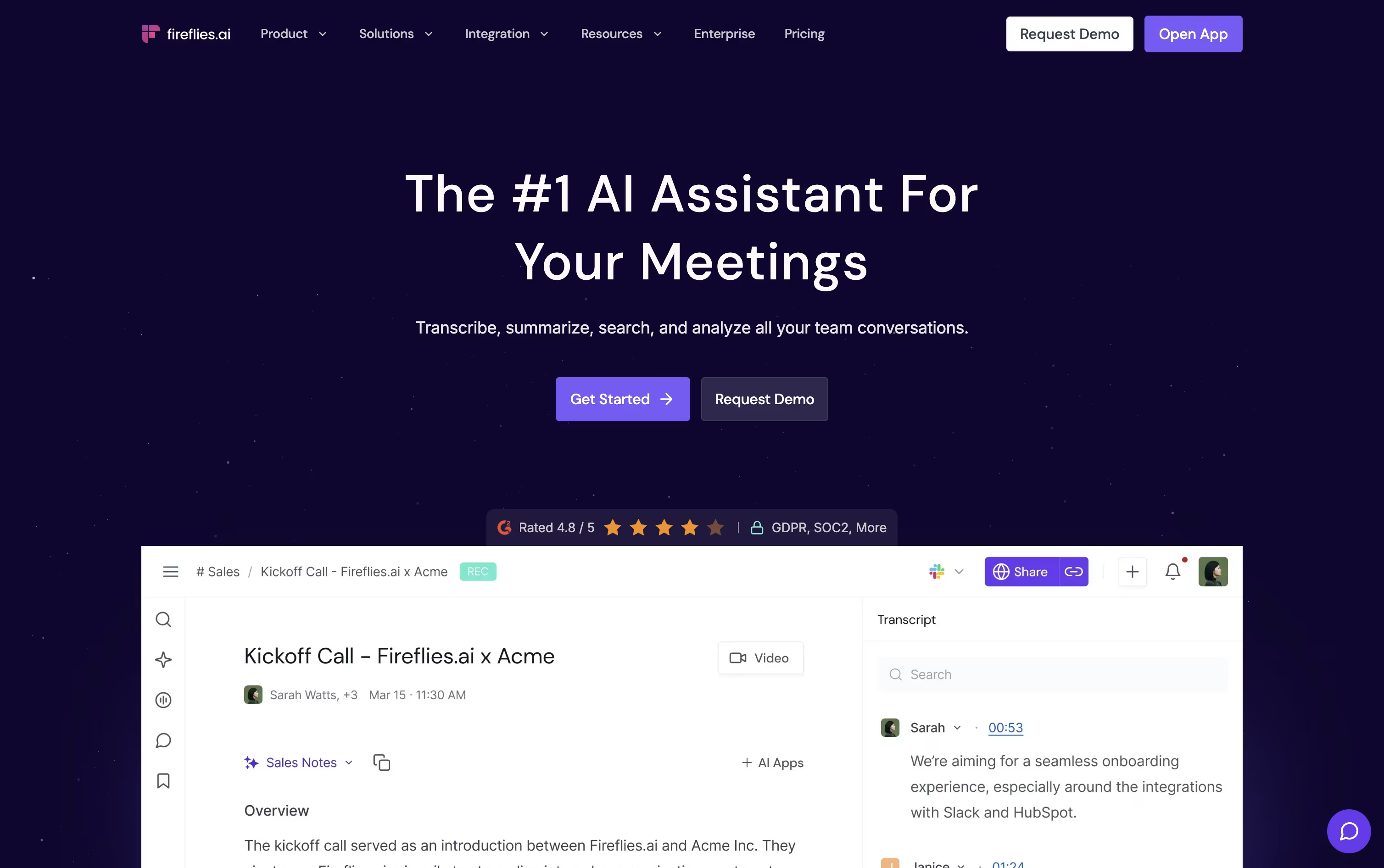
AskFred, the built in AI assistant, answers questions about any past meeting, while Live Assist offers real time notes and suggestions as the call happens.
The Free plan is free forever and covers unlimited transcription with 20 AI credits included. Pro is $18 a seat each month, or $10 on the annual plan, and adds video recording plus automation features like Voice Agents.
Business costs $29 a seat monthly, or $19 yearly, and brings unlimited storage along with Conversation Intelligence and team level analytics.
Enterprise is $39 a seat monthly on annual billing, adding SSO, SCIM, HIPAA compliance, and a dedicated account manager.
Because it connects with Salesforce, HubSpot, and Slack, teams in sales, recruiting, and support can push meeting insights straight into their existing workflow.

Instead of sending a bot into your meetings, Tactiq quietly reads the captions already provided by Google Meet, Zoom, or Microsoft Teams through its Chrome extension. No audio is ever recorded or stored.
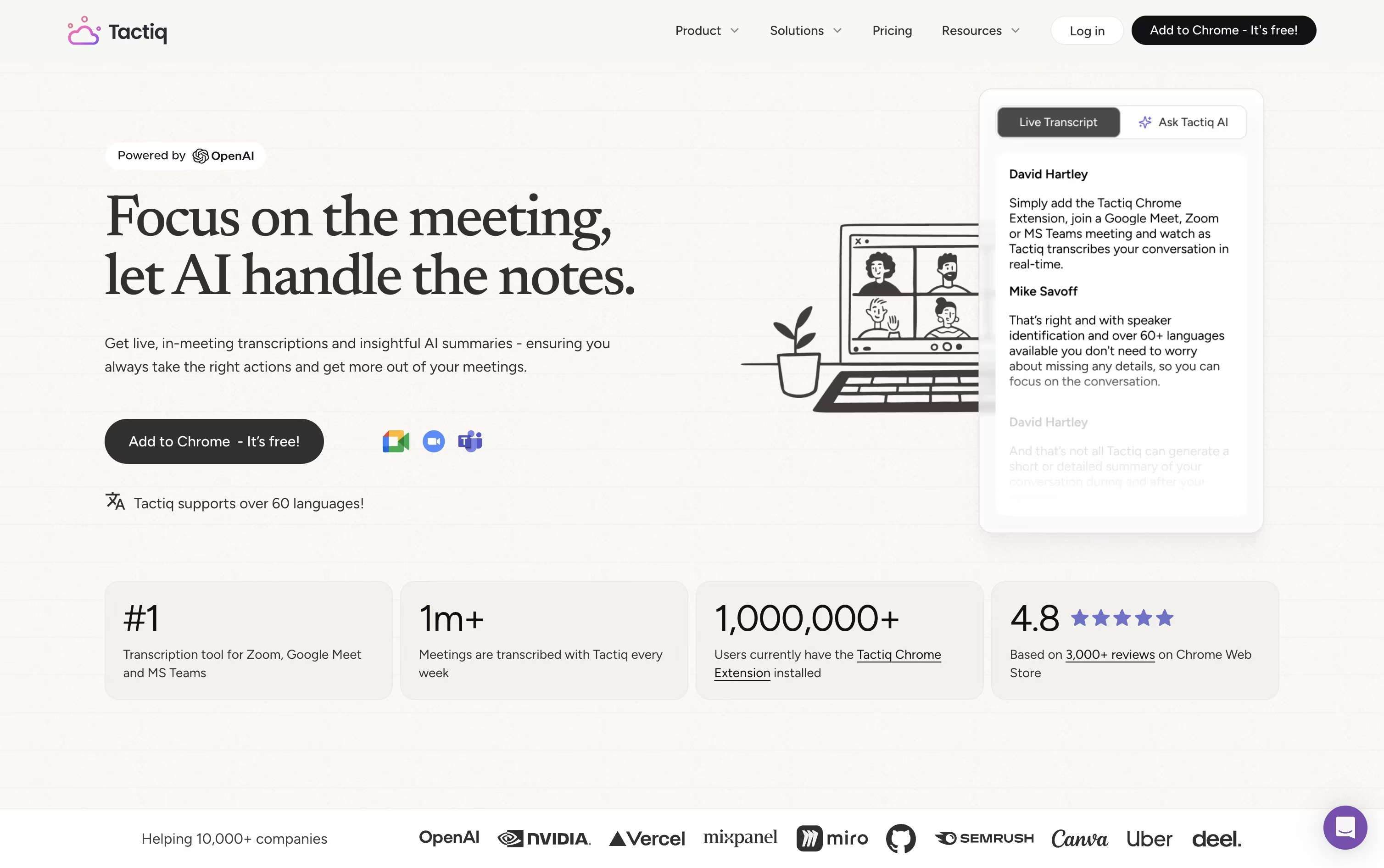
During the call, a live transcript appears in a side panel, letting you tag action items, highlight key lines, and ask the AI questions in real time.
Once the meeting wraps up, Tactiq can generate a summary, list out action items with names attached, or draft a follow up email automatically. Past transcripts stay searchable, and workflows can send that content straight to Slack, Notion, or your other tools.
The free plan gives one user 10 transcripts and 5 AI credits a month. Pro lifts the transcript limit for $12 a user monthly, Team unlocks unlimited AI credits at $20, and Business adds SSO and stronger data controls for $40. Enterprise pricing is negotiated directly for larger organizations.
With SOC 2, ISO 27001, GDPR, and HIPAA compliance in place, it also holds up for teams with stricter security needs.
Sitting through a meeting and typing notes at the same time is hard, MeetGeek handles the note taking part by recording and transcribing your calls automatically.
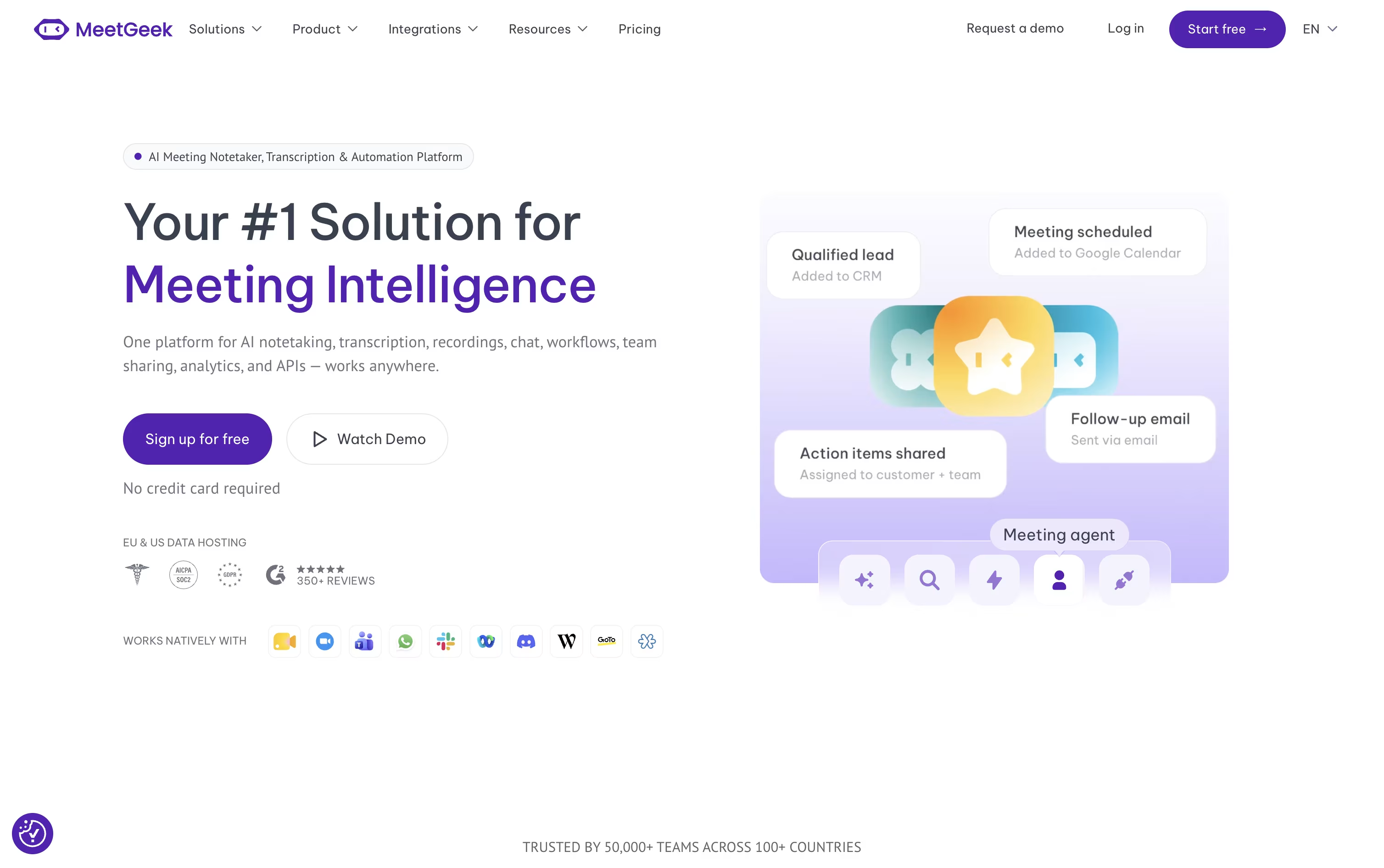
It can join scheduled meetings on Zoom, Google Meet, and Microsoft Teams, or skip the bot entirely and record through its browser extension, desktop app, or phone app instead.
Once a meeting ends, you get a written summary covering the main points, decisions made, and action items to follow up on, plus the option to chat with an AI about anything discussed.
Getting started costs nothing, the Basic plan is free forever with 3 hours of transcription each month.
Moving up, Pro costs $15.99 per user monthly, or $9.99 with yearly billing, and unlocks more storage and automation, while Business runs $27 per user monthly with a 14 day trial and adds unlimited transcription and team features.
Enterprise pricing is custom and built for organizations needing extra security and support.
Krisp works quietly in the background of your calls, cleaning up audio before it ever reaches the other person. Instead of connecting to one specific app, it plugs into your device as a virtual microphone and speaker, so it works with Zoom, Teams, Slack Huddles, and most other calling tools.
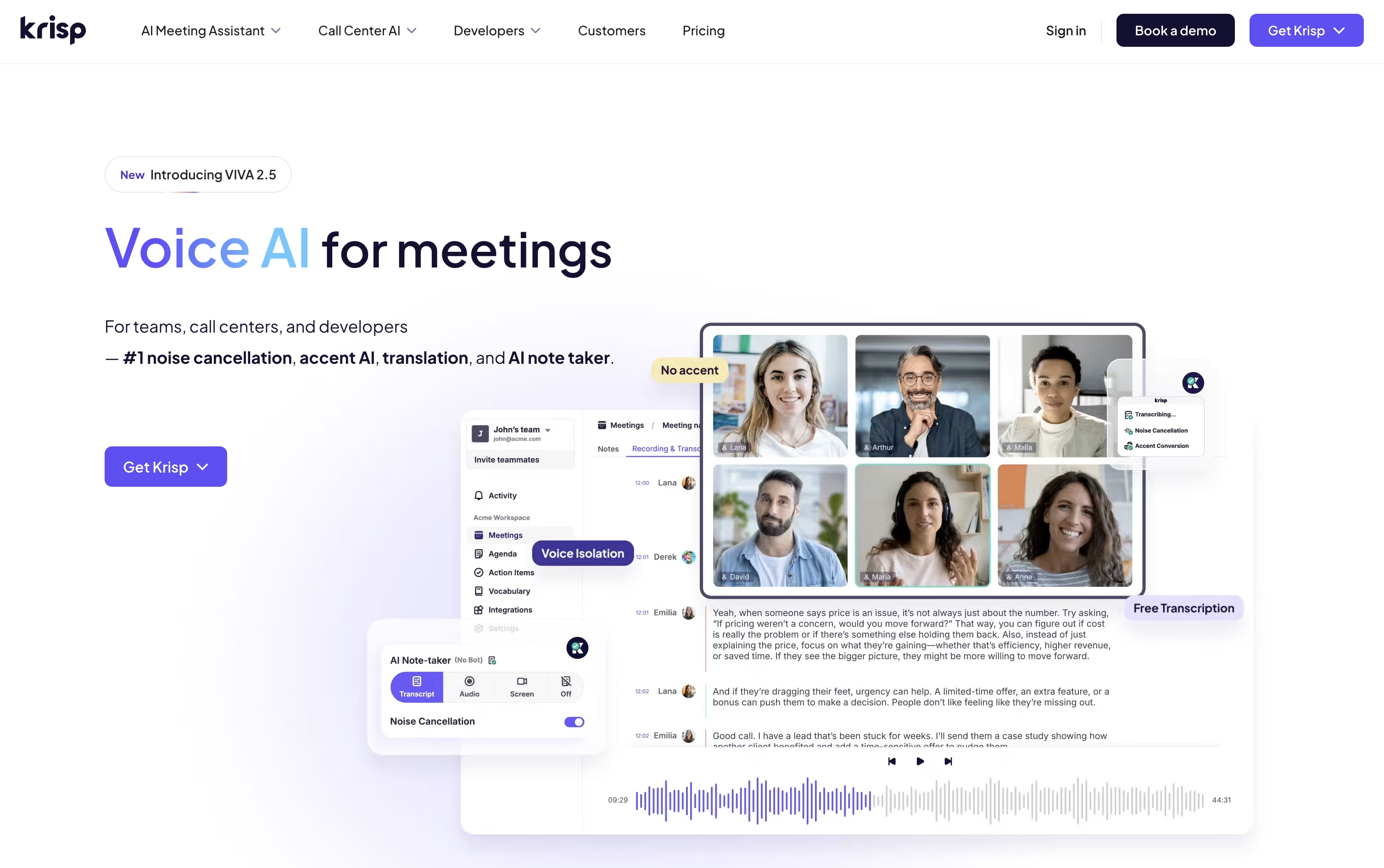
Its AI meeting assistant can sit in on meetings without a visible bot, then hand you a transcript, a summary, and a list of action items once the call ends.
New users get a 7 day free trial with no card required. After that, the Core plan runs $16 a month per seat, dropping to $8 with annual billing, and includes unlimited noise cancellation plus 10 GB of storage.
Advanced pricing sits at $30 monthly, or $15 annually, and unlocks longer accent conversion sessions, manager dashboards, and tools like Salesforce syncing. Larger organizations can move to a custom Enterprise plan for single sign on, HIPAA support, and unlimited storage.
A separate Call Center AI line starts near $10 per agent a month, and developers can apply for SDK access to build similar features themselves.
tl;dv automatically records, transcribes, and summarizes meetings across Zoom, Google Meet, and Microsoft Teams, turning calls into searchable notes without a human notetaker.
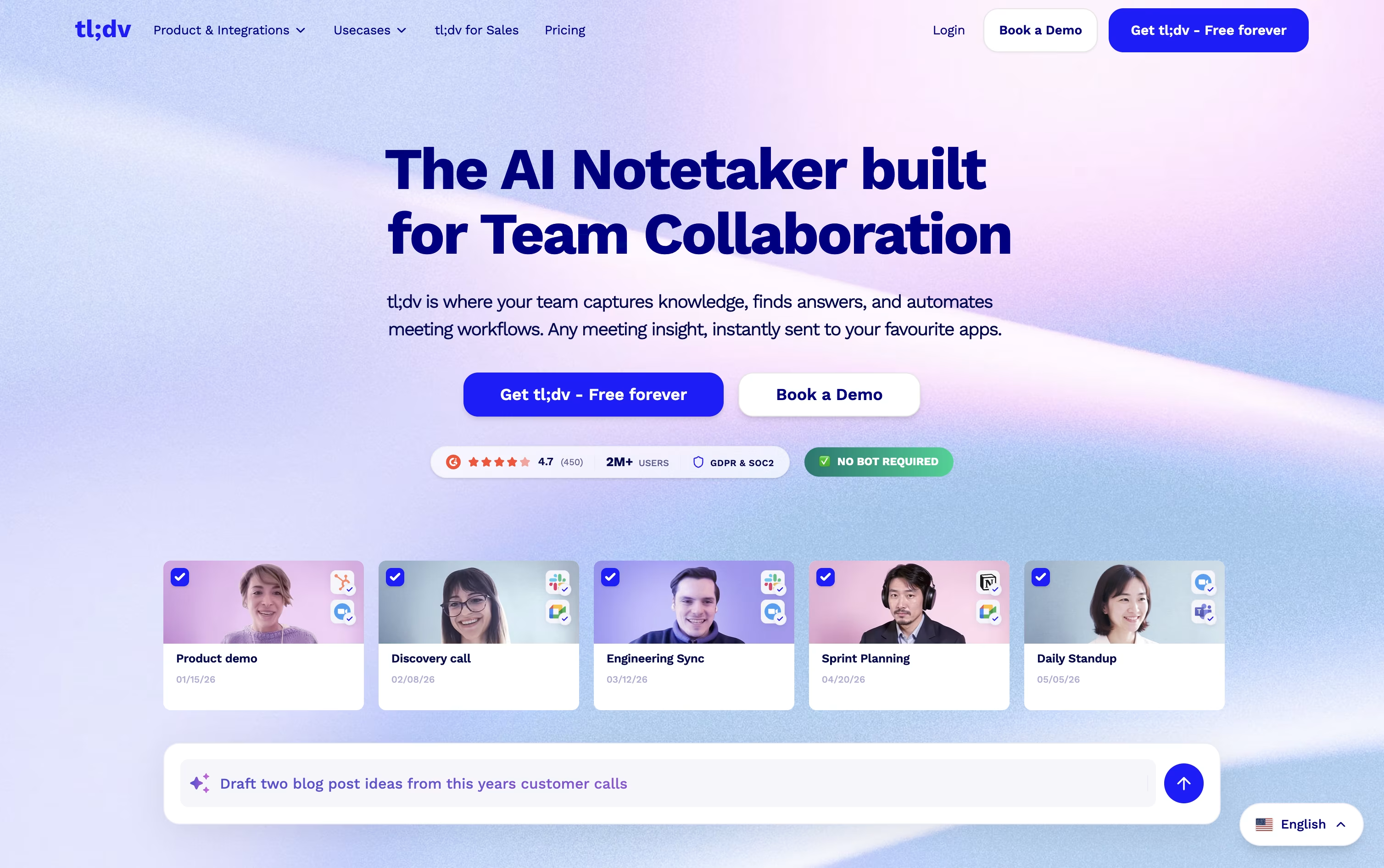
Getting started is free. The Free plan offers unlimited recordings and transcripts, though AI meeting notes are limited to 10 meetings a month and Ask AI queries are capped at 5.
Individuals and small teams often move to Pro, priced at $29 a month or $18 a month when billed annually, which removes the AI notes cap, adds unlimited single-meeting Ask AI, custom bot branding, and thousands of integrations.
Teams that need more automation choose Business, at $39 a month or $29 a month annually. It brings premium transcription, multi-language support, unlimited multi-meeting insights, coaching tools, and no usage-based AI charges.
Larger organizations can move to Enterprise, which uses custom pricing and adds org-wide admin controls, SCIM, custom SSO, privately hosted AI, and a dedicated success manager.
Backed by SOC 2 and GDPR compliance with EU data hosting, tl;dv fits everyone from solo users to enterprise teams.

Instead of scribbling notes during a call, Fathom sits in the background of your Zoom, Google Meet, or Microsoft Teams meetings and turns the conversation into a clean transcript and summary on its own.
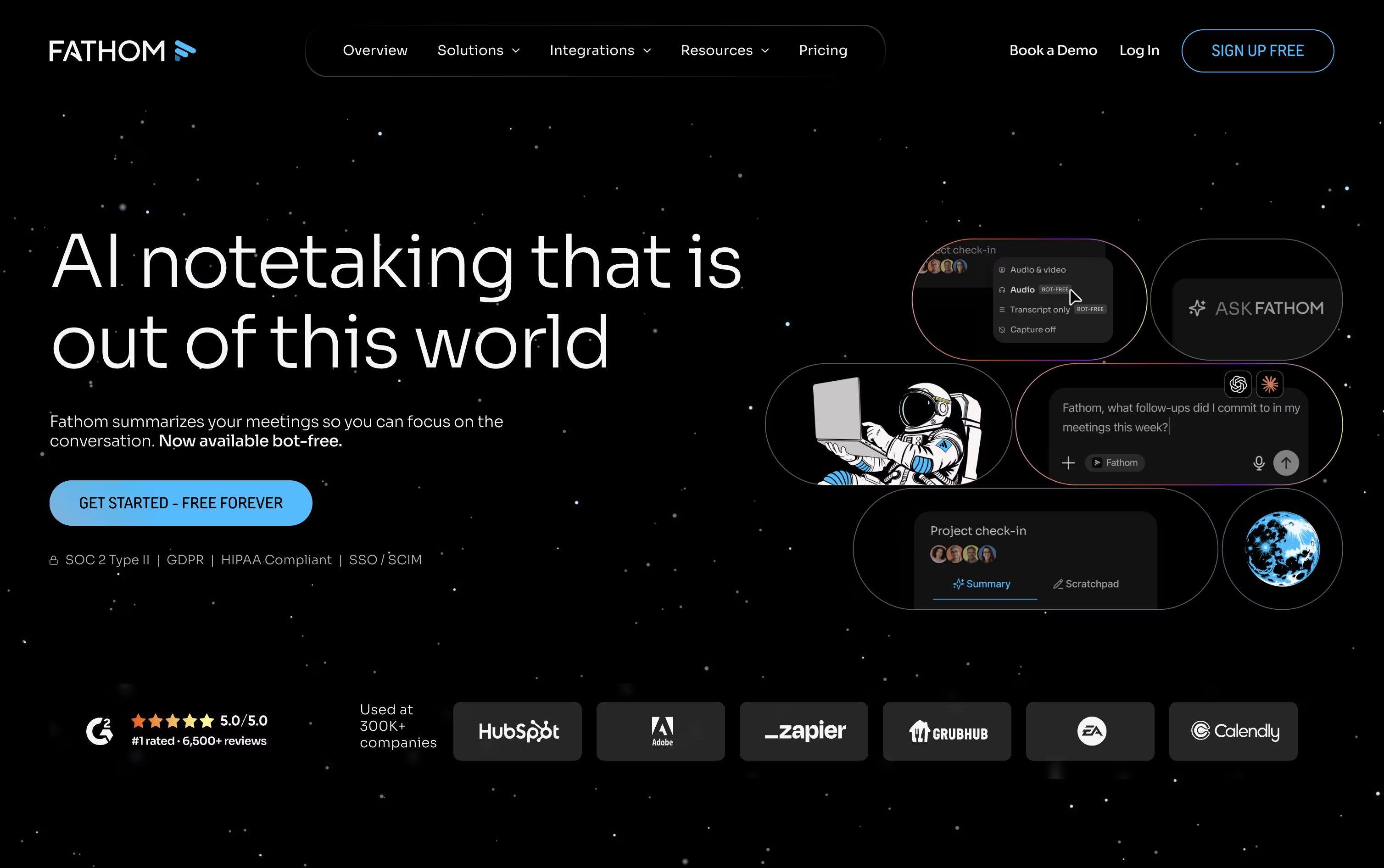
As soon as the call wraps up, you get a written summary, a full transcript with each speaker labeled, and a ready made list of action items. Past meetings stay searchable, so you can ask Fathom a question and jump straight to the moment it was discussed.
Getting started costs nothing. The Free plan includes unlimited recordings and instant summaries. Stepping up to Premium at $16 a month per user unlocks deeper summaries, automatic action items, and a chat style meeting assistant.
For groups working together, the Team plan runs $15 a month per user and adds shared search plus collaboration features, while Business at $25 a month per user brings CRM updates, deal tracking, and coaching scorecards for sales and support teams.
Enterprise customers get single sign on, custom data retention, and a dedicated success manager, with pricing arranged per organization. Across every plan, meeting data can also be connected directly into ChatGPT or Claude.